What Is a Fulfillment Center? How It Works
How a fulfillment center works, its technology and types, how it differs from a warehouse, what it costs and how to choose.

Key takeaways
- A fulfillment center stores products and ships individual online orders.
- It differs from a warehouse by layout, systems and returns handling.
- Look at location, integrations, accuracy and peak capacity.
- Track accuracy, dock-to-stock and same-day ship rate.
On this page
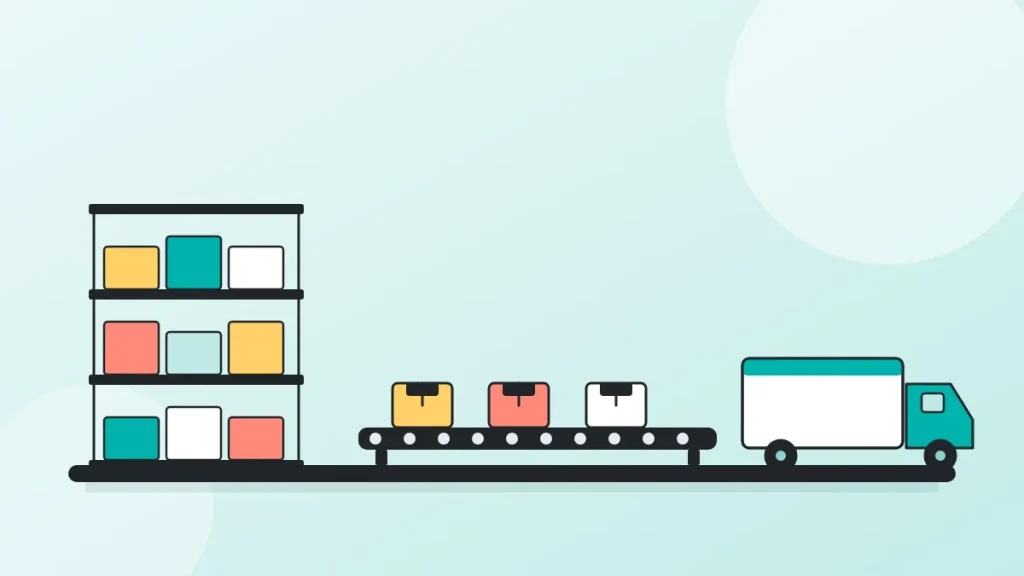
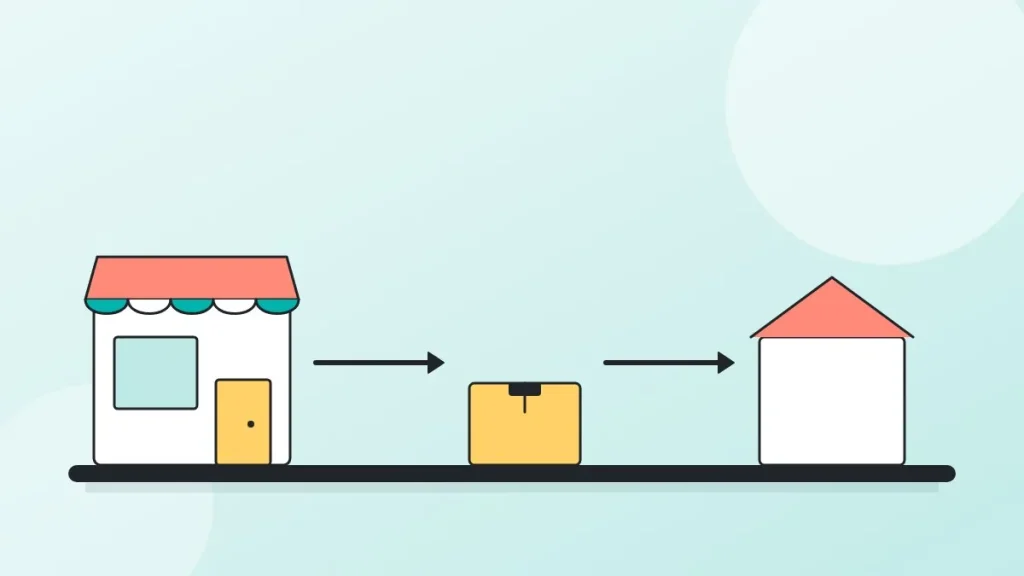
A fulfillment center is a warehouse set up to process online orders. It receives products from sellers, stores them, then picks, packs and ships individual orders to customers and handles returns. Unlike a plain storage warehouse, its layout, systems and staffing are built around speed and accuracy for many small orders.
This guide explains how a fulfillment center works, the technology inside it, the main types, what it costs and how to choose one.
What a fulfillment center does
- Receives and verifies inbound inventory.
- Stores products in tracked locations.
- Picks and packs customer orders.
- Ships with the carrier and service that fits each order.
- Processes returns and updates inventory.
- Provides extras: kitting, labeling, custom packaging, inserts.
How a fulfillment center works
- InboundDelivery is received, verified and logged.
- StorageItems are slotted by demand and tracked.
- Order intakeOrders enter the order management system.
- PickPicked by method suited to the order.
- Pack and checkPacked, checked and labeled.
- ShipCarrier collects, tracking is sent.
- ReturnsReceived, graded and restocked.
The same steps in more detail: the order fulfillment process.
Technology inside a fulfillment center
| System | What it does |
|---|---|
| Warehouse management system (WMS) | Locations, stock counts, pick tasks, scanning |
| Order management and integrations | Brings orders from stores and marketplaces, sends back tracking |
| Barcode scanning | Confirms locations and items at each step |
| Shipping software | Rate shopping, labels, address validation |
| Conveyors, robotics, automated storage | Used in larger sites to move or store goods |
| Reporting | Accuracy, speed and inventory dashboards |
Types of fulfillment centers
- In-house: owned and run by the seller.
- Third-party: run by a 3PL for many clients. See what a 3PL is.
- Dedicated vs. multi-client: one brand only, or shared by many.
- Regional, distributed or micro: smaller sites placed near customers to shorten delivery.
Fulfillment center vs. warehouse, distribution center and 3PL
| Main job | Typical order | |
|---|---|---|
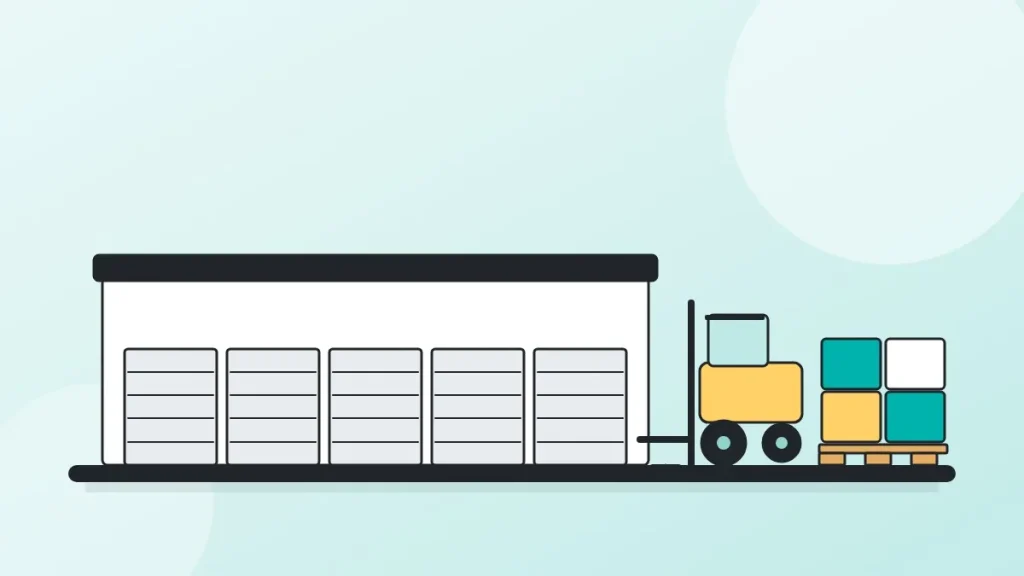
| Warehouse | Store goods, often long term | Few large movements |
| Fulfillment center | Fill individual customer orders | Many small parcels |
| Distribution center | Move bulk goods to stores or other warehouses | Pallets and cartons |
| 3PL | A company that runs these sites for clients | Depends on the service |
More in fulfillment center vs. warehouse and ecommerce distribution centers.
Why ecommerce brands use fulfillment centers
- Faster, more consistent order processing.
- Higher accuracy through scanning and checks.
- Capacity for growth and seasonal peaks without new leases.
- Shipping rates from combined volume.
- A cleaner returns process.
Common challenges
| Challenge | What to look for |
|---|---|
| Capacity and labor in peaks | Peak plan and staffing in writing |
| Inventory accuracy | Scan-based receiving, cycle counts |
| Limited visibility | A dashboard and clear reports |
| Less direct control | Clear rules, a named contact, regular reviews |
What a fulfillment center costs
Typical fees are receiving, storage, pick and pack, packaging, shipping and account fees. The sum depends on your order profile, so compare quotes by cost per order. See how much fulfillment costs for a worked example.
How to choose one
- Location: distance to your customers and your suppliers or port.
- Integrations with your store and marketplaces.
- Experience with your product type and any special handling.
- Peak capacity and scalability.
- Service levels, accuracy reporting and responsiveness.
- Total cost and contract terms.
Our checklist and warning signs are in how to choose a fulfillment provider. We operate a fulfillment center in Florida. See Direct-to-consumer fulfillment services and our services.
KPIs to track
| KPI | Meaning |
|---|---|
| Order accuracy | Share of orders shipped without errors |
| Dock-to-stock | Time from receipt to available stock |
| Same-day ship rate | Share of orders shipped before cut-off |
| Inventory accuracy | System counts vs. physical counts |
| Return processing time | Receipt to restock |
Best practices inside a fulfillment center
- Scan at every step: receiving, putaway, picking, packing and shipping.
- Slot fast-moving SKUs near the packing stations.
- Keep similar-looking products apart.
- Run cycle counts on fast sellers more often.
- Review errors weekly and fix the cause.
How fulfillment centers support last-mile delivery
Location sets the number of shipping zones and the transit time. A center closer to customers shortens delivery and reduces cost. Cut-off times and carrier pickup schedules decide whether an order ships the same day. See fast fulfillment.
How Ecom Auto Prep supports ecommerce fulfillment
Our warehouse in Florida handles receiving, storage, pick and pack, shipping and returns. See Direct-to-consumer fulfillment and all services.
Frequently asked questions
What is a fulfillment center in simple terms?
A warehouse that stores your products and ships your customers’ orders for you.
What does a fulfillment center do?
It receives, stores, picks, packs and ships orders and handles returns.
How is it different from a warehouse?
A warehouse stores goods, often in bulk. A fulfillment center is built to process many small orders quickly.
Is a fulfillment center the same as a 3PL?
No. The fulfillment center is the facility. The 3PL is the company that operates it.
When should I use one?
When order volume, channels or peaks make in-house fulfillment slower or more expensive than outsourcing.
Anton Kashirin
Anton founded EcomAutomation, the company behind EcomAutoPrep. He works with Amazon FBA sellers and DTC brands on receiving, prep, kitting and shipping, and reviews the guides on this blog against how orders move through the warehouse.