#1 Fulfillment Partner in the Region

Walmart Fulfillment Services

Scaling an e-commerce brand beyond a single channel usually hits the same operational bottleneck as physical distribution. As transaction volume scales on Walmart Marketplace, self-fulfilling every box in-house or relying on fragmented logistics networks can slow down delivery times and inflate shipping expenses.

Walmart Fulfillment Services (WFS) addresses this hurdle by opening Walmarts distribution infrastructure directly to third-party merchants. This guide walks through the mechanics of WFS, breaks down how its fee structures function in practice, outlines seller compliance expectations, and evaluates when a hybrid strategy with an independent 3PL makes economic sense.

Walmart Fulfillment Explained for Marketplace Sellers

Walmart Fulfillment Services allows approved third-party merchants to send inventory directly to Walmarts regional fulfillment hubs. Orders placed on the marketplace are picked, packed, and delivered to buyers with guaranteed 2-day nationwide shipping.

What WFS Includes

  • Inventory storage: US distribution network
  • Pick & pack: Standard packaging
  • Shipping: Fast nationwide delivery
  • Returns: In-store drop-offs & mail-ins
  • Customer service: Walmart buyer support

Seller Requirements

  • Marketplace approval: Active account
  • Eligible products: Non-perishable, safe goods
  • Preparation: Barcode & carton standards
  • Routing: Strict inbound shipping rules

Fees and Cost Factors

  • Fulfillment fees: Based on unit weight/size
  • Monthly storage: $0.75/cu. ft. base rate
  • Peak storage: Q4 duration adjustments
  • Removal fees: Unit return or disposal rates
  • Oversize costs: Specific tier surcharges

WFS vs. 3PL Fulfillment

Walmart WFS:
  • Walmart-only sales channel
  • Delivery badges BuyBox boost
  • Simplified single-channel focus
Third-Party Logistics (3PL):
  • Multi-channel order dispatch
  • Custom packaging kitting
  • Operational inventory control

What Are Walmart Fulfillment Services?

At its core, what is walmart fulfillment services comes down to leveraging retail infrastructure. Walmart Fulfillment Services operates as a native end-to-end logistics program designed for merchants selling on the platform. Rather than keeping stock in a private warehouse, merchants transfer inventory to Walmarts regional facilities. When buyers place orders, automated pick-and- pack workflows take over, dispatching products through preferred carrier networks.

How WFS Handles Storage, Shipping, and Returns

Once an inbound shipment arrives at an assigned center, items are scanned into active stock and placed across picking locations. Inventory positioning balances regional availability to keep transit windows tight. When an order fires, warehouse teams package the product into standard boxes and hand it off for expedited delivery.

Reverse logistics often a major operational pain point is managed through a streamlined channel. Customers initiating returns can ship items back via standard carriers or walk directly into any local physical store. Walmart handles initial intake, issues customer refunds, and evaluates returned items for restocking or removal, taking the weight off your internal customer service team.

Who Can Use Walmart Fulfillment Services

WFS access is granted to verified merchants operating on Walmart Marketplace who meet clear catalog and account benchmarks:

  • Marketplace Approval: Brands must hold an active seller account in good compliance standing.

  • Seller Requirements: Accounts need consistent operational history, low order defect rates, and documented product sourcing.

  • Product Eligibility: Items must align with physical size boundaries (up to 500 lbs) and avoid restricted material categories like regulated hazmat or temperature-controlled perishables.

  • Onboarding Readiness: A approved seller must complete the WFS application process within Seller Center prior to creating inbound routing plans.
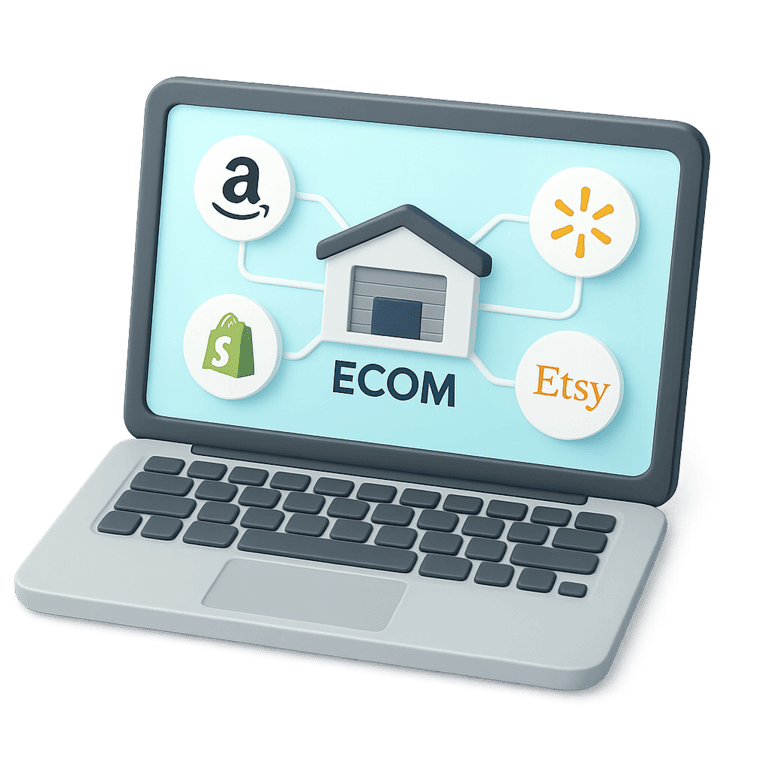
How Walmart Fulfillment Services Work

Moving product through WFS follows a clear four-step operational cycle from account enrollment to doorstep delivery.

Apply and Get Approved for WFS
STEP 1

Apply and Get Approved for WFS

Enroll directly inside your Seller Center dashboard. Walmart reviews catalog dimensions, category safety, and performance metrics before activating fulfillment features.

STEP 2

Prepare and Send Inventory to Walmart

Generate inbound shipments within the portal. Apply scannable barcode labels to individual units, build compliant master cartons or pallets, and schedule carrier pickup to assigned fulfillment nodes.

Prepare and Send Inventory to Walmart
Convert Products to Walmart Fulfilled
STEP 3

Convert Products to Walmart Fulfilled

Switch selected catalog SKUs to "Fulfilled by Walmart" status. This update automatically displays fast delivery badges across item listings, driving higher organic search visibility and click-through rates.

STEP 4

Walmart Stores, Ships, and Handles Returns

As stock checks into active inventory, orders automatically route through pick-and-pack fulfillment. Walmart shares tracking updates with buyers and manages in-store return logistics.

Walmart Stores, Ships, and Handles Returns

Walmart Fulfillment Services Fees and Pricing Factors

Understanding walmart fulfillment services fees is critical for calculating true SKU-level unit economics. Rather than locking merchants into fixed monthly account retainers, WFS utilizes a pay-as-you-go model.
Overall walmart fulfillment services pricing comes down to three operational variables: per-unit shipping fees, monthly cubic-foot storage costs, and conditional preparation or return charges.

Fulfillment Fees by Product Size and Weight

Base fulfillment rates depend on calculated shipping weight which uses unit weight or dimensional weight (whichever is higher) plus packaging allowances:

Size / Weight Category
Shipping Weight Tier
Base Fulfillment Fee (Standard Items)
Small / Lightweight
$\le 1\text{ lb}$
$3.45 per unit
Medium Standard
$2\text{ lbs}$
$4.95 per unit
Standard Mid-Weight
$3\text{ lbs}$
$5.45 per unit
Standard Heavy
$4\text{ to } 20\text{ lbs}$
$5.75 + $0.40 per lb ove
Large Standard Tier
$21\text{ to } 30\text{ lbs}$
$15.55 + $0.40 per lb over 21 lbs
Big & Bulky Tier
$> 90\text{ lbs to } 500\text{ lbs}$
$155.00 base + $0.80 per lb over 90 lbs

Category-Specific Surcharges: Apparel incurs an additional $0.50 per unit; hazardous materials incur $0.50 per unit; items priced under $10 incur a $1.00 processing charge. Oversize dimensions add Tier 1 ($3.00) or Tier 2 ($20.00) charges.

Storage Fees and Seasonal Cost Changes

Storage fees are calculated monthly based on unit cubic feet ($\text{L} \times \text{W} \times \text{H} / 1,728$):

  • Off-Peak Months (January through September): Base storage rate is $0.75 per cubic foot per month for items held up to 365 days.

  • Peak Season (October through December): $0.75 per cubic foot per month for items held 30 days or fewer. Units stored longer than 30 days incur a $1.50 per cubic foot surcharge ($2.25/cu. ft. total).

  • Long-Term Storage Rates: Units held between 366 and 450 days incur $2.25 per cubic foot per month. Extended inventory stored beyond 450 days incurs an aged rate of $7.50 per cubic foot per month.

Returns, Removals, and Additional Costs

  • Return Processing Fees: Standard returns start at $4.70 for units $\le 1\text{ lb}$ and scale with weight tiers.

  • Removal & Disposal Orders: Product return shipments back to your facility cost a base fee ($0.35/unit) plus freight ($0.40/lb). Disposal orders start at $0.35 per unit for standard weights.

  • Unplanned Prep Penalties: Shipments with scannability issues or labeling errors incur chargeback costs ($0.65 for missing labels; $0.80 for polybagging errors).

Benefits of Walmart Fulfillment Services

Faster Delivery and Better Customer Trust

WFS provides 2-day delivery coverage across the continental United States. Meeting strict transit windows reduces delivery friction, lowers cart abandonment, and builds long-term customer confidence.

Higher Marketplace Visibility and Delivery Badges

Items enrolled in WFS gain prominent "2-day shipping" or "Walmart+" delivery badges across search results. These badges improve search position algorithms and increase your win rate for the buy box over self-fulfilled merchant listings.

Simplified Returns and Customer Support

Outsourcing logistical management removes post-purchase burdens. Walmart handles shipping inquiries, loss claims, and local store returns, freeing up administrative resources to focus on brand development and expansion.

Limitations of Walmart Fulfillment Services

Product Eligibility and Approval Requirements

WFS enforces strict inventory rules:

  • Units exceeding 500 lbs or max girth boundaries are restricted.

  • Temperature-controlled products or hazardous goods are excluded from standard facilities.

  • Inbound shipments missing compliance labels risk check-in delays or chargeback fees.

Less Flexibility for Multi-Channel Sellers

A primary constraint of the walmart fulfillment management service is its channel focus. WFS is built specifically to handle orders originating within Walmart Marketplace. Merchants cannot use WFS stock pools to fulfill sales from external channels like Shopify, Amazon, or TikTok Shop.

Potential Storage and Removal Costs

Slow-moving SKUs sitting in WFS hubs can accumulate long-term storage fees. If inventory turnover slows during peak season or sits past 365 days, holding costs can erode margin performance.

Walmart Fulfillment Services vs. Third-Party Fulfillment

When WFS Is the Better Option

Walmart Fulfillment Services is effective for brands prioritizing single-channel platform growth. If your main objective is winning the BuyBox, gaining delivery badges, and securing low delivery costs for fast-turning SKUs, WFS offers an efficient model.
When WFS Is the Better Option
When a 3PL Is More Flexible

When a 3PL Is More Flexible

Partnering with an independent walmart fulfillment services 3pl provider offers broader control for merchants seeking complete walmart seller fulfillment solutions. A 3PL is preferable if you:

  • Dispatch orders across Shopify, Amazon, TikTok Shop, and eBay from a central inventory hub.
  • Require custom branded boxes, inserts, or complex kit assembly.
  • Supply B2B wholesale orders alongside direct-to-consumer sales.
  • Store safety stock near major arrival ports to prevent WFS long-term storage penalties.

How Ecom Auto Prep Can Support Walmart Sellers

While WFS manages final-mile delivery, meeting strict packing, labeling, and shipping compliance rules requires execution before goods reach Walmart hubs. Ecom Auto Prep operates as a preparation and logistics partner, ensuring stock meets vendor guidelines before distribution.
How Ecom Auto Prep Can Support Walmart Sellers
Marketplace Prep and Inventory Handling

Marketplace Prep and Inventory Handling

Proper prep prevents warehouse check-in rejections, receiving delays, and penalty chargebacks. Preparation services include:

  • Receiving & Inspection: Checking inbound containers for transit damage and verifying SKU counts.
  • Labeling & Barcoding: Applying scannable GTIN, UPC, and SKU barcode labels per Walmart guidelines.
  • Bundling & Polybagging: Packaging multi-packs, fragile goods, or liquids using compliant packaging.
  • Pallet Prep: Stacking, wrapping, and labeling freight pallets for smooth warehouse check-in.

Support for Multi-Channel Fulfillment Needs

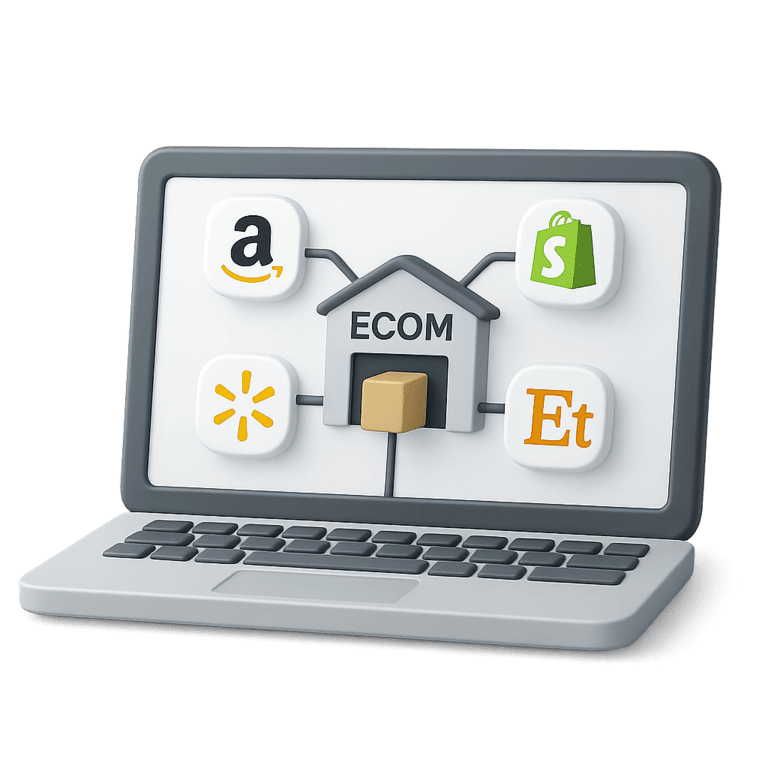
Ecom Auto Prep supports a flexible hybrid logistics model across Walmart Marketplace, Shopify, Amazon, eBay, and TikTok Shop. By storing core stock at a central prep facility, you can forward needed inventory to WFS to maintain 2-day delivery badges while fulfilling external sales channels from the same master stock pool.
Support for Multi-Channel Fulfillment Needs

Looking to streamline inbound preparation and avoid warehouse chargebacks?

Contact Ecom Auto Prep today to receive a customized quote for preparation, multi-channel storage, and hybrid logistics management.

Frequently Asked Questions

Walmart Fulfillment Services (WFS) is an official logistics solution provided by Walmart for marketplace sellers. Walmart receives seller inventory, picks and packages orders, ships goods with 2-day nationwide delivery, and manages customer returns and support.

WFS fulfillment fees start at $3.45 per unit for lightweight items and scale based on item weight and size tiers. Standard storage costs $0.75 per cubic foot per month during off-peak periods, with additional charges for peak months, long-term storage, return processing, or inventory removals.

While both programs store inventory, grant delivery badges, and handle buyer support, WFS operates exclusively within Walmart's ecosystem. Distinct WFS features include no monthly seller account subscription fee, competitive per-unit fulfillment rates, and customer return drop-offs at physical Walmart stores.

Yes. A 3PL helps sellers inspect and label goods to comply with strict WFS inbound guidelines, holds surplus stock to avoid long-term storage fees, and manages multi-channel fulfillment across non-Walmart channels using a centralized inventory pool.

A Shopify store should consider outsourcing fulfillment when packing and shipping orders takes operational time away from marketing, product development, and business development. Common growth thresholds include reaching 200–500 monthly orders, experiencing high inventory mispack rates, running out of storage space, or struggling to meet fast customer delivery expectations.