#1 Fulfillment Partner in the Region

WooCommerce Third-Party Logistics Company

A WooCommerce third-party logistics company has to work with a platform that gives store owners far more control over checkout, order statuses, and plugins than most hosted platforms allow. That flexibility is an advantage for the merchant and a real integration challenge for the warehouse. This page covers what has to be configured before go-live, how orders move from checkout to carrier, how exceptions get handled without guessing, and what to expect from returns, scaling, and multi-store operations.

Prepare WooCommerce Order Data Before Connecting a 3PL

Validate Customer Addresses and Required Order Fields

Custom checkout fields, optional address lines, and plugin-added form fields can all break address parsing if the warehouse feed isn't built to expect them. Address validation needs to happen before an order reaches the pick queue, not after a label prints wrong.

Map Store Shipping Methods to Carrier Services

Each WooCommerce shipping method a customer can select at checkout needs a defined mapping to an actual carrier service on the warehouse side. Without this mapping, "Standard Shipping" becomes whatever the warehouse defaults to, which can quietly break delivery-time promises made at checkout.

Create One Source of Truth for SKUs and Variations

WooCommerce variations (size, color, material) need a single authoritative SKU list that the warehouse and the store both reference. Stores that manage SKUs loosely in the product editor end up with variation mismatches that only surface as picking errors.

Define Backorder, Fraud Hold, and Preorder Rules

WooCommerce allows backorders and preorders by default settings that vary per plugin and per store. The warehouse needs explicit rules for what happens to an order in each of these states before it ever reaches the fulfillment queue.

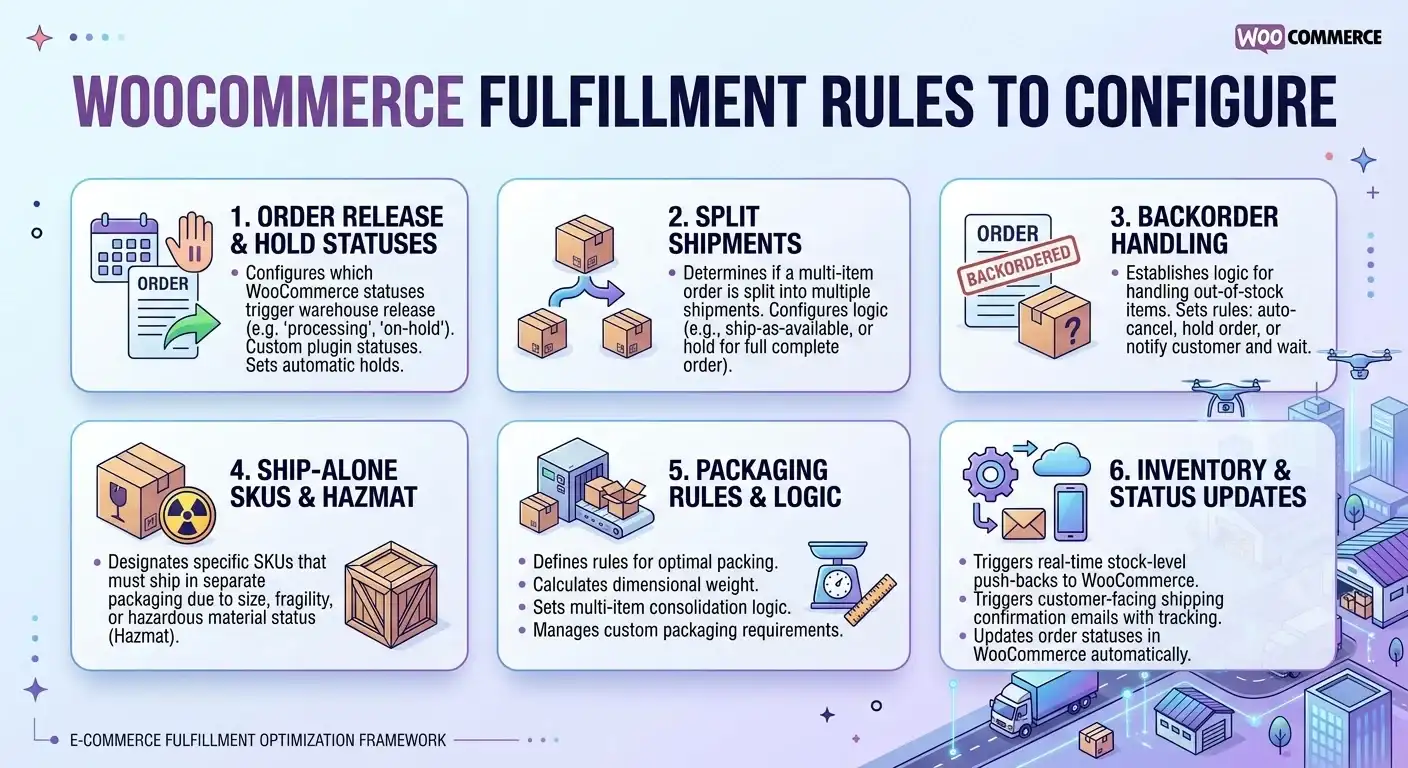
WooCommerce Fulfillment Rules to Configure

WooCommerce Fulfillment Rules to Configure

  • Order Release and Hold Statuses - which WooCommerce statuses (processing, on-hold, custom plugin statuses) actually release an order to the warehouse.
  • Split Shipment and Backorder Logic - how a single order with a backordered line item is handled: ship what's available now, or hold the full order.
  • Ship-Alone and Packaging Rules - which SKUs require separate packaging due to size, fragility, or hazmat status.
  • Inventory, Tracking, and Email Updates - what triggers a stock-level push back to WooCommerce and what triggers the customer-facing shipping confirmation email.
WooCommerce Plugin, API, and WMS Integration

Choosing Between a Plugin, Direct API, and Middleware

A WooCommerce store can connect to a 3PL through a fulfillment plugin, a direct API build against the WooCommerce REST API, or middleware that also handles other sales channels. Plugins are the fastest path for a single-store setup; direct API suits stores with custom order logic; middleware fits sellers running WooCommerce alongside Amazon, Walmart, or a second storefront. See EAP's integration options for the specific paths supported.

Syncing Orders, Stock Levels, and Tracking Data

Orders need to pull into the warehouse feed on a schedule tight enough to avoid picking against stale inventory. Stock-level pushes back to WooCommerce should happen on the same cadence, not as an end-of-day batch that lets the store oversell all afternoon.

Monitoring Failed Imports, Duplicate Orders, and Sync Delays

A failed order import or a duplicate order created by a sync retry needs an alert, not silence. Left unmonitored, a stalled sync can hold up an entire day's order batch before anyone notices.

From WooCommerce Checkout to Carrier Handoff

1

Validate and Release the Order

The order clears fraud and payment checks and passes address/SKU validation before entering the warehouse feed.
2

Reserve Inventory and Create the Pick Task

Available stock is reserved against the order and a pick task is generated in the WMS.
3

Pick, Pack, Label, and Confirm Shipment

The item is picked, packed per any ship-alone or packaging rule, labeled, and manifested with the carrier.
4

Update WooCommerce and Notify the Customer

Tracking number and order status push back to WooCommerce, triggering the customer's shipping confirmation.

Handling WooCommerce Fulfillment Exceptions

Address Changes and Order Edits After Checkout

Address Changes and Order Edits After Checkout

A customer or admin editing an order after checkout is one of the most common WooCommerce-specific exception cases, since the platform allows post-checkout edits more freely than many hosted alternatives. The cutoff is pick-start: before it, the change updates cleanly; after it, it needs a defined manual-intervention path.
Cancellations After an Order Reaches the Warehouse

Cancellations After an Order Reaches the Warehouse

An order canceled after it reaches the warehouse needs a hard stop point. If picking has already started, the cancellation has to trigger a physical hold, not just a status flip in WooCommerce.
Fraud Reviews, Payment Holds, and Manual Releases

Fraud Reviews, Payment Holds, and Manual Releases

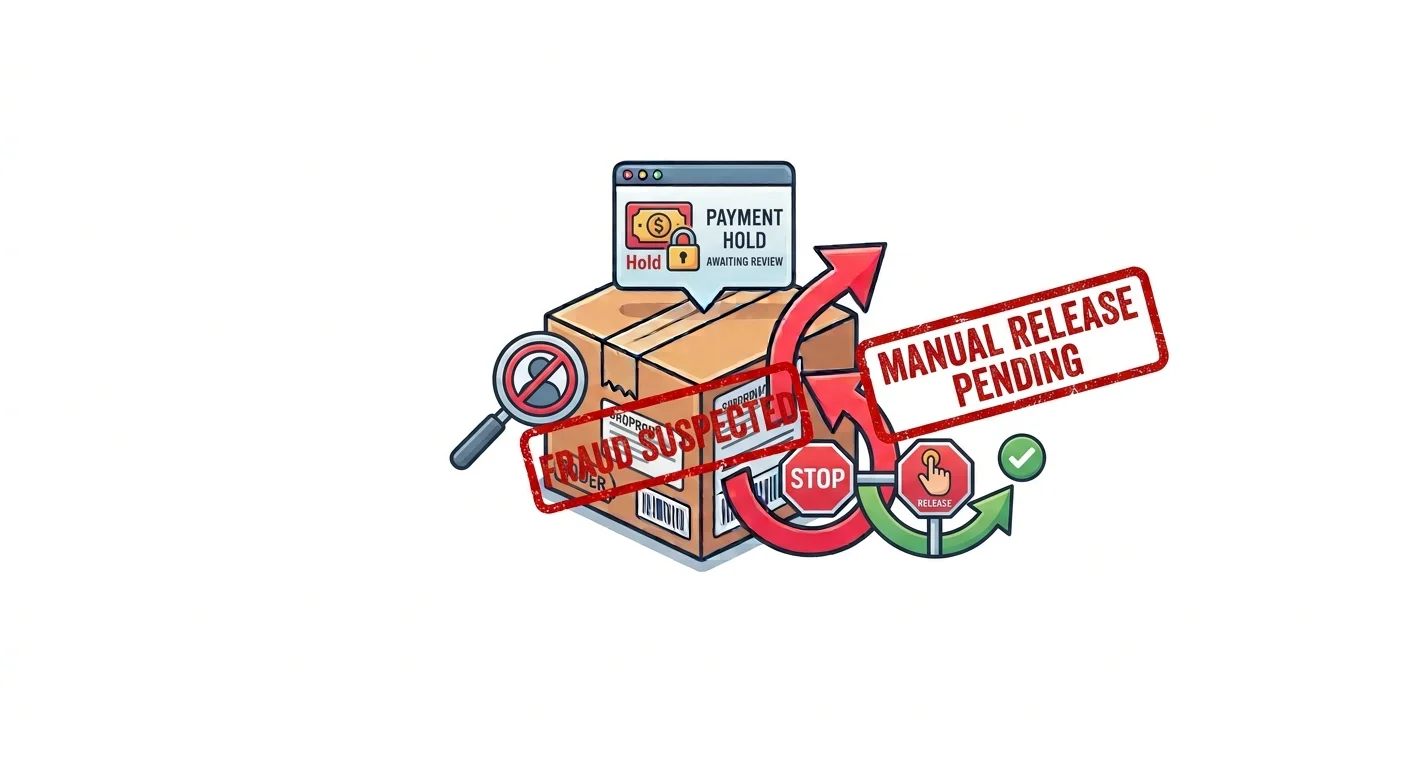
Orders flagged for fraud review or sitting on a payment hold should never enter the pick queue automatically. Release should require an explicit status change, not a timeout- based assumption that the hold cleared.
Backorders, Overselling, and Partial Fulfillment

Backorders, Overselling, and Partial Fulfillment

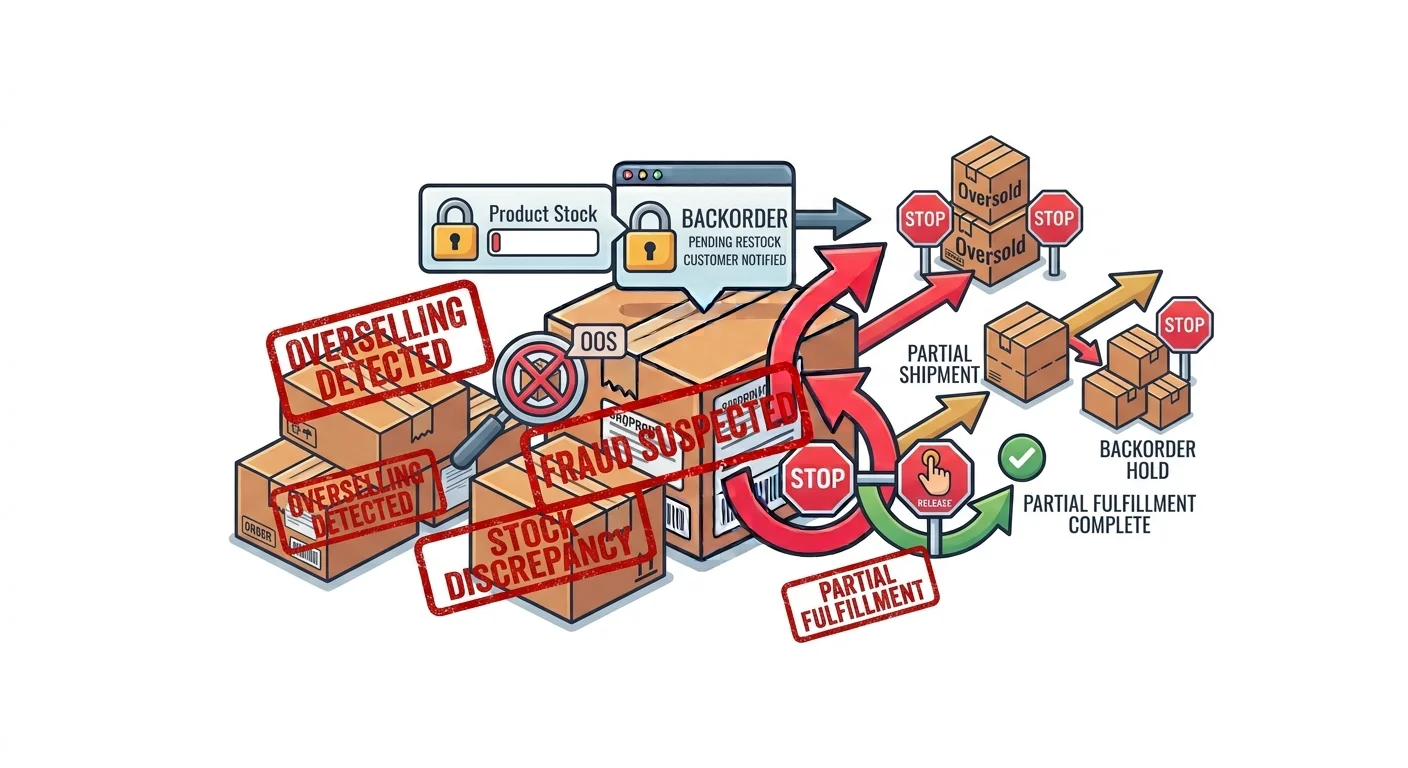
When a SKU oversells due to sync lag, the warehouse needs a defined partial-fulfillment rule: ship the in-stock lines now and hold the rest, or hold the full order. Leaving this undefined turns every oversell into a one-off customer service decision.

Warehouse Services for WooCommerce Products

Receiving, Storage, and Live Inventory Visibility

Inbound stock is received, counted, and put away with inventory visible in near real time, so the WooCommerce stock feed reflects what's actually on the shelf rather than a stale snapshot.

Bundles, Kits, Subscription Orders, and Inserts

WooCommerce subscription and bundle plugins generate recurring or multi-component orders that need the same component-level inventory logic as any bundled SKU, plus a defined process for recurring ship dates.

Custom Packing Rules and Branded Unboxing

Branded inserts, custom packaging, and unboxing requirements are configured per SKU or per customer segment rather than applied uniformly across every order.

Rate Shopping, Shipping, and Delivery Tracking

Carrier selection should weigh cost against delivery reliability by zone, with tracking data flowing back to WooCommerce automatically rather than requiring a manual carrier- portal lookup.

WooCommerce Returns and Exchanges

Return Inspection and Product Disposition

Returned items are inspected for condition and assigned a disposition - restock, damage, or disposal - before any refund or exchange is processed.

Restock, Exchange, and Refund Status Updates

Restock decisions need to sync back to WooCommerce inventory promptly, and exchange or refund status should update the order record so customer service isn't manually reconciling warehouse action against store status.

Scaling Complex WooCommerce Operations

Multiple Stores, Languages, and Sales Channels

Brands running more than one WooCommerce install, multiple languages, or WooCommerce alongside a marketplace channel need inventory treated as one shared pool, not separate counts per storefront.
Multiple Stores, Languages, and Sales Channels
Peak-Season Capacity and Temporary Promotions

Peak-Season Capacity and Temporary Promotions

A promotion-driven volume spike needs warehouse capacity and staffing planned in advance, not absorbed reactively once order volume has already climbed.

Order Accuracy, Inventory Drift, and Shipping Cost Reporting

Recurring reporting on pick accuracy, inventory drift, and shipping cost by zone catches problems while they're still small operational issues rather than after they've become a pattern of customer complaints.
Order Accuracy, Inventory Drift, and Shipping Cost Reporting

Frequently Asked Questions

Not necessarily. A plugin is the fastest integration path for a single store, but a direct API build or middleware can serve stores with custom order logic or multiple sales channels.

Yes, provided the custom status is explicitly mapped to a release or hold rule in the warehouse feed rather than left to a default assumption.

Both should be defined as explicit rules before go-live: backorders follow a stated partial-fulfillment or full-hold policy, and fraud holds require a manual release rather than an automatic timeout.

Yes, provided subscription and bundle plugins are mapped to component-level inventory logic and recurring ship-date handling on the warehouse side.

A processed return is assigned a disposition first, and only sellable inventory syncs back as available stock, with the exchange or refund status updating the order record.

Ready to Simplify WooCommerce Fulfillment Complexity

Custom checkout rules and plugin-driven order logic create fulfillment gaps most 3PLs aren't built to close. Get a quote on a WooCommerce fulfillment setup built around your specific order rules, schedule a meeting with our operations team to map your current checkout and status logic, or request a service pricing breakdown for your order volume.