What Are Fulfillment Services?
What fulfillment services include, how the process works from inbound to returns, who benefits and how to choose a provider.

Key takeaways
- Fulfillment covers receiving, storage, pick and pack, shipping and returns.
- A 3PL runs the warehouse; the fulfillment center is the building.
- Outsourcing helps most when volume grows, channels multiply or peaks are sharp.
- Compare providers on fit, full cost and contract terms.
On this page
Fulfillment services are the work of storing your inventory, packing customer orders and shipping them, done by a third-party company so you do not have to run a warehouse. A provider that does this is called a third-party logistics company, or 3PL. You send products to its warehouse, your store sends orders to its system, and its team picks, packs and ships each order.
This guide explains what fulfillment services include, how the process works from start to finish, who benefits most, and what to check when choosing a provider.
What fulfillment services include
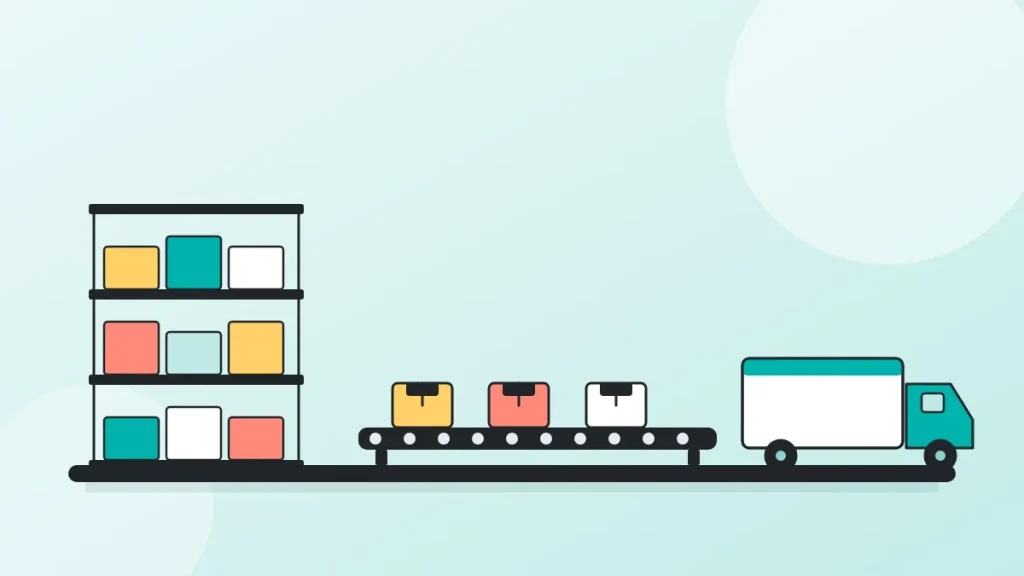
- Receiving: unloading and checking inbound shipments against your notice.
- Storage: keeping stock on pallets, shelves or in bins, with every unit tracked in an inventory system.
- Order processing: receiving orders from your store or marketplace automatically.
- Pick and pack: finding the items, checking them and packing them for shipping.
- Shipping: printing labels, handing parcels to carriers and sending tracking numbers back to your store.
- Returns: receiving, inspecting and restocking or disposing of returned goods.
Many providers add services on top: kitting and bundling, custom packaging, inserts, labeling, Amazon FBA preparation, subscription boxes and freight. Our services overview lists what we offer.
How the process works
- SetupConnect your store, list SKUs, agree pricing and packaging rules.
- InboundYou ship stock in. The team receives, scans and stores it.
- OrderA customer buys. The order reaches the 3PL system within minutes.
- Pick, pack, shipItems are picked, packed and handed to the carrier. Tracking goes to the customer.
- Returns and reportsReturns are inspected and restocked. You see stock and orders in a dashboard.
The page How does it Works shows our version step by step. For a detailed breakdown of what happens to an order, see the ecommerce order process.
Types of fulfillment service
Direct-to-consumer fulfillment
Each order is packed and shipped to an individual customer. Speed, accuracy and branded packaging matter most. See Direct-to-consumer fulfillment services.
Amazon FBA prep
Products are labeled, bagged, bundled and packed to Amazon’s inbound rules before they go to an Amazon warehouse. Mistakes here can mean rejected shipments or extra fees. See Amazon FBA Prep Service.
Kitting and bundling
Separate items are combined into one set, gift box or promotional pack. See Kitting and Fulfillment Services.
Subscription box fulfillment
Recurring boxes are assembled on a schedule, with inserts that change by month or cohort. See Subscription Box Fulfillment Services.
B2B and retail fulfillment
Larger shipments to retailers and distributors, often with specific labeling and routing requirements.
Returns processing
Receiving returns and deciding what happens to each item. Our guide on reverse logistics in ecommerce covers this in detail.
Who benefits most from fulfillment services
- Brands whose order volume has outgrown a garage, office or spare room.
- Sellers on several channels who need one inventory count.
- Amazon sellers who need compliant FBA prep without their own team.
- Subscription and gift-box brands with recurring assembly work.
- Companies that import goods and want one partner for receiving and shipping.
It is less useful when you ship very few orders, when each item needs unique handling that only you can do, or when you want to keep a hands-on role in every parcel.
Benefits and trade-offs
| Benefit | Trade-off to keep in mind |
|---|---|
| You can grow without leasing space or hiring warehouse staff | You depend on the provider’s quality and uptime |
| Carrier discounts that a small shipper cannot get alone | Pricing structures vary and need careful comparison |
| Real-time inventory and order tracking | Integration setup takes time at the start |
| Your time is freed for product and marketing | You lose direct sight of the packing line |
How to choose a provider
Look at fit first: experience with your type of product, integrations with your sales channels and a warehouse location near your customers or suppliers. Then compare price on a complete basis, check accuracy and response time, and read the contract for minimums and exit terms. Our guide on how to choose a fulfillment provider has a full checklist, and fulfillment center costs explains what the invoice contains.
Frequently asked questions
What is the difference between fulfillment and shipping?
Shipping is one step, the movement of a parcel by a carrier. Fulfillment includes the whole chain: receiving, storage, picking, packing, shipping and returns.
Is a 3PL the same as a fulfillment center?
A fulfillment center is the warehouse. A 3PL is the company that runs it and offers services around it, sometimes in more than one building.
How many orders do I need before outsourcing?
There is no fixed number. Many brands start looking when packing takes hours of the owner’s day or when mistakes and delays start to affect reviews. The cost comparison in our costs guide helps you decide.
Can I keep my own branding on packages?
Yes, most 3PLs support branded boxes, tape, inserts and labels. Ask what is included and what is billed as an extra.
How do I start with Ecom Auto Prep?
Send us your product types, monthly orders and sales channels on the contact page. We reply with a plan and a quote.
Anton Kashirin
Anton founded EcomAutomation, the company behind EcomAutoPrep. He works with Amazon FBA sellers and DTC brands on receiving, prep, kitting and shipping, and reviews the guides on this blog against how orders move through the warehouse.