Order Fulfillment Process: 7 Steps to Delivery
The order fulfillment process from receiving stock to returns, with what to check at each step and common causes of delay.

Key takeaways
- Seven steps: receive, store, order intake, pick, pack, ship, returns.
- Most errors start at receiving and picking, not at shipping.
- Scan at every step and track accuracy and cut-off time.
- Plan the returns step before the first sale.
On this page
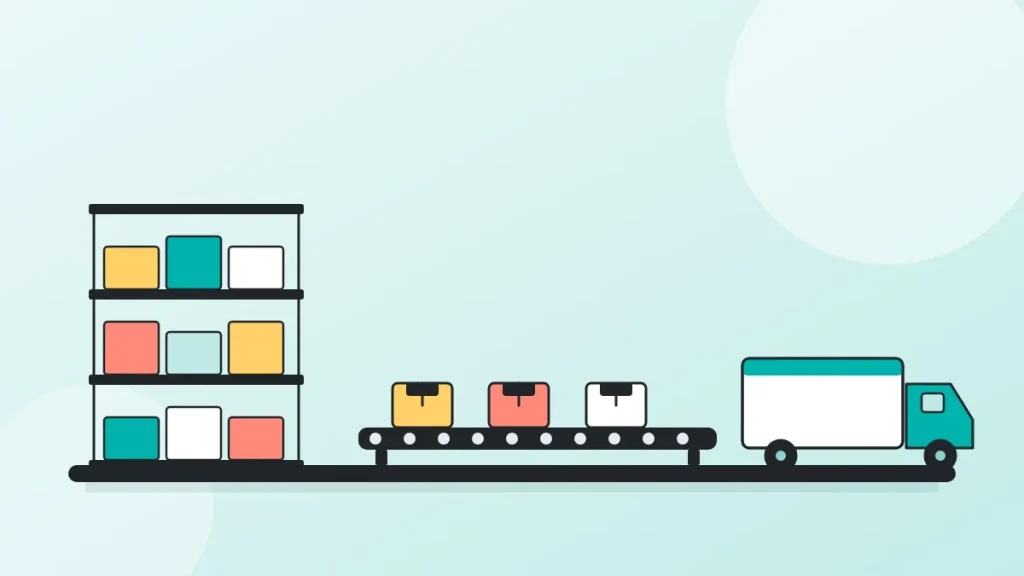
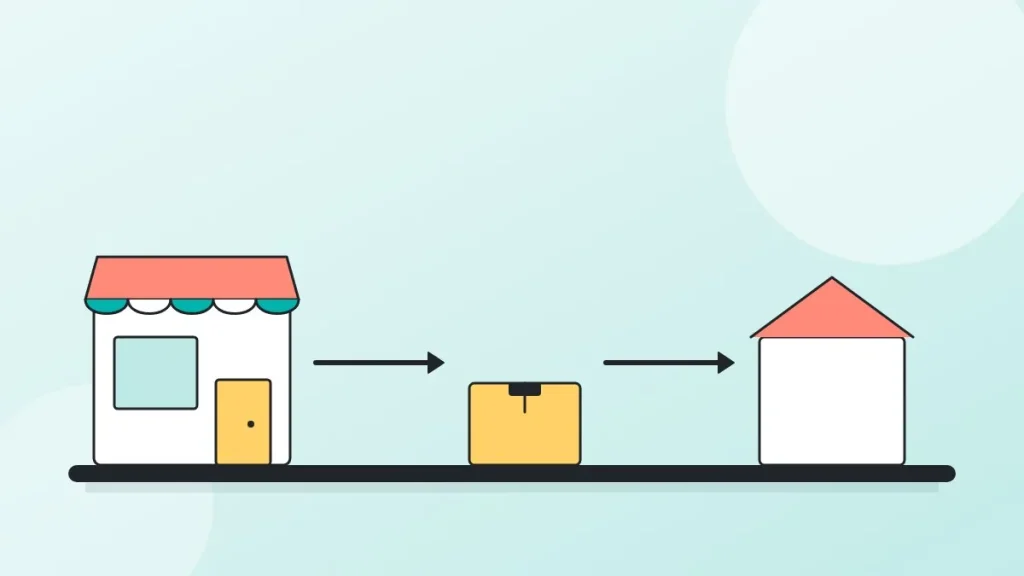
The order fulfillment process is the chain of steps that turns an incoming order into a delivered parcel: receiving inventory, storing it, processing the order, picking, packing, shipping and handling returns. Each step has one job, and delays or errors in one step show up as late or wrong orders in the next.
This guide walks through the steps in order, compares the main fulfillment models, and shows how to find and fix the slowest step. For a definition and the basics, start with what ecommerce fulfillment is.
The five steps
- Receive and storeInbound stock is checked, labeled and put away.
- Process the orderThe order is verified and stock is allocated.
- Pick, pack, checkItems are collected, packed and checked.
- Ship and trackA carrier collects the parcel, the customer gets tracking.
- ReturnsReturns are inspected and restocked.
1. Receiving and storing inventory
The warehouse matches the delivery to your shipping notice, counts it, checks for damage and puts each SKU in a recorded location. The quality of this step controls everything after it: a wrong count or location creates stockouts and wrong picks later. Send an accurate notice and label every carton to keep this step fast.
2. Order receipt, verification and processing
The order reaches the fulfillment system from your store or marketplace. The system checks address and payment status, reserves stock and releases a pick task. Orders with address problems or out-of-stock items are held for review.
3. Picking, packing and quality control
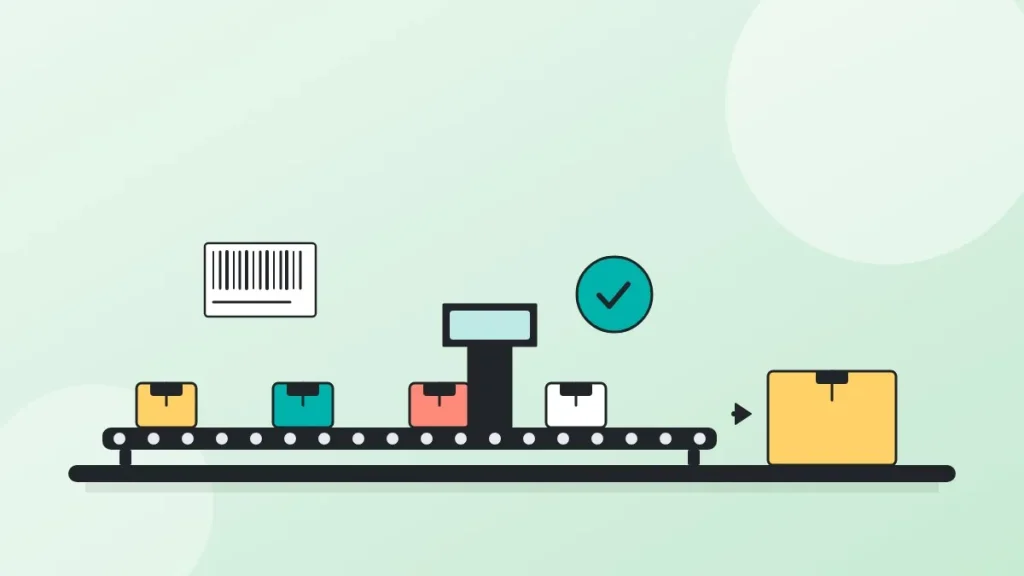
Pickers collect items, usually guided by a scanner. Packers check the contents against the order, choose the right package, add inserts and seal it. A scan at the packing station catches wrong items before they leave. See the pick and pack process for the detail.
4. Shipping, delivery and tracking
The system selects the carrier and service, prints the label and records the weight. The carrier collects parcels at a set time each day, so the order cut-off decides whether an order leaves today or tomorrow. Tracking updates flow back to your store and to the customer.
5. Returns and post-purchase support
Returns are received, inspected and either restocked, repaired or disposed of. The faster this happens, the more stock you can resell. See reverse logistics in ecommerce.
An example: one order, start to finish
| Time | Event |
|---|---|
| 10:02 | Customer orders two items. The order reaches the warehouse system within minutes. |
| 10:05 | The system checks the address, reserves both items and creates a pick task. |
| 11:20 | A picker scans both locations and both items, and brings them to packing. |
| 11:35 | The packer scans the items again, picks the box, adds the insert and prints the label. |
| 14:00 | The carrier collects the day’s parcels. Tracking is sent to the customer. |
| Day 3 | Delivered. If the customer returns it, the cycle runs in reverse. |
The times are an example, not a promise. What matters is that each step has an owner and a target, so a delay can be traced to one place.
Technology behind the process
- Warehouse management system (WMS): locations, stock counts, pick tasks and scanning.
- Order management: collects orders from all channels, applies rules, routes to a warehouse.
- Shipping software: compares carriers, prints labels, validates addresses.
- Integrations: keep stock and tracking in sync with your store. See Integrations.
Order fulfillment vs. order processing vs. shipping
| Term | Scope |
|---|---|
| Order processing | Handling the order record: verification, stock allocation, label creation |
| Shipping | Moving the parcel with a carrier |
| Order fulfillment | The whole chain, including storage, picking, packing, shipping and returns |
The detail of the processing step is in ecommerce order processing.
Fulfillment models compared
| In-house | 3PL | Dropshipping | |
|---|---|---|---|
| Who stores the stock | You | The 3PL | The supplier |
| Control over packing | Full | Agreed rules | Limited |
| Cost structure | Rent, labor, equipment | Per order, storage, extras | Per order, supplier margin |
| Scales with volume | Needs space and staff | Yes | Yes, but quality varies |
| Best for | Low volume, special handling | Growing brands, many channels | Testing products |
Common problems and fixes
| Problem | Typical cause | Fix |
|---|---|---|
| Wrong item shipped | Similar SKUs, no scan check | Scan validation at pick and pack |
| Oversold stock | Slow inventory sync across channels | One inventory source, frequent updates |
| Late shipments | Missed cut-off, backlog at packing | Earlier cut-off, batch picking, staffing for peaks |
| High shipping cost | Oversized packaging, wrong service | Right-size boxes, rate shopping |
| Slow returns | No inspection standard | Written grades and a restock target |
Peak season planning
Peaks break weak processes first. Send stock early, agree peak capacity and surcharges before the season, and set a realistic cut-off for holiday delivery promises. Check that returns capacity is ready for January.
How to improve the process
- Time each step for a sample of orders. Find the slowest one.
- Check accuracy by step: receiving counts, pick errors, pack errors.
- Fix the biggest cause first, usually inventory accuracy or picking method.
- Add automation only where a manual step is a proven bottleneck: scanning, rate shopping, label printing.
- Review monthly and keep the same metrics so changes are visible.
If steps keep failing at volume, consider a 3PL. Fulfillment costs and choosing a provider help you compare options. Our How does it Works page shows the way we run it.
Frequently asked questions
What is the first step in the order fulfillment process?
Receiving inventory. Without accurate stock in known locations, no later step works reliably.
What is the difference between order fulfillment and shipping?
Shipping is one step. Fulfillment includes receiving, storage, picking, packing, shipping and returns.
How can a business improve the process?
Measure each step, fix inventory accuracy and picking first, then add scanning and automation where they remove a real bottleneck.
When should a business outsource fulfillment?
When growth, channels or peaks make in-house fulfillment slower or more expensive than a full 3PL quote, or when it takes time you need elsewhere.
Anton Kashirin
Anton founded EcomAutomation, the company behind EcomAutoPrep. He works with Amazon FBA sellers and DTC brands on receiving, prep, kitting and shipping, and reviews the guides on this blog against how orders move through the warehouse.