

Most BigCommerce 3PL problems start in the handoff to the warehouse. We set up status mapping and inventory sync first, then pick, pack and ship from Coral Springs, Florida.

A BigCommerce third-party logistics company only earns its fee if orders leave the platform and reach the warehouse in a state the warehouse can act on: correct SKU, correct variant, correct address, correct status. Most fulfillment problems on BigCommerce start before a box is picked. They start in the handoff.

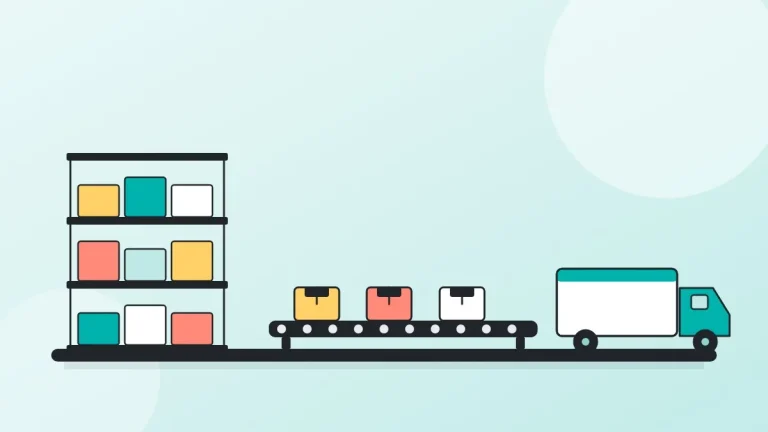
This page covers how that handoff should work: order status mapping, variant and bundle inventory sync, connection methods, the physical warehouse process behind each shipment, a pre-launch checklist and the metrics worth tracking once you are live.
Not every BigCommerce status should reach the warehouse floor. Orders in manual review, partial payment or fraud hold must stay out of the pick queue until BigCommerce clears them, or the warehouse ships orders that get reversed.
Cancellations and address edits after an order enters the feed are the most common source of mis-ships. Mapping needs a cutoff: before pick-start, a change cancels or reroutes the order. After pick-start, it needs a defined exception path instead of a silent failure.
When a status callback to BigCommerce fails (a timeout, a malformed payload, a temporary API outage), the order should not sit unresolved. A retry queue with alerting catches it before the customer notices a missing tracking number.
Size, color and pack-size variants need a clean 1:1 mapping to a physical warehouse SKU and barcode. Loose variant mapping is one of the most common causes of inventory drift on multi-variant catalogs.
A bundle sold as one BigCommerce SKU still consumes several physical components. Sync has to decrement each component, not just the bundle SKU, or counts on the individual items go stale.
"Available to sell" on BigCommerce should equal on-hand minus reserved minus safety stock, not raw warehouse quantity. Without this, a store oversells the last units of anything with replenishment lead time.
BigCommerce can connect to a 3PL through a native app, a direct API build or middleware. Native apps are fastest to launch. Direct API gives more control over edge cases. Middleware suits sellers already running several sales channels through one hub. See our integration options for the supported paths.
Real-time sync matters most for inventory and order release. Near-real-time is often fine for tracking updates. Whatever the frequency, failed syncs need alerts and automatic retries, not a manual check the next morning.

Brands running more than one BigCommerce storefront, or BigCommerce next to Amazon or Walmart, need inventory sync that treats all channels as draws against one shared pool, not separate silos that each think they own the full quantity.
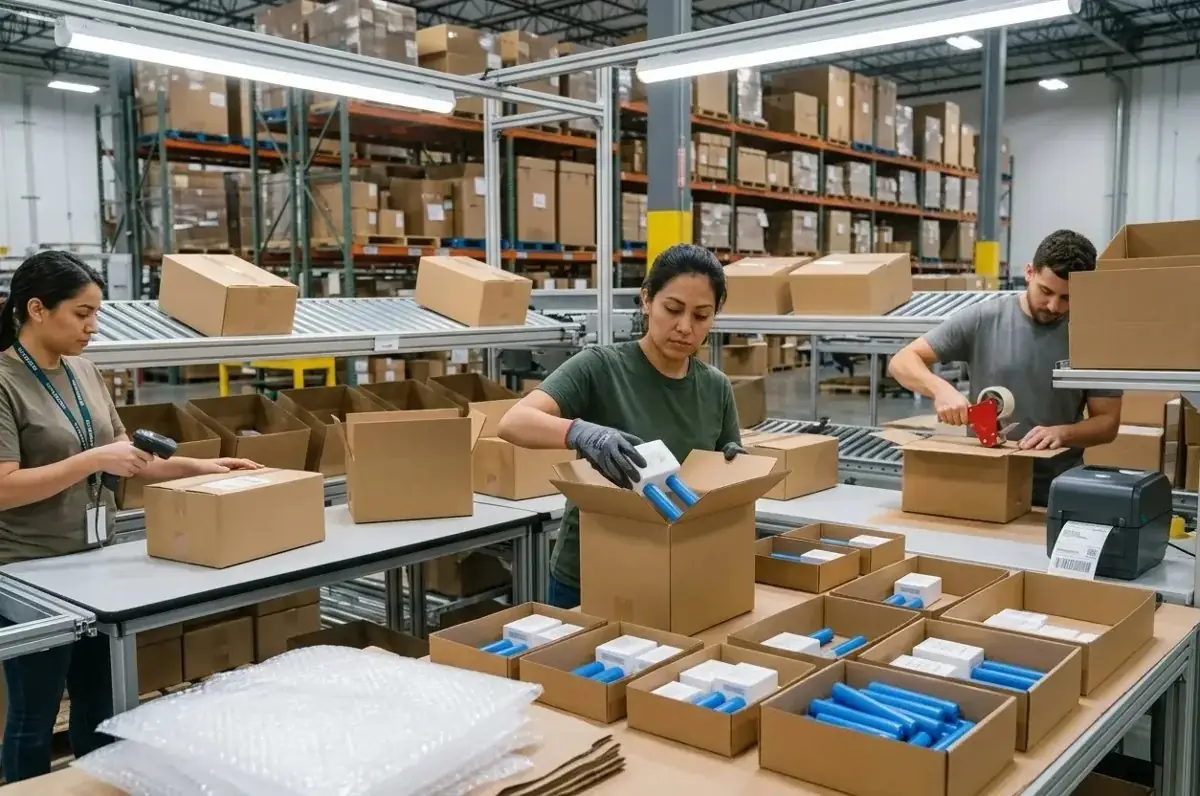
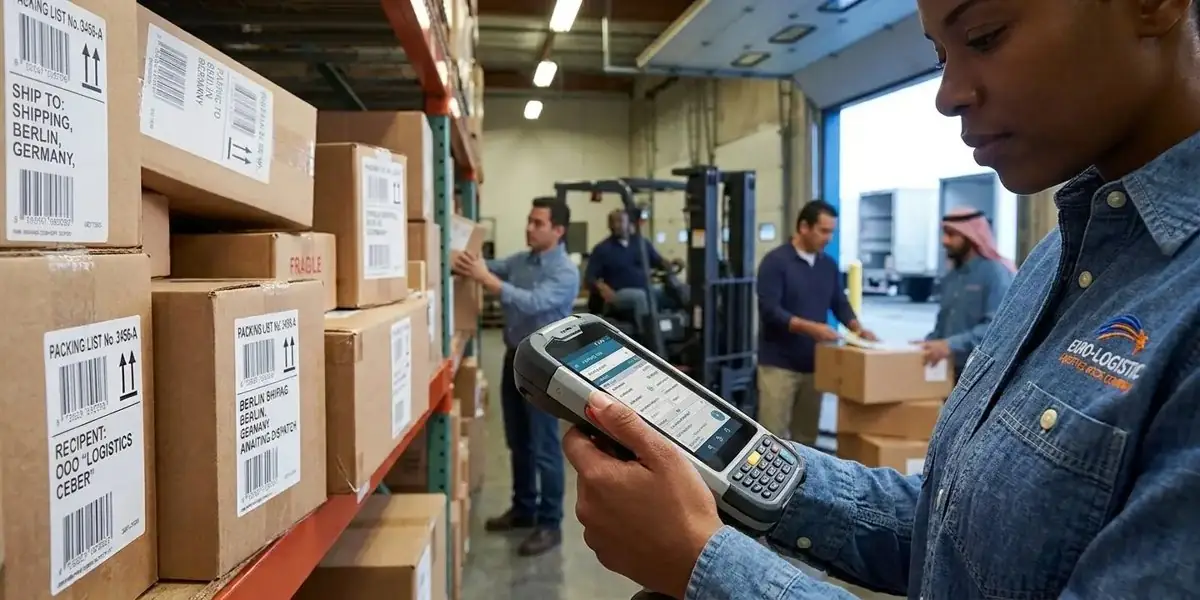
Inbound inventory is counted, checked against expected SKUs and quantities, and put away to a scannable location before it is sellable in the WMS.
Multi-item kits, promotional inserts and branded packaging are assembled to spec as part of the pack process, not bolted on as a separate manual step.
Barcode scans at pick and pack catch wrong-item and wrong-quantity errors before they reach a shipping label, not after a customer complaint.
Carrier choice weighs zone, package weight and service level against cost, with a defined daily cutoff so same-day orders actually ship same day.
Returns are inspected, then restocked, quarantined or disposed of, with the disposition synced back so nothing is silently adjusted.
Confirm every active SKU and variant has a unique identifier and scannable barcode before go-live.

Define which shipping methods map to which carrier services, which statuses trigger a hold, and how split shipments are handled.

Run live test orders through the full cycle (order, cancellation, return, tracking callback) before real customer orders go through.
Confirm agreed service levels in writing: receiving turnaround, same-day shipping cutoff and support response time.
Track how long orders sit before shipping and what percentage ship within the committed window.
Watch the gap between system quantity and physical count, and review why adjustments happen.
Break down average shipping cost by destination zone, and track how often orders hit an exception path.
Measure how quickly returns are processed and what share of restockable units make it back into sellable inventory.
Order growth should not force a new warehouse process each time. The same status mapping and sync logic should hold at 500 orders a month and at 50,000.
One shared pool across BigCommerce and marketplaces keeps counts consistent and prevents oversells on every channel.
They all run from the same warehouse.
One warehouse, many channels.
Our BigCommerce orders ship the day they land. Tracking is always back in the store before the customer asks.
They told us what to fix in our SKU data before launch, and it saved us weeks.
Returns come back as sellable stock in days instead of sitting in a corner.
Short case: store type, volume before, what changed, result. Test text for layout.
Read the full case studyThrough a native integration, a direct API connection or middleware, depending on how much control and channel complexity the brand needs.
Statuses are split into those that release an order to the warehouse and those that hold it, with defined rules for cancellations and address changes made after release.
Yes, provided each variant maps to a distinct SKU and bundles are configured to decrement component-level inventory rather than the bundle SKU alone.
Partial shipments update tracking per shipment segment, and returns sync a disposition status (restocked, damaged or disposed) back to the order record.
No order minimums and no long-term contracts.
By phone, WhatsApp or Telegram. A quote request is answered within one business day.
UPS, FedEx and USPS, with rate shopping per parcel.
Last updated: Oct 29, 2026. Reviewed by the EcomAutoPrep operations team.

Tell us your orders per month, SKU count and sales channels. We reply with a quote and a start plan.