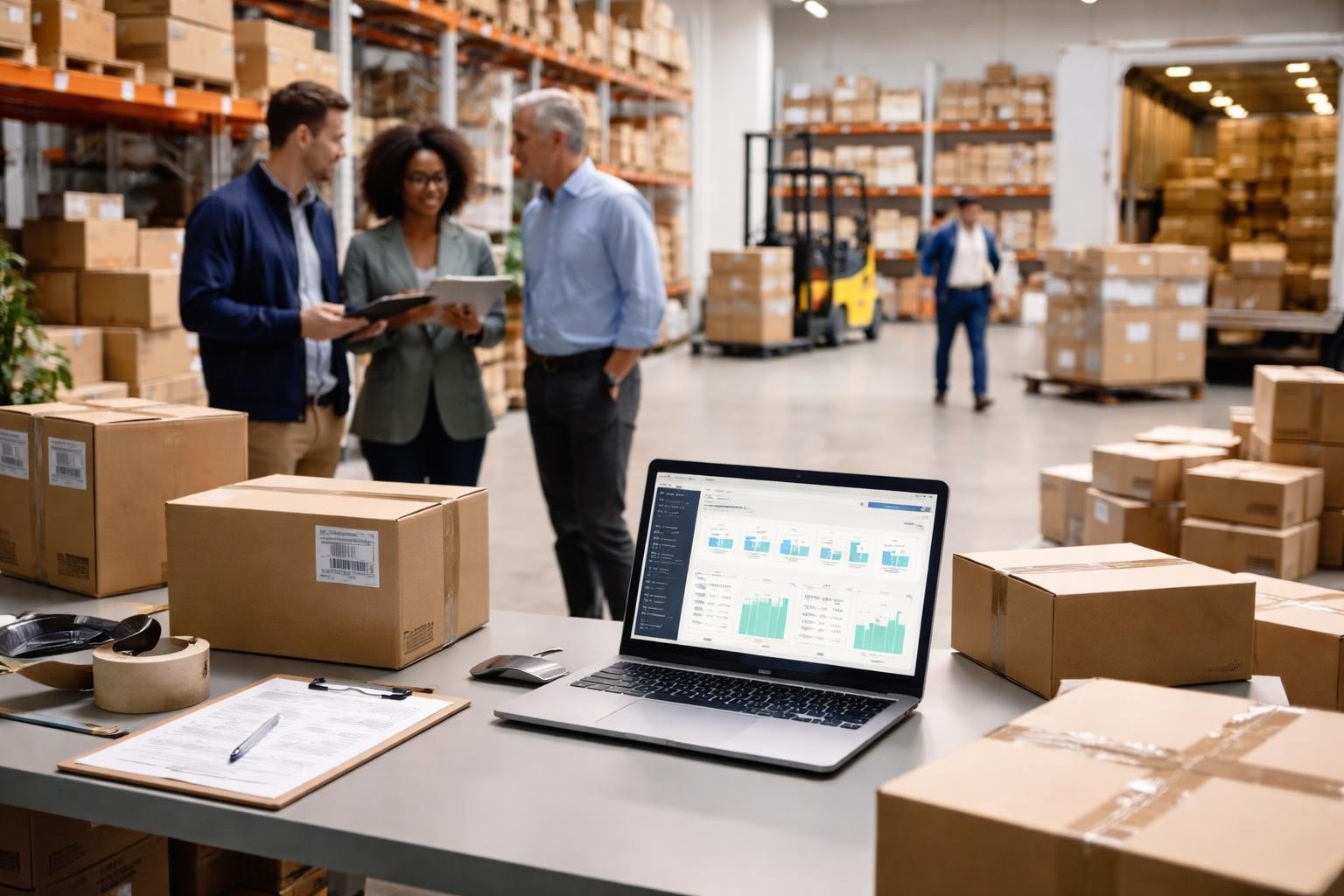

#1 Fulfillment Partner in the Region

Shopify Fulfillment Services

Scaling an online brand requires a seamless bridge between your digital storefront and physical logistics. As daily order volume grows, managing inventory, packing boxes, and coordinating last-mile shipping in-house can quickly consume time needed for marketing and strategy. Partnering with a dedicated fulfillment provider for Shopify provides the infrastructure, technology, and operational accuracy required to automate order fulfillment and maintain fast, reliable delivery for your customers.

A specialized Shopify order fulfillment company connects directly with your storefront to handle receiving, secure storage, picking, packing, shipping, and reverse logistics. With automated order syncing, real-time stock tracking, and discounted carrier rates, professional fulfillment services for Shopify enable growing e-commerce brands to cut operational costs and deliver exceptional customer experiences.

Fulfillment Support for Shopify Stores

Pick, Pack, and Shipping

Deliver custom unboxing experiences using branded packaging, specialized inserts, optimized box selection, and discounted last-mile shipping rates.

Multi-Channel Growth Support

Scale effortlessly beyond your core Shopify store by unifying inventory management across Amazon, Walmart, direct-to-consumer, and B2B channels.

Inventory and Storage Management

Maintain full operational control through dynamic WMS tracking, automated reorder points, real- time stock counts, and scalable SKU allocation.

What Are Shopify Fulfillment Services?

Shopify fulfillment services encompass the entire physical operation required to turn an online order into a delivered parcel. While Shopify excels as a digital storefront, physical commerce depends on rapid warehouse execution, secure inventory storage, precise order handling, and dependable carrier dispatch. Utilizing a dedicated fulfillment provider for Shopify bridges the gap between your digital checkout and your customer's doorstep, ensuring every item arrives accurately, safely, and on schedule. Modern Shopify online fulfillment services integrate directly into your store via API, turning manual shipping efforts into a fully automated, scalable logistics operation.

How Shopify Orders Move From Checkout to Delivery

When a customer completes a purchase, the order workflow follows a continuous digital-to- physical loop:

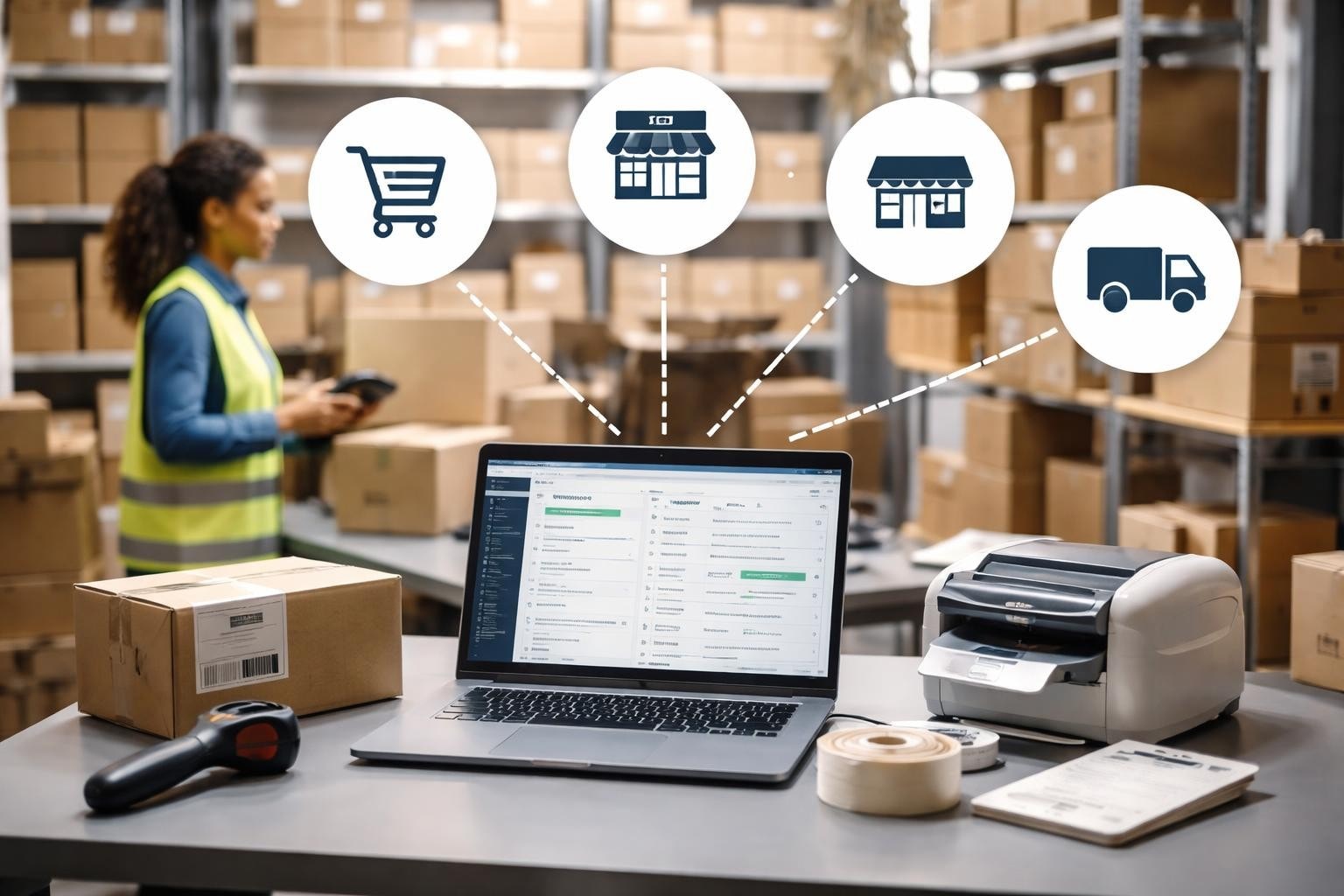
  1. Checkout & Order Syncing: As soon as an order is authorized at checkout, transaction details, customer shipping data, and selected SKUs are pushed via API directly into our Warehouse Management System (WMS).

  2. Inventory Reservation & Allocation: The WMS instantly reserves physical stock from your allocated bin or pallet location, adjusting real-time stock levels on your Shopify store to prevent overselling.

  3. Pick & Pack Execution: Warehouse staff receive optimized digital pick routes. Items are gathered, validated using handheld RF barcode scanning, carefully wrapped, and packed into optimal shipping containers.

  4. Label Generation & Carrier Dispatch: Shipping labels are generated using automated rate- shopping algorithms to find the fastest, most cost-effective carrier route.

  5. Tracking & Status Update: Once scanned by the last-mile carrier, tracking data syncs back to your Shopify admin, sending automated tracking notifications to your customer.

What a 3PL Handles for Shopify Merchants

Partnering with a specialized 3PL (Third-Party Logistics) provider offloads complex operational demands. Comprehensive fulfillment services Shopify merchants depend on cover the full life cycle of inventory:

  • Inbound Freight & Receiving: Offloading containers, inspecting shipment integrity, verifying piece counts against packing slips, and placing inventory into designated storage locations.

  • Storage & SKU Optimization: Organizing products across secure pallet racks, shelf bins, or climate-controlled zones tailored to your product catalog.

  • Custom Kitting & Bundling: Assembling multi-packs, adding promotional inserts, building custom gift boxes, or applying specialized barcoding (FNSKU/UPC).

  • Automated Order Processing: Guaranteeing strict Service Level Agreements (SLAs), such as same-day dispatch for orders placed before daily cutoff times.

  • Carrier Management: Leveraging volume discounts across carriers like USPS, UPS, FedEx, and DHL to lower shipping overhead.
When Shopify Stores Need a Fulfillment Partner

Handling fulfillment in-house works during early growth, but rapid scaling creates operational friction. Transitioning to professional fulfillment services for Shopify helps protect your brand reputation, lower unit costs, and free up valuable executive resources.

Order Volume Is Taking Time Away From Growth

Packing boxes, printing labels, and dropping off packages at local carrier hubs takes hours away from product development, brand strategy, and customer acquisition. If daily operations leave your team with no time for marketing and sales growth, outsourcing to an automated warehouse provider immediately restores focus to high-value revenue drivers.

Inventory Is Hard to Track Across Channels

Selling across multiple storefronts such as Shopify, Amazon, and Walmart without unified software causes inventory discrepancies, stockouts, and canceled orders. Modern Shopify online fulfillment services unify physical inventory in one centralized warehouse, updating stock levels across every channel automatically as items sell.

Shipping and Returns Are Hurting Customer Experience

Modern shoppers expect fast, low-cost delivery along with simple return options. Delayed dispatches, mispacks, damaged items, or complicated return processes lead to negative reviews, chargebacks, and high customer acquisition churn. Outsourcing logistics ensures standardized accuracy, enterprise-grade shipping speed, and professionally managed reverse logistics.

What Shopify Fulfillment Services Include

High-growth e-commerce brands require comprehensive logistics support. End-to-end fulfillment services Shopify encompass every operational touchpoint needed to maintain quality control and fast order turnaround.

Receiving and Inventory Storage

Warehouse efficiency starts during inventory intake. When inbound shipments arrive, receiving teams conduct thorough inspections, record physical counts, check for freight damage, and register stock into our WMS. Inventory is then assigned to designated warehouse locations designed to optimize order retrieval speed.

Pick, Pack, and Shipping

Precision picking uses handheld RF barcode scanners to guarantee item accuracy. Packaging specialists secure items with customized dunnage, select eco-friendly corrugated boxes or custom mailers, and affix carrier labels. Advanced rate-shopping algorithms automatically compare real-time carrier rates across USPS, UPS, and FedEx to secure the fastest, most cost- effective shipping method.

Inventory Reporting and Stock Visibility

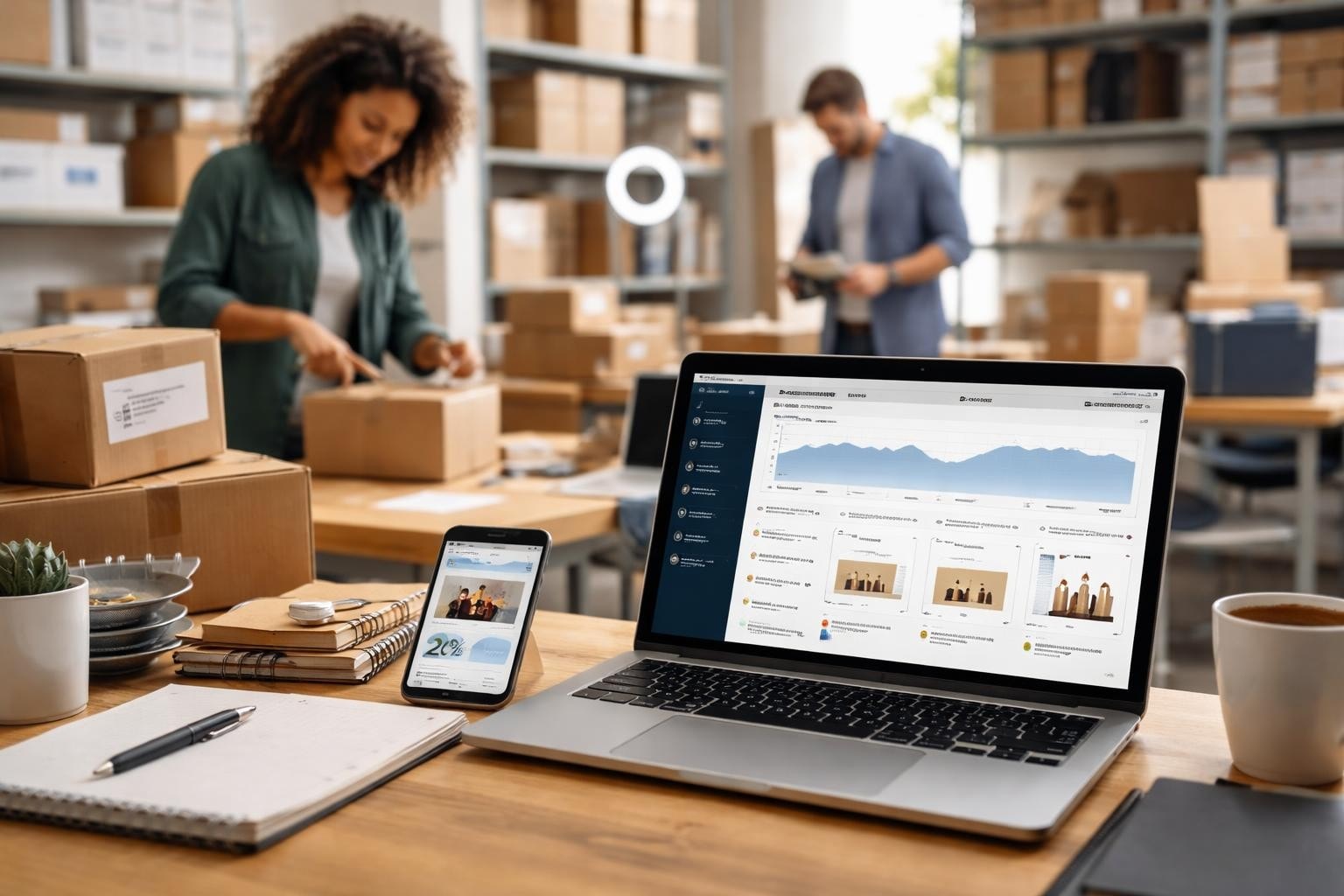
Comprehensive dashboard reporting provides deep visibility into your supply chain performance. Track operational metrics like inventory velocity, order throughput, storage consumption, fast-moving vs. slow-moving SKUs, and reorder point alerts to keep your business running smoothly.

Order Syncing and Fulfillment Workflow

With custom Shopify fulfillment integration services, storefront orders import into the warehouse system instantly without manual file uploads. Rule-based automation routes orders based on priority, packaging preferences, and shipping speeds, ensuring seamless processing from order entry to final staging.

Returns Management

Reverse logistics handles returns efficiently and professionally. Customer returns are received, inspected against strict quality parameters, graded, and processed. Items in pristine condition are re-wrapped and restored to active stock, while damaged goods are quarantined or disposed of according to your business guidelines.

Shopify Fulfillment Integration and Order Flow

Modern e-commerce logistics relies on seamless software connectivity. Professional Shopify fulfillment integration services eliminate manual data entry, reduce fulfillment delays, and maintain data consistency across digital storefronts and physical operations.

Operational Feature
In-House Fulfillment
Integrated 3PL Engine
Order Processing Time
Hours (Manual Import/Export)
Real-time (Instant API Sync)
Pick & Pack Accuracy
~92–95% (Prone to Human Error)
>99.9% (RF Barcode Verification)
Inventory Synchronization
Delayed / Batch Updates
Instant Cross-Channel Sync
Shipping Carrier Options
Single Carrier / Retail Rates
Automated Rate Shopping & Tier 1 Discounts
Scalability
Limited by Space & Headcount
Dynamic Space & On-Demand Labor

Order Syncing From Shopify to the Warehouse

Through direct API connectors, orders automatically sync into the WMS the moment customer checkout is completed. The system imports crucial order attributes, including item variants, custom customer notes, gift wrapping choices, and international customs data, triggering immediate picking workflows without manual intervention.

Inventory Updates and Tracking Information

Synchronized integration creates two-way data sharing. As orders are picked and labeled, the WMS pushes unique tracking numbers and carrier details back to your Shopify dashboard, automatically marking orders as fulfilled. At the same time, real-time inventory adjustments update available online stock to protect against over-purchasing.

Support for Shopify Plus and Multi-Store Setups

Enterprise brands using Shopify Plus or managing multiple international storefronts need scalable operational architecture. Our system supports multi-store integrations, allowing inventory allocation rules to distribute orders across multiple fulfillment hubs, regional nodes, and retail channels from a central management platform.

Shopify Fulfillment vs. In-House Shipping

Deciding whether to build internal warehouse capabilities or partner with an established Shopify order fulfillment company depends on order velocity, available capital, and long-term business focus.

When In-House Fulfillment Works

Managing fulfillment in-house can work well under specific operational conditions:

  1. Micro-Volume Startups: Brands processing fewer than 50 to 100 orders per month where founder packing remains cost-effective.

  2. Bespoke Crafting: Highly specialized products requiring on-demand manufacturing or intricate assembly during packing.

  3. Hyper-Localized Distribution: Merchants serving immediate local markets using internal delivery teams.

When Outsourcing Saves Time and Cost

As your volume increases beyond several hundred orders per month, managing a dedicated warehouse, long-term leases, warehouse labor, specialized software, and packing equipment introduces substantial fixed overhead. Outsourcing turns these fixed overhead costs into a flexible pay-as-you-grow model. Additionally, 3PL partners pass along enterprise-tier carrier discounts, offsetting fulfillment fees through lower overall shipping costs.

Inventory Management for Shopify Stores

Effective logistics management requires active inventory control. Maintaining clear stock visibility helps prevent tying up capital in excess stock while protecting your business against stockouts on high-demand products.

SKU Organization and Stock Control

Every product variant—including size, color, and packaging configuration—is mapped using standardized SKU architectures and unique warehouse bin barcodes. Barcode-driven stock control tracks items as they move from receiving bins to pick locations, maintaining absolute inventory accuracy across all physical storage locations.

Replenishment Planning and Storage Flexibility

Advanced WMS reporting helps streamline inventory replenishment planning. Dynamic safety stock alerts calculate lead times and historical sales velocity, notifying you when it is time to reorder stock. Flexible storage options let you scale up pallet capacity during peak Q4 sales rushes and scale down during quieter periods without long-term space commitments.

Returns Management for Shopify Orders

A streamlined returns process protects revenue and builds long-term customer trust. High- performing reverse logistics workflows minimize returned item losses while giving customers a fast, effortless resolution.

Return Inspection and Restocking

Returned items are delivered directly to specialized reverse logistics stations. Processing teams unpack returns, inspect for wear or damage, check tags, and assess functionality according to customized merchant criteria. Items cleared for resale are repackaged and restocked into active inventory to minimize supply chain disruption.

Customer Experience and Refund Workflow Support

Fast return processing speeds up customer communication and refund authorizations. Our inventory management software interfaces directly with your returns platform (such as Loop, Happy Returns, or native Shopify Returns) to update order statuses automatically, release refunds, or dispatch exchange items without delay.

How Ecom Auto Prep Supports Shopify Fulfillment

Ecom Auto Prep delivers scalable, modern, technology-driven logistics built to support fast- growing e-commerce businesses. As an experienced fulfillment provider for Shopify, our operations combine enterprise warehouse management software with reliable fulfillment execution to help turn your logistics into a competitive advantage.

Flexible 3PL Support for Growing Ecommerce Brands

We adapt our fulfillment services Shopify store owners rely on to match your brand's unique growth profile. Whether you process 300 orders a month or scale up to tens of thousands during major sales events, our infrastructure expands dynamically alongside your order volume, giving you access to institutional-grade logistics facilities without heavy upfront investments.

Marketplace and Direct-to-Consumer Fulfillment Experience

Modern e-commerce brands often expand beyond a single sales channel. In addition to handling direct-to-consumer (D2C) Shopify orders, Ecom Auto Prep manages prep, labeling, bundling, and logistics for Amazon FBA, Walmart Fulfillment Services, TikTok Shop, and eBay. Leveraging robust Shopify fulfillment integration services, we help you keep all your channel inventory organized under one roof.

Storage, Packing, Shipping, and Returns Under One Process

By consolidating inventory intake, storage, pick and pack workflows, carrier dispatch, and return management within a unified fulfillment system, Ecom Auto Prep removes operational complexity. Our integrated setup helps maintain high shipping accuracy, protect margins, and ensure high-quality delivery experiences for your customers.

Who This Service Is Best For

Our specialized fulfillment solutions are engineered for scalable digital brands looking to replace operational headaches with streamlined execution.

Shopify Brands Growing Beyond Manual Fulfillment

Emerging brands reaching consistent monthly order volume often find self-fulfillment unsustainable. Moving ops to a dedicated warehouse helps eliminate shipping backlogs, reduce human packaging errors, and free up core leadership team time to focus on scaling the business.

Shopify Brands Growing Beyond Manual Fulfillment
Stores Selling Through Shopify and Marketplaces

Stores Selling Through Shopify and Marketplaces

Omnichannel merchants require unified inventory management. Our integrated systems allow brands selling across Shopify, Amazon, Walmart, and retail stockists to manage a single shared inventory pool, reducing carrying costs and avoiding split-stock stockouts.

Ecommerce Teams That Need U.S. Fulfillment Support

International brands expanding into the U.S. market, as well as domestic teams looking for centralized shipping hubs, rely on our domestic facilities to cut last-mile shipping times and costs, ensuring fast nationwide delivery for their end consumers.

Ecommerce Teams That Need U.S. Fulfillment Support

Frequently Asked Questions

Shopify fulfillment refers to the end-to-end operational process of managing, picking, packing, and shipping customer orders placed through a Shopify storefront. It includes inventory receiving, warehouse storage, order synchronization via software integrations, package preparation, last-mile shipping, and reverse logistics.

Yes. A Third-Party Logistics (3PL) provider connects to your Shopify storefront using automatic API software integration. When an order is placed on your online store, it automatically syncs to the 3PL's Warehouse Management System (WMS), where warehouse staff pick, pack, and ship the package before sending real-time tracking data back to your storefront.

Yes. Professional fulfillment services integrate active inventory management solutions. This includes real-time inventory visibility across channels, automated SKU counts, safety stock threshold alerts, barcode tracking, receiving inspection, and detailed reporting on inventory turnover and product velocity.

Yes. Comprehensive fulfillment services manage reverse logistics workflows alongside outgoing shipments. Returned parcels are received, inspected against customer quality standards, graded for condition, and either refurbished and restocked into sellable stock or directed for quarantine, liquidation, or disposal.

A Shopify store should consider outsourcing fulfillment when packing and shipping orders takes operational time away from marketing, product development, and business development. Common growth thresholds include reaching 200–500 monthly orders, experiencing high inventory mispack rates, running out of storage space, or struggling to meet fast customer delivery expectations.