

The rapid evolution of online retail has transformed how businesses manage their order fulfillment operations. Modern ecommerce fulfillment services have become essential infrastructure for brands looking to meet rising customer expectations while maintaining operational efficiency. Whether you’re launching a new direct-to-consumer brand or scaling an established marketplace presence, understanding the fulfillment landscape is critical to sustainable growth. This comprehensive guide explores how fulfillment services work, their benefits, and strategies for selecting the right partner to support your business objectives.
Understanding Ecommerce Fulfillment Services
Ecommerce fulfillment services encompass the complete process of storing inventory, processing orders, picking and packing products, and shipping them to customers. These services have evolved significantly beyond simple warehousing to include sophisticated inventory management systems, multi-channel integration, and value-added services like kitting and custom packaging.
The Core Components of Fulfillment Operations
Professional fulfillment providers manage several interconnected processes that form the backbone of successful ecommerce operations:
- Inventory receiving and storage with real-time tracking systems
- Order processing integrated with your sales channels
- Pick and pack operations optimized for accuracy and speed
- Shipping carrier management with negotiated rates
- Returns processing and inventory restocking
- Quality control at multiple checkpoints
According to comprehensive industry statistics, the global fulfillment market continues to experience double-digit growth as more businesses recognize the competitive advantage of professional fulfillment operations. The complexity of managing multiple sales channels simultaneously has made outsourcing increasingly attractive for growing brands.

Key Service Models in Modern Fulfillment
Different businesses require different fulfillment approaches based on their product types, order volumes, and growth trajectories. The primary service models include:
Third-Party Logistics (3PL) providers offer comprehensive fulfillment solutions for brands selling through their own websites or multiple marketplaces. These partners handle warehousing, labor, and shipping logistics while providing technology integration with your selling platforms.
Amazon FBA Preparation services specialize in ensuring products meet Amazon’s strict requirements before entering their fulfillment network. This includes labeling, packaging, and compliance verification that prevents costly rejections.
Direct-to-Consumer (DTC) Fulfillment focuses on creating branded unboxing experiences with custom packaging, inserts, and personalized touches that build customer loyalty. Understanding fulfillment for ecommerce requires recognizing these distinct service categories.
Strategic Benefits of Outsourcing Fulfillment
Partnering with professional ecommerce fulfillment services delivers measurable advantages across multiple business dimensions. The decision to outsource represents a strategic investment in scalability and customer satisfaction.
Cost Optimization Through Shared Resources
Fulfillment providers leverage economies of scale that individual businesses cannot replicate. By consolidating shipments from multiple clients, they negotiate substantially better carrier rates. Additionally, shared warehouse space, equipment, and labor pools reduce per-unit fulfillment costs compared to maintaining private infrastructure.
| Cost Factor | In-House Fulfillment | Outsourced Fulfillment |
|---|---|---|
| Warehouse Lease | Fixed overhead regardless of volume | Variable based on actual storage used |
| Labor | Full-time salaries + benefits | Pay only for orders processed |
| Technology | Capital investment in WMS | Included in service fees |
| Shipping Rates | Retail or small business rates | Enterprise-level negotiated rates |
| Scalability | Requires advance planning and investment | Immediate capacity adjustments |
The ability to reduce shipping costs through carrier rate optimization alone can justify outsourcing for many businesses.
Operational Flexibility and Scalability
Seasonal fluctuations and unexpected growth spurts challenge in-house operations. Professional fulfillment services provide the flexibility to scale up during peak periods without the burden of maintaining excess capacity year-round. This elastic infrastructure supports business growth without operational bottlenecks.
Recent trends in ecommerce fulfillment highlight how automation and advanced warehouse management systems enable providers to handle volume spikes efficiently while maintaining accuracy rates above 99.5%.
Selecting the Right Fulfillment Partner
Choosing ecommerce fulfillment services requires careful evaluation of capabilities, costs, and cultural alignment. The right partner becomes an extension of your brand, directly impacting customer satisfaction and retention.
Critical Evaluation Criteria
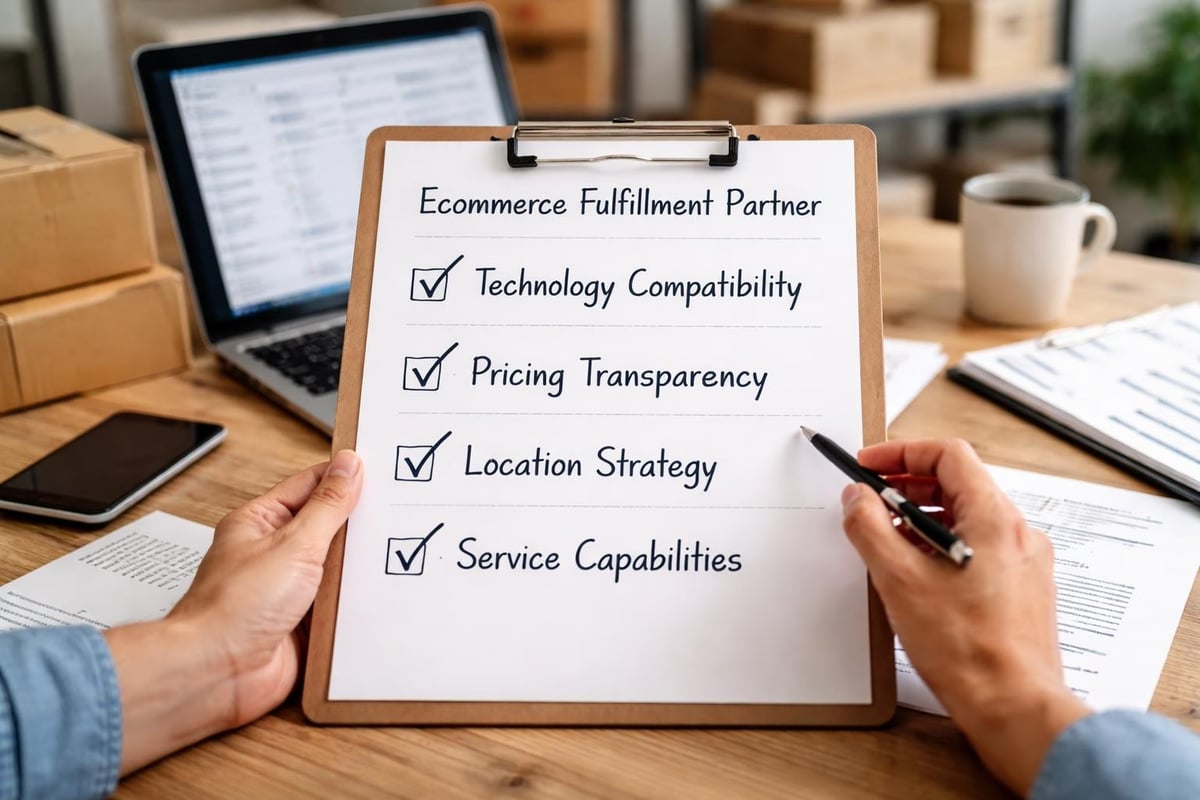
When assessing potential fulfillment partners, prioritize these essential factors:
- Technology integration capabilities with your existing ecommerce platform
- Geographic warehouse locations relative to your customer base
- Specialty services like kitting, bundling, or subscription box assembly
- Transparent pricing structures without hidden fees
- Track record with businesses similar to yours in size and industry
- Customer service responsiveness and problem resolution processes
For specialized industries, niche expertise matters significantly. Brands in specific verticals should seek providers experienced with their product types, as seen with fashion ecommerce fulfillment where handling delicate materials and maintaining presentation standards requires specialized knowledge.
Understanding Pricing Models
Fulfillment pricing typically combines multiple components that vary based on your specific requirements:
- Storage fees calculated per pallet or cubic foot monthly
- Receiving fees for processing incoming inventory shipments
- Pick and pack fees per order, often tiered by item count
- Shipping costs passed through at provider’s negotiated rates
- Value-added service fees for kitting, bundling, or custom packaging
- Technology fees for WMS access and integrations
Transparent ecommerce fulfillment pricing structures enable accurate financial modeling and prevent surprise charges that erode margins. Request detailed quotes with itemized costs for realistic scenarios based on your order profiles.
Advanced Fulfillment Strategies for Growth
Beyond basic order processing, strategic use of ecommerce fulfillment services can create competitive advantages and enhance customer lifetime value.
Value-Added Services That Differentiate Your Brand
Modern fulfillment providers offer services that transform basic logistics into brand-building opportunities:
Kitting and Bundling allow you to create product sets, promotional bundles, or curated collections without maintaining finished goods inventory. This flexibility supports marketing campaigns and seasonal promotions while minimizing inventory risk.
Custom Packaging and branded inserts turn every delivery into a marketing touchpoint. Incorporating branded shipping elements creates memorable unboxing experiences that encourage social sharing and repeat purchases.
Subscription Box Assembly requires specialized capabilities to manage recurring shipments with variable contents. Providers experienced in subscription box fulfillment understand the unique requirements of membership-based business models.
Multi-Channel Distribution Excellence
Successful brands in 2026 sell across multiple platforms simultaneously, creating complex fulfillment requirements. Professional ecommerce fulfillment services synchronize inventory across channels to prevent overselling while optimizing stock allocation based on velocity and margin by channel.
Strategies for ecommerce fulfillment success emphasize the importance of unified inventory visibility and centralized fulfillment operations that support omnichannel selling without operational complexity.
For businesses operating on Amazon alongside their own websites, understanding the differences in Amazon FBA prep versus 3PL fulfillment helps optimize channel strategies while maintaining consistent customer experiences.
Technology Integration and Data Visibility
The technological sophistication of ecommerce fulfillment services has become as important as their physical infrastructure. Real-time data access and seamless system integration enable informed decision-making and operational transparency.
Essential Technology Capabilities
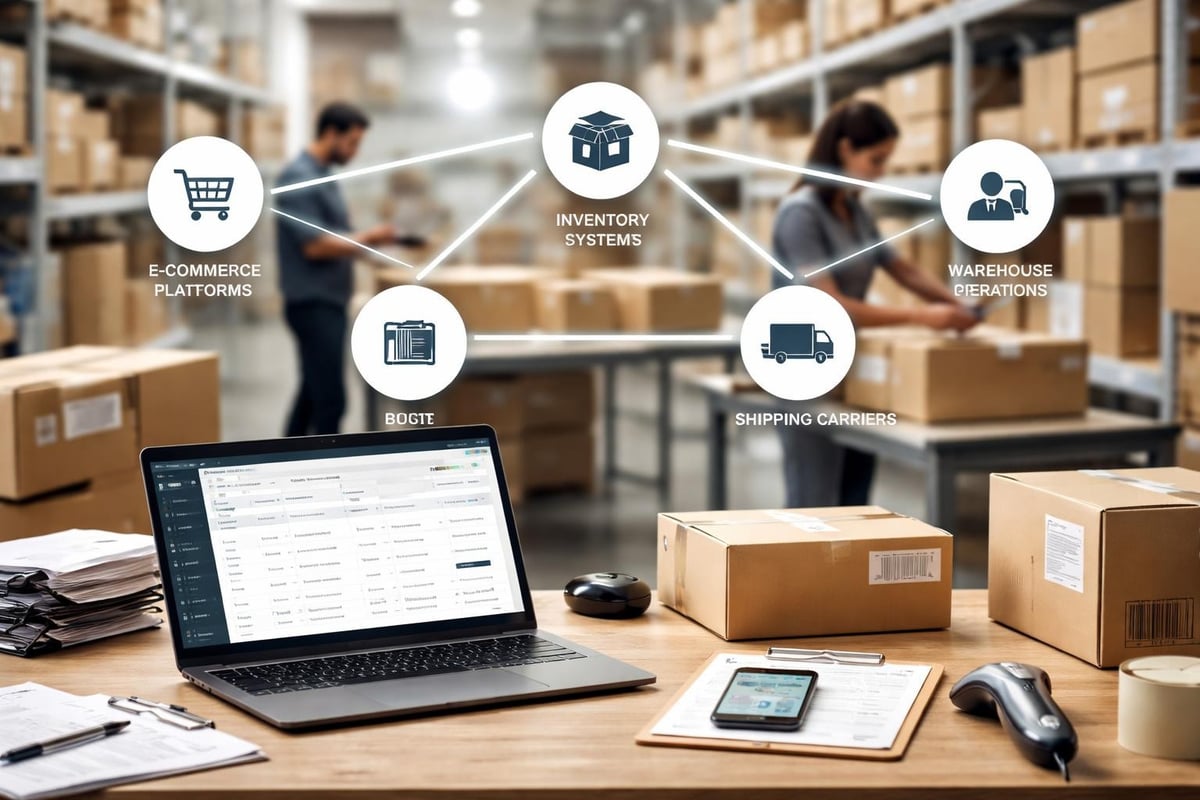
Leading fulfillment providers invest heavily in warehouse management systems (WMS) that offer:
- Real-time inventory tracking across all SKUs and locations
- Automated order routing to optimize fulfillment speed and cost
- Integration APIs for major ecommerce platforms and marketplaces
- Customer portal access for order status and inventory levels
- Analytics dashboards showing performance metrics and trends
- Mobile applications for on-the-go inventory and order management
These technological capabilities transform fulfillment from a black box into a transparent, controllable component of your business operations. The ability to monitor inventory levels, track shipments, and analyze fulfillment performance in real-time supports proactive management rather than reactive problem-solving.
Performance Metrics That Matter
Professional fulfillment partnerships should provide regular reporting on key performance indicators:
| Metric | Target Range | Business Impact |
|---|---|---|
| Order Accuracy | 99.5%+ | Customer satisfaction and return rates |
| Same-Day Shipping | 95%+ for orders before cutoff | Delivery speed expectations |
| Inventory Accuracy | 99%+ | Prevents overselling and stockouts |
| Average Pick Time | 2-5 minutes per order | Directly affects labor costs |
| Damage Rate | <0.5% | Product loss and customer experience |
Monitoring these metrics allows you to hold your fulfillment partner accountable while identifying improvement opportunities collaboratively.
Industry-Specific Fulfillment Considerations
Different product categories and business models require specialized fulfillment approaches. Understanding these nuances helps align service capabilities with your specific requirements.
Specialized Requirements by Vertical
Food and Beverage products often require temperature-controlled storage and expedited shipping to maintain freshness. Compliance with FDA regulations and proper handling certifications become essential evaluation criteria.
Beauty and Cosmetics demand careful handling to prevent damage to packaging and products. Lot tracking for expiration dates and batch recalls adds complexity to inventory management.
Electronics require anti-static environments, specialized packaging materials, and insurance considerations due to high product values. Serial number tracking supports warranty management and theft prevention.
For businesses in sectors like cycling equipment, working with specialized retailers like Cycling Gears Hub demonstrates how niche markets benefit from expertise in handling specific product types with appropriate care and knowledge. Similarly, when considering exit strategies or business growth through acquisitions, platforms like Aligned IQ provide valuable resources for understanding the strategic value that efficient fulfillment operations add to business valuations in the ecommerce sector.
Compliance and Regulatory Considerations
Ecommerce fulfillment services must navigate increasingly complex regulatory environments. Providers should demonstrate knowledge of:
- International shipping regulations and customs documentation
- Hazardous materials handling for products with shipping restrictions
- Data privacy compliance protecting customer information
- Tax nexus implications of warehouse locations across states
- Industry-specific certifications relevant to your product category
Market analysis of ecommerce fulfillment services shows regulatory compliance capabilities becoming increasingly important differentiators among providers as cross-border commerce expands.
Returns Management and Reverse Logistics
Efficient returns processing significantly impacts customer satisfaction and operational costs. Professional ecommerce fulfillment services should offer comprehensive reverse logistics capabilities that turn a cost center into a retention opportunity.
Strategic Returns Processing
Effective returns management includes:
- Customer-friendly return portals that generate shipping labels and track returns
- Quality inspection protocols to determine restocking eligibility
- Rapid processing timelines to return inventory to available stock quickly
- Disposition management for damaged or unsellable items
- Data analytics identifying return patterns and quality issues
The cost of returns extends beyond shipping expenses to include labor, damaged inventory, and lost sales opportunities. Providers who minimize these costs while maintaining positive customer experiences deliver substantial value.
Subscription Business Considerations
For subscription-based businesses, fulfillment complexity increases with recurring shipments, membership management, and variable box contents. Specialized subscription fulfillment services understand the unique requirements of managing member databases, processing upgrades and downgrades, and coordinating scheduled shipments with production timelines.
Future Trends Shaping Fulfillment Services
The ecommerce fulfillment landscape continues evolving rapidly as technology advances and customer expectations increase. Understanding emerging trends helps businesses future-proof their fulfillment strategies.
Automation and Robotics Integration
Warehouse automation accelerates order processing while reducing labor costs and error rates. Leading fulfillment providers invest in:
- Automated storage and retrieval systems maximizing vertical space utilization
- Robotic picking systems handling high-velocity SKUs
- Conveyor networks optimizing product flow through facilities
- Automated packing stations right-sizing boxes and minimizing dimensional weight charges
While full automation remains capital-intensive, hybrid approaches combining automation for repetitive tasks with human workers for complex operations deliver optimal results for most ecommerce operations.
Sustainability and Environmental Responsibility
Consumer preferences increasingly favor brands demonstrating environmental stewardship. Fulfillment providers respond by offering:
- Sustainable packaging options using recycled and biodegradable materials
- Carbon-neutral shipping programs through offset purchases
- Energy-efficient facilities with solar power and LED lighting
- Route optimization reducing transportation emissions
These capabilities allow brands to align fulfillment operations with corporate sustainability commitments while meeting customer expectations for responsible business practices.
Micro-Fulfillment and Distributed Networks
Traditional centralized warehouse models give way to distributed fulfillment networks positioning inventory closer to population centers. This geographic diversification reduces shipping times and costs while providing disaster recovery redundancy. Urban micro-fulfillment centers enable same-day delivery in major markets, meeting the rising expectations set by major retailers.
According to best practices for managing ecommerce fulfillment, small businesses can access distributed fulfillment networks through partnerships with providers operating multiple facilities, gaining enterprise-level capabilities without corresponding capital investment.
Selecting and partnering with professional ecommerce fulfillment services represents a strategic decision that impacts customer satisfaction, operational efficiency, and scalability potential. By evaluating providers based on technology capabilities, specialty services, pricing transparency, and cultural alignment, growing brands position themselves for sustainable success in an increasingly competitive marketplace. Ecom Automation Prep delivers comprehensive fulfillment solutions including Amazon FBA prep, direct-to-consumer operations, and value-added services like kitting and bundling, making fulfillment effortless for fast-growing ecommerce brands ready to scale their operations efficiently.



[…] the facility. Whether you're selling through Amazon FBA, direct-to-consumer channels, or both, e-commerce fulfillment services provide the infrastructure needed to compete with major retailers without the capital investment of […]
[…] importance of technology integration cannot be overstated. Brands managing e-commerce fulfillment services across multiple channels need unified data to make informed decisions about inventory allocation, […]
[…] ecommerce fulfillment services provide expertise across all preparation requirements, handling everything from initial inspection […]
[…] ecommerce fulfillment services should include transition support, helping brands move inventory and configure systems […]
[…] sellers find that comprehensive e-commerce fulfillment services can help optimize prep costs and reduce overall expenses through efficient processing and strategic […]
[…] E-commerce fulfillment services that incorporate quality control automation demonstrate error rates below 0.5%, compared to 2-3% for manual operations. This accuracy improvement directly impacts customer satisfaction and reduces costly returns and replacements that erode profitability. […]