

The e-commerce landscape in 2026 continues to evolve rapidly, with sellers facing mounting pressure to deliver products faster and more efficiently than ever before. An amazon fulfillment company provides the infrastructure, expertise, and technology that modern online businesses need to compete in this demanding marketplace. Whether you’re selling automotive accessories through platforms like Iverol LLC or specialized products such as wellness items from RecoSauna, understanding how fulfillment partnerships work can transform your operational efficiency and customer satisfaction rates.
Understanding Amazon Fulfillment Company Operations
An amazon fulfillment company specializes in handling the complete order fulfillment process for sellers who leverage Amazon’s platform or similar e-commerce channels. These companies bridge the gap between manufacturers and customers by managing inventory storage, order processing, packaging, and shipping logistics.
The core function of these service providers extends far beyond simple warehousing. They ensure products meet Amazon’s strict requirements, prepare items according to platform-specific standards, and coordinate seamless delivery to fulfillment centers or directly to consumers.
Key Services Provided
Amazon fulfillment companies typically offer a comprehensive suite of services designed to streamline operations:
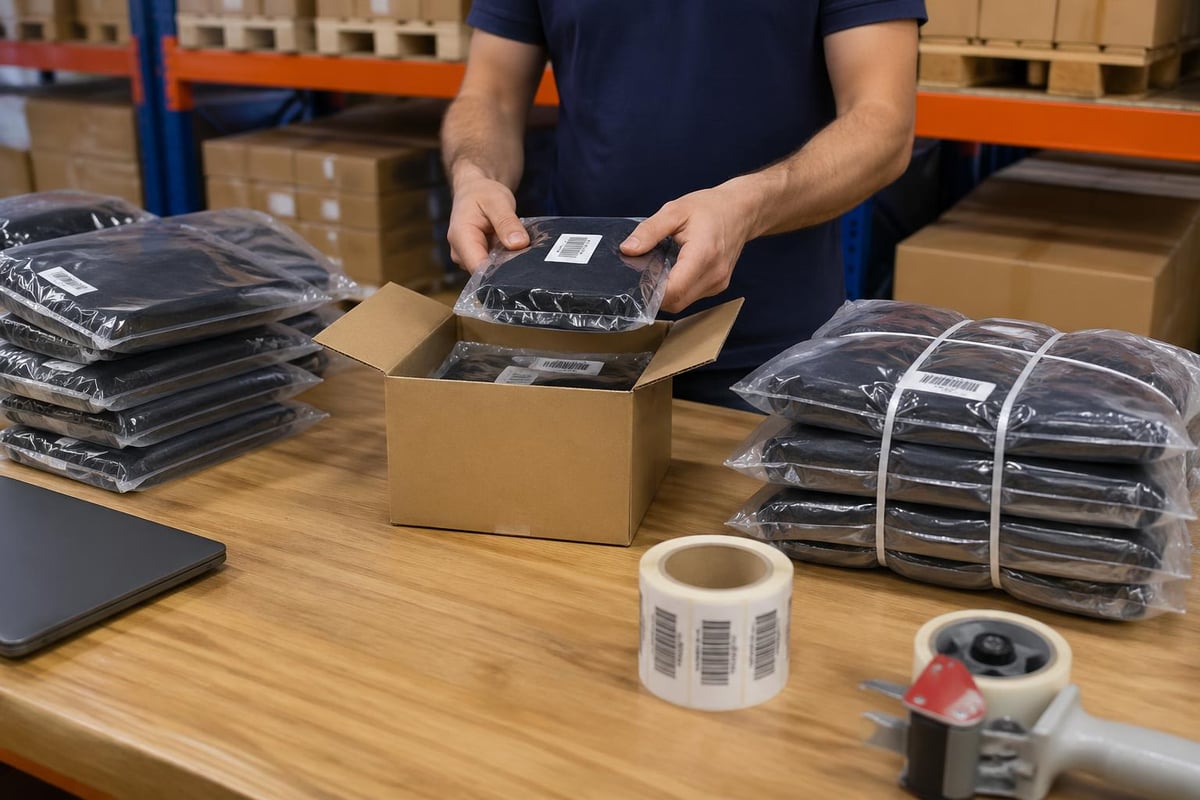
- FBA preparation and labeling that ensures compliance with Amazon’s specific requirements
- Inventory receiving and inspection to verify product quality and quantity
- Storage management with climate-controlled facilities and security systems
- Kitting and bundling for multi-item product offerings
- Returns processing to handle customer returns efficiently
- Direct-to-consumer shipping for multi-channel selling strategies
Many sellers discover that partnering with specialized fulfillment providers dramatically reduces the time spent on logistics while improving order accuracy rates. Professional services handle the technical aspects of preparation, allowing brand owners to focus on product development and marketing initiatives.
The Technology Behind Modern Fulfillment
Amazon’s own network utilizes sophisticated automation systems, and quality third-party fulfillment companies have adopted similar technologies. The integration of robotics and automation has revolutionized warehouse operations across the industry.
Modern amazon fulfillment company facilities employ warehouse management systems (WMS) that track inventory in real-time, automate reordering processes, and optimize storage layouts for maximum efficiency. These systems integrate directly with Amazon’s seller platforms, providing seamless data flow and reducing manual entry errors.
| Technology Component | Function | Business Impact |
|---|---|---|
| Barcode Scanning | Inventory tracking and order verification | 99.9% accuracy rates |
| WMS Integration | Real-time stock updates across platforms | Reduced stockouts by 65% |
| Automated Labeling | FBA-compliant label application | 80% faster prep times |
| Climate Control | Product quality preservation | Minimal damage claims |
Choosing the Right Amazon Fulfillment Company Partner
Selecting an appropriate fulfillment partner requires careful evaluation of multiple factors that directly impact your business performance. The wrong choice can lead to inventory delays, compliance violations, and dissatisfied customers.
Location and network coverage significantly affect shipping times and costs. Companies with facilities near major Amazon fulfillment centers provide faster transfer times and lower transportation expenses. Geographic proximity also matters for direct-to-consumer shipments, where regional distribution centers enable two-day delivery to major markets.
Evaluating Service Quality and Reliability
Quality metrics separate exceptional providers from mediocre operations. When assessing potential partners, examine their track record across several performance indicators:
- Order accuracy rates should exceed 99.5% for competent operations
- Processing speed from receiving to Amazon delivery within 24-48 hours
- Compliance expertise with zero tolerance for FBA requirement violations
- Communication responsiveness including same-day responses to urgent inquiries
- Scalability capacity to handle seasonal volume fluctuations of 300% or more
The FBA prep services offered by specialized companies must align with Amazon’s continuously evolving requirements. Amazon updates its packaging standards and labeling specifications regularly, making it essential to work with partners who maintain current compliance knowledge.
Understanding fulfillment costs structures helps sellers budget accurately and protect profit margins. Transparent pricing without hidden fees indicates a trustworthy partnership approach.

How Amazon Fulfillment Companies Support FBA Sellers
The Fulfillment by Amazon program offers tremendous advantages for sellers, but accessing these benefits requires meticulous preparation work. An amazon fulfillment company serves as the critical link between your product source and Amazon’s distribution network.
FBA sellers must adhere to specific packaging standards, labeling requirements, and shipment creation protocols. Professional prep centers possess the equipment, expertise, and systems to execute these tasks consistently and efficiently.
Prep Services That Drive FBA Success
Comprehensive preparation encompasses multiple specialized processes:
Inspection and Quality Control: Every unit receives examination for defects, damage, or discrepancies before entering Amazon’s system. This prevents customer complaints and maintains seller rating scores above critical thresholds.
Labeling and Barcoding: Amazon requires specific FNSKU labels on individual units. Professional application ensures labels remain secure during handling and scanning equipment reads them accurately.
Polybagging and Bubble Wrapping: Certain products require protective packaging to prevent damage during transit. Amazon specifies exact requirements for bag thickness, suffocation warnings, and closure methods.
Case Pack Breakdown: Manufacturers often ship in bulk cases, but Amazon requires individual unit preparation. Fulfillment companies efficiently break down master cartons and prep individual items.
| Prep Service Type | Amazon Requirement | Professional Advantage |
|---|---|---|
| FNSKU Labeling | Required on all units | Automated systems prevent errors |
| Polybagging | Items with openings, sharp edges | Correct mil thickness, warning labels |
| Boxing | Oversized items | Proper dimensions, weight compliance |
| Bundling | Multi-packs sold as single ASIN | Secure assembly, appropriate labeling |
Inventory Management and Strategic Warehousing
Effective inventory management separates profitable sellers from struggling operations. An amazon fulfillment company provides strategic storage solutions that optimize cash flow while maintaining product availability.
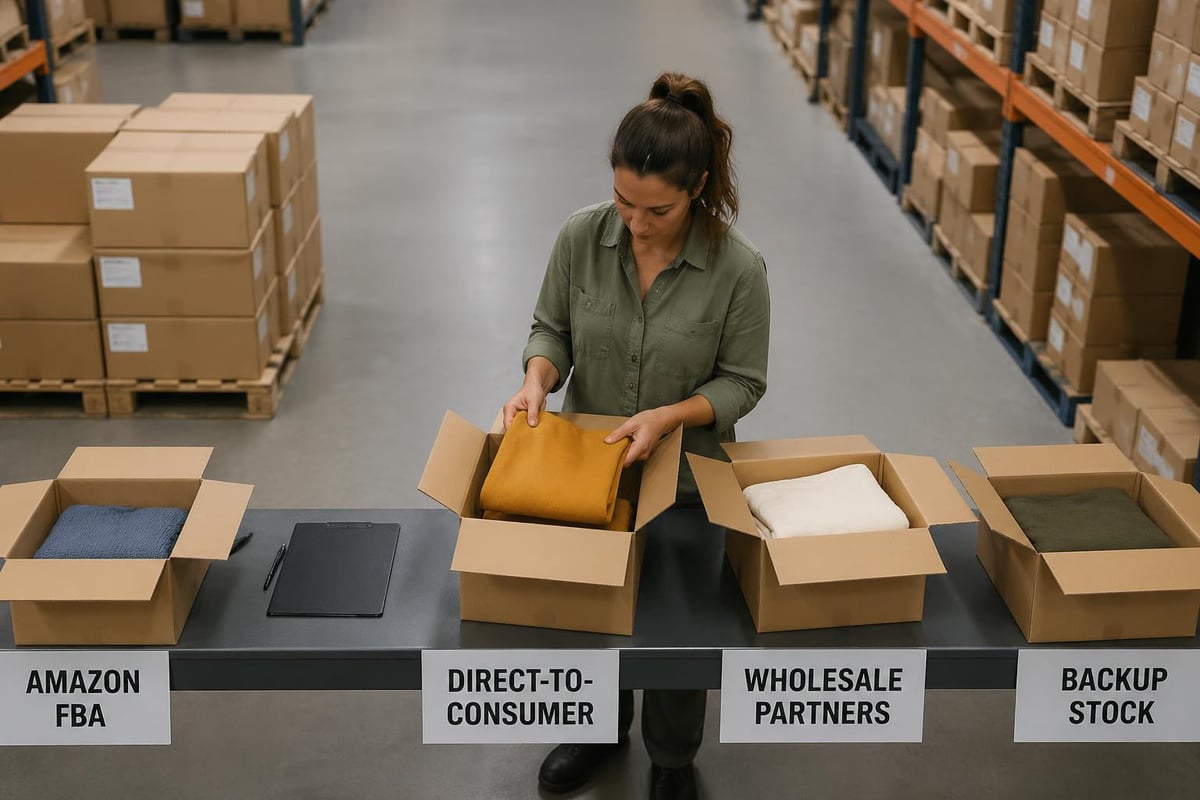
Smart sellers leverage fulfillment partners for overflow storage during peak seasons. Rather than sending excessive inventory to Amazon (incurring long-term storage fees), they maintain backup stock at third-party facilities and replenish FBA inventory as needed.
Multi-Channel Fulfillment Strategies
The most successful e-commerce brands in 2026 don’t rely exclusively on Amazon. They maintain presence across multiple platforms including their own websites, Walmart Marketplace, eBay, and specialty marketplaces.
An amazon fulfillment company with multi-channel capabilities can:
- Ship orders from any platform using the same inventory pool
- Maintain separate SKUs for different marketplaces
- Provide direct-to-consumer fulfillment with custom packaging
- Handle subscription box assembly and recurring shipments
- Process international orders with appropriate customs documentation
This flexibility prevents inventory fragmentation where stock sits idle on one platform while another runs out. Centralized inventory management through experienced e-commerce fulfillment services creates operational efficiency and capital efficiency simultaneously.
Research on consumer purchasing patterns demonstrates how product availability affects sales velocity. Stockouts damage search rankings and customer trust, making reliable inventory flow critical for growth.
Compliance and Quality Assurance Standards
Amazon maintains rigorous quality standards enforced through automated systems and manual reviews. Violations result in inventory stranded at fulfillment centers, ASIN suspensions, or complete seller account deactivation.
A competent amazon fulfillment company stays current with Amazon’s policies across multiple categories. They understand hazmat classifications, restricted product handling, expiration date requirements, and category-specific packaging rules.
Navigating Complex Regulations
Different product categories face unique requirements:
Apparel needs specific polybagging standards with size stickers and hangers removed. Electronics require frustration-free packaging certifications for certain ASINs. Consumables must display expiration dates and lot numbers according to precise formatting rules.
Professional fulfillment partners maintain current knowledge across these categories. They invest in ongoing training and maintain direct communication channels with Amazon’s support teams to clarify ambiguous requirements.
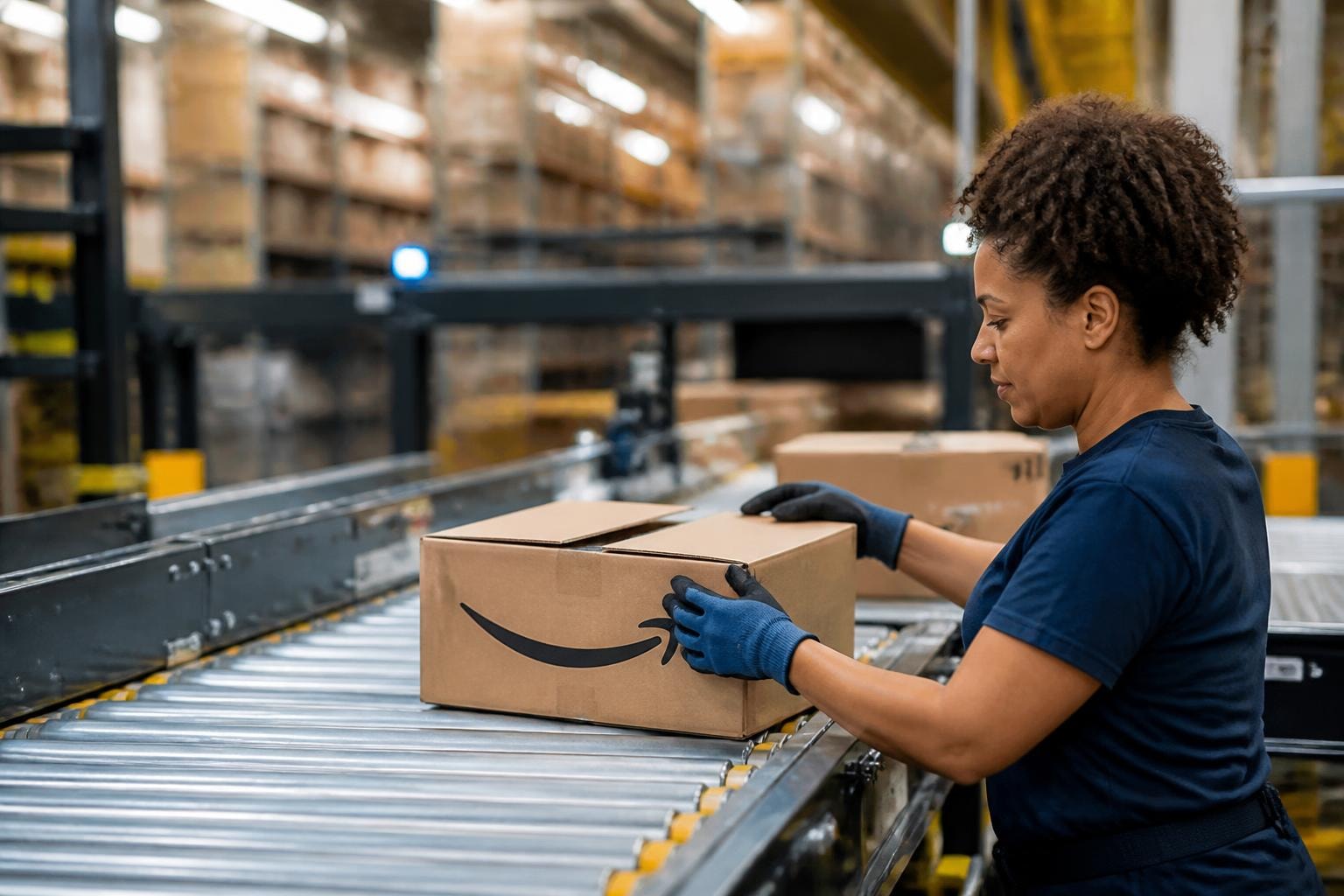
The operational excellence Amazon achieves within its own facilities sets the standard that third-party prep centers must match. Sellers benefit when their fulfillment partner maintains comparable quality systems.
Cost Analysis and ROI Considerations
Understanding the complete cost structure of working with an amazon fulfillment company enables accurate profit calculations. Fees typically include receiving charges, storage rates, prep service costs, and shipping expenses.
Receiving fees cover the labor and systems involved in accepting shipments, counting inventory, and logging items into warehouse management systems. These range from $0.10 to $0.50 per unit depending on complexity.
Storage costs vary based on product size, duration, and facility location. Monthly rates typically fall between $0.50 and $2.00 per cubic foot. Climate-controlled storage commands premium pricing but protects sensitive products.
Preparation service fees depend on the specific work required:
- Basic labeling: $0.15-$0.30 per unit
- Polybagging: $0.25-$0.50 per unit
- Bundling: $0.50-$2.00 per bundle
- Boxing oversized items: $1.00-$5.00 per unit
Calculating True Fulfillment Expenses
Smart financial analysis compares total fulfillment costs against the alternative of self-fulfillment. Many sellers underestimate the hidden costs of DIY operations including warehouse rent, labor, supplies, equipment, insurance, and their own time.
| Cost Factor | DIY Fulfillment | Professional Company |
|---|---|---|
| Warehouse Space | $2,000-5,000/month | Included in storage fees |
| Labor | $15-25/hour + benefits | Included in service fees |
| Equipment | $10,000-50,000 upfront | No capital investment |
| Supplies | Ongoing variable costs | Bulk purchasing savings |
| Mistakes/Returns | High impact on margins | Professional quality control |
| Time Investment | 20-40 hours/week | 2-5 hours/week oversight |
Research on warehouse automation efficiency shows that professional operations achieve productivity levels difficult for small businesses to replicate. The specialized equipment and optimized workflows justify the service fees through superior speed and accuracy.
Seasonal Scaling and Peak Period Management
E-commerce businesses face dramatic volume fluctuations throughout the year. Q4 holiday selling typically generates 40-60% of annual revenue for many brands, creating intense operational pressure.
An amazon fulfillment company with adequate infrastructure handles these surges without service degradation. They maintain excess capacity, hire seasonal staff, and implement overtime schedules to process increased volumes.
Proactive planning starts months before peak season. Experienced fulfillment partners help sellers forecast inventory needs, schedule shipment deliveries, and create contingency plans for supply chain disruptions.
The ability to scale operations up and down matches variable demand with appropriate resource allocation. This flexibility proves impossible when operating private warehouse facilities with fixed overhead costs.
International Expansion and Cross-Border Logistics
Amazon operates marketplaces across North America, Europe, Asia, and other regions. Sellers pursuing global expansion face complex challenges including customs documentation, import regulations, and localized prep requirements.
Select amazon fulfillment company partners offer international expertise that simplifies cross-border selling. They maintain relationships with customs brokers, understand VAT requirements in European markets, and can coordinate sea freight and customs clearance for inventory shipments.
Country-specific requirements vary significantly. The UK demands different safety certifications than Germany. Japan requires Japanese-language labels for most products. Canada has unique packaging regulations for consumables.
Professional guidance through these complexities prevents costly mistakes that delay product launches or result in rejected shipments. The investment in experienced partners pays for itself through avoided errors and faster market entry.
Technology Integration and Data Analytics
Modern fulfillment operations generate valuable data that informs business decisions. An advanced amazon fulfillment company provides reporting dashboards that track key performance metrics in real-time.
Inventory velocity reports show which products sell quickly versus slow-moving SKUs. This intelligence guides purchasing decisions and identifies candidates for promotions or liquidation.
Damage and defect tracking reveals quality issues with suppliers or shipping carriers. Patterns in damage reports trigger corrective actions before problems escalate.
Integration with seller central platforms enables automatic reorder triggers based on predefined thresholds. When FBA inventory drops below specified levels, the fulfillment company receives automatic notifications to prepare and ship replenishment inventory.
Analysis of e-commerce performance metrics helps sellers optimize product offerings and inventory investment. Data-driven decisions consistently outperform intuition-based approaches in competitive markets.
Building Long-Term Fulfillment Partnerships
The relationship between sellers and their amazon fulfillment company should function as a strategic partnership rather than a transactional vendor arrangement. The best outcomes occur when both parties align on growth objectives and operational excellence standards.
Regular communication prevents misunderstandings and enables quick problem resolution. Weekly check-ins during normal periods and daily contact during peak seasons maintain alignment.
Transparency regarding challenges creates collaborative problem-solving opportunities. When suppliers ship late or products arrive damaged, honest dialogue helps develop solutions rather than assigning blame.
Performance reviews conducted quarterly assess service levels against agreed metrics. These structured evaluations identify improvement opportunities and recognize achievements. They also provide forums for discussing changing business needs as brands grow.
The expertise available through professional fulfillment services extends beyond basic logistics. Experienced partners offer insights on packaging optimization, bundle configurations that drive higher average order values, and seasonal inventory strategies.
Technology-Driven Future of Fulfillment Services
The fulfillment industry continues evolving rapidly with artificial intelligence, machine learning, and advanced robotics reshaping operations. Forward-thinking amazon fulfillment company providers invest in these technologies to maintain competitive advantages.
Predictive analytics forecast inventory needs based on historical patterns, seasonal trends, and market signals. These systems recommend optimal stock levels that balance availability against carrying costs.
Robotic process automation handles repetitive tasks like label printing, box sizing calculations, and shipping carrier selection. Automation reduces labor costs while improving consistency and accuracy.
The fulfillment operations teams at Amazon itself demonstrate how technology enables unprecedented scale and efficiency. Third-party providers adopting similar innovations deliver comparable benefits to their seller clients.
Vision systems now inspect products automatically, identifying defects human eyes might miss. These quality control improvements reduce customer returns and maintain seller rating scores at optimal levels.
Selecting the right amazon fulfillment company represents one of the most consequential decisions e-commerce sellers make as they scale their operations. The partnership affects product availability, customer satisfaction, operational costs, and ultimately profitability. Whether you’re launching your first products on Amazon or expanding an established brand across multiple channels, professional fulfillment services provide the infrastructure and expertise that accelerate growth while maintaining quality standards. Ecom Automation Prep offers comprehensive solutions designed specifically for fast-growing e-commerce brands, handling everything from FBA preparation to multi-channel fulfillment with scalable systems built to support your success.



[…] prep services (if using Amazon fulfillment company […]
[…] fulfillment centers and potentially managing direct-to-consumer shipments for other sales channels. Amazon fulfillment services require specific labeling, packaging, and shipment preparation to meet Amazon’s stringent […]
[…] requires strict compliance with FBA (Fulfillment by Amazon) preparation standards. Professional Amazon fulfillment companies ensure products meet all labeling, packaging, and shipping requirements before arriving at Amazon […]