

Running a successful online retail business requires more than just great products and marketing. Behind every satisfied customer is a sophisticated logistics operation that receives, stores, picks, packs, and ships orders with precision. An ecommerce fulfillment warehouse serves as the critical backbone of this operation, transforming digital orders into physical deliveries. For fast-growing brands, choosing the right fulfillment infrastructure and partner can mean the difference between scaling smoothly and drowning in operational chaos. Understanding how these facilities operate, what technologies they employ, and which services they offer helps businesses make informed decisions about their supply chain strategy.
What Is an Ecommerce Fulfillment Warehouse
An ecommerce fulfillment warehouse is a specialized facility designed to store inventory and process orders for online retailers. Unlike traditional wholesale warehouses that ship in bulk to retail locations, these modern facilities handle individual consumer orders with speed and accuracy.
The core function involves receiving products from manufacturers or suppliers, storing them systematically, and then fulfilling customer orders as they arrive through various sales channels. This includes marketplaces like Amazon, Shopify stores, and other ecommerce platforms.
Key Operational Components
Every ecommerce fulfillment warehouse operates through several interconnected processes:
- Receiving and intake: Products arrive, get inspected, counted, and entered into inventory management systems
- Storage optimization: Items are assigned specific locations based on velocity, size, and picking efficiency
- Order processing: Digital orders trigger picking sequences for warehouse staff or automated systems
- Quality control: Orders are verified for accuracy before packing
- Packing and shipping: Items are packaged appropriately and shipped via selected carriers
- Returns management: Reverse logistics handle product returns and restocking

Modern facilities integrate warehouse management systems and automation technologies to coordinate these activities efficiently. The goal is reducing order cycle times while maintaining accuracy rates above 99.5%.
Technology Infrastructure in Modern Warehouses
Technology has transformed how ecommerce fulfillment warehouses operate in 2026. The integration of advanced systems enables facilities to process thousands of orders daily with minimal errors.
Warehouse Management Systems
A robust WMS serves as the operational brain, tracking every product from arrival to shipment. These systems provide real-time inventory visibility, optimize picking routes, and generate performance analytics. They integrate directly with ecommerce platforms, automatically importing orders and updating stock levels.
Leading solutions now incorporate artificial intelligence to predict demand patterns, suggest optimal storage locations, and identify potential bottlenecks before they impact operations. The latest trends in ecommerce fulfillment show that AI-driven systems are becoming standard rather than exceptional.
Automation and Robotics
Physical automation ranges from conveyor systems to sophisticated robotic pickers. Many warehouses now deploy collaborative robots that work alongside human staff, handling repetitive tasks while people manage exceptions and complex items.
Automated storage and retrieval systems (AS/RS) maximize vertical space usage and reduce picking times. Some facilities have implemented autonomous mobile robots that transport products between zones, eliminating much of the walking time that traditionally consumed worker productivity.
| Technology Type | Primary Benefit | Implementation Cost | ROI Timeline |
|---|---|---|---|
| WMS Software | Accuracy & Visibility | Medium | 6-12 months |
| Conveyor Systems | Speed & Efficiency | High | 12-24 months |
| Collaborative Robots | Labor Optimization | Medium-High | 18-30 months |
| Barcode/RFID Scanning | Error Reduction | Low-Medium | 3-6 months |
Inventory Management Best Practices
Effective inventory control separates high-performing warehouses from mediocre ones. An ecommerce fulfillment warehouse must balance having enough stock to meet demand without tying up excessive capital in slow-moving products.
Stock Positioning Strategies
Fast-moving items should occupy prime locations near packing stations. This velocity-based slotting reduces travel time and accelerates order processing. Seasonal variations require periodic reorganization as product popularity shifts.
ABC analysis categorizes inventory into tiers based on sales frequency and value. A-items receive the most attention and optimal placement, while C-items occupy less accessible areas. This prioritization ensures resources focus where they deliver maximum impact.
Implementing proper ecommerce warehouse best practices requires regular cycle counting to verify accuracy. Rather than annual physical inventories that disrupt operations, continuous counting maintains data integrity without shutdowns.
Safety Stock and Reorder Points
Calculating appropriate safety stock levels prevents stockouts while avoiding overstock situations. Factors include lead time variability, demand fluctuation, and the cost of lost sales versus holding costs.
Automated reorder point systems trigger purchase orders when inventory falls below predetermined thresholds. These thresholds account for supplier lead times and expected sales during replenishment periods. Smart systems adjust these dynamically based on trends and seasonality.
Fulfillment Speed and Customer Expectations
Consumer expectations for delivery speed have intensified dramatically. Same-day and next-day delivery options that seemed premium in previous years now serve as competitive necessities for many product categories.
An ecommerce fulfillment warehouse must process orders within tight windows to meet these commitments. Cut-off times for same-day shipping often fall around noon or earlier, creating pressure for morning efficiency.
Order Batching vs. Discrete Picking
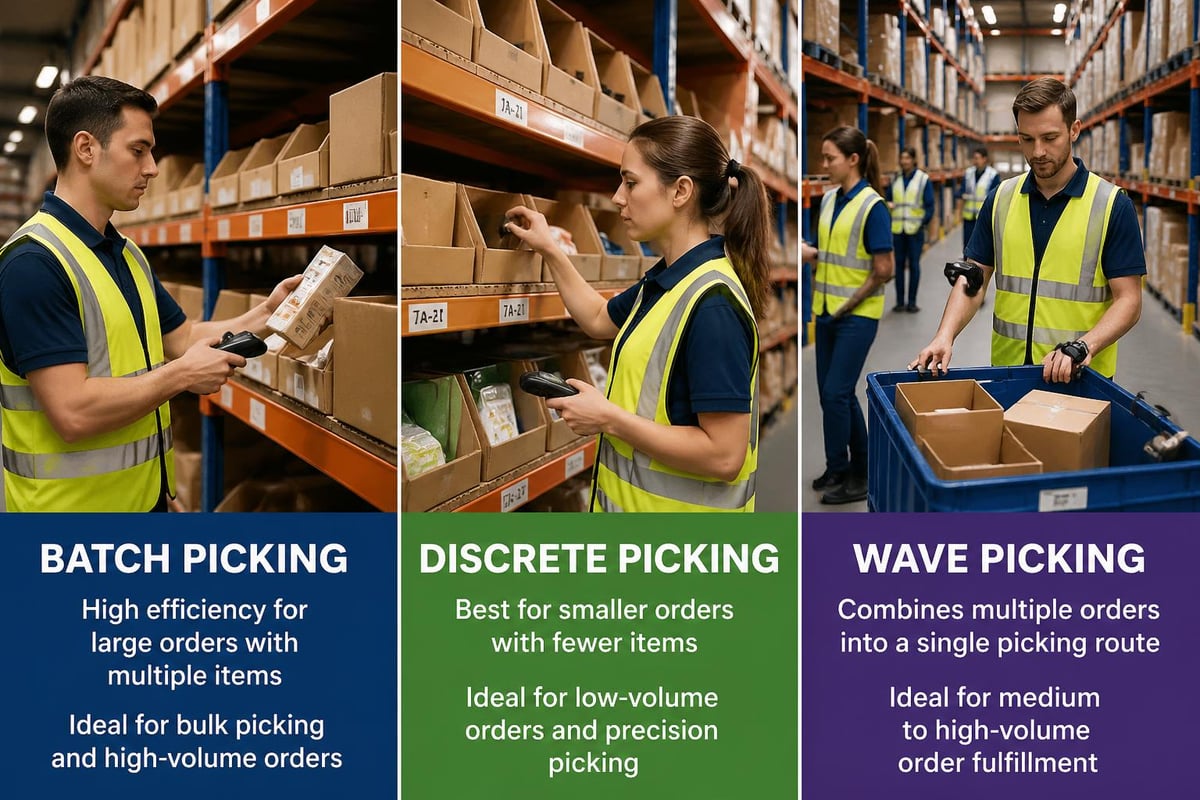
High-volume operations typically employ batch picking, where one worker collects items for multiple orders simultaneously. This method maximizes efficiency when order profiles are similar.
Discrete picking handles one order at a time, better suited for customized or complex orders requiring special handling. Many warehouses use hybrid approaches, batching simple orders while processing complicated ones individually.
Wave picking divides the warehouse into zones, with specialists handling specific areas. Orders pass through multiple zones sequentially, with each worker adding their assigned items. This specialization increases speed and accuracy through familiarity.
For businesses selling through Amazon, specialized Amazon FBA prep services ensure products meet strict platform requirements before entering fulfillment centers.
Specialized Services Beyond Basic Fulfillment
Leading ecommerce fulfillment warehouses offer value-added services that extend beyond simple storage and shipping. These capabilities help brands differentiate themselves and reduce complexity.
Kitting and Bundling
Creating product bundles or kits involves combining multiple items into single sellable units. This service is particularly valuable for:
- Promotional gift sets
- Subscription box contents
- Product launch bundles
- Seasonal assortments
Warehouse staff assemble these combinations according to specifications, apply appropriate labeling, and treat them as discrete SKUs for inventory tracking. This eliminates the need for brands to pre-bundle products before sending them to fulfillment centers.
Custom Packaging and Branding
Unboxing experiences significantly impact customer perception and repeat purchase rates. Forward-thinking warehouses accommodate custom packaging requests including branded boxes, tissue paper, inserts, and promotional materials.
Some facilities offer on-demand printing for personalized notes or shipping labels that match brand aesthetics. These touches transform functional shipping into marketing opportunities that strengthen customer relationships.
Direct-to-Consumer vs. Marketplace Fulfillment
Ecommerce brands typically sell through multiple channels, each with distinct fulfillment requirements. Understanding these differences helps optimize warehouse operations.
Direct-to-consumer fulfillment gives brands complete control over packaging, inserts, and customer experience. Orders flow directly from brand websites to the warehouse without marketplace intermediaries.
This model allows for personalization impossible within marketplace constraints. However, it requires handling customer service, returns, and shipping carrier relationships independently.
Marketplace-Specific Requirements
Amazon, Walmart, and other marketplaces impose strict packaging and labeling standards. Products must arrive at fulfillment centers properly prepared or face rejection and fees.
Requirements often include:
- Specific label placement and sizing
- Poly-bagging for certain product types
- Suffocation warning labels where applicable
- FNSKU barcode application for Amazon
- Carton content labels for case-packed items
Partnering with experienced providers familiar with these requirements prevents costly mistakes and delays. The complexity increases when selling across multiple marketplaces simultaneously, each with unique specifications.
Cost Structure and Pricing Models
Understanding fulfillment costs helps brands evaluate options and forecast expenses accurately. An ecommerce fulfillment warehouse typically charges through several components rather than a single all-inclusive rate.
| Cost Component | Typical Structure | Factors Affecting Price |
|---|---|---|
| Receiving | Per unit or per shipment | Item complexity, inspection needs |
| Storage | Per cubic foot monthly | Location, seasonality, volume |
| Pick & Pack | Per order | Item count, special handling |
| Shipping | Variable by carrier | Weight, dimensions, destination |
| Returns Processing | Per return | Condition assessment, restocking |
Storage costs fluctuate based on space consumption and duration. Long-term storage fees encourage inventory turnover and discourage warehousing slow-moving products indefinitely.
Some warehouses offer volume discounts as monthly order counts increase. These tiered pricing structures reward growth and make scaling more economical. Negotiating terms becomes possible once businesses demonstrate consistent volume.
Strategies to reduce shipping costs include optimizing packaging dimensions, leveraging zone skipping, and negotiating carrier contracts based on aggregate volume.
Location Strategy and Distribution Networks
Geographic positioning of an ecommerce fulfillment warehouse dramatically impacts shipping costs and delivery times. Strategic placement reduces the distance products travel to reach customers.
Single vs. Multiple Fulfillment Centers
Brands starting out typically operate from one location, accepting longer delivery times to certain regions. As volume grows, adding warehouses in different geographic zones becomes economically viable.
A bi-coastal strategy with East and West Coast facilities covers most of the United States population within two-day ground shipping. This approach balances cost savings against the complexity of managing split inventory.
The emerging trend of micro-fulfillment centers places smaller facilities closer to urban populations, enabling same-day delivery for high-velocity items while maintaining regional hubs for full inventories.
International Considerations
Global ecommerce requires navigating customs, duties, and international shipping regulations. Some fulfillment providers maintain warehouses in multiple countries, enabling local fulfillment that reduces shipping times and costs for international customers.
Cross-border ecommerce involves complex documentation and compliance requirements. Experienced providers handle these details, ensuring smooth customs clearance and delivery.

Returns Management and Reverse Logistics
Product returns represent a significant operational challenge that separates capable warehouses from excellent ones. An ecommerce fulfillment warehouse must efficiently process returns to restore saleable inventory quickly.
Returns Processing Workflow
When customers initiate returns, products flow backward through the supply chain. Efficient facilities complete this cycle rapidly:
- Customer ships product back to warehouse
- Receiving staff inspect condition and verify against return authorization
- Items are categorized as resaleable, damaged, or defective
- Resaleable products return to active inventory
- Damaged goods are disposed or sent for repair
- Data updates trigger customer refunds
The speed of this process directly impacts cash flow and inventory availability. Delays in processing returns create dead stock that occupies space without generating revenue.
Quality reverse logistics solutions minimize the financial impact of returns through efficient processing and clear disposition protocols. Some returns may qualify for manufacturer warranties or vendor credits, requiring additional documentation and handling.
Choosing the Right Fulfillment Partner
Selecting an ecommerce fulfillment warehouse partner represents a strategic decision with long-term implications. The wrong choice creates operational headaches, while the right partnership enables growth and customer satisfaction.
Evaluation Criteria
Beyond pricing, several factors determine fulfillment success:
- Technology integration: Seamless connection with your ecommerce platform and other business systems
- Scalability: Ability to handle growth without service degradation
- Location: Geographic positioning relative to your customer base
- Specialization: Experience with your product type and sales channels
- Service breadth: Availability of value-added services like kitting and custom packaging
- Communication: Responsiveness and transparency in operations
Request references from current clients in similar industries. Tour facilities when possible to observe operations firsthand and assess organizational culture.
Transition Planning
Migrating fulfillment operations requires careful planning to avoid disruption. Coordinate inventory transfers during slower periods when possible. Maintain parallel operations briefly during transitions to ensure continuity.
Comprehensive ecommerce fulfillment services should include transition support, helping brands move inventory and configure systems smoothly.
Marketing Integration and Fulfillment
While fulfillment seems purely operational, it connects deeply with marketing effectiveness. Fast, reliable delivery reinforces brand promises and enables satisfied customers to become repeat buyers and advocates.
Modern marketing increasingly relies on video content to demonstrate products and build trust. Tools like AdsRaw enable brands to create realistic, user-generated content style video ads using AI, helping test and validate marketing messages quickly before scaling campaigns. Effective ads drive order volume, making efficient fulfillment infrastructure essential to capitalize on marketing success.
The unboxing experience serves as a touchpoint where operational excellence meets brand identity. Premium packaging, personalized notes, and careful attention to detail create memorable moments that customers share on social media, generating organic marketing value.
Performance Metrics and Continuous Improvement
Measuring fulfillment performance enables data-driven optimization. An ecommerce fulfillment warehouse should track and share key metrics regularly with brand partners.
Critical KPIs
- Order accuracy rate: Percentage of orders shipped without errors
- Average order processing time: Hours from order receipt to carrier pickup
- Inventory accuracy: Alignment between system records and physical stock
- On-time shipment rate: Orders shipped by promised date
- Damaged goods rate: Percentage of products damaged in handling
- Returns processing time: Days from return receipt to inventory restoration
Establishing baseline metrics enables identifying improvement opportunities. Regular review of these indicators with fulfillment partners ensures alignment on priorities and service standards.
Implementing proven warehouse best practices through continuous improvement methodologies drives incremental gains that compound over time.
Subscription Box Fulfillment
Recurring subscription models require specialized fulfillment capabilities. Products ship on predictable schedules, but customization and variability create complexity.
An ecommerce fulfillment warehouse handling subscriptions must coordinate multiple product combinations based on customer preferences or subscription tiers. Timing precision ensures boxes arrive within expected windows, maintaining subscriber satisfaction.
Dedicated subscription fulfillment services address these unique requirements through specialized workflows that accommodate variability while maintaining efficiency.
Seasonal Scaling Challenges
Holiday periods and promotional events create dramatic volume spikes. Warehouses must scale capacity temporarily without compromising service quality during peak demand.
Flexible staffing models, cross-training, and technology leverage help accommodate 2-3x normal volumes during busy seasons. Planning these surges months in advance ensures adequate preparation.
Optimizing your ecommerce fulfillment warehouse strategy requires balancing speed, accuracy, cost, and customer experience across complex operational challenges. The right infrastructure and partnerships transform fulfillment from a cost center into a competitive advantage that enables growth and customer loyalty. Ecom Automation Prep specializes in making fulfillment effortless for fast-growing ecommerce brands through comprehensive services including Amazon FBA prep, direct-to-consumer fulfillment, kitting, and bundling, providing the scalable solutions you need to focus on what matters most-growing your business.



[…] with an e-commerce fulfillment warehouse experienced in customization helps brands maintain accuracy while scaling personalization options […]
[…] systems integrate with ecommerce fulfillment warehouse operations, coordinating preparation with broader supply chain […]