

The subscription e-commerce model has transformed how consumers shop, creating predictable revenue streams for brands while delivering curated experiences to customers. However, managing recurring shipments requires specialized logistics capabilities that go far beyond traditional fulfillment. Subscription fulfillment services have emerged as the backbone of successful recurring revenue models, handling everything from inventory forecasting to personalized packaging and automated shipping schedules. For e-commerce brands looking to launch or scale subscription offerings in 2026, understanding these specialized fulfillment operations is essential.
Understanding the Unique Demands of Subscription Operations
Subscription fulfillment services differ fundamentally from one-time order processing. Traditional e-commerce fulfillment responds to individual purchase events, while subscription operations manage continuous, predictable cycles that require different infrastructure and planning.
Predictable Demand Patterns
The recurring nature of subscriptions creates inventory forecasting advantages that traditional retail cannot match. Brands know exactly how many units they need for each fulfillment cycle, allowing for optimized purchasing and storage. This predictability enables fulfillment logistics strategies that align with customer billing cycles, reducing stockouts and excess inventory simultaneously.
However, this same predictability creates pressure points. Missing a fulfillment window impacts every subscriber in that cohort, making reliability non-negotiable. Successful subscription programs require:
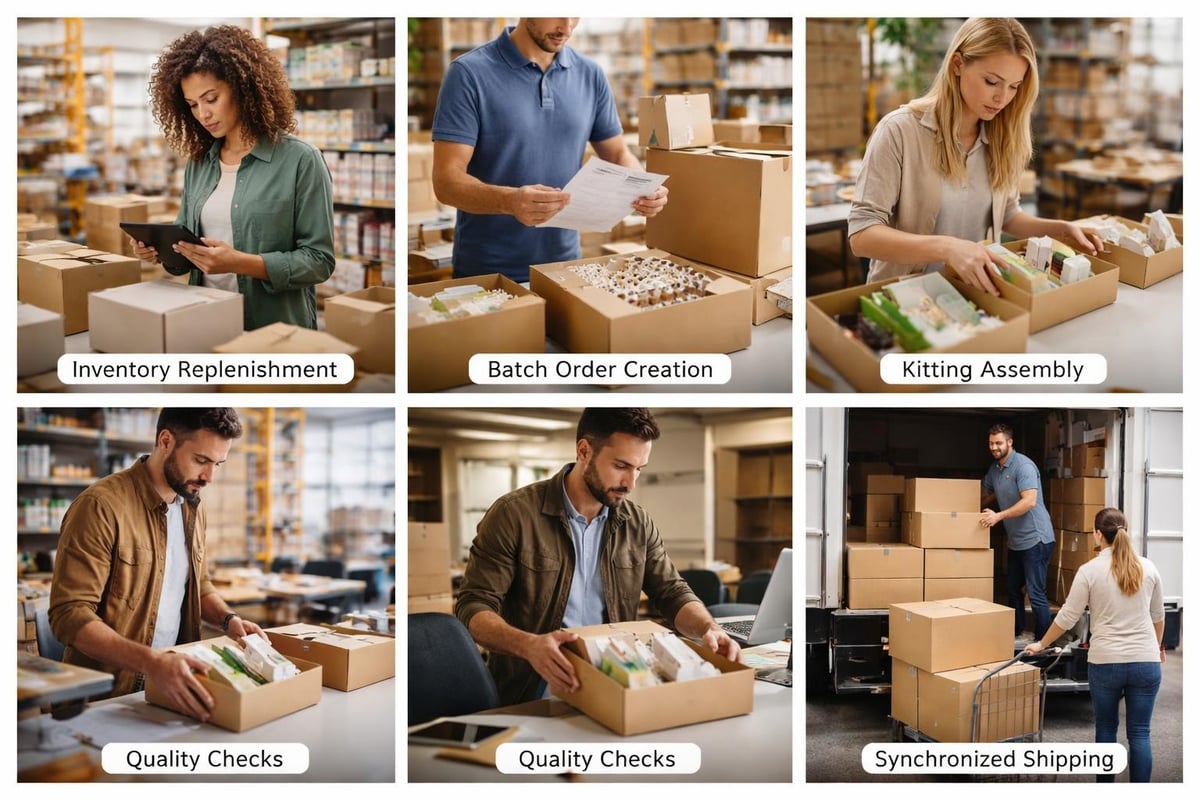
- Batch processing capabilities to handle wave shipments efficiently
- Automated renewal tracking synchronized with fulfillment schedules
- Buffer inventory positioned for subscription volume spikes
- Dedicated storage zones for subscription-specific SKUs
Customization and Personalization Requirements
Modern subscription boxes compete on experience, not just convenience. Customers expect personalized touches that justify recurring charges and build brand loyalty. This creates fulfillment complexity that generic warehouses struggle to accommodate.
Personalization can include product selection based on customer preferences, customized inserts with subscriber names, or seasonal variations. Each customization layer adds operational complexity that specialized subscription fulfillment services are designed to handle efficiently through systematic processes and technology integration.
Core Components of Effective Subscription Fulfillment
Building a subscription fulfillment operation requires specific capabilities beyond standard warehousing and shipping. These components form the foundation of services that support long-term subscription growth.
Inventory Management Synchronized to Renewal Cycles
Traditional inventory systems track stock levels and reorder points based on sales velocity. Subscription inventory management must align with renewal dates, churn predictions, and new subscriber acquisition rates. This creates a three-dimensional planning challenge that requires specialized software and processes.
| Inventory Challenge | Traditional E-commerce | Subscription Model |
|---|---|---|
| Demand Forecasting | Historical sales trends | Active subscriber count + growth rate |
| Reorder Timing | When stock reaches threshold | Scheduled pre-fulfillment deadlines |
| SKU Planning | Individual product performance | Box composition across all variants |
| Storage Allocation | Velocity-based slotting | Cycle-based staging areas |
Leading subscription operations implement pre-kitting workflows that assemble boxes days before ship dates, ensuring quality control time while meeting tight delivery windows. This approach, common among experienced subscription box services, reduces last-minute scrambles and improves accuracy.
Kitting and Assembly Capabilities
Subscription boxes rarely contain single items shipped in manufacturer packaging. Instead, they require assembly of multiple components into branded experiences. This kitting process demands:
- Clean assembly workstations with quality control protocols
- Efficient workflows that accommodate box variations
- Inventory tracking at the component level
- Packaging materials management for branded unboxing
The complexity multiplies when brands offer multiple subscription tiers or allow customization. A beauty subscription might have three tiers with different product counts, seasonal variations, and customer-selected preferences. Fulfilling these variations efficiently requires systematic processes that prevent errors while maintaining throughput.
Specialized providers like Ecom Automation Prep excel at these complex kitting operations, bringing experience from diverse product categories to create streamlined assembly workflows that scale with subscriber growth.
Branded Packaging and Unboxing Experiences
The unboxing moment represents the physical manifestation of your brand promise. Subscription fulfillment services must execute packaging strategies that enhance the unboxing experience while remaining cost-effective at scale.
Considerations include:
- Custom box printing with brand colors and messaging
- Protective packaging that ensures products arrive intact
- Insert materials including welcome cards, product information, and promotional content
- Sustainability through recyclable or compostable materials that align with brand values
Premium unboxing creates social media moments that drive organic marketing. Gaming and technology subscription services, for example, leverage memorable packaging to encourage customer sharing. Retailers like Gamer Gear Direct understand that presentation matters when delivering high-value simulation gear, a principle that applies equally to subscription commerce.
Technology Infrastructure for Subscription Fulfillment
Manual processes break down quickly in subscription operations. The recurring nature of shipments demands automation and integration that connects fulfillment operations to subscription management platforms.
Integration with Subscription Management Platforms
Subscription businesses typically run on platforms like Recharge, Cratejoy, or custom solutions built on Shopify. Effective subscription fulfillment services must integrate seamlessly with these systems to automate order creation, inventory updates, and shipping confirmations.
API connections should enable:
- Automatic order import based on renewal schedules
- Real-time inventory synchronization
- Shipping confirmation export to trigger customer notifications
- Return and exchange processing tied to subscriber records
Without tight integration, subscription operations require manual data transfers that introduce errors and delays. The investment in proper technology infrastructure pays dividends through reduced labor costs and improved accuracy.

Automation for Recurring Processes
Subscription fulfillment creates repetitive workflows ideal for automation. Smart operations automate:
- Order batching by ship date and subscription tier
- Pick list generation optimized by warehouse layout
- Label printing with carrier selection based on rules
- Inventory alerts when component stock drops below thresholds for upcoming cycles
The automation level directly impacts your ability to scale. Scaling subscription fulfillment requires systems that can handle 10x subscriber growth without proportional labor increases. This scalability becomes particularly crucial during rapid growth phases when brands need to focus on acquisition rather than operational firefighting.
Managing the Customer Lifecycle Through Fulfillment
Subscription success depends on retention, and fulfillment quality directly impacts whether customers renew or cancel. Thoughtful subscription fulfillment services address the entire customer journey, not just the shipping transaction.
Onboarding and First Box Excellence
The first shipment creates lasting impressions that influence retention rates. New subscriber boxes should include:
- Welcome materials explaining what to expect in future shipments
- Brand storytelling that builds emotional connection
- Clear instructions for managing subscription preferences
- Extra touches like samples or gifts that exceed expectations
First-box fulfillment often requires different handling than renewal shipments. Some operations maintain separate workflows for new subscribers versus renewals, ensuring that onboarding materials reach the right customers without slowing down routine processing.
Managing Subscription Modifications
Subscribers pause, skip shipments, upgrade tiers, and update addresses. Each modification impacts fulfillment planning and execution. Best practices for subscription businesses emphasize making these modifications easy for customers, but each change creates fulfillment complexity.
Effective systems handle:
- Pause processing that removes customers from upcoming batches
- Skip management that holds inventory for next active cycle
- Mid-cycle upgrades that may require partial fulfillment
- Address changes captured before batch processing locks
The fulfillment operation must receive these modifications in time to execute them accurately. Cut-off dates become critical operational parameters that balance customer flexibility with processing realities.
Returns and Exchange Management
Returns affect subscriptions differently than one-time purchases. A customer returning a damaged item from their third monthly box remains a valuable subscriber. The fulfillment response should reinforce retention, not create friction.
Subscription-focused operations implement:
- Simplified return processes that don’t require customers to contact support for simple issues
- Rapid replacement shipping to maintain the subscription schedule
- Root cause analysis when product quality issues affect multiple subscribers
- Proactive outreach when fulfillment errors impact subscriber satisfaction
These customer-centric approaches recognize that subscription fulfillment challenges extend beyond logistics into relationship management. A $5 replacement shipped immediately protects a customer relationship worth hundreds of dollars in lifetime value.
Cost Structures and Pricing Models for Subscription Fulfillment
Understanding how subscription fulfillment services price their offerings helps brands budget accurately and negotiate favorable terms as they scale.
Per-Box Fulfillment Fees
Most providers charge per-box fees that cover picking, packing, and shipping preparation. These fees typically range from $3 to $8 per box depending on:
- Number of items per box
- Kitting complexity
- Packaging materials required
- Monthly volume commitments
Higher volumes generally reduce per-box costs through efficiency gains. A brand shipping 10,000 boxes monthly negotiates better rates than one shipping 500 boxes. Understanding e-commerce fulfillment pricing structures helps brands forecast costs as they grow.
Storage and Inventory Fees
Subscription models require buffer inventory stored between fulfillment cycles. Storage fees typically calculate as:
| Fee Type | Calculation Method | Typical Range |
|---|---|---|
| Pallet Storage | Per pallet per month | $15-$40 |
| Bin Storage | Per cubic foot per month | $0.50-$1.50 |
| Component Storage | Per SKU count | Variable |
Efficient inventory planning minimizes storage costs while maintaining adequate buffer stock. Brands shipping monthly might maintain 6-8 weeks of inventory, while quarterly subscriptions require longer-term storage arrangements.
Additional Service Charges
Beyond core fulfillment, subscription operations incur charges for:
- Receiving and inspection of incoming inventory shipments
- Kitting labor for multi-component box assembly
- Custom packaging materials beyond standard boxes
- Returns processing including inspection and restocking
- Technology integration and platform maintenance fees
Transparent pricing from fulfillment partners should clearly outline all potential charges, avoiding surprise fees that disrupt profitability calculations. Understanding the complete cost structure enables accurate subscription pricing that maintains healthy margins.
Selecting the Right Subscription Fulfillment Partner
Choosing a fulfillment provider represents a strategic decision that impacts customer experience, operational flexibility, and growth potential. The wrong partner creates bottlenecks; the right one becomes a competitive advantage.
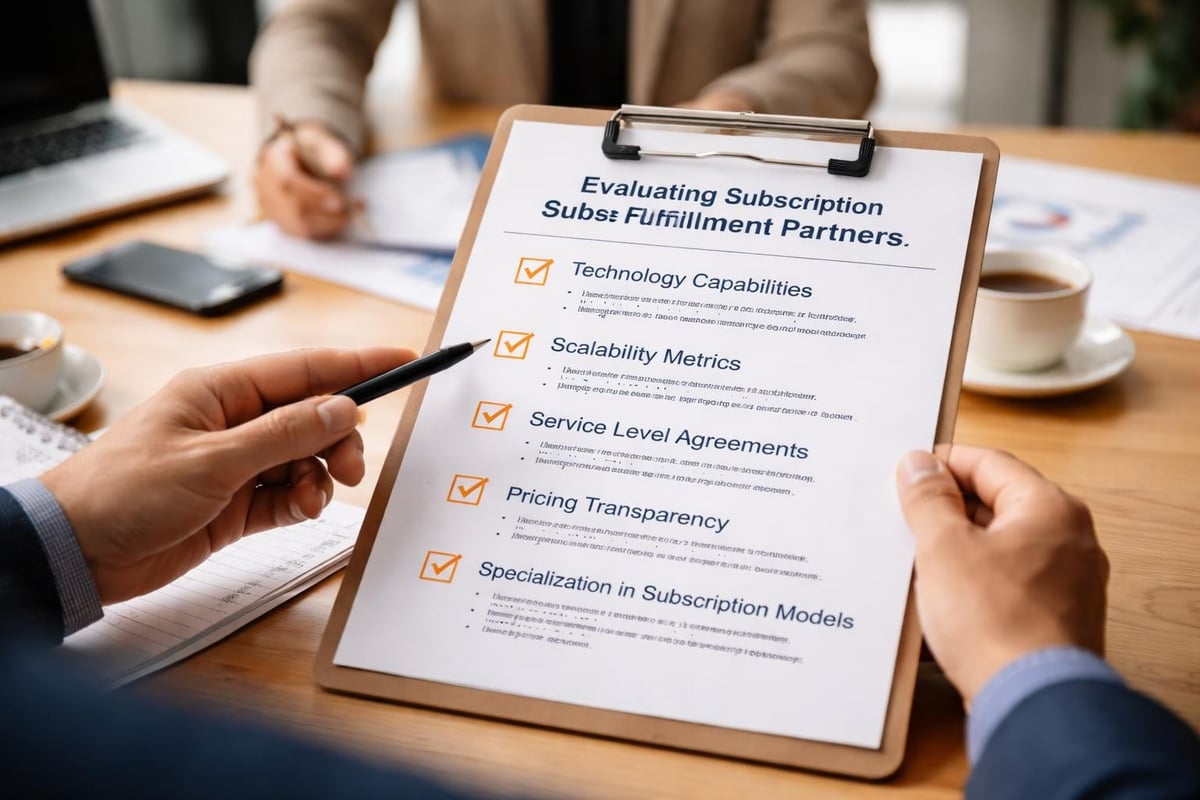
Specialization in Subscription Models
Generic warehouses struggle with subscription-specific requirements. Seek partners with demonstrated subscription expertise who understand:
- Batch processing workflows and timing requirements
- Subscription platform integrations
- Kitting and customization capabilities
- Renewal cycle inventory planning
Ask potential partners about their largest subscription client, average box complexity they handle, and technology platforms they integrate with. Specific answers indicate real experience versus generic fulfillment capabilities marketed toward subscription brands.
Scalability and Geographic Reach
Your fulfillment needs evolve as subscriber counts grow. Evaluate whether providers can scale with your business through:
- Multiple fulfillment centers for geographic distribution as you expand
- Flexible labor models that accommodate seasonal volume fluctuations
- Technology infrastructure that handles 10x current volumes
- Financial stability ensuring they remain operational as you grow
Consider starting with a provider who has room to grow with you, rather than outgrowing your partner after 12 months. Scaling e-commerce operations often involves fulfillment transitions that disrupt operations and risk customer experience.
Service Level Agreements and Performance Metrics
Define clear performance expectations through service level agreements covering:
- Order accuracy rates (typically 99.5% or higher)
- On-time shipment percentages for scheduled fulfillment windows
- Inventory accuracy through regular cycle counts
- Response times for customer service inquiries
Regular performance reviews using these metrics keep operations aligned with customer expectations. The best partners proactively share performance data and address issues before they impact subscribers.
Cost-Effectiveness Beyond Price
The cheapest provider rarely delivers the best value. Evaluate total cost of ownership including:
- Direct fulfillment fees and storage charges
- Hidden costs from errors requiring customer service intervention
- Impact on retention from fulfillment quality
- Time saved through automation versus manual processes
A provider charging $1 more per box but delivering 99.8% accuracy versus 98.5% may save money through reduced replacement costs and higher retention. Similarly, strong technology integration that eliminates manual data entry saves labor that offsets higher per-box fees.
Trends Shaping Subscription Fulfillment in 2026
The subscription fulfillment landscape continues evolving as technology advances and consumer expectations shift. Staying ahead of these trends positions brands for competitive advantage.
Micro-Fulfillment and Distributed Inventory
Brands increasingly adopt distributed inventory strategies placing stock closer to subscriber concentrations. This approach reduces shipping costs and transit times while improving sustainability through shorter transportation distances. Micro-fulfillment centers in major metro areas enable same-day or next-day delivery for premium subscription tiers.
However, distributed inventory increases complexity. Inventory must be allocated across locations based on subscriber geography while maintaining adequate stock levels at each facility. Fulfillment must adapt to these models through sophisticated allocation algorithms and inter-facility transfer capabilities.
Sustainability and Circular Commerce
Environmental consciousness drives subscription brands toward sustainable fulfillment practices including:
- Recyclable and compostable packaging materials
- Optimized box sizing to minimize dimensional weight charges and waste
- Carbon-neutral shipping options
- Returnable packaging programs for refillable subscriptions
Some subscription models now incorporate circular commerce principles where products return to the provider for refurbishment and reshipment. This creates reverse logistics requirements that traditional subscription fulfillment services are beginning to accommodate.
Personalization Through Data Integration
Advanced subscription operations leverage customer data to personalize fulfillment beyond basic product selection. Integration between customer profiles, preference data, and fulfillment systems enables:
- Personalized insert messaging based on subscriber history
- Product sampling aligned with stated interests
- Packaging variations for customer milestones (anniversaries, birthdays)
- Proactive inventory allocation for subscriber-specific preferences
This data-driven personalization requires tight integration between marketing platforms, subscription management systems, and warehouse management software. The technical complexity increases, but the retention impact justifies the investment for premium subscription brands.
Hybrid Models Combining Subscriptions and One-Time Purchases
Many brands now offer hybrid models where subscribers also make one-time purchases. This creates fulfillment complexity as systems must:
- Identify opportunities to combine subscription and retail orders
- Apply appropriate shipping logic based on order types
- Maintain separate inventory pools when necessary
- Handle partial shipments when products have different availability
E-commerce fulfillment strategies must evolve to support these hybrid models, treating subscription and traditional commerce as integrated rather than separate operations. The brands that execute this integration smoothly create convenience that drives both subscription retention and incremental revenue.
Building Your Subscription Fulfillment Strategy
Successfully implementing subscription fulfillment services requires strategic planning that aligns operational capabilities with business goals and customer expectations.
Start with Clear Subscriber Experience Goals
Define the customer experience you want to deliver before selecting fulfillment approaches. Consider:
- What unboxing experience differentiates your brand?
- How much personalization do subscribers expect?
- What fulfillment speed justifies your subscription price?
- Which quality standards maintain your brand reputation?
These experience goals drive fulfillment requirements. A luxury beauty subscription demands different fulfillment capabilities than a budget-friendly snack box. Align your fulfillment partner selection and operational investments with the experience your subscribers pay for.
Plan for Growth from Day One
Subscription businesses succeed by growing rapidly or failing quickly. Design fulfillment operations that accommodate 10x growth without complete restructuring. This means:
- Choosing technology platforms that scale beyond current needs
- Partnering with providers who handle much larger clients
- Building processes that work at both 500 and 5,000 monthly boxes
- Documenting workflows to enable team expansion
The brands that struggle most often optimized for their launch volume rather than their growth trajectory. Successful operators build slight excess capacity that supports rapid expansion when acquisition efforts succeed.
Test and Iterate Before Scaling
Launch subscription programs with pilot phases that validate fulfillment processes before large marketing investments. Run initial cycles with limited subscribers to identify:
- Timing gaps between order creation and shipping deadlines
- Kitting workflow inefficiencies
- Integration errors between platforms
- Packaging failures during transit
These learnings improve operations before thousands of customers depend on flawless execution. The cost of iteration during a 200-subscriber pilot far outweighs the damage from fulfillment failures at 2,000 subscribers.
Monitor and Optimize Continuously
Subscription fulfillment requires continuous improvement as subscriber preferences evolve and operational volumes change. Establish regular review cycles examining:
| Metric Category | Key Performance Indicators | Review Frequency |
|---|---|---|
| Quality | Order accuracy, damage rates, customer complaints | Weekly |
| Efficiency | Units per labor hour, cost per box, space utilization | Monthly |
| Customer Impact | Retention rate, NPS, unboxing feedback | Monthly |
| Financial | Total fulfillment cost, margin impact, fee changes | Quarterly |
Use these insights to refine processes, negotiate better terms with partners, and identify opportunities for automation or outsourcing. The subscription brands that thrive treat fulfillment as a dynamic capability requiring constant attention rather than a solved problem.
Mastering subscription fulfillment services requires understanding their unique demands, implementing appropriate technology, and partnering with specialists who share your commitment to subscriber satisfaction. As subscription commerce continues growing in 2026, the brands that invest in robust fulfillment operations position themselves for sustainable success through superior customer experiences and operational efficiency. Ecom Automation Prep brings comprehensive fulfillment expertise to subscription brands, offering the kitting capabilities, technology integration, and scalable infrastructure that support rapid growth while maintaining the quality that keeps subscribers renewing month after month.



[…] Subscription fulfillment services manage recurring shipments with variable contents. These operations handle complex kitting requirements, personalization based on customer preferences, and precise timing to ensure subscribers receive boxes on schedule. The recurring nature requires sophisticated inventory forecasting and assembly planning. […]
[…] subscription box companies, subscription fulfillment services handle the complex task of assembling customized boxes according to subscriber preferences, […]
[…] subscription business model creates unique fulfillment challenges requiring specialized expertise. Subscription fulfillment services manage recurring shipments, variable product selections, and customer preference […]
[…] increases with recurring shipments, membership management, and variable box contents. Specialized subscription fulfillment services understand the unique requirements of managing member databases, processing upgrades and […]