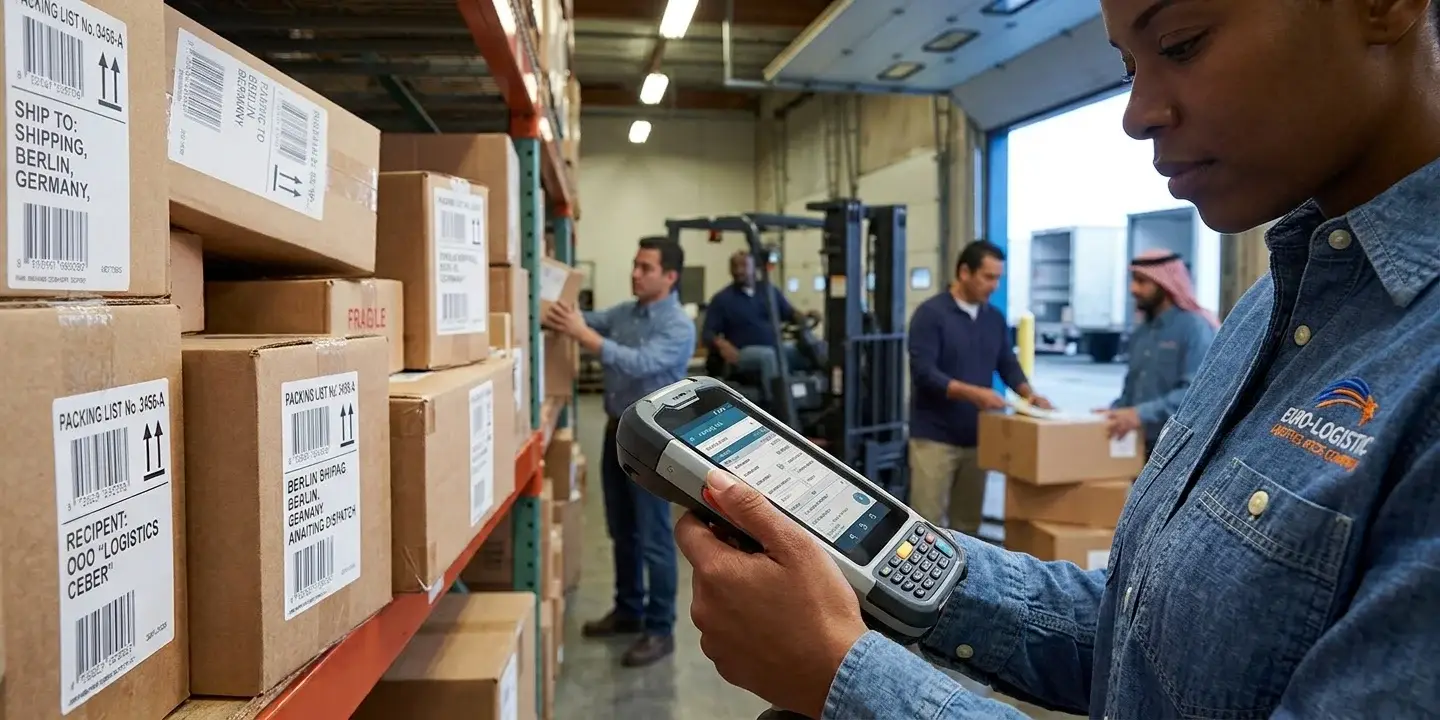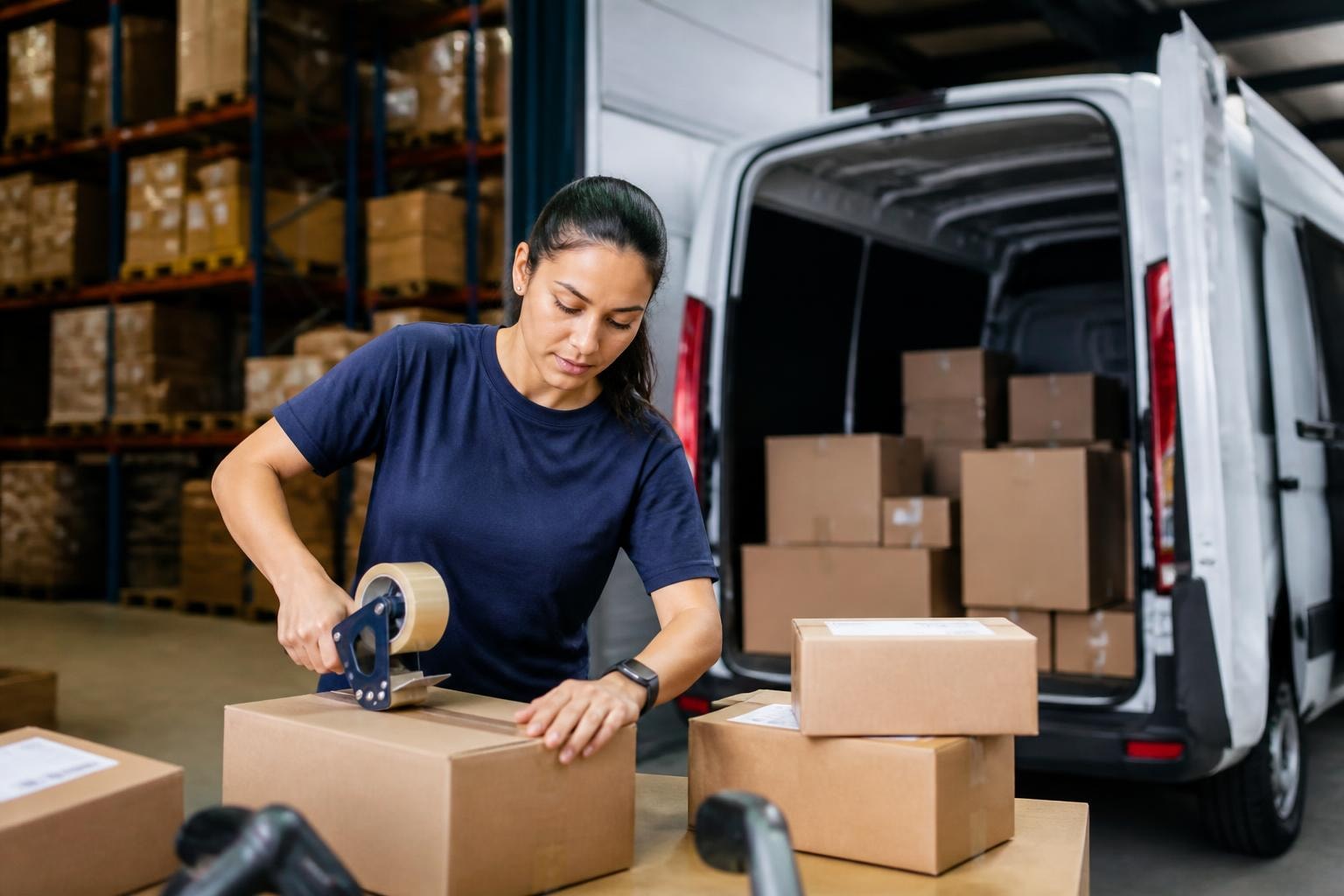

3PL Services at a Glance
A third-party logistics provider, or 3PL, takes over the physical and operational side of getting products to customers. For an ecommerce brand, that typically means six connected functions working as one system.
Warehousing and Storage
Products sit in a 3PL’s facility on pallets, in bins, or in pick locations sized to how fast each SKU actually moves. Storage is billed by the space a brand’s inventory occupies, not by a flat monthly fee, so a lean SKU catalog usually costs less to store than a sprawling one.
Inventory Management
A 3PL tracks unit counts, locations, and movement inside a warehouse management system (WMS), giving a brand visibility into what is on hand, what is committed to open orders, and what needs to be reordered.
Ecommerce Order Fulfillment
Orders from Shopify, Amazon, Walmart, eBay, or TikTok Shop flow into the 3PL’s system, where staff pick the correct items, pack them, and generate a shipping label, usually within a defined same-day or next-day cutoff.
Shipping and Delivery
The 3PL selects a carrier, applies negotiated or blended rates, and hands the package off for delivery, then returns tracking information back to the selling channel.
Returns Management
Returned products are received, inspected, and either restocked as sellable inventory, flagged as damaged, or disposed of, depending on the brand’s return policy.
Value-Added Services
Many 3PLs also perform kitting, bundling, poly-bagging, labeling, FNSKU prep for Amazon, and insert placement, work that goes beyond a basic pick-and-pack fee.
What Is a 3PL?
What Does 3PL Stand For?
3PL stands for third-party logistics. It refers to a company that handles supply chain functions, most commonly warehousing, order fulfillment, and shipping, on behalf of a business that would otherwise perform those functions itself.
How a 3PL Fits Into the Ecommerce Supply Chain
In a direct-to-consumer supply chain, products move from a manufacturer or importer to a warehouse, then to the end customer. A 3PL occupies the warehouse and fulfillment stage of that chain, sitting between inbound freight and the parcel carrier that completes final delivery. The brand still owns the inventory and the customer relationship; the 3PL owns the physical execution.
How Does a 3PL Work?
1. The 3PL Receives Your Inventory
Inventory arrives by parcel, LTL, FTL, or container. The 3PL checks pallet and carton counts against the shipment documentation and inspects for visible damage before accepting it into the warehouse.
2. Products Are Stored and Tracked
Once received, units are logged into the WMS and assigned to a physical location, whether that is a reserve pallet position, a pick face, or a bin. Accurate location data is what makes fast, error-free picking possible later.
3. Customer Orders Flow Into the 3PL System
When a customer checks out on Shopify, Amazon, or another channel, the order is transmitted electronically to the 3PL’s system, typically within minutes, rather than requiring manual entry.
4. Orders Are Picked, Packed, and Shipped
Warehouse staff pick the ordered SKUs, pack them using the appropriate box or mailer, weigh and measure the package, and generate a compliant shipping label before handing it to the carrier.
5. Returns Are Processed and Inventory Is Updated
When a customer sends a product back, the 3PL receives it, inspects its condition, and updates the WMS to reflect whether the unit goes back into sellable stock, is quarantined, or is disposed of.
What Services Does a 3PL Provide?
Receiving, Warehousing, and Storage
This includes appointment scheduling, container or trailer unloading, pallet and carton counts, damage inspection, and putaway into a defined storage location.
Inventory Management and Real-Time Visibility
A capable 3PL gives a brand a live view of on-hand units, committed inventory, and reorder points, rather than relying on periodic manual counts.
Ecommerce Order Fulfillment
Picking, packing, and label generation across every connected sales channel, coordinated so the same SKU pool serves Shopify, Amazon FBM, Walmart, eBay, and TikTok Shop orders without duplicate inventory.
Transportation, Shipping, and Delivery
Carrier selection, rate access, and label generation for outbound parcel shipments, plus coordination of LTL or FTL freight when a brand ships in bulk to a retailer or another warehouse.
Returns and Reverse Logistics
Receiving, inspecting, restocking, or disposing of returned merchandise, with reporting back to the brand on return reasons and condition.
Kitting, Labeling, Packaging, and Other Value-Added Services
Combining SKUs into bundles, applying FNSKU or compliance labels, poly-bagging, bubble wrapping, and inserting marketing materials into outbound orders.
Types of 3PL Providers
Warehouse-Based 3PLs
These providers focus on storage and fulfillment out of their own or leased warehouse space. Most ecommerce-focused 3PLs fall into this category.
Transportation-Based 3PLs
These providers specialize in moving freight rather than storing it, arranging truckload, LTL, or intermodal capacity on a shipper’s behalf.
Full-Service Ecommerce Fulfillment 3PLs
These combine warehousing, multi-channel order fulfillment, returns, and value-added services under one operation, which is the model most direct-to-consumer brands need.
Asset-Based vs. Non-Asset-Based 3PLs
An asset-based 3PL owns the warehouse space, equipment, or vehicles it uses. A non-asset-based 3PL arranges services through a network of carriers or facilities without owning them directly. Ecommerce fulfillment 3PLs are typically asset-based for warehousing, since physical control over inventory location and handling is central to accuracy.
3PL vs. 4PL, Freight Forwarder, and In-House Fulfillment
| Dimension | 3PL | 4PL | Freight Forwarder | In-House Fulfillment |
| Role | Executes warehousing, fulfillment, and shipping | Manages and optimizes the entire supply chain strategy | Arranges international transportation and customs documentation | Brand performs all fulfillment functions itself |
| Assets | Often owns or leases warehouse space and equipment | Typically non-asset, coordinates other providers | Non-asset, works through carrier networks | Brand owns or leases its own facility and equipment |
| Services | Receiving, storage, pick and pack, shipping, returns | All 3PL services plus network design and strategic planning | Freight booking, customs brokerage, documentation | Same functions, performed with internal staff |
| Control | Brand retains inventory ownership, contracts specific tasks | Brand cedes coordination to a single strategic partner | Limited to transportation, no inventory control | Full control, full operational burden |
| Typical case | A growing Shopify or Amazon brand outsourcing fulfillment | An enterprise brand consolidating multiple providers under one strategy partner | A brand importing goods internationally | An early-stage brand with low order volume |
| Who it suits | Brands that want execution without owning infrastructure | Brands with complex, multi-provider supply chains | Brands moving freight across borders | Brands with very low volume or specialized handling needs |
3PL vs. 4PL
A 3PL executes specific logistics tasks under contract. A 4PL sits a level above, coordinating multiple 3PLs, carriers, and technology providers to manage an entire supply chain strategy. Most ecommerce brands need a 3PL; 4PL arrangements are more common at enterprise scale with multiple providers to coordinate.
3PL vs. Freight Forwarder
A freight forwarder moves goods internationally and handles customs documentation, but does not typically store inventory or fulfill individual customer orders. A 3PL picks up where the freight forwarder leaves off, once goods land at a domestic warehouse.
3PL vs. In-House Fulfillment
In-house fulfillment keeps every function inside the company: leasing space, hiring warehouse staff, negotiating carrier rates, and building a WMS. It offers maximum control but requires capital, headcount, and operational expertise that many growing brands have not yet built.
Benefits of Using a 3PL for Ecommerce
Lower Infrastructure and Operating Costs
A brand avoids leasing warehouse space, buying racking and equipment, and hiring a warehouse team, converting a fixed cost into a variable one tied to actual order volume.
Flexible Capacity for Growth and Seasonal Peaks
A 3PL can absorb a volume spike during a launch or peak season without the brand needing to lease temporary space or hire temporary labor on its own.
Faster Shipping and Broader Geographic Coverage
Positioning inventory closer to customers, or working with a 3PL that has multiple warehouse nodes, can shorten transit times and reduce shipping zones.
Better Technology, Tracking, and Inventory Visibility
An established 3PL typically runs a dedicated WMS with real-time inventory data, order status, and shipment tracking, technology many brands would not build in-house.
More Time to Focus on Products, Sales, and Customers
Removing daily warehouse management from a founder’s or operations team’s plate frees time for product development, marketing, and customer relationships.
Potential Drawbacks and Costs of a 3PL
Common 3PL Pricing and Fee Categories
3PL pricing is typically built from several separate line items rather than one flat fee:
- Receiving fees, charged per pallet, carton, or container unloaded
- Storage fees, charged per pallet or bin, per month
- Pick and pack fees, charged per order and per additional unit
- Shipping costs, either passed through at cost or with a markup
- Returns processing fees, charged per returned unit
- Setup and integration fees, for connecting the 3PL to a brand’s ecommerce platform
- Minimums and peak season surcharges, which can apply during high-volume periods
A brand should ask for a full fee schedule, not just a per-order quote, before comparing providers.
Reduced Direct Control and Integration Requirements
Handing fulfillment to a third party means a brand no longer controls the day-to-day handling of its own inventory, and it depends on the 3PL’s system integrations working correctly with its sales channels. Choosing a 3PL with proven platform integrations and transparent reporting reduces this risk.
When Should an Ecommerce Business Use a 3PL?
Signs It Is Time to Outsource Fulfillment
- Order volume has outgrown a garage, office, or small storage unit
- Packing and shipping now consume hours that should go toward growth
- Seasonal peaks regularly overwhelm available space or staff
- Shipping errors or inventory inaccuracies are increasing
- Delivery times are too slow for the markets a brand sells into
- The brand is expanding into new channels or new geographic markets
When In-House Fulfillment May Still Make Sense
Very low order volume, highly specialized handling requirements, or a product that requires direct founder involvement in packing can make in-house fulfillment the more practical choice, at least temporarily.
How to Choose the Right 3PL Partner
Industry Experience and Range of Services
A provider with direct experience in a brand’s product category and sales channels is less likely to create costly mistakes during onboarding.
Warehouse Locations, Capacity, and Carrier Network
Facility location affects shipping zones and delivery speed. Available capacity and carrier relationships affect both cost and reliability during peak periods.
Technology and Ecommerce Platform Integrations
A 3PL should integrate cleanly with the platforms a brand already uses, whether that is Shopify, Amazon, Walmart, eBay, or TikTok Shop, without requiring manual order entry.
Service-Level Agreements, Accuracy, and Reporting
Clear commitments on receiving time, order accuracy, and shipping cutoffs, backed by reporting a brand can actually see, separate a dependable partner from one that only promises speed.
Pricing Transparency and Contract Terms
A full, itemized fee schedule and a contract without one-sided termination or liability terms protect a brand from unexpected costs later.
Customer Support, Compliance, and References
Direct access to a real point of contact, rather than a rotating support queue, matters most when something goes wrong. Ask for references from brands of a similar size and product type.
How Ecom Auto Prep Supports Ecommerce Fulfillment
Prep, Storage, Order Fulfillment, and Value-Added Services
Ecom Auto Prep (EAP 3PL) operates a Class A warehouse in Coral Springs, Florida, supporting direct-to-consumer fulfillment, Amazon FBA prep, Amazon FBM, and multi-channel order fulfillment across Shopify, Walmart, eBay, and TikTok Shop. The operation also handles kitting, bundling, poly-bagging, labeling, inspection, returns processing, cross-docking, and container unloading, so a brand can consolidate warehousing and value-added prep work with a single provider instead of coordinating multiple vendors.
Flexible Support for Growing Ecommerce Brands
EAP works best with established ecommerce brands generally shipping in the range of 5,000 to 50,000 orders per month, particularly compact, non-bulky products with strong margins. Rather than routing every account through a support ticket queue, EAP gives brands direct access to the people who run the warehouse, which matters most when inventory needs to move, a layout needs to change, or a problem needs a fast answer instead of a slow escalation.
FAQ
What does 3PL mean in logistics?
3PL means third-party logistics, a company that handles warehousing, fulfillment, shipping, or transportation functions on behalf of another business.
What is an example of a 3PL service?
Receiving inventory, storing it in a warehouse, picking and packing customer orders, and shipping them through a parcel carrier is a common example of a 3PL service for ecommerce.
How does a 3PL work for ecommerce businesses?
A brand sends inventory to the 3PL’s warehouse, connects its sales channels so orders transmit automatically, and the 3PL picks, packs, and ships each order while keeping inventory counts updated.
What is the difference between a 3PL and a fulfillment center?
A fulfillment center is a type of facility, usually one focused specifically on order picking, packing, and shipping for ecommerce. A 3PL is the broader business model, which can include fulfillment centers along with warehousing, freight, and reverse logistics services.
How much does a 3PL cost?
Cost is built from separate fees for receiving, storage, pick and pack, shipping, and returns, plus possible setup or peak season charges. Actual pricing depends on order volume, SKU count, product dimensions, and service requirements, so a brand should request a quote based on its own operating profile rather than a generic rate card.
When should a business switch to a 3PL?
Common triggers include outgrowing available space or staff, rising shipping errors, slow delivery times, and expansion into new sales channels or markets that in-house fulfillment cannot support.
Can a 3PL handle returns and value-added services?
Yes. Most full-service 3PLs process returns, including inspection and restocking, and offer value-added services such as kitting, bundling, labeling, and custom packaging.
Ready to Fix Fulfillment Before It Slows You Down
Every day spent evaluating options is a day your shipping cost, storage bill, and customer experience stay unpredictable. Get a quote based on your real order volume and product mix, schedule a meeting with the team that will actually run your account, or request a service pricing breakdown built around your operation instead of a generic rate card.