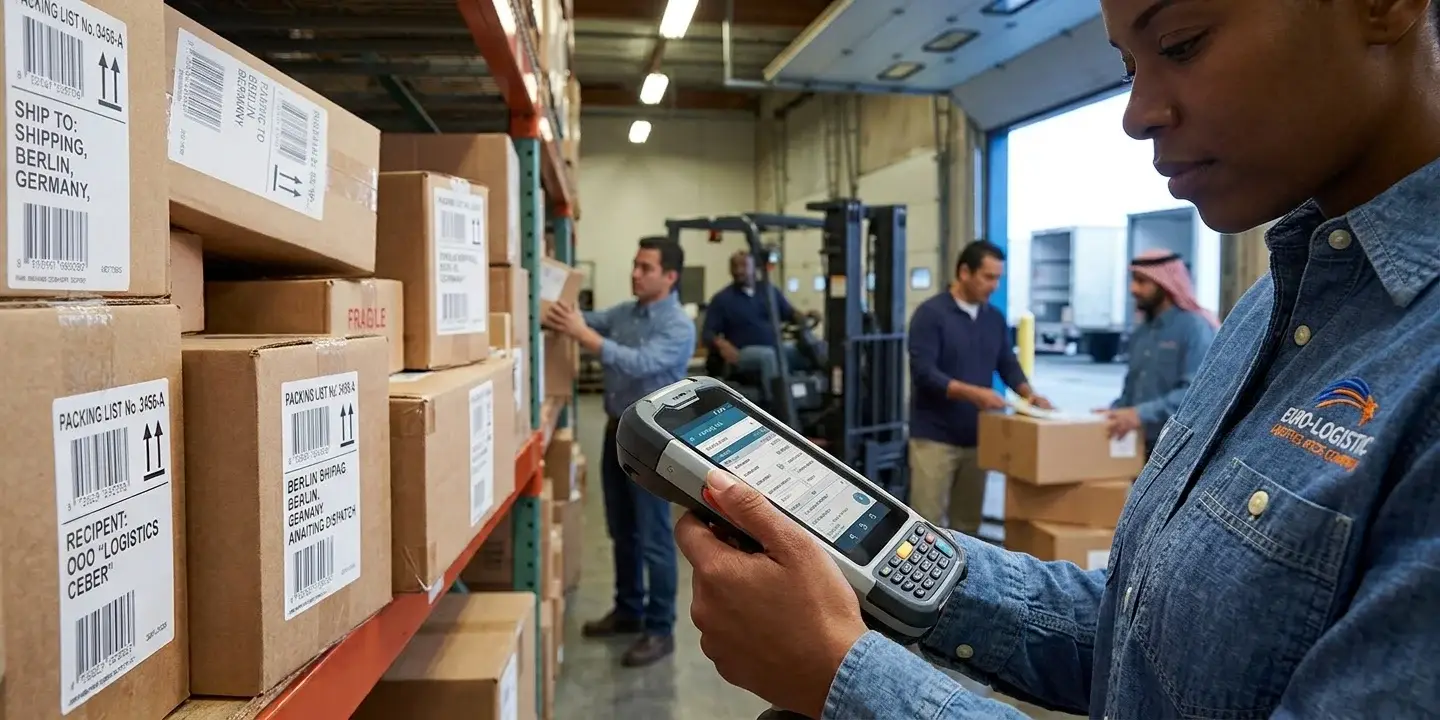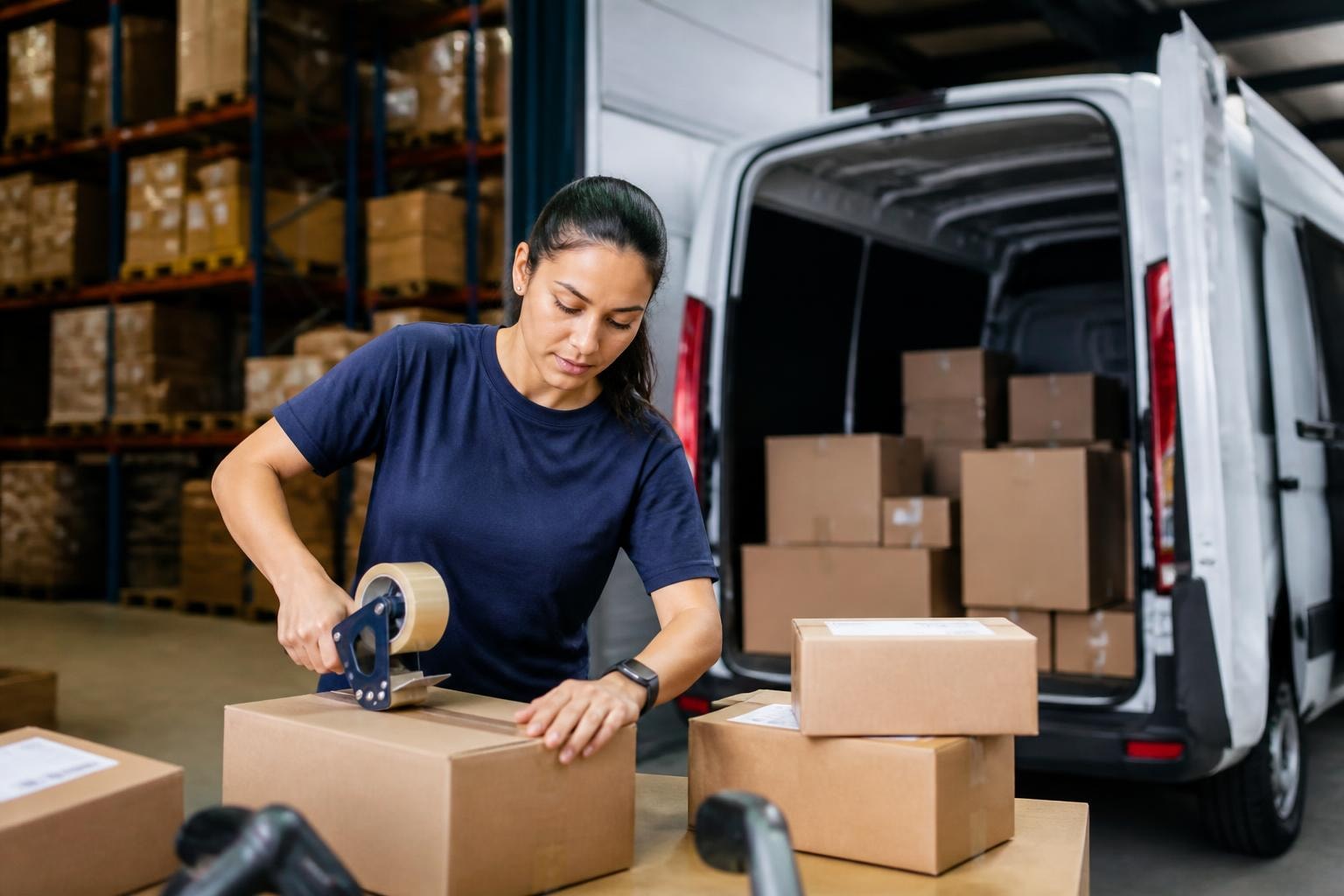

A single mis-picked order costs an ecommerce brand between $30 and $75 once relabeling, reshipping, and customer service time are counted. At 5,000 orders a month, even a 2% error rate turns into thousands of dollars in avoidable cost every quarter. Order fulfillment is the operational chain that decides whether that cost shows up: receiving, storage, picking, packing, shipping, and returns, run as one connected system instead of five departments that only talk to each other through spreadsheets.
What Is Ecommerce Order Fulfillment?
Order fulfillment covers everything that happens between a supplier shipment arriving at a warehouse and a customer opening their package. It is not the same as shipping, and treating the two as interchangeable is one of the more expensive assumptions a growing brand can make.
The Financial Impact of Fulfillment Decisions
Fulfillment decisions show up on a profit and loss statement whether or not anyone is tracking them there. Package dimensions are a direct example. Parcel carriers bill by dimensional weight when a box takes up more space than its actual weight would justify, so shaving roughly 400 cubic inches off a package can save $3 or more per shipment depending on carrier, zone, and dimensional divisor. On a brand shipping 30,000 orders a month, a $2 per order improvement in packaging efficiency works out to $60,000 a month, or $720,000 a year. That is the kind of number that turns fulfillment from a back-office cost center into a lever for gross margin.
Order Fulfillment vs. Order Processing and Shipping
Order processing is the verification step inside fulfillment: confirming customer details, checking inventory availability, and routing the order to the right pick location. Shipping is narrower still, covering only the handoff to a parcel or freight carrier and the transit to the customer. Order fulfillment is the full chain that contains both of these plus receiving, storage, picking, packing, and returns. Confusing the terms leads brands to benchmark the wrong thing, comparing a carrier’s on-time rate to a fulfillment provider’s overall accuracy when the two numbers measure different parts of the chain.
How the Ecommerce Order Fulfillment Process Works
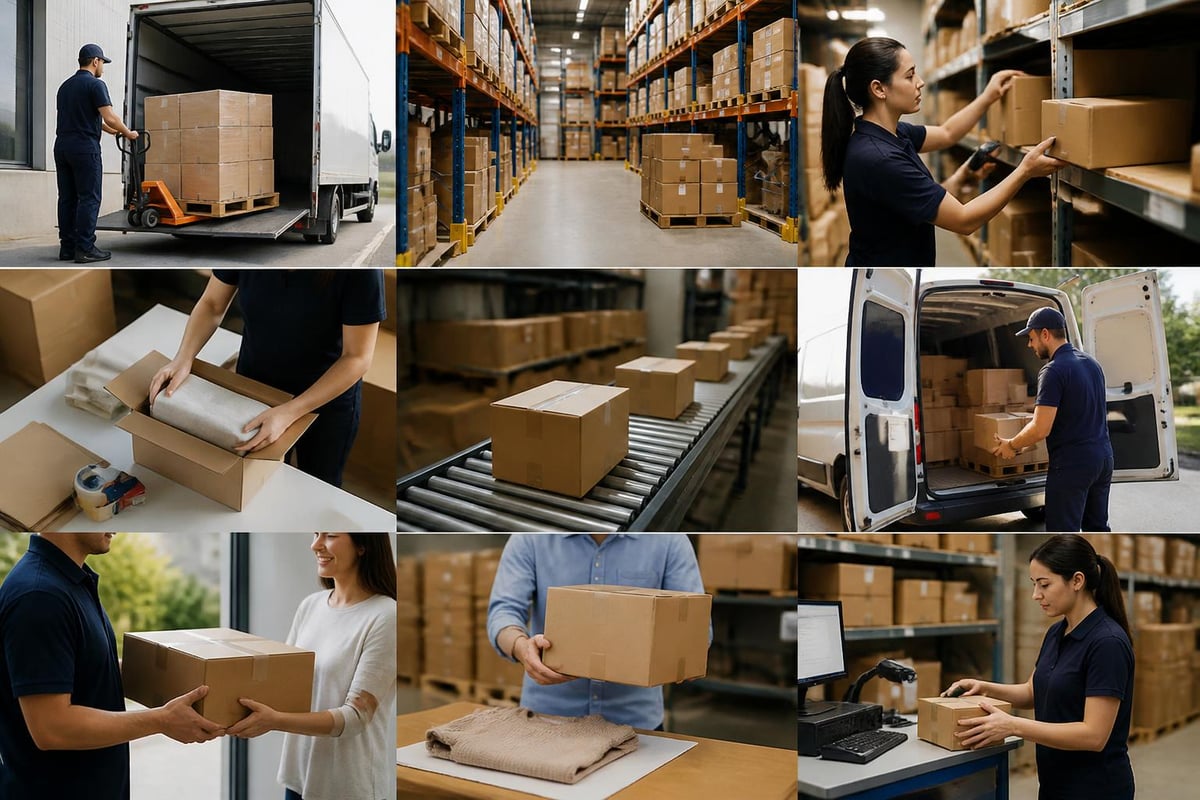
The order fulfillment process breaks into five stages, and each one has its own failure points.
1. Receiving and Storing Inventory
Inbound freight arrives as parcel, LTL, FTL, or floor-loaded container, and every unit needs to be counted, inspected for damage, and entered into a warehouse management system before it becomes sellable. Storage location matters as much as the count. Products get assigned to pallet positions, pick faces, or bins based on how fast they move, and a wrong physical or WMS location can look identical to lost inventory on a report. Storage conditions also matter for specific product categories: an ambient warehouse without climate control is a different fit than a temperature-sensitive product line, and this is a question worth asking a fulfillment partner directly rather than assuming.
2. Order Receipt, Verification, and Processing
Once an order comes in from Shopify, Amazon, Walmart, eBay, or TikTok Shop, it needs to be verified against inventory availability and routed to the correct fulfillment channel, whether that is direct-to-consumer, FBA prep, or a B2B shipment. An order management system syncing in real time with the warehouse management system prevents the most common processing failure: selling inventory that has already been allocated or is sitting in the wrong location.
3. Picking, Packing, and Quality Control
Picking methods (single-order, batch, zone, or cart-based) trade off speed against complexity, and the right method depends on order volume and SKU count more than on brand preference. Packing is where dimensional weight and damage prevention intersect: the box, mailer, and void fill selected here directly affect both the carrier bill and the return rate. A quality control check before the package is sealed, confirming SKU, quantity, and condition, is the last point where an error is cheap to fix instead of an expensive reship.
4. Shipping, Delivery, and Tracking
Carrier selection should weigh more than the label price. Delivery consistency, claims history, tracking accuracy, and undeliverable rate all affect the customer’s experience after the label prints. A provider that accepts a slightly higher per-label cost for a carrier with materially better delivery consistency is making a defensible trade, not overpaying. Tracking data returned to the selling channel closes the loop and reduces where-is-my-order support volume.
5. Returns and Post-Purchase Support
A return is not the end of the fulfillment process, it is a second, smaller version of it: receive, inspect, decide whether to restock or dispose, and update inventory accordingly. Brands that treat returns as an afterthought tend to have inventory records that drift further out of sync every month, since a restocked return that never gets logged looks like inventory that simply appeared from nowhere.
Common Challenges in Order Fulfillment Operations
Fast-growing ecommerce brands face numerous obstacles as they scale their fulfillment operations. Understanding these challenges helps businesses proactively develop solutions before problems impact customer satisfaction.
Inventory Management Complexities
Inventory errors are rarely simple shrinkage. In practice they trace back to a longer list of causes: wrong physical or WMS location, incorrect units-per-carton assumptions, open cartons counted incorrectly, duplicate or missing transactions, and transfer errors between locations. A brand growing from 25 SKUs to more than 150 SKUs will feel this complexity rise even if order volume does not grow at the same pace, because pick locations, replenishment work, and cycle counting all scale with SKU count, not just with orders.
Accuracy and Quality Control Issues
A single fulfillment error is commonly estimated to cost between $30 and $75 once relabeling, reshipping, and customer service time are factored in. At meaningful volume, a fulfillment operation with a 1 to 2% error rate is absorbing a five- or six-figure annual cost that a tighter QC process at the pack station would largely prevent
Shipping Speed Expectations
Customers increasingly expect delivery timelines that used to be reserved for premium shipping tiers. Meeting that expectation without eroding margin usually comes down to dock-to-stock speed (how quickly received inventory becomes available to pick), realistic order cutoff times, and carrier selection that matches the zone and service level actually required rather than defaulting to the fastest, most expensive option for every order.
Order Fulfillment Models
In-House Fulfillment
Running fulfillment internally gives a brand full control over the process and direct visibility into every order, but it also means carrying the fixed cost of space, labor, and technology regardless of order volume. It tends to work best at lower volumes, before the SKU count and order velocity make in-house scaling economically inefficient.
Third-Party Logistics (3PL)
A 3PL takes over receiving, storage, picking, packing, shipping, and returns on a brand’s behalf, converting fixed fulfillment costs into a variable, volume-based expense. The trade-off is giving up some direct control, which is why partner selection (covered later in this guide) matters more than any single feature comparison.
Dropshipping and Hybrid Fulfillment
Dropshipping removes inventory ownership entirely, with the supplier shipping directly to the customer, which minimizes capital risk but limits control over packaging, branding, and delivery speed. A hybrid model, storing fast-moving SKUs with a fulfillment partner while dropshipping slower or made-to-order items, is increasingly common among brands with a mixed product catalog.
In-House vs. 3PL vs. Dropshipping
| Factor | In-House | 3PL | Dropshipping |
| Control over process | Full | Shared | Minimal |
| Capital investment | High | Low to none | None |
| Scalability | Limited by space and labor | High | High |
| Speed to market | Slower to set up | Fast onboarding | Fastest |
| Best fit | Low, stable volume | Growing, multi-channel brands | Low-margin or untested SKUs |
Scaling Your Fulfillment Operations
Growth brings its own set of challenges. What works efficiently for 100 orders daily may collapse under the strain of 1,000 orders as businesses scale their operations.
When to Transition from In-House Fulfillment
There is no single universal order count that triggers the switch, but most brands feel the strain somewhere between roughly 1,000 and 5,000 orders a month, when hiring, space, and system limitations start competing with time that should go toward growth. Brands in the 5,000 to 50,000 orders per month range typically have enough complexity to benefit from a 3PL’s systems without being so large that only the biggest national providers can support them.
Technology Integration Requirements
A fulfillment partner needs to connect cleanly with the platforms a brand already sells on, whether that is Shopify, Amazon, Walmart, eBay, or TikTok Shop, and keep inventory counts synchronized in near real time. Gaps here create the most common multi-channel failure: an item selling out on one channel while the WMS still shows it as available on another.
Managing Peak Season Demands
Peak season strains every part of the chain at once: receiving backs up, pick faces run out of single-SKU positions, and staffing needs jump well above baseline. Warehouses that can temporarily expand pick-face count and pull in flexible labor tend to hold service levels during the surge; those that cannot tend to see accuracy and speed both slip at exactly the moment customers are least forgiving of it.
Specialized Fulfillment Services for Growth
Beyond basic pick, pack, and ship operations, specialized services help brands differentiate their customer experience and expand their product offerings.
Kitting and Bundling Operations
Kitting combines multiple SKUs into a new sellable configuration, such as a subscription kit, a gift set, a launch package, or a product-plus-accessory bundle. This work is labor-intensive and priced accordingly, so a fulfillment partner comfortable with kitting should be evaluated on throughput and consistency, not just willingness to do it.
Amazon FBA Preparation Services
FBA prep covers FNSKU labeling, poly-bagging, bubble wrapping, carton and pallet preparation, and compliance checks before inventory is forwarded to an Amazon fulfillment center. Errors here result in Amazon-side rejections or chargebacks, so this is one area where a fulfillment partner’s specific FBA experience is worth confirming rather than assuming.

Value-Added Services
Beyond core pick and pack, a fulfillment partner may offer inserts (thank-you cards, promotional material, instructions), inspection and quality control, and relabeling or repackaging. These services matter most for brands running promotions, subscription models, or products that need extra protective packaging.
Measuring Fulfillment Performance
You can’t improve what you don’t measure. Establishing key performance indicators (KPIs) for fulfillment operations provides visibility into efficiency and identifies improvement opportunities.
Essential Fulfillment Metrics
The metrics worth tracking regularly include on-time shipment rate, mis-pick rate, dock-to-stock time (how long inventory sits before it is available to pick), inventory accuracy, and cost per order across labor, packaging, and postage. Reviewing these together, rather than any single one in isolation, is what surfaces whether a fulfillment operation is actually improving or just moving problems around.
Customer Satisfaction Indicators
Delivery time consistency (not just average delivery time) and order accuracy correlate directly with repeat purchase rate. A return handled quickly and transparently can retain a customer that a slow, confusing return process would lose permanently, which makes the returns experience a satisfaction metric in its own right, not just a cost line.
How to Choose an Ecommerce Fulfillment Partner
Choosing a fulfillment partner is a decision with real switching cost, so it is worth evaluating on more than price per pick.
Partner Selection Criteria
The criteria that matter most in practice: a track record of inventory accuracy, technology that integrates with the brand’s actual sales channels, transparent and explainable billing, and direct access to the people who run day-to-day operations rather than a support ticket queue. Most brands switching 3PLs cite a combination of inventory inaccuracies, slow support, unexplained fees, and poor account management as the reason for leaving, which makes these the exact points worth probing before signing a contract.
Fulfillment Center Locations and Shipping Zones
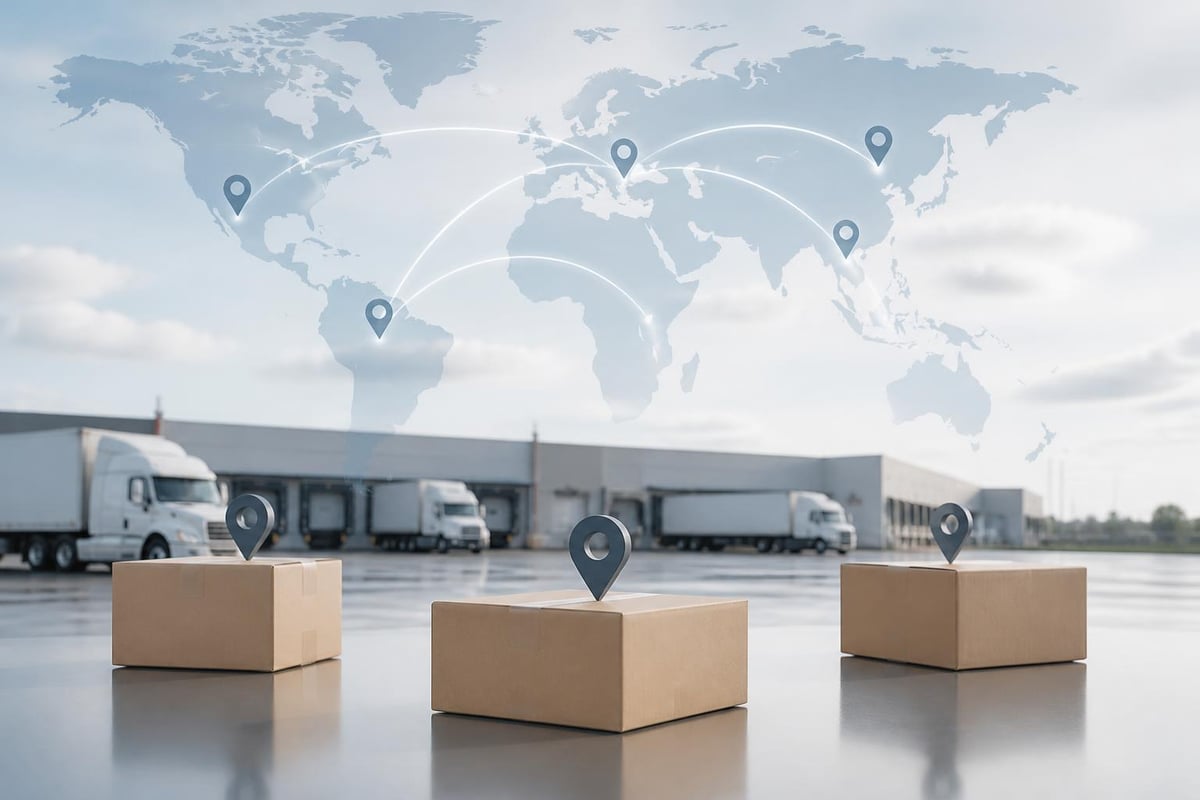
A single warehouse location determines the parcel zones a brand can reach economically. A Southeast facility gives strong access to South Florida, Latin America-linked trade flows, and East Coast zones, while a brand with a national customer base benefits from a partner with multiple nodes or a clear plan to add them, since zone skipping across two or more warehouse locations can meaningfully reduce both cost and transit time.
How to Improve the Order Fulfillment Process
The best fulfillment operations never stop evolving. Regular reviews of processes, metrics, and customer feedback identify opportunities for optimization and efficiency gains.
Process Auditing and Optimization
Improving the order fulfillment process starts with a regular audit of the metrics above against a defined baseline, not with a general sense that things feel slow. A packaging audit specifically (checking for oversized boxes triggering dimensional weight charges) is frequently the fastest, lowest-effort win available to a brand that has not looked at it before.
Automation, Data, and Customer Feedback
Automating data capture between the OMS and WMS removes the manual entry step most likely to introduce errors, and real-time reporting turns fulfillment KPIs from a monthly surprise into something correctable mid-month. Customer feedback, particularly complaints tied to a specific SKU, carrier, or warehouse zone, often points to a fulfillment process steps issue before it shows up in the aggregate numbers.
Ecommerce Fulfillment Services From Ecom Auto Prep
Ecom Auto Prep runs a Class A industrial fulfillment facility in Coral Springs, Florida, supporting Shopify, Amazon FBA, Walmart, eBay, and TikTok Shop sellers from one warehouse. The operation is built around direct account access rather than a support ticket queue, with services spanning receiving, storage, multi-channel order processing, kitting, subscription box fulfillment, and Amazon FBA prep. Brands evaluating a switch can review our kitting and bundling capabilities, platform integrations, and industry-specific fulfillment pages for more detail on how each service fits a specific catalog.
Ready to Fix What’s Slowing Your Fulfillment Down?
If mis-picks, unexplained fees, or slow support are costing you orders every month, get a quote from our Coral Springs team this week. Schedule a meeting to walk through your SKUs, volume, and channels, or request a service pricing built around your actual order profile instead of a generic rate card.
Frequently Asked Questions
What Is the Initial Step in the Order Fulfillment Process?
The initial step is receiving: counting, inspecting, and entering inbound inventory into a warehouse management system before it becomes available to pick. Every downstream step, from order processing to shipping, depends on this data being accurate.
What Is the Difference Between Order Fulfillment and Shipping?
Shipping is the transportation leg only, the handoff to a carrier and transit to the customer. Order fulfillment is the full chain, including receiving, storage, picking, packing, shipping, and returns, so shipping is one stage inside a larger process rather than a synonym for it.
How Can a Business Improve the Order Fulfillment Process?
Start by auditing packaging dimensions against dimensional weight charges, syncing the OMS and WMS to remove manual data entry, and tracking mis-pick rate and dock-to-stock time on a fixed schedule rather than only when a problem surfaces.
When Should a Business Outsource Order Fulfillment?
Most brands feel the case for outsourcing somewhere between 1,000 and 5,000 orders a month, when in-house space, staffing, or systems start limiting growth rather than supporting it. The 5,000 to 50,000 orders per month range is where a 3PL’s systems typically deliver the clearest return.