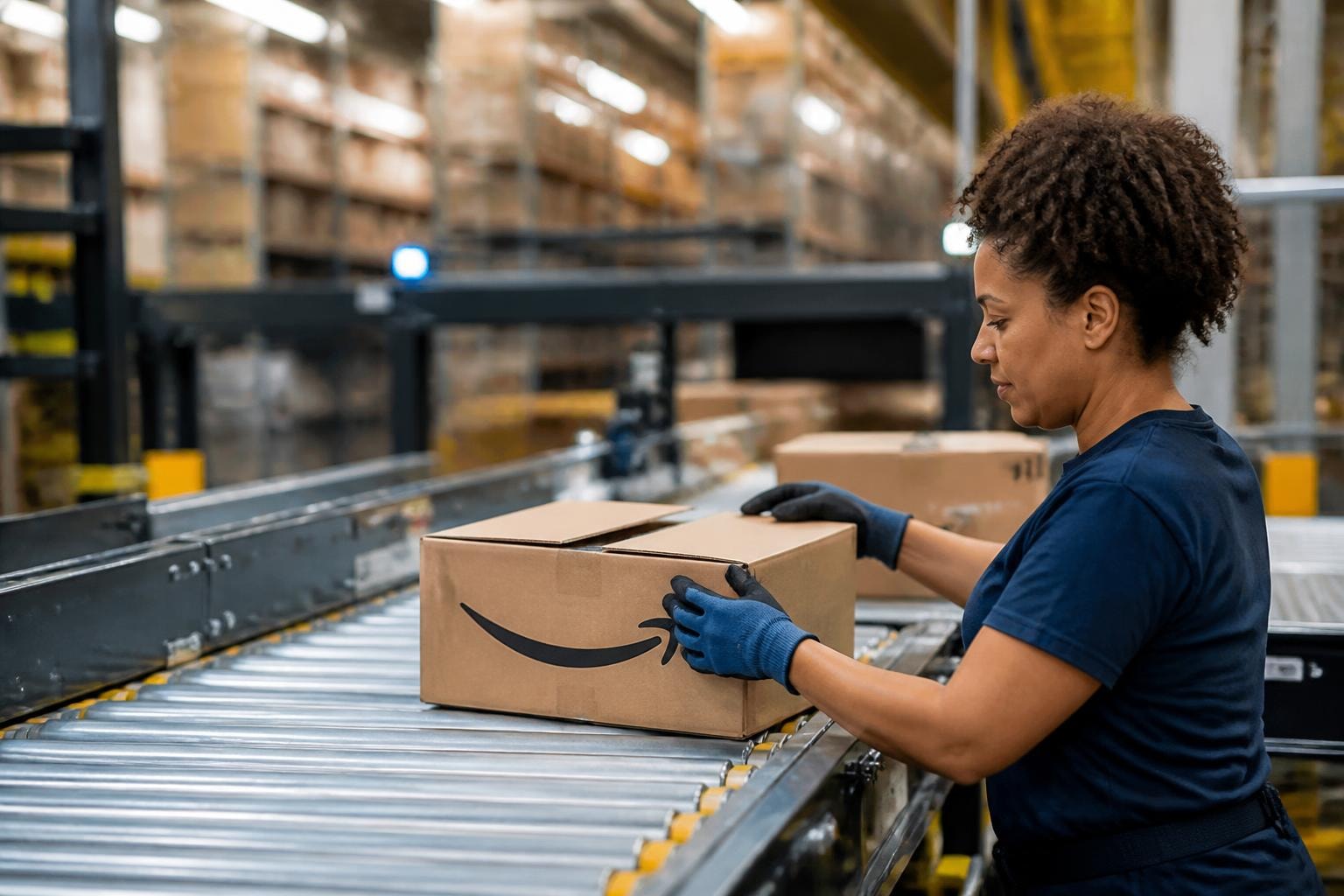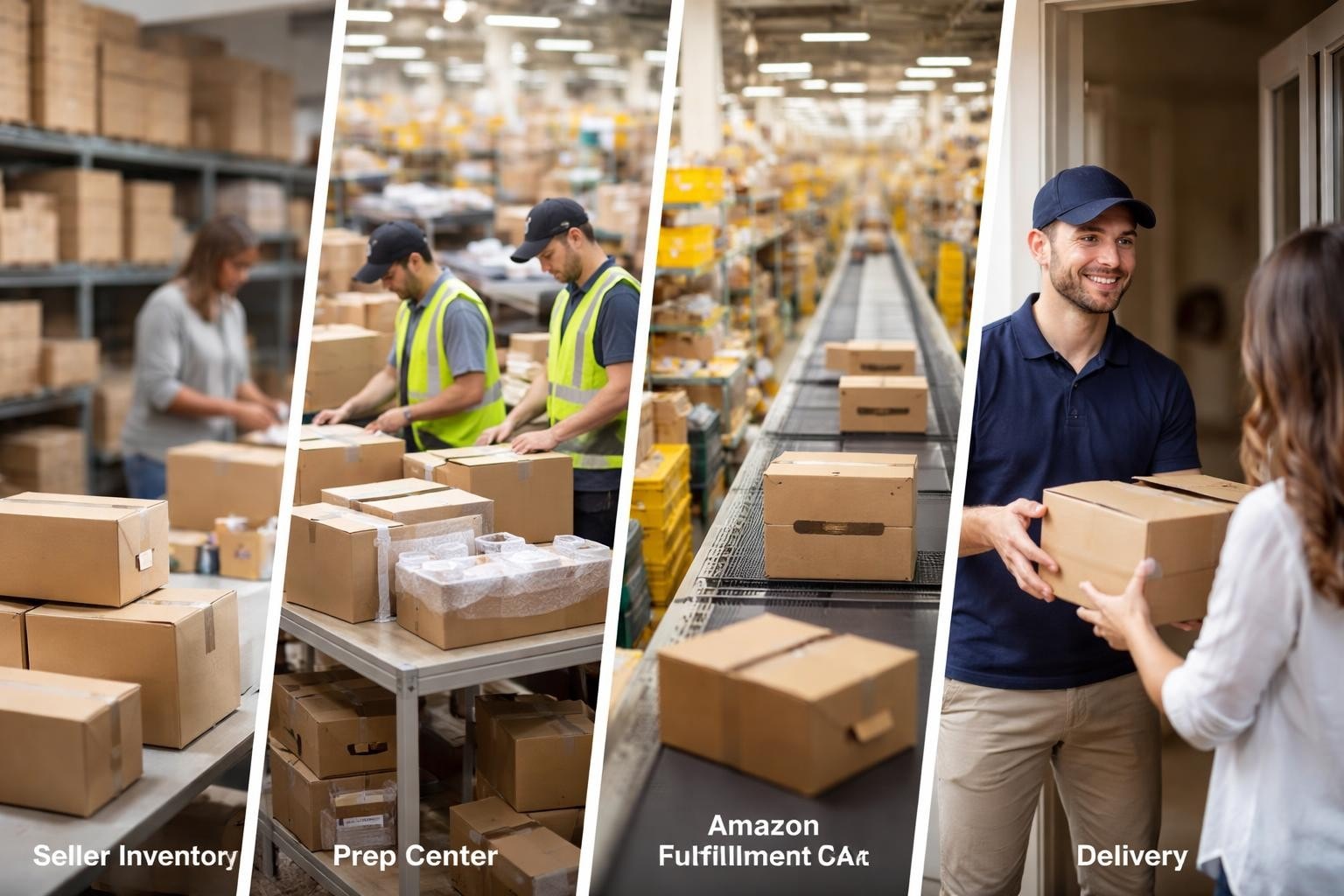

The amazon fba shipping service has revolutionized how e-commerce sellers manage logistics, transforming small businesses into competitive players in the global marketplace. By leveraging Amazon’s extensive fulfillment network, sellers gain access to world-class warehousing, shipping infrastructure, and customer service capabilities without building these systems themselves. Understanding the intricacies of this service is essential for any seller looking to scale operations, improve delivery times, and maintain the competitive edge that customers expect in 2026. From initial prep requirements to final delivery, mastering the FBA shipping process can significantly impact profitability and customer satisfaction.
Understanding Amazon FBA Shipping Fundamentals
The Fulfillment by Amazon program operates on a straightforward premise: sellers send inventory to Amazon’s warehouses, and Amazon handles storage, picking, packing, shipping, and customer service. This model has fundamentally changed e-commerce logistics by democratizing access to sophisticated fulfillment infrastructure.
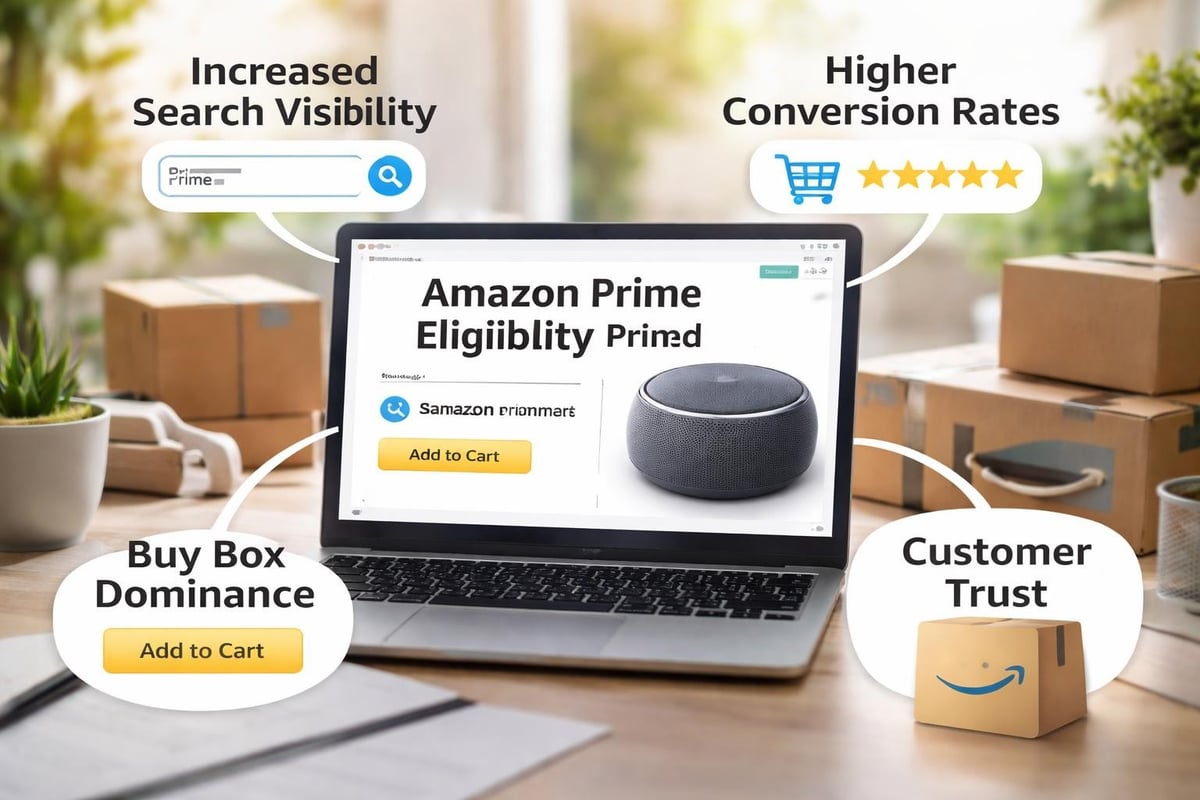
When you use the amazon fba shipping service, your products become eligible for Prime shipping, which dramatically increases visibility and conversion rates. Amazon’s data shows Prime-eligible products typically see 30-50% higher sales compared to merchant-fulfilled items. This advantage stems from customer trust in Amazon’s delivery promises and the psychological appeal of fast, free shipping.
Key Components of FBA Shipping
The service encompasses several critical stages that sellers must understand:
- Inbound shipping: Transporting inventory from your location to Amazon fulfillment centers
- Receiving and storage: Amazon’s acceptance and warehousing of your products
- Order processing: Automated picking and packing when customers purchase
- Outbound shipping: Final delivery to customers through Amazon’s carrier network
- Returns management: Handling customer returns and refunds
Each component requires specific preparation and adherence to Amazon’s standards. Failure to meet these requirements results in refused shipments, storage fees, or account suspensions.
Preparing Products for Amazon FBA Shipping
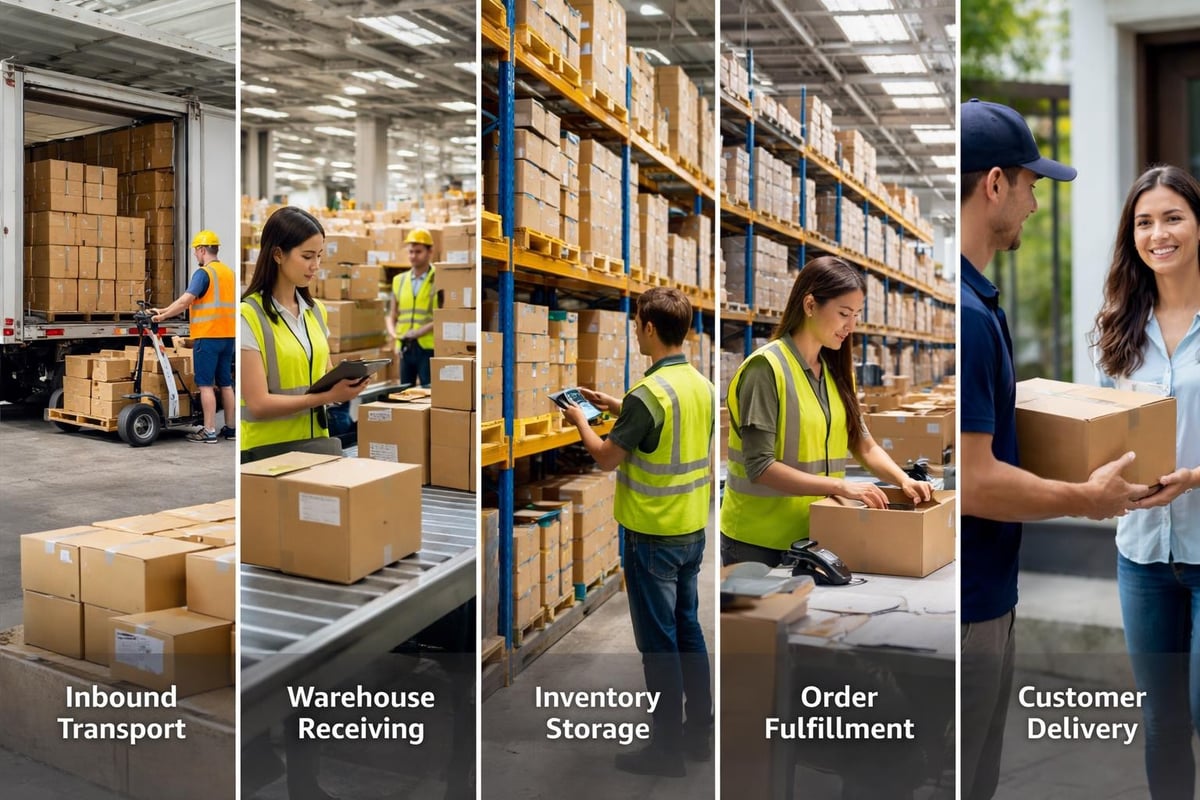
Product preparation represents one of the most critical aspects of using the amazon fba shipping service successfully. Amazon maintains strict guidelines for how products must arrive at their facilities, and non-compliance leads to immediate rejection.
Labeling Requirements
Every unit sent to Amazon requires proper identification. You’ll choose between manufacturer barcodes (UPC, EAN) or Amazon’s FNSKU labels. FNSKU labels provide better inventory tracking and prevent commingling with other sellers’ inventory, which protects brand integrity.
Standard labeling specifications include:
- Label placement on scannable surfaces (not curved edges or seams)
- Minimum size of 1″ x 2″ for readability
- High-contrast printing with adequate white space
- No overlapping with existing barcodes
Working with a professional prep service ensures compliance with these evolving requirements. Many sellers partner with fulfillment providers to handle the technical aspects of preparation, allowing them to focus on sourcing and marketing.
Packaging Standards
Amazon requires packaging that protects products during warehouse operations and shipping. Fragile items need poly bagging or bubble wrap, while liquids require double-sealing in leak-proof containers. The comprehensive guide for FBA sellers outlines specific packaging requirements by product category.
| Product Type | Packaging Requirement | Additional Notes |
|---|---|---|
| Textiles/Fabrics | Poly bag with suffocation warning | Must be sealed if opening >5 inches |
| Glass/Fragile | Bubble wrap + “Fragile” sticker | Six-sided protection required |
| Liquids | Sealed bag + absorbent material | Container must withstand 3-foot drop |
| Multipacks | Shrink wrap or banding | Individual items must not separate |
Optimizing Inbound Shipping Costs
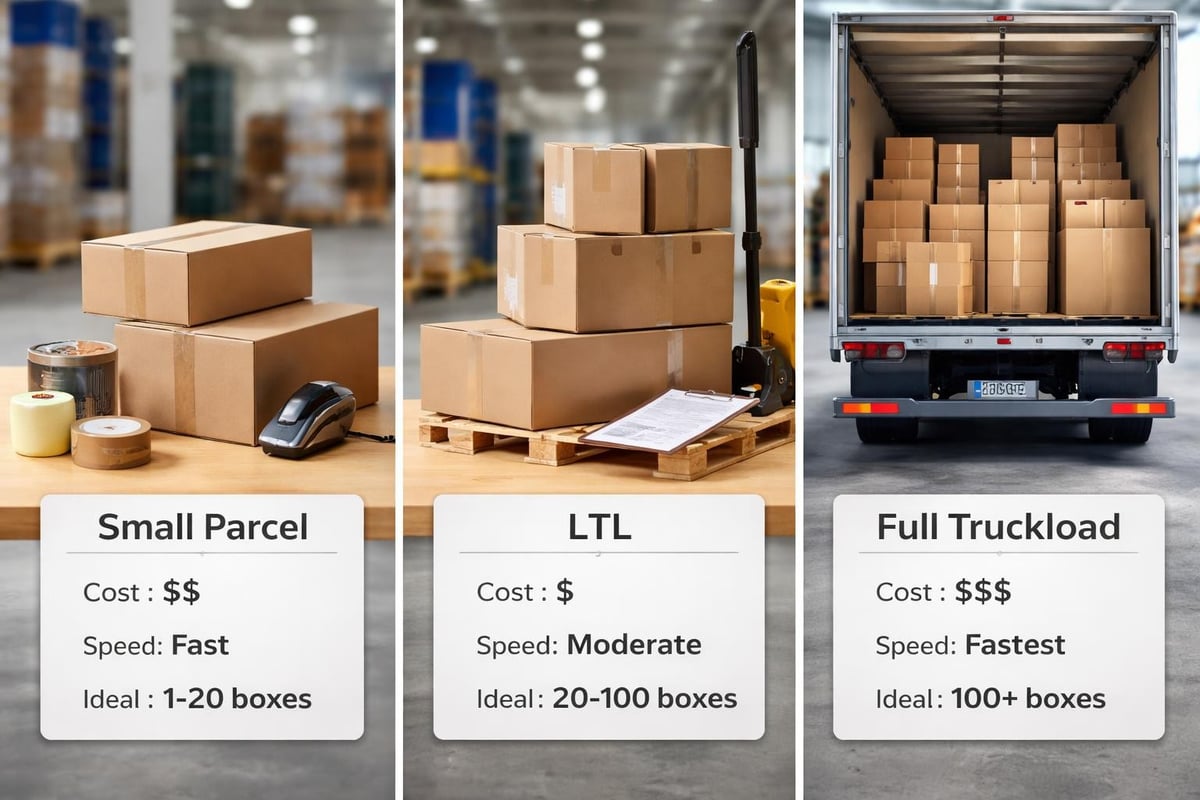
Transportation costs to Amazon warehouses significantly impact margins. The amazon fba shipping service begins with your inbound shipping strategy, which requires careful planning to balance speed and cost efficiency.
Choosing Shipping Methods
Sellers typically select between small parcel carriers (UPS, FedEx) for smaller shipments and less-than-truckload (LTL) or full truckload for larger volumes. Small parcel works well for shipments under 150 pounds, while LTL becomes cost-effective for 150-10,000 pounds.
Amazon Partner Carrier options provide discounted rates through Amazon’s negotiated contracts. These carriers integrate directly with Seller Central, streamlining the shipping workflow and providing automatic tracking updates.
For international sellers, Amazon Global Logistics offers competitive ocean and air freight rates directly integrated with FBA. This end-to-end solution simplifies customs clearance and reduces the complexity of international shipping.
Strategic Inventory Distribution
Amazon’s Inventory Placement Service allows sellers to choose between distributed inventory (Amazon splits shipments across multiple warehouses) and single-location shipping (seller pays fees but ships to one facility). Understanding how to reduce shipping costs through strategic placement decisions can save thousands annually.
Most sellers find distributed inventory more economical long-term despite requiring multiple shipments initially. Amazon’s algorithm places products closer to customers, reducing outbound shipping costs and delivery times.
Navigating FBA Fee Structures
Understanding the complete cost structure of the amazon fba shipping service enables accurate profitability calculations. Amazon charges multiple fees that vary by product size, weight, and category.
Fulfillment Fees
Standard-size items (under 20 lbs) incur fees ranging from $3.22 to $6.10 per unit depending on dimensional weight. Oversized items face significantly higher fees, sometimes exceeding $20 per unit. These fees cover picking, packing, shipping, customer service, and product returns.
Seasonal rate increases occur during Q4 (October-December) when fulfillment costs rise by $0.35-$0.40 per unit. Savvy sellers factor these temporary increases into pricing strategies or adjust inventory levels accordingly.
Storage Fees
Monthly storage fees vary by time of year and product size. Standard-size items cost $0.87 per cubic foot January-September and $2.40 per cubic foot October-December. These fees encourage inventory turnover and penalize slow-moving products.
Long-term storage fees apply to inventory stored over 365 days, charged at $6.90 per cubic foot or $0.15 per unit, whichever is greater. Regular inventory audits prevent these costly charges from accumulating.
| Fee Type | Standard-Size | Oversize | When Charged |
|---|---|---|---|
| Fulfillment | $3.22-$6.10 | $9.73-$137.32 | Per unit sold |
| Monthly Storage (Jan-Sep) | $0.87/cu ft | $0.56/cu ft | Monthly |
| Monthly Storage (Oct-Dec) | $2.40/cu ft | $1.40/cu ft | Monthly |
| Long-term Storage | $6.90/cu ft | $6.90/cu ft | Semi-annually |
Mastering Shipment Creation in Seller Central
Creating FBA shipments requires attention to detail and understanding of Amazon’s workflow. The amazon fba shipping service starts when you initiate a shipment in Seller Central, triggering Amazon’s receiving process.
Step-by-Step Shipment Process
- Convert listings to FBA: Change product fulfillment channels from merchant-fulfilled to Amazon
- Create shipping plan: Enter quantity and prepare products, selecting box content information
- Prep and label products: Apply FNSKU labels and prepare according to requirements
- Set box dimensions and weight: Provide accurate measurements for each shipping box
- Choose carrier and print labels: Select shipping method and generate box labels
- Schedule pickup or deliver: Arrange carrier pickup or deliver to carrier facility
This step-by-step FBA shipping guide provides visual walkthroughs of each stage in Seller Central. Following the precise sequence prevents shipment rejection and delays.
Common Shipment Mistakes
Many sellers encounter problems during their first several shipments. Inadequate labeling causes the most frequent rejections, followed by incorrect box content information. When Amazon cannot verify shipment contents, they refuse the entire delivery.
Mismatched box weights trigger additional verification processes that delay receiving by several days. Always weigh boxes after packing and provide measurements that match actual dimensions within one inch.
Mixed SKU boxes require itemized box content information, which becomes time-consuming for large shipments. Many sellers simplify by keeping single-SKU boxes whenever possible, accepting slightly higher material costs for operational efficiency.
Leveraging FBA for Competitive Advantage
The strategic benefits of the amazon fba shipping service extend beyond simple logistics outsourcing. How Amazon’s FBA changed the shipping logistics playbook demonstrates the competitive advantages available to sellers who master the system.
Prime Badge Benefits
Prime eligibility dramatically increases product visibility in search results and buy box eligibility. Amazon’s algorithm favors FBA products because the company controls the delivery experience and can guarantee service levels.
Conversion rate improvements of 25-50% are common when products gain Prime eligibility. Customers filter specifically for Prime items, effectively excluding merchant-fulfilled competitors from consideration.
Multi-Channel Fulfillment
FBA inventory can fulfill orders from other sales channels (your website, eBay, Walmart) through Multi-Channel Fulfillment. This feature allows centralized inventory management while serving customers across platforms, though fees run slightly higher than standard FBA.
Businesses leveraging direct-to-consumer fulfillment strategies benefit from using FBA as one component of a diversified fulfillment approach. This reduces dependency on any single platform while maintaining operational efficiency.
Managing International FBA Shipping
Cross-border e-commerce represents significant growth opportunities, and the amazon fba shipping service supports international expansion through several programs. Understanding customs, duties, and international logistics separates successful global sellers from those who struggle.
FBA Export Program
Amazon’s FBA Export automatically makes products available to international customers in over 100 countries. Products ship from domestic warehouses with Amazon handling customs forms and international shipping logistics.
Sellers simply enable the program in Seller Central settings. Amazon adds a small fee (typically 1-3% of product price) but manages all complexity of international shipping, returns, and customer service in local languages.
European Expansion Strategies
The Pan-European FBA program allows sellers to store inventory in one country while selling across all EU marketplaces. Amazon redistributes inventory to local fulfillment centers, reducing delivery times and shipping costs for European customers.
VAT registration requirements vary by country and total sales volume. Most sellers reaching €10,000 in annual sales to an EU country must register for VAT in that nation. Professional accounting guidance becomes essential for compliance.
Optimizing FBA Inventory Management
Successful use of the amazon fba shipping service requires sophisticated inventory planning. Stockouts lose sales and damage rankings, while excess inventory accumulates storage fees and ties up capital.
Reorder Point Calculations
Effective reorder points account for lead time (manufacturing plus shipping), safety stock (buffer for demand variability), and Amazon’s receiving time (typically 3-7 days). The basic formula considers daily sales velocity multiplied by total lead time in days.
Seasonal demand fluctuations complicate calculations for products with variable sales patterns. Historical data from previous years provides the foundation for forecasting, adjusted for growth trends and market changes.
Inventory Performance Index
Amazon’s Inventory Performance Index (IPI) scores sellers on inventory efficiency from 0-1000. Scores below 450 trigger storage limits, restricting how much inventory can be sent to FBA. Maintaining scores above 500 ensures unrestricted access to storage capacity.
Four factors determine IPI scores:
- Excess inventory percentage (products with over 90 days supply)
- FBA sell-through rate (units sold divided by average inventory)
- Stranded inventory (products without active listings)
- In-stock rate for popular products
Working with FBA Prep Services
Many sellers partner with third-party prep centers to handle the technical requirements of the amazon fba shipping service. These partnerships prove especially valuable for sellers sourcing internationally or managing large product catalogs.
Benefits of Professional Prep
Dedicated prep services understand Amazon’s evolving requirements and maintain compliance even as policies change. They handle labeling, poly bagging, bundling, and quality inspection before shipping to Amazon.
Cost analysis typically shows prep services become economical once volumes exceed 500-1000 units monthly. Labor costs, error rates, and opportunity cost of seller time all factor into this calculation. Understanding e-commerce fulfillment pricing helps sellers make informed decisions about when to outsource.
Selecting a Prep Partner
Evaluation criteria should include proximity to major FBA warehouses, service breadth, pricing transparency, and technology integration. The best prep centers offer real-time inventory visibility and seamless workflow integration with existing business systems.
Location matters significantly for inbound shipping costs. Prep centers near Amazon warehouses reduce transportation expenses and shorten delivery times, allowing faster inventory replenishment cycles.
Advanced FBA Shipping Strategies
Experienced sellers develop sophisticated approaches to maximize the amazon fba shipping service benefits while minimizing costs and risks.
Shipment Splitting Optimization
Amazon often requires shipments split across multiple warehouses. Strategic box packing can influence how Amazon distributes inventory. Heavier, slower-moving items grouped together may receive different placement than fast-moving, lightweight products.
Some sellers deliberately create shipments that trigger specific warehouse assignments, placing inventory closer to known customer concentrations. This advanced technique requires deep understanding of Amazon’s distribution network and historical shipment patterns.
Removal Order Planning
Strategic removal orders reclaim slow-moving inventory before long-term storage fees apply. Sellers can redirect products to prep centers for repackaging, bundling with other items, or liquidation through alternative channels.
Automated removal triggers based on inventory age and velocity prevent fee accumulation. Setting up monthly reviews of inventory over 300 days old allows proactive decisions before reaching the 365-day threshold.
Liquidation Programs
Amazon’s FBA Liquidations program allows automated sale of excess inventory to recovery companies. While returns are typically 5-10% of wholesale cost, this eliminates storage fees and frees capital for better-performing products.
Grade-and-resell strategies prove more profitable for slow movers with intact value. Removing products, inspecting condition, and relisting with better images and descriptions often revitalizes sales without deep discounting.
Compliance and Account Health
Maintaining good standing with Amazon’s amazon fba shipping service requires ongoing attention to performance metrics and policy compliance. Account suspensions cost sellers thousands in lost revenue during resolution.
Shipment Defect Rate
Amazon tracks receiving problems including incorrect labeling, damaged products, and shipment discrepancies. Defect rates above 0.5% trigger warnings, while sustained rates above 1% risk account restrictions.
Photographic documentation of all shipments before carrier pickup provides evidence if disputes arise. Many sellers photograph each labeled box and master carton to verify proper preparation.
Best Practices for Compliance
Following these FBA shipping and import best practices prevents most common compliance issues:
- Maintain detailed records of all shipments and their contents
- Respond promptly to receiving problems and coaching notifications
- Stay current with policy updates through Seller Central announcements
- Test new product preparations with small shipments before scaling
- Use case pack quantities that match Amazon’s preferences when possible
Regular account health monitoring catches problems early. Weekly reviews of shipment processing times, inventory accuracy, and customer feedback reveal trends before they impact metrics.
Future Trends in FBA Shipping
The amazon fba shipping service continues evolving with technology advancements and changing customer expectations. Understanding emerging trends helps sellers prepare for coming changes.
Automation and Robotics
Amazon’s increasing warehouse automation affects how products must be prepared. Standardized packaging dimensions work better with robotic systems, while irregular shapes may face additional handling fees as automation expands.
RFID adoption may eventually replace barcodes, requiring different labeling approaches. Staying informed about pilot programs and testing new technologies early provides competitive advantages.
Sustainability Initiatives
Amazon’s climate pledge commitments influence packaging requirements. Frustration-free packaging and reduced material usage become increasingly important. Sellers who proactively adopt sustainable packaging may receive preferential treatment or fee discounts in future programs.
How improving delivery fueled independent seller growth demonstrates Amazon’s continued investment in logistics infrastructure. Sellers benefit from these improvements through expanded capabilities and geographical reach.
Mastering the amazon fba shipping service provides e-commerce sellers with unparalleled logistics capabilities and access to millions of Prime customers. By understanding preparation requirements, optimizing costs, and maintaining compliance, sellers position themselves for sustainable growth in competitive marketplaces. Whether you’re just starting with FBA or looking to scale existing operations, partnering with experienced fulfillment providers streamlines the process and ensures consistent quality. Ecom Automation Prep specializes in comprehensive FBA preparation services that help growing brands navigate Amazon’s requirements while focusing on what matters most: sourcing great products and growing sales.