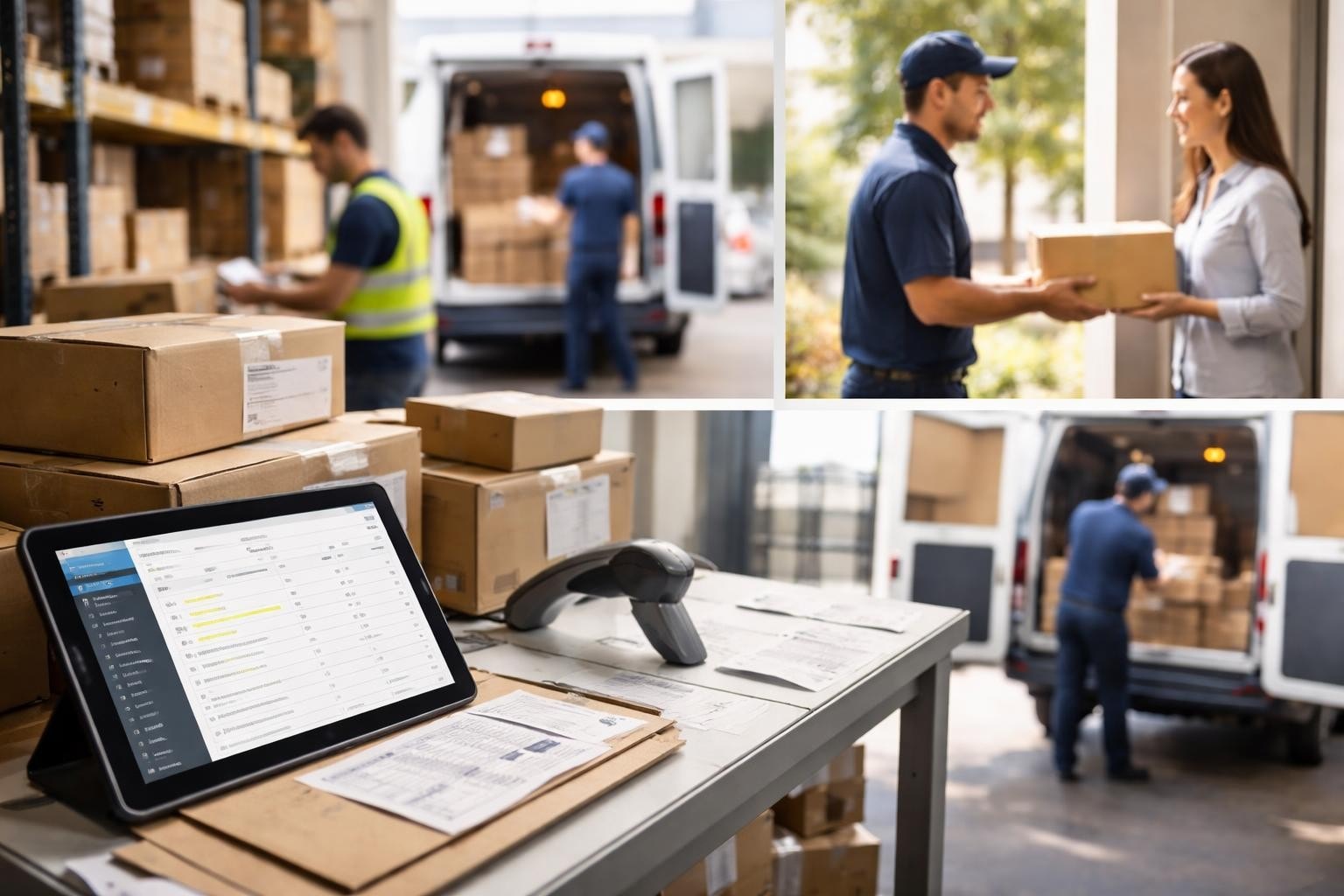

The landscape of fulfillment e commerce has evolved dramatically as online shopping continues to reshape retail. Today’s consumers expect fast shipping, accurate orders, and seamless experiences that challenge even the most established brands. Whether you’re launching a new direct-to-consumer brand or scaling an existing marketplace presence, understanding how fulfillment works and how to optimize it can determine your success in competitive markets. With technological advances and shifting consumer expectations, the fulfillment process has become a critical differentiator that impacts everything from customer loyalty to profit margins.
Understanding Modern Fulfillment E Commerce Operations
Fulfillment e commerce encompasses the entire process of receiving, processing, and delivering orders to customers. This complex operation involves inventory management, order processing, picking and packing, shipping coordination, and returns handling. Unlike traditional retail where customers physically select products, online fulfillment requires businesses to maintain precise inventory tracking while ensuring orders reach customers quickly and accurately.
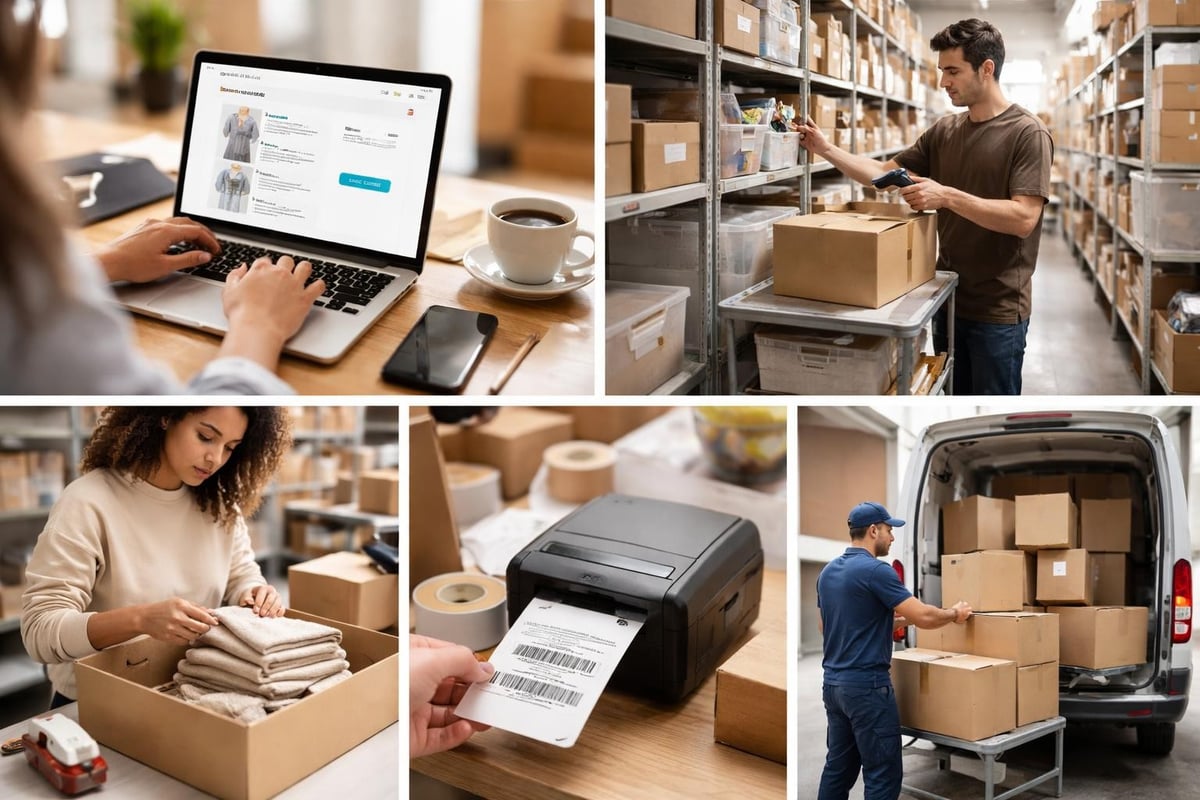
The fulfillment journey begins when a customer places an order on your website or marketplace. Your fulfillment system receives the order details, locates the product in your warehouse, picks the item from its storage location, packages it according to your specifications, and coordinates with carriers for delivery. Each step requires careful coordination and accuracy to maintain customer satisfaction.
Key Components of Successful Fulfillment
Several critical elements determine the effectiveness of your fulfillment operations:
- Inventory accuracy ensures you can fulfill orders without disappointing customers with stockouts
- Order processing speed directly impacts your ability to meet delivery expectations
- Packaging quality protects products while creating positive unboxing experiences
- Shipping carrier relationships provide competitive rates and reliable delivery options
- Returns management handles reverse logistics efficiently to maintain customer trust
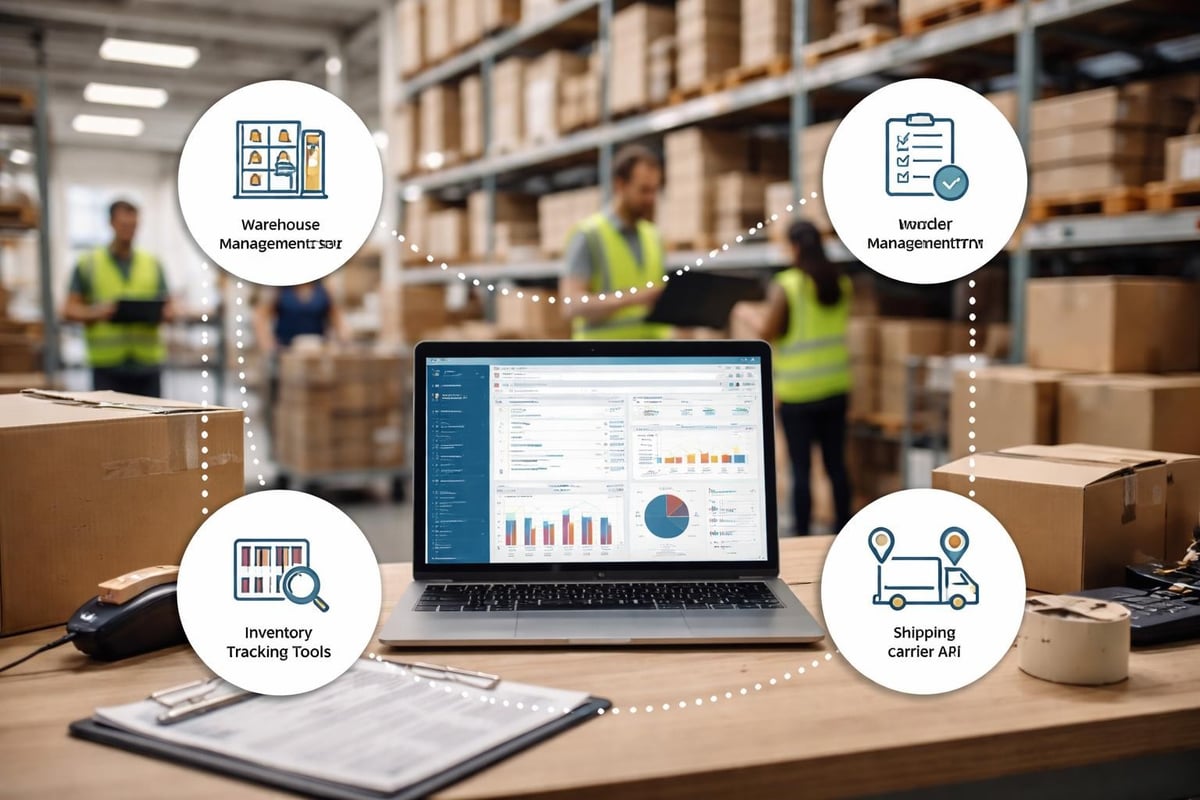
Modern fulfillment e commerce operations increasingly rely on technology integration. Warehouse management systems track inventory in real-time, while order management platforms connect sales channels to fulfillment operations. This technological infrastructure enables businesses to scale without proportionally increasing labor costs or error rates.
Choosing the Right Fulfillment Strategy
Businesses face several fulfillment model options, each with distinct advantages and challenges. Your choice depends on order volume, product characteristics, growth trajectory, and available capital.
In-House Fulfillment
Managing fulfillment internally gives you complete control over operations. You maintain direct oversight of inventory, can implement custom packaging solutions, and respond quickly to issues. However, this approach requires significant upfront investment in warehouse space, equipment, technology, and staff. As your business grows, scaling in-house fulfillment becomes increasingly complex and capital-intensive.
Many brands start with in-house fulfillment when order volumes are manageable. This allows them to perfect their processes and understand operational requirements before considering external partners.
Third-Party Logistics (3PL) Partners
Outsourcing to specialized fulfillment providers offers scalability without capital investment. 3PL services handle warehousing, picking, packing, and shipping, allowing you to focus on product development and marketing. These partnerships work particularly well for growing brands that need flexible capacity and geographic reach.
The decision between Amazon FBA prep services and traditional 3PL fulfillment depends on where you sell and your brand control priorities. FBA provides access to Prime customers but limits branding opportunities, while 3PL partners offer greater customization for direct-to-consumer operations.
Hybrid Approaches
Many successful brands combine fulfillment strategies. They might use FBA for marketplace sales while maintaining 3PL relationships for website orders. This hybrid approach optimizes for each channel’s requirements while diversifying operational risk.
| Fulfillment Model | Best For | Key Advantages | Primary Challenges |
|---|---|---|---|
| In-House | Low volume, high customization | Complete control, brand experience | High fixed costs, scaling difficulty |
| Third-Party (3PL) | Growing brands, multi-channel | Scalability, expertise, geographic reach | Less direct control, variable costs |
| Amazon FBA | Marketplace sellers, Prime access | Customer trust, fast shipping | Limited branding, strict requirements |
| Hybrid | Multi-channel brands | Channel optimization, risk distribution | Complexity, inventory allocation |
Technology Transforming Fulfillment E Commerce
The future of e-commerce fulfillment heavily relies on technological innovation that improves accuracy, speed, and cost efficiency. Automation, artificial intelligence, and advanced analytics are reshaping how fulfillment centers operate in 2026.
Warehouse Automation Systems
Modern fulfillment centers deploy various automation technologies to increase throughput while reducing errors. Conveyor systems move products efficiently through facilities, while automated storage and retrieval systems maximize vertical space utilization. Pick-to-light systems guide warehouse workers to exact product locations, significantly reducing picking time and errors.
Robotics have become increasingly sophisticated and affordable. Autonomous mobile robots transport inventory within warehouses, while robotic picking systems handle repetitive tasks. These technologies allow fulfillment operations to scale without proportionally increasing labor costs.
AI-Powered Inventory Management
Artificial intelligence transforms how businesses forecast demand and position inventory. Machine learning algorithms analyze historical sales data, seasonality patterns, promotional impacts, and external factors to predict future demand with remarkable accuracy. This enables more precise inventory purchasing and strategic positioning across multiple fulfillment locations.
AI systems in 2026 go beyond basic forecasting to actively manage inventory levels, suggest reordering points, and even automate purchase orders with suppliers. This reduces both stockouts and excess inventory carrying costs.
Real-Time Integration Platforms
Modern fulfillment requires seamless data flow between sales channels, inventory systems, and shipping carriers. Integration platforms connect these systems, ensuring order information flows automatically from point of sale to warehouse execution. When customers place orders, fulfillment centers receive instant notifications with complete shipping requirements.
These integrations enable features like real-time inventory updates across all sales channels, preventing overselling. They also provide customers with accurate shipping estimates and tracking information, improving the post-purchase experience.
Optimizing Fulfillment Costs and Efficiency
Cost management separates profitable e-commerce businesses from those struggling with thin margins. Fulfillment expenses typically represent 15-20% of order value, making optimization crucial for sustainable growth.
Dimensional Weight Pricing Strategies
Carriers increasingly charge based on dimensional weight rather than actual weight, making package size critical to reducing shipping costs. Right-sizing packaging minimizes dimensional weight charges while reducing material costs and environmental impact.
Smart businesses maintain multiple box sizes and use packaging optimization software to select the most cost-effective option for each order. Some fulfillment operations even implement custom packaging solutions for frequently shipped product combinations.
Zone Skipping and Distribution Networks
Strategically positioning inventory closer to customers reduces shipping zones and associated costs. Brands with sufficient volume benefit from distributed fulfillment networks that position stock in multiple regional facilities. This approach also enables faster delivery times, meeting growing consumer expectations for quick shipping.
Zone skipping involves consolidating shipments destined for specific regions and transporting them in bulk to regional hubs before final delivery. This reduces individual parcel shipping costs while maintaining delivery speed.
Kitting and Bundling Efficiencies
Pre-assembling product combinations through kitting and bundling reduces per-order processing time and costs. Instead of picking multiple individual items for commonly ordered combinations, fulfillment teams pick single pre-assembled units. This approach works particularly well for subscription boxes, gift sets, and promotional bundles.
Businesses selling through specialized niches benefit from customized fulfillment approaches. For example, retailers offering eco-friendly products like sustainable shopping options often require special handling for fragile items or custom packaging that aligns with environmental values. Similarly, specialty food retailers like South African food stores serving expatriate communities may need temperature-controlled storage and culturally appropriate packaging for international products.
Meeting Customer Expectations in 2026
Consumer expectations for fulfillment e commerce continue rising, driven by experiences from market leaders and technological capabilities. Understanding and meeting these expectations determines customer satisfaction and repeat purchase rates.
Shipping Speed Requirements
Same-day and next-day delivery have transitioned from premium services to standard expectations for many product categories. E-commerce fulfillment trends for 2026 indicate that businesses unable to offer expedited shipping options face competitive disadvantages, particularly in urban markets.
Meeting speed expectations requires strategic fulfillment location selection, carrier partnership optimization, and efficient internal processes. Many brands offer tiered shipping options, balancing free economy shipping with expedited choices for time-sensitive orders.
Transparency and Communication
Modern consumers expect real-time visibility into order status. Automated tracking updates, proactive communication about delays, and accurate delivery estimates build trust and reduce customer service inquiries. Integration between fulfillment systems and customer communication platforms enables this transparency without manual effort.
The best fulfillment operations provide detailed tracking that shows orders moving through each fulfillment stage: received, picked, packed, and shipped. This visibility reassures customers and manages expectations throughout the delivery journey.
Sustainability Considerations
Environmental consciousness influences purchasing decisions for growing customer segments. Sustainable fulfillment practices include minimizing packaging materials, using recyclable or biodegradable materials, optimizing shipping routes to reduce carbon emissions, and offering carbon-neutral shipping options.
Brands committed to sustainability communicate their fulfillment practices as part of their value proposition. This resonates particularly strongly with environmentally conscious consumers who evaluate purchases based on total environmental impact.
Handling Returns and Reverse Logistics
Returns management represents one of the most challenging aspects of fulfillment e commerce. E-commerce return rates significantly exceed physical retail, with some categories experiencing returns above 30%. Efficient reverse logistics processes minimize costs while maintaining customer satisfaction.
Streamlined Returns Processing
Quick returns processing improves customer experience and accelerates inventory return to available stock. Advanced fulfillment operations receive returned items, inspect them for resale eligibility, update inventory systems, and restock items within 24-48 hours. This rapid turnaround reduces the financial impact of returns.
Technology enables automated returns authorization, prepaid shipping labels, and return tracking that keeps customers informed. Self-service return portals reduce customer service workload while providing convenient returns experiences.
Quality Control and Disposition
Not all returned items can return to regular inventory. Fulfillment operations must inspect returns, categorize them based on condition, and determine appropriate disposition. Items may return to stock, undergo refurbishment, move to liquidation channels, or require disposal.
Implementing systematic quality control processes ensures only sellable items return to active inventory, protecting brand reputation and preventing customer disappointment with substandard products.
Specialized Fulfillment Services
Different product categories and business models require specialized fulfillment capabilities beyond basic pick-pack-ship operations.
Subscription Box Fulfillment
Subscription fulfillment services manage recurring shipments with variable contents. These operations handle complex kitting requirements, personalization based on customer preferences, and precise timing to ensure subscribers receive boxes on schedule. The recurring nature requires sophisticated inventory forecasting and assembly planning.
Value-Added Services
Beyond basic fulfillment, many operations offer value-added services that enhance products or customer experiences:
- Custom packaging and branded unboxing experiences through branded shipping solutions
- Product customization like monogramming, engraving, or personalization
- Quality inspections and product photography for marketplace listings
- Assembly services for products requiring configuration before shipping
- Gift wrapping and personalized messaging for direct-to-recipient orders
These services differentiate brands and justify premium pricing while creating memorable customer experiences.

Scaling Fulfillment Operations
Growth presents both opportunities and challenges for fulfillment e commerce operations. Businesses must scale fulfillment capabilities in alignment with sales growth to maintain service quality.
Peak Season Planning
Seasonal demand fluctuations, particularly around holidays, stress fulfillment operations. Successful businesses plan months ahead for peak periods, securing additional warehouse capacity, hiring temporary staff, building inventory buffers, and establishing backup carrier relationships. Fulfillment trends analysis shows that preparation separates companies that thrive during peaks from those that disappoint customers.
Early communication with fulfillment partners about expected volume increases allows adequate preparation. Businesses using comprehensive fulfillment services benefit from partners experienced in managing seasonal surges across multiple clients.
Multi-Channel Inventory Management
Brands selling through multiple channels must synchronize inventory across platforms to prevent overselling while maximizing availability. Advanced inventory management systems allocate stock across channels based on demand patterns and channel priorities, adjusting in real-time as sales occur.
This orchestration becomes particularly complex when managing inventory across multiple fulfillment locations. Businesses need clear strategies for inventory positioning and rebalancing between locations based on regional demand patterns.
International Expansion Considerations
Entering international markets requires understanding customs requirements, international shipping regulations, landed cost calculations, and local delivery expectations. Some businesses establish international fulfillment partnerships to serve foreign markets efficiently, while others work with cross-border specialists who handle customs documentation and compliance.
Understanding e-commerce fulfillment pricing becomes more complex internationally due to duties, taxes, and varying carrier costs across regions.
Future Developments Shaping Fulfillment
The fulfillment e commerce landscape continues evolving rapidly as new technologies and business models emerge.
Micro-Fulfillment Centers
Urban micro-fulfillment centers position inventory extremely close to customers, enabling ultra-fast delivery within hours. These compact facilities use high-density storage and automation to maximize efficiency in limited space. As real estate costs and delivery speed expectations increase, micro-fulfillment adoption will accelerate.
Predictive Fulfillment
Advanced analytics enable predictive fulfillment, where businesses ship products toward customers before orders are placed based on purchasing probability. This approach positions inventory optimally for instant fulfillment when orders occur. While risky, sophisticated algorithms minimize speculative positioning costs while dramatically reducing delivery times.
Autonomous Delivery Integration
Self-driving vehicles and delivery drones represent the next frontier in last-mile delivery. Fulfillment operations will increasingly integrate with autonomous delivery networks, coordinating handoffs and optimizing for machine-readable package handling. The latest fulfillment logistics trends indicate this transition is already underway in select markets.
Building Fulfillment Partnerships
Selecting the right fulfillment partner significantly impacts operational success. Businesses should evaluate potential partners across multiple dimensions before committing to relationships.
Critical Evaluation Criteria
When assessing fulfillment providers, consider these factors:
- Geographic coverage that aligns with your customer distribution
- Technology integration capabilities with your existing systems
- Scalability to accommodate growth without service degradation
- Specialty capabilities matching your product requirements
- Pricing transparency with clear fee structures
- Performance metrics demonstrating accuracy and speed
- Customer service responsiveness for issue resolution
Request case studies from similar businesses and contact existing clients to understand real operational experiences. The best partnerships develop when provider capabilities align closely with business requirements.
Service Level Agreements
Establish clear service level agreements defining performance expectations for order accuracy, shipping speed, inventory accuracy, and communication responsiveness. These agreements create accountability and provide frameworks for addressing performance issues when they arise.
Regular performance reviews ensure ongoing alignment between your business needs and fulfillment execution. As your business evolves, service requirements change, necessitating partnership adjustments.
| Performance Metric | Industry Standard | Best-in-Class | Measurement Frequency |
|---|---|---|---|
| Order Accuracy | 99.0% | 99.7%+ | Daily |
| Inventory Accuracy | 98.5% | 99.5%+ | Weekly |
| Same-Day Shipping | 95% (orders by cutoff) | 98%+ | Daily |
| Returns Processing | 3-5 days | 24-48 hours | Weekly |
| Customer Issue Response | 24 hours | 4 hours | Daily |
Integration and Implementation
Successfully implementing new fulfillment e commerce solutions requires careful planning and execution to minimize disruption while maximizing benefits.
Technology Integration Planning
Connecting fulfillment systems with your e-commerce platform, marketplace channels, and accounting software requires technical coordination. Work with providers offering robust APIs and pre-built integrations with popular platforms. Test integrations thoroughly before processing live orders to identify and resolve issues.
Plan for data migration carefully when transitioning between fulfillment providers. Ensure historical order data transfers completely and inventory counts reconcile accurately before going live.
Inventory Transition Strategies
Moving inventory between facilities carries risk of loss, damage, or miscounting. Conduct thorough inventory counts before shipment, verify counts upon receipt, and reconcile any discrepancies immediately. Consider transitioning inventory gradually rather than moving everything simultaneously to maintain operational continuity.
Some businesses maintain parallel operations briefly during transitions, processing new orders through the new provider while the previous provider handles remaining inventory. This approach minimizes risk but increases temporary costs.
Staff Training and Change Management
Whether implementing in-house fulfillment improvements or transitioning to external partners, staff training ensures smooth adoption. Team members need to understand new systems, processes, and responsibilities. Provide comprehensive training, create reference documentation, and establish support channels for questions during transition periods.
Modern fulfillment e commerce requires balancing speed, accuracy, cost efficiency, and customer experience across increasingly complex operations. As consumer expectations rise and competition intensifies, having the right fulfillment strategy and partners becomes essential for sustainable growth. Ecom Automation Prep specializes in helping fast-growing e-commerce brands navigate these complexities with comprehensive fulfillment solutions including Amazon FBA prep, direct-to-consumer fulfillment, and specialized services like kitting and bundling. Partner with experienced fulfillment professionals who understand your growth challenges and can scale alongside your business.