Fulfillment for Startups: When to Outsource
Signs it is time to outsource, options for small brands and what to prepare before the first handoff.


Key takeaways
- DIY works at low volume; outsourcing wins when time and errors cost more.
- Prepare SKU data, barcodes and packing rules first.
- Ask about minimums and integrations.
- Start with a small first shipment.
On this page
Order fulfillment for startups is the question of who stores, packs and ships your first thousands of orders, and when to hand that job to a 3PL. Most new stores begin at home, and that is fine. The cost appears later: hours of packing, stock in the living room, late parcels and no room for a promotion. This guide compares in-house fulfillment with a 3PL, lists the costs to plan for and gives a setup checklist.
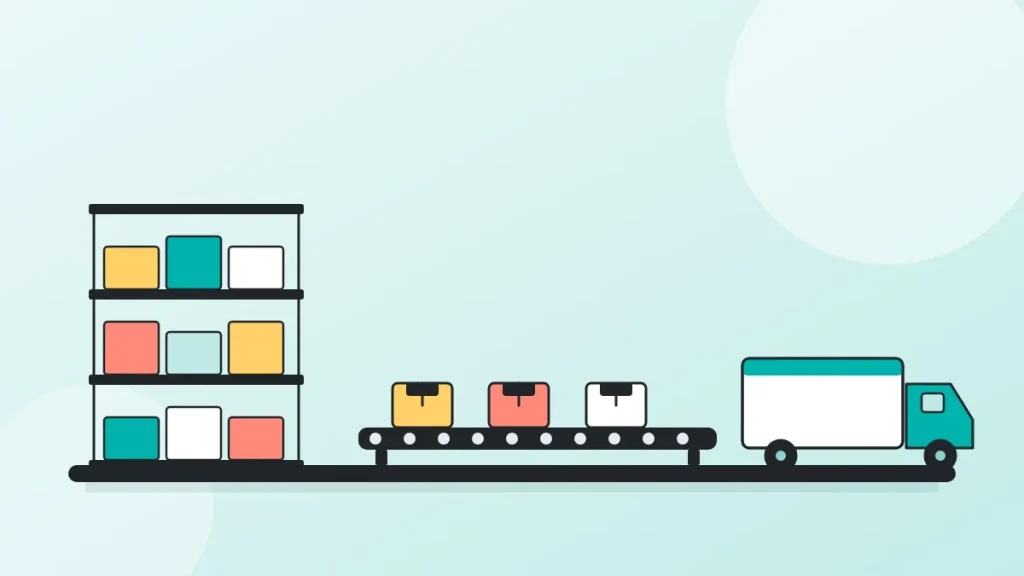
How startup order fulfillment works
- Stock arrivesFrom your supplier to your space or a 3PL.
- Order comes inFrom your store or marketplace.
- Pick and packRight item, right box, packing slip.
- ShipCarrier label and pickup or drop-off.
- ReturnsReceive, check, restock or discard.
The same steps exist at every size. What changes is who does them and how many errors and hours they cost. Details: the order fulfillment process.
In-house fulfillment vs. a 3PL for a startup
| In-house | 3PL | |
|---|---|---|
| Upfront cost | Low: shelves, boxes, a label printer | Setup and receiving fees, sometimes monthly minimums |
| Cost as you grow | Labor and space grow with orders | Per-order fees, shipping rates from pooled volume |
| Your time | Packing and shipping take hours daily | Hours go back to product and marketing |
| Speed and coverage | Limited by your schedule | Same-day cut-off, weekends depend on provider |
| Control | Full, hands-on | Through rules, reports and spot checks |
| Peaks | Hard to absorb | Planned capacity, if agreed in advance |
| Best for | Testing a product, low order count | Repeat orders, growth, several channels |
Signs it is time to outsource
- Packing and shipping take hours that should go to product or marketing.
- Stock is taking over your home or office.
- Late or wrong orders cause refunds and bad reviews.
- You cannot ship while traveling or on weekends.
- A promotion or a seasonal peak would overwhelm you.
- Marketplaces or retailers ask for compliant labeling you cannot produce.
Startup fulfillment costs to plan for
| Cost | In-house | 3PL |
|---|---|---|
| Space | Rent or lost home space | Storage fee per bin, shelf or pallet |
| Labor | Your hours or a packer’s wage | Pick and pack fee per order and per extra item |
| Supplies | Boxes, tape, labels, void fill | Packaging fee or your own packaging |
| Shipping | Carrier rates you can reach alone | Provider’s carrier rates |
| Software | Shipping tool, inventory spreadsheet | Integration and account fees |
| Mistakes | Reships, refunds, reviews | Error rate and how the provider handles errors |
Compare both columns per order, not per month. Use your real figures with the example in how much fulfillment costs.
Setup checklist for a first handoff
- Export your SKU list with dimensions and weights.
- Barcode every unit, or agree that the provider does it.
- Write packing rules per product: box, protection, inserts.
- Estimate monthly orders and units per order.
- Connect your store and test one order end to end.
- Send a small first receipt, check counts and condition.
- Compare the first two weeks of accuracy and speed with your promise.
Common startup fulfillment mistakes
| Mistake | Better approach |
|---|---|
| Waiting until errors hurt reviews | Set a trigger: orders per week or hours spent |
| Choosing on headline price | Compare total cost per order |
| No barcodes or product data | Prepare data before the first receipt |
| Skipping the contract details | Ask about minimums, notice and exit terms |
| Sending all stock at once | Start with a test lot and scale up |
Use how to choose a fulfillment provider for questions to ask. Shopify seller? See how to fulfill orders on Shopify.
How Ecom Auto Prep supports startups
We run fulfillment from Florida for online brands at different stages: receiving, storage, pick and pack, shipping and returns, with carrier savings of up to 90% on qualifying shipments through partnerships with UPS, FedEx and USPS. See Direct-to-consumer fulfillment.
Frequently asked questions
When should a startup outsource fulfillment?
When packing and shipping take too much time, errors cost money or storage no longer fits your space.
Is a 3PL too expensive for a small business?
Compare cost per order with your own time and supplies, and ask about minimums before you decide.
What do I need to send a 3PL?
Product details, barcodes, packing rules and a store integration.
Can I start with a few SKUs?
Yes. Many providers onboard small catalogs. Confirm any minimums in writing.
Will I lose control over quality?
Not if you define packing rules, check the first shipments and review accuracy reports.
Can I switch back to in-house later?
Yes. Check the exit terms and how stock is returned before you sign.
Anton Kashirin
Anton founded EcomAutomation, the company behind EcomAutoPrep. He works with Amazon FBA sellers and DTC brands on receiving, prep, kitting and shipping, and reviews the guides on this blog against how orders move through the warehouse.