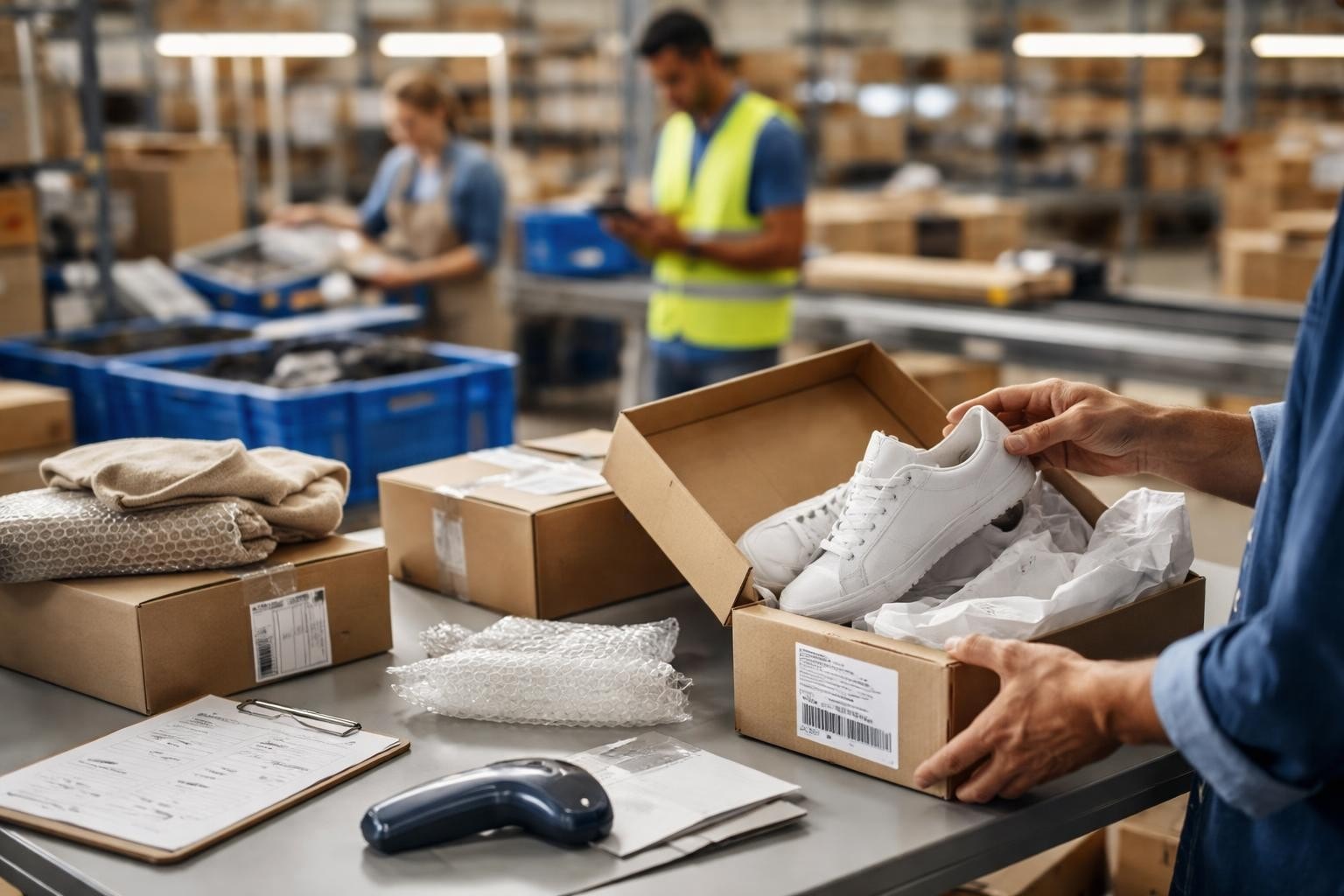

A customer clicks return on a $45 candle set three weeks after a holiday sale. That single click sets off return authorization, transportation, receiving, inspection, and a decision about what happens to the item next. All of it, start to finish, is reverse logistics. Understanding what is reverse logistics starts with that single box, not a textbook definition.
So what is reverse logistics? In plain terms, it is the set of activities that move a product backward through the supply chain, from the customer to a warehouse, distributor, or manufacturer, for restocking, repair, recycling, or disposal. It is the mirror image of forward logistics, and for ecommerce brands it has become too large a cost and too large an opportunity to leave unmanaged.
The Foundation of Reverse Logistics Systems
What is reverse logistics in supply chain management, exactly? It is the umbrella term for every step that happens after a customer decides to send a product back: return authorization, transportation, receiving, inspection, sorting, refurbishment, restocking, recycling, and disposal. What is meant by reverse logistics is not just “accepting returns” but running a controlled process that decides, quickly and consistently, what should happen to each unit that comes back. If you need the one-line version, here is the reverse logistics definition in the simplest terms possible: the set of activities that return a product from the customer to a warehouse for restock, repair, recycling, or disposal. That answers what is reverse logistics definition about as plainly as it can be answered.
Core Components of Effective Returns Management
A working reverse logistics system needs several parts operating together: return authorization and tracking (often called RMA, for return merchandise authorization), carrier coordination for inbound transportation, a receiving and inspection protocol, a disposition decision tree, refurbishment and repackaging capability, restocking and resale channels, and recycling or disposal partnerships for anything that cannot be resold. Running all of that as one coordinated system, not seven separate spreadsheets, is what is reverse logistics, day to day, inside a warehouse.
The inspection step carries the most weight, because it determines the outcome for every other part of the system. A unit can be restocked as new, sold as open-box, refurbished and resold, broken down for parts, or scrapped. Getting that call right, and getting it fast, is what separates a reverse logistics program that protects margin from one that just accumulates boxes.
Reverse Logistics vs. Forward Logistics
Forward logistics moves inventory from a supplier or manufacturer to a warehouse and then out to the customer. Reverse logistics runs the same route backward: customer to warehouse, and sometimes warehouse back to the manufacturer.
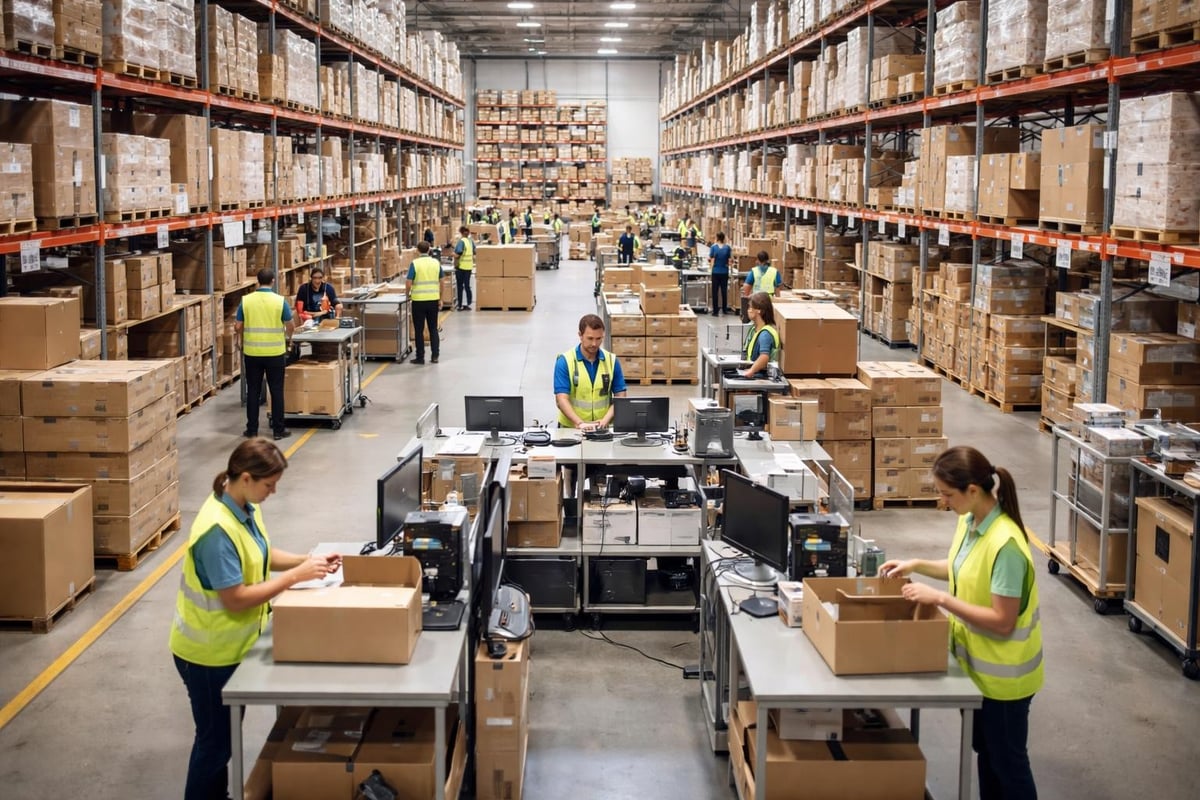
The two flows often share the same building, the same forklifts, and the same warehouse management system, but they compete for the same dock doors and the same staff hours in ways a lot of fulfillment plans never account for. A warehouse that only sizes its capacity around outbound orders gets blindsided the first time a return spike collides with a shipping peak.

Types of Reverse Logistics
Brands researching what is reverse logistics with examples usually want to see the idea applied to a real return, not just a definition. What is reverse logistics? At its simplest, it is whichever category below matches the reason the product is coming back, and grouping them by cause makes it easier to decide which parts of the process need automation and which can run on a simpler manual rule. For a plain answer to what is reverse logistics in supply chain terms, each category below maps to a different real-world trigger rather than an abstract theory.
Returns and Exchanges
Customer returns and exchanges are the most visible category and usually the highest volume. A shopper orders the wrong size, changes their mind, or receives a damaged item, and the resulting return needs an RMA, an inbound label, and a fast inspection so the refund or exchange does not stall. Exchanges add a second layer, since a replacement unit has to ship out while the original is still in transit back.
Refurbishment, Resale, Recycling, and Disposal
Not every returned unit goes back on the shelf as new. Refurbishment covers cleaning, repairing, or reconditioning a product enough to resell it, often through a secondary or open-box channel. Recycling recovers raw materials from products or packaging that cannot be resold at all. Disposal is the last resort, reserved for units that fail inspection, cannot be repaired economically, or are legally required to be destroyed, such as certain expired or recalled goods.
Recalls, Unsold Goods, and Delivery Failures
Recalls move product backward through the supply chain for safety or compliance reasons rather than customer dissatisfaction, and they usually run on a stricter documentation trail. Unsold goods flow from retailers or marketplaces back to the brand when a SKU underperforms or a wholesale order goes unsold, which is really an inventory problem wearing a reverse logistics label. Delivery failures, meaning packages that were refused, undeliverable, or lost in transit, get routed back to a sorting center and either reattempted or returned to stock, depending on the reason for the failure.
Financial Impact and Strategic Importance
Many finance teams first ask what is reverse logistics in supply chain accounting terms, meaning where exactly the cost and the recovered value show up on a P&L. Reverse logistics is frequently treated as pure overhead, but the economics run both directions. Handled well, it protects revenue that would otherwise be lost to unsellable inventory. Handled poorly, it quietly erodes margin on products that were already sold once.
Breaking Down the True Cost of Returns
The cost of a single return is almost never one line item. It typically stacks up from inbound return shipping, receiving and inspection labor, restocking labor, disposition-specific costs such as repackaging materials or certified disposal fees, and the lost sell-through value while the unit sits in transit or waiting on an inspection queue.
Industry return-rate research from the National Retail Federation has put online returns at roughly 17 to 18 percent of orders, well above the return rate for in-store purchases. That gap is exactly why reverse logistics cost has become a line item worth managing on its own rather than an afterthought buried inside customer service. Exact cost-per-return figures vary too much by product category, carrier zone, and disposition path to state as a single fixed number here; a brand’s real per-SKU number is worth requesting directly rather than assuming an industry average applies.
Converting Returns into Revenue Opportunities
A returned unit in resellable condition can go straight back to stock and recover close to full value. A unit with a minor defect might be refurbished and sold through a secondary or open-box channel at a reduced but still profitable price. Even units that fail inspection outright can sometimes be broken down for parts or sold to a liquidation buyer rather than scrapped for nothing.
Return data itself has value beyond the individual transaction. Patterns in return reasons expose sizing problems, misleading product descriptions, or recurring damage-in-transit issues that, once corrected, reduce the return rate on future orders. A reverse logistics process that only handles the physical item and ignores the reason code is leaving half the insight on the table.
Operational Excellence in Returns Processing
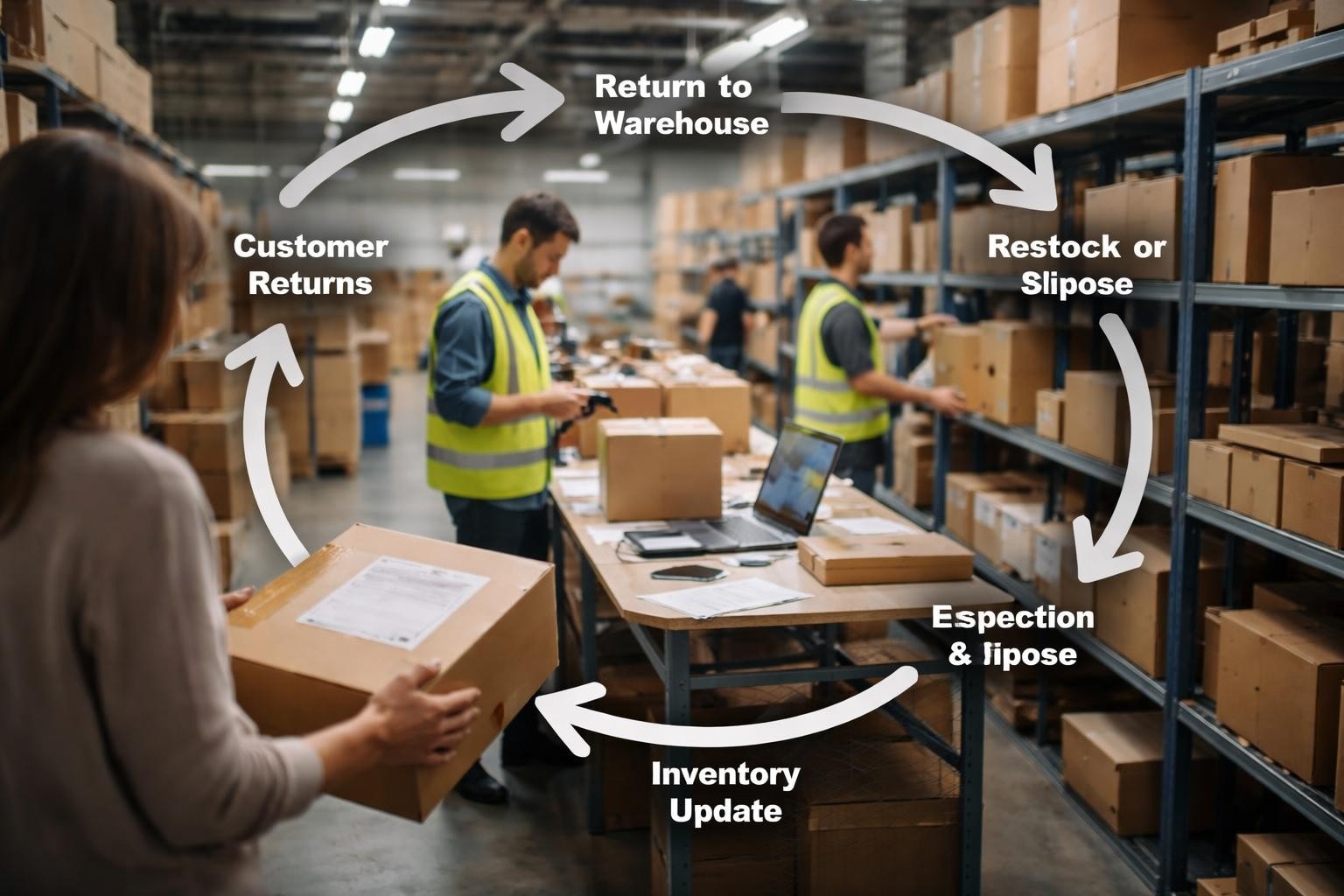
Strip away the industry jargon and what is reverse logistics process, in practice, comes down to five steps that repeat every time a product moves backward through the supply chain, regardless of channel or product type.
1. Authorize the Return and Arrange Transportation
The process starts when a customer requests a return through a portal, email, or marketplace return flow. An RMA is issued, a reason code is captured, and a return label or pickup is arranged. Setting expectations clearly at this step (return window, condition requirements, who pays for shipping) prevents most disputes later in the process.
2. Receive, Inspect, and Classify the Product
Once the item arrives at the warehouse, it is checked against the stated return reason and classified by condition: like-new, open-box, damaged, or defective. This is the single highest-leverage step in the whole process, because every downstream decision depends on an accurate classification made here rather than corrected later.
3. Choose a Disposition Route
Based on the classification, the unit is routed to one of a small number of outcomes: restock as new, resell as open-box, send for repair or refurbishment, recycle for materials, or dispose of under a compliant process. A clear, pre-agreed decision tree here removes the guesswork that otherwise slows this step down.
4. Restock, Repair, Refurbish, or Resell
Sellable units go back to a pick face or bin so they can fill the next order rather than sit idle. Units needing repair or refurbishment move to that workflow, ideally with a target turnaround time, since a return that takes a month to repair has effectively left the sellable inventory pool for a month.
5. Recycle or Dispose and Update Inventory
Units that cannot be resold or repaired move to recycling or certified disposal, closing out that unit’s file. Whatever the outcome, the inventory count updates, the refund or credit is issued, and the transaction is recorded in the warehouse management system so financial and inventory numbers stay in sync.
Technology Infrastructure Requirements
Modern reverse logistics depends on a WMS that connects return authorization, inventory adjustment, and customer communication in real time rather than as three separate spreadsheets. Automated label generation, mobile inspection tools for warehouse staff, disposition routing rules, and a customer-facing return status portal all reduce the manual handling time per return and cut down on classification errors.
Automation does not replace the judgment call at inspection, but it does remove the slow parts around it: looking up the right disposition rule, re-keying a tracking number, or manually emailing a customer that their refund is processing.
Strategic Partnership Models
Many fast-growing ecommerce brands find that building reverse logistics capability in-house pulls resources away from product development and marketing, the things that actually grow the business. A 3PL partner offers an alternative: professional reverse logistics capability without the capital investment in space, staff, and systems.
Evaluating Fulfillment Partner Capabilities
The right partner brings more than warehouse space. Technology integration (API connectivity, real-time inventory visibility), processing speed (inspection turnaround, restocking timeline), quality standards (accuracy and damage prevention), flexibility for custom workflows and seasonal scaling, and value recovery through secondary market or refurbishment access are the dimensions worth comparing before signing a contract.
A partner that already runs your outbound fulfillment has a structural advantage here: the same warehouse, the same staff, and the same systems that ship your orders can process what comes back, using product knowledge the team already has rather than starting from zero.
In-House vs. 3PL Reverse Logistics
| Criteria | Handle in-house | Outsource to a 3PL |
|---|---|---|
| Return volume | Roughly under 50 to 100 returns per month | Growing past that consistently |
| Warehouse space | Spare receiving dock and staff hours | No dedicated space for return triage |
| SKU complexity | Few SKUs, one disposition rule for all | Many SKUs, different disposition rules by channel |
| Restock speed needed | Can tolerate a slower turnaround | Needs same-week restock to protect sell-through |
| Reporting needs | Manual tracking is workable | Needs WMS-level accuracy for inventory and accounting |
Product-Specific Reverse Logistics Strategies
Different product categories present unique challenges in reverse logistics processes. Electronics require careful testing and data wiping protocols. Apparel faces seasonality concerns where delayed processing might miss selling windows. Perishable goods have minimal recovery options. Subscription box items often involve partial returns requiring itemized inspection.
Handling High-Value Products
Higher-value items justify a more thorough inspection and a wider set of disposition options, since the margin recovered by refurbishing or reselling as open-box is large enough to cover the extra labor. They also carry more fraud and damage-in-transit risk, which is why serial number or lot tracking at the SKU level matters more here than on low-cost commodity products.
Subscription Box and Bundled Product Considerations
A subscription box return rarely means the whole box comes back. More often it is one component of a multi-item bundle, which means the disposition decision has to happen at the component level, not the box level, and the inventory system needs to unwind a bundled SKU back into its individual parts before any of them can be restocked or resold.
Sustainability and Environmental Responsibility
Modern consumers increasingly evaluate brands based on environmental practices, making sustainable reverse logistics a reputational imperative alongside an operational necessity. The environmental impact of returns extends beyond carbon emissions from transportation to include packaging waste, product disposal, and energy consumption throughout processing.
Implementing Circular Economy Principles
A circular approach to reverse logistics tries to keep a product or its materials in use as long as possible: restock before refurbish, refurbish before recycle, recycle before disposal, in that order of preference. Certified recycling partnerships for electronics and batteries, and consolidated return shipping to cut down on the number of partial-load trips, are two of the more practical levers available without a large capital investment.
Customer Experience Optimization
The returns experience significantly influences customer loyalty and lifetime value. Research consistently shows that hassle-free returns increase purchase confidence and repeat buying behavior. Conversely, complicated or expensive return processes drive customers toward competitors offering more generous policies.
Balancing Convenience and Fraud Prevention
A generous return policy increases purchase confidence and repeat buying, but an unlimited one invites returns fraud and wardrobing, where a customer uses a product briefly before returning it as unused. A clear return window matched to the product category, transparent tracking and status updates, and defined eligibility rules strike a workable balance between accessibility and abuse prevention without turning every return into a manual review.

Amazon FBA Returns Management
For brands selling through Amazon’s marketplace, reverse logistics in e-commerce involves navigating Amazon’s specific policies and processes. Amazon handles customer-facing returns for FBA sellers, but understanding disposition decisions, removal orders, and reimbursement policies becomes critical for protecting inventory value.
FBA Returns Processing and Recovery
Amazon handles the customer-facing side of FBA returns, but its automated condition assessments do not always match a seller’s own standards. Amazon’s removal orders bring inventory back under a seller’s direct control, and a returned unit marked unsellable by Amazon is sometimes perfectly resalable after a quick cleaning or repackaging pass. Working with a fulfillment partner experienced in Amazon FBA prep makes it possible to intercept that inventory, reinspect it against the brand’s own standards, and either return it to FBA-compliant condition or route it to a direct-to-consumer channel where it can still recover strong value.
Data Analytics and Continuous Improvement
What is reverse logistics in supply chain management terms, if not the discipline of turning a cost center into a controlled, revenue-protecting process? The KPIs below are how that discipline gets measured.
Key Performance Indicators for Returns
A handful of metrics carry most of the signal in a reverse logistics program: return rate (as noted earlier, ecommerce runs well above in-store retail), processing time from receipt to disposition, restocking rate as a share of total returns, recovery value relative to the cost of processing the return, and customer satisfaction with the return experience itself.
None of these numbers mean much in isolation. A rising return rate on one SKU points to a quality or description problem. A slipping restocking rate points to a damage-in-transit or packaging issue. Tracked together over time, they turn reverse logistics from a cost center nobody watches into a source of product and process feedback.
Seasonal and Peak Period Planning
Reverse logistics in e-commerce faces dramatic seasonality, with return volumes surging in January following holiday shopping and again after major promotional events. Planning for these predictable spikes prevents capacity overload that delays processing and frustrates customers.
Capacity Planning and Resource Allocation
Return volume is seasonal in a predictable way, spiking in January after holiday shopping and again after major promotional events. Planning for that spike months in advance, with historical data and return-rate forecasts, prevents the same dock backlog that an unplanned outbound peak would cause. A multi-client ecommerce distribution operation has an advantage here, since it can shift labor across accounts as one client’s peak return volume rises while another’s is quiet.
Future Trends Reshaping Returns
Most reverse logistics programs run into the same handful of obstacles. Naming them clearly is the first step to fixing them.
High Costs, Fraud, and Compliance
Processing cost per return is the most visible pain point, but returns fraud (wardrobing, empty-box returns, or serial return abuse) and compliance requirements for hazardous or regulated products add cost that is easy to underestimate. Batteries, aerosols, and certain supplements often cannot be resold once returned at all and require certified disposal, which changes the workflow and the cost profile for that category specifically.
Return Volumes, Product Condition, and Partner Coordination
Return volume rarely arrives evenly. A viral SKU or a single bad batch can spike return volume far faster than staffing can adjust, and products come back in every condition from unopened to badly damaged, which makes accurate forecasting difficult. Coordinating multiple stakeholders (carriers, repair vendors, recycling partners, and the brand’s own customer service team) adds another layer of complexity that a single-warehouse, single-system operation avoids.
Emerging Technologies and Innovations
The practical fix for most of the above is better tracking, not more headcount. Barcode or RFID tracking at receipt, disposition rules encoded in the WMS instead of left to individual judgment, and return-reason analytics that feed back into product and packaging decisions reduce both the cost per return and the rate at which returns happen in the first place. None of this requires exotic technology; it requires the return data to actually connect to the systems that make restocking and purchasing decisions.
Reverse Logistics Services From Ecom Auto Prep
At the Coral Springs, Florida warehouse, returns move through the same Packiyo-based inventory system used for outbound orders, so a returned unit shows up in the same stock count that drives replenishment and future order allocation rather than in a separate, disconnected spreadsheet.
Multi-channel sellers get one disposition workflow instead of a separate return process for each marketplace. Returns arriving from direct-to-consumer orders, Amazon FBA removals, Walmart, eBay, or TikTok Shop are received, inspected against the stated reason, and routed to restock, repair, or disposal, with the decision logged before the unit sits idle. That is what is reverse logistics for most ecommerce brands, and it is exactly what EAP is built to run: inventory that is not received, located, and available quickly cannot be sold, and a return is no exception.
Frequently Asked Questions
Still working through what is meant by reverse logistics for your own catalog, or wondering what is reverse logistics management in practice rather than in theory? Teams outside of logistics often just want to know what is reverse logistics in supply chain contexts before they worry about which KPI to track. These five questions cover what ecommerce brands ask most.
What Is an Example of Reverse Logistics?
A customer orders the wrong shoe size and requests a return. The retailer issues an RMA, the shoes travel back to the warehouse, an inspector confirms they are unworn and undamaged, and the unit is restocked and made available for the next order. That full loop, not just the refund, is reverse logistics.
What Are the Main Steps in the Reverse Logistics Process?
Five steps repeat across nearly every return: authorize the return and arrange transportation, receive and inspect the item, choose a disposition route, restock or repair the unit, and recycle or dispose of anything that cannot be resold while updating the inventory record.
What Is the Difference Between Forward and Reverse Logistics?
Forward logistics moves goods from manufacturer to customer. Reverse logistics moves them backward, from customer to warehouse and sometimes on to the manufacturer, for restocking, repair, recycling, or disposal.
How Does Reverse Logistics Reduce Costs?
It reduces costs by recovering value that would otherwise be written off entirely: restocking sellable units at close to full price, refurbishing and reselling units with minor defects, and routing unsellable units to recycling or liquidation instead of paying to dispose of items that still had recoverable value.
When Should an Ecommerce Brand Outsource Reverse Logistics?
Once return volume consistently exceeds what a small internal team can inspect and restock within a few days, or once a brand is selling across enough channels (Shopify, Amazon FBA, Walmart, eBay, TikTok Shop) that each one needs a different disposition rule, in-house handling usually starts costing more in lost sell-through than a 3PL would charge to run it.
Turn Returns Into a Controlled Process, Not a Warehouse Backlog
Returns that pile up at the dock cost more than the products are worth. EAP builds reverse logistics workflows around your SKUs and sales channels so restock happens fast and disposal decisions get documented. Get a quote for return processing, schedule a meeting with our Coral Springs operations team, or request a service pricing summary for your product mix.

[…] perfect operations generate some returns. Efficient reverse logistics processes minimize losses by quickly evaluating returned inventory for resale eligibility, identifying […]
[…] processing represents a critical value-added service that many brands overlook. Professional reverse logistics operations inspect returned items, restock sellable products, and provide detailed reporting on […]