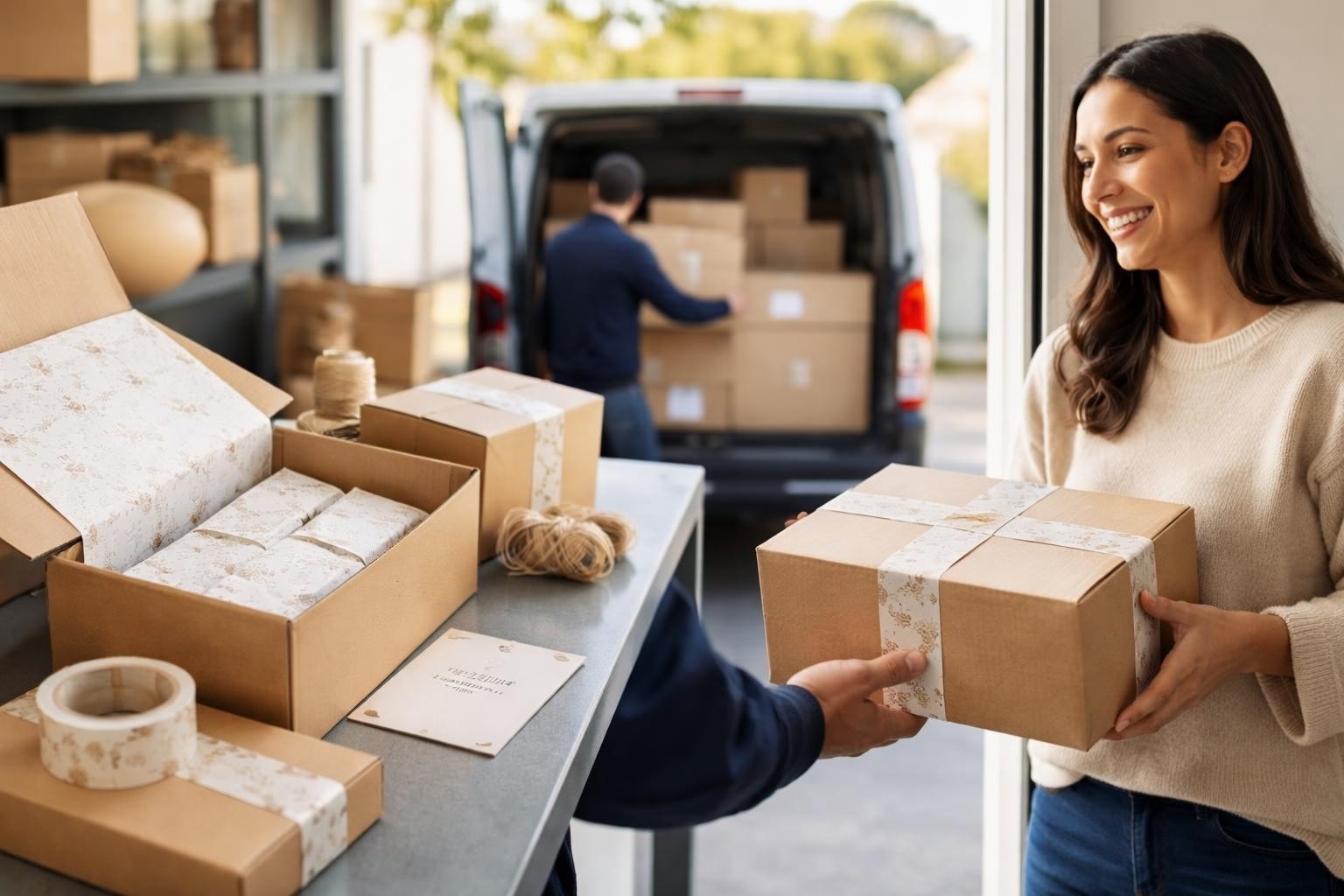

In today’s competitive e-commerce landscape, the customer experience doesn’t end at checkout. Every interaction matters, and the shipping experience represents a critical touchpoint that can either strengthen your brand identity or become a forgettable transaction. Branded shipping transforms the delivery process into an extension of your marketing strategy, creating memorable experiences that drive customer loyalty and increase lifetime value. For fast-growing e-commerce brands, understanding how to leverage every element of the shipping journey has become essential for standing out in crowded markets.
What Is Branded Shipping and Why It Matters
Branded shipping encompasses every customer-facing element of the delivery experience, from packaging materials and box design to tracking pages and delivery notifications. Unlike generic brown boxes and standard shipping labels, branded shipping creates cohesive touchpoints that reinforce your brand identity throughout the fulfillment process.
The impact of branded shipping extends far beyond aesthetics. Research shows that customers form lasting impressions based on how products arrive, with branded packaging materials significantly enhancing customer loyalty and trust. When customers receive a package that reflects your brand’s personality and values, they’re more likely to share their experience on social media, make repeat purchases, and recommend your business to others.
The Business Case for Investing in Branded Shipping
Fast-growing e-commerce brands face constant pressure to acquire new customers while retaining existing ones. Branded shipping addresses both challenges simultaneously:
- Increased social media exposure through unboxing videos and customer photos
- Higher customer retention rates due to enhanced brand recall
- Reduced return rates when packaging communicates quality and care
- Greater perceived value that justifies premium pricing
- Improved brand differentiation in competitive markets
The psychology behind branded shipping is compelling. When customers receive a thoughtfully designed package, their brains release dopamine, creating positive associations with your brand. This emotional connection transforms a functional transaction into a memorable experience that influences first impressions and encourages repeat purchases.
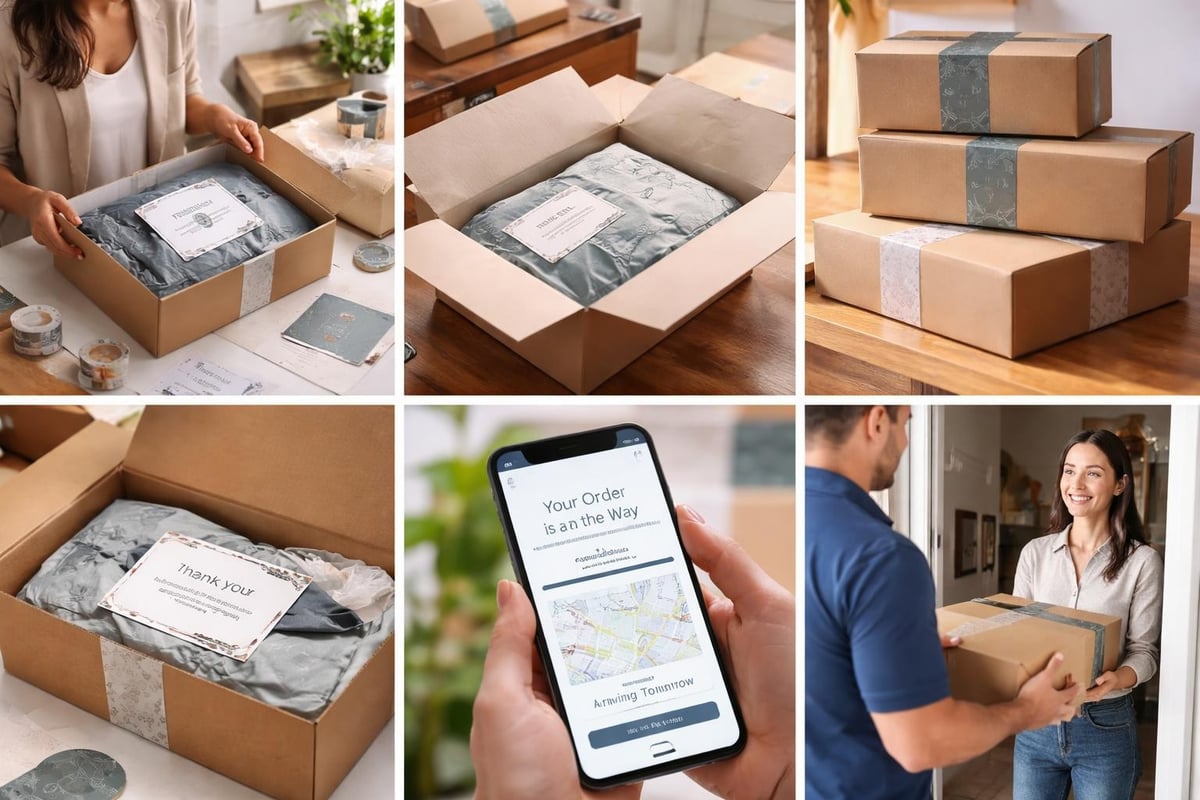
Essential Elements of Effective Branded Shipping
Creating a comprehensive branded shipping strategy requires attention to multiple components that work together to deliver a cohesive experience. Each element serves a specific purpose while contributing to the overall brand narrative.
Custom Packaging Materials
Your packaging materials form the foundation of branded shipping. These include:
Outer shipping boxes featuring your logo, brand colors, and messaging create immediate visual impact when packages arrive. Many successful brands use custom box designs that customers recognize before even seeing the return address.
Protective materials like tissue paper, bubble wrap, and void fill can incorporate brand colors and patterns. Even these functional elements become opportunities for brand reinforcement when thoughtfully designed.
Branded tape serves dual purposes: securing packages while displaying your logo repeatedly across every seal. This simple addition transforms plain boxes into branded experiences at minimal cost.
Packaging Inserts and Marketing Materials
Strategic use of inserts maximizes the marketing potential of every shipment:
- Thank you cards personalized with your brand voice create emotional connections
- Product care instructions demonstrate expertise and reduce support inquiries
- Promotional materials for upcoming launches or special offers drive repeat purchases
- Referral cards with incentives encourage word-of-mouth marketing
- Brand story elements that communicate your mission and values
Communities like Talk Shop frequently discuss how merchants optimize packaging inserts to boost customer lifetime value, sharing real-world examples of what works across different product categories and customer segments.
Branded Tracking and Post-Purchase Communication
The shipping experience extends beyond physical packaging to digital touchpoints. Creating branded order tracking pages keeps customers engaged during the waiting period between purchase and delivery.
| Tracking Element | Standard Approach | Branded Approach |
|---|---|---|
| Order confirmation | Generic email template | Branded email with personalized message |
| Tracking page | Carrier’s default page | Custom-branded tracking portal |
| Delivery notifications | Basic text updates | Engaging messages with brand voice |
| Post-delivery follow-up | None or automated | Personalized thank you and feedback request |
Implementing branded tracking pages reduces customer anxiety, decreases “where is my order” support tickets, and provides additional marketing opportunities through product recommendations and exclusive offers.
Designing Your Branded Shipping Strategy
Developing an effective branded shipping approach requires strategic planning aligned with your overall business objectives and customer expectations. The process involves understanding your audience, defining brand guidelines, and selecting appropriate materials and partners.
Understanding Your Customer’s Unboxing Experience
Put yourself in your customer’s shoes and map their entire journey from order confirmation to product use. Consider these questions:
- What emotions do you want customers to feel when they receive their package?
- How does the unboxing experience align with your brand positioning?
- What would motivate customers to share their experience on social media?
- How can packaging reinforce the value customers received for their purchase price?
For luxury brands, packaging should communicate exclusivity and premium quality through materials, presentation, and attention to detail. For eco-conscious brands, sustainable materials and minimal waste demonstrate values alignment. For playful brands, creative designs and unexpected elements create delight and encourage sharing.
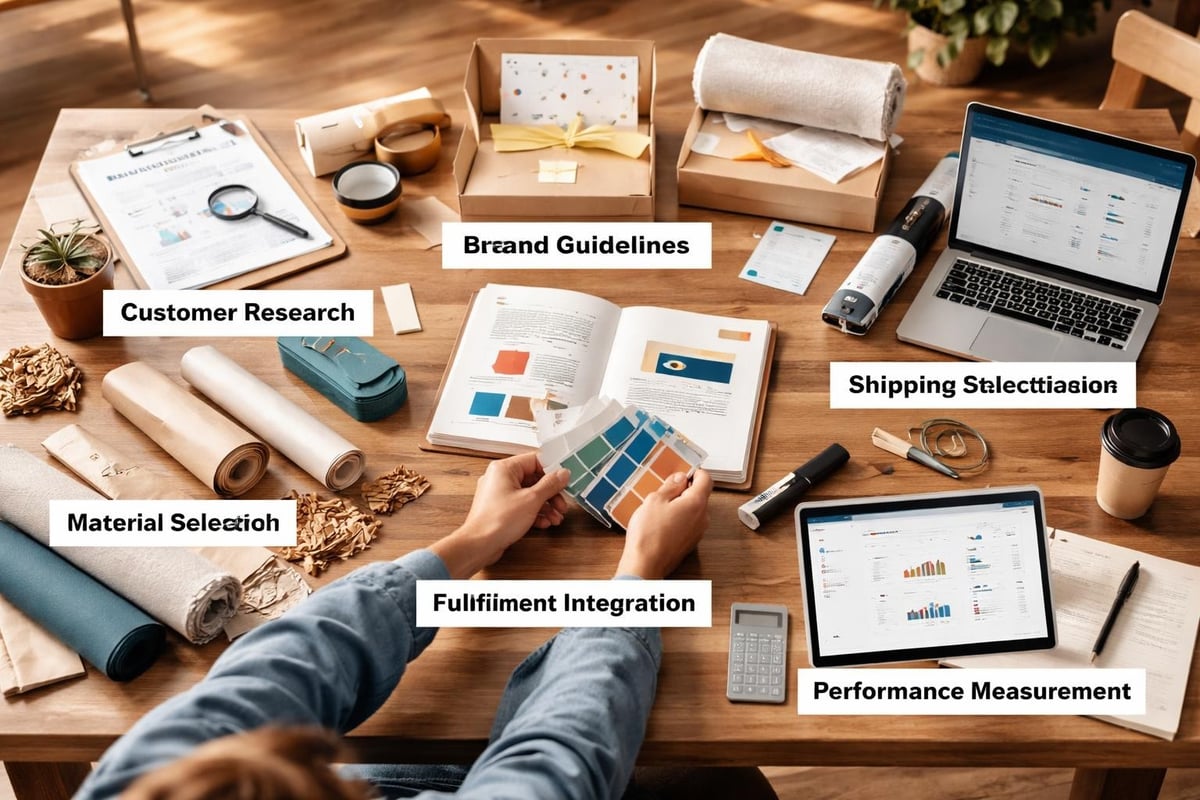
Balancing Brand Impact with Fulfillment Efficiency
While elaborate packaging creates memorable experiences, it must remain practical for your e-commerce fulfillment operations. Overly complex packaging designs can slow fulfillment, increase labor costs, and create training challenges.
Consider these efficiency factors:
- Assembly time per package and impact on fulfillment speed
- Storage space requirements for custom materials
- Training requirements for fulfillment staff
- Scalability as order volume increases
- Cost per package versus customer lifetime value
Work with your fulfillment provider to identify branded shipping solutions that maintain operational efficiency while delivering brand impact. Many successful brands start with simplified branded packaging for high-velocity products while reserving premium packaging for first-time customers or high-value orders.
Material Selection and Sustainability Considerations
Material choices communicate brand values and directly impact customer perception. The science of branded packaging demonstrates how physical materials influence emotional responses and purchase decisions.
Common branded packaging materials include:
- Corrugated boxes with custom printing (kraft, white, or colored)
- Mailer boxes for products that don’t require additional protection
- Poly mailers with custom designs for soft goods and apparel
- Tissue paper in brand colors for product wrapping
- Custom tape featuring logos or patterns
- Stickers and labels for sealing and branding
Sustainability has become a critical consideration for many consumers. Eco-friendly packaging options include recycled materials, compostable mailers, and minimalist designs that reduce waste. Brands can even leverage custom printed items like those from MyPaperCups for marketing events and promotions, extending brand consistency beyond shipping to in-person customer touchpoints.
Implementation and Execution Best Practices
Successfully implementing branded shipping requires coordination across multiple business functions, from design and procurement to fulfillment and customer service. Following proven best practices ensures smooth rollout and maximum return on investment.
Working with Fulfillment Partners
Your fulfillment partner plays a crucial role in executing your branded shipping strategy. When evaluating fulfillment providers, assess their capabilities for handling custom packaging:
- Storage capacity for multiple SKUs of packaging materials
- Staff training on assembly and quality standards
- Inventory management systems for tracking packaging supplies
- Quality control processes to ensure consistent execution
- Flexibility to accommodate seasonal or promotional packaging variations
Clear communication with your fulfillment partner is essential. Provide detailed standard operating procedures (SOPs) with photos showing proper assembly, material usage, and quality standards. Regular check-ins ensure consistency as your business scales.
Testing and Iteration
Before fully committing to expensive custom packaging, test different approaches with small order batches. Gather customer feedback through surveys, social media monitoring, and direct outreach to understand what resonates.
Key metrics to track:
- Social media mentions and unboxing content generated
- Customer satisfaction scores related to packaging
- Repeat purchase rates comparing branded versus generic packaging
- Customer acquisition cost reduction from referrals
- Return rates and packaging-related damage claims
Use A/B testing to compare different packaging elements and identify which investments deliver the strongest returns. For example, test premium boxes against standard boxes with branded tape to determine if the additional cost justifies the customer response.
Seasonal and Promotional Considerations
Branded shipping provides opportunities for seasonal differentiation and promotional campaigns. Holiday packaging, limited edition designs, and special occasion variations create urgency and collectibility.
Plan seasonal packaging well in advance, considering:
- Lead times for custom material production (typically 4-8 weeks)
- Storage requirements for seasonal inventory
- Fulfillment transition timing between regular and seasonal packaging
- Marketing calendar alignment for maximum impact
- Cost implications and budget allocation
Many brands reserve special packaging for peak seasons when customer acquisition costs are highest and competition is most intense, maximizing impact during critical sales periods.
Cost Considerations and ROI Analysis
Understanding the financial implications of branded shipping helps justify investments and optimize resource allocation. While custom packaging adds costs, the returns through increased customer lifetime value often far exceed the incremental expenses.
Breaking Down Branded Shipping Costs
| Cost Component | Typical Range | Optimization Strategies |
|---|---|---|
| Custom boxes | $0.50 – $3.00 per unit | Order larger quantities, simplify designs |
| Branded tape | $0.05 – $0.15 per package | Use selectively on standard boxes |
| Tissue paper/inserts | $0.10 – $0.50 per package | Source in bulk, use for first orders only |
| Custom mailers | $0.30 – $1.50 per unit | Negotiate volume pricing |
| Stickers/labels | $0.05 – $0.20 per package | Print in-house for small volumes |
| Setup and design fees | $500 – $5,000 one-time | Amortize across production runs |
Total cost per package typically ranges from $0.75 to $5.00 depending on brand positioning and product category. Luxury brands may invest $10+ per package, while value brands might focus on minimal branded elements under $1.00.
Calculating Return on Investment
To justify branded shipping investments, calculate the impact on key business metrics:
Customer Lifetime Value (CLV) increase: If branded packaging increases repeat purchase rates by 15% and your average CLV is $200, each customer delivers an additional $30 in value. If your branded packaging costs $2 extra per shipment and customers make 4 purchases, you’ve invested $8 to generate $30 in additional revenue.
Reduced customer acquisition costs (CAC): When customers share unboxing experiences on social media, they generate free marketing exposure. If branded packaging generates 10% more referrals and your typical CAC is $40, each referred customer saves $40 in marketing spend.
Premium pricing support: Branded packaging justifies higher price points by communicating quality and value. Even a 5% price increase can offset packaging costs while improving profit margins.
Understanding how lower shipping rates combine with efficient branded packaging creates competitive advantages for growing brands.
Industry-Specific Branded Shipping Strategies
Different e-commerce verticals require tailored approaches to branded shipping based on product characteristics, customer expectations, and competitive dynamics.
Fashion and Apparel
Fashion brands excel at creating Instagram-worthy unboxing experiences with tissue paper, custom boxes, and premium touches. The shipping guide for fashion brands emphasizes how branded tracking and thoughtful packaging drive engagement in this highly visual category.
Fashion-specific considerations include:
- Protecting garments from wrinkles while maintaining presentation
- Incorporating lookbooks or styling suggestions
- Using reusable packaging like garment bags or storage boxes
- Seasonal packaging that reflects current collections
- Influencer collaboration on limited edition packaging designs
Beauty and Cosmetics
Beauty products require protective packaging while creating excitement around the purchase. Brands in this space often use vibrant colors, mirrors in box lids, and samples to enhance the experience.
Subscription Boxes
Subscription businesses rely heavily on branded packaging to justify recurring charges and create anticipation. Each delivery represents an opportunity to reinforce value and prevent cancellations.
Consumer Electronics
Electronics require substantial protection, but branded packaging still matters. Clean designs, setup instructions, and accessory organization demonstrate attention to detail and build confidence in product quality.
Following e-commerce packaging best practices ensures products arrive safely while making strong brand impressions across all categories.
Integration with Broader E-Commerce Growth Strategy
Branded shipping doesn’t exist in isolation but rather as one component of comprehensive e-commerce scaling efforts. Successful brands align packaging with broader customer experience initiatives.
Creating Cohesive Multi-Channel Experiences
Your branded shipping should reflect and reinforce messaging across all customer touchpoints:
- Website design elements that appear in packaging colors and graphics
- Email marketing that previews the unboxing experience
- Social media content featuring packaging and encouraging user-generated content
- Retail partnerships where packaging differentiates your products on shelves
- Event marketing using consistent branded materials
Supporting Customer Service and Retention
Well-designed branded shipping reduces support burdens while increasing retention:
- Clear packaging with product information reduces confusion
- Quality materials minimize damage and returns
- Branded inserts with FAQs address common questions
- Return instructions integrated into packaging streamline the process
- Warranty cards and registration prompts build ongoing relationships
Scaling Considerations for Growing Brands
As your business grows, branded shipping strategies must evolve. What works at 100 orders per month may not scale to 10,000 orders per month without adjustments.
Scaling strategies include:
- Standardizing on fewer packaging options to simplify inventory
- Automating insert assembly through fulfillment technology
- Negotiating volume pricing with packaging suppliers
- Implementing tiered packaging based on order value
- Developing efficient quality control processes
Understanding fulfillment pricing structures helps you budget for branded shipping as part of overall operational costs while maintaining healthy margins.
Measuring Success and Continuous Improvement
Implementing branded shipping is not a one-time project but an ongoing process of measurement, learning, and optimization. Establishing clear metrics and feedback loops ensures your investment delivers sustained returns.
Key Performance Indicators
Track these metrics to assess branded shipping effectiveness:
Customer engagement metrics:
- Social media mentions and hashtag usage
- Unboxing video creation and views
- Customer photo submissions and sharing rates
- Review content mentioning packaging experience
Business impact metrics:
- Repeat purchase rate comparison (branded vs. non-branded periods)
- Average order value trends
- Customer lifetime value by cohort
- Referral traffic and conversion rates
- Net Promoter Score (NPS) improvements
Operational metrics:
- Cost per package over time
- Fulfillment time impact
- Damage and return rates
- Packaging material waste and efficiency
Gathering and Acting on Customer Feedback
Systematic feedback collection provides insights for continuous improvement. Methods include:
- Post-delivery surveys asking specifically about packaging experience
- Social media monitoring to identify organic mentions and sentiment
- Customer service ticket analysis to identify packaging-related issues
- Focus groups for new packaging concept testing
- Competitor analysis to benchmark against industry standards
Use customer feedback to refine material choices, adjust insert content, and identify opportunities for innovation. The most successful brands treat packaging as a living element of their brand experience that evolves with customer preferences.
Adapting to Market Changes and Trends
The e-commerce landscape continuously evolves, requiring brands to stay current with packaging trends while remaining true to their core identity. Recent trends include:
- Minimalist designs reducing waste and costs
- Interactive elements like QR codes linking to exclusive content
- Personalization through variable data printing
- Sustainability certifications and transparent material sourcing
- Augmented reality experiences triggered by packaging
Balancing trend adoption with brand consistency requires careful consideration. Not every trend suits every brand, but staying aware of innovations helps you identify opportunities that align with your positioning and customer expectations.
Branded shipping represents a powerful opportunity to differentiate your e-commerce business, build lasting customer relationships, and drive profitable growth. By thoughtfully designing every element of the delivery experience and maintaining consistent execution at scale, you transform ordinary transactions into memorable brand moments that customers eagerly share and repeat. Whether you’re just beginning to explore custom packaging or ready to elevate your existing approach, partnering with a fulfillment provider that understands the strategic importance of branded shipping is essential. Ecom Automation Prep specializes in helping fast-growing e-commerce brands implement scalable branded shipping solutions that maintain quality while controlling costs, allowing you to focus on building your business while we handle the details that make lasting impressions.
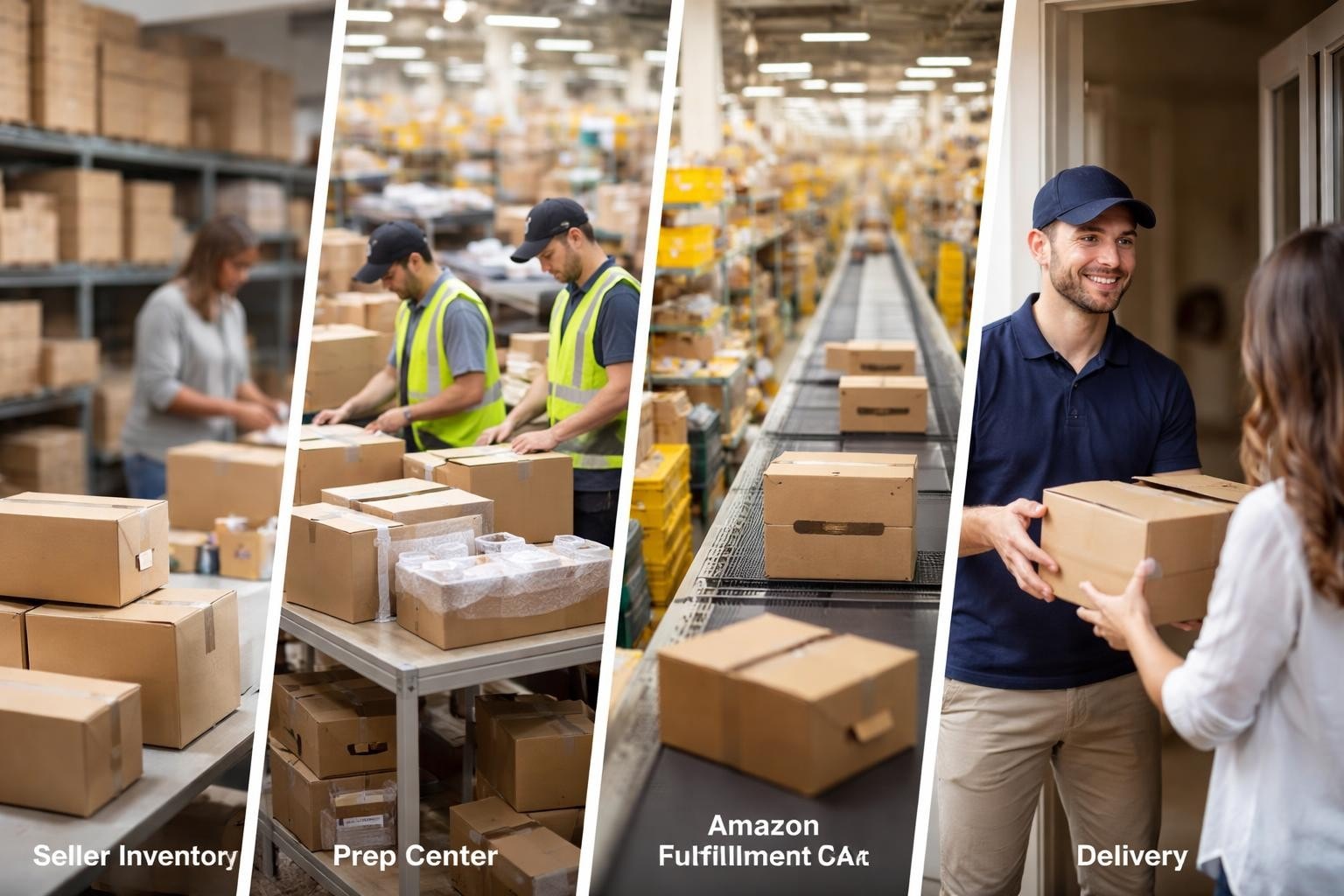


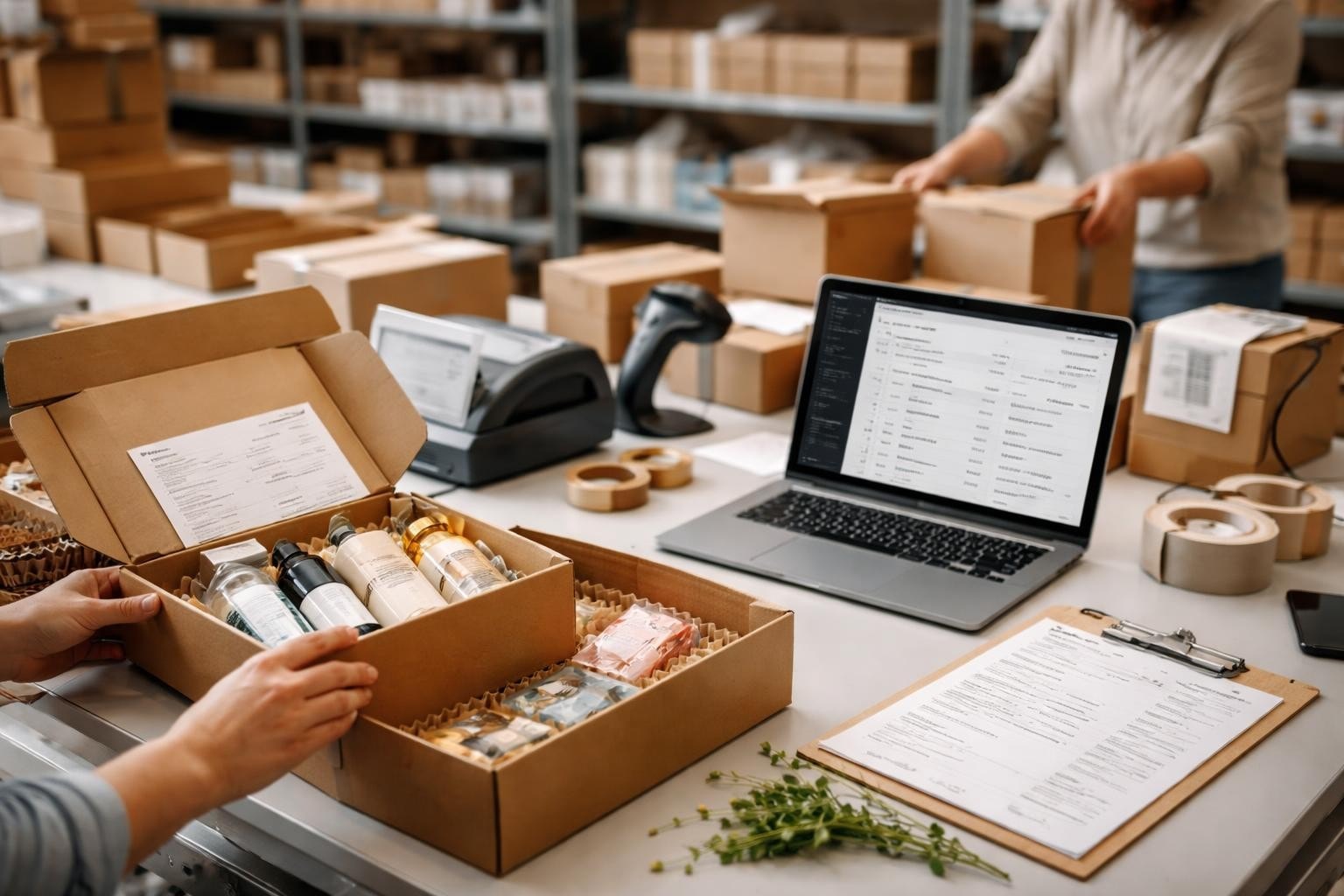
[…] Branded shipping enhances customer experience and reinforces brand identity but increases per-order costs. Custom boxes, tissue paper, branded tape, and thank-you cards each add incremental expenses that range from $0.75 to $3.50 per order depending on the sophistication of packaging. […]
[…] services like branded shipping that enhance customer […]
[…] Branded shipping solutions allow businesses to maintain consistent brand presentation without holding inventory of packaging materials. Quality fulfillment partners manage these materials, apply them correctly, and ensure every package represents your brand professionally. […]