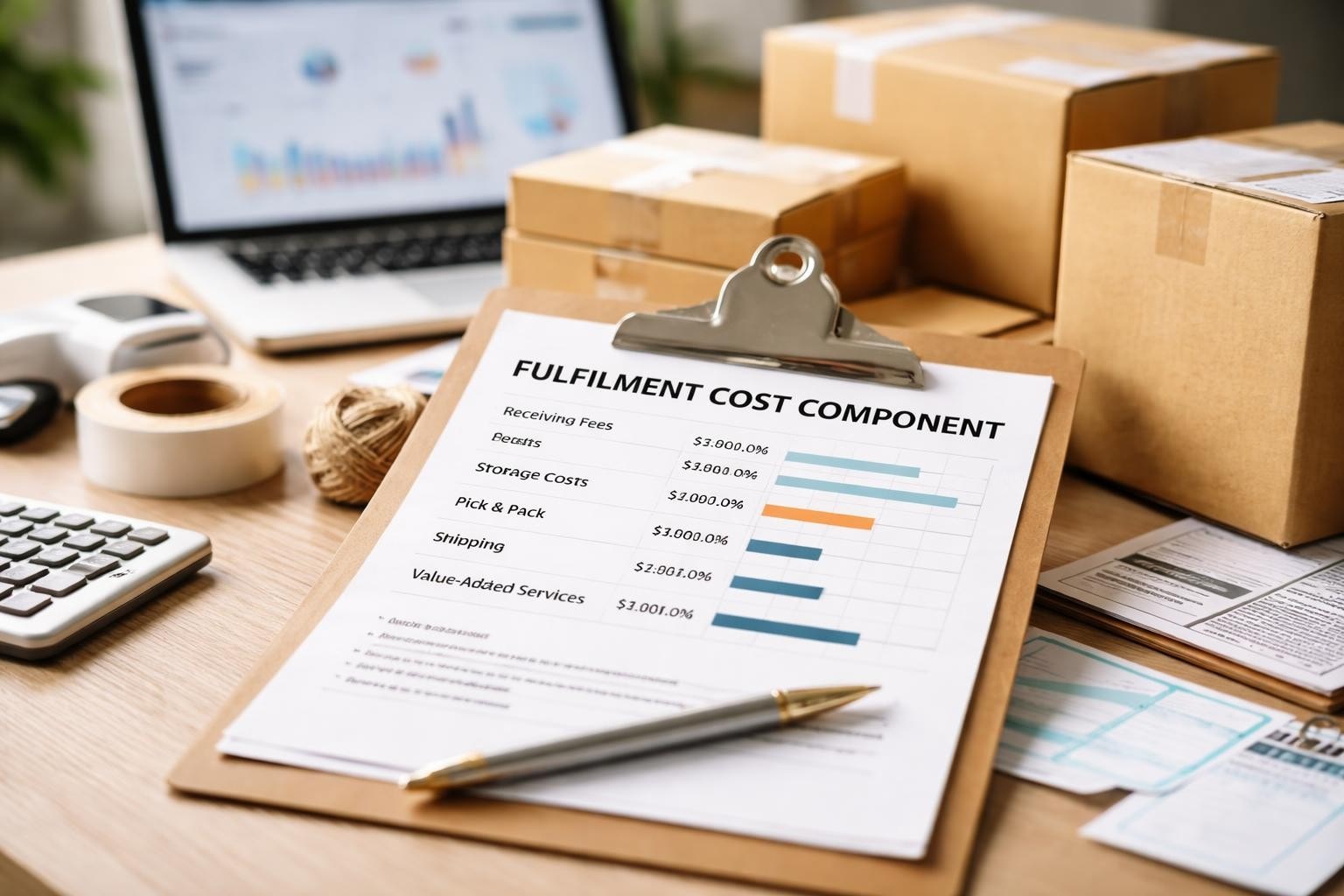

Understanding e commerce fulfillment pricing is critical for any business looking to scale operations while maintaining healthy profit margins. The costs associated with storing, picking, packing, and shipping products can make or break your bottom line, especially as order volumes fluctuate throughout the year. With fulfillment providers offering vastly different pricing structures and fee schedules, making informed decisions requires a thorough understanding of how these costs accumulate and which models align best with your specific business needs. This comprehensive guide breaks down every component of fulfillment pricing, helping you navigate one of the most significant operational expenses in modern e-commerce.
Core Components of Fulfillment Pricing
E commerce fulfillment pricing typically consists of several distinct cost categories that providers charge separately or bundle together. Understanding each component helps you compare providers accurately and identify where you might be overpaying.
Receiving and Intake Fees
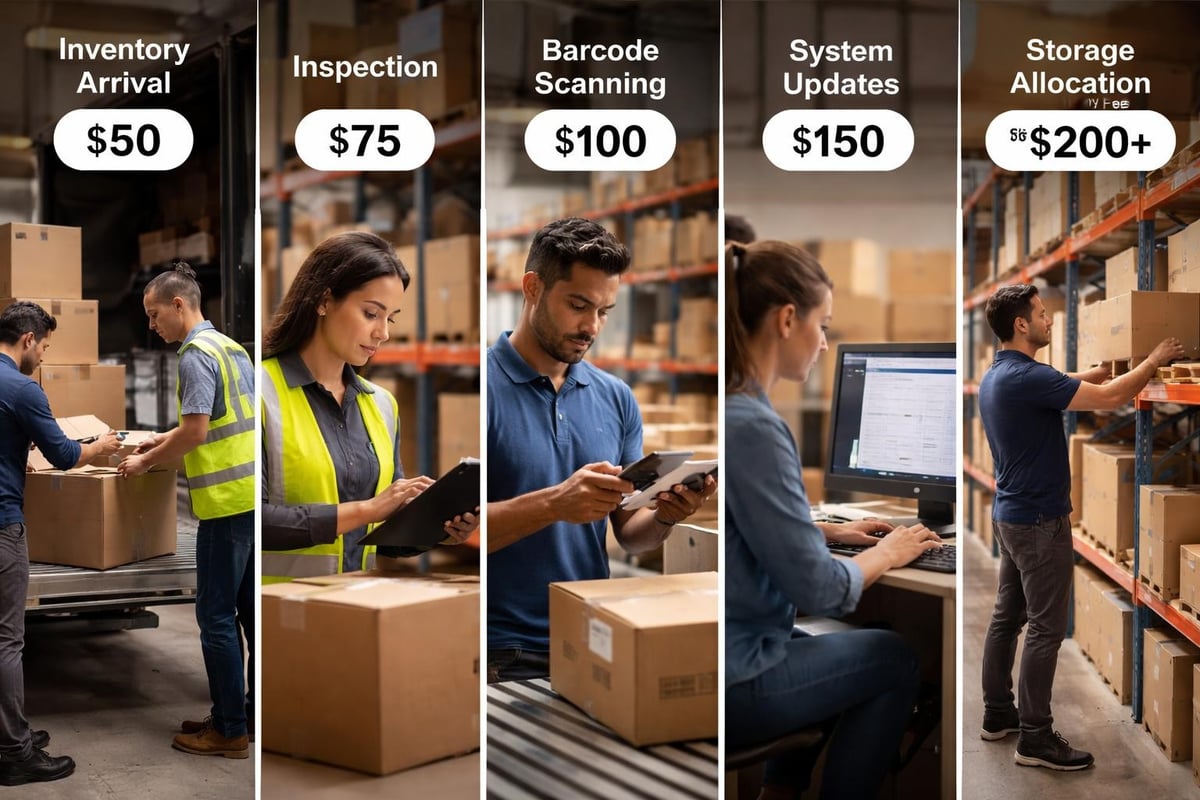
When your inventory arrives at a fulfillment center, you’ll encounter receiving fees that cover the labor and time required to process your products. These charges typically range from $25 to $50 per hour of receiving time, though some providers charge per pallet or per carton.
Most fulfillment partners inspect incoming shipments, count units, scan barcodes, and update inventory management systems. The complexity of your products directly impacts these costs-simple, uniform items process faster than fragile or irregular items requiring special handling.
- Standard pallet receiving: $5-$15 per pallet
- Floor-loaded container unloading: $150-$300 per container
- Per-unit receiving: $0.10-$0.50 per item
- Quality inspection: Additional $0.15-$0.35 per unit
Storage and Warehousing Costs
Storage fees represent one of the most variable aspects of e commerce fulfillment pricing. Providers typically charge monthly based on the space your inventory occupies, measured in either cubic feet or pallet positions.
Standard storage rates fluctuate between $8 and $15 per pallet per month for ambient storage. Climate-controlled or specialized storage commands premium rates of $15 to $30 per pallet monthly. Some providers have shifted to cubic-foot pricing, charging $0.40 to $0.75 per cubic foot monthly, which can benefit businesses with dense, heavy products.
Long-term storage fees may apply to inventory sitting in the warehouse beyond 180 days, sometimes doubling or tripling standard rates. These penalties encourage inventory turnover and free up space for active products.
| Storage Type | Monthly Rate (Per Pallet) | Monthly Rate (Per Cubic Foot) |
|---|---|---|
| Standard ambient | $8-$15 | $0.40-$0.60 |
| Climate-controlled | $15-$30 | $0.60-$0.90 |
| Long-term (180+ days) | $20-$45 | $0.80-$1.50 |
Pick and Pack Fee Structures
The pick and pack component of e commerce fulfillment pricing covers the labor and materials required to prepare orders for shipment. This represents the most significant variable cost in most fulfillment operations, as it directly correlates with order volume.
Single-Item Orders
For orders containing just one SKU, pick and pack fees typically range from $2.50 to $4.50 per order. This baseline rate includes pulling the product from inventory, packaging it appropriately, printing shipping labels, and preparing it for carrier pickup. Understanding e-commerce fulfillment costs requires examining how these baseline charges scale with order complexity.
Multi-Item and Complex Orders
Additional items in the same order incur incremental pick fees, usually $0.30 to $0.75 per additional unit. Orders requiring kitting, bundling, or custom packaging see substantially higher fees reflecting the additional labor involved.
Businesses offering subscription box fulfillment face particularly complex pricing due to the customization and assembly requirements. These specialized services might cost $5 to $12 per box depending on the number of items and assembly complexity.
Factors influencing pick and pack costs:
- Number of SKUs per order
- Product size and weight
- Special handling requirements
- Custom packaging or branding needs
- Insert materials or promotional items
- Gift wrapping or personalization
Shipping and Carrier Integration
While technically separate from fulfillment services, shipping costs represent a substantial portion of total order fulfillment expenses. Most fulfillment providers either pass through actual carrier costs or negotiate discounted rates they share with clients.
Carrier Rate Structures
Third-party logistics providers often secure better shipping rates than individual merchants due to their aggregate volume. These discounts typically range from 15% to 40% off published carrier rates, depending on the provider’s shipping volume and carrier relationships.
Some fulfillment partners mark up shipping costs as an additional revenue stream, while others operate on transparent pass-through pricing. Strategies to reduce shipping costs become essential when evaluating the total landed cost of fulfillment services.
Zone-based pricing, dimensional weight calculations, and fuel surcharges all affect final shipping expenses. Working with a fulfillment partner that distributes inventory across multiple warehouse locations can reduce zone distances and lower per-package shipping costs significantly.

Value-Added Services and Special Handling
Beyond basic fulfillment functions, most providers offer value-added services that carry additional fees. These services can differentiate your brand and enhance customer experience but require careful cost-benefit analysis.
Kitting and Assembly
Kitting involves combining multiple individual items into a single sellable unit. Pricing for kitting services ranges from $1.50 to $5.00 per kit, depending on the number of components and assembly complexity. Businesses selling bundled products or promotional packages rely heavily on these services.
Returns processing represents another significant value-added service, typically costing $3 to $8 per returned item. This includes receiving the return, inspecting the product, restocking if appropriate, or disposing of damaged goods.
| Value-Added Service | Typical Price Range |
|---|---|
| Basic kitting (2-3 items) | $1.50-$3.00 per unit |
| Complex assembly (4+ items) | $3.50-$7.00 per unit |
| Returns processing | $3.00-$8.00 per return |
| Custom packaging | $0.50-$2.50 per order |
| Insert stuffing | $0.15-$0.40 per insert |
| Photography services | $5.00-$25.00 per SKU |
Branded Packaging Options
Branded shipping enhances customer experience and reinforces brand identity but increases per-order costs. Custom boxes, tissue paper, branded tape, and thank-you cards each add incremental expenses that range from $0.75 to $3.50 per order depending on the sophistication of packaging.
Pricing Models and Contract Structures
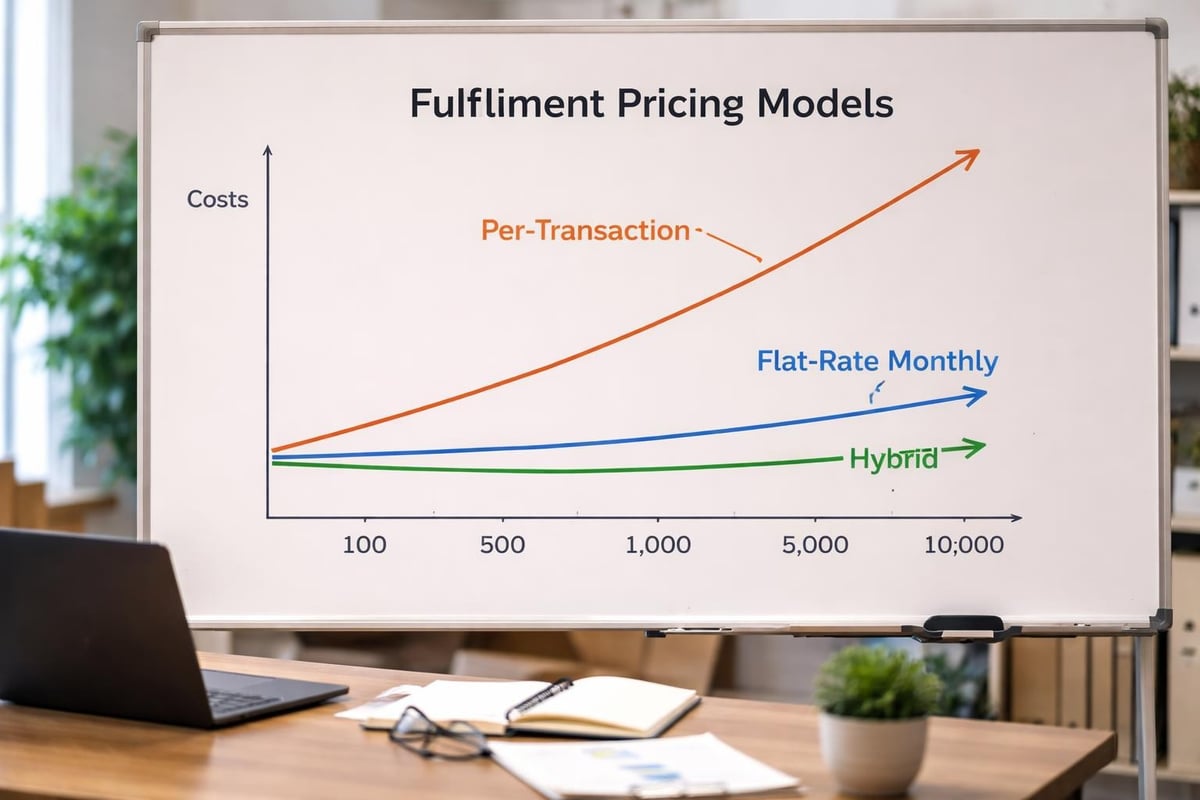
E commerce fulfillment pricing models vary significantly across providers, each offering different advantages depending on your business characteristics and growth trajectory.
Per-Transaction Pricing
The most common model charges fees per order or per unit handled. This structure provides predictable per-order costs and scales directly with sales volume, making it attractive for businesses with fluctuating demand. However, per-transaction pricing can become expensive as volumes increase without negotiated volume discounts.
Flat-Rate Monthly Pricing
Some providers offer all-inclusive monthly rates covering a specified number of orders and storage space. This model appeals to businesses seeking budget predictability and simplified accounting. The challenge lies in accurately forecasting monthly order volumes-exceeding plan limits triggers overage fees that can negate the simplicity advantage.
Transparent pricing structures have become increasingly important to growing e-commerce brands that need to forecast fulfillment expenses accurately as part of their financial planning.
Pros and cons of common pricing models:
- Per-transaction: Scales with volume, transparent, but can be expensive at high volumes
- Flat-rate monthly: Predictable budgeting, simplified billing, but risky if volumes fluctuate
- Hybrid models: Combines base monthly fee with per-order charges, balancing predictability and scalability
- Minimum monthly: Guarantees provider revenue, can penalize slow months for merchants
Hidden Fees and Cost Considerations
Beyond the standard fee categories, several less obvious charges can significantly impact total e commerce fulfillment pricing. Savvy merchants scrutinize contracts for these potential cost drivers before committing to a fulfillment partner.
Account Management and Technology Fees
Monthly account management fees ranging from $100 to $500 cover customer service, dedicated account managers, and ongoing support. Technology platform fees or integration costs add another $50 to $300 monthly for access to inventory management systems, reporting dashboards, and API connections to your e-commerce platform.
Setup and onboarding fees represent one-time costs that can range from zero to several thousand dollars. These cover initial system integration, SKU setup, and training. Some providers waive these fees to win new business, while others justify them as necessary investments in proper account configuration.
Seasonal and Peak Surcharges
Many fulfillment providers implement peak season surcharges during the fourth quarter when demand spikes. These temporary fees help offset the costs of seasonal labor and facility expansion, typically adding 10% to 25% to standard pick and pack rates from October through December.
Minimum order requirements ensure providers maintain profitability on smaller accounts. These might be structured as minimum monthly revenue requirements ($500 to $2,000) or minimum monthly order volumes (100 to 500 orders), with shortfall fees charged if you don’t meet thresholds.
Evaluating Total Cost of Fulfillment
Calculating the true cost of e commerce fulfillment pricing requires looking beyond individual fee components to understand total landed costs per order. This comprehensive view enables accurate comparison between providers and helps you determine whether outsourcing remains more cost-effective than in-house fulfillment.
Cost Per Order Calculation
To calculate your effective cost per order, sum all monthly fees (storage, account management, technology) and divide by monthly order volume, then add variable per-order charges (pick and pack, packaging, shipping). This formula reveals your all-in fulfillment cost:
Total Monthly Cost Per Order = (Fixed Monthly Fees ÷ Monthly Orders) + Variable Per-Order Costs + Shipping
For a business shipping 1,000 orders monthly with $500 in fixed fees, $3.50 in variable costs per order, and $6.00 average shipping, the calculation would be: ($500 ÷ 1,000) + $3.50 + $6.00 = $10.00 per order.
When considering e-commerce scaling strategies, understanding how these per-order costs decrease with volume becomes critical to maintaining profitability during rapid growth phases.
Negotiating Better Fulfillment Rates
Armed with knowledge of standard pricing structures, merchants can negotiate more favorable terms with fulfillment providers. The e-commerce fulfillment services market continues evolving, with providers competing aggressively for quality accounts.
Volume Commitments and Discounts
Providers offer tiered pricing that rewards volume commitments. Guaranteeing minimum monthly order volumes or signing longer-term contracts (12 to 36 months) can secure 15% to 30% discounts on standard rates. However, these commitments carry risk if your business experiences seasonal fluctuations or unexpected demand changes.
Request detailed breakdowns of all fees in writing before signing contracts. Straightforward pricing structures eliminate surprises and enable accurate financial forecasting, making them preferable to complex fee schedules with numerous add-ons.
Negotiation leverage points:
- Committed order volume projections
- Contract length and exclusivity
- Timing of new client onboarding (off-peak periods)
- Competitive quotes from multiple providers
- Willingness to handle multiple fulfillment needs (FBA prep, DTC fulfillment)
- Low SKU complexity or special handling requirements
Industry-Specific Pricing Variations
Different product categories and business models experience significant variations in fulfillment costs. A business selling athletic apparel faces different cost structures than one selling fragile electronics or oversized furniture.
Specialized Fulfillment Requirements
Companies in niche markets often require specialized fulfillment capabilities that command premium pricing. For instance, businesses like Gallant Equestrian selling performance equestrian clothing may need expertise in handling technical fabrics and maintaining specific storage conditions to preserve product quality. These specialized requirements can increase storage and handling fees by 20% to 40% compared to standard apparel fulfillment.
Similarly, businesses dealing with large, heavy products such as those using pallet manufacturing services for wholesale distribution face substantially higher storage and shipping costs due to dimensional factors. Oversized items often require special equipment and generate lower storage density, directly impacting per-unit costs.
Amazon FBA Prep Services
Merchants selling through Amazon FBA must ensure products meet specific packaging and labeling requirements. Third-party fulfillment providers offering FBA prep services typically charge $0.50 to $2.00 per unit for labeling, poly-bagging, and preparing shipments according to Amazon’s standards. This specialization adds complexity to e commerce fulfillment pricing but proves essential for multi-channel sellers.
Technology and Integration Considerations
Modern fulfillment operations rely heavily on technology platforms that connect your e-commerce store with warehouse operations. The sophistication and reliability of these integrations significantly impact both service quality and pricing.
Platform Capabilities
Leading fulfillment providers offer real-time inventory visibility, automated order routing, and robust reporting through proprietary or third-party warehouse management systems. While basic integrations might be included in standard pricing, advanced features like custom reporting, API access, or multi-channel inventory management may carry additional monthly fees.
Integration capabilities with major e-commerce platforms, marketplaces, and shipping carriers streamline operations and reduce errors. Seamless data flow between systems minimizes the manual intervention that drives up costs and creates fulfillment delays.
Investing in fulfillment partners with sophisticated technology infrastructure might command slightly higher base rates but typically delivers better accuracy, faster processing times, and superior customer experience that justify the premium.
Making the Right Fulfillment Decision
Selecting a fulfillment partner based solely on the lowest quoted rates often proves shortsighted. The cheapest option may lack the capacity to handle growth, offer inferior customer service, or hide significant fees in complex contract terms.
Evaluating Provider Quality
Beyond e commerce fulfillment pricing, assess providers on accuracy rates, average order processing times, customer service responsiveness, and facility locations relative to your customer base. A provider offering slightly higher rates but superior service and strategic warehouse locations may deliver lower total costs through reduced shipping expenses and fewer customer service issues.
Request client references and conduct facility tours when possible. Observing warehouse operations firsthand reveals a lot about organizational culture, technology adoption, and operational efficiency that impact your business directly.
Key evaluation criteria beyond pricing:
- Order accuracy rates (target 99.5%+)
- Same-day shipping cutoff times
- Geographic coverage and warehouse locations
- Technology platform sophistication
- Scalability and capacity for growth
- Returns processing capabilities
- Customer service hours and response times
- Minimum contract terms and exit clauses
Consider total cost of ownership rather than individual line-item rates. A fulfillment partner charging slightly more for pick and pack but offering free receiving, no setup fees, and superior technology might deliver better overall value than the cheapest per-order rate.
Understanding the full scope of e commerce fulfillment pricing empowers you to make strategic decisions that support sustainable growth while controlling costs. By evaluating all fee components, comparing pricing models, and prioritizing providers offering transparency and scalability, you can establish fulfillment partnerships that grow with your business. When you’re ready to experience effortless fulfillment with transparent pricing and reliable service, Ecom Automation Prep offers comprehensive solutions including Amazon FBA prep, direct-to-consumer fulfillment, kitting, and bundling designed specifically for fast-growing e-commerce brands. Our scalable approach ensures your fulfillment costs remain predictable and competitive as your business expands.
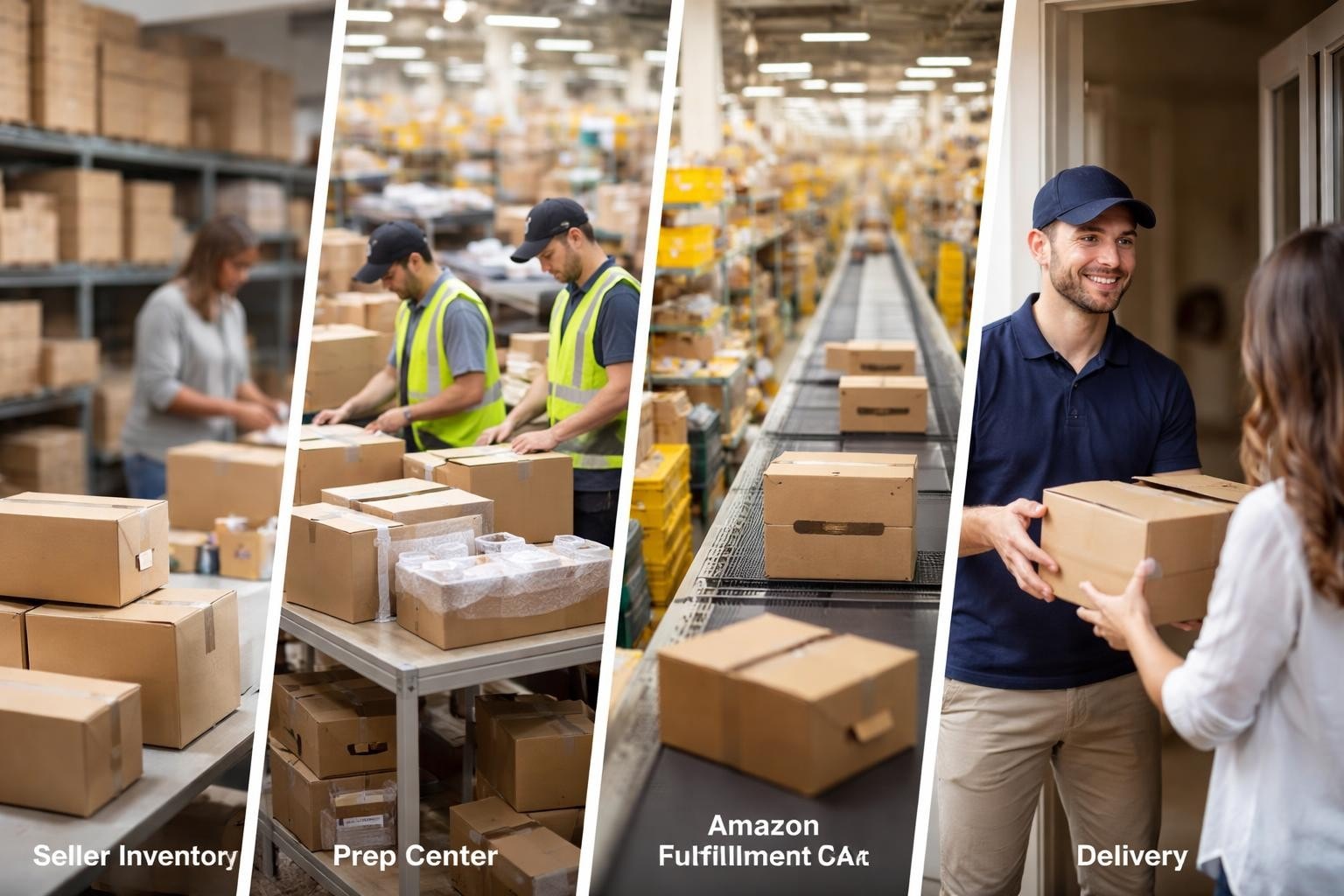



[…] error rates, and opportunity cost of seller time all factor into this calculation. Understanding e-commerce fulfillment pricing helps sellers make informed decisions about when to […]
[…] additional fees for special handling, returns processing, or customer service support. Reviewing e-commerce fulfillment pricing structures from multiple providers reveals the total cost of […]
[…] e-commerce fulfillment pricing structures helps businesses compare providers effectively and identify the best value proposition […]
[…] shipping 10,000 boxes monthly negotiates better rates than one shipping 500 boxes. Understanding e-commerce fulfillment pricing structures helps brands forecast costs as they […]