
What Is Kitting and Assembly?
Kitting and assembly are two distinct fulfillment operations that get grouped together because they usually sit next to each other on a warehouse floor. Kitting takes finished components and packages them into a new sellable unit. Assembly builds a new product out of parts that were not finished goods on their own. A brand can need one, the other, or both, depending on how its products arrive at the warehouse.
What Is Kitting?
Kitting is the process of grouping two or more individual SKUs into a single kit that gets a new SKU, gets stored as one unit, and ships as one unit. Nothing is manufactured. The components already exist in finished form; kitting just changes how they are packaged and sold. A skincare set combining a cleanser, serum, and moisturizer under one SKU is a kit. So is a printer bundled with ink cartridges, or a gift box combining three unrelated products for a seasonal promotion.
What Is Assembly?
Assembly is a manufacturing-adjacent step that joins discrete components into a finished product that did not exist in that form before. A furniture hardware set becomes a chair. Loose electronic parts become a working device. Assembly typically requires tools, trained labor, and sometimes testing or calibration, which kitting does not. Many ecommerce fulfillment operations only need kitting. Fewer need true assembly, and when they do, it is often paired with kitting immediately afterward, since the assembled product still needs to be packaged with its accessories, manual, and warranty card.
Kitting vs. Assembly: Key Differences
The practical difference that matters for an ecommerce brand is not the dictionary definition. It is which one determines how you carry inventory and how fast you can react to a demand spike.
Kitting vs. Assembly: On-Demand and Made-to-Stock
| Dimension | Kitting | Assembly |
|---|---|---|
| What changes | Packaging and SKU identity | Physical structure of the product |
| Components used | Finished goods only | Parts, sub-assemblies, raw materials |
| Labor type | Pick, pack, label | Build, fasten, sometimes test or calibrate |
| Inventory model | Can be built to stock or to order | Usually built to stock ahead of demand |
| Reversibility | Can often be disassembled and restocked | Rarely reversible without loss |
| Typical ecommerce use | Bundles, gift sets, subscription boxes, multi-packs | Furniture, hardware kits, some electronics |
| Skill or tooling requirement | Low to moderate | Moderate to high |
Where Kitting and Assembly Fit in Ecommerce Fulfillment
Assembly, Packaging, and Kitting
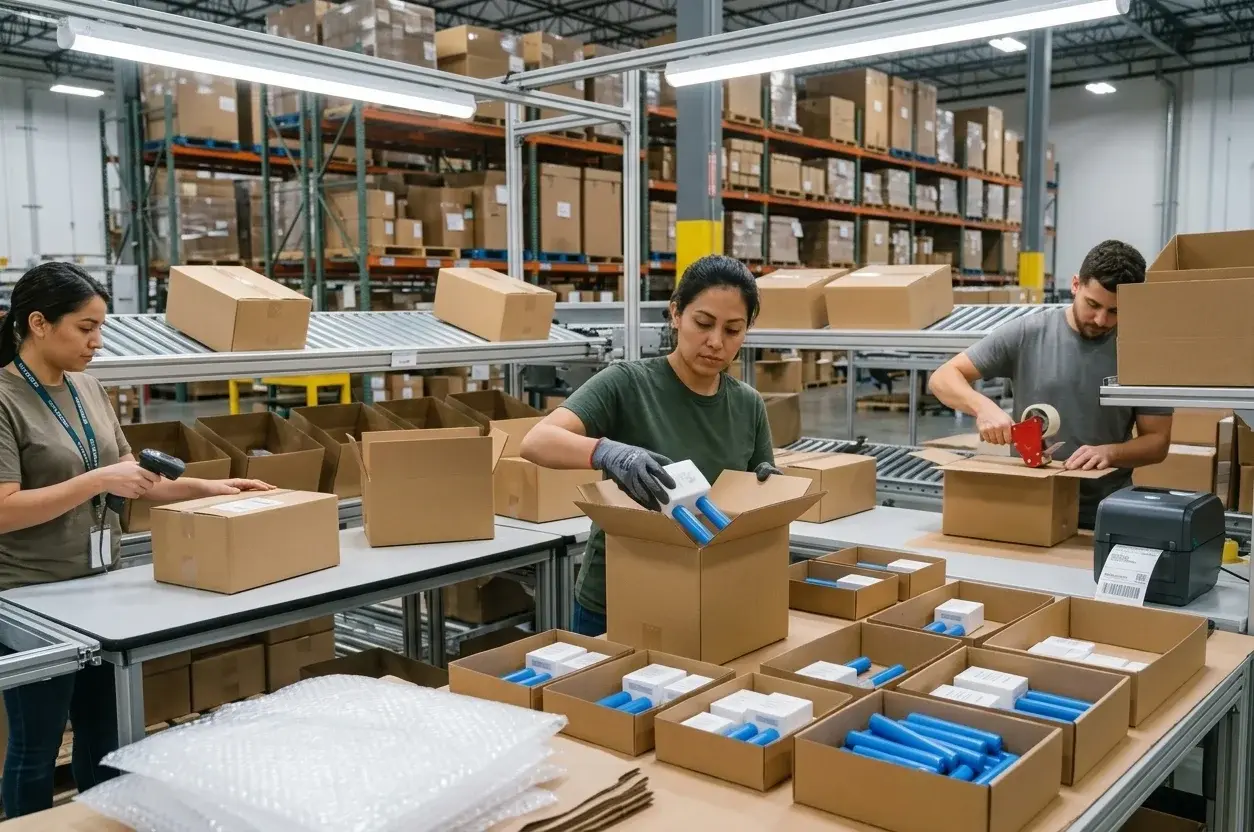
In a real fulfillment workflow, assembly, packaging, and kitting are not separate departments. They are sequential steps that happen in the same staging area, usually in this order: components arrive and are verified against the bill of materials, assembly happens if the product requires it, the assembled or finished items are grouped into the sellable kit configuration, and the kit is packaged for its outbound channel. The sequence matters more than most guides mention: if a defect in a component is caught after kitting instead of before, the entire kit has to be broken back down, which doubles the labor cost of the error instead of containing it at the cheapest possible point.
Assembly Staging and Kitting
Staging is where kitting economics are won or lost. If component bins are laid out in the sequence the kit is built, an operator can complete a kit in one pass. If components are scattered across the warehouse, every kit build turns into a mini pick run, and labor cost per kit climbs even though nothing about the product changed. A dedicated kitting staging area, replenished ahead of a known order pattern, is the single highest-leverage layout decision for any brand doing kitting at volume.
Common Ecommerce Use Cases
Kitting shows up across nearly every consumer category once a brand has more than one SKU:
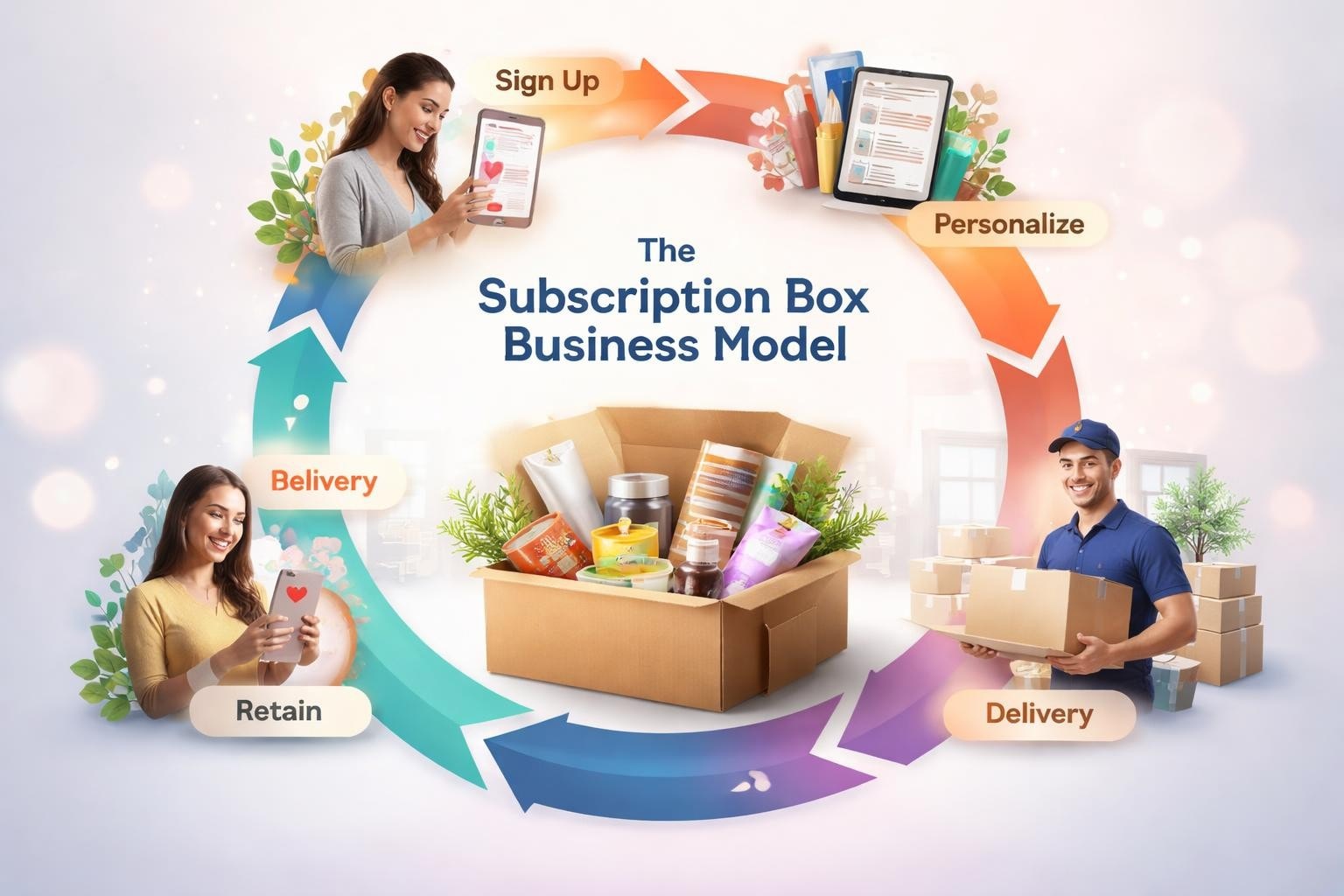
- Subscription box fulfillment, where the contents change monthly but the shipping unit stays constant
- Gift sets and seasonal bundles built for a specific promotional window
- Multi-item bundles that combine a hero product with accessories or refills
- Influencer and launch packages, often personalized in small batches
- Amazon FBA multi-packs and case-pack configurations that need to match a specific listing’s requirements
- Promotional kits that pair a slow-moving SKU with a fast-moving one to clear inventory without discounting the fast mover
Kitting and Assembly Process: Step by Step
1. Define the Product and Bill of Materials
Every kit starts with a bill of materials, or BOM: the exact list of components, quantities, and packaging that make up one unit of the finished kit SKU. The BOM also needs a decision most brands skip until it causes a problem: what happens when one component runs short. Building the substitution rule into the BOM up front, rather than improvising it during a stockout, prevents an out-of-stock component from stalling every order that contains it.
2. Receive and Stage Components
Components are received, checked against the BOM for quantity and condition, and moved into a staging location built around the kit build sequence, not around generic putaway rules. Components destined only for kitting should not be slotted the same way as components also sold individually, since mixed-purpose slotting is one of the most common causes of a kit build stalling on the floor.
3. Pick, Kit, and Assemble
Operators pick the required components per the BOM, complete any assembly step, and combine everything into the finished kit configuration. Batch kitting, where multiple kits are built in one pass using pre-staged components, is significantly faster than building kits one order at a time, but it only works if demand for that kit configuration is predictable enough to build to stock.
4. Inspect, Package, and Label
Before a kit ships, it gets checked for completeness against the BOM, not just for general damage. A kit missing one component is a different failure mode than a mispick, and it needs a checklist that catches it specifically. Once inspected, the kit gets its new SKU label, any compliance labeling its channel requires, FNSKU for Amazon as one example, and its outbound packaging.
5. Update Inventory and Fulfill Orders
Inventory has to move correctly at this step or the numbers stop matching reality. Component quantities are deducted from stock, the new kit SKU is received into inventory as a finished unit, and the order fulfills against the kit SKU rather than against the individual components. Getting this transaction wrong is one of the most common sources of phantom inventory discrepancies in any warehouse that runs kitting alongside individual-unit fulfillment.
Inventory Management and Kitting Automation
SKU, BOM, and Component Tracking
The decision that most kitting guides skip is when component inventory actually converts into kit inventory. There are two models. Build-to-stock kitting converts components into finished kits ahead of demand, based on a forecast, so the kit SKU sits in inventory ready to ship the moment an order comes in. Build-to-order kitting keeps components as components until an order arrives, then builds the kit on demand. Build-to-stock is faster at the moment of the order but locks components into a specific kit configuration, which is a problem if the kit mix changes often. Build-to-order keeps components flexible but adds a build step to every single order. Most brands running seasonal or promotional kits should default to build-to-order; brands running a stable, high-repeat kit configuration usually benefit from build-to-stock.
WMS, ERP, and Ecommerce Integrations
A warehouse management system with real BOM functionality, not just a generic SKU field, is what makes either inventory model workable at volume. The WMS needs to track component consumption against the BOM, flag component shortages before they become a stalled order, and sync kit-level inventory back to the ecommerce platform so a kit does not show as available for sale when a required component is out of stock.
Barcodes, Work Instructions, and Real-Time Control
Barcode scanning at each build step, paired with a clear work instruction showing the exact components and quantities for that specific kit, is what keeps kitting accuracy high once volume increases past what a single trained operator can hold in memory. This matters more as SKU count grows: a brand with three kit configurations can run on tribal knowledge, but a brand with thirty cannot.
Benefits of Kitting and Assembly for Ecommerce Brands
Faster Fulfillment and Lower Labor Costs
Once a kit exists as a single SKU, an order for that kit requires one pick instead of several, which cuts the labor time per order and reduces the number of touches where an error can occur.
Higher Accuracy and Consistent Quality
A defined BOM and a completeness check at packaging catch a missing component before it reaches the customer, which is a very different failure than a single-item mispick and one that a BOM-based process is specifically built to prevent.
Customization, Flexibility, and Scalability
Kitting lets a brand create promotional, seasonal, or subscription configurations without holding separate inventory for every possible combination, since the same core components can be recombined into different kit SKUs as the offer changes.
Common Kitting and Assembly Challenges
Component Shortages and BOM Changes
A kit is only as available as its scarcest component. When one item in a five-component kit runs out, the entire kit stops shipping even though four of five components are in stock. Brands that update BOMs frequently for seasonal variations also need a process for retiring the old BOM version without losing traceability on kits already built under it.
Quality Control, Rework, and Errors
Kitting introduces a failure mode that single-SKU fulfillment does not have: a kit that is complete but built with the wrong component variant, such as the correct kit with the wrong color or size substituted for one item. Catching this requires a completeness and correctness check, not just a count check.
Returns, Disassembly, and Inventory Recovery
Almost no kitting guide covers this, and it is one of the more expensive blind spots in a kitting operation. When a customer returns a kit, the warehouse needs a defined process for whether the kit gets restocked as-is, disassembled back into individual components for resale, or partially disposed of if one component is damaged. Without that process, returned kits sit in limbo, tying up inventory that could otherwise be reclaimed and resold as individual units.
In-House vs. Outsourced Kitting and Assembly
In-House vs. 3PL: Cost, Control, Volume, and Complexity
| Factor | In-House | Outsourced to a 3PL |
|---|---|---|
| Startup cost | Low at very small volume | Low, since infrastructure already exists |
| Cost at scale | Rises with labor, space, and management overhead | Typically lower per-unit at volume |
| Control over quality | Direct, but limited by internal training | Depends on the provider’s process discipline |
| Speed to launch a new kit | Fast for a small operation | Depends on provider onboarding and BOM setup |
| Seasonal or peak flexibility | Constrained by fixed staff and space | Provider absorbs labor scaling |
| Best fit | Very low volume, highly custom, or IP-sensitive kits | Growing brands with recurring or scaling kit volume |
How to Choose a Kitting and Assembly Provider
Capabilities, Quality Standards, and Technology
The provider should be able to show, not just describe, how it handles BOM tracking, component shortages, and kit-level completeness checks. A provider that treats kitting as a generic add-on rather than a defined process is more likely to produce the specific failure modes described above: incomplete kits, wrong-variant substitutions, and stalled orders on a missing component.
Pricing, SLAs, and Scaling Capacity
Pricing should reflect actual labor complexity, not a flat per-unit rate that ignores how many components a kit contains or how often the BOM changes. A provider should also be able to describe how it scales kitting labor for a seasonal spike without degrading turnaround time on the rest of the warehouse’s order volume.
Kitting and Assembly Services From Ecom Auto Prep
Ecom Auto Prep runs kitting and assembly out of a Class A industrial facility in Coral Springs, Florida, supporting Shopify, Amazon FBA, Walmart, eBay, and TikTok Shop sellers from one physical operation. Kitting work handled at EAP includes promotional kits, product-and-accessory combinations, subscription kits, gift sets, multi-item bundles, and influencer or launch packages, alongside standard FBA prep, poly-bagging, and relabeling. Brands working with EAP get direct access to the people running their account rather than a support ticket queue, which matters most exactly when a BOM changes or a component runs short and someone needs to make a fast call. Full details on the service are available on the kitting and fulfillment page.
Frequently Asked Questions
What Products Are Best Suited for Kitting and Assembly?
Products with a stable, repeatable combination of components, or a promotional configuration with a defined start and end date, are the best fit. Highly customized one-off builds are usually a poor fit for kitting logic and are better handled as individual assembly projects.
How Do Kitting and Assembly Affect Inventory?
Kitting adds a layer of inventory tracking on top of standard SKU management: component stock has to be tracked separately from kit stock, and the two have to reconcile against each other every time a kit is built, sold, or returned.
Can Kitting and Assembly Be Automated?
Parts of both can be automated, particularly component retrieval and barcode-driven build verification, but the physical act of assembling most consumer kits still relies on trained labor, especially for kits with more than a few components or any variant selection.
When Should a Brand Outsource Kitting and Assembly?
Once kitting volume is high enough that it requires dedicated staff, space, and a documented BOM process, most brands find it more cost-effective to outsource to a 3PL that already has that infrastructure than to build it internally from scratch.
Stop Losing Orders to a Missing Component
Missing components stall orders and cost you repeat customers. Ready to see accurate, BOM-driven kitting at your real order volume? Get a quote based on your actual product mix and component list, schedule a meeting with the account team that will run your kits day to day, or request a service pricing breakdown built around your specific configurations.