


E-commerce brands face mounting pressure to deliver exceptional customer experiences while controlling operational costs. One strategy that accomplishes both objectives is fulfillment kitting, a process that combines multiple individual items into a single package before orders arrive. This approach transforms how businesses manage inventory, process orders, and satisfy customers. Whether you're launching subscription boxes, creating gift sets, or bundling complementary products, understanding the intricacies of kitting can dramatically improve your bottom line and operational efficiency.
Understanding Fulfillment Kitting and Its Strategic Value
Fulfillment kitting involves assembling multiple products into a single sellable unit before storing them as inventory. Rather than picking individual items when orders come in, warehouse teams pre-assemble these combinations, creating ready-to-ship packages that drastically reduce processing time.
The strategic value extends beyond simple convenience. When you implement fulfillment kitting, you're essentially front-loading the assembly work during slower periods, which means your team can process orders exponentially faster during peak seasons. This approach proves particularly valuable for businesses experiencing rapid growth or seasonal demand spikes.
Key Differences Between Kitting and Traditional Fulfillment
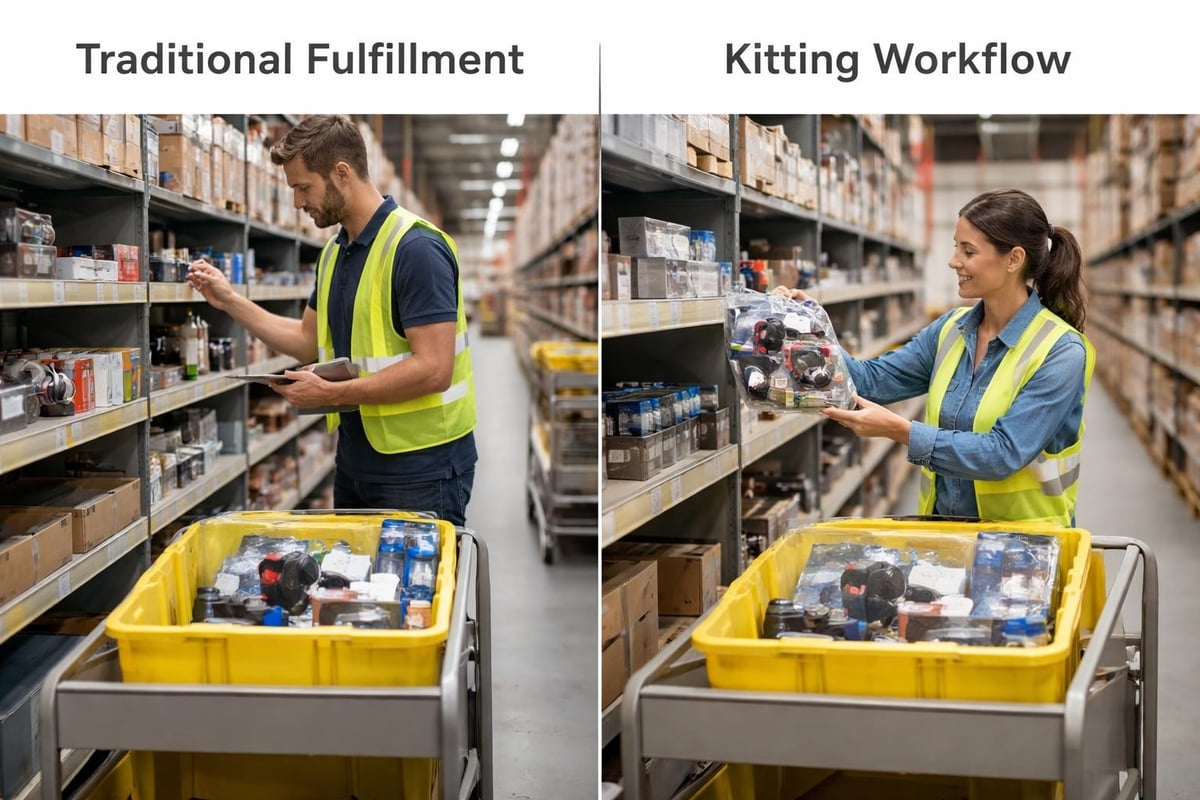
Traditional fulfillment requires warehouse staff to locate and pick each item individually when an order arrives. A customer ordering a skincare bundle might trigger four separate pick actions, quality checks, and packing steps.
Kitting eliminates this redundancy by:
- Pre-assembling products during off-peak hours
- Reducing pick time from minutes to seconds
- Minimizing handling errors across multiple SKUs
- Standardizing package quality and presentation
- Decreasing labor costs per order
The benefits of inventory kitting become immediately apparent when comparing processing times. A kitted product requires one pick action versus multiple picks for individual components.
Types of Fulfillment Kitting Operations
Different business models require distinct kitting approaches. Understanding which type aligns with your strategy ensures optimal implementation and resource allocation.
Subscription Box Kitting
Subscription services depend heavily on consistent, high-quality kitting operations. Each month's box contains curated items that must be assembled, packaged, and shipped to thousands of subscribers simultaneously.
This model demands:
- Precise inventory forecasting to prevent stockouts
- Scalable assembly processes for large batch sizes
- Quality control measures ensuring consistency
- Flexible systems accommodating product variations
- Efficient storage solutions for pre-assembled boxes
Promotional Bundle Kitting
Seasonal promotions and limited-time offers often involve creating special product combinations. Holiday gift sets, back-to-school bundles, and flash sale packages fall into this category.
| Bundle Type | Assembly Timing | Inventory Approach | Shelf Life Considerations |
|---|---|---|---|
| Holiday Sets | 4-6 weeks advance | Temporary SKU creation | High priority disassembly planning |
| Cross-sell Bundles | On-demand or batch | Permanent SKU | Matches individual components |
| Sample Kits | Continuous production | Standing inventory | Requires rotation monitoring |
Custom Configuration Kitting
Some e-commerce brands allow customers to build their own bundles or configurations. This approach requires advanced e-commerce logistics solutions that can handle variable combinations efficiently.
The system must track which components constitute each custom kit while maintaining accurate inventory counts for individual items. This complexity increases but delivers superior customer satisfaction through personalization.
Implementing Effective Kitting Processes
Successful fulfillment kitting requires careful planning and execution across multiple operational dimensions. Simply deciding to kit products isn't enough; you need robust systems and procedures.
Warehouse Organization and Layout Optimization
Physical space configuration directly impacts kitting efficiency. Dedicated kitting stations separate from standard picking areas prevent workflow conflicts and reduce congestion.
Essential layout elements include:
- Designated assembly zones with adequate lighting and ergonomic workstations
- Proximity to component storage for minimal travel time
- Quality control checkpoints before final packaging
- Staging areas for completed kits awaiting storage
- Clear pathways preventing bottlenecks during shift changes
The warehouse organization strategies you implement determine how quickly teams can scale production during demand surges.
Technology Integration and Inventory Management
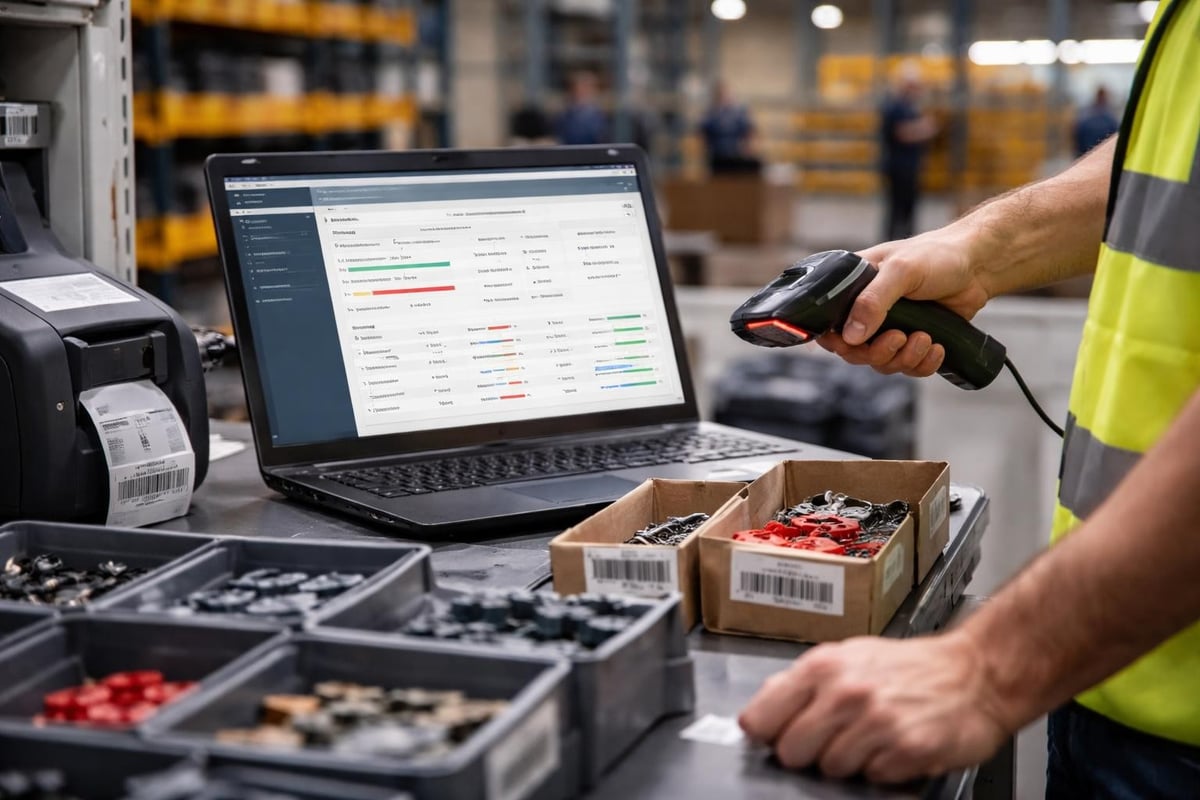
Modern fulfillment kitting relies heavily on warehouse management systems (WMS) that track both individual components and finished kits. Your WMS should automatically adjust inventory levels when kits are assembled, preventing overselling scenarios.
Barcode scanning technology ensures accuracy throughout the process. Each component gets scanned during assembly, verifying correct items and quantities before the kit receives its own unique identifier. This modern approach to warehouse kitting minimizes human error while creating comprehensive audit trails.
Quality Control Protocols
Even minor errors in kitting can trigger costly returns and damage brand reputation. Implementing multi-stage quality checks catches mistakes before packages leave your facility.
Standard quality control includes:
- Component verification confirming correct items before assembly
- Assembly inspection ensuring proper packaging and presentation
- Weight verification catching missing or extra items
- Random audits maintaining team accountability and identifying systematic issues
- Customer feedback loops revealing problems that slip through internal checks
Financial Benefits and Cost Analysis
The economics of fulfillment kitting extend far beyond simple labor savings. Comprehensive analysis reveals multiple revenue and cost advantages.
Direct Cost Reductions
Labor represents the most obvious savings category. Pre-assembling products reduces order processing time by 40-60% in most scenarios, directly translating to lower labor costs per order.
Additional cost benefits include:
- Reduced shipping errors that trigger expensive reshipments
- Optimized packaging using right-sized boxes for kitted products
- Lower material waste through standardized assembly processes
- Decreased damage rates from consistent packing methods
- Minimized overtime expenses during peak periods
Revenue Enhancement Opportunities
Strategic kitting creates opportunities to increase average order value and customer lifetime value. Bundles encourage customers to purchase multiple items they might not have bought separately.
Gift-ready packaging adds perceived value, justifying premium pricing. Many brands charge 10-20% more for kitted bundles compared to individual item totals, and customers willingly pay for the convenience and presentation quality.
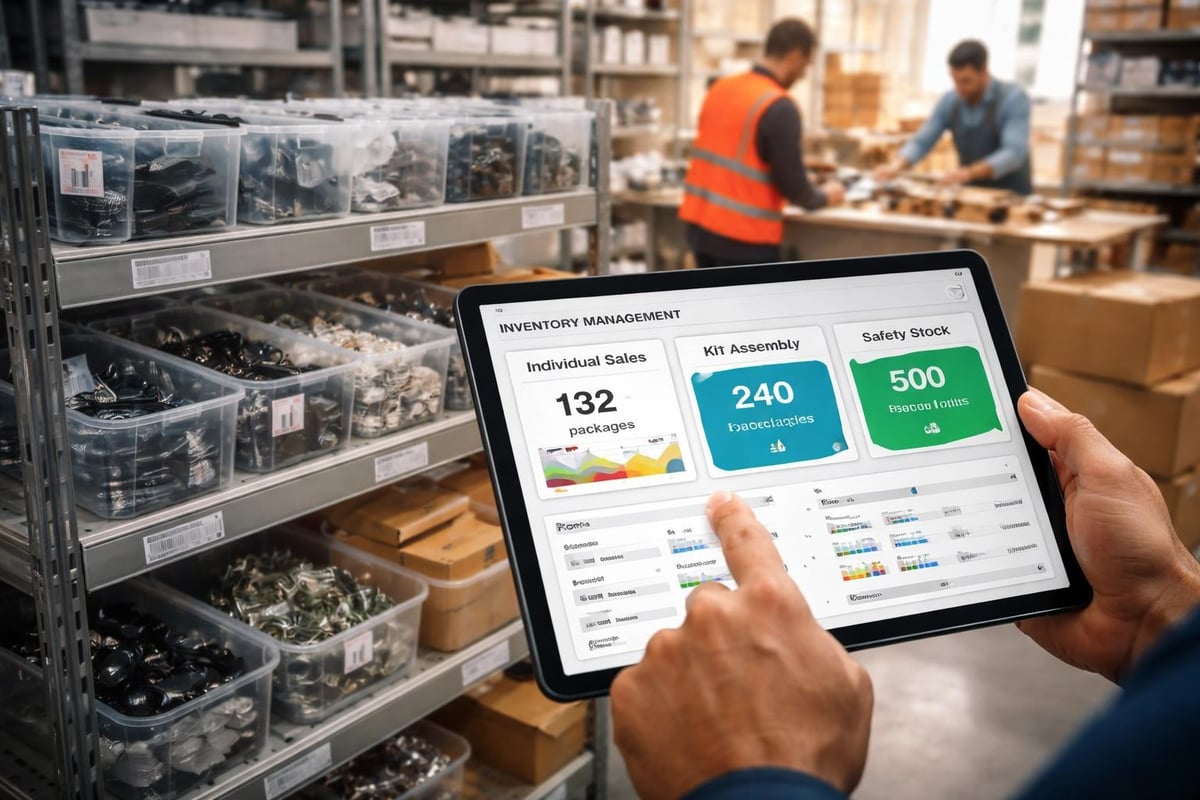
| Metric | Individual Sales | Kitted Bundles | Improvement |
|---|---|---|---|
| Average Order Value | $42 | $67 | +60% |
| Return Rate | 8.5% | 4.2% | -51% |
| Processing Time | 6.2 minutes | 2.1 minutes | -66% |
| Customer Satisfaction | 4.1/5 | 4.7/5 | +15% |
Operational Challenges and Solutions
Despite significant benefits, fulfillment kitting introduces unique challenges that require proactive management and creative problem-solving.
Demand Forecasting Complexity
Predicting demand for kitted products proves more challenging than forecasting individual items. You must commit inventory to specific combinations, reducing flexibility if demand shifts unexpectedly.
Mitigation strategies include:
- Starting with smaller kit production batches
- Selecting components with longer shelf lives
- Creating disassembly protocols for slow-moving kits
- Monitoring sales velocity closely during initial launches
- Maintaining buffer stock of high-demand individual items
Storage Space Requirements
Kitted products typically consume more warehouse space than their individual components stored separately. A kit containing four items might require the same cubic footage as eight individual items due to packaging and spacing requirements.
Scaling e-commerce operations means accurately projecting space needs before committing to kitting programs. Consider vertical storage solutions and seasonal storage partnerships for peak periods.
Inventory Accuracy Maintenance
Tracking inventory becomes exponentially more complex when products exist as both individual items and kit components. Your system must prevent selling the last unit of a component as an individual item when that unit is needed for a pre-sold kit.
This requires sophisticated inventory reservation systems that allocate component quantities to scheduled kit production runs. Real-time synchronization between assembly operations and inventory databases prevents discrepancies.
Best Practices for Third-Party Logistics Partnerships
Many e-commerce brands partner with specialized fulfillment providers for their kitting needs. Understanding what makes 3PL kitting operations successful helps you select the right partner and structure effective agreements.
Evaluating 3PL Kitting Capabilities
Not all fulfillment centers offer equal kitting expertise. When evaluating potential partners, assess their experience with your specific product categories and complexity levels.
Critical evaluation criteria include:
- Demonstrated experience with similar product types
- Technology infrastructure supporting complex kitting
- Scalability to accommodate growth projections
- Quality control processes and error rates
- Pricing transparency covering all assembly scenarios
- Communication systems for real-time inventory visibility
Communication and Documentation Requirements
Clear documentation prevents costly misunderstandings. Your kitting services agreement should specify exact assembly instructions, including component placement, packaging materials, and quality standards.
Visual assembly guides prove far more effective than written descriptions alone. Photographs or videos showing proper kit configuration eliminate ambiguity and reduce training time for warehouse staff.
Integration with Amazon FBA and Multi-Channel Strategies
E-commerce brands often sell through multiple channels simultaneously, complicating kitting strategies. Amazon FBA presents unique considerations due to its specific prep and labeling requirements.
FBA-Compliant Kitting Approaches
Amazon allows kitted products but requires proper categorization and labeling. Your kit must have its own ASIN distinct from individual components, and all Amazon prep requirements still apply.
Consider these FBA-specific factors:
- Labeling requirements for both the kit and individual components
- Packaging standards meeting Amazon's shipment guidelines
- Inventory reconciliation between your system and Amazon's
- Return handling for kits versus individual items
- Cost implications of FBA storage fees for larger kitted units
Direct-to-Consumer Coordination
Brands selling both through Amazon and their own websites face inventory allocation decisions. Should you kit products before sending to FBA, or maintain separate inventory pools for each channel?
The answer depends on sales velocity, margin differences, and storage costs across channels. Many successful brands maintain kitted inventory at third-party fulfillment centers for their direct channels while sending individual items to FBA, assembling kits only when Amazon demand justifies the approach.
Seasonal Considerations and Scaling Strategies
Fulfillment kitting demands fluctuate dramatically throughout the year. Building flexible systems that scale efficiently prevents bottlenecks during peak seasons while avoiding excess capacity costs during slower months.
Planning for Peak Season Success
Fourth-quarter holiday demand can increase kitting requirements by 300-500% for many brands. This surge requires advance planning across multiple dimensions.
Successful peak preparation involves:
- Beginning kit assembly 8-12 weeks before peak season
- Cross-training staff across multiple kit types
- Establishing temporary workspace expansions
- Securing backup labor sources for demand spikes
- Building safety stock buffers for critical components
- Testing processes at scale before actual peak begins
Year-Round Optimization
Maintaining lean operations during slower periods prevents unnecessary costs while preserving capability for quick scaling. Consider implementing variable kitting schedules that increase production as demand builds rather than maintaining constant production year-round.
Comprehensive e-commerce help resources can guide you through creating responsive kitting schedules aligned with your specific demand patterns.
Measuring Kitting Performance and ROI
Implementing fulfillment kitting without measuring its impact leaves money on the table. Establishing clear metrics enables continuous improvement and justifies ongoing investment.
Key Performance Indicators
Track these essential metrics monthly to understand kitting effectiveness:
- Kit assembly cost per unit including labor, materials, and overhead
- Order processing time reduction compared to non-kitted equivalent
- Error rate differential between kitted and individual item orders
- Inventory turnover rates for kitted versus component products
- Customer satisfaction scores specifically for bundled products
- Revenue per kit versus equivalent individual item sales
Continuous Improvement Methodologies
The most successful kitting operations evolve continuously based on data and feedback. Establish regular review cycles examining both quantitative metrics and qualitative observations from warehouse teams.
Small process refinements compound over time. Adjusting component placement to reduce reach distance by six inches might save only seconds per kit, but multiplied across thousands of units monthly, these micro-improvements generate substantial value.
Advanced Kitting Strategies for Competitive Advantage
Once basic kitting operations run smoothly, sophisticated brands explore advanced strategies that create defensible competitive advantages and deeper customer relationships.
Personalization at Scale
Modern technology enables customization previously impossible at commercial scales. Variable data printing allows personalized inserts or packaging for each kit while maintaining efficient assembly speeds.
This approach works particularly well for corporate gifting, influencer collaborations, and premium subscription tiers where personalization justifies additional costs.
Sustainable Kitting Practices
Environmental consciousness influences purchasing decisions for growing customer segments. Digital logistics innovations enable more sustainable kitting through optimized packaging and reduced waste.
Consider implementing:
- Right-sized packaging minimizing dimensional weight
- Recyclable or compostable materials throughout
- Reusable component containers in warehouse operations
- Carbon-neutral shipping options for kitted products
- Sustainability messaging highlighting your eco-friendly approach
Data-Driven Kit Development
Rather than guessing which product combinations resonate, analyze purchase behavior to identify natural bundling opportunities. Customers frequently buying specific items together represent prime candidates for new kitted offerings.
This analytical approach to what kitting encompasses ensures your product development aligns with actual customer preferences rather than assumptions.
Employee Training and Engagement
The human element ultimately determines kitting success. Well-trained, engaged employees produce higher quality work with fewer errors and greater efficiency.
Comprehensive Training Programs
Effective training extends beyond simple task demonstration. Team members should understand why accuracy matters, how their work impacts customer experience, and what quality standards they're expected to maintain.
The best practices for efficient kitting emphasize employee engagement as critical to sustained operational excellence.
Training should cover:
- Detailed assembly procedures for each kit type
- Quality control checkpoints and verification methods
- Technology systems including scanners and WMS interfaces
- Problem identification and escalation protocols
- Safety procedures specific to products being handled
Performance Recognition Systems
Recognizing exceptional performance motivates teams and reinforces desired behaviors. Consider implementing tiered incentive programs rewarding both accuracy and productivity without sacrificing quality for speed.
Public recognition of employees maintaining perfect accuracy records over extended periods creates positive peer pressure and establishes clear performance expectations for newer team members.
Fulfillment kitting represents a powerful strategy for e-commerce brands seeking operational efficiency, cost reduction, and enhanced customer experiences. By pre-assembling products during off-peak periods, implementing robust quality controls, and leveraging technology for inventory accuracy, businesses can dramatically improve their fulfillment performance while creating new revenue opportunities through strategic bundling. Whether you're managing kitting in-house or partnering with specialists, Ecom Automation Prep provides the expertise and infrastructure to make your kitting operations seamless and scalable, allowing you to focus on growing your brand while we handle the complexities of assembly, quality control, and fulfillment.