
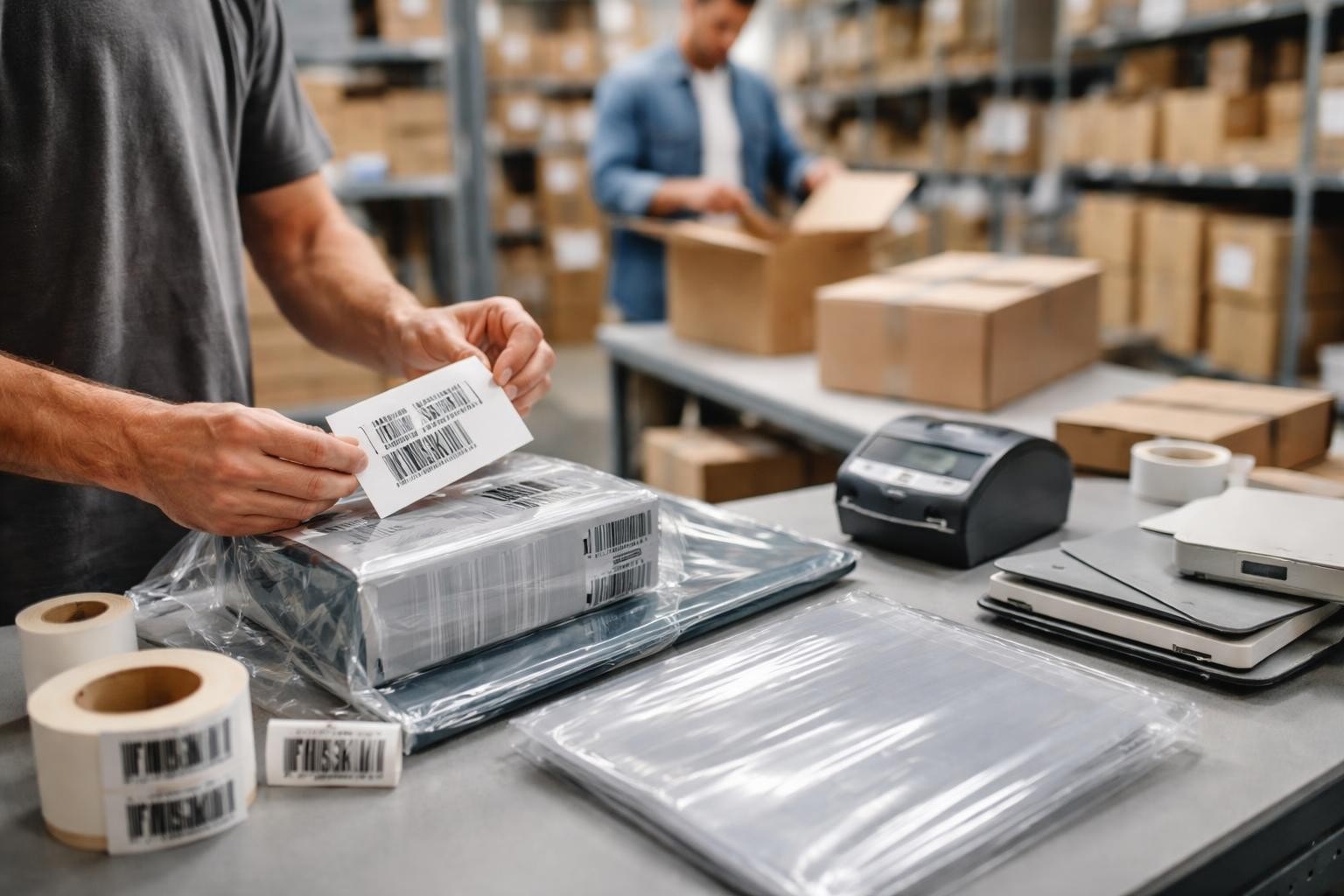

The landscape of selling on Amazon has shifted dramatically with the company's decision to discontinue its in-house FBA prep and labeling services effective January 1, 2026. This change means sellers must now take full responsibility for ensuring their products meet Amazon's strict preparation requirements before shipping to fulfillment centers. Understanding proper amazon prep procedures has become more critical than ever for maintaining account health, avoiding costly penalties, and ensuring your inventory reaches customers without delays. Whether you're a seasoned seller or just entering the FBA marketplace, mastering these requirements will directly impact your bottom line.
Understanding Amazon's 2026 Prep Requirement Changes
Amazon's decision to end its internal prep services represents a fundamental shift in how sellers must approach their fulfillment strategy. Previously, sellers could opt to have Amazon handle certain preparation tasks like labeling, polybagging, and bubble wrapping for a fee. Now, every product must arrive at Amazon fulfillment centers ready for storage and shipment.
The discontinuation of FBA prep services has created both challenges and opportunities in the marketplace. Sellers who fail to adapt risk having their shipments rejected, delayed, or charged significant non-compliance fees. On the other hand, those who establish efficient prep workflows can gain competitive advantages through faster processing times and lower costs.
Key Compliance Areas Every Seller Must Master
Amazon prep encompasses several distinct categories that sellers must understand thoroughly:
- Product labeling requirements including FNSKU barcode placement and legibility standards
- Packaging specifications for different product types, sizes, and fragility levels
- Shipping box requirements with weight limits, dimension standards, and labeling protocols
- Hazmat documentation for products containing batteries, liquids, or aerosols
- Bundle and multipacks preparation following specific kitting guidelines
Each category has detailed requirements that vary based on product characteristics. A comprehensive FBA prep guide covering 2025-2026 requirements provides sellers with the technical specifications needed to maintain compliance.
Essential Amazon Prep Standards for Product Labeling
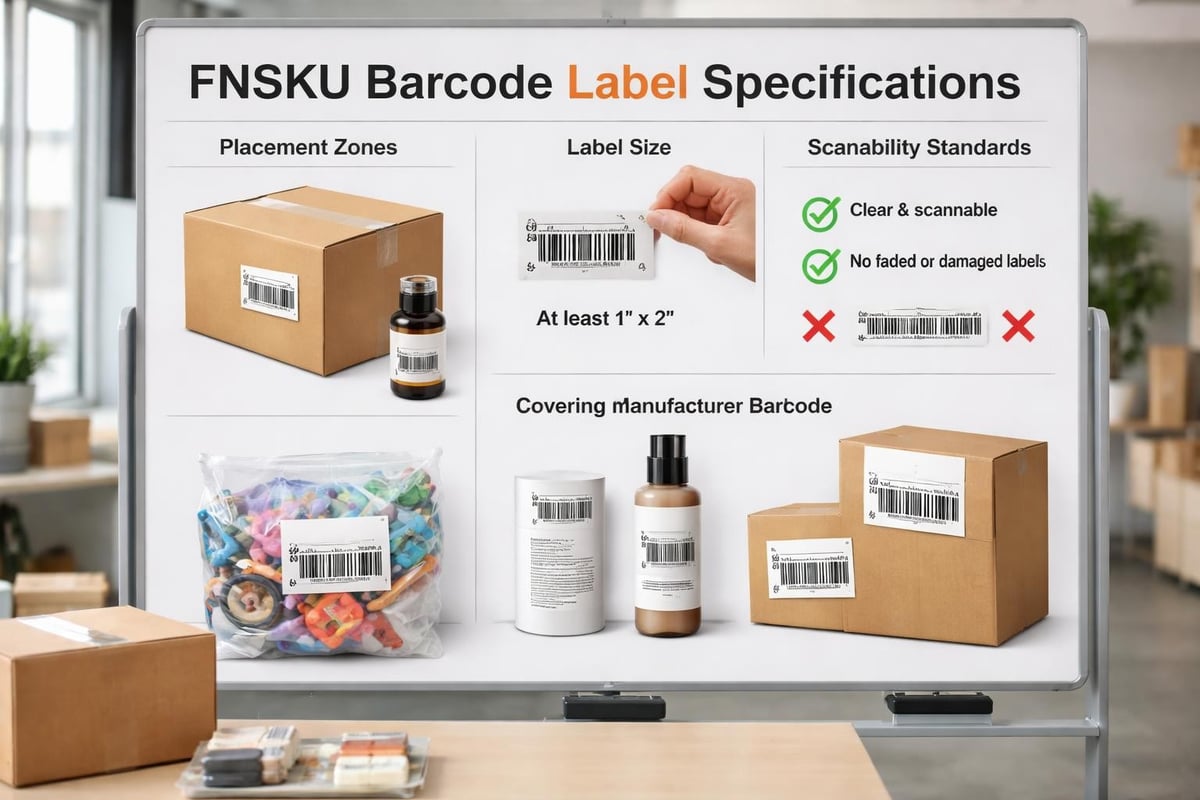
Proper labeling forms the foundation of amazon prep compliance. Every unit sent to Amazon must have a scannable FNSKU (Fulfillment Network Stock Keeping Unit) barcode that allows the company to track your inventory through its system.
FNSKU Label Requirements and Placement
Amazon's barcode specifications are precise and non-negotiable. Labels must meet these standards:
| Requirement | Specification |
|---|---|
| Minimum size | 1" x 2" (preferred 1" x 3") |
| Print quality | 300 DPI minimum, black on white |
| Placement | Flat surface, not over seams or edges |
| Coverage | Must completely cover manufacturer barcode |
| Scanability | No wrinkles, smudges, or obstructions |
The FNSKU label must be placed where it can be easily scanned without removing packaging or manipulating the product. For items with existing manufacturer barcodes, you must completely cover the original barcode to prevent scanning errors. This often requires applying opaque labels or using specific covering techniques that meet Amazon's standards.
Professional prep services understand these nuances and use industrial-grade label printers that ensure consistent quality across thousands of units. When you're processing inventory at scale, investing in proper equipment or partnering with specialists becomes essential for maintaining efficiency.
Packaging Requirements That Prevent Rejection
Amazon's packaging standards exist to protect products during the fulfillment process while maintaining warehouse efficiency. The Amazon FBA prep services transition has made these requirements more critical than ever, as sellers can no longer rely on Amazon to fix packaging issues.
Product-Specific Packaging Guidelines
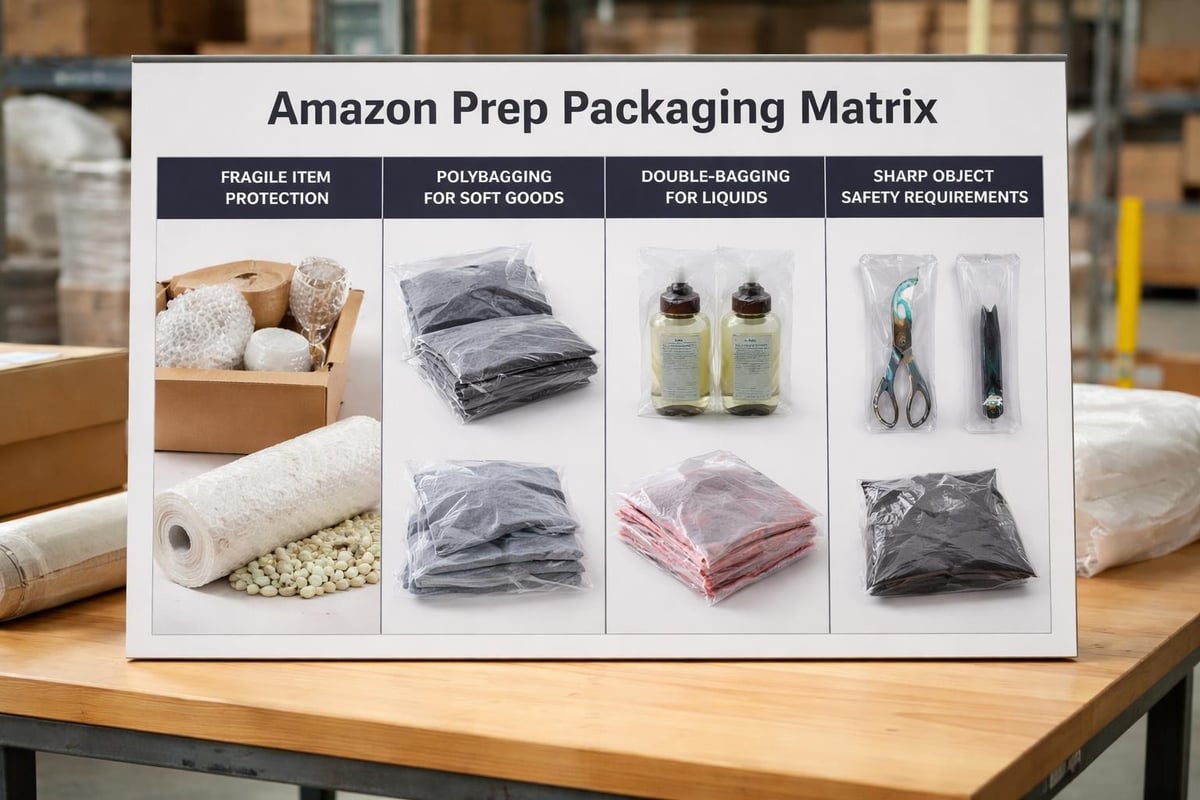
Different product categories require distinct packaging approaches:
Fragile Items need bubble wrap, foam inserts, or air pillows to prevent damage. Glass, ceramics, and electronics fall into this category and must be secured so they cannot shift during transport.
Soft Goods including clothing, textiles, and plush items require polybagging when they lack original retail packaging. The poly bags must meet specific thickness requirements (1.5 mil for bags with a 5-inch opening or larger) and include suffocation warning labels.
Liquids and Gels must be double-bagged and sealed to prevent leakage. The outer bag needs to be thick enough to contain spills, and products must pass a drop test to ensure the packaging can withstand normal handling.
Sharp Objects require protective covering over points and edges. Items like knives, tools, or anything with exposed sharp surfaces must be secured to prevent injury to warehouse workers.
Case Pack and Master Carton Standards
When shipping multiple units to Amazon, your outer cartons must meet specific criteria. Boxes cannot exceed 25 inches on any side unless they contain a single oversized item. Weight limits are strictly enforced, with most standard boxes capped at 50 pounds.
The exterior of each carton requires proper labeling with Amazon-generated shipping labels, and you must never reuse boxes with old barcodes or markings that could confuse scanning systems. Using new, sturdy boxes prevents collapses and ensures your products arrive intact.
Navigating Hazmat and Restricted Product Prep
Products containing batteries, flammable materials, aerosols, or other regulated substances require additional amazon prep steps. Amazon classifies these as hazmat (hazardous materials) and applies stricter handling protocols.
Before shipping any potentially hazardous product, you must complete Amazon's hazmat review process. This involves submitting Safety Data Sheets (SDS) and product specifications for approval. Only after Amazon classifies your product can you proceed with prep and shipment.
Battery-Containing Products
Items with lithium batteries face the most stringent requirements. You must clearly label packages with battery type, watt-hour rating, and appropriate hazmat symbols. The 2026 compliance checklist emphasizes proper documentation as a critical success factor.
Batteries must be installed in devices or packaged to prevent short circuits. Terminals need protective covering, and you cannot ship loose batteries in ways that could allow them to contact metal objects.
Kitting, Bundling, and Multipacks Preparation
Creating product bundles or multipacks adds complexity to the prep process. Amazon distinguishes between different types of combined products, and each has specific requirements.
Virtual Bundles vs. Physical Bundles
Virtual bundles are items listed together but stored separately in Amazon's system. These require no special prep beyond individual item requirements.
Physical bundles are multiple items packaged together as a single unit. These need:
- Clear external packaging showing all included items
- A single FNSKU barcode for the complete bundle
- Secure interior packaging preventing items from separating
- Compliance with combined weight and dimension limits
Creating bundles that comply with Amazon's standards while remaining cost-effective requires careful planning. The packaging must be professional enough to ship directly to customers if ordered as a bundle, yet efficient enough to maintain profit margins.
Multipacks and Sets
Multipacks (multiple identical items sold as one) must be shrink-wrapped or boxed together so they cannot be separated. Each multipack receives one FNSKU that differs from the individual item FNSKU, preventing Amazon from breaking up the set.
Understanding how to properly structure your e-commerce order process for bundled products ensures smoother operations across all fulfillment channels.
Strategic Approaches to Outsourcing Amazon Prep
With Amazon no longer offering in-house prep services, sellers face a critical decision: handle prep internally or partner with a third-party logistics provider. This choice impacts operational costs, scalability, and time management.
In-House Prep: Costs and Considerations
Managing amazon prep internally gives you complete control over quality and timing. However, it requires significant investment in several areas:
- Physical space for receiving, inspecting, and preparing inventory
- Equipment including label printers, heat sealers, scales, and packaging materials
- Labor costs for staff to perform repetitive prep tasks
- Training programs to ensure consistency and compliance
- Quality control systems to catch errors before shipment
For sellers moving modest volumes, in-house prep can be cost-effective. But as your business scales, the operational burden often outweighs the benefits of maintaining internal control.
Third-Party Prep Service Benefits
Professional prep centers specialize in amazon prep and process thousands of units daily. This specialization delivers several advantages:
| Benefit | Impact |
|---|---|
| Economies of scale | Lower per-unit costs through bulk processing |
| Expertise | Up-to-date knowledge of compliance changes |
| Speed | Faster turnaround from receiving to Amazon shipment |
| Flexibility | Scale up or down without hiring or layoffs |
| Technology | Advanced systems for tracking and reporting |
Working with established providers means your inventory flows smoothly even during peak seasons. These companies invest in compliance training, quality management systems, and direct relationships with Amazon to resolve issues quickly.
The comprehensive FBA prep requirements for 2026 highlight how complex the preparation process has become, making professional services increasingly valuable for growing brands.

Quality Control and Inspection Protocols
Regardless of whether you handle prep internally or outsource it, robust quality control prevents costly mistakes. Amazon's strict receiving standards mean that even small errors can result in rejected shipments or stranded inventory.
Receiving and Initial Inspection
Every product entering your prep workflow should undergo inspection. This catches manufacturing defects, shipping damage, or items that don't match your listings before they reach Amazon.
Professional operations implement systematic inspection procedures:
- Verify quantities against purchase orders or manifests
- Check product condition for damage, defects, or missing components
- Confirm product specifications match your Amazon listings
- Document discrepancies with photos and detailed notes
- Quarantine problematic items for return or disposal
Catching issues at receiving prevents them from becoming expensive problems at Amazon's fulfillment centers. Products that don't meet standards should never be sent to FBA.
Pre-Shipment Quality Checks
Before sealing cartons for Amazon shipment, a final quality check ensures compliance. This includes verifying that FNSKU labels are correctly applied, packaging meets standards, and shipping labels are accurate.
Creating checklists specific to your product categories reduces human error. When different team members handle prep on different days, standardized procedures maintain consistency.
Cost Management and Profitability Optimization
Amazon prep expenses directly affect your profit margins, making cost management essential for sustainable business growth. Understanding the full cost structure helps you make informed decisions about your fulfillment strategy.
Direct Prep Costs
The obvious expenses include materials and labor:
- Label stock and printer supplies
- Polybagging materials and heat sealers
- Bubble wrap, air pillows, and other protective packaging
- Boxes, tape, and shipping supplies
- Labor hours for prep tasks
These costs multiply quickly at scale. A seller processing 1,000 units monthly might spend $500-1,500 on materials alone, not counting labor.
Hidden Costs of Non-Compliance
The less obvious but potentially devastating costs come from errors:
- Rejected shipments requiring return freight and re-prep
- Non-compliance fees charged by Amazon for improper preparation
- Stranded inventory that can't be sold due to prep issues
- Negative customer reviews from damaged products
- Account health penalties affecting search rankings and buy box eligibility
A single rejected shipment can cost hundreds or thousands of dollars in fees and lost sales. This makes investing in proper prep – whether internal or outsourced – a financial imperative rather than an optional expense.
Technology and Automation in Modern Prep Operations
Forward-thinking sellers leverage technology to streamline amazon prep workflows and reduce errors. Automation tools range from simple barcode systems to comprehensive warehouse management platforms.
Inventory Management Systems
Software that integrates with your Amazon seller account automates many prep-related tasks. These systems can:
- Generate FNSKU labels automatically when inventory arrives
- Track which products require specific prep procedures
- Calculate optimal case pack quantities for shipments
- Monitor prep status in real-time
- Alert you to compliance requirement changes
Using technology reduces reliance on manual processes that are prone to mistakes. Even basic barcode scanning systems prevent mislabeling errors that could strand inventory.
Integration with Fulfillment Partners
When working with third-party prep services, technology integration becomes even more valuable. API connections allow your prep partner to receive inventory data automatically, generate required labels, and provide tracking updates without manual data entry.
This seamless flow of information speeds up the entire process. Products can move from your supplier directly to the prep center and then to Amazon with minimal handling delays, improving your inventory turnover and cash flow.
Preparing for Seasonal Demand and Peak Periods
Amazon prep requirements don't change during Q4, but volumes certainly do. Sellers must plan prep capacity carefully to avoid bottlenecks during peak selling seasons.
Scaling Prep Operations
The weeks leading up to major shopping events like Prime Day, Black Friday, and the December holidays see dramatic volume increases. Your prep operation – whether internal or outsourced – must scale accordingly.
Internal operations might need temporary staff, extended hours, or additional workspace. Planning these changes months in advance prevents last-minute scrambles.
External prep partners often book up during peak seasons. Establishing relationships early and forecasting your needs allows prep centers to allocate capacity for your inventory. The most reliable providers work with clients to create seasonal plans that guarantee timely processing.
Buffer Stock and Lead Time Planning
Smart sellers maintain buffer inventory already prepped and ready to ship. This prevents stockouts when prep operations are strained or when Amazon's receiving times extend during busy periods.
Understanding your complete supply chain timeline – from manufacturing through prep to Amazon receiving – helps you maintain adequate stock levels. Adding extra days to your lead time calculations during peak seasons prevents disappointing customers with out-of-stock listings.
Building Long-Term Partnerships for Prep Success
The transition away from Amazon's internal prep services creates an opportunity to build strategic partnerships that support long-term business growth. Choosing the right Amazon FBA prep services partner involves more than comparing per-unit pricing.
Evaluating Prep Service Providers
Professional prep operations should demonstrate several key capabilities:
Compliance expertise with documented knowledge of current Amazon requirements and processes for staying updated on changes
Scalability to handle your growth without service degradation or capacity constraints
Technology integration that connects with your systems and provides visibility into prep status
Geographic advantages with locations that minimize shipping costs to multiple Amazon fulfillment centers
Track record proven through client references and case studies showing successful partnerships
Communication and Relationship Management
The best prep partnerships involve regular communication and collaborative problem-solving. Your prep partner should alert you to potential issues before they become emergencies and work proactively to optimize your processes.
Regular business reviews help identify opportunities for cost reduction, process improvements, and capacity planning. When your prep partner understands your growth goals and seasonal patterns, they can anticipate your needs and ensure resources are available when you need them.
Many successful e-commerce brands view their prep service as an extension of their team rather than simply a vendor. This perspective encourages the kind of collaboration that drives continuous improvement and competitive advantage.
Risk Mitigation and Contingency Planning
Relying on any single point of failure in your supply chain creates vulnerability. Smart sellers develop contingency plans that keep inventory flowing even when disruptions occur.
Backup Prep Capabilities
Whether you primarily use in-house prep or a third-party service, maintaining backup capabilities protects your business. This might mean:
- Having a secondary prep partner qualified and ready to handle overflow
- Maintaining minimal internal prep capacity even when outsourcing most volume
- Developing relationships with regional prep services near your suppliers
- Creating detailed documentation of your prep procedures that could be used by alternative providers
The cost of maintaining these backup options is minimal compared to the revenue loss from extended stockouts caused by prep disruptions.
Insurance and Liability Considerations
Products can be damaged or lost at any stage of the prep process. Clear contractual terms with prep partners should define liability for different types of losses and establish insurance requirements.
Understanding what coverage your prep partner carries – and what gaps might exist – helps you make informed decisions about additional insurance. Products with high values or tight margins may justify additional protection beyond standard coverage.
Mastering amazon prep requirements in 2026 requires attention to detail, investment in proper procedures, and often partnership with specialists who handle compliance daily. As Amazon's standards continue evolving, sellers who establish robust prep workflows position themselves for sustainable growth and profitability. Ecom Automation Prep provides comprehensive FBA prep services designed specifically for fast-growing brands navigating these complex requirements, handling everything from receiving and inspection through labeling, packaging, and shipment to Amazon fulfillment centers. Let us manage your prep logistics so you can focus on scaling your business.