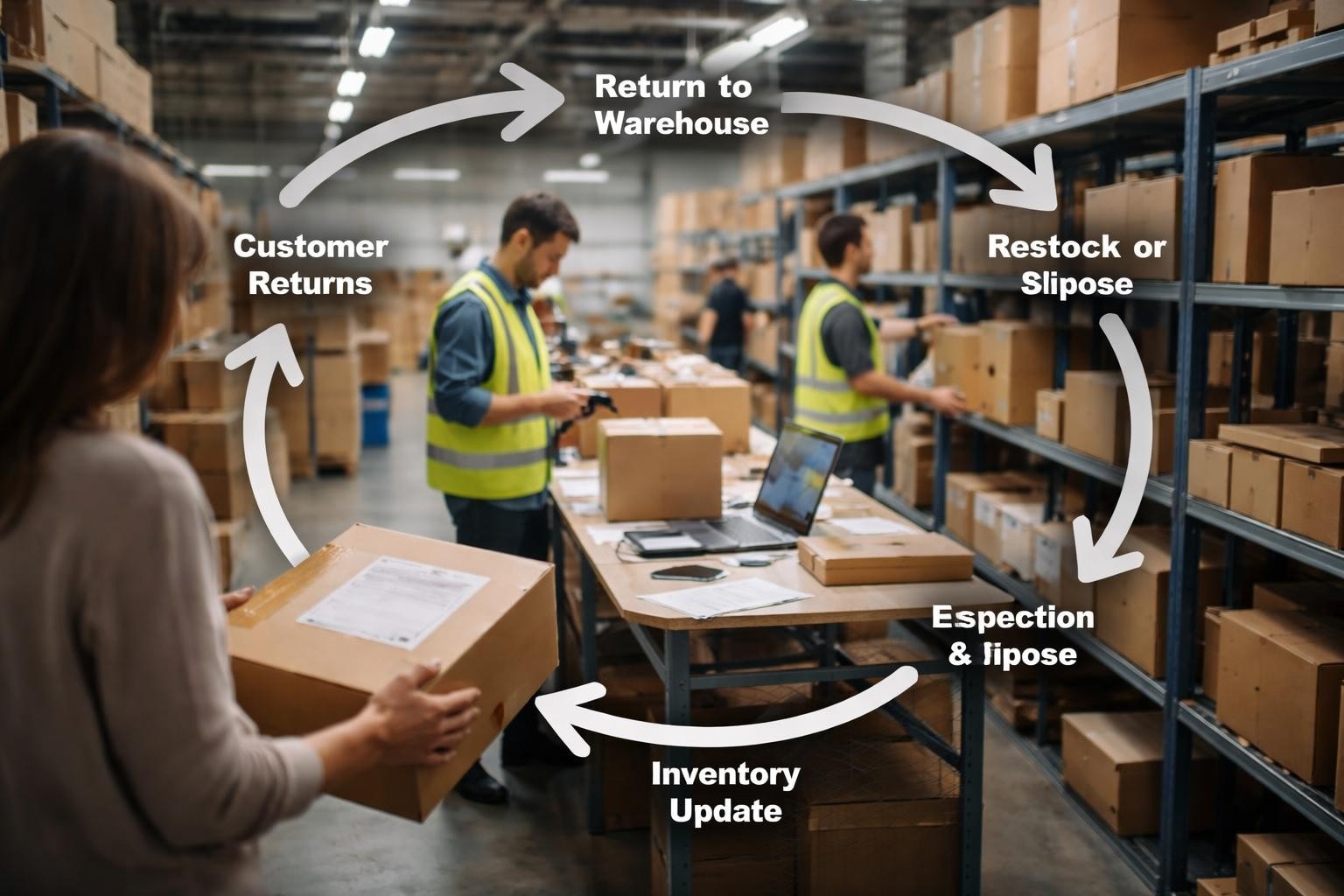


Running a successful e-commerce business in 2026 requires more than just great products and competitive pricing. The landscape has evolved dramatically, with customers expecting instant responses, flawless fulfillment, and personalized experiences at every touchpoint. Whether you're scaling a fast-growing brand or launching your first online store, understanding where to find and implement effective ecommerce help can make the difference between thriving and merely surviving. From customer service excellence to operational efficiency, the support infrastructure you build today will determine your capacity for growth tomorrow.
Understanding the Core Pillars of Ecommerce Help
Effective ecommerce help encompasses multiple dimensions of your business operations. Customer-facing support represents just one aspect of a comprehensive assistance strategy that successful brands deploy.
Customer Service Excellence as Foundation
The quality of your customer interactions directly impacts retention rates and lifetime value. Modern consumers expect immediate, personalized assistance across multiple channels, from social media to live chat and traditional email. According to research on strategies to improve e-commerce customer service, offering support on multiple channels while maintaining consistent quality creates the seamless experience today's shoppers demand.
Fast response times have become non-negotiable. Customers who wait hours for simple answers often abandon their carts and share negative experiences publicly. Implementing AI-powered chatbots for initial inquiries while maintaining human support for complex issues strikes the right balance between efficiency and personalization.

Technology-Driven Support Solutions
Leveraging the right technology stack transforms how you deliver ecommerce help to both customers and internal teams. CRM systems track customer interactions across touchpoints, ensuring no inquiry falls through the cracks while building comprehensive customer profiles that enable personalized service.
The integration of AI and automation has revolutionized support capabilities. As detailed in resources about technology-enhanced customer support, AI-powered chatbots now handle routine questions 24/7, freeing human agents to tackle complex problems that require empathy and critical thinking.
| Technology Solution | Primary Benefit | Best Use Case |
|---|---|---|
| AI Chatbots | 24/7 availability | Frequently asked questions, order tracking |
| CRM Systems | Unified customer view | Personalized interactions, history tracking |
| Help Desk Software | Ticket management | Complex issue resolution, team collaboration |
| Analytics Platforms | Performance insights | Identifying improvement opportunities |
Operational Ecommerce Help: Streamlining Fulfillment
While customer service captures attention, operational efficiency often determines profitability. The backend processes that move products from warehouse to doorstep require just as much strategic support as customer-facing functions.
Fulfillment Challenges and Solutions
Fast-growing e-commerce brands frequently encounter fulfillment bottlenecks that constrain growth. Inventory management complexities, shipping cost pressures, and customer expectations for rapid delivery create a perfect storm of operational challenges.
Working with experienced fulfillment partners provides the ecommerce help needed to scale without sacrificing quality. Specialized providers offer expertise in comprehensive fulfillment services that extend beyond basic warehousing, including kitting, bundling, and preparation for various sales channels.
For brands selling through multiple channels, understanding platform-specific requirements becomes critical. Amazon FBA prep services, direct-to-consumer fulfillment, and retail distribution each demand different processes and compliance standards. Professional fulfillment partners navigate these complexities daily, preventing costly mistakes that damage seller metrics and customer relationships.
Cost Management Without Compromising Speed
Shipping expenses represent one of the largest variable costs for online retailers. Finding ways to reduce e-commerce fulfillment and shipping costs while maintaining delivery speed requires strategic thinking and often, expert guidance.
Dimensional weight pricing, zone-based shipping strategies, and carrier negotiations all impact your bottom line. Brands lacking internal logistics expertise benefit enormously from partners who understand these nuances and can optimize shipping strategies based on product characteristics and customer distribution.
Consider these cost-reduction approaches:
- Consolidate inventory in strategically located fulfillment centers
- Implement intelligent order routing to minimize shipping zones
- Negotiate volume discounts with multiple carriers
- Optimize packaging to reduce dimensional weight charges
- Utilize hybrid fulfillment models for different product categories
Building a Comprehensive Ecommerce Help Strategy
Sustainable growth requires integrating various support elements into a cohesive strategy that addresses both immediate needs and long-term scalability.
Educating Customers to Reduce Support Burden
Proactive customer education represents one of the most underutilized forms of ecommerce help. When you empower customers with information, you simultaneously improve their experience and reduce repetitive support inquiries.
Creating robust FAQ sections, tutorial videos, and detailed product guides helps customers find answers independently. As highlighted by experts who focus on educating and engaging customers, informative content helps shoppers make confident purchase decisions while building trust in your brand.
Documentation should address the entire customer journey, from pre-purchase questions about sizing and compatibility to post-purchase guidance on assembly, care, and returns. Well-crafted content serves customers for years, providing perpetual value far exceeding the initial creation cost.

Measuring What Matters: Key Support Metrics
You cannot improve what you do not measure. Tracking the right metrics provides the ecommerce help your team needs to identify weaknesses and capitalize on strengths.
Essential customer service metrics include:
- Customer Satisfaction Score (CSAT) – Measures immediate satisfaction after interactions
- Net Promoter Score (NPS) – Gauges overall brand loyalty and referral likelihood
- First Response Time – Tracks how quickly customers receive initial replies
- Resolution Time – Measures average time to fully resolve issues
- Customer Effort Score (CES) – Evaluates how easy customers find the support process
According to best practices for tracking customer service metrics, regularly analyzing these indicators helps identify specific areas requiring improvement rather than making assumptions about customer needs.
Platform-Specific Ecommerce Help Considerations
Different e-commerce platforms present unique challenges and opportunities that require specialized knowledge and support.
Shopify Store Optimization
Shopify powers millions of online stores, but maximizing the platform's potential requires expertise beyond basic setup. From theme customization to app integration and conversion optimization, working with a dedicated Shopify agency ensures your store leverages platform capabilities fully while maintaining performance standards that prevent customer abandonment.
Performance optimization, mobile responsiveness, and seamless checkout experiences directly impact conversion rates. Technical ecommerce help from specialists who understand Shopify's architecture prevents common pitfalls that plague self-managed stores.
| Optimization Area | Impact on Conversions | Common Issues |
|---|---|---|
| Page Load Speed | 20-30% improvement possible | Unoptimized images, excessive apps |
| Mobile Experience | 50%+ of traffic affected | Poor responsive design, difficult navigation |
| Checkout Process | 15-25% cart recovery potential | Complicated forms, limited payment options |
| Product Presentation | 10-20% conversion lift | Poor images, insufficient descriptions |
Expanding Support Across Sales Channels
Today's successful brands rarely rely on a single sales channel. Understanding how to navigate popular e-commerce platforms and integrate operations across marketplaces, direct-to-consumer sites, and social commerce requires comprehensive ecommerce help.
Each channel demands specific product data formats, fulfillment requirements, and customer service protocols. Amazon customers expect different communication styles than Instagram shoppers, while fulfillment SLAs vary dramatically across platforms.
Advanced Strategies for Growing Brands
As your business scales, the complexity of required ecommerce help increases proportionally. What worked at $100K in annual revenue creates bottlenecks at $1M and complete breakdowns at $10M.
Omnichannel Customer Experience
Creating consistent experiences across all customer touchpoints has become table stakes for competitive e-commerce brands. Research on omnichannel customer support implementation demonstrates that integrated service experiences across multiple communication channels significantly enhance satisfaction and retention.
Customers expect to start conversations on social media and continue them via email without repeating information. They want in-app support that accesses their full purchase history. Meeting these expectations requires sophisticated systems and processes that many growing brands struggle to implement without external expertise.
Leveraging Data for Personalization
Generic ecommerce help no longer satisfies modern consumers who expect brands to understand their preferences and anticipate their needs. AI-powered personalization engines analyze browsing behavior, purchase history, and demographic information to deliver tailored product recommendations and proactive support.
Strategies for boosting e-commerce customer experience increasingly rely on artificial intelligence to provide instant, relevant responses while building authentic connections with audiences through social media trends and community engagement.

Subscription and Specialized Fulfillment Models
Recurring revenue models introduce unique operational challenges that require specialized ecommerce help to execute successfully.
Subscription Box Operations
Subscription businesses demand precise inventory forecasting, consistent fulfillment timing, and exceptional customer communication. Late shipments or inconsistent product quality cause immediate cancellations in a business model where retention drives profitability.
Professional subscription box fulfillment services handle the complexities of recurring shipments, including kitting multiple items per box, managing subscriber preferences, and coordinating shipping schedules that maintain consistent delivery dates across time zones.
Subscription fulfillment partners bring economies of scale that individual brands cannot achieve, from negotiated shipping rates to specialized warehouse systems designed for recurring order processing.
Custom Kitting and Bundling
Product bundling increases average order values while creating differentiated offerings that competitors cannot easily replicate. However, kitting multiple SKUs into new bundles introduces inventory tracking complexities and additional labor requirements.
Determining whether to handle kitting in-house or outsource requires understanding true costs beyond simple labor calculations. Space utilization, quality control, scalability limitations, and opportunity costs all factor into ecommerce fulfillment pricing decisions.
Website Optimization for Conversion
Technical ecommerce help extends beyond operations into website performance and user experience optimization that directly impacts revenue.
Site Speed and Navigation
Every second of page load time costs conversions. Research shows that pages loading in under two seconds convert significantly better than those requiring three or more seconds. Best practices for boosting e-commerce conversions emphasize optimizing site navigation, improving load speeds, and enhancing product presentations.
Intuitive navigation structures help customers find products quickly without frustration. Clear category hierarchies, robust search functionality, and intelligent filtering options reduce the clicks between landing and purchasing.
Essential website optimizations include:
- Compressing images without sacrificing quality
- Implementing lazy loading for below-fold content
- Minimizing third-party scripts and plugins
- Using content delivery networks (CDNs)
- Optimizing mobile experiences separately from desktop
Product Page Excellence
Product pages serve as your digital sales floor where conversion battles are won or lost. High-quality images from multiple angles, detailed descriptions addressing common questions, clear pricing including shipping costs, and prominent calls-to-action all contribute to conversion optimization.
Customer reviews and user-generated content provide social proof while answering questions potential buyers have not yet thought to ask. Strategic placement of trust signals like security badges, return policies, and satisfaction guarantees reduces purchase anxiety at critical decision moments.
Expert Guidance for Scaling Operations
Rapid growth creates operational strain that can overwhelm teams lacking experience managing expansion. Understanding when to seek expert ecommerce help prevents costly mistakes during critical growth phases.
When to Partner with Specialists
Recognizing the right time to engage external expertise separates sustainable growth from unsustainable strain. Signs you need professional e-commerce support include consistently late shipments, increasing customer complaints, inventory discrepancies, or team members working excessive overtime managing manual processes.
The cost of not seeking help often exceeds the investment in professional services. Lost customers, damaged reputation, team burnout, and missed growth opportunities create hidden expenses that compound over time.
Strategic partnerships allow you to access specialized knowledge and infrastructure without the capital investment and time required to build capabilities internally. Whether you need fulfillment support, technical development, or marketing expertise, the right partners accelerate growth while reducing risk.
Building Scalable Systems
Growing brands need systems designed for tomorrow's volume, not just today's reality. Implementing scalable ecommerce help infrastructure includes choosing platforms that accommodate growth, establishing standard operating procedures that work at 10x current volume, and building teams with clear roles and progression paths.
Documentation becomes increasingly critical as teams expand. Processes that exist only in founder heads create bottlenecks and single points of failure that constrain growth. Systematic documentation of workflows, decision criteria, and best practices enables delegation and maintains consistency across growing teams.
Mastering the multifaceted aspects of ecommerce help positions your brand for sustainable growth while maintaining the customer experience that drives loyalty and referrals. From customer service excellence to operational efficiency, each element contributes to your competitive advantage. When fulfillment complexities threaten to constrain your growth, Ecom Automation Prep provides the comprehensive support your scaling brand needs, from Amazon FBA prep to complete direct-to-consumer fulfillment, allowing you to focus on what you do best while we handle the operational details that make growth possible.