

The modern retail landscape has fundamentally changed how businesses deliver products to customers. For fast-growing online brands, partnering with an ecommerce fulfillment center represents a strategic decision that directly impacts customer satisfaction, operational efficiency, and bottom-line profitability. As customer expectations continue to evolve in 2026, understanding the full scope of fulfillment operations becomes essential for any serious ecommerce entrepreneur looking to compete in an increasingly demanding marketplace.
Understanding the Modern Ecommerce Fulfillment Center
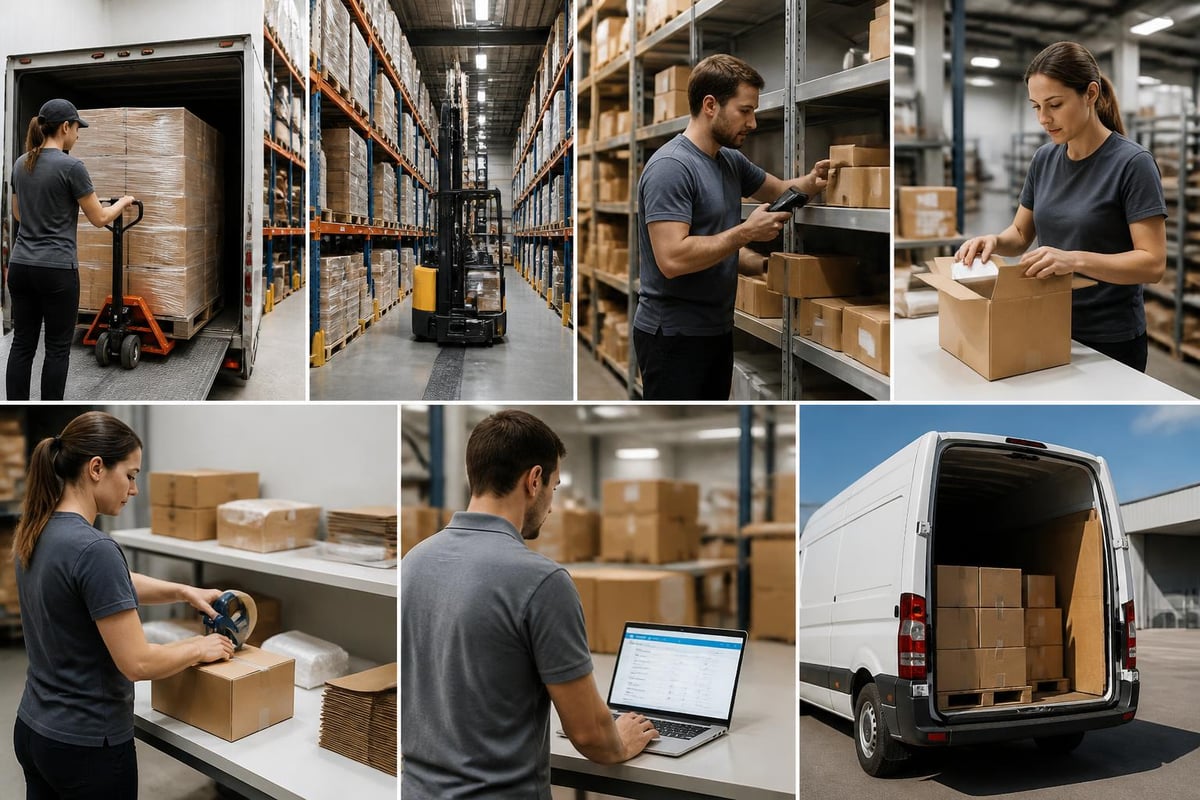
An ecommerce fulfillment center operates as a specialized facility designed to receive, store, process, and ship products on behalf of online retailers. Unlike traditional warehouses that primarily focus on storage, these centers integrate advanced technology, streamlined processes, and logistics expertise to handle the complete order lifecycle.
The distinction matters because fulfillment centers prioritize speed and accuracy in order processing. When a customer places an order on your website, the fulfillment center immediately receives notification, picks the correct items from inventory, packages them according to specifications, and ships them using the most efficient carrier. This orchestration happens thousands of times daily in high-performing facilities.
Core Functions and Operational Components
Modern fulfillment operations encompass several interconnected services:
- Inventory receiving and inspection to verify product quality and quantities
- Strategic storage optimization using warehouse management systems
- Real-time inventory tracking across multiple sales channels
- Order picking and packing with accuracy verification protocols
- Shipping and carrier management to optimize delivery times and costs
- Returns processing to handle reverse logistics efficiently
The best practices in ecommerce warehouse operations emphasize the importance of optimizing each component to create a seamless workflow that minimizes errors and maximizes throughput.
Strategic Advantages of Outsourcing Fulfillment
Partnering with a dedicated ecommerce fulfillment center delivers measurable benefits that extend beyond simple cost savings. For growing brands, these advantages create competitive differentiation in crowded marketplaces.
Scalability Without Capital Investment
Building and operating your own warehouse requires significant capital expenditure. Real estate costs, equipment purchases, staffing expenses, and technology investments can quickly consume resources that could otherwise fuel product development or marketing initiatives.
Third-party fulfillment eliminates these barriers. As your sales volume increases during seasonal peaks or promotional periods, your fulfillment partner scales operations to match demand. You pay only for the space and services you actually use.
| Traditional Warehouse | Fulfillment Center Partnership |
|---|---|
| High upfront capital costs | Variable pricing based on volume |
| Long-term lease commitments | Flexible contract terms |
| Fixed capacity constraints | Scalable infrastructure |
| Internal hiring and training | Expert staff included |
| Technology system investment | Integrated WMS and tools |
Geographic Distribution and Faster Delivery
Strategic placement of inventory across multiple fulfillment locations enables two-day or even next-day delivery to broader customer bases. According to recent fulfillment trends data, global network design has emerged as a key differentiator for successful ecommerce brands in 2026.
Businesses serving diverse markets benefit tremendously from distributed inventory strategies. A customer in Los Angeles receives their order from a West Coast facility, while someone in New York gets shipped from an East Coast location. This reduces transit times, lowers shipping costs, and improves the overall customer experience.
Specialized Services Within Fulfillment Operations
Beyond basic storage and shipping, comprehensive ecommerce fulfillment services encompass value-added capabilities that enhance product presentation and customer satisfaction.
Kitting and Bundling Operations
Product bundling creates unique offerings that differentiate your brand. A fulfillment center assembles multiple individual items into custom packages, adding marketing materials, special packaging, or promotional items as needed.
This service proves particularly valuable for:
- Subscription box businesses requiring regular monthly assemblies
- Gift sets combining complementary products
- Promotional bundles during holiday seasons
- Product samplers introducing customers to new items
The operational efficiency of professional kitting far exceeds what most brands can achieve in-house. Experienced teams complete assemblies faster and with greater consistency.
Amazon FBA Preparation Services
Selling through Amazon's FBA program requires strict compliance with detailed preparation standards. Products must be labeled, packaged, and shipped according to Amazon's specific requirements. Non-compliance results in rejection, delays, and additional fees.
Specialized preparation services handle these complexities, ensuring products arrive at Amazon fulfillment centers ready for immediate processing. This includes poly-bagging, bubble wrapping, FNSKU labeling, case pack creation, and compliance verification.

Technology Integration and Automation Trends
The impact of AI and automation on ecommerce fulfillment continues accelerating in 2026, transforming how fulfillment centers operate and deliver value to clients.
Warehouse Management Systems
Modern WMS platforms serve as the operational backbone of efficient fulfillment centers. These systems coordinate every aspect of warehouse activity, from receiving to shipping, while maintaining real-time inventory accuracy across all sales channels.
Key capabilities include:
- Automated order routing to optimize picker efficiency
- Inventory allocation based on sales velocity and location
- Real-time stock level synchronization with your online store
- Performance analytics tracking key metrics and identifying improvements
- Integration with shipping carriers for automated label generation
Robotic Process Automation
Advanced facilities now employ robotic systems that work alongside human operators to increase throughput while reducing errors. These systems handle repetitive tasks like item retrieval, sorting, and transportation within the warehouse.
The technology doesn't eliminate jobs but rather allows staff to focus on higher-value activities requiring judgment and problem-solving. This combination of automation and human expertise creates optimal results.
Omnichannel Fulfillment Strategies
The distinction between retail and ecommerce continues blurring as consumers expect seamless shopping experiences across all touchpoints. Omnichannel fulfillment models address these evolving expectations by coordinating inventory and order processing across multiple sales channels.
Direct-to-Consumer and B2B Integration
Growing brands often serve both individual consumers and wholesale accounts. An effective ecommerce fulfillment center accommodates both models without requiring separate inventory pools or systems.
D2C fulfillment emphasizes individual order accuracy and presentation, while B2B fulfillment focuses on bulk shipping, EDI integration, and retailer-specific compliance requirements. The best fulfillment partners handle both seamlessly.
| D2C Fulfillment | B2B Fulfillment |
|---|---|
| Individual unit shipping | Case and pallet quantities |
| Branded packaging emphasis | Retailer routing compliance |
| Residential delivery focus | Commercial dock-to-dock |
| Marketing insert inclusion | EDI/ASN documentation |
| Gift messaging options | UCC-128 labeling |
Just as brands in specialized sectors like natural beauty products or premium coffee sachets require careful handling and presentation, your fulfillment partner should understand the unique requirements of your product category and customer expectations.
Subscription Commerce Capabilities
The subscription business model creates unique fulfillment challenges requiring specialized expertise. Subscription fulfillment services manage recurring shipments, variable product selections, and customer preference updates.
Successful subscription fulfillment demands:
- Automated recurring order generation tied to billing cycles
- Product rotation management for variety subscriptions
- Preference tracking for customized selections
- Flexible pause and skip functionality
- Renewal notification coordination
Choosing the Right Fulfillment Partner
Selecting an ecommerce fulfillment center represents a significant strategic decision that impacts every aspect of your customer experience. The evaluation process should examine multiple dimensions beyond simple pricing.
Location and Network Coverage
Geographic positioning directly affects both shipping costs and delivery speed. Analyze where your customers concentrate and choose fulfillment locations that minimize the average distance packages travel.
For brands experiencing rapid growth, consider partners offering multiple facility locations. This allows you to start with one location and expand your network as volumes increase, implementing the distributed inventory strategies that leading ecommerce trends indicate will dominate competitive strategies.
Technology Capabilities and Integration
Your fulfillment partner's technology stack must integrate seamlessly with your existing systems. Request detailed information about:
- Shopping cart and marketplace integrations supported
- API capabilities for custom connections
- Real-time inventory visibility and reporting
- Order management features and customization options
- Returns portal functionality for customer self-service
The quality of integration determines how efficiently orders flow through the system and how accurately inventory levels reflect across sales channels. Poor integration creates overselling problems, customer dissatisfaction, and operational headaches.

Service Flexibility and Value-Added Options
Standard pick-pack-ship services represent the baseline. Differentiated fulfillment partners offer additional capabilities that enhance your brand presentation and operational flexibility.
Evaluate potential partners on these criteria:
- Custom packaging options including branded boxes and inserts
- Gift services such as messaging and special wrapping
- Product customization like monogramming or engraving
- Photography and quality inspection for incoming inventory
- Seasonal capacity to handle peak periods without degradation
Cost Structure and Pricing Models
Understanding fulfillment pricing requires examining multiple cost components that together determine your total expense. Transparency in pricing enables accurate financial planning and profitability analysis.
Primary Fee Categories
Most fulfillment centers charge fees across these categories:
- Receiving fees for processing incoming shipments and adding inventory
- Storage fees calculated per cubic foot or pallet position monthly
- Pick and pack fees per order plus per item charges
- Shipping costs either marked up from carrier rates or passed through
- Special handling for oversized items, fragile products, or custom requirements
Request detailed pricing scenarios based on your actual order profiles. A provider offering the lowest per-order fee might charge higher storage rates that increase total costs for slower-moving inventory.
Hidden Costs and Contract Considerations
Beyond standard fees, examine potential additional charges:
- Setup and onboarding fees for account initiation
- Integration costs for system connections
- Minimum monthly fees regardless of volume
- Account management or customer service charges
- Returns processing fees and restocking charges
Contract terms matter significantly. Understand cancellation policies, notice requirements, and any penalties for early termination. Growing brands need flexibility as requirements evolve.
Quality Control and Performance Monitoring
The accuracy and speed of order fulfillment directly impact customer satisfaction and repeat purchase rates. Establishing clear performance expectations and monitoring mechanisms ensures consistent service quality.
Key Performance Indicators
Monitor these critical metrics to evaluate fulfillment performance:
| Metric | Target Benchmark | Impact |
|---|---|---|
| Order accuracy rate | 99.5% or higher | Customer satisfaction |
| Same-day ship rate | 95%+ for orders before cutoff | Delivery speed |
| Inventory accuracy | 99%+ cycle count accuracy | Stockout prevention |
| Damage rate | Less than 0.5% | Return costs |
| Average pick time | 2-3 minutes per order | Operating efficiency |
Request regular reporting on these metrics and establish service level agreements defining acceptable performance ranges and remediation for deficiencies.
Returns Management Excellence
Returns processing represents a critical but often overlooked component of fulfillment excellence. Efficient returns handling recovers inventory value, identifies product issues, and creates opportunities for customer recovery.
Effective returns programs include:
- Simple return authorization processes for customers
- Quality inspection upon return receipt
- Rapid inventory reintegration for resalable items
- Detailed reporting on return reasons and trends
- Disposition options for damaged or defective products
Industry-Specific Fulfillment Considerations
Different product categories and business models create unique fulfillment requirements. The ideal ecommerce fulfillment center understands these nuances and adapts operations accordingly.
Perishable and Temperature-Controlled Products
Businesses selling food items, beverages, or temperature-sensitive products require specialized facilities. Whether you're shipping artisan cupcakes or premium coffee, proper climate control prevents spoilage and maintains product quality.
Requirements include:
- Refrigerated or frozen storage capabilities
- Expedited shipping to minimize transit time
- Insulated packaging materials
- Cold chain compliance monitoring
- Batch tracking and expiration date management
Sporting Goods and Equipment Handling
Categories like professional tennis gear demand careful handling to prevent damage during storage and shipping. Oversized items, fragile equipment, and high-value products require secure storage areas and protective packaging materials.
Fulfillment partners serving these categories should offer specialized packing materials, quality control inspections, and insurance options for high-value shipments.
Future Trends Shaping Fulfillment Operations
The fulfillment industry continues evolving rapidly as technology advances and consumer expectations shift. Forward-thinking brands align with partners investing in emerging capabilities.
Micro-Fulfillment and Urban Distribution
The emergence of micro-fulfillment centers brings inventory closer to dense urban populations, enabling same-day delivery in major metropolitan areas. These smaller facilities use automated systems to maximize efficiency in compact footprints.
While not suitable for all brands immediately, understanding this trend helps in long-term strategic planning as customer delivery expectations continue compressing.
Sustainability and Environmental Responsibility
Environmental consciousness increasingly influences purchasing decisions. Fulfillment partners implementing sustainable practices provide competitive advantages:
- Recyclable and biodegradable packaging materials
- Carbon-neutral shipping options
- Energy-efficient facility operations
- Waste reduction and recycling programs
- Optimized packaging to minimize dimensional weight
Predictive Analytics and Demand Forecasting
Advanced fulfillment centers leverage historical data and machine learning to forecast demand patterns, optimize inventory positioning, and prevent stockouts. These predictive capabilities ensure popular items remain available while minimizing excess inventory carrying costs.
Selecting and partnering with an ecommerce fulfillment center fundamentally shapes your brand's ability to deliver exceptional customer experiences while maintaining operational efficiency. The right partnership provides scalability, expertise, and technology that would require massive investment to develop internally. Ecom Automation Prep specializes in comprehensive fulfillment solutions designed specifically for fast-growing ecommerce brands, offering everything from Amazon FBA preparation to direct-to-consumer shipping, kitting services, and complete warehouse fulfillment. Let us handle the complexity of fulfillment while you focus on growing your business.




[…] with an e-commerce fulfillment center that offers multi-location capabilities can provide the benefits of distribution without the […]
[…] issue indicate potential supplier problems requiring immediate attention. Working with experienced e-commerce fulfillment centers that provide quality inspection services catches many defects before they reach […]
[…] decision to partner with an ecommerce fulfillment center should be based on both current pain points and future growth projections. Transitioning before […]