

Shipping costs represent one of the most significant operational expenses for e-commerce businesses in 2026. As online retail continues expanding and customer expectations for fast, affordable delivery rise, finding ways to secure lower shipping rates has become essential for maintaining healthy profit margins. For growing e-commerce brands, particularly those handling direct-to-consumer fulfillment or Amazon FBA operations, even small percentage improvements in shipping costs can translate into substantial annual savings. This comprehensive guide explores proven strategies that modern e-commerce businesses can implement immediately to reduce their shipping expenses while maintaining service quality.
Understanding the True Cost of Shipping
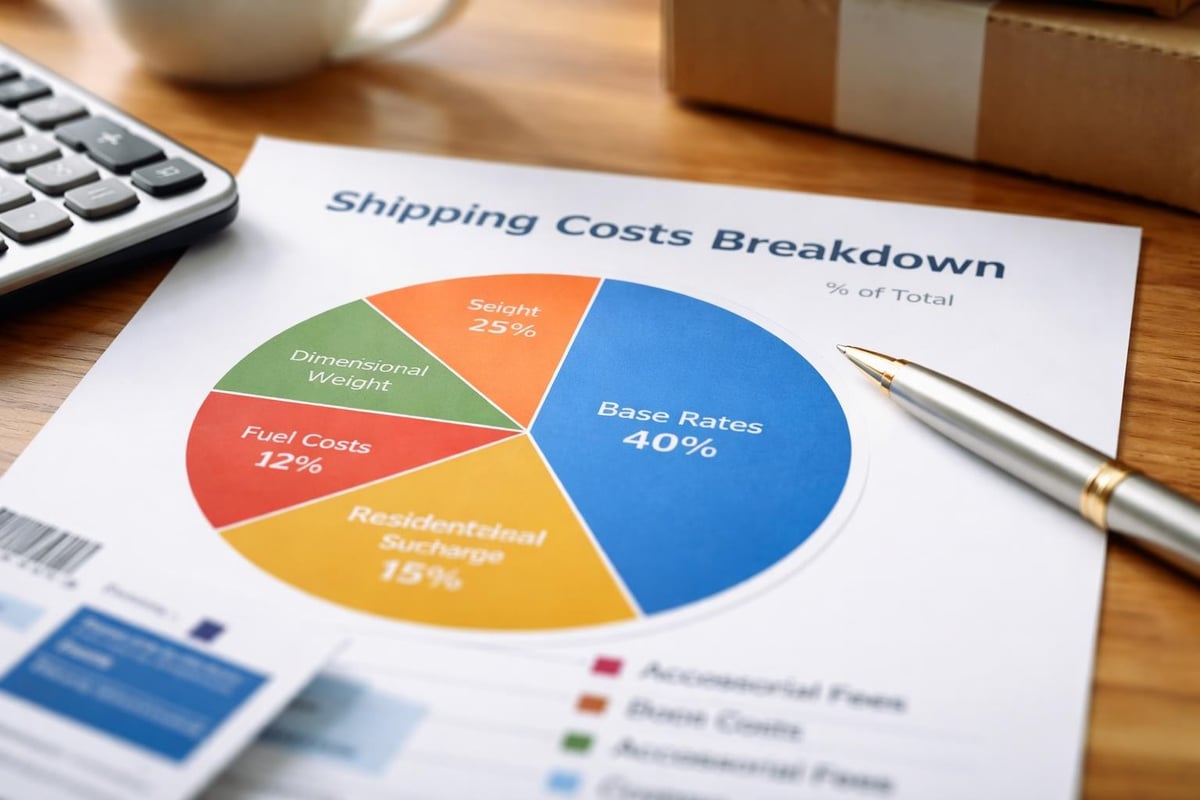
Shipping expenses extend far beyond the basic per-package rate charged by carriers. Many e-commerce businesses fail to account for hidden costs that accumulate throughout their fulfillment operations. These include dimensional weight pricing, residential delivery surcharges, fuel surcharges, address correction fees, and packaging materials.
Breaking Down Shipping Cost Components
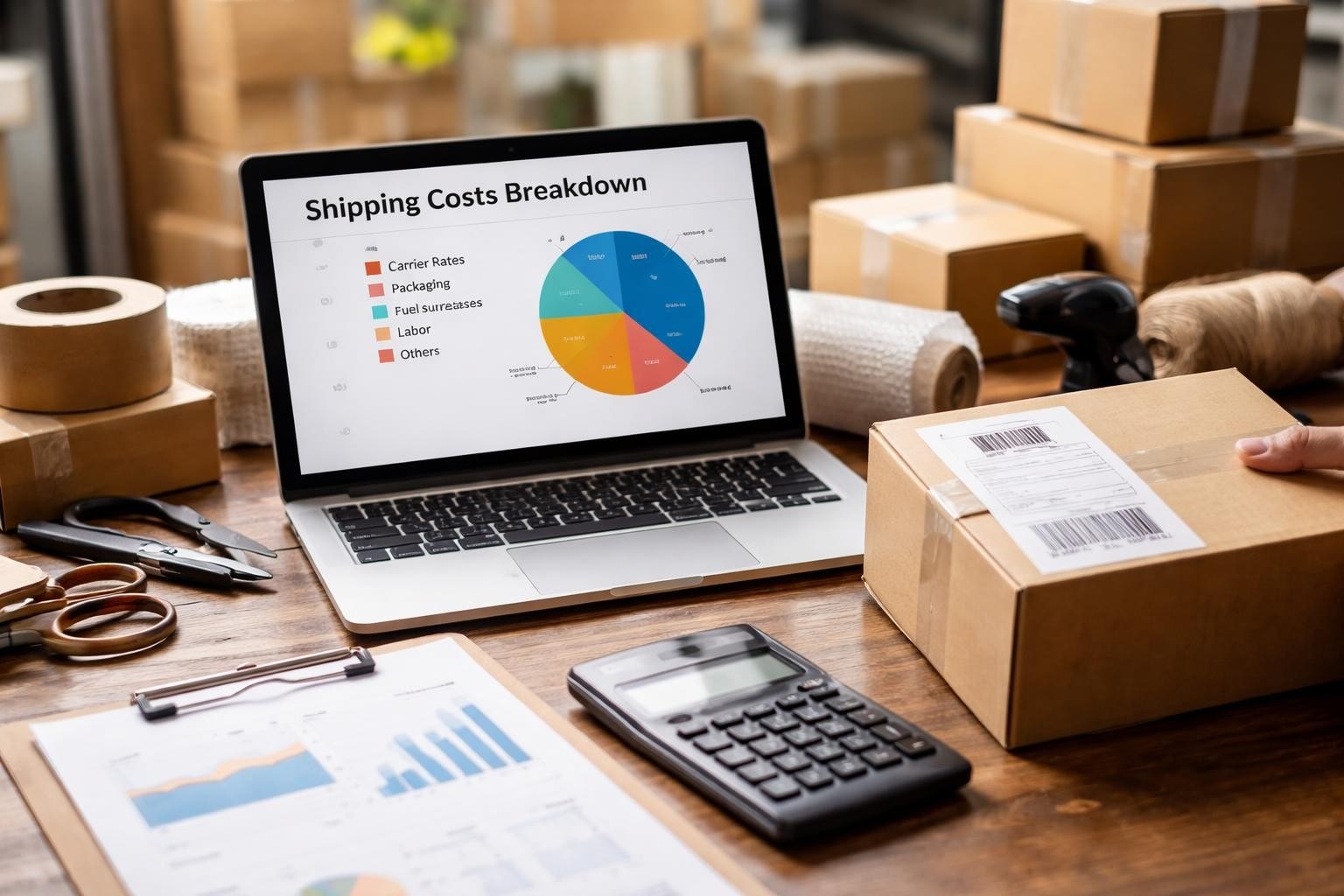
The first step toward achieving lower shipping rates involves understanding exactly where your money goes. Modern carrier pricing structures have become increasingly complex, with multiple variables affecting the final cost of each shipment.
Major cost factors include:
- Base shipping rate determined by weight and zone
- Dimensional weight calculations for lightweight but bulky items
- Residential vs. commercial delivery surcharges
- Fuel surcharges that fluctuate with energy markets
- Accessorial fees for special handling requirements
- Peak season surcharges during high-volume periods
Tracking these individual components allows businesses to identify specific areas where optimization will deliver the greatest impact. Many companies discover that accessorial fees alone account for 15-20% of their total shipping spend.
Strategic Carrier Selection and Negotiation
No single carrier provides the best rates for every shipping scenario. The most successful e-commerce businesses develop multi-carrier strategies that leverage different providers based on package characteristics, destination, and service level requirements.
Comparing Carrier Performance Metrics
| Carrier Type | Best For | Average Savings Potential | Key Advantage |
|---|---|---|---|
| USPS | Lightweight packages under 1 lb | 15-25% | Rural delivery coverage |
| Regional Carriers | Zone 2-4 shipments | 20-35% | Faster delivery at lower cost |
| National Carriers | Heavy items, commercial addresses | 10-20% | Extensive network |
| Hybrid Services | Mixed volume operations | 25-40% | Optimized routing |
Regional carriers have emerged as particularly valuable partners for businesses seeking lower shipping rates on shipments traveling shorter distances. These carriers often provide service comparable to national providers at significantly reduced costs. A direct-to-consumer brand cut shipping costs by 40% by incorporating regional carriers into their fulfillment strategy.
Negotiating Better Carrier Contracts
Armed with shipping volume data and competitive intelligence, e-commerce businesses can negotiate substantially better rates. Carriers regularly offer discounts ranging from 30-50% off published rates to businesses that demonstrate consistent volume and professional shipping practices.
Effective negotiation tactics:
- Consolidate volume data across all channels to demonstrate total shipping capacity
- Obtain competitive quotes from multiple carriers to establish benchmarking leverage
- Request annual rate reviews with automatic volume tier adjustments
- Negotiate caps on fuel surcharges and accessorial fees
- Secure seasonal rate protections during peak periods
Companies that approach carrier rate negotiation strategically often achieve immediate cost reductions of 15-30% without changing any operational processes.
Optimizing Packaging Strategies
Packaging represents a dual opportunity for cost reduction. Smart packaging choices simultaneously reduce material expenses and minimize dimensional weight charges that drive up shipping costs.
Dimensional weight pricing penalizes inefficient packaging by charging based on package size rather than actual weight when the package is lightweight but bulky. For many e-commerce products, especially apparel, accessories, and electronics, dimensional weight exceeds actual weight.
Right-Sizing Package Dimensions
Conducting a comprehensive packaging audit reveals significant opportunities. Businesses often discover they can reduce average package dimensions by 20-40% through strategic changes.
Package optimization strategies include:
- Creating custom box sizes matched to your most common product dimensions
- Using poly mailers instead of boxes for soft goods and apparel
- Implementing automated packaging systems that adjust to product size
- Removing unnecessary void fill materials that add dimensional weight
- Training fulfillment staff on proper package selection
One cosmetics distributor lowered freight expenses by 34% primarily through packaging automation and consolidation improvements. The investment in automated packaging equipment paid for itself within eight months through reduced shipping charges.
Leveraging Technology and Automation
Modern shipping technology platforms provide capabilities that were unavailable just a few years ago. These tools analyze millions of data points to identify optimization opportunities that human operators would never catch.
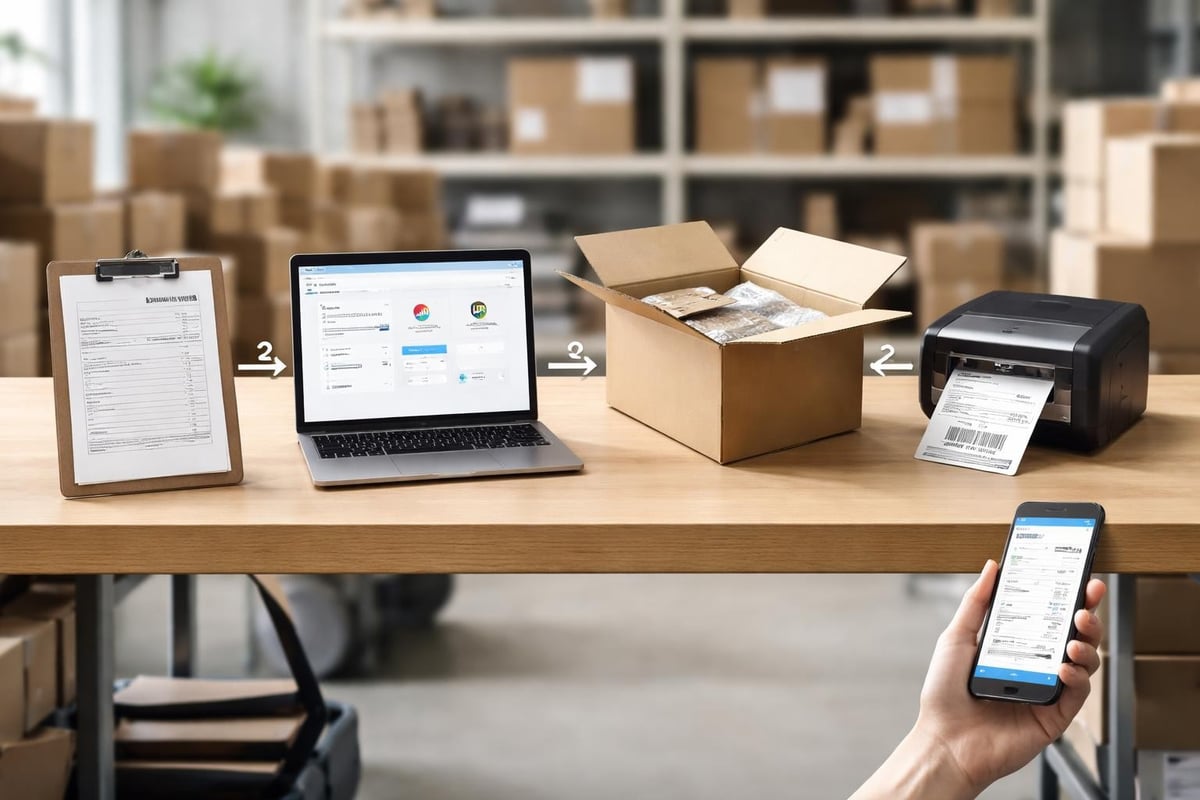
Transportation management systems (TMS) and multi-carrier shipping platforms automate carrier selection, rate shopping, and label generation while capturing detailed analytics. This data visibility allows businesses to make informed decisions about their shipping operations.
Real-Time Rate Shopping
Advanced shipping software compares rates across all contracted carriers for each individual shipment, automatically selecting the most cost-effective option that meets delivery requirements. This eliminates guesswork and ensures every package ships via the optimal carrier.
A global supplier achieved a 36% reduction in parcel shipping costs through centralized operations supported by automated carrier selection technology. The system evaluated thousands of shipments daily, consistently choosing the lowest-cost option that satisfied delivery timeframes.
Data Analytics for Continuous Improvement
Shipping data reveals patterns and opportunities that drive strategic decisions. Analyzing historical shipping data answers critical questions about carrier performance, zone distribution, package characteristics, and seasonal trends.
Monthly shipping analytics should track:
- Average cost per package by carrier, zone, and weight class
- Dimensional weight impact across product categories
- Accessorial fee frequency and total cost
- Delivery performance metrics by carrier and service level
- Rate comparison between contracted carriers for common shipping profiles
Strategic Fulfillment Location Planning
Geography fundamentally impacts shipping costs. The distance between your fulfillment center and your customers determines the zones your packages travel through, which directly affects shipping rates.
Multi-Location Fulfillment Networks
Businesses shipping nationally often find that operating multiple fulfillment locations delivers substantial savings compared to single-location operations. By positioning inventory closer to customer concentrations, you reduce the average shipping zone and associated costs.
Benefits of distributed fulfillment include:
- Reduced average shipping zones from 6-7 to 2-4 for most orders
- Lower shipping rates due to shorter distances
- Faster delivery times that improve customer satisfaction
- Reduced reliance on premium shipping services to meet delivery expectations
Implementing a comprehensive e-commerce fulfillment strategy that includes strategic warehouse locations can reduce shipping costs by 20-35% for businesses with geographically dispersed customer bases.
Zone Analysis and Inventory Allocation
Understanding where your customers are located allows you to make data-driven decisions about fulfillment location selection and inventory allocation. Zone analysis reveals the optimal number and location of fulfillment centers to minimize shipping costs.
| Fulfillment Strategy | Average Zone | Typical Shipping Cost | Delivery Speed |
|---|---|---|---|
| Single East Coast Location | Zone 5-8 | $8.50-$12.00 | 4-6 days |
| Single Central Location | Zone 4-6 | $7.00-$9.50 | 3-5 days |
| Dual Coast Locations | Zone 2-4 | $5.50-$7.50 | 2-3 days |
| Three-Location Network | Zone 2-3 | $4.75-$6.25 | 1-3 days |
Consolidation and Batching Strategies
How you aggregate and ship orders significantly impacts total shipping costs. Strategic consolidation reduces the number of individual shipments while maintaining customer satisfaction.
Subscription box businesses have mastered consolidation by bundling multiple products into single shipments. This approach delivers value to customers while dramatically reducing per-item shipping costs. Professional kitting services enable e-commerce brands to create product bundles that ship more efficiently than individual items.
Order Batching Windows
Rather than shipping orders immediately as they arrive, implementing brief batching windows allows multiple orders to the same customer or geographic area to ship together. A four-hour batching window might delay shipments slightly but can reduce total shipping volume by 10-15%.
Customers who place multiple orders within the batching window receive consolidated shipments, reducing both shipping costs and packaging waste. This approach particularly benefits businesses with high customer repeat purchase rates.
Leveraging Business Classifications and Programs
Carriers offer specialized programs and pricing for businesses that meet specific criteria. Taking advantage of these programs can unlock additional savings beyond standard negotiated rates.
Commercial Plus Pricing Programs
USPS Commercial Plus pricing provides deeper discounts than standard Commercial Base pricing for businesses meeting minimum volume thresholds. Qualification typically requires at least 50,000 annual packages, but the savings can reach 20-25% below Commercial Base rates.
Similarly, regional carriers often provide tiered pricing programs where rates decrease as monthly volume increases. Understanding these thresholds allows businesses to forecast when they’ll reach more favorable pricing tiers.
Returns Optimization
Returns represent a hidden shipping cost that many businesses overlook. Reverse logistics typically costs 1.5-2x outbound shipping due to individual package handling and unpredictable timing.
Strategies to reduce returns shipping costs:
- Provide prepaid return labels only when customers request them
- Negotiate specific return shipping rates separate from outbound contracts
- Consolidate returns processing at a single location to maximize volume discounts
- Partner with carriers offering specialized returns programs
- Consider offering returnless refunds for low-value items where appropriate
Understanding Dimensional Weight Pricing
Dimensional weight calculations have become increasingly important as carriers seek to maximize trailer and aircraft utilization. Understanding and optimizing for dimensional weight delivers significant savings opportunities.
The formula carriers use calculates dimensional weight by multiplying package length x width x height (in inches) and dividing by a dimensional divisor. In 2026, most carriers use a divisor of 139 for domestic shipments.
When dimensional weight exceeds actual weight, you’re charged based on dimensional weight. For a package measuring 18″ x 14″ x 10″ with a dimensional divisor of 139, the dimensional weight equals 18 pounds, regardless of the actual contents weight.

Minimizing Dimensional Weight Impact
Beyond right-sizing packaging, several tactics reduce dimensional weight charges:
- Design products with shipping efficiency in mind when possible
- Use vacuum sealing or compression for soft goods
- Implement package dimensioning systems to verify measurements
- Audit carrier-measured dimensions against actual dimensions to identify errors
- Choose packaging that minimizes wasted internal space
These fulfillment costs considerations extend throughout the entire supply chain, from product design through final delivery.
Seasonal Planning and Peak Surcharge Management
Shipping costs fluctuate throughout the year, with significant increases during peak seasons. Strategic planning around these patterns helps businesses maintain lower shipping rates year-round.
Carriers implement peak season surcharges from October through January, adding $2.00-$5.00 per package during the highest-volume weeks. For businesses shipping thousands of packages weekly, these surcharges represent substantial expense increases.
Peak Season Preparation Strategies
Forward-thinking businesses begin peak preparation months in advance. This includes pre-positioning inventory closer to customers, negotiating peak rate caps with carriers, and exploring alternative carriers that may offer more favorable peak pricing.
Some companies strategically shift to slower but less expensive shipping methods during peak season when customer delivery expectations already account for longer transit times. This approach maintains acceptable delivery windows while avoiding the highest premium service charges.
Freight Class Optimization for Larger Shipments
Businesses shipping larger items or wholesale quantities must understand freight classification systems. Unlike small parcel shipping, LTL (less-than-truckload) freight uses commodity classes ranging from 50 to 500 that determine pricing.
Freight class depends on:
- Density (pounds per cubic foot)
- Stowability (how easily it fits with other freight)
- Handling requirements (special equipment or care needed)
- Liability (value and damage susceptibility)
Lower freight classes receive lower rates. Optimizing packaging to increase density can move items from Class 125 to Class 85, potentially reducing shipping costs by 30-40% on larger shipments. An automotive parts provider reduced shipping costs by 23% through time-in-transit optimization and improved carrier selection.
Insurance and Liability Considerations
While reducing shipping costs is essential, maintaining appropriate protection for shipments remains equally important. Balancing insurance costs against potential losses requires careful analysis.
Carriers provide basic liability coverage, typically $100 or less per package. For higher-value items, businesses can purchase declared value coverage from carriers or third-party insurance providers.
Third-party shipping insurance often costs 40-60% less than carrier-provided coverage while offering comparable or superior protection. For businesses shipping significant quantities of products valued over $100, switching to third-party insurance can save thousands annually while maintaining appropriate risk management.
Building Strategic Carrier Relationships
Beyond contract negotiations, developing strong working relationships with carrier account representatives provides ongoing value. These relationships facilitate problem resolution, provide early notification of rate changes, and sometimes unlock opportunities not available through standard channels.
Regular communication with carrier representatives ensures your business stays informed about new programs, service options, and pricing structures. Account representatives can also provide valuable insights into optimizing shipping practices for their specific network capabilities.
Ten actionable steps to lower shipping rates emphasize the importance of team collaboration and strategic carrier relationship management throughout the cost reduction process.
Audit and Recovery Services
Carrier billing errors occur more frequently than most businesses realize. Studies indicate that 5-10% of carrier invoices contain errors, almost always in the carrier’s favor. These errors range from duplicate charges to incorrect zone classifications to unearned accessorial fees.
Professional audit services review carrier invoices to identify overcharges and pursue refunds. Most operate on contingency fees, typically 40-50% of recovered amounts, making them risk-free to implement.
Common billing errors include:
- Duplicate tracking numbers charged multiple times
- Incorrect zone assignments for delivery addresses
- Residential surcharges applied to commercial addresses
- Late delivery refund eligibility not automatically processed
- Dimensional weight calculations using incorrect measurements
Businesses shipping significant volume should implement ongoing audit processes rather than one-time reviews. Continuous auditing identifies systemic issues that, when corrected, prevent future overcharges.
Training and Standard Operating Procedures
Even the best shipping strategies fail without proper implementation. Warehouse and fulfillment staff require comprehensive training on packaging standards, carrier selection criteria, and proper system usage.
Documented standard operating procedures ensure consistency across shifts and personnel changes. When staff understand how their packaging and shipping decisions impact costs, they become partners in cost reduction efforts rather than simply executing tasks.
Creating visual guides showing proper package selection, dimension measurement techniques, and carrier selection decision trees reduces errors that add shipping costs. Regular refresher training keeps these practices top of mind.
Professional e-commerce fulfillment services maintain rigorous training programs and quality control processes that consistently optimize shipping costs while maintaining service quality standards.
Achieving lower shipping rates requires a comprehensive approach combining carrier strategy, technology leverage, packaging optimization, and operational excellence. By implementing even a portion of these proven strategies, e-commerce businesses can reduce shipping expenses by 20-40% while maintaining or improving delivery performance. Whether you’re managing fulfillment in-house or exploring outsourcing options, Ecom Automation Prep provides the expertise and infrastructure to optimize your shipping costs through strategic carrier relationships, efficient packaging practices, and scalable fulfillment solutions designed specifically for growing e-commerce brands.



[…] brands often pay premium rates due to limited negotiating power with carriers. As volume increases, lower shipping rates become accessible through tiered pricing […]
[…] businesses shipping fewer than 1,000 packages monthly. Working with fulfillment partners who offer lower shipping rates through their carrier relationships provides immediate cost […]
[…] capital investment. Fulfillment partners with multiple locations enable faster delivery times and lower shipping rates through proximity to end customers. This distribution strategy, highlighted in industry research on […]
[…] how lower shipping rates combine with efficient branded packaging creates competitive advantages for growing […]
[…] Reducing a package by just two inches in any dimension can move it to a lower shipping tier, lowering shipping rates substantially across thousands of […]