
In 2026, e fulfillment stands as the backbone of every successful online store, delivering unmatched speed, accuracy, and customer delight in a market where expectations are higher than ever. As e-commerce evolves, brands face increasing pressure to meet rapid delivery promises and handle complex order workflows with precision.
Are you ready to master the challenges of modern order fulfillment? This comprehensive guide offers actionable strategies and expert insights that empower e-commerce leaders and operations managers to achieve online order success.
You will discover the definition and evolution of e fulfillment, a step-by-step workflow, the latest in technology and automation, how to choose the right partners, omnichannel and global best practices, and future trends shaping the industry.
Understanding E-Fulfillment in 2026: Definition, Evolution, and Core Principles
What is E-Fulfillment?
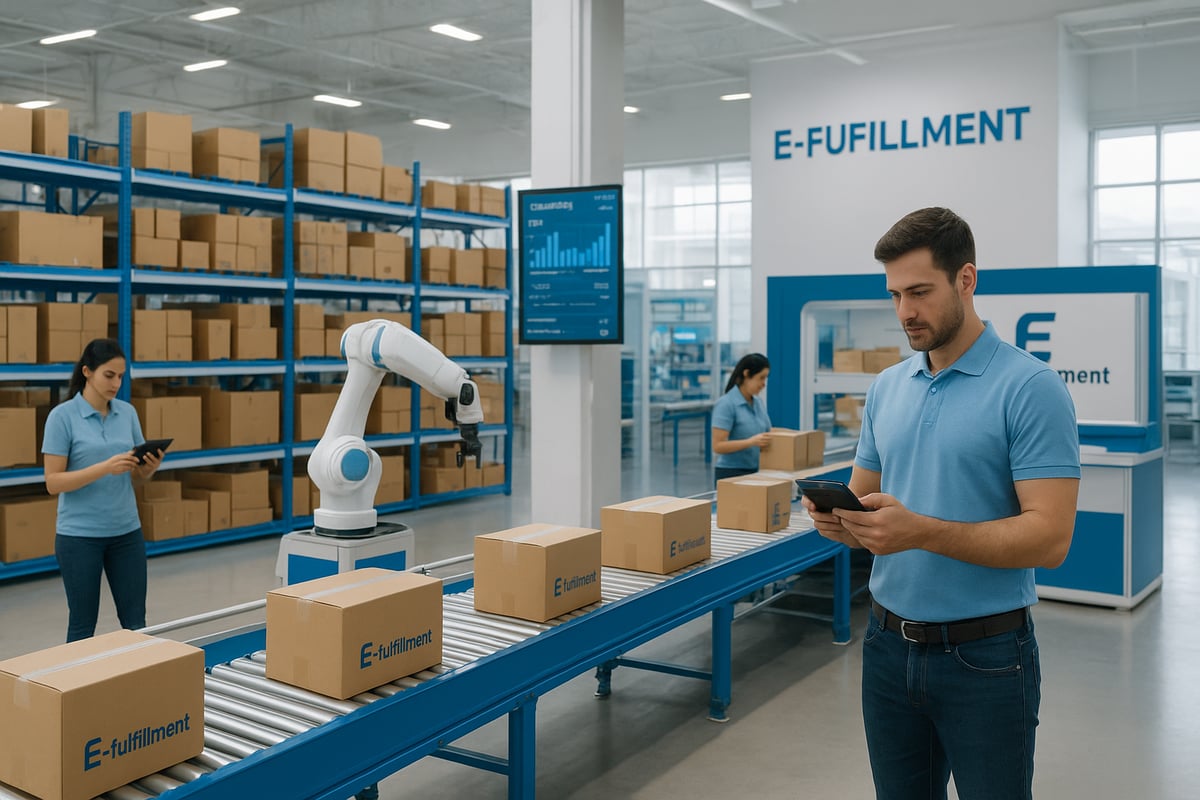
E fulfillment is the complete process that takes an online order from checkout to delivery at the customer’s doorstep. It covers every step: receiving goods, warehousing, order processing, picking, packing, shipping, and handling returns. Unlike traditional fulfillment, e fulfillment is designed for the speed, volume, and real-time accuracy demanded by e-commerce.
Leading providers process over 60 million direct-to-consumer orders each year, enabling brands like Amazon and Shopify sellers to scale rapidly. The difference is clear: e fulfillment harnesses digital systems and automation to meet rising customer demands. For a deeper dive into how these services function, see What Are Fulfillment Services.
The Evolution of E-Fulfillment: 2020–2026
The e fulfillment landscape has transformed dramatically since 2020. Online shopping growth and customer expectations for two-day or faster delivery have forced companies to adapt. Manual processes have given way to highly automated, technology-driven systems.
The COVID-19 pandemic and global supply disruptions accelerated innovation, pushing providers to expand and integrate omnichannel and direct-to-consumer models. Warehouse networks now cover 99.5% of the United States within two days, showing just how far e fulfillment has come in enabling seamless, nationwide delivery.
Core Principles for E-Fulfillment Success
Successful e fulfillment relies on several foundational principles:
- Speed and accuracy in every step, from order processing to delivery
- Scalability to handle growth and seasonal peaks
- Customer experience at the center of every interaction
- Data-driven decisions and real-time inventory visibility
- Seamless integration with marketplaces and sales channels
- Flexibility to adapt to market changes
- Brand-building through custom packaging and personalization
These principles ensure that e fulfillment not only meets but exceeds customer expectations in 2026.
The Stakes: Why E-Fulfillment is Mission-Critical in 2026
E fulfillment performance directly impacts customer loyalty and business reputation. Late or inaccurate orders can quickly damage both revenue and trust. Top providers now boast an 86% order accuracy rate, setting a high standard for the industry.
Brands that outsource e fulfillment to experts like ShipBob and GEODIS have scaled rapidly, especially during peak shopping seasons. The future is clear: e fulfillment is no longer a support function, but a core competitive differentiator that drives growth and customer satisfaction.
The E-Fulfillment Workflow: Step-by-Step Guide to Online Order Success
Efficient e fulfillment is the foundation of every high-performing online business in 2026. To achieve operational excellence, brands must master each stage of the workflow, from inventory intake to reverse logistics. Below is a detailed, step-by-step breakdown of the modern e fulfillment process, showcasing how technology, automation, and best practices drive online order success.
Step 1: Receiving and Inventory Management
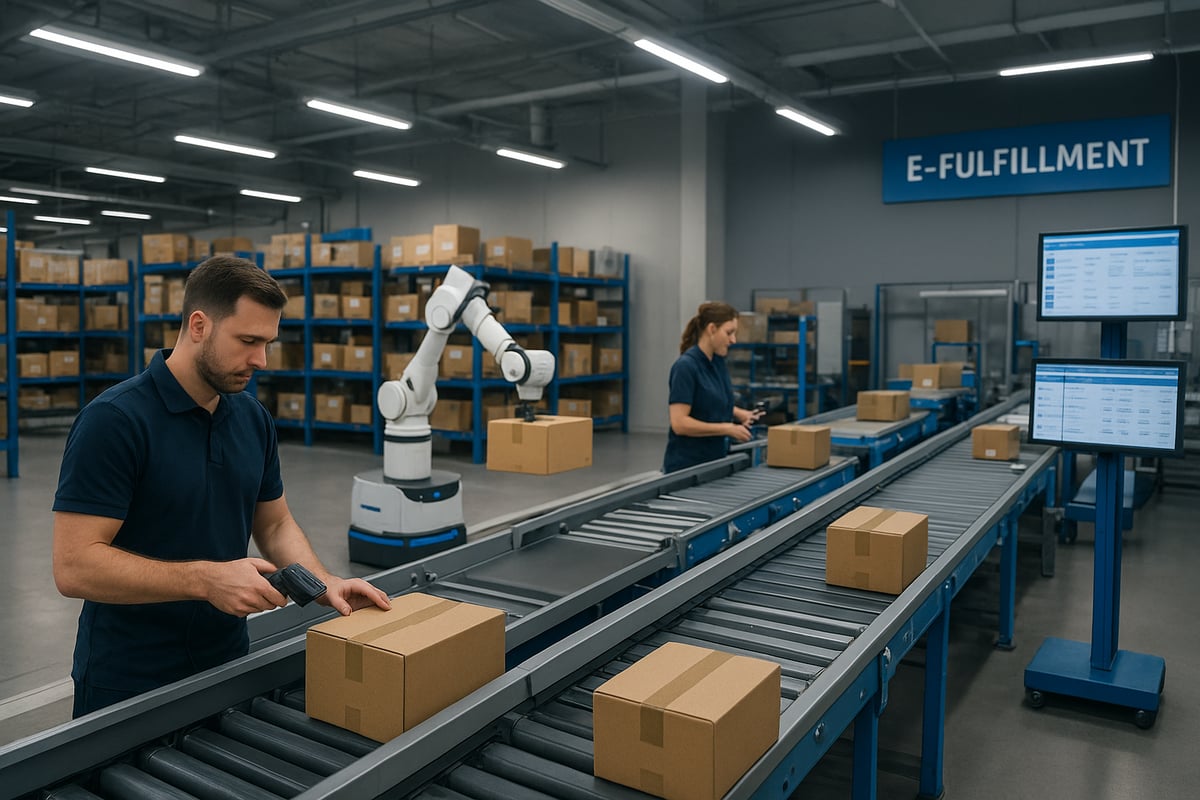
The e fulfillment journey starts as products arrive at the warehouse. Inbound shipments undergo thorough quality checks to ensure accuracy and condition. Inventory is scanned into the system, enabling real-time tracking across all locations.
Automated alerts notify teams of low stock or restocking needs. Leading providers operate massive facilities, with over 50 million square feet dedicated to scalable storage. Accurate inventory management is essential for preventing overselling and ensuring customers receive exactly what they ordered.
Efficient receiving and inventory processes lay the groundwork for reliable e fulfillment operations.
Step 2: Order Processing Automation
Once an order is placed, e fulfillment technology springs into action. Automated systems import orders from platforms like Shopify and Amazon, seamlessly verifying details and screening for potential fraud.
Integration with order management systems (OMS), inventory management systems (IMS), and enterprise resource planning (ERP) tools ensures data flows without manual intervention. Leading warehouses process billions of units annually through such automated workflows, dramatically reducing turnaround time.
Swift order processing is crucial for meeting customer expectations and maintaining a competitive edge in e fulfillment.
Step 3: Picking and Packing Optimization
The next phase in e fulfillment focuses on accuracy and efficiency. Intelligent pick routing software and robotic systems guide staff to the correct products quickly. Cartonization algorithms recommend the most cost-effective packaging for each order.
Brands can enhance their image with custom packaging and memorable unboxing experiences. Subscription box kitting, with monthly product variations, is streamlined through advanced automation, as seen with major providers.
Optimized picking and packing not only reduce errors and labor costs but also elevate the overall e fulfillment customer experience.
Step 4: Shipping, Delivery, and Tracking
Shipping is the most visible stage of e fulfillment for customers. Automated systems generate shipping labels and select the best carrier based on speed and cost. Real-time tracking updates keep both merchants and buyers informed throughout the process.
Providers now cover 99.5% of the U S within two days, meeting rising consumer demands. Managing shipping costs is vital, and businesses can learn more strategies from How to Cut E-Commerce Fulfillment Shipping Costs.
A robust shipping and tracking system ensures timely delivery and reinforces trust in your e fulfillment operations.
Step 5: Returns Management and Reverse Logistics
Returns are an inevitable part of e fulfillment, but they can be turned into an opportunity for loyalty. Streamlined returns processing enables quick restocking and minimizes delays for resale.
Automated return labels and customer notifications simplify the process for buyers. Leading brands use data-driven analysis to identify return trends and improve products. Integration with customer support ensures that every return is handled smoothly, maintaining satisfaction.
Effective reverse logistics completes the e fulfillment cycle, closing the loop on a seamless online shopping experience.
Technology and Automation: Powering E-Fulfillment Excellence
In 2026, technology is the engine behind e fulfillment success. Advanced automation, real-time analytics, and seamless integrations have transformed how brands deliver orders with speed and precision. Every step in the process, from warehousing to last-mile delivery, relies on digital innovation to meet rising customer expectations.
Warehouse Automation and Robotics
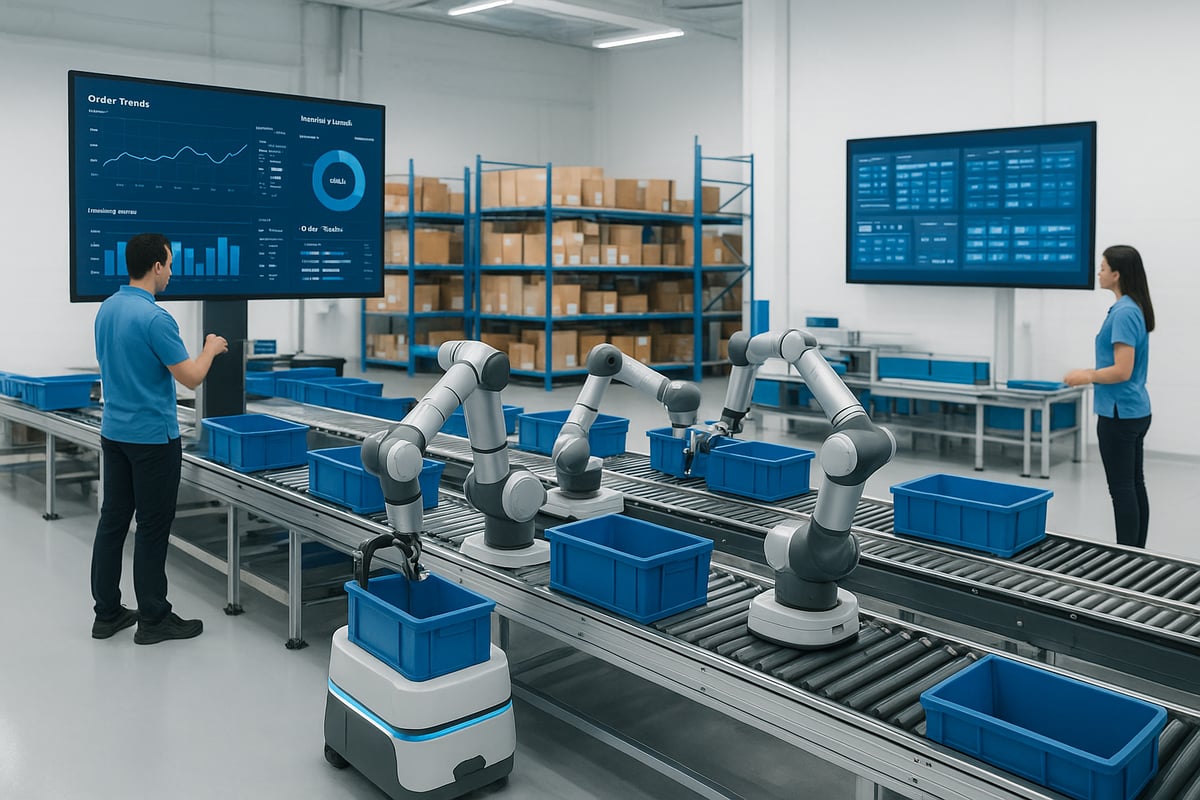
Modern e fulfillment begins in smart warehouses. Automated storage and retrieval systems (AS/RS) now handle inventory with unmatched speed and accuracy. Robotic pickers and conveyor networks reduce manual labor, while intelligent labor management software deploys staff where they are needed most.
During peak seasons, many providers use campus-based resource sharing to scale quickly and maintain service levels. For example, GEODIS can process five times normal volume without delays. According to warehouse automation statistics 2026, robotics and automation are expected to power a majority of e fulfillment centers by 2026, driving efficiency and cost savings.
Order Management and Inventory Software
Centralized order management systems (OMS) are the backbone of e fulfillment. These platforms aggregate orders from multiple channels, including Amazon, Shopify, and custom marketplaces, into a single dashboard. Real-time inventory synchronization ensures stock accuracy across all platforms, reducing the risk of overselling.
API integrations connect OMS with inventory management systems (IMS) and ERP platforms, creating a unified view of operations. Automated confirmations and tracking updates are sent to each channel, giving both merchants and customers visibility into every order. This level of integration is essential for brands seeking to scale their e fulfillment operations efficiently.
Shipping and Delivery Optimization Tools
Shipping is a critical component of e fulfillment, and technology is key to minimizing both costs and delivery times. Cartonization algorithms determine the most efficient packaging for each order, reducing dimensional weight charges. Automated carrier rate shopping and label printing ensure each shipment uses the best available option.
Route optimization tools help carriers navigate the last mile, improving delivery speed and reliability. Real-time tracking and proactive exception management keep customers informed and reduce support inquiries. These tools enable e fulfillment providers to offer 2-day and same-day shipping options while controlling costs.
Data Analytics, Visibility, and Reporting
Data is at the heart of e fulfillment excellence. Real-time dashboards provide instant visibility into inventory levels, order status, and return rates. Predictive analytics help forecast demand and optimize resource allocation, allowing brands to anticipate spikes and avoid stockouts.
Providers track key performance indicators like order accuracy and turnaround times, sharing this data with clients for transparency. Operations performance data from leading partners, such as ShipBob, helps brands benchmark their fulfillment strategies. This level of insight drives continuous improvement in e fulfillment operations.
Integration with E-Commerce Platforms and Marketplaces
Seamless integration is a hallmark of modern e fulfillment. Direct connections with platforms like Amazon and Shopify enable automated order import, inventory updates, and tracking synchronization. Omnichannel support allows brands to manage B2B, DTC, and marketplace sales from a single system.
API connections make it easy to expand to new sales channels without manual data entry. This not only reduces operational friction but also ensures customers receive consistent experiences regardless of where they shop. For fast-growing brands, robust integration capabilities are essential to e fulfillment scalability.
Choosing the Right E-Fulfillment Partner: Criteria, Questions, and Case Studies
Selecting the right e fulfillment partner can make or break your online business success. In a rapidly evolving landscape, the provider you choose must be capable of supporting your brand’s growth, maintaining operational excellence, and delivering a seamless customer experience. Let’s break down the essential criteria, questions to ask, a trusted provider example, and real-world case studies to guide your decision.
Key Criteria for Selecting an E-Fulfillment Provider
When evaluating e fulfillment providers, focus on these core criteria:
- Network Size & Coverage: Large, distributed warehouse networks ensure faster delivery and scalability.
- Technology Stack: Look for advanced automation, analytics, and seamless integrations with your sales channels.
- Service Offerings: Providers should support kitting, bundling, subscription boxes, and efficient returns management.
- Performance Metrics: High order accuracy rates and strong customer satisfaction scores indicate operational excellence.
- Transparent Pricing: Competitive rates, clear shipping discounts, and no hidden fees are essential.
Choosing a provider that excels in these areas will future-proof your e fulfillment strategy and support long-term growth.
Critical Questions to Ask Potential Partners
Before committing to an e fulfillment partnership, ask these essential questions:
- How do you handle peak season surges and rapid order volume growth?
- What is your average order accuracy rate and turnaround time?
- Which platforms and integrations do you support, such as Amazon, Shopify, or custom systems?
- How is your returns process managed, and what tools do you offer for reverse logistics?
- Can you provide real-time tracking, performance data, and transparent communication?
These questions help ensure your e fulfillment provider aligns with your business needs, technology ecosystem, and growth trajectory.
Ecom Automation Prep: Scalable, Reliable Fulfillment for Fast-Growing Brands
Ecom Automation Prep stands out in the e fulfillment landscape by offering end-to-end solutions for online brands. Specializing in Amazon FBA prep, DTC fulfillment, kitting, and subscription boxes, they are trusted by over 150 leading brands, including Procter & Gamble and DeWalt.
Key advantages include up to 90% shipping discounts, 86% order accuracy, 20/7 real-time tracking, and award-winning service. Brands benefit from seamless integrations and flexible, scalable operations. Ecom Automation Prep also offers free trials for subscription and sea freight services, making it ideal for brands seeking omnichannel e fulfillment and rapid growth support.
Case Studies: Brands Succeeding with Outsourced E-Fulfillment
Many brands have accelerated their growth by outsourcing e fulfillment. For instance, twelve brands scaled efficiently with ShipBob, leveraging technology and flexible services. Additionally, five of the top 25 internet retailers rely on GEODIS to meet peak performance demands and maintain customer satisfaction.
The impact is clear: outsourcing enables faster shipping, improved customer experience, and cost savings, with average shipping reductions of 60–77% among leading providers. These case studies underscore the importance of customization, flexibility, and advanced technology in modern e fulfillment partnerships.
Omnichannel, Subscription, and Global Fulfillment Strategies
In 2026, e fulfillment strategies are reshaping how brands deliver seamless experiences across every sales channel. As competition intensifies, mastering omnichannel, subscription, and global fulfillment is essential for growth. These approaches help brands meet customers where they are, drive recurring revenue, and expand into new markets without friction.
Omnichannel Fulfillment: Selling Everywhere, Fulfilling Anywhere
Omnichannel e fulfillment integrates online, in-store, and marketplace sales into a single, unified operation. Real-time inventory visibility ensures that you always know where stock is located and can automatically allocate inventory to prevent stockouts or overselling. Leading providers, such as GEODIS, support direct-to-consumer and B2B channels with centralized technology.
Benefits of omnichannel e fulfillment include:
- Increased sales through multiple channels
- Reduced operational complexity
- Enhanced customer experience with consistent service
Retailers leveraging this approach gain the flexibility to fulfill from any location, whether a warehouse, store, or partner facility. As a result, brands can quickly adapt to changing demand and deliver the fast, reliable service that today’s customers expect.
Subscription Box Fulfillment: Recurring Revenue, Consistent Experience
Subscription services rely on specialized e fulfillment processes to deliver recurring, personalized experiences. Automated kitting lines assemble thousands of unique box combinations each day, while technology manages monthly product rotations and customer preferences. Flexible scheduling allows subscribers to skip months or adjust their selections as needed.
Quality validation is crucial for maintaining brand standards with each shipment. Providers like Ecom Automation Prep and GEODIS offer scalable solutions for subscription brands. For more on this topic, explore Subscription Box Fulfillment Insights.
With e fulfillment tailored for subscription commerce, brands benefit from predictable revenue streams and stronger customer loyalty. Consistency and personalization help differentiate your offering in a crowded market.
Global Expansion: Fulfilling Orders Worldwide
Scaling internationally requires robust e fulfillment networks that span multiple countries. Providers with global warehouse footprints enable fast delivery to customers worldwide. They manage cross border shipping, customs clearance, and compliance, reducing the complexity of international logistics.
Localized packaging and streamlined returns make it easier to serve customers in diverse markets. To learn more, see Global Fulfillment Services Overview.
However, global e fulfillment brings challenges such as duties, taxes, and regulatory differences. Brands that partner with experienced global providers can overcome these hurdles, expand faster, and deliver a consistent experience regardless of geography.
Personalization, Customization, and Brand Experience
Elevating the customer experience is a core advantage of advanced e fulfillment strategies. Branded packaging, custom inserts, and personalized gift messages create memorable unboxing moments that drive loyalty. Leading fulfillment partners use data driven segmentation to tailor each shipment, such as including member specific items or targeted promotions.
Customization suites offered by top providers enable brands to maintain their unique identity at scale. These enhancements lead to higher retention rates and greater customer satisfaction. In a world where e fulfillment is a primary touchpoint, thoughtful personalization can set your brand apart.
Future Trends in E-Fulfillment: What to Expect in 2026 and Beyond
The landscape of e fulfillment is transforming rapidly as we approach 2026. Industry leaders are preparing for a future shaped by automation, sustainability, and customer-centric innovation. Let us explore the pivotal trends that will define e fulfillment in the coming years and how your business can stay ahead of the curve.
Hyper-Automation and AI-Driven Fulfillment
Hyper-automation is revolutionizing e fulfillment by integrating AI-powered inventory forecasting and dynamic labor management. Predictive analytics now anticipate demand spikes and supply chain risks, enabling businesses to respond quickly. The adoption of autonomous vehicles and drones for last-mile delivery is accelerating order speed and reliability.
Agentic AI is at the forefront of this transformation, orchestrating everything from robotic picking to intelligent route optimization. For a deeper look at how these technologies will define the future, see this analysis of Agentic AI and unified commerce in 2026. Companies leveraging hyper-automation in e fulfillment will achieve greater resilience and cost efficiency.
Sustainability and Green Logistics
Sustainability is now a key priority for e fulfillment operations. Brands are switching to eco-friendly packaging, carbon-neutral shipping, and energy-efficient warehouses to meet growing consumer expectations. Electric delivery fleets are reducing emissions, while recycling programs and green logistics initiatives are gaining momentum.
Data shows that customers are increasingly loyal to brands that prioritize sustainability. In 2026, e fulfillment providers who invest in green practices will enjoy a stronger reputation and better regulatory compliance. Adopting sustainable solutions is not just good for the environment, it is essential for business growth.
Customer-Centric Fulfillment and Experience Innovation
Customer experience is at the heart of modern e fulfillment strategies. Real-time delivery updates and proactive notifications have become standard, giving shoppers complete visibility and control. Flexible delivery options, such as same-day, scheduled, and locker pickups, are enhancing convenience.
Seamless returns and instant refunds are now possible thanks to advanced integration between customer support and fulfillment systems. These innovations make e fulfillment a key driver of customer loyalty and brand differentiation. Companies that prioritize the customer journey will stand out in a crowded market.
The Rise of Micro-Fulfillment and Localized Warehousing
Micro-fulfillment centers are emerging in urban areas to support rapid, cost-effective delivery for e fulfillment. These small-scale facilities reduce shipping distances and enable same-day or even two-hour delivery for city dwellers. Pop-up fulfillment centers are being deployed quickly during peak events or flash sales.
Providers can now set up micro-fulfillment operations within days, giving retailers unmatched agility. According to e-commerce fulfillment market growth projections, the demand for localized, scalable solutions will continue to surge. Businesses that embrace micro-fulfillment will enjoy lower costs, faster delivery, and greater flexibility.
As you move forward in mastering e fulfillment for 2026, it’s clear that success relies on a seamless blend of speed, accuracy, and adaptability. Whether you’re scaling your brand, navigating omnichannel growth, or aiming for that perfect customer experience, having a trusted fulfillment partner makes all the difference. At Ecom Automation Prep, we’re dedicated to delivering reliable, scalable solutions tailored to your needs—so you can focus on growth while we handle the logistics. If you’re ready to elevate your operations and see how effortless fulfillment can be, Get A Quote today.