
Choosing the right third-party logistics provider can transform your ecommerce operation from a daily struggle into a seamless revenue-generating machine. As your business scales beyond self-fulfillment capabilities, partnering with experienced logistics specialists becomes essential for maintaining customer satisfaction while controlling costs. The best 3PL companies for ecommerce offer more than just warehouse space-they provide technology integration, scalable solutions, and strategic expertise that grows alongside your brand. This comprehensive guide examines the leading providers in 2026, helping you identify which fulfillment partner aligns with your specific business needs, budget constraints, and growth trajectory.
Understanding Third-Party Logistics for Ecommerce Growth
Third-party logistics providers handle the operational complexity of storing inventory, processing orders, packing products, and coordinating shipments on behalf of ecommerce brands. This outsourcing model allows businesses to focus on product development, marketing, and customer acquisition while experts manage the fulfillment infrastructure.
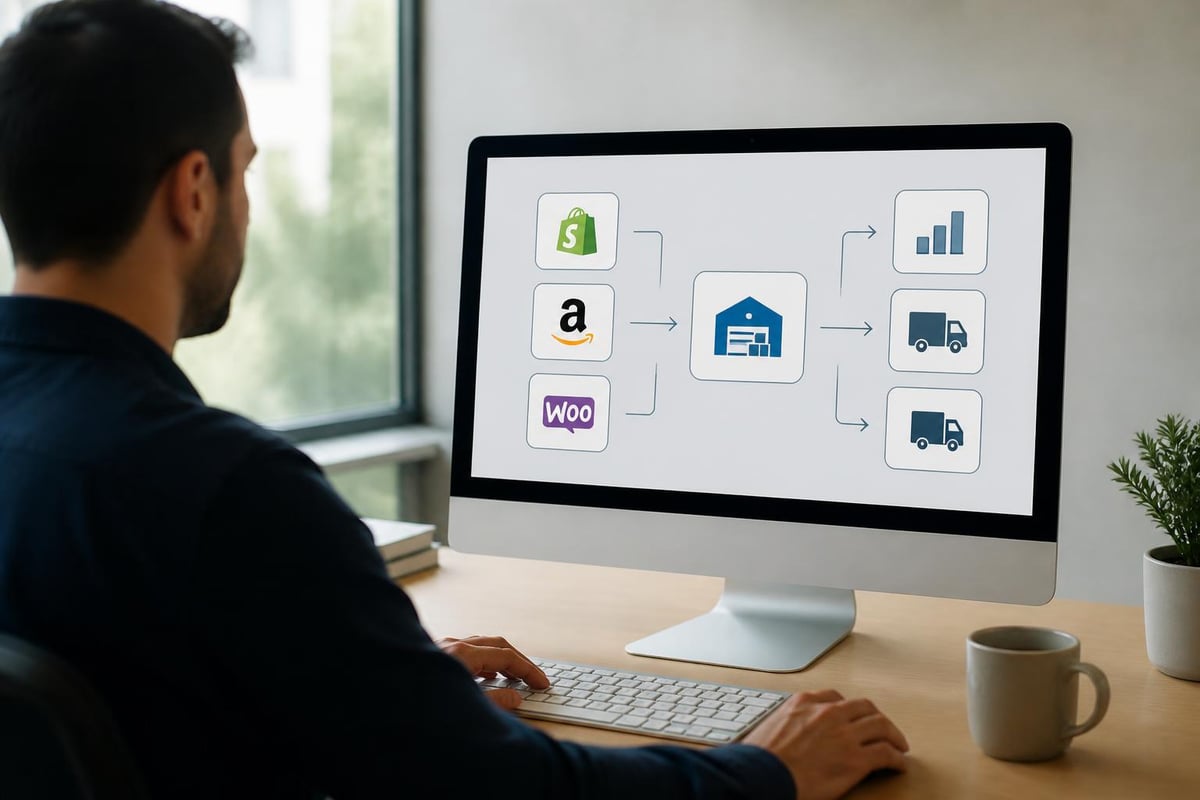
Modern 3PL partnerships extend far beyond basic warehousing. Leading providers integrate directly with your selling channels-Shopify, Amazon, WooCommerce, BigCommerce, and others-creating automated workflows that reduce manual data entry and minimize shipping errors. Real-time inventory visibility ensures you never oversell products, while distributed warehouse networks place inventory closer to customers for faster delivery times.
The financial benefits of partnering with established fulfillment companies become particularly evident as order volumes increase. Instead of investing capital in warehouse leases, equipment purchases, and staffing, you pay variable costs that scale proportionally with sales. This flexibility proves invaluable during seasonal fluctuations and growth phases.
Key Services Provided by Leading 3PL Companies
- Inventory receiving and storage management
- Order processing and pick-pack operations
- Shipping carrier negotiation and coordination
- Returns processing and inventory restocking
- Kitting and bundling for promotional campaigns
- Amazon FBA preparation and compliance
- Custom packaging and branded unboxing experiences
According to detailed comparisons of top 3PL providers, technology integration capabilities have become the primary differentiator among fulfillment companies in 2026.

Evaluating 3PL Companies Based on Business Requirements
Selecting from the best 3PL companies for ecommerce requires matching provider strengths to your specific operational needs. A direct-to-consumer brand shipping apparel has vastly different requirements than a supplement company preparing inventory for Amazon FBA.
Order Volume and Pricing Structures
Fulfillment pricing typically follows three models: per-order fees, storage fees, and receiving charges. Some providers excel at serving high-volume merchants with predictable costs, while others accommodate smaller brands with flexible minimum requirements.
Volume tiers significantly impact per-unit economics. A company shipping 500 orders monthly faces different rate structures than one processing 10,000 orders. Request detailed pricing breakdowns that include all potential fees-receiving, storage, pick-pack, shipping, special handling, and any technology platform charges.
| Pricing Component | Low Volume (0-500/mo) | Mid Volume (500-5,000/mo) | High Volume (5,000+/mo) |
|---|---|---|---|
| Pick & Pack Fee | $3.50-$5.00 | $2.50-$4.00 | $1.50-$3.00 |
| Storage (per pallet/mo) | $30-$50 | $25-$40 | $20-$35 |
| Receiving (per pallet) | $35-$60 | $30-$50 | $25-$45 |
Geographic Coverage and Shipping Zones
Warehouse location directly affects delivery times and shipping costs. The best 3PL companies for ecommerce maintain strategically distributed fulfillment centers across major population centers, enabling two-day ground delivery to the majority of US customers.
West Coast operations serve California, Oregon, Washington, and mountain states efficiently. Central locations in states like Texas, Missouri, or Illinois provide balanced coverage nationwide. East Coast facilities optimize delivery to the dense population corridor from Boston to Atlanta.
Multi-location fulfillment strategies split inventory across regions based on customer demographics and order history. This approach reduces shipping costs while meeting increasingly demanding delivery expectations. Research from leading 3PL comparison resources indicates that distributed fulfillment can reduce average shipping costs by 15-30% compared to single-location operations.
Top-Tier 3PL Providers for Ecommerce Brands
The fulfillment landscape includes providers ranging from massive international logistics corporations to specialized boutique operations. Understanding the positioning and strengths of major players helps narrow your selection.
Enterprise-Level Fulfillment Solutions
ShipBob has established itself as a technology-forward provider with 50+ fulfillment centers across North America, Europe, and Australia. Their proprietary software platform offers sophisticated inventory distribution algorithms, detailed analytics dashboards, and seamless integration with major ecommerce platforms. ShipBob works best for brands shipping 1,000+ orders monthly with expansion ambitions.
Deliverr (now part of Flexport) specializes in fast-tag programs that help merchants qualify for premium shipping badges on Amazon and Walmart marketplaces. Their distributed network focuses on enabling two-day delivery nationwide. Pricing transparency and straightforward onboarding make Deliverr attractive for mid-market brands.
Red Stag Fulfillment differentiates through accuracy guarantees and specialization in heavy or high-value products. Their damage-free guarantees and error-free picking commitments address pain points that commodity fulfillment providers often overlook. Analysis of top 3PL companies highlights Red Stag’s unique positioning for brands with complex handling requirements.
Specialized Fulfillment Providers
Some of the best 3PL companies for ecommerce have built expertise serving specific verticals or fulfillment models.
Ware2Go (a UPS company) focuses on enabling small to medium businesses to compete with enterprise logistics capabilities. Their network provides access to UPS’s infrastructure while maintaining flexibility and personalized service. Geographic coverage emphasizes key metro markets rather than comprehensive national footprint.
ShipMonk combines fulfillment services with robust inventory management tools designed for multichannel sellers. Their platform excels at managing complex SKU catalogs, kitting operations, and subscription box fulfillment. Pricing tends toward premium positioning but includes extensive value-added services.
Rakuten Super Logistics brings Japanese operational excellence to North American fulfillment. Their technology platform emphasizes automation, accuracy, and detailed reporting. Strong Walmart marketplace integration makes them particularly valuable for brands expanding beyond Amazon.
Technology Integration and Operational Transparency
The operational backbone of effective fulfillment partnerships is seamless technology integration. Leading providers offer sophisticated warehouse management systems (WMS) that connect with your existing tech stack through APIs and native integrations.
Essential Technology Features
Your 3PL’s platform should provide real-time visibility into inventory levels across all warehouse locations. This data synchronization prevents stockouts and overselling scenarios that damage customer relationships. Automated order routing ensures shipments originate from the optimal warehouse based on customer location and inventory availability.
Reporting capabilities separate exceptional providers from adequate ones. Access to detailed analytics covering fulfillment accuracy rates, average processing times, shipping costs by zone, and inventory turnover ratios enables data-driven operational decisions.
- Two-way inventory synchronization with all sales channels
- Automated tracking number updates to customers
- Customizable packing slips and inserts for brand consistency
- Returns management portals with disposition rules
- Batch processing capabilities for promotional campaigns
- Mobile apps for on-demand status checking
Resources comparing the best 3PL companies for ecommerce growth emphasize that technology maturity often correlates more strongly with customer satisfaction than warehouse square footage or company age.
Data Security and Compliance Considerations
Fulfillment partners access sensitive business data including customer information, sales volumes, and inventory values. Verify that prospective 3PLs maintain SOC 2 compliance, implement robust cybersecurity protocols, and execute comprehensive business associate agreements when handling regulated products.
For brands selling supplements, cosmetics, or food products, FDA compliance and lot tracking capabilities become non-negotiable requirements. Specialized providers maintain proper licensing, implement segregated storage for regulated inventory, and provide detailed batch traceability.
Amazon FBA Preparation and Marketplace Fulfillment
Amazon’s Fulfillment by Amazon program imposes strict preparation requirements that, if violated, result in rejected shipments and costly penalties. The best 3PL companies for ecommerce serving Amazon sellers have developed specialized FBA prep capabilities.
FBA Compliance Requirements
Labeling precision ensures each unit carries the correct FNSKU barcode in the specified location. Preparation services include polybagging items as required, bundling multi-packs, bubble wrapping fragile products, and affixing suffocation warnings on bags exceeding size thresholds.
Case pack requirements demand that shipping cartons contain identical SKUs (when required), meet weight limits, display proper shipping labels, and include pallet configurations that comply with Amazon’s receiving standards. Non-compliance triggers manual processing fees or outright rejection.
| FBA Prep Service | Typical Cost | Compliance Impact |
|---|---|---|
| FNSKU Labeling | $0.30-$0.50/unit | Required for commingled inventory |
| Polybagging | $0.35-$0.60/unit | Prevents damage, contamination |
| Bubble Wrapping | $0.50-$0.80/unit | Protects fragile items |
| Bundling/Kitting | $1.00-$2.50/bundle | Creates multi-unit listings |
According to comprehensive 3PL industry analysis, FBA prep services have become profit centers for fulfillment providers as Amazon marketplace sales continue expanding faster than traditional DTC channels.
Multi-Channel Fulfillment Strategies
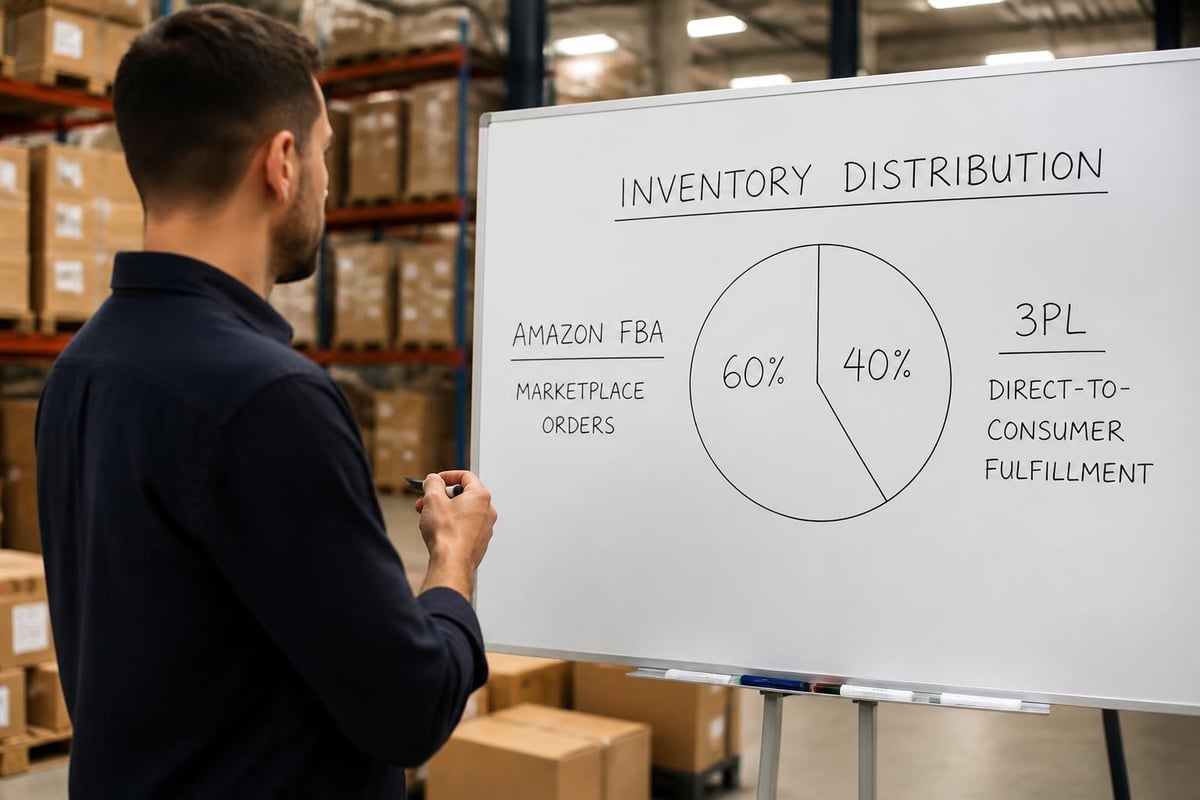
Sophisticated ecommerce brands increasingly adopt hybrid fulfillment approaches-storing some inventory at Amazon FBA facilities for Prime eligibility while maintaining stock at 3PL warehouses for direct-to-consumer orders. This strategy optimizes for marketplace conversion rates while maintaining control over customer experience and unit economics on DTC orders.
The best 3PL companies for ecommerce facilitate this approach through intelligent inventory allocation systems that recommend optimal stock distribution based on sales channel velocity, margin analysis, and seasonal patterns. Some providers even manage the transfer logistics between their warehouses and Amazon facilities.
Specialized Services: Kitting, Bundling, and Custom Packaging
Value-added services differentiate premium 3PL providers from commodity warehousing operations. These capabilities enable creative marketing strategies and enhanced customer experiences without requiring in-house fulfillment infrastructure.
Kitting and Bundling Operations
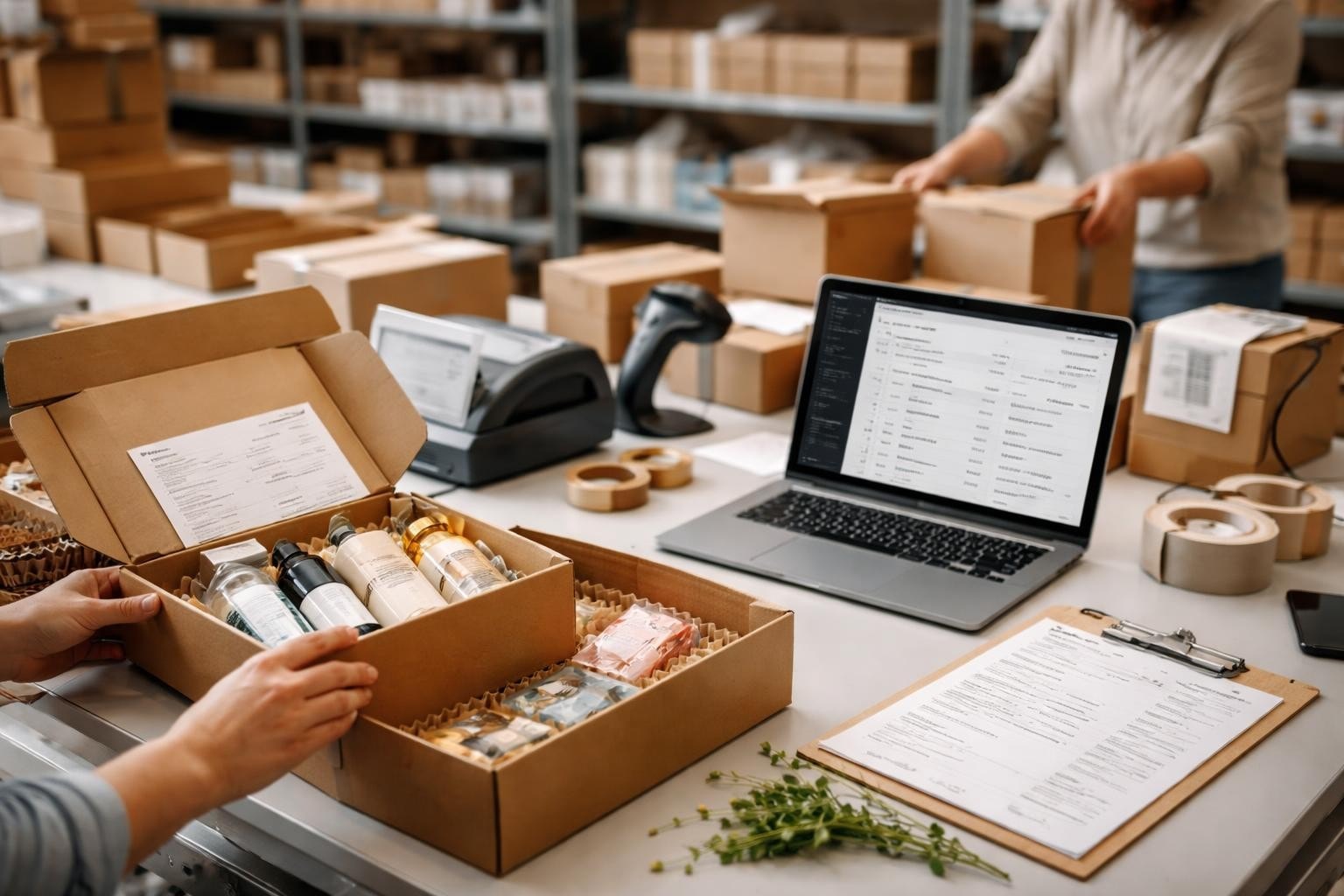
Kitting combines individual SKUs into new product bundles for promotional campaigns, subscription boxes, or retail distribution. A skincare brand might kit a cleanser, toner, and moisturizer into a complete regimen bundle. Creating these assemblies at a 3PL warehouse avoids the inventory management complexity of maintaining pre-bundled stock.
Bundling services typically charge $1.00-$3.00 per bundle depending on component count and complexity. Volume commitments often reduce per-unit costs. The ability to quickly create or dissolve bundles provides marketing agility-testing promotional offers, seasonal packages, or influencer collaboration sets without long-term inventory commitments.
Custom packaging capabilities transform commodity products into memorable brand experiences. Services include branded box insertion, custom tissue paper, thank-you cards, promotional inserts, and even hand-written notes for VIP customers.
Returns Management and Reverse Logistics
Product returns represent one of ecommerce’s most challenging operational aspects. Efficient returns processing directly impacts customer lifetime value and inventory availability. The best 3PL companies for ecommerce implement sophisticated returns portals that provide customers with shipping labels while routing returned items through quality inspection workflows.
Returns disposition rules determine whether items get restocked for resale, segregated for liquidation, or destroyed based on condition assessments. Detailed reporting shows return reasons, enabling product improvement and reducing future return rates. Integration with customer service platforms allows support teams to track return status and proactively address customer concerns.
Cost Analysis and Hidden Fee Identification
Fulfillment pricing appears straightforward on proposal documents but often includes nuanced charges that significantly impact total costs. Conducting thorough financial analysis prevents budget surprises after onboarding.
Standard Fee Components
Receiving fees apply when inventory arrives at the warehouse. Charges typically range from $25-$60 per pallet depending on provider and volume commitments. Some companies waive receiving fees for container-load shipments, while others charge by labor hour for mixed SKU deliveries requiring extensive sorting.
Storage costs usually calculate monthly based on pallet positions or cubic footage occupied. Standard pallet storage runs $20-$50 monthly, with premiums for refrigerated storage, hazmat materials, or high-security inventory. Long-term storage fees penalize slow-moving inventory that occupies space beyond 180-365 days.
Pick and pack fees constitute the core fulfillment charge, covering labor to retrieve items from shelves, pack orders, and prepare shipments. Single-item orders typically cost $2.00-$4.00, with additional charges of $0.30-$0.75 per extra item. Fragile items, oversized products, or gift wrapping trigger surcharges.
Identifying Hidden Costs
Beyond standard fees, several charges emerge unexpectedly:
- Account setup fees ranging from $500-$2,000 for onboarding and system configuration
- Monthly minimum fees requiring $500-$1,500 in charges regardless of volume
- Technology platform fees of $100-$500 monthly for software access
- Inventory counting fees for cycle counts or year-end audits
- Special project charges for promotional kitting or product photography
- Inbound freight coordination if the 3PL manages your supplier relationships
Request all-inclusive pricing scenarios based on your projected volumes. Compare proposals using identical order profiles to ensure accurate cost comparisons. Expert evaluations of 3PL companies recommend obtaining references from current clients in similar volume ranges to verify pricing accuracy.
Onboarding Process and Timeline Expectations
Transitioning fulfillment operations to a new 3PL requires careful planning and realistic timeline expectations. Rushed implementations often result in order delays, inventory discrepancies, and customer service problems.
Implementation Phases
Discovery and planning (2-3 weeks) involves mapping your current fulfillment workflows, identifying SKU characteristics, documenting special handling requirements, and configuring technology integrations. Provide detailed product information including dimensions, weights, storage requirements, and any compliance considerations.
Technology integration (1-3 weeks) connects your ecommerce platform, order management system, and any other relevant software to the 3PL’s warehouse management system. Testing ensures orders flow correctly, inventory synchronizes accurately, and tracking updates post appropriately.
Inventory transfer (1-4 weeks) timing depends on current inventory location and quantities. Shipping from your facility or existing 3PL to the new provider requires coordination to maintain stock availability during transition. Some brands implement gradual transitions, directing new purchase orders to the new 3PL while selling down existing stock at the old location.
Pilot period (2-4 weeks) processes initial orders under heightened monitoring to identify and resolve any operational issues before full-scale launch. Starting with a single product line or controlled order volume minimizes risk while building confidence in the new partnership.
Performance Metrics and Partnership Management
Successful 3PL relationships require ongoing performance monitoring and collaborative improvement efforts. Establishing clear metrics and review cadences ensures accountability and alignment.
Critical Performance Indicators
Order accuracy rate measures the percentage of orders shipped without errors in product selection, quantity, or destination. World-class fulfillment operations maintain 99.5%+ accuracy. Rates below 98% indicate systematic problems requiring immediate attention.
Cycle time tracks hours between order receipt and shipment departure. Same-day fulfillment for orders received before cutoff times (typically 2-4 PM) has become the standard expectation. Delays often stem from inventory location inefficiencies or inadequate staffing.
Inventory accuracy compares physical inventory counts to system records. Discrepancies create stockouts, overselling scenarios, and financial reconciliation challenges. Monthly cycle counting and annual physical inventories maintain accuracy above 99%.
| Metric | Industry Standard | Excellent Performance | Action Required |
|---|---|---|---|
| Order Accuracy | 98.5% | 99.5%+ | Below 98.0% |
| Same-Day Ship Rate | 85% | 95%+ | Below 80% |
| Inventory Accuracy | 98.0% | 99.5%+ | Below 97% |
| Damage Rate | 1.5% | 0.5% | Above 2.0% |
Shipping cost per order combines carrier charges, packaging materials, and any 3PL coordination fees. Tracking trends identifies opportunities for carrier negotiation, packaging optimization, or inventory distribution improvements.
Quarterly Business Reviews
Schedule structured review meetings with your 3PL account management team quarterly. These sessions analyze performance trends, address operational challenges, plan for seasonal volume increases, and discuss service enhancements. Successful partnerships evolve collaboratively rather than functioning as purely transactional vendor relationships.
Scalability and Growth Accommodation
The best 3PL companies for ecommerce demonstrate capacity to support your business through multiple growth phases without requiring disruptive transitions to new providers.
Infrastructure Capacity Planning
Evaluate prospective partners’ warehouse networks, expansion plans, and capacity management processes. Providers with multiple facilities offer geographic expansion options as your customer base grows. Companies actively adding square footage and locations signal investment in long-term growth capabilities.
Seasonal flexibility proves essential for brands experiencing holiday volume surges or promotional spikes. Confirm the 3PL’s staffing strategies, temporary labor relationships, and historical performance during peak periods. References from existing clients regarding Q4 performance provide valuable insights.
Technology scalability ensures the warehouse management system handles increasing SKU counts, order complexity, and integration requirements as your business adds sales channels, international markets, or new product categories.
International Expansion Support
Global ecommerce growth requires fulfillment infrastructure in target markets to manage duties, taxes, and customer delivery expectations. Multi-national 3PL providers offer pathways to European, Australian, or Asian fulfillment without requiring separate vendor relationships in each region.
Cross-border shipping expertise becomes valuable even before establishing foreign warehouse operations. Providers experienced in international compliance, documentation requirements, and carrier selection help you test international markets with direct shipping before committing to local fulfillment infrastructure.
Selecting from the best 3PL companies for ecommerce demands careful evaluation of technology capabilities, geographic coverage, specialized services, and transparent pricing models that align with your business requirements and growth trajectory. Whether you need Amazon FBA preparation, direct-to-consumer fulfillment, or value-added services like kitting and custom packaging, Ecom Automation Prep delivers comprehensive solutions designed for fast-growing ecommerce brands. Our scalable fulfillment infrastructure, seamless technology integration, and commitment to operational excellence make fulfillment effortless so you can focus on building your brand.