
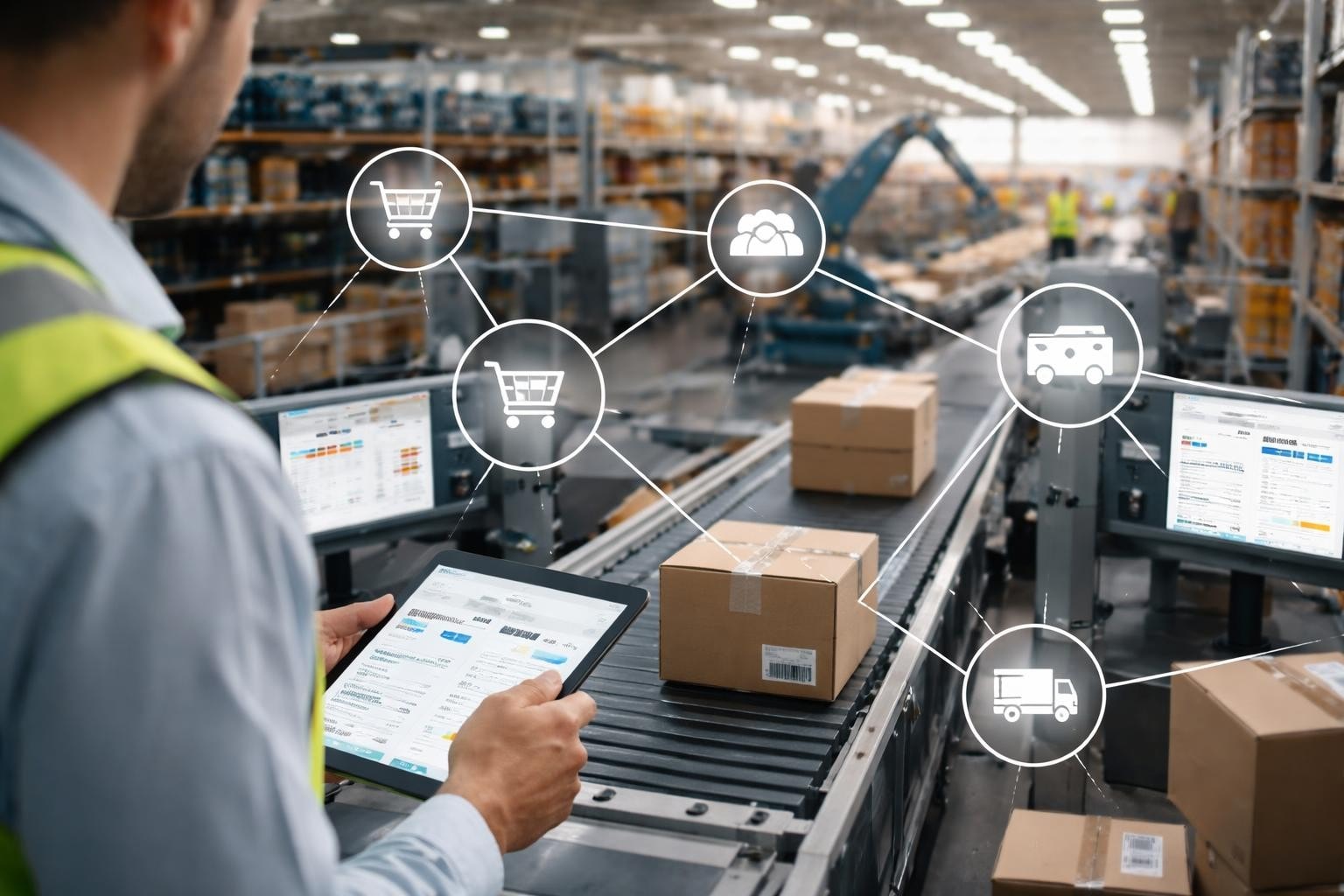

The landscape of e-commerce has transformed dramatically over the past decade, and electronic fulfilment has emerged as the backbone of modern retail operations. This digital-first approach to order processing, inventory management, and shipment coordination leverages technology to create seamless experiences from checkout to delivery. As consumer expectations for speed and accuracy continue to rise, businesses must understand how electronic fulfilment systems work and how to implement them effectively to remain competitive in 2026's demanding marketplace.
Understanding Electronic Fulfilment in Modern E-Commerce
Electronic fulfilment represents the complete digitization of the order fulfillment process, encompassing everything from automated inventory tracking to real-time shipment updates. Unlike traditional fulfillment methods that rely heavily on manual processes and paper-based systems, electronic fulfilment integrates software platforms, automated warehousing systems, and digital communication channels to create an efficient, error-resistant operation.
The core components of electronic fulfilment include warehouse management systems (WMS), order management systems (OMS), transportation management systems (TMS), and customer relationship management (CRM) platforms. These systems communicate through application programming interfaces (APIs) to ensure data flows seamlessly across the entire fulfillment chain.

The Technology Stack Behind Electronic Fulfilment
Modern electronic fulfilment operations depend on a sophisticated technology infrastructure that connects multiple systems and data sources. At the foundation sits the warehouse management system, which orchestrates inventory locations, picking routes, and packing procedures. This system integrates with barcode scanners, RFID readers, and sometimes robotic picking systems to maintain accurate, real-time inventory counts.
Key technologies enabling electronic fulfilment include:
- Cloud-based inventory management platforms
- Automated picking and sorting systems
- Real-time order tracking software
- Integrated shipping carrier platforms
- Predictive analytics engines
- Mobile warehouse applications
Research shows that data-driven assortment planning and inventory allocation can significantly enhance fulfillment efficiency, particularly for operations handling diverse product catalogs. These systems use machine learning algorithms to predict demand patterns, optimize stock levels, and reduce fulfillment times.
The integration layer represents another critical component. Middleware platforms connect e-commerce storefronts, marketplace channels, and enterprise resource planning (ERP) systems to fulfillment operations. This ensures that when a customer places an order on any channel, the fulfillment center receives accurate information instantly, triggering the picking and packing process without manual intervention.
Best Practices for Implementing Electronic Fulfilment
Implementing electronic fulfilment requires strategic planning and careful attention to process optimization. Successful operations balance technology adoption with practical workflow design to create systems that employees can use effectively while delivering exceptional customer experiences.
Data Management and System Integration
Accurate data represents the lifeblood of electronic fulfilment operations. Every product SKU must have complete information including dimensions, weight, storage requirements, and handling instructions. Incomplete or inaccurate data cascades through the entire fulfillment chain, causing picking errors, shipping delays, and customer dissatisfaction.
Streamlining e-commerce fulfillment processes starts with establishing robust data governance protocols. This includes regular audits of product information, standardized naming conventions, and validation rules that prevent incomplete records from entering the system.
Integration testing deserves equal attention. Before launching electronic fulfilment systems, businesses should conduct thorough end-to-end testing that simulates real-world order volumes and scenarios. This identifies bottlenecks, data synchronization issues, and process gaps before they affect customers.
| Integration Point | Critical Data Elements | Update Frequency |
|---|---|---|
| E-commerce Platform | Order details, customer info | Real-time |
| Inventory System | Stock levels, locations | Every 15 minutes |
| Shipping Carriers | Tracking numbers, rates | Real-time |
| Customer Service | Order status, returns | Real-time |
Warehouse Layout Optimization
Physical warehouse design significantly impacts electronic fulfilment efficiency, even in highly automated facilities. Products should be positioned based on velocity analysis, with fast-moving items located closest to packing stations. This reduces travel time for pickers and accelerates order processing.
Implementing fulfillment services requires careful consideration of how physical space supports digital workflows. Dedicated zones for receiving, quality control, storage, picking, packing, and shipping ensure smooth product flow and prevent congestion during peak periods.
Zone-based picking strategies work particularly well in electronic fulfilment environments. The system divides orders across multiple zones, with pickers in each area handling their assigned items. Products then converge at a consolidation station where the complete order is assembled and packed. This approach maximizes throughput while maintaining accuracy.
Omnichannel Strategies and Electronic Fulfilment
The rise of omnichannel retail has added complexity to electronic fulfilment operations. Customers expect consistent experiences whether they order online for home delivery, buy online and pick up in-store (BOPIS), or return items purchased on one channel through another.
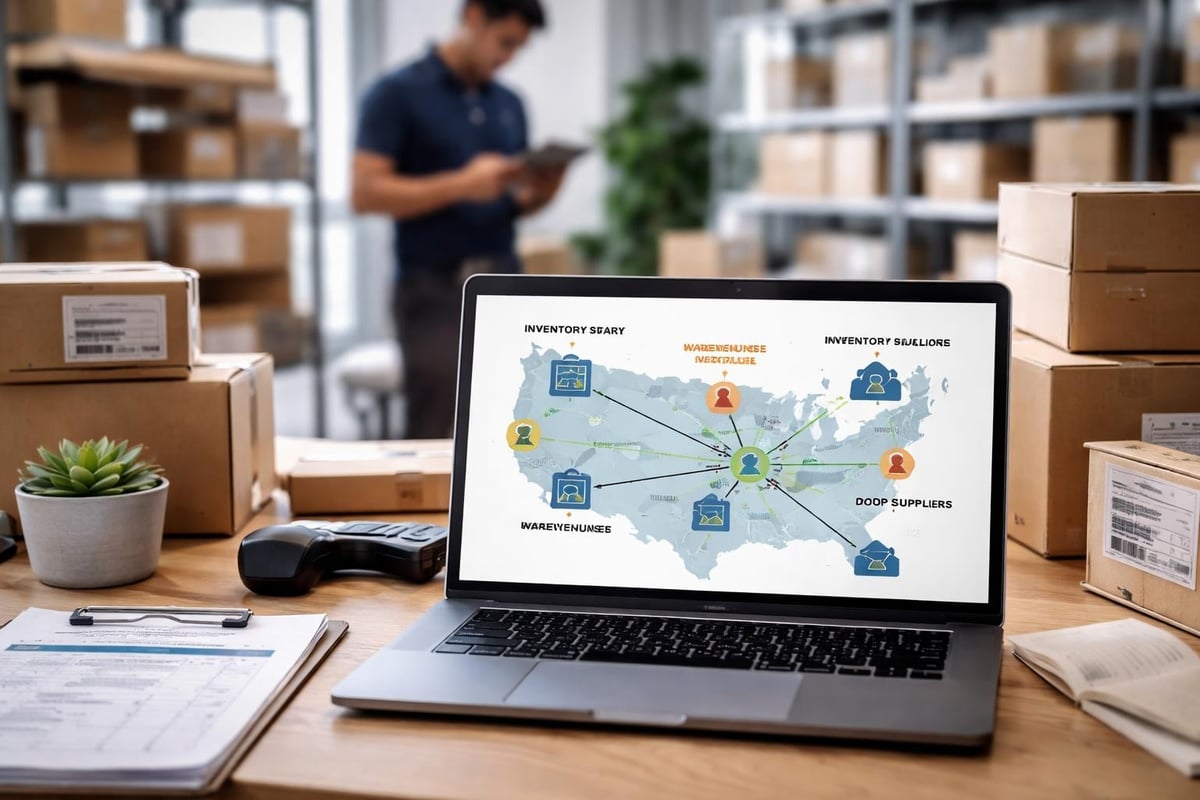
Managing Multi-Channel Inventory
Successful omnichannel electronic fulfilment requires unified inventory visibility across all channels. A contextual stochastic optimization framework for omnichannel order fulfillment can help businesses address delivery time uncertainties and allocate inventory optimally across channels.
The challenge lies in balancing inventory availability with fulfillment speed. Should an online order be fulfilled from a warehouse or a retail store? The answer depends on factors including proximity to the customer, current stock levels, and channel-specific priorities. Advanced electronic fulfilment systems make these decisions automatically based on predefined business rules.
Omnichannel fulfillment decision factors:
- Customer proximity to fulfillment locations
- Promised delivery timeframes
- Inventory levels across locations
- Fulfillment costs per channel
- Product availability and alternatives
- Customer lifetime value
For B2B operations, strategic batch picking and ERP integration become essential components of electronic fulfilment. Business customers often place larger orders with specific delivery windows, requiring more sophisticated coordination between sales, fulfillment, and logistics teams.
Returns Management in Electronic Fulfilment
Returns processing represents one of the most challenging aspects of electronic fulfilment. The system must quickly assess returned items, update inventory, process refunds, and either restock products or route them for disposal. This reverse logistics flow requires the same level of automation and accuracy as forward fulfillment.
Leading electronic fulfilment operations implement dedicated returns portals that customers access online. These systems generate return authorization numbers, print prepaid shipping labels, and track items through the returns process. When products arrive at the fulfillment center, workers scan barcodes that instantly update inventory and trigger refund workflows.
Automation Technologies Driving Electronic Fulfilment
Automation continues to reshape electronic fulfilment capabilities, enabling businesses to process higher order volumes with greater accuracy and lower labor costs. The automation spectrum ranges from simple conveyor systems to fully autonomous mobile robots and artificial intelligence-powered decision engines.
Robotic Process Automation
Robotic process automation (RPA) handles repetitive digital tasks that previously required human intervention. In electronic fulfilment, RPA bots can process order confirmations, update tracking information across multiple systems, generate shipping labels, and reconcile inventory discrepancies. These software robots work 24/7 without errors or fatigue.
Physical robotics have made equally significant strides. Autonomous mobile robots (AMRs) navigate warehouses independently, transporting products from storage locations to picking stations. Collaborative robots (cobots) work alongside human pickers, handling heavy items or performing repetitive tasks while employees focus on complex decision-making.
| Automation Type | Best Use Cases | ROI Timeline | Implementation Complexity |
|---|---|---|---|
| Conveyor Systems | High-volume operations | 12-18 months | Medium |
| Automated Sorters | Multi-SKU fulfillment | 18-24 months | High |
| AMRs | Dynamic warehouses | 24-36 months | Medium-High |
| Pick-to-Light | Order accuracy | 6-12 months | Low-Medium |
| RPA Software | Data processing | 3-6 months | Low |
Artificial Intelligence and Machine Learning
AI-powered systems enhance electronic fulfilment through predictive analytics and intelligent decision-making. Machine learning algorithms analyze historical order data to forecast demand, optimize inventory placement, and predict potential stockouts before they occur. This proactive approach prevents fulfillment delays and improves customer satisfaction.
Natural language processing (NLP) technologies have found applications in customer service automation for e-commerce logistics solutions. Chatbots handle routine inquiries about order status, shipping times, and product availability, freeing human agents to address complex issues. These AI assistants integrate directly with electronic fulfilment systems to provide accurate, real-time information.
Computer vision systems automate quality control by photographically inspecting products for damage or defects. These systems catch issues before items ship to customers, reducing return rates and protecting brand reputation. Some advanced implementations even use AI to optimize box sizing, reducing packaging waste and shipping costs.
Measuring Electronic Fulfilment Performance
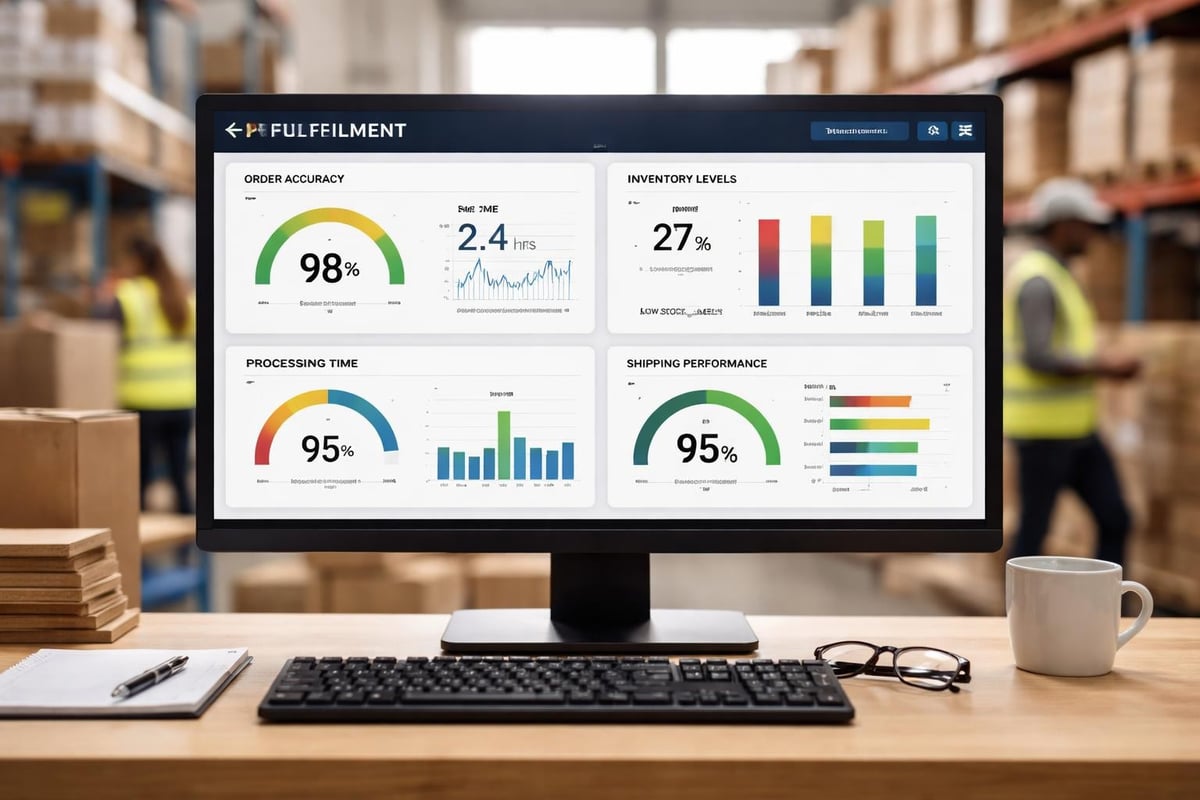
Effective electronic fulfilment requires continuous monitoring and optimization based on key performance indicators (KPIs). These metrics provide visibility into operational efficiency, accuracy, and customer satisfaction, enabling data-driven improvements.
Essential Fulfillment Metrics
Order accuracy stands as the most critical metric for electronic fulfilment operations. This measures the percentage of orders shipped completely correct, including the right products, quantities, and destinations. Industry-leading operations achieve accuracy rates above 99.5%, while operations below 98% typically experience high return rates and customer complaints.
Core electronic fulfilment KPIs include:
- Order accuracy rate
- On-time shipment percentage
- Average order processing time
- Inventory accuracy
- Cost per order fulfilled
- Return rate
- Customer satisfaction scores
Cycle time metrics track how long each fulfillment stage takes, from order receipt to carrier pickup. Strategies for successful e-commerce fulfillment emphasize reducing these timeframes through process optimization and automation. Breaking down cycle time by fulfillment stage helps identify bottlenecks and improvement opportunities.
Cost Optimization Strategies
Electronic fulfilment systems generate detailed cost data for every operational aspect, enabling precise analysis and optimization. Businesses can calculate exact fulfillment costs per order, per SKU, or per customer, informing pricing strategies and profitability analysis.
Shipping represents the largest variable cost in most electronic fulfilment operations. Understanding how to cut e-commerce fulfillment shipping costs without sacrificing delivery speed requires sophisticated carrier rate analysis and zone-based routing strategies. Electronic fulfilment systems can automatically select the most cost-effective carrier for each shipment based on destination, package dimensions, and delivery timeframe.
Dimensional weight pricing has made packaging optimization increasingly important. Systems that recommend optimal box sizes based on order contents reduce shipping costs while minimizing packaging waste. Some advanced implementations use 3D bin-packing algorithms to determine the most efficient arrangement of multiple items within a single box.
Sustainability in Electronic Fulfilment
Environmental responsibility has become a critical consideration for modern electronic fulfilment operations. Consumers increasingly favor brands that demonstrate commitment to sustainability, and e-commerce fulfillment best practices now include environmental impact as a core component.
Electronic fulfilment systems support sustainability through several mechanisms. Digital documentation eliminates paper waste from packing slips, shipping labels, and inventory records. Optimized routing algorithms reduce transportation distances and fuel consumption. Intelligent inventory allocation prevents overstock situations that lead to product disposal.
Packaging and Waste Reduction
Right-sized packaging represents one of the most impactful sustainability improvements in electronic fulfilment. Systems that select appropriately sized boxes for each order reduce corrugate consumption, minimize void fill requirements, and decrease dimensional weight charges. This triple benefit improves both environmental and financial performance.
Reusable packaging programs integrate with electronic fulfilment systems through unique identifiers that track containers through multiple use cycles. Customers return packaging to designated drop-off points, and the system credits their accounts while routing containers back to fulfillment centers for sanitization and reuse.
| Sustainability Initiative | Environmental Impact | Implementation Cost | Payback Period |
|---|---|---|---|
| Right-sized Packaging | 20-30% waste reduction | Low | 3-6 months |
| Electric Fleet Vehicles | 100% emissions reduction | High | 5-7 years |
| Solar Warehouse Power | 40-60% energy reduction | High | 7-10 years |
| Recyclable Materials | 80-90% waste diversion | Low-Medium | 6-12 months |
Specialized Electronic Fulfilment Applications
Different business models require specialized electronic fulfilment approaches. Understanding these variations helps businesses select appropriate systems and processes for their specific needs.
Subscription Box Fulfillment
Subscription box services present unique electronic fulfilment challenges. These operations must coordinate recurring shipments, manage variable product assortments, and handle high-volume processing during specific monthly windows. Electronic fulfilment systems designed for subscriptions include features like automated billing integration, curated box assembly workflows, and subscriber preference management.
The kitting process for subscription boxes benefits significantly from electronic fulfilment automation. Systems generate picking lists organized by subscription tier, ensuring each box receives the correct combination of products. Barcode verification at each assembly stage prevents errors and maintains brand consistency.
Digital Product Delivery
Electronic fulfilment extends beyond physical products to include electronic fulfillment of digital goods, such as software licenses, activation codes, and digital content. These systems deliver products instantly via email, application programming interfaces, or customer portals, eliminating physical handling entirely.
Digital product fulfillment requires robust security measures to prevent unauthorized distribution and ensure compliance with licensing terms. Systems track activation codes, monitor usage, and automatically revoke access when subscriptions expire. Integration with content delivery networks (CDNs) enables high-speed distribution of large files globally.
Direct-to-Consumer vs. Amazon FBA
Businesses operating e-fulfillment across multiple channels must coordinate between direct-to-consumer operations and marketplace fulfillment programs like Amazon FBA. Electronic fulfilment systems manage this complexity through channel-specific workflows and inventory allocation rules.
The decision to fulfill orders through ecom distribution centers versus marketplace programs depends on factors including product margins, storage costs, and delivery speed requirements. Advanced electronic fulfilment platforms calculate these variables automatically, recommending optimal fulfillment methods for each order.
Future Trends in Electronic Fulfilment
The evolution of electronic fulfilment continues accelerating as new technologies emerge and customer expectations evolve. Understanding these trends helps businesses prepare for future requirements and maintain competitive advantages.
Same-day and next-day delivery have transitioned from premium services to baseline expectations in many markets. Electronic fulfilment systems increasingly incorporate micro-fulfillment centers located near population centers, enabling rapid delivery without excessive costs. These smaller facilities use compact automation systems optimized for high-velocity SKUs.
Blockchain technology shows promise for improving transparency and traceability in electronic fulfilment operations. Distributed ledgers can track products through complex supply chains, verify authenticity, and provide customers with complete visibility into product origins and handling.
Drone delivery and autonomous vehicles remain on the horizon for electronic fulfilment, though regulatory and technical challenges persist. Systems designed to coordinate these technologies integrate with traditional fulfillment operations, creating hybrid delivery networks that optimize for speed, cost, and environmental impact.
Best fulfillment practices increasingly emphasize post-purchase engagement as a critical component of the customer experience. Electronic fulfilment systems now include features for proactive communication, delivery preferences, and personalized thank-you messages that strengthen brand relationships beyond the transaction.
Electronic fulfilment has transformed from a back-office function into a strategic differentiator for e-commerce brands, directly impacting customer satisfaction, operational efficiency, and profitability. As technology continues advancing and customer expectations rise, businesses must continuously evaluate and optimize their fulfillment operations to remain competitive. Whether you're scaling a fast-growing brand or refining existing operations, partnering with experienced providers who understand the complexities of modern electronic fulfilment makes the difference between struggling with logistics and delivering exceptional customer experiences. Discover how Ecom Automation Prep can streamline your fulfillment operations with comprehensive services designed for e-commerce brands ready to scale efficiently.