
In 2026, the difference between e-commerce leaders and laggards will be defined by the efficiency of their distribution centers. This essential guide delivers actionable strategies to help you achieve ecom distribution center success amid rapid industry change. Whether you oversee an e-commerce brand, manage logistics, or operate fulfillment, you will find the insights you need to build, optimize, and future-proof your operations. Discover how to define the modern center, leverage critical success factors, harness technology, apply best practices, track key metrics, and anticipate future trends. Start transforming your distribution strategy for long-term growth.
Defining the Modern Ecom Distribution Center in 2026
The ecom distribution center of 2026 stands as the engine room driving rapid, reliable online shopping experiences. Unlike traditional warehouses, these centers are optimized for speed, flexibility, and seamless integration across every fulfillment stage. To understand their modern impact, let us explore how these centers have evolved and what sets them apart in today’s e-commerce landscape.
Evolution from Traditional Warehousing to Ecom Distribution Centers
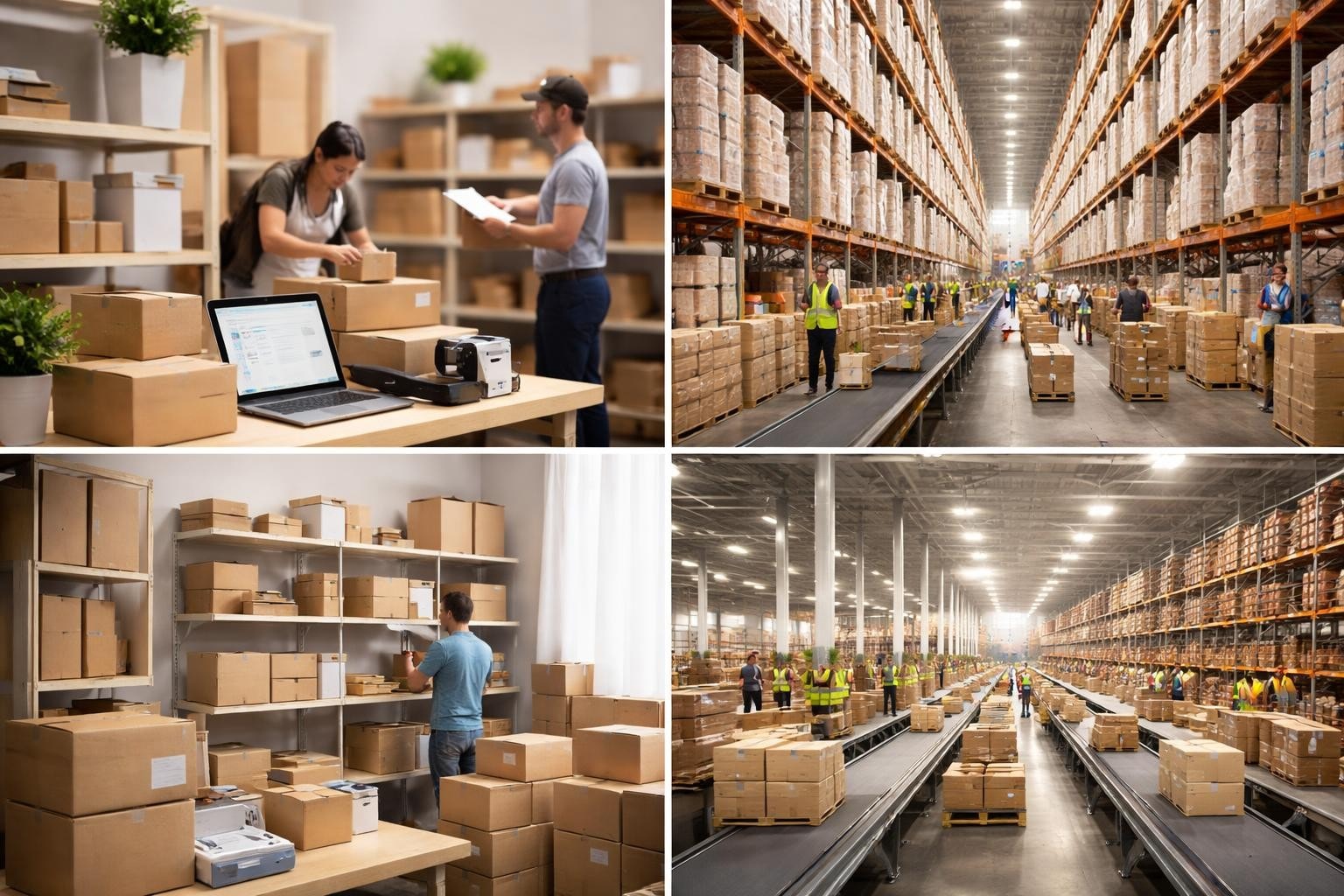
The shift from static storage to dynamic, fulfillment-focused operations defines the ecom distribution center revolution. Traditional warehouses prioritized long-term storage, but today’s centers focus on rapid order processing and minimal dwell time.
Modern ecom distribution centers leverage customer-centric workflows, handling receiving, picking, packing, shipping, and returns under one roof. Third-party logistics providers (3PLs) have replaced legacy warehouses, enabling agility and scalability for fast-growing brands. Competitors now integrate every stage, ensuring products move swiftly from supplier to customer.
Key Functions and Roles in Ecom Distribution Centers
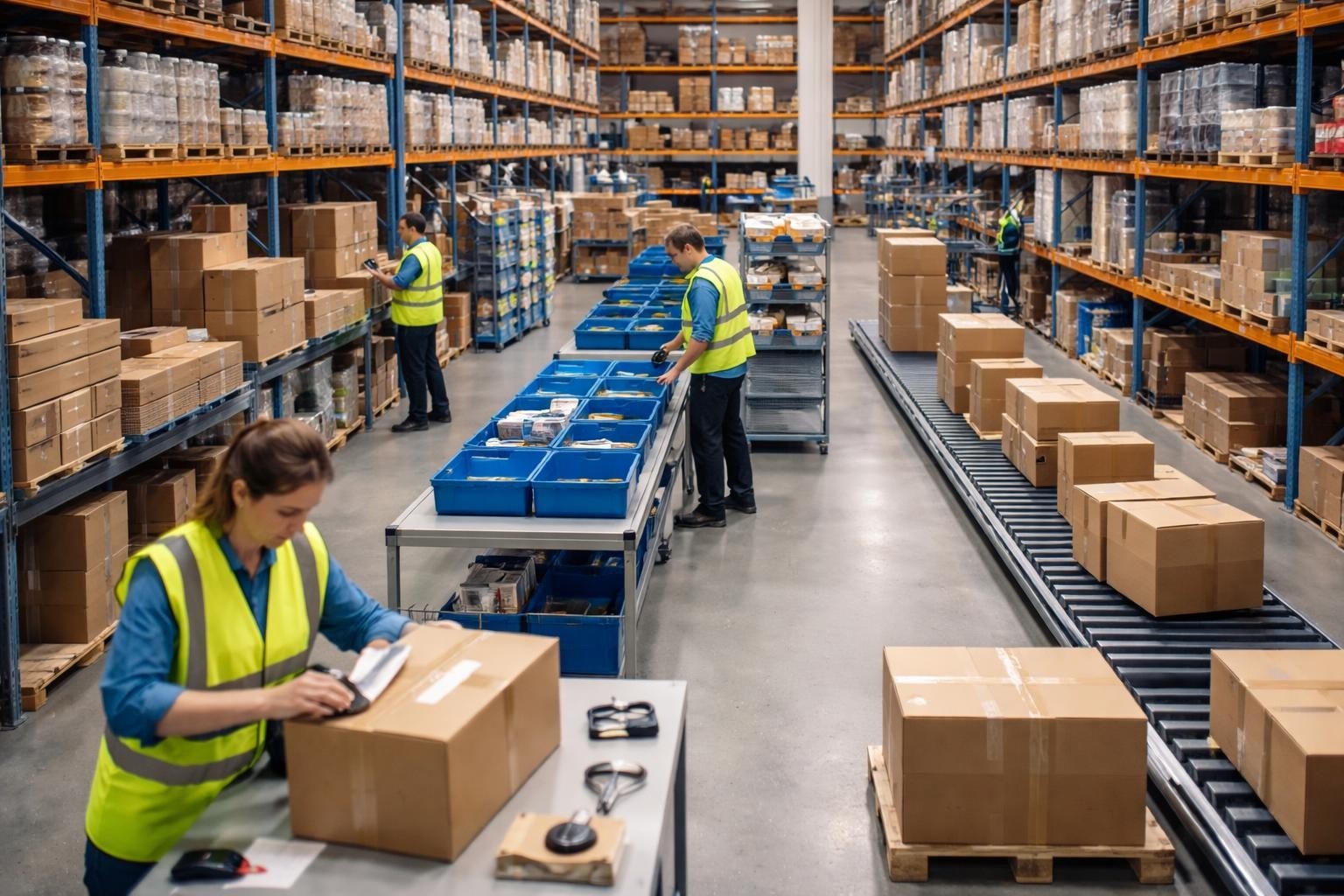
At the heart of every ecom distribution center is efficient order fulfillment, from intelligent pick-and-pack systems to last-mile delivery. Real-time inventory tracking minimizes errors and supports automated workflows. Seamless integration with e-commerce platforms allows for instant updates and streamlined order management.
Returns processing and reverse logistics have become core functions, not afterthoughts. Distributed fulfillment models reduce delivery times and costs, empowering brands to offer competitive shipping. For deeper insights into optimization, see these e-commerce fulfillment best practices.
Distribution Center vs. Warehouse: Crucial Differences
A modern ecom distribution center prioritizes speed, automation, and proximity to the end customer, while warehouses focus on storage and basic fulfillment. The table below highlights key distinctions:
| Feature | Ecom Distribution Center | Traditional Warehouse |
|---|---|---|
| Core Focus | Rapid fulfillment, automation | Long-term storage |
| Layout | Dynamic, optimized for flow | Static, bulk storage |
| Technology | Advanced WMS, robotics | Basic inventory systems |
| Customer Experience | Fast, accurate delivery | Standard shipping |
For leading centers, a 96% order accuracy rate is now the industry standard.
The Strategic Importance for E-Commerce Brands
An ecom distribution center enables fast and accurate delivery, supporting superior customer experiences and greater loyalty. These centers facilitate omnichannel fulfillment, serving direct-to-consumer, B2B, and marketplace channels seamlessly.
Strategic placement allows brands to expand into new markets with confidence. By leveraging 3PL networks, some brands now reach 98% of the US population within one to two days, setting new benchmarks for speed and reliability.
Types of Ecom Distribution Centers
Ecom distribution centers come in several forms:
- Centralized networks, offering efficiency from a single location.
- Decentralized models, with multiple regional centers for faster delivery.
- Specialized centers for cold chain, hazardous materials, or subscription box fulfillment.
- In-house operations, managed by the brand.
- Outsourced models, partnering with 3PL or 4PL providers.
Each type supports specific needs, ensuring the ecom distribution center remains at the forefront of fulfillment innovation.
Critical Success Factors for Ecom Distribution Centers
Modern ecom distribution center success in 2026 depends on mastering several critical factors. Brands that excel in these areas will deliver faster, more accurate fulfillment and stay ahead of evolving industry standards.
Location Strategy and Network Design
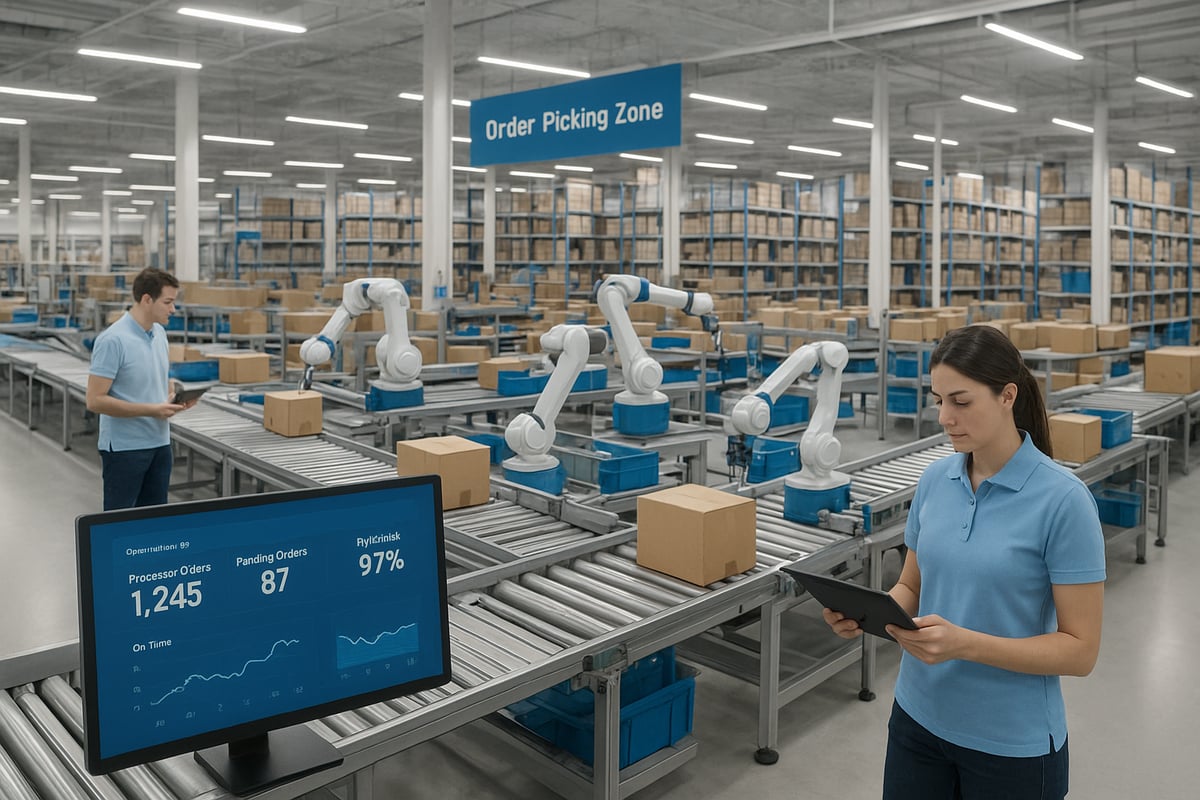
The foundation of a high-performing ecom distribution center is its strategic location. Proximity to major customer populations and shipping zones enables faster delivery and lower costs.
Many brands now use multi-node networks, placing several ecom distribution centers across regions for optimal coverage. This approach shortens transit times and helps meet the expectation for 1–2 day shipping. For example, ShipNetwork’s model demonstrates how distributed fulfillment can reach 98% of US customers quickly.
Site selection also involves evaluating labor availability, transportation access, and local regulations. For more on these trends, see 9 Key Factors Shaping US Warehousing and Distribution Through 2026.
Inventory Management and Optimization
Effective inventory management is essential for every ecom distribution center. Real-time visibility across SKUs allows operators to respond instantly to demand shifts.
Brands use advanced demand forecasting to avoid stockouts and overstocking. Lot tracking ensures compliance for regulated products and supports accurate recalls when needed.
SKU rationalization, where slow-moving products are minimized, streamlines picking and reduces holding costs. Automated replenishment systems keep inventory levels just right, supporting smoother operations.
Technology Integration and Automation
Technology is the backbone of ecom distribution center efficiency. Advanced Warehouse Management Systems (WMS) integrate with order management platforms, providing seamless control from receiving to shipping.
Automation tools, such as robotic pickers and automated sorters, increase speed and accuracy. API and EDI integrations connect the ecom distribution center to e-commerce platforms and carriers, creating a unified workflow.
Unified dashboards allow managers to track KPIs in real time, supporting data-driven decisions. This integration reduces manual errors and accelerates fulfillment cycles.
Skilled Workforce and Operational Excellence
Even with automation, people remain crucial in every ecom distribution center. Well-trained staff ensure accuracy, safety, and flexibility during peak periods.
Cross-training workers allows teams to shift roles as needed, maintaining productivity when demand spikes. High-performing centers achieve 96% or higher order accuracy rates through continuous improvement programs.
Operational excellence also involves regular audits, safety training, and clear performance metrics. Engaged employees help drive quality and efficiency.
Scalability and Flexibility
A successful ecom distribution center must adapt to growth and seasonal changes. Modular layouts allow space to be reconfigured for new products or increased volume.
Scalable technology infrastructure, such as cloud-based WMS, supports rapid expansion. Flexible staffing models, including temporary hires, help manage holiday surges without sacrificing service quality.
This agility ensures brands can scale confidently without major disruptions or delays.
Cost Control and Efficiency
Controlling costs is a top priority for any ecom distribution center. Negotiating carrier contracts and optimizing shipping zones can yield savings of up to 90%.
Lean process improvements, such as reducing travel time for pickers and minimizing excess storage, further lower expenses. Table: Cost Efficiency Tactics
| Tactic | Impact |
|---|---|
| Carrier rate negotiation | Shipping savings |
| Lean process mapping | Labor reduction |
| SKU rationalization | Lower storage |
By continually refining these areas, brands keep fulfillment costs competitive.
Customer Experience Focus
Customer experience is the ultimate test for an ecom distribution center’s performance. Fast, accurate order fulfillment and real-time tracking are now baseline expectations.
Value-added services, like kitting, custom packaging, and efficient returns, set brands apart. Many centers offer hassle-free returns, which boosts loyalty and repeat business.
With consumers demanding more each year, a relentless focus on service quality ensures lasting competitive advantage.
Step-by-Step Guide to Optimizing Ecom Distribution Center Operations
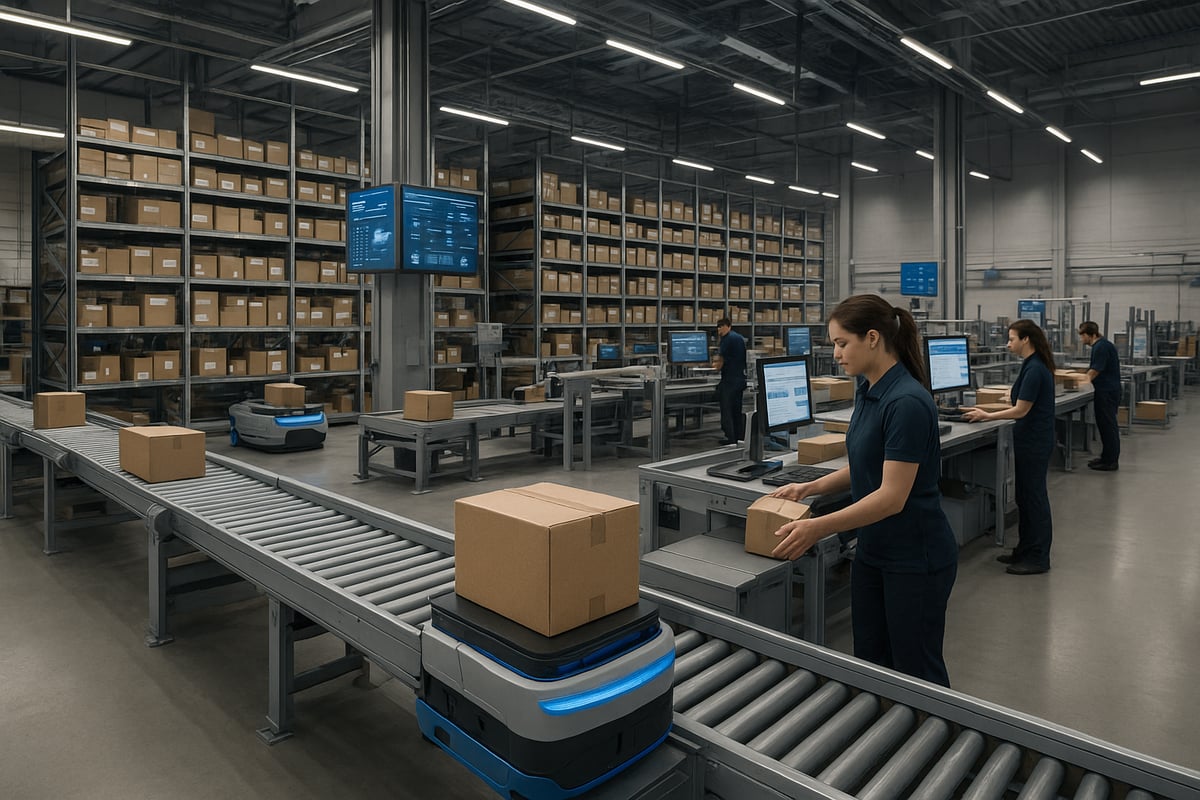
Optimizing your ecom distribution center is essential for keeping up with the fast-paced demands of 2026. By following a structured set of steps, brands can transform daily operations, increase speed, and reduce costs. Here is a practical, step-by-step guide for future-proofing your ecom distribution center.
Step 1: Assess and Map Current Operations
Begin by conducting a thorough workflow analysis from receiving to shipping. Map out each process within your ecom distribution center, including receiving, storage, picking, packing, and shipping. Identify bottlenecks, slow zones, and any manual handoffs that cause delays.
Use process mapping tools or simple tables to visualize each workflow. Document your current technology stack and note all integration points with e-commerce platforms, carriers, and ERPs. This foundational assessment will reveal where improvements are needed and set the stage for targeted upgrades.
Step 2: Implement Advanced Inventory Management
Adopt real-time inventory tracking to minimize errors and stockouts within your ecom distribution center. Demand forecasting tools, powered by artificial intelligence, help you anticipate order spikes and optimize stock levels.
Analyze your SKU portfolio to streamline picking paths and storage locations. Integrate inventory systems directly with your e-commerce platforms for automated updates and replenishment. These tactics ensure customers always see accurate stock levels, reducing overselling and backorders.
Step 3: Upgrade Technology and Automation
Select an advanced Warehouse Management System (WMS) tailored for ecom distribution center operations. A robust WMS enables automated picking, packing, and order routing, which boosts speed and accuracy.
Deploy automation technologies such as robotics, conveyors, and automated packing stations to handle repetitive tasks. Integrate with major shipping carriers for instant label generation and real-time tracking updates. This level of technology integration minimizes manual errors and supports high-volume order processing.
Step 4: Optimize Layout and Space Utilization
Reconfigure your ecom distribution center layout to prioritize fast-moving SKUs and efficient picking routes. Use zoning strategies, such as dedicated areas for hazardous materials, temperature-sensitive products, or kitting and assembly.
For brands with recurring shipments, design specialized subscription box fulfillment zones to streamline those workflows. Adjust racking systems and aisle widths to maximize space while maintaining safety and accessibility for both staff and automation.
Step 5: Enhance Workforce Management
Cross-train your staff to ensure agility during peak periods in your ecom distribution center. Implement clear performance metrics for accuracy, speed, and safety, and review them regularly with your team.
Leverage data-driven scheduling to align labor resources with forecasted demand, minimizing overtime and burnout. Continuous improvement programs encourage staff engagement and drive operational excellence, ensuring your workforce can adapt as technology evolves.
Step 6: Strengthen Returns and Reverse Logistics
Streamline the returns intake process so that restocking and refunds are handled quickly and accurately. Automate return label generation and notify customers proactively to improve their experience.
Efficient reverse logistics is a core differentiator for any ecom distribution center. For deeper insights and best practices, explore reverse logistics and returns management solutions that can elevate your returns process and boost customer loyalty.
Step 7: Monitor, Measure, and Iterate
Track critical KPIs such as order accuracy, on-time shipping, cost per order, and returns rate. Use a dashboard to benchmark your ecom distribution center against industry leaders, aiming for 96%+ accuracy and 1–2 day delivery standards.
Regularly review your data to identify trends, address recurring issues, and inform continuous improvement. By embracing a cycle of measurement and iteration, your ecom distribution center will remain competitive and resilient as the industry evolves.
Technology Innovations Shaping Ecom Distribution Centers in 2026
The ecom distribution center is undergoing a technological revolution in 2026. New advancements are transforming how orders are fulfilled, inventory is managed, and customer expectations are met. Embracing these innovations is critical for any ecom distribution center aiming to stay ahead of the curve.
Robotics and Automation
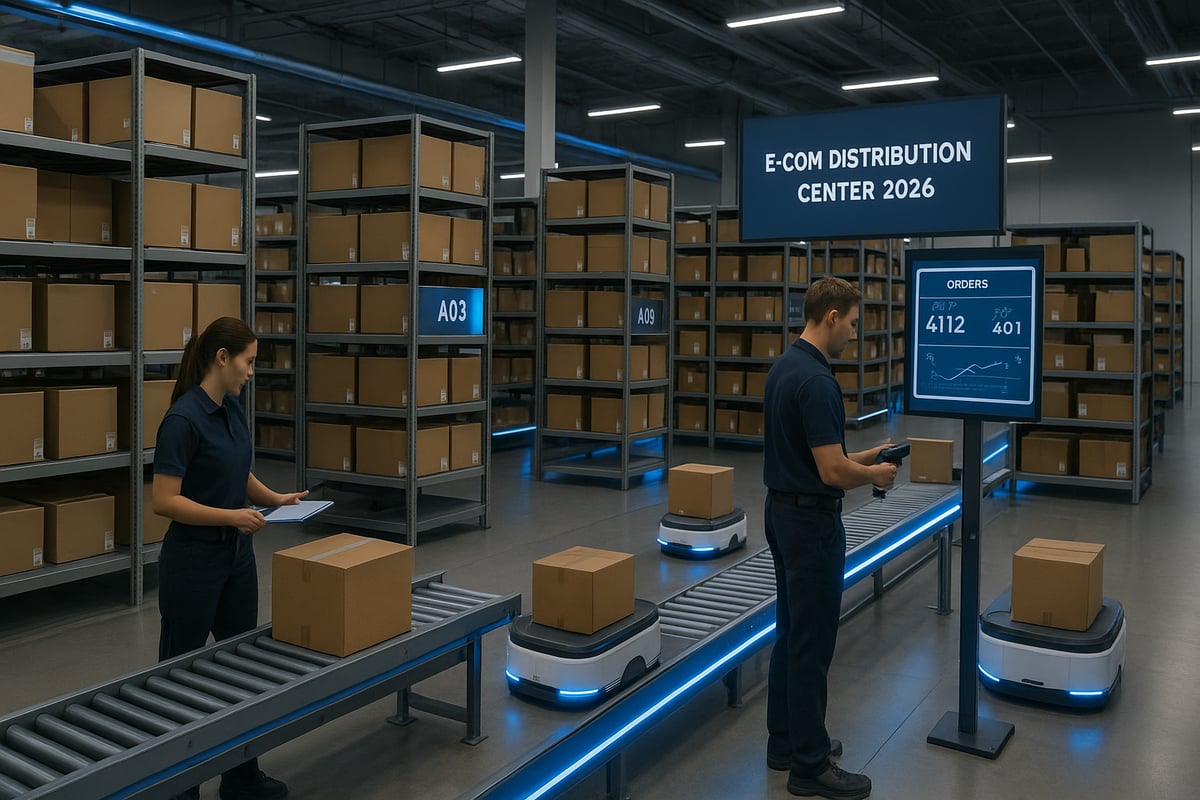
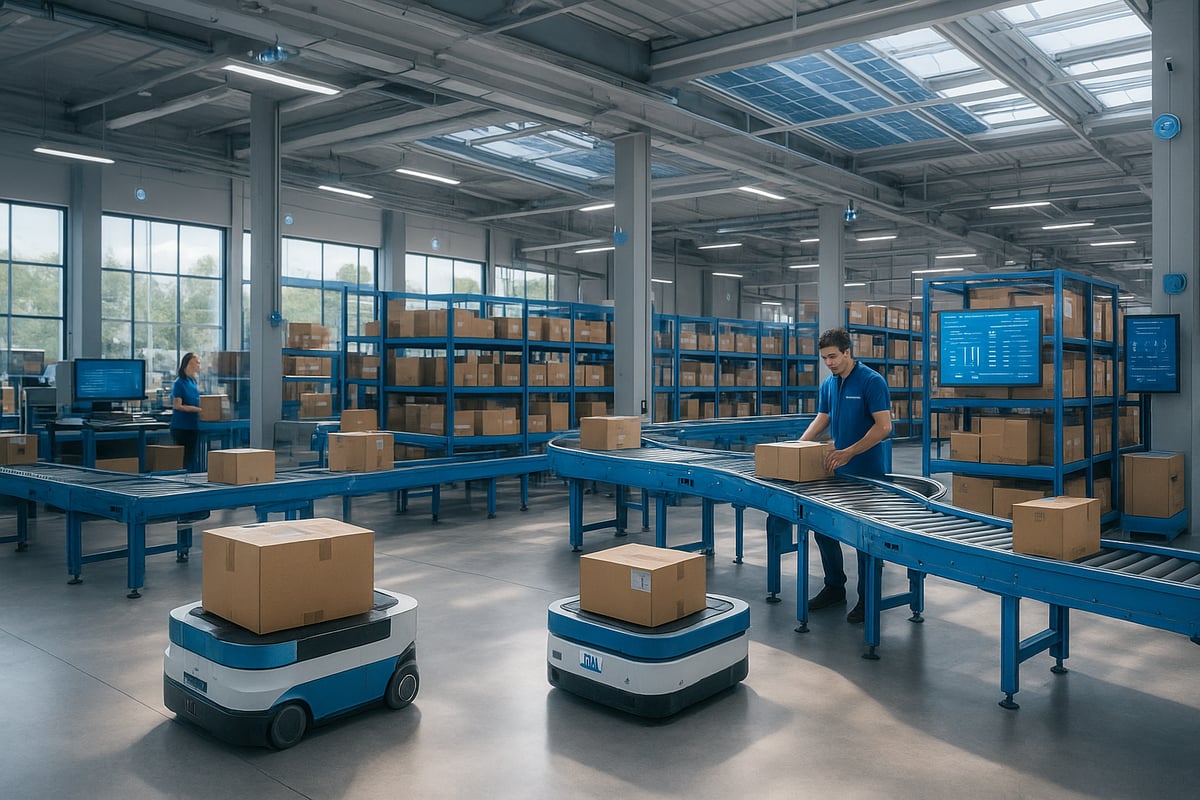
Robotics have become the backbone of the ecom distribution center. Autonomous mobile robots (AMRs) now handle picking and transport, drastically improving speed and accuracy. Automated sortation systems move parcels efficiently through the facility, minimizing manual handling and errors.
- AMRs for picking and moving inventory
- Automated conveyors for sortation
- Minimal manual intervention required
With these technologies, a single ecom distribution center can process thousands of orders per hour, providing a competitive advantage.
Artificial Intelligence and Predictive Analytics
Artificial intelligence is at the core of every modern ecom distribution center. AI-driven demand forecasting ensures inventory levels match customer needs, reducing both stockouts and overstocks. Machine learning optimizes route planning and labor schedules, further boosting efficiency.
According to 7 E-Commerce Trends That Will Transform Shopping In 2026, AI integration is transforming not just forecasting, but every layer of e-commerce fulfillment. Data-driven insights help operators make smarter decisions, directly impacting profitability.
IoT and Real-Time Visibility
The ecom distribution center now leverages IoT for unparalleled real-time visibility. Sensor networks monitor temperature, humidity, and asset locations throughout the facility. This allows instant tracking of both products and equipment, ensuring optimal storage conditions and reducing loss.
Customers and operators benefit from transparent order and inventory updates. Real-time visibility has become an expectation for any leading ecom distribution center.
Seamless System Integrations
System integration is essential for the modern ecom distribution center. APIs and EDI connections link e-commerce platforms, ERPs, and shipping carriers, enabling automated order processing and shipping label generation.
Unified dashboards provide control over every process step, from inventory intake to last-mile delivery. This level of connectivity helps ecom distribution center teams respond rapidly to changes in demand and keep operations running smoothly.
Sustainable and Green Technologies
Sustainability is no longer optional for any ecom distribution center. Facilities are investing in solar panels, electric vehicle fleets, and energy-efficient lighting. Automated systems reduce waste by optimizing packaging and minimizing excess inventory.
- Solar power for energy needs
- Electric vehicles for last-mile delivery
- Recyclable and minimal packaging
These efforts lower environmental impact while also reducing operational costs.
Cybersecurity and Data Protection
With increased connectivity, cybersecurity is a top priority for every ecom distribution center. Enhanced protocols protect sensitive customer data, while compliance with privacy regulations is strictly enforced.
Facilities must regularly update security measures to defend against evolving threats. A secure ecom distribution center builds trust with customers and partners, ensuring that technology innovations bring benefits without introducing new risks.
Key Metrics and KPIs for Distribution Center Success
Tracking the right metrics is essential for any ecom distribution center aiming to outperform competitors in 2026. These KPIs not only reveal operational strengths and weaknesses but also ensure customer expectations are consistently met.
Order Accuracy and Fulfillment Speed
Order accuracy is the foundation of any top-performing ecom distribution center. Industry benchmarks now require a 96%+ accuracy rate, with 1–2 day delivery to nearly all customers in the US. Fast, precise fulfillment drives both customer satisfaction and repeat business. As highlighted in the JD.com case study, data-driven KPI management can dramatically improve fulfillment speed and accuracy, setting a gold standard for global operations.
Inventory Turnover and Stockout Rates
A high inventory turnover rate signals that products move quickly through the ecom distribution center, reducing holding costs and minimizing obsolete stock. Low stockout rates are equally crucial, ensuring that customer orders are consistently fulfilled without delays. Continuous monitoring of these KPIs helps prevent lost sales and keeps inventory levels optimized.
Cost per Order and Shipping Savings
Monitoring cost per order is vital for managing profitability in an ecom distribution center. Optimized carrier contracts and strategic shipping zones can yield up to 90% savings, directly impacting the bottom line. By leveraging these efficiencies, brands can offer competitive shipping options without eroding margins.
Returns Processing Efficiency
Efficient returns processing is a competitive differentiator for modern ecom distribution centers. Leading operators process returns within 24–48 hours, minimizing customer wait times and quickly restocking sellable inventory. This speed not only improves customer loyalty but also reduces reverse logistics costs.
Labor Productivity and Utilization
Measuring orders fulfilled per labor hour enables ecom distribution center managers to identify productivity gains from automation or process improvements. High-performing centers maximize labor utilization by cross-training staff and deploying technology to handle repetitive tasks, ensuring peak efficiency during busy periods.
Customer Experience Metrics
Customer experience metrics—such as on-time delivery rate, NPS, and transparent tracking—are now central to ecom distribution center success. Proactive communication and reliability set brands apart, fostering trust and encouraging repeat purchases. Consistently high ratings reflect operational excellence.
Scalability and Flexibility Metrics
Scalability metrics track how well an ecom distribution center adapts to peak seasons and growth. Monitoring throughput, capacity utilization, and time to ramp up ensures that service quality remains high, even as order volume fluctuates. Flexible centers stay ahead of demand spikes and market changes.
| Metric | Benchmark/Goal | Impact |
|---|---|---|
| Order Accuracy | 96%+ | Customer satisfaction |
| Fulfillment Speed | 1–2 days (98% US coverage) | Repeat business |
| Inventory Turnover | High | Cost savings |
| Cost per Order | Up to 90% shipping savings | Profitability |
| Returns Processing | 24–48 hours | Loyalty, inventory efficiency |
| Labor Productivity | High orders per labor hour | Efficiency |
| Customer Experience (NPS) | 70+ | Brand reputation |
| Scalability | Rapid ramp-up, high uptime | Growth readiness |
Consistently measuring these KPIs allows ecom distribution center operators to drive improvements, deliver exceptional service, and maintain a competitive edge in the fast-paced world of e-commerce.
Future Trends and Challenges for Ecom Distribution Centers
The ecom distribution center landscape is evolving at a rapid pace, and 2026 will bring both new opportunities and fresh challenges. Operators who anticipate these shifts will gain a significant edge.
The Rise of Distributed Fulfillment Networks
Distributed fulfillment networks are redefining speed and reach. By establishing multi-node, regionalized centers, brands can achieve same-day or next-day delivery for a majority of customers. This approach minimizes shipping times and costs.
According to E-commerce logistics surge sparks a distribution center boom, the surge in online shopping is fueling an unprecedented boom in ecom distribution center openings. Third-party providers are expanding national and cross-border networks to keep up with demand.
Increasing Customer Expectations
Customers now expect faster, more flexible delivery and seamless returns. Personalization is no longer optional, as value-added services become key differentiators.
Ecom distribution center operators must adapt by offering tailored packaging, real-time tracking, and hassle-free returns. Meeting these expectations consistently is crucial for brand loyalty and repeat purchases.
Sustainability and Regulatory Compliance
Sustainability is a growing priority for every ecom distribution center. Operators need to reduce their carbon footprint through green packaging, efficient routing, and adoption of electric delivery fleets.
At the same time, compliance with evolving regulations on labor, data privacy, and international shipping is non-negotiable. Proactive adaptation helps mitigate risks and ensures long-term success.
Labor Market Dynamics and Automation
Labor shortages are prompting a greater reliance on automation. Robotics and AI-driven systems are transforming how an ecom distribution center operates, boosting productivity and reducing error rates.
Upskilling staff for tech-enabled roles is essential. Facilities that combine skilled labor with automation will remain resilient, especially during peak seasons or unexpected surges.
Cross-Border and Global Fulfillment Complexity
Global expansion presents new challenges for every ecom distribution center. Navigating customs, tariffs, and complex international logistics requires robust technology and local expertise.
For brands evaluating in-house versus outsourced fulfillment, resources like the 3PL vs. Amazon FBA prep comparison offer clear guidance on building a scalable, compliant solution for cross-border growth.
Resilience and Risk Management
Unexpected disruptions, from supply chain shocks to demand spikes, are now a reality for any ecom distribution center. Building redundancy into network design and maintaining flexible processes are vital strategies.
Data-driven forecasting and scenario planning support faster recovery and minimize downtime, ensuring business continuity even during challenging periods.
Case Studies and Success Stories
Many brands are scaling rapidly thanks to distributed, tech-enabled fulfillment. For example, centers shipping over 96,000 orders monthly with 96% order accuracy have become industry benchmarks.
Leveraging technology, strategic partnerships, and continuous improvement, these leading ecom distribution center operators set the standard for efficiency and customer satisfaction in 2026.
Partnering with Leading Fulfillment Providers for Distribution Center Success
Choosing the right fulfillment partner can define your ecom distribution center’s success in 2026. Leading providers offer brands immediate access to advanced technology, automation, and a nationwide logistics network. With expertise in omnichannel fulfillment, the best partners handle direct-to-consumer, B2B, and marketplace orders with precision. Flexible solutions allow brands to scale operations seamlessly, manage seasonal spikes, and enter new markets with confidence.
Key advantages include:
- Industry-leading shipping savings, often up to 90 percent through optimized carrier contracts
- Advanced systems for real-time order tracking and inventory management
- Value-added services such as kitting, returns management, and subscription box fulfillment solutions
- Personalized onboarding and support to streamline your ecom distribution center operations
Ecom Automation Prep is trusted by over 150 global brands for its comprehensive suite of ecom distribution center solutions. Their services cover Amazon FBA prep, direct-to-consumer fulfillment, bundling, and scalable capacity exceeding 96,000 orders per month. With seamless technology integration, real-time tracking, and up to 90 percent shipping discounts, brands benefit from reliable, efficient, and future-proof fulfillment. Omnichannel expertise ensures consistent customer experiences across every sales channel, supported by custom quotes and 30-day free trials for select services.
Partnering with a proven fulfillment provider enables e-commerce brands to focus on growth, knowing their ecom distribution center operations are optimized for accuracy, speed, and scalability.
As you look ahead to building a distribution center that truly supports your e-commerce growth, it’s clear that having the right fulfillment partner makes all the difference. We’ve covered how technology, operational excellence, and scalability are critical to success in 2026—and that’s exactly where Ecom Automation Prep shines. With proven expertise in Amazon FBA prep, DTC fulfillment, and advanced automation, you can focus on growing your brand while fulfillment becomes effortless. If you’re ready to take the next step toward seamless, scalable operations, let’s explore how tailored solutions can work for you.
Get A Quote