

Growing an e-commerce business brings exciting opportunities and complex challenges. When your order volume increases from hundreds to thousands of transactions monthly, the systems that worked during your launch phase quickly become bottlenecks. Successful ecommerce scaling requires strategic planning across fulfillment operations, technology infrastructure, and organizational processes. Brands that prepare for growth with scalable solutions can maintain quality and customer satisfaction while expanding their market presence, while those that react to scaling challenges often struggle with operational breakdowns and declining performance.
Understanding the Foundation of Ecommerce Scaling
Ecommerce scaling differs fundamentally from simple business growth. While growth measures increases in revenue and order volume, ecommerce scalability represents your ability to handle that growth efficiently without proportional cost increases or performance degradation.
Many businesses confuse these concepts and build operations that require linear resource expansion. For every doubling of orders, they need to double staff, warehouse space, and technology costs. This approach creates unsustainable financial pressure and limits long-term potential.
Scalable operations leverage:
- Automated systems that handle increased volume without additional labor
- Technology infrastructure designed for growth
- Fulfillment partnerships that offer flexible capacity
- Streamlined processes that maintain efficiency at higher volumes
The distinction matters because businesses focused solely on growth often hit walls where adding more resources becomes economically unfeasible. Companies that prioritize scalability build foundations that support multiples of their current volume without complete operational overhauls.
Critical Metrics for Measuring Scalability
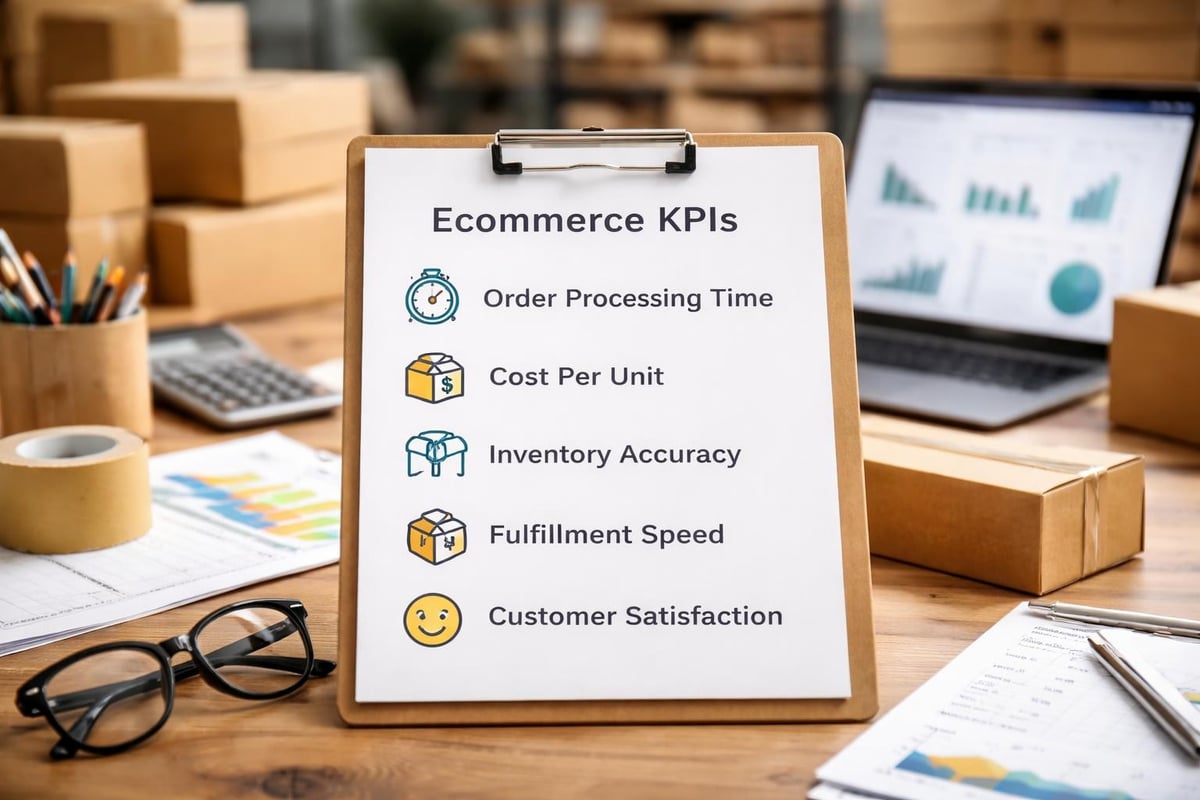
Understanding where your business stands requires tracking specific indicators beyond basic revenue figures. Order processing time, cost per order, error rates, and customer satisfaction scores all reveal whether your operations can handle increased demand.
Monitor these key performance indicators:
- Average order fulfillment time from purchase to shipment
- Cost per unit shipped as volume increases
- Inventory accuracy percentages
- Customer complaint rates related to fulfillment
- Return and refund percentages
These metrics provide early warning signals when your infrastructure approaches capacity limits. A sudden increase in processing time or cost per order suggests your current systems cannot efficiently handle higher volumes.
Infrastructure Challenges in Ecommerce Scaling
Technical infrastructure represents one of the most significant barriers to successful expansion. Hidden scalability roadblocks often emerge when businesses cobble together disconnected systems during early growth phases.
E-commerce platforms, inventory management systems, shipping software, and accounting tools frequently operate in isolation. Manual data transfer between these systems creates inefficiencies that compound as order volume increases. What takes 30 minutes daily with 50 orders becomes an eight-hour task with 500 orders.
Technology Stack Integration
Building an integrated technology ecosystem should be a priority before scaling efforts intensify. Modern e-commerce operations require seamless data flow between platforms to maintain accuracy and efficiency.
| System Component | Scalability Requirement | Risk of Poor Integration |
|---|---|---|
| E-commerce Platform | Handle traffic spikes without crashes | Lost sales during peak periods |
| Inventory Management | Real-time stock updates across channels | Overselling and customer disappointment |
| Warehouse Management | Automated pick, pack, ship workflows | Processing delays and errors |
| Shipping Software | Rate shopping and label automation | Excessive shipping costs |
| Customer Service | Order visibility and status tracking | Support ticket overload |
The right integrations eliminate data entry redundancy and reduce human error. When a customer places an order, the information should automatically flow to your warehouse management system, update inventory counts across all sales channels, generate shipping labels, and trigger customer notifications without manual intervention.
Many growing brands discover that challenges in scaling operations stem from attempting to manage disconnected systems manually. As volume increases, the probability of errors multiplies exponentially.
Fulfillment Operations and Ecommerce Scaling
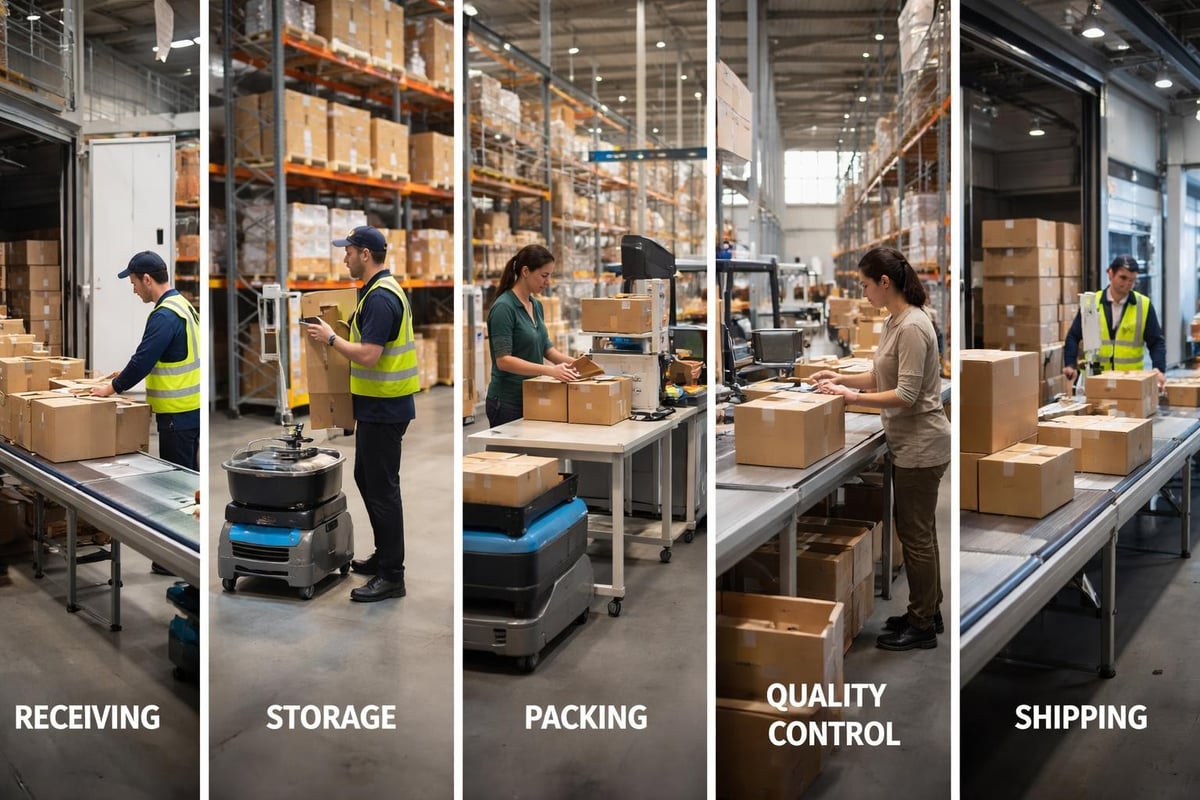
Fulfillment represents the physical manifestation of your ecommerce scaling efforts. Unlike digital systems that can scale with server capacity, warehouse operations involve physical space, equipment, and labor that require strategic planning.
The decision between self-fulfillment and partnering with specialized providers significantly impacts your scaling trajectory. Self-fulfillment offers complete control but demands substantial capital investment in space, equipment, and personnel. Third-party fulfillment provides flexibility and expertise but requires relinquishing some direct oversight.
Warehouse Capacity Planning
Effective warehouse operations balance current needs with future growth potential. Underestimating space requirements leads to cramped conditions that slow processing, while overcommitting to excessive space inflates fixed costs.
Consider these capacity factors:
- Peak season multipliers – Calculate your highest volume months and plan for 20-30% above those levels
- SKU proliferation – Product line expansion requires additional storage configurations
- Value-added services – Kitting, bundling, and customization need dedicated workspace
- Returns processing – Allocate space for inspection, repackaging, and restocking
- Receiving capacity – Inbound shipment processing cannot bottleneck operations
Working with an e-commerce distribution center that offers scalable space allows brands to expand capacity as needed rather than committing to long-term leases for space they cannot yet utilize.
Labor and Training Considerations
Staffing represents one of the most challenging aspects of ecommerce scaling. Finding, training, and retaining quality warehouse personnel becomes increasingly difficult during rapid growth phases. High turnover rates compound these challenges, creating constant training cycles that impact efficiency.
Many businesses underestimate the time required to bring new fulfillment staff to full productivity. While basic picking and packing can be learned quickly, understanding product nuances, handling exceptions, and maintaining quality standards require weeks or months of experience.
Partnering with fulfillment services eliminates these concerns by leveraging teams already trained in best practices. These providers maintain staffing levels appropriate for fluctuating demand, scaling up during peak seasons without requiring your direct involvement in hiring and management.
Cost Management During Growth
Financial planning for ecommerce scaling extends beyond simply projecting higher revenues. Understanding how costs scale with volume helps maintain profitability during expansion phases.
Some costs scale linearly with volume. Packaging materials, shipping expenses, and payment processing fees increase proportionally with order count. Other costs, like warehouse rent and management salaries, remain relatively fixed regardless of volume increases.
The key to profitable scaling lies in maximizing the ratio between variable and fixed costs. As volume increases, fixed costs get distributed across more units, reducing the cost per order.
Shipping Cost Optimization
Shipping represents one of the largest variable expenses in e-commerce operations. Small brands often pay premium rates due to limited negotiating power with carriers. As volume increases, lower shipping rates become accessible through tiered pricing structures.
However, achieving these rates requires consistently hitting volume thresholds. Many growing brands find themselves in an awkward middle ground where their volume exceeds small business pricing but falls short of enterprise negotiation power.
Fulfillment partners aggregate volume across multiple clients, providing access to discounted shipping rates that individual brands cannot obtain independently. This advantage alone can offset fulfillment service fees while improving delivery speed through access to better carrier services.
Shipping optimization strategies include:
- Zone-based distribution to minimize distance to customers
- Dimensional weight optimization through efficient packaging
- Carrier diversification to leverage competitive rates
- Technology-enabled rate shopping for every shipment
Technology Partnerships for Scaling
Ecommerce scaling challenges often require technical partners who specialize in specific aspects of growth. Rather than building every capability internally, successful brands identify where partnerships create greater value than in-house development.
Platform performance under load represents a common technical challenge. An e-commerce site that performs well with 1,000 daily visitors may crash when traffic spikes to 10,000 during promotional periods. Upgrading server infrastructure, implementing content delivery networks, and optimizing database queries require specialized expertise.
Marketplace Expansion Considerations
Many brands pursue ecommerce scaling through marketplace expansion, adding sales channels beyond their direct-to-consumer website. Amazon, eBay, Walmart Marketplace, and other platforms offer access to massive customer bases but introduce operational complexity.
Each marketplace has unique requirements for product listing, fulfillment, and customer service. Managing inventory across multiple channels without overselling requires sophisticated systems that synchronize stock levels in real-time.
Amazon FBA prep services become particularly valuable when expanding into this marketplace. Understanding packaging requirements, labeling specifications, and shipping protocols prevents costly rejections and delays. Specialized prep ensures products arrive at Amazon fulfillment centers ready for immediate availability.
Process Optimization and Standardization
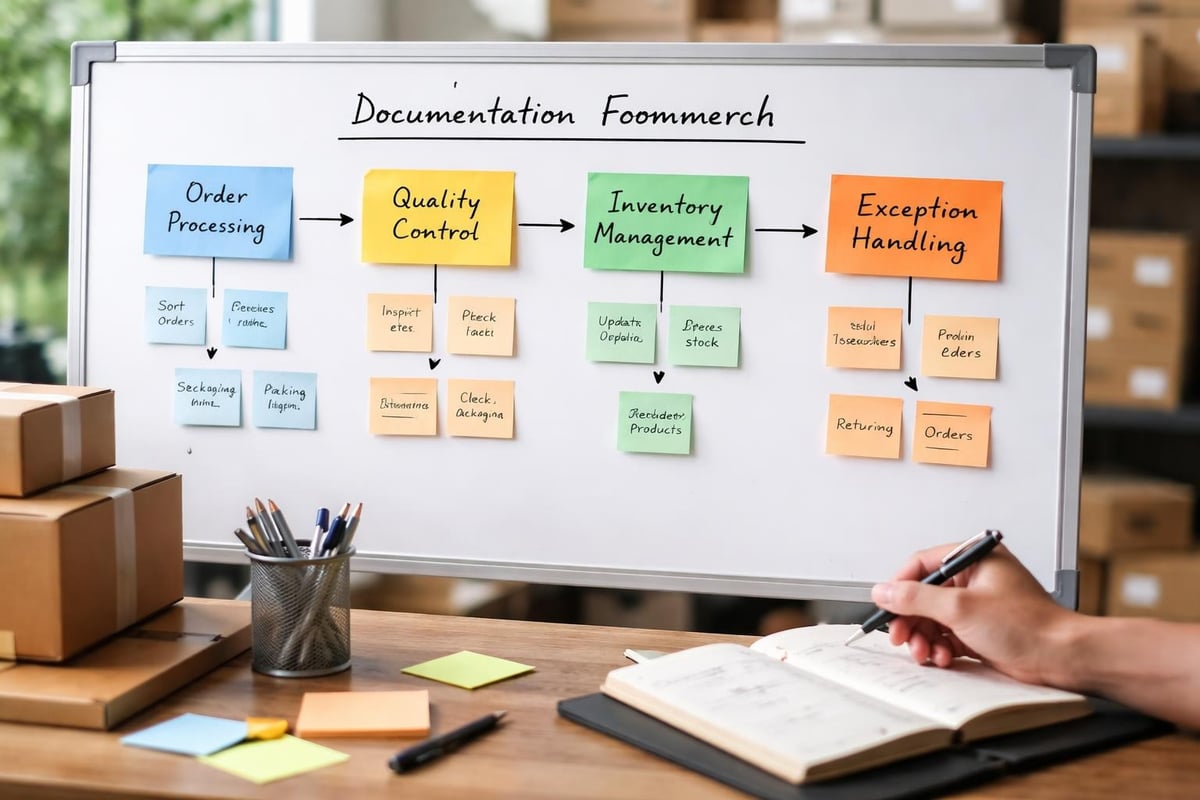
Sustainable ecommerce scaling requires documented, repeatable processes that maintain consistency as teams expand. When operations exist only in the minds of a few key employees, growth becomes constrained by their availability and knowledge transfer becomes a perpetual challenge.
Operational bottlenecks emerge when ad-hoc problem-solving replaces standardized procedures. What works for handling exceptions with 50 daily orders creates chaos with 500 orders if every situation requires custom decision-making.
Standard operating procedures should cover:
- Order processing workflows from receipt to shipment
- Quality control checkpoints and standards
- Exception handling for common scenarios
- Returns and refund procedures
- Inventory receiving and putaway processes
- Customer communication protocols
These documented processes enable training new team members efficiently while maintaining quality standards. They also facilitate continuous improvement by providing baselines for measuring process enhancements.
Quality Control at Scale
Maintaining quality as volume increases challenges even well-established brands. The error rate percentage may remain constant, but the absolute number of mistakes grows proportionally. A 2% error rate with 100 daily orders means two mistakes daily, but that same percentage with 1,000 orders creates 20 daily problems.
Implementing systematic quality checkpoints throughout fulfillment operations catches errors before they reach customers. Random sampling inspections, barcode scanning verification, and weight validation systems reduce mistakes while maintaining processing speed.
Technology enables quality control at scale through automated verification. Modern warehouse management systems can flag anomalies like incorrect product weights, missing items, or wrong shipping addresses before boxes leave the facility.
Inventory Management and Forecasting
Effective inventory management becomes exponentially more complex during ecommerce scaling. Stock-outs lose sales and damage customer relationships, while excess inventory ties up capital and increases storage costs.
Demand forecasting requires analyzing historical sales patterns while accounting for seasonal fluctuations, promotional impacts, and market trends. Simple spreadsheet-based inventory tracking fails when managing dozens or hundreds of SKUs across multiple channels.
Multi-channel Inventory Synchronization
Selling across multiple platforms without sophisticated inventory management creates overselling risks. When the same product listing appears on your website, Amazon, and eBay, selling the last unit through one channel while the others still show availability creates fulfillment nightmares.
Real-time inventory synchronization prevents overselling by updating stock levels across all channels immediately when sales occur. This capability requires integrated systems that communicate constantly, adjusting availability based on actual warehouse inventory.
Kitting and bundling operations add another layer of complexity to inventory management. When you offer bundled products, the system must reserve individual component inventory and update both the bundle and individual item availability correctly.
Customer Experience During Rapid Growth
Scaling operations should enhance rather than compromise customer experience. Faster fulfillment, expanded product selection, and improved service capabilities represent positive outcomes of successful scaling.
However, many brands experience customer service degradation during rapid growth phases. Overwhelmed support teams, longer response times, and fulfillment errors damage the reputation built during earlier stages.
Maintaining customer satisfaction requires scaling support infrastructure proportionally with order volume. What are fulfillment services often includes customer service components that handle order tracking, return processing, and basic inquiries, freeing your core team to focus on complex issues and relationship building.
Customer experience priorities during scaling:
- Maintain or improve order fulfillment speed
- Provide accurate order tracking and proactive updates
- Streamline returns and exchange processes
- Preserve packaging quality and presentation
- Ensure consistent product availability
Strategic Planning for Long-term Scalability
Sustainable ecommerce scaling requires looking beyond immediate growth to build foundations for future expansion. Decisions made during rapid growth phases impact your business for years, making strategic planning essential.
Technology choices, fulfillment partnerships, and operational processes should accommodate not just your next growth phase but several stages beyond. Migrating platforms, changing fulfillment providers, or overhauling processes becomes increasingly difficult and disruptive as your business grows.
Building Flexibility Into Operations
The most successful scaling strategies build flexibility that accommodates various growth scenarios. Rather than optimizing exclusively for one anticipated outcome, create systems that adapt to different trajectories.
| Growth Scenario | Operational Requirement | Flexibility Strategy |
|---|---|---|
| Rapid seasonal spikes | Variable warehouse capacity | Partner with scalable fulfillment services |
| Product line expansion | Additional storage configurations | Modular warehouse design or flexible 3PL |
| Geographic expansion | Regional distribution capabilities | Multi-location fulfillment network |
| New sales channels | Platform-agnostic systems | API-driven integrations |
| International growth | Cross-border logistics expertise | Partners with global capabilities |
This flexibility prevents being locked into rigid infrastructure that cannot adapt to market changes or new opportunities. The e-commerce landscape evolves rapidly, and businesses must maintain agility to capitalize on emerging trends.
Understanding ecommerce tips from industry experts helps identify best practices that support flexible, scalable operations rather than creating constraints that limit future options.
Successful ecommerce scaling balances growth ambition with operational excellence, building infrastructure that supports expansion without compromising quality or profitability. The strategies outlined here provide a framework for sustainable growth, from technology integration and fulfillment optimization to inventory management and customer experience preservation. When you’re ready to scale your fulfillment operations with a partner that understands the complexities of rapid growth, Ecom Automation Prep offers the comprehensive solutions and expertise needed to support your expansion journey.