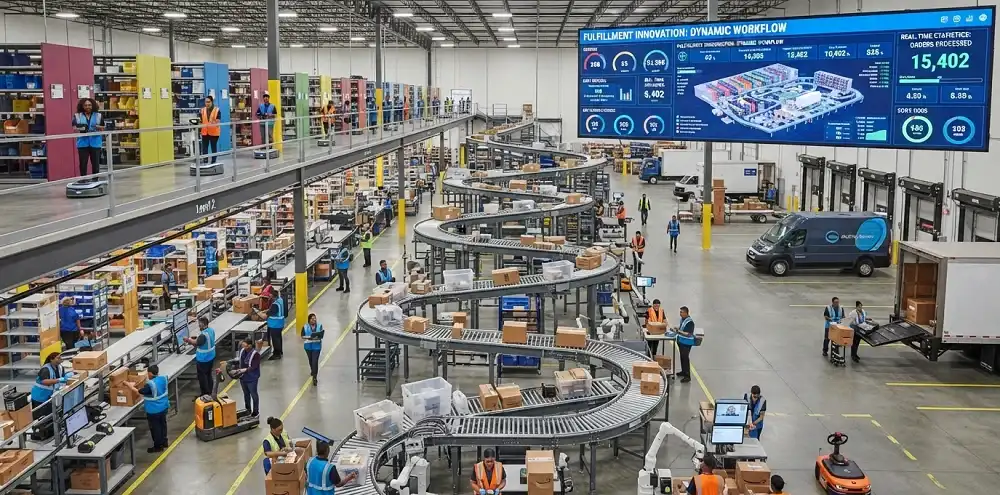

Modern e-commerce businesses face unprecedented pressure to deliver products quickly, accurately, and cost-effectively. Center fulfillment has emerged as the backbone of successful online retail operations, enabling brands to scale without compromising service quality. Understanding how fulfillment centers operate and optimize their processes is essential for any growing e-commerce brand looking to compete in today’s fast-paced marketplace. This comprehensive guide explores the critical components of center fulfillment and how strategic implementation can transform your business operations.
Understanding Center Fulfillment Infrastructure
Center fulfillment refers to the systematic process of receiving, storing, picking, packing, and shipping products from a centralized warehouse facility. These operations serve as the critical link between your inventory and your customers.
The physical layout of a fulfillment center directly impacts operational efficiency. Strategic zone planning separates receiving areas from storage sections, while dedicated packing stations minimize bottlenecks during peak order periods. Modern facilities incorporate vertical storage solutions to maximize space utilization and reduce the physical distance workers travel when picking orders.
Key Components of Effective Center Operations
Inventory management systems form the foundation of successful center fulfillment. Real-time tracking ensures accurate stock counts, prevents overselling, and enables data-driven reordering decisions. Barcode scanning and RFID technology have become standard tools for maintaining inventory accuracy above 99%.
Essential operational zones include:
- Receiving docks for incoming shipments and quality inspection
- Storage areas organized by product velocity and size
- Picking zones optimized for order consolidation
- Packing stations equipped with materials and shipping supplies
- Staging areas for carrier pickup and last-mile delivery coordination
The integration of warehouse management systems (WMS) connects these zones into a cohesive operation. Optimizing fulfillment center efficiency requires continuous monitoring of key performance indicators and process refinement based on actual data.

Automation Technologies Reshaping Center Fulfillment
Technology adoption has accelerated dramatically across fulfillment operations. Automation now handles repetitive tasks with greater speed and accuracy than manual processes, allowing human workers to focus on complex problem-solving and quality control.
Robotics and Material Handling Systems
Automated guided vehicles (AGVs) transport inventory between zones without human intervention. These systems reduce labor costs while increasing throughput capacity during demand spikes. Robotic picking arms equipped with computer vision can identify and grasp products of varying sizes and shapes, though many facilities still rely on human workers for items requiring delicate handling.
Conveyor systems create continuous product flow from receiving to shipping. Modern sortation equipment uses weight sensors, barcode scanners, and destination algorithms to route packages accurately. Emerging e-commerce fulfillment trends indicate that automation investments will continue growing as labor shortages persist and customer expectations for faster delivery intensify.
| Technology Type | Primary Benefit | Implementation Cost | ROI Timeline |
|---|---|---|---|
| Warehouse Management System | Inventory accuracy | Moderate | 12-18 months |
| Automated Conveyors | Throughput increase | High | 18-24 months |
| Robotic Picking | Labor reduction | Very High | 24-36 months |
| Barcode Scanning | Error reduction | Low | 3-6 months |
Software Integration and Order Management
Center fulfillment efficiency depends on seamless data exchange between e-commerce platforms, inventory systems, and shipping carriers. Application programming interfaces (APIs) enable real-time synchronization, ensuring customers receive accurate availability information and tracking updates.
Order management platforms consolidate sales from multiple channels into a single processing queue. This prevents inventory conflicts when selling through Amazon, Shopify, and other marketplaces simultaneously. Advanced algorithms determine optimal picking routes and packing methods to minimize shipping costs while meeting delivery timeframes.
Operational Strategies for Maximum Efficiency
Strategic planning separates high-performing fulfillment operations from those struggling with errors and delays. Process optimization requires analyzing every touchpoint in the order lifecycle and eliminating unnecessary steps.
Slotting Optimization and Inventory Placement
Product placement within storage areas dramatically affects picking speed. High-velocity items should occupy easily accessible locations near packing stations, while slow-moving inventory can be stored in less convenient zones. Understanding distribution center processes reveals how strategic slotting reduces travel time by up to 40%.
ABC analysis categorizes inventory based on sales frequency:
- A-items represent 20% of SKUs generating 80% of orders
- B-items constitute 30% of SKUs with moderate turnover
- C-items comprise 50% of SKUs with infrequent movement
Regular slotting reviews ensure product locations adapt to changing demand patterns. Seasonal merchandise requires temporary repositioning before peak selling periods, then returns to standard locations once the season ends.
Quality Control and Error Prevention
Accuracy metrics directly impact customer satisfaction and return rates. Multi-point verification systems catch mistakes before packages leave the facility. Scan verification during picking confirms the correct item was selected, while weight checks at packing stations identify missing or extra products.
Center fulfillment operations should implement:
- Photo documentation for high-value items
- Barcode matching at every transfer point
- Random audits of completed orders
- Root cause analysis for recurring errors
- Continuous training programs for warehouse staff
Error rates below 0.5% are achievable with proper systems and accountability. Many operations find that investing in quality control saves more money than it costs by reducing returns, chargebacks, and negative reviews.

Scaling Center Fulfillment for Growing Brands
Business growth presents both opportunities and challenges for fulfillment operations. Capacity planning must anticipate future needs while maintaining flexibility to adjust for market changes.
Capacity Management and Peak Season Preparation
Volume fluctuations strain unprepared facilities. Historical sales data reveals patterns that inform staffing decisions and inventory positioning. Most e-commerce brands experience significant spikes during November and December, requiring temporary labor increases and extended operating hours.
Effective capacity strategies include:
- Cross-training employees for multiple roles
- Establishing relationships with temporary staffing agencies
- Implementing flexible shift schedules
- Pre-positioning inventory based on forecasts
- Securing backup space for overflow storage
Direct-to-consumer fulfillment demands particularly responsive operations since consumers expect fast shipping regardless of order timing. Building buffer capacity prevents service degradation during unexpected demand surges.
Geographic Expansion and Multi-Center Networks
Single-location fulfillment limits delivery speed and increases shipping costs for distant customers. Strategic expansion to multiple centers reduces transit times and enables zone-skipping strategies that bypass intermediate carrier hubs.
| Network Configuration | Shipping Cost Impact | Delivery Speed | Complexity Level |
|---|---|---|---|
| Single Center | Baseline | 3-5 days average | Low |
| East/West Centers | 15-25% reduction | 2-3 days average | Medium |
| Regional Network (4+) | 30-40% reduction | 1-2 days average | High |
Geographic distribution brings inventory management challenges. Stock must be allocated across locations based on regional demand patterns, requiring sophisticated forecasting and transfer logistics. Future fulfillment trends suggest that hyperlocal micro-fulfillment centers will become increasingly common as same-day delivery expectations grow.
Technology Selection and Implementation
Choosing appropriate technology requires balancing current needs against future scalability. Over-investing in complex systems burdens small operations, while under-investing limits growth potential.
Evaluating Warehouse Management Systems
WMS platforms vary dramatically in capabilities and cost structures. Basic systems handle inventory tracking and order processing, while enterprise solutions offer advanced features like labor management, yard management, and predictive analytics.
Selection criteria should include:
- Integration capabilities with existing platforms
- Scalability to accommodate growth
- User interface simplicity for warehouse staff
- Vendor support and training resources
- Total cost of ownership including licensing and maintenance
Implementation timelines typically range from three to twelve months depending on complexity. Phased rollouts minimize disruption by testing new systems in controlled environments before full deployment.
Data Analytics and Performance Monitoring
Center fulfillment generates massive amounts of operational data. Analytics platforms transform raw information into actionable insights about productivity, accuracy, and cost drivers. Dashboard visualization makes complex metrics accessible to managers who need real-time awareness of facility performance.
Key performance indicators to monitor include:
- Orders per labor hour measuring workforce productivity
- Perfect order percentage tracking overall accuracy
- Inventory turnover rate indicating stock health
- Dock-to-stock time assessing receiving efficiency
- Cost per order revealing profitability trends
Regular performance reviews identify improvement opportunities and validate the impact of process changes. Warehouse trends shaping fulfillment emphasize data-driven decision making as essential for competitive operations.

Specialized Services and Value-Added Operations
Modern center fulfillment extends beyond basic pick-and-pack services. Value-added offerings differentiate service providers and enable brands to outsource complex preparation tasks.
Kitting and Bundling Capabilities
Product bundling creates new SKUs by combining multiple items into single packages. This service requires dedicated assembly space and quality control procedures to ensure correct component inclusion. Seasonal gift sets, subscription boxes, and promotional bundles all benefit from professional kitting services.
Assembly operations demand careful workflow design. Component staging areas prevent picking errors, while assembly line configurations increase throughput for high-volume bundles. Documentation with visual guides ensures consistency across different workers and shifts.
Amazon FBA Prep and Marketplace Compliance
Selling through Amazon requires strict adherence to fulfillment by Amazon (FBA) preparation standards. Non-compliant shipments face rejection or additional fees that erode profit margins. Professional FBA prep services handle labeling, poly-bagging, bubble wrapping, and case pack configurations according to current Amazon requirements.
Marketplace-specific preparation includes:
- FNSKU label application and placement
- Suffocation warning labels for poly bags
- Expiration date stickers for perishable items
- Box content labels for case packs
- Dimensional weight optimization
Staying current with changing marketplace requirements prevents costly compliance issues. Amazon updates policies frequently, making it challenging for brands to maintain internal expertise across all preparation categories.
Partnership Considerations and Outsourcing Decisions
Many e-commerce brands face the build-versus-buy decision regarding fulfillment capabilities. Operating proprietary centers provides maximum control but requires substantial capital investment and operational expertise.
Evaluating Third-Party Logistics Providers
Third-party logistics (3PL) partnerships allow brands to access professional center fulfillment without facility ownership responsibilities. Provider selection should consider location coverage, technology capabilities, pricing transparency, and customer service responsiveness.
Critical evaluation factors include:
- Minimum volume requirements that align with current scale
- Pricing structure covering storage, handling, and additional services
- Technology integration supporting your e-commerce platform
- Geographic footprint reaching your customer base efficiently
- Specialization in your product category and requirements
Comparing fulfillment service options helps brands understand which partnership model best supports their growth trajectory. Some companies benefit from hybrid approaches that combine internal operations for certain products with outsourced fulfillment for others.
Service Level Agreements and Performance Guarantees
Formal agreements establish expectations and accountability metrics. SLAs should define accuracy thresholds, processing timeframes, and escalation procedures for issues. Performance guarantees with financial penalties ensure providers maintain service quality.
| SLA Component | Typical Standard | Measurement Method |
|---|---|---|
| Order Accuracy | 99.5% minimum | Weekly audit samples |
| Same-Day Shipment | Orders by 2 PM | System timestamps |
| Inventory Accuracy | 99% minimum | Monthly cycle counts |
| Damage Rate | Below 0.5% | Customer return data |
Regular business reviews maintain alignment between brands and fulfillment partners. Quarterly meetings should examine performance trends, discuss growth plans, and address operational challenges before they impact customer experience.
Sustainability and Environmental Considerations
Environmental responsibility has become a competitive differentiator in e-commerce. Center fulfillment operations significantly impact carbon footprints through packaging waste, energy consumption, and transportation emissions.
Packaging Optimization Strategies
Right-sized packaging reduces material waste and shipping costs simultaneously. Dimensional weight pricing from carriers penalizes oversized boxes, making efficient packing financially beneficial. Fulfillment industry trends indicate growing consumer preference for brands demonstrating environmental stewardship.
Sustainable packaging initiatives include:
- Eliminating unnecessary void fill materials
- Switching to recyclable or compostable materials
- Implementing automated box sizing systems
- Offering frustration-free packaging options
- Consolidating multi-item orders into single shipments
Energy-efficient facilities reduce operational costs while supporting sustainability goals. LED lighting, solar panels, and climate control optimization lower electricity consumption. Some operations pursue LEED certification or carbon-neutral status to appeal to environmentally conscious consumers.
Cost Management and Financial Optimization
Center fulfillment expenses significantly impact e-commerce profitability. Understanding cost drivers enables strategic decisions about service levels and operational investments.
Analyzing Total Fulfillment Costs
Complete cost assessment includes storage fees, labor expenses, packaging materials, shipping charges, and technology systems. Hidden costs like returns processing and damaged inventory replacement often surprise brands new to detailed financial analysis.
Cost per order provides the clearest profitability metric. This figure encompasses all expenses divided by total orders fulfilled during the period. Tracking this metric over time reveals whether operational improvements are reducing costs or simply maintaining pace with volume growth.
Expense reduction strategies worth exploring:
- Negotiating carrier contracts based on volume commitments
- Optimizing inventory levels to minimize storage fees
- Automating repetitive tasks to reduce labor requirements
- Consolidating shipments when customers order multiple items
- Analyzing returns data to address root causes of product returns
Lower shipping rates through strategic carrier partnerships and zone optimization represent one of the fastest ways to improve fulfillment economics. Small percentage reductions in shipping costs compound significantly across thousands of monthly orders.
Labor Management and Workforce Development
Human capital remains essential despite increasing automation. Skilled workers handle exceptions, maintain equipment, and provide the flexibility that rigid automated systems lack.
Recruiting and Retention Strategies
Warehouse labor markets have tightened considerably, making employee retention critical for operational stability. Competitive wages, benefits packages, and career development opportunities reduce turnover rates that disrupt center fulfillment consistency.
Effective workforce strategies include:
- Performance-based incentive programs
- Clear advancement paths from entry-level to management
- Cross-training programs that increase job variety
- Ergonomic workstation design reducing injury risk
- Recognition programs celebrating exceptional performance
Training investments pay dividends through improved accuracy and productivity. Comprehensive onboarding programs familiarize new employees with systems and procedures, while ongoing education keeps teams current with process improvements and technology updates.
Safety Programs and Compliance
Warehouse environments present injury risks from heavy lifting, equipment operation, and repetitive motions. Robust safety programs protect workers while reducing workers’ compensation costs and regulatory penalties.
OSHA compliance requires attention to material handling procedures, equipment maintenance, emergency preparedness, and hazard communication. Regular safety audits identify risks before they result in incidents. Many operations find that safety culture improvements simultaneously boost morale and productivity.
Strategic center fulfillment operations provide the foundation for sustainable e-commerce growth, combining technology, process excellence, and human expertise to deliver exceptional customer experiences. Whether you’re managing internal operations or seeking a fulfillment partner, understanding these core principles enables informed decisions that scale with your business. Ecom Automation Prep delivers comprehensive e-fulfillment solutions designed specifically for fast-growing brands, handling everything from Amazon FBA prep to direct-to-consumer shipping so you can focus on growing your business. Contact us today to discover how our scalable fulfillment services can eliminate operational headaches and accelerate your growth.