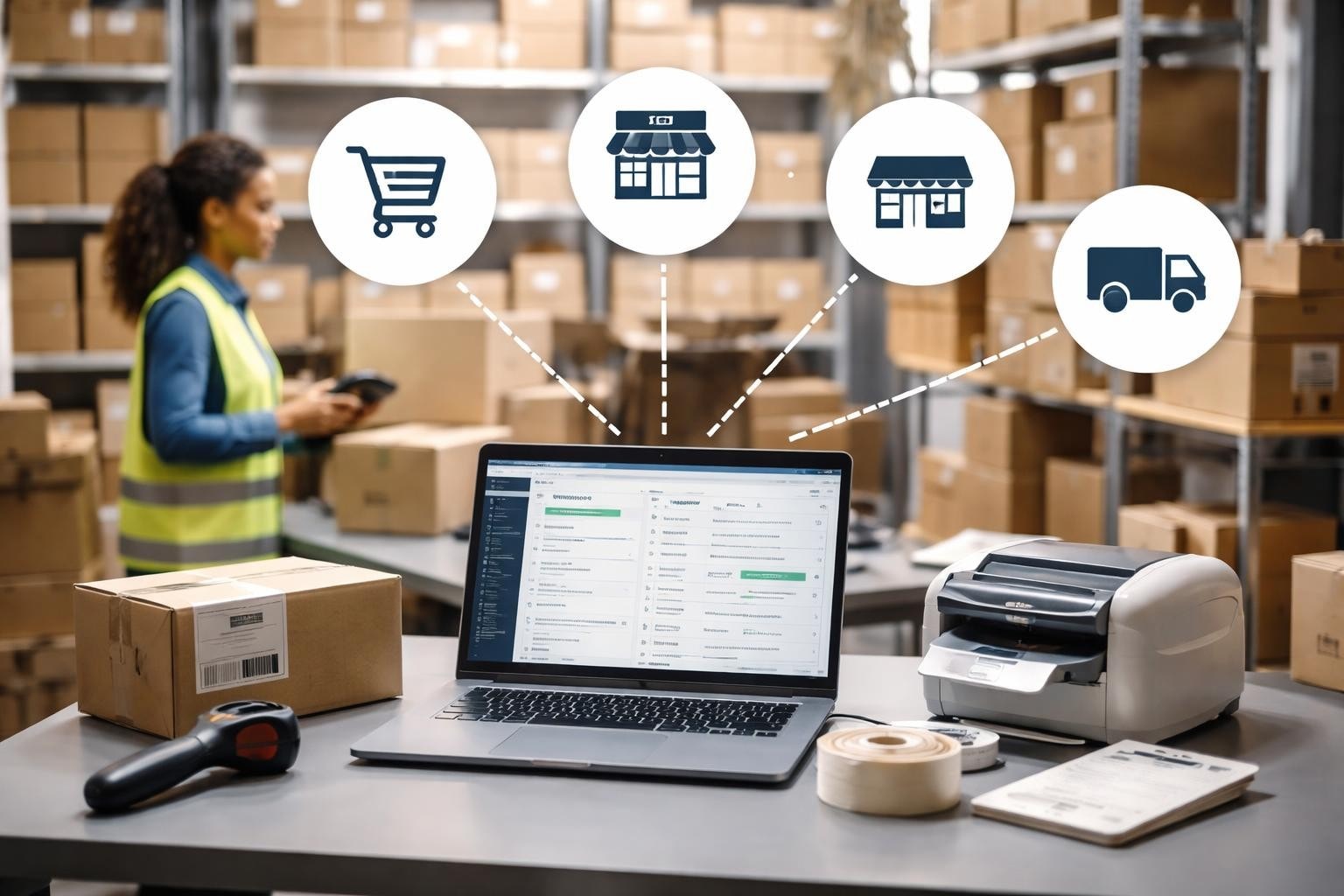

Business-to-business fulfillment represents a fundamentally different operational model compared to direct-to-consumer shipping, yet many e-commerce brands struggle to adapt when expanding into wholesale channels. Unlike individual consumer orders that prioritize speed and personalization, b2b fulfillment demands precision in bulk shipments, strict compliance with retailer requirements, and sophisticated inventory allocation strategies. As online brands mature and pursue retail partnerships, understanding these operational complexities becomes critical to maintaining margins and building sustainable wholesale relationships. The stakes are high: a single compliance violation can result in costly chargebacks, while inefficient processes can erode the profitability that makes wholesale channels attractive in the first place.
Understanding B2B Fulfillment Requirements
The transition from consumer-focused shipping to business fulfillment requires significant operational adjustments. Retailers expect specific packaging standards, labeling protocols, and delivery windows that differ dramatically from consumer expectations.
Compliance demands form the foundation of successful b2b fulfillment operations. Major retailers maintain detailed routing guides that specify everything from carton labeling to pallet configuration. These requirements aren’t suggestions-they’re contractual obligations that carry financial penalties when violated.
Key Differences from D2C Operations
Traditional direct-to-consumer fulfillment focuses on individual orders, often shipped in branded packaging with marketing inserts and personalized touches. B2B fulfillment centers on efficiency, standardization, and meeting exact specifications.
- Order volumes typically range from dozens to thousands of units per shipment
- Packaging must meet specific retailer standards for dimensions and labeling
- Delivery windows are narrow and strictly enforced
- Returns and reverse logistics follow different protocols
- Invoice accuracy affects payment terms and vendor relationships
The challenges in B2B logistics extend beyond simple volume differences. Brands must navigate EDI integration, advance ship notices, and multi-tier distribution networks that add layers of complexity to standard fulfillment workflows.

Retailer Routing Guides and Compliance
Every major retailer publishes routing guides that function as operating manuals for their vendors. These documents outline precise requirements for order processing, packaging, labeling, and shipping.
Common routing guide requirements include:
- GS1-128 barcode labels with specific data elements in prescribed positions
- Carton content labeling that identifies SKUs and quantities without opening boxes
- Pallet specifications including maximum height, weight limits, and wrapping standards
- Delivery appointment scheduling through specific systems or portals
- Advance ship notice transmission via EDI before shipment departure
Understanding retailer routing guides and regulatory compliance prevents chargebacks that can exceed the profit margin on entire orders. Many brands discover these requirements after signing contracts, leading to scrambled operational adjustments.
Inventory Management for Wholesale Channels
Effective inventory allocation separates successful b2b fulfillment operations from those that consistently disappoint retail partners. Brands must balance stock between consumer channels, wholesale commitments, and safety reserves.
Strategic Inventory Allocation
The fundamental challenge involves reserving adequate inventory for large wholesale orders while maintaining availability for direct sales. Poor allocation leads to stockouts that damage retail relationships or diverted inventory that cannibalizes higher-margin consumer sales.
| Challenge | Impact | Solution |
|---|---|---|
| Overselling across channels | Order cancellations, damaged relationships | Real-time inventory synchronization |
| Underselling to retailers | Missed revenue, weakened partnerships | Forecasting based on purchase orders |
| Safety stock imbalances | Capital tied up or emergency expediting costs | Channel-specific reserve calculations |
Brands expanding into retail must implement inventory management systems that track commitments across channels. Many e-commerce platforms lack the sophistication to handle wholesale reservations alongside real-time consumer demand.
ERP Integration and Visibility
Enterprise resource planning systems become essential as b2b fulfillment scales beyond a few retail accounts. These platforms connect purchase orders, inventory levels, production schedules, and shipment tracking into unified workflows.
The importance of ERP integration cannot be overstated. Without centralized systems, brands rely on spreadsheets and manual updates that inevitably lead to errors, especially during peak seasons when wholesale orders compete with consumer demand spikes.
Modern ERP systems provide real-time visibility into inventory positions, automatically allocate stock based on channel priorities, and generate compliance documentation required by retail partners. This automation reduces errors while freeing operations teams to focus on strategic initiatives rather than data reconciliation.
Warehouse Operations for B2B Fulfillment
Physical warehouse design and workflows must adapt to accommodate both individual consumer orders and bulk wholesale shipments. This dual capability requires flexible layouts and cross-trained teams.
Batch Picking and Order Consolidation
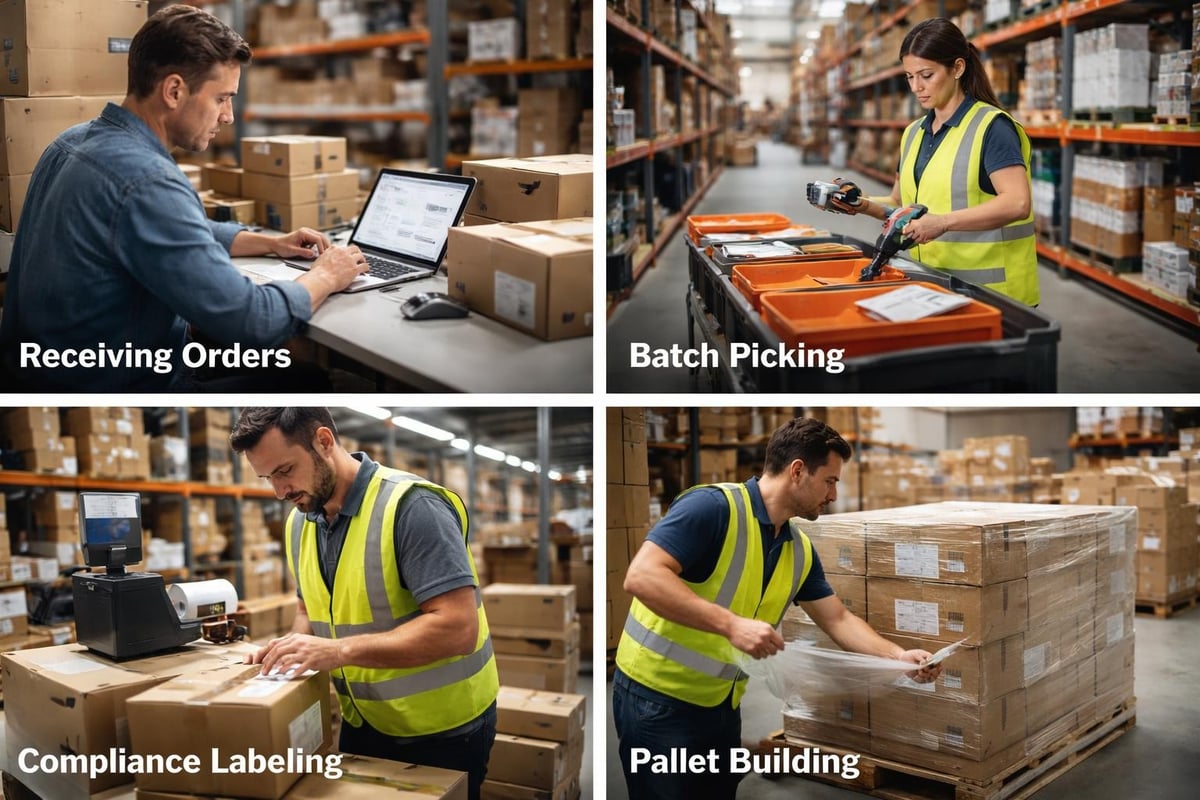
Unlike consumer orders where each item ships individually, wholesale orders benefit from batch picking strategies that improve efficiency. Workers gather multiple units of the same SKU simultaneously, then consolidate them according to retailer specifications.
Batch picking advantages for b2b fulfillment include:
- Reduced warehouse travel time by minimizing trips between locations
- Improved picking accuracy through focused, repetitive tasks
- Enhanced packing efficiency when building retailer-compliant cartons
- Better labor utilization during mixed consumer and wholesale order periods
The best practices for B2B e-commerce fulfillment emphasize zone-based picking for high-volume wholesale accounts. This approach dedicates specific warehouse areas to frequently ordered SKUs, further reducing fulfillment time.
Kitting and Bundling Capabilities
Retailers often request custom configurations that differ from standard consumer packaging. Brands might sell individual bottles to consumers but ship retailer-specific six-packs or promotional bundles to wholesale accounts.
These value-added services require dedicated workspace and specialized processes. Teams must track multiple SKU configurations, apply retailer-specific labels, and maintain quality control across various bundle types. Companies offering comprehensive fulfillment services typically maintain separate kitting areas equipped for assembly work.
Building bundles in-house provides flexibility to respond quickly to retailer requests without lengthy lead times from contract manufacturers. This agility becomes competitive advantage when retailers test new promotions or regional assortments.
Technology Solutions Driving Efficiency
Manual processes collapse under the complexity of modern b2b fulfillment requirements. Technology platforms automate compliance verification, route optimization, and documentation generation that would otherwise consume excessive staff time.
Warehouse Management Systems
Advanced warehouse management systems (WMS) coordinate physical operations with digital requirements. These platforms direct picking paths, verify compliance before shipping, and generate required documentation automatically.
Essential WMS capabilities for wholesale operations include:
- EDI integration for automated purchase order receipt and processing
- Label generation that matches retailer routing guide specifications
- Shipment verification confirming carton contents against orders
- Carrier integration for compliant transportation booking
- Performance tracking measuring on-time, in-full delivery rates
Investment in robust WMS technology pays dividends through reduced chargebacks and improved vendor scorecards. Retailers track supplier performance metrics closely, and consistent execution leads to increased purchase orders and better shelf placement.
AI and Predictive Analytics
Artificial intelligence transforms b2b fulfillment from reactive order processing to proactive demand management. Machine learning algorithms analyze historical patterns, seasonal trends, and promotional calendars to forecast wholesale requirements.
Technology revolutionizing B2B fulfillment includes predictive analytics that recommend inventory prepositioning based on retailer buying patterns. Brands can strategically allocate stock to regional warehouses before purchase orders arrive, compressing lead times and improving in-stock rates.
These systems also optimize labor scheduling by predicting peak wholesale shipping periods. Operations managers can adjust staffing levels proactively rather than scrambling to fill last-minute capacity gaps during critical shipping windows.
Transportation and Last-Mile Logistics
Getting products to retail distribution centers requires different transportation strategies than home delivery. Wholesale shipments typically move via less-than-truckload (LTL) or full truckload carriers with specific delivery protocols.
Freight Management Strategies
Retailers specify approved carrier lists and delivery window requirements that constrain transportation options. Some accounts require delivery appointments scheduled days in advance, while others accept shipments only during specific hours.
| Shipping Method | Typical Use Case | Key Considerations |
|---|---|---|
| LTL Freight | Orders of 2-6 pallets | Class rating, dimensional weight, liftgate requirements |
| Full Truckload | Orders exceeding 10 pallets | Consolidation opportunities, dedicated appointments |
| Small Parcel | Emergency replenishment | Higher per-unit costs, limited compliance options |
Effective freight management involves consolidating orders when possible to achieve truckload economics. The importance of distributed inventory strategy becomes apparent when brands can ship full trucks from regional locations rather than splitting small shipments from centralized facilities.
Regional Distribution Networks
National retail chains maintain distribution centers across the country, expecting vendors to deliver to multiple locations. Brands operating from single warehouses face expensive transportation costs and longer transit times that complicate compliance with tight delivery windows.
Regional fulfillment networks position inventory closer to retail distribution hubs. This approach to streamlining last-mile logistics reduces freight costs while improving delivery reliability-two factors that directly impact vendor scorecards and future purchase order volumes.

Returns and Reverse Logistics
Wholesale returns follow different protocols than consumer returns, involving larger volumes and specific processing requirements. Retailers typically consolidate defective or unsold products before returning them to vendors.
Managing B2B Returns Processing
Return merchandise authorizations (RMAs) govern the wholesale returns process. Retailers issue RMAs documenting return reasons, quantities, and expected credits. Vendors must process these returns according to contractual terms that often favor the retailer.
Common return scenarios in b2b fulfillment include:
- Seasonal inventory returned after promotional periods end
- Damaged products identified during receiving at distribution centers
- Overstock from stores closing or regional assortment changes
- Defective items discovered during quality control inspections
Brands need systems to receive, inspect, and disposition returned inventory quickly. Delays in processing credits damage retail relationships and tie up working capital. Sophisticated reverse logistics solutions streamline inspection workflows and automate credit memo generation.
Quality Control and Restocking
Not all returned wholesale inventory qualifies for resale. Items returned in damaged packaging might sell as consumer returns or liquidation inventory, while products with quality issues require disposal or manufacturer returns.
Efficient b2b fulfillment operations maintain separate quality control processes for wholesale returns. Teams inspect returned products, categorize them by disposition, and update inventory systems to reflect available stock accurately. This attention to handling returns properly prevents selling defective products through other channels while maximizing recovery value.
Scaling B2B Operations Effectively
Growth in wholesale channels creates both opportunities and operational stress. Brands must scale infrastructure, technology, and teams to handle increasing order volumes without compromising execution quality.
Choosing 3PL Partners
Third-party logistics providers specializing in b2b fulfillment offer expertise and infrastructure that brands lack internally. These partners maintain established retailer relationships, compliance knowledge, and systems integration capabilities.
When evaluating B2B order fulfillment complexities as brands scale, consider whether internal operations can match specialized 3PL capabilities. The break-even point typically occurs when wholesale volume justifies dedicated warehouse space and staff but before brands can afford comprehensive WMS platforms and multi-location networks.
Quality 3PLs provide more than warehouse space-they offer strategic guidance on retailer requirements, compliance best practices, and technology integration. This partnership model allows brands to focus on product development and sales while leveraging fulfillment expertise.
Building Scalable Processes
Sustainable growth requires documenting standard operating procedures that teams can execute consistently regardless of volume fluctuations. Ad hoc processes that work for initial wholesale accounts collapse when managing dozens of retail relationships simultaneously.
Successful brands invest in:
- Detailed process documentation covering each retailer’s unique requirements
- Cross-training programs ensuring multiple team members understand critical workflows
- Performance metrics tracking on-time shipments, accuracy rates, and compliance scores
- Continuous improvement reviews identifying bottlenecks before they impact service levels
- Technology upgrades that automate repetitive tasks and reduce manual errors
The transition to scalable b2b fulfillment operations often requires cultural shifts. Teams accustomed to consumer-focused flexibility must embrace the standardization and documentation that wholesale excellence demands. This evolution positions brands for sustained growth across both direct and wholesale channels.
Mastering b2b fulfillment complexity separates e-commerce brands that successfully scale wholesale operations from those that struggle with compliance issues and eroded margins. By implementing robust inventory management, embracing specialized technology, and maintaining strict quality standards, brands position themselves as reliable retail partners worthy of expanded distribution. Ecom Automation Prep provides the comprehensive fulfillment infrastructure that growing e-commerce brands need to excel in both direct-to-consumer and wholesale channels, offering scalable solutions from Amazon FBA prep to sophisticated B2B distribution services.