
The e-commerce landscape has fundamentally changed how consumers shop, but with convenience comes an inevitable challenge: product returns. Understanding reverse logistics in e-commerce has become essential for brands seeking sustainable growth in 2026. Unlike traditional forward logistics that moves products from manufacturers to consumers, reverse logistics manages the opposite flow, handling returns, exchanges, refurbishments, and disposal. For fast-growing e-commerce brands, mastering this process isn't just about accepting returns-it's about converting a potential cost center into a competitive advantage that builds customer loyalty and recovers value.
The Foundation of Reverse Logistics Systems
Reverse logistics encompasses every step that occurs after a customer decides to return a product. This complex system includes return authorization, product transportation, inspection, sorting, refurbishment, restocking, and disposal. The fundamental principles of reverse logistics have evolved significantly as e-commerce returns continue to surge, with industry data showing that online purchases generate return rates three to four times higher than brick-and-mortar stores.
Core Components of Effective Returns Management
Building a robust reverse logistics framework requires careful attention to multiple interconnected elements. Each component must work seamlessly to minimize costs while maintaining customer satisfaction.
Essential elements include:
- Return authorization and tracking systems
- Transportation and carrier coordination
- Receiving and inspection protocols
- Inventory disposition decision trees
- Refurbishment and repackaging capabilities
- Restocking and resale channels
- Recycling and disposal partnerships
The inspection phase deserves particular emphasis because it determines the ultimate fate of each returned item. Products might be restocked as new, sold as open-box items, refurbished and resold, recycled for parts, or disposed of entirely. Making these decisions quickly and accurately directly impacts profitability.

Financial Impact and Strategic Importance
The economics of reverse logistics in e-commerce extend far beyond simple return shipping costs. According to recent industry analysis, managing returns efficiently is crucial for e-commerce profitability, as the total cost of processing a return can range from 20% to 65% of the original product price when factoring in all associated expenses.
Breaking Down the True Cost of Returns
| Cost Category | Percentage Impact | Primary Drivers |
|---|---|---|
| Inbound Shipping | 15-25% | Carrier rates, distance, speed |
| Processing Labor | 20-35% | Inspection time, sorting, data entry |
| Restocking | 10-20% | Repackaging materials, quality checks |
| Inventory Depreciation | 25-40% | Time out of stock, condition loss |
| Customer Service | 5-15% | Support interactions, communication |
These figures reveal why reverse logistics in e-commerce demands strategic investment rather than reactive management. Brands that view returns as inevitable friction costs miss opportunities to optimize processes that directly affect their bottom line.
Converting Returns into Revenue Opportunities
Forward-thinking companies recognize that well-designed reverse logistics programs create value through multiple channels. Returned products in excellent condition can be restocked immediately, recovering full product value. Items with minor defects might be refurbished and sold through secondary markets. Even damaged goods contain components that can be harvested for parts or recycled responsibly.
Customer data gathered during returns provides invaluable insights. Patterns in return reasons expose product quality issues, misleading descriptions, or sizing inconsistencies that can be corrected. This feedback loop transforms returns from pure losses into actionable intelligence that improves future sales and reduces subsequent return rates.
Operational Excellence in Returns Processing
Executing reverse logistics in e-commerce effectively requires sophisticated operational capabilities that many brands struggle to develop internally. The complexity multiplies when managing multiple sales channels, product categories, and customer segments simultaneously.
Technology Infrastructure Requirements
Modern reverse logistics depends heavily on integrated technology platforms that coordinate activities across the entire returns journey. Return merchandise authorization (RMA) systems must connect with warehouse management software, inventory databases, customer relationship platforms, and financial systems to maintain real-time visibility.
Critical technology capabilities include:
- Automated return label generation and tracking
- Real-time inventory adjustment upon receipt
- Mobile inspection tools for warehouse staff
- Disposition routing based on product condition
- Customer portal for return status updates
- Analytics dashboards for performance monitoring
The strategic implementation of reverse logistics technologies enables brands to scale operations without proportional increases in labor costs. Automation reduces human error in sorting decisions, speeds processing times, and provides the data needed for continuous improvement.
Strategic Partnership Models
Many fast-growing e-commerce brands discover that building in-house reverse logistics capabilities diverts resources from core competencies like product development and marketing. Strategic partnerships with specialized fulfillment providers offer an alternative path that delivers professional expertise without capital investment.
Evaluating Fulfillment Partner Capabilities
When selecting a partner for reverse logistics in e-commerce, brands should assess capabilities across multiple dimensions. The ideal partner brings not just warehouse space but integrated systems, experienced staff, and flexible processes that adapt to your specific needs.
| Capability Area | Key Evaluation Criteria | Business Impact |
|---|---|---|
| Technology Integration | API connectivity, real-time data, portal access | Visibility and control |
| Processing Speed | Inspection SLA, restocking timeline | Inventory availability |
| Quality Standards | Accuracy rates, damage prevention | Customer experience |
| Flexibility | Custom workflows, seasonal scaling | Operational efficiency |
| Value Recovery | Secondary market access, refurbishment | Revenue optimization |
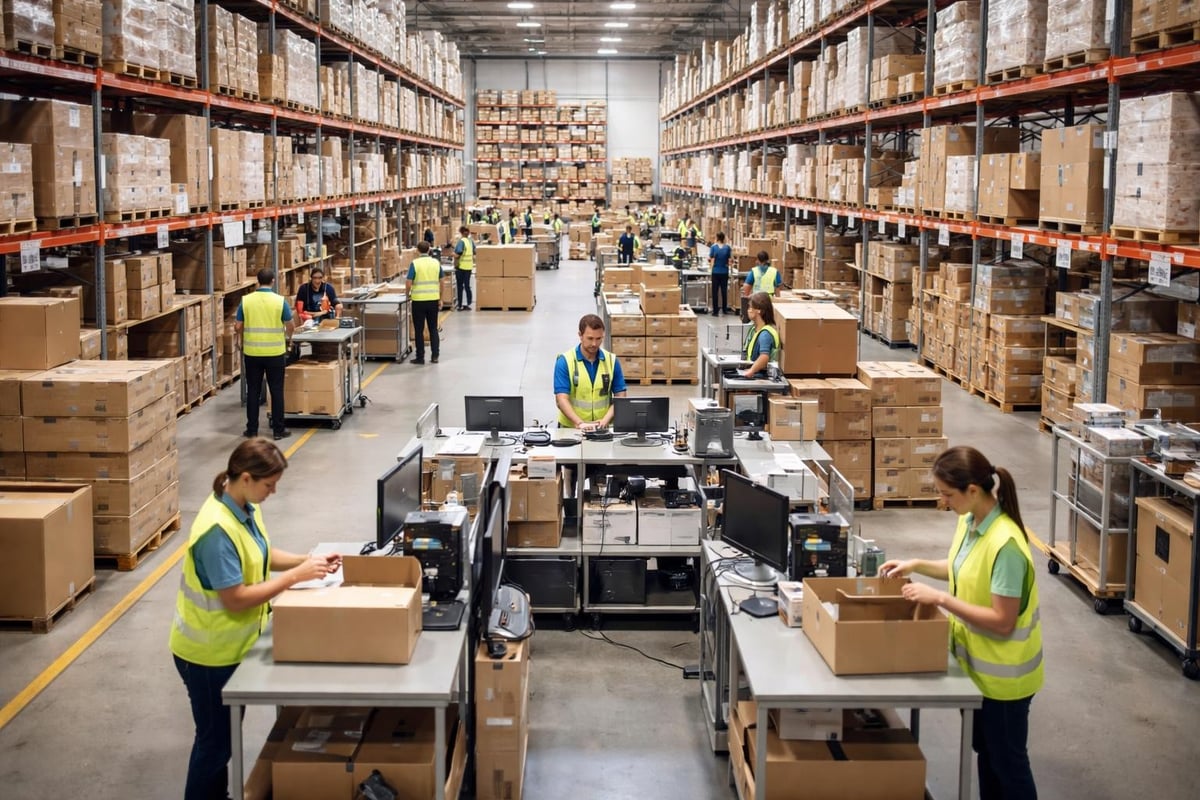
Providers offering comprehensive e-commerce fulfillment services typically integrate forward and reverse logistics into unified operations. This integration creates efficiencies because the same warehouse handling your outbound shipments can process returns using familiar systems and staff already trained on your product specifications.
Product-Specific Reverse Logistics Strategies
Different product categories present unique challenges in reverse logistics processes. Electronics require careful testing and data wiping protocols. Apparel faces seasonality concerns where delayed processing might miss selling windows. Perishable goods have minimal recovery options. Subscription box items often involve partial returns requiring itemized inspection.
Handling High-Value Products
Returns of expensive items demand enhanced security, detailed condition documentation, and expedited processing to minimize inventory carrying costs. Managing returns for high-value electronics and technology products requires specialized protocols including functional testing, cosmetic grading, and secure storage segregated from general inventory.
For brands operating in premium market segments, reverse logistics quality standards must match the brand experience customers expect. White-glove return services, advanced exchange programs, and generous return windows become competitive differentiators that justify premium pricing despite higher processing costs.
Subscription Box and Bundled Product Considerations
Reverse logistics in e-commerce becomes particularly complex when handling subscription boxes or product bundles. Customers might return entire kits or individual components, creating challenges for inventory tracking and restocking decisions. Specialized kitting operations need reverse logistics capabilities that can disassemble bundles, inspect components individually, and make intelligent decisions about whether items can be reintegrated into new kits or must be sold separately.
Sustainability and Environmental Responsibility
Modern consumers increasingly evaluate brands based on environmental practices, making sustainable reverse logistics a reputational imperative alongside an operational necessity. The environmental impact of returns extends beyond carbon emissions from transportation to include packaging waste, product disposal, and energy consumption throughout processing.
Implementing Circular Economy Principles
Progressive brands incorporate circular economy thinking into reverse logistics design. This approach prioritizes product longevity, repairability, and eventual recycling over linear "make-use-dispose" models. Products are designed for disassembly, allowing valuable components to be recovered. Packaging materials are standardized for reuse across multiple fulfillment cycles.
Sustainable reverse logistics practices include:
- Consolidated return shipping to reduce transportation emissions
- Refurbishment programs that extend product lifecycles
- Partnership with certified electronics recyclers
- Donation channels for functional but unsellable items
- Compostable or recyclable packaging materials
- Carbon offset programs for return transportation
These initiatives transform reverse logistics from an environmental liability into a sustainability showcase that resonates with environmentally conscious consumers. Brands can market their responsible returns practices as competitive differentiators while simultaneously reducing waste-related costs.
Customer Experience Optimization
The returns experience significantly influences customer loyalty and lifetime value. Research consistently shows that hassle-free returns increase purchase confidence and repeat buying behavior. Conversely, complicated or expensive return processes drive customers toward competitors offering more generous policies.
Balancing Convenience and Fraud Prevention
Designing customer-friendly return policies requires careful balance between accessibility and abuse prevention. Overly generous policies invite returns fraud and wardrobing behavior where customers use products temporarily before returning them. Overly restrictive policies frustrate legitimate customers and damage brand reputation.
Effective policy elements include:
- Clear return windows appropriate for product category
- Free return shipping above minimum purchase thresholds
- Multiple return methods (mail, drop-off, exchange)
- Instant refund or advanced exchange options
- Easy-to-understand eligibility requirements
- Transparent tracking and status communication
The return authorization process sets customer expectations and initiates the reverse logistics workflow. Self-service portals where customers can initiate returns, print labels, and track status reduce customer service workload while providing the control customers expect. Integration with direct-to-consumer fulfillment operations ensures consistent experiences across purchase and return journeys.

Amazon FBA Returns Management
For brands selling through Amazon's marketplace, reverse logistics in e-commerce involves navigating Amazon's specific policies and processes. Amazon handles customer-facing returns for FBA sellers, but understanding disposition decisions, removal orders, and reimbursement policies becomes critical for protecting inventory value.
FBA Returns Processing and Recovery
Amazon's automated returns system makes disposition decisions based on product condition assessments that may not align with seller standards. Items marked "unsellable" might be perfectly saleable with minor cleaning or repackaging. Many sellers discover significant value recovery opportunities through removal orders that bring inventory back under direct control.
Working with fulfillment partners experienced in Amazon FBA prep services creates opportunities to intercept returned inventory, reinspect against your standards, and make optimal disposition decisions. Products returned through FBA might be cleaned, repackaged to Amazon standards, and returned to FBA inventory. Alternatively, items might be diverted to direct-to-consumer channels or secondary markets where they command better recovery values.
Data Analytics and Continuous Improvement
Sophisticated reverse logistics programs generate valuable data that informs strategic decisions across the business. Return rate tracking by product, SKU-level damage patterns, reason code analysis, and processing cost monitoring reveal opportunities for operational improvements and product enhancements.
Key Performance Indicators for Returns
| Metric | Calculation | Target Range | Strategic Insight |
|---|---|---|---|
| Return Rate | Returns / Total Orders | 5-15% varies by category | Product-market fit |
| Processing Time | Receipt to Disposition | 24-48 hours | Operational efficiency |
| Restocking Rate | Restocked / Total Returns | 60-80% | Quality and damage |
| Recovery Value | Revenue / Return Cost | 120-150% | Financial performance |
| Customer Satisfaction | Survey Response | 4.0+ / 5.0 | Experience quality |
Regular analysis of these metrics identifies trends before they become crises. A sudden spike in return rates for a specific product signals potential quality issues requiring immediate investigation. Increasing processing times indicate capacity constraints that might require staffing adjustments or process optimization.
Seasonal and Peak Period Planning
Reverse logistics in e-commerce faces dramatic seasonality, with return volumes surging in January following holiday shopping and again after major promotional events. Planning for these predictable spikes prevents capacity overload that delays processing and frustrates customers.
Capacity Planning and Resource Allocation
Effective peak planning begins months in advance with historical data analysis, sales projections, and return rate forecasting. Staffing plans must account for inspection specialists, customer service representatives, and warehouse processors needed to handle volume increases. Technology capacity including server resources and software licensing must scale accordingly.
Flexible partnerships with experienced e-commerce distribution providers offer scalability advantages over fixed in-house operations. Partners with diverse client portfolios can shift resources across accounts as needed, providing surge capacity during your peak periods while maintaining efficiency during slower months.
Future Trends Reshaping Returns
The reverse logistics landscape continues evolving rapidly as technology advances and consumer expectations shift. Artificial intelligence increasingly powers inspection decisions, using computer vision to assess product conditions more consistently than human inspectors. Predictive analytics forecast return likelihood at the point of sale, enabling proactive interventions.
Emerging Technologies and Innovations
Blockchain technology promises enhanced traceability throughout reverse logistics chains, creating immutable records of product journeys from initial sale through returns and disposition. This transparency supports authenticity verification for luxury goods and simplifies warranty management.
Augmented reality applications help customers make better purchase decisions by virtually placing furniture in rooms or trying on apparel digitally, potentially reducing returns driven by expectation mismatches. These preventive technologies represent the ideal reverse logistics strategy: avoiding returns altogether through improved pre-purchase experiences.
Automated sortation systems using robotics and AI can process returns at unprecedented speeds, scanning barcodes, assessing conditions, and routing products to appropriate bins without human intervention. While these systems require significant capital investment, they deliver processing speeds and accuracy impossible with manual operations.
Mastering reverse logistics in e-commerce transforms what many brands view as an unavoidable cost into a strategic capability that differentiates your customer experience and protects profitability. Whether you're managing returns for Amazon FBA, direct-to-consumer sales, or subscription boxes, the right processes and partnerships make all the difference. Ecom Automation Prep provides comprehensive fulfillment solutions that integrate forward and reverse logistics into seamless operations, giving fast-growing brands the scalability and expertise needed to turn returns challenges into competitive advantages.