
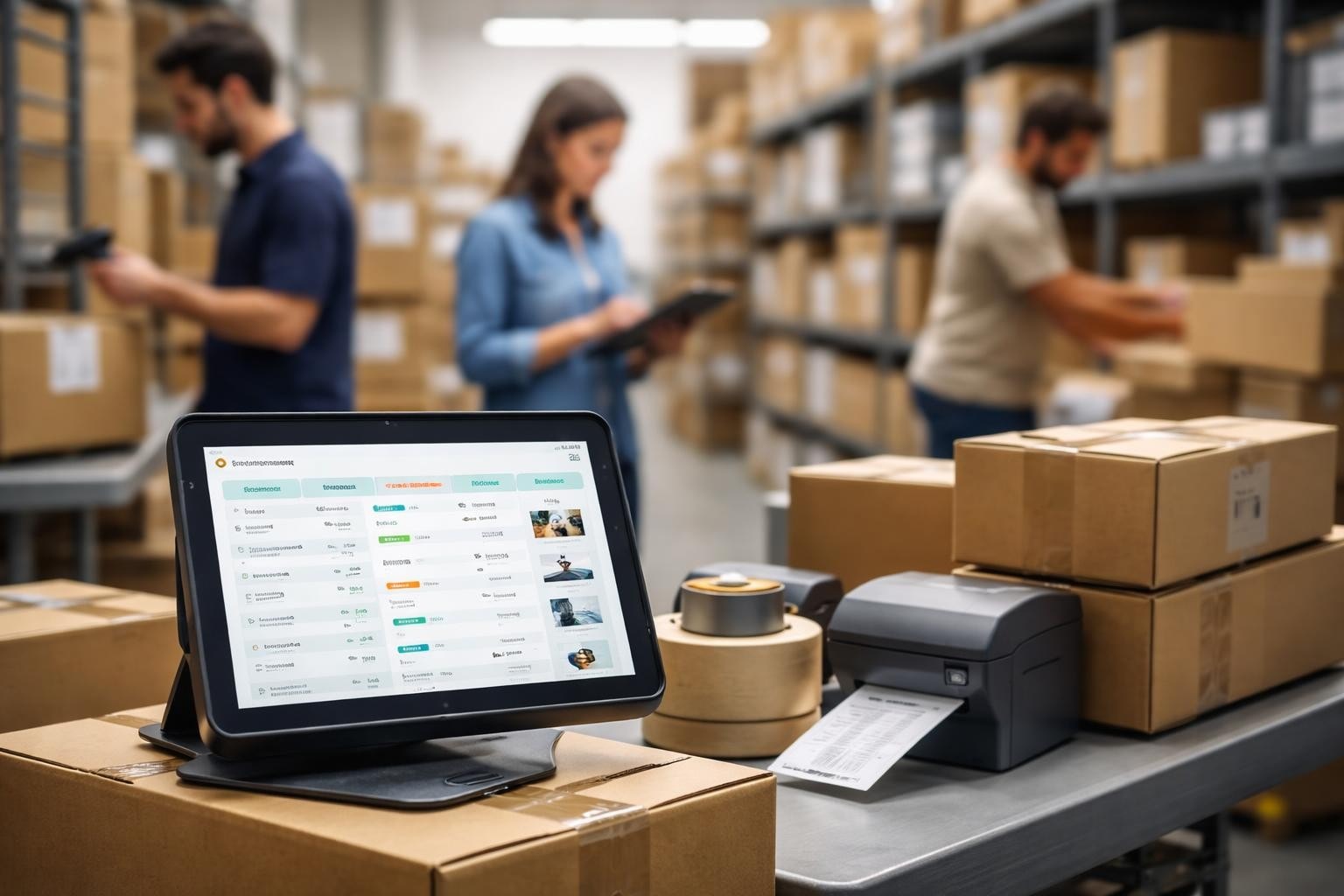

E-commerce businesses face mounting pressure to deliver products faster, more accurately, and at lower costs than ever before. As customer expectations continue rising and competition intensifies, the infrastructure supporting product delivery becomes a critical differentiator. Modern order fulfillment solutions have evolved from simple warehousing operations into sophisticated systems that combine technology, logistics expertise, and strategic planning to create seamless customer experiences. Understanding the components, benefits, and implementation strategies for these solutions enables growing brands to scale effectively while maintaining operational excellence.
Understanding Modern Order Fulfillment Solutions
Order fulfillment solutions encompass the complete ecosystem of processes, technologies, and services that move products from storage to customers' doorsteps. These integrated systems handle everything from inventory receipt and storage to order processing, picking, packing, shipping, and returns management.
The landscape has transformed dramatically over the past decade. Traditional fulfillment centered on batch processing and manual operations, but today's solutions leverage automation, real-time data, and predictive analytics to optimize every touchpoint. Core fulfillment services now extend beyond basic warehousing to include value-added offerings like kitting, bundling, and custom packaging that enhance brand presentation.
Key Components of Comprehensive Fulfillment Systems
Modern order fulfillment solutions integrate multiple operational layers:
- Receiving and inspection processes that verify incoming inventory accuracy and condition
- Inventory management systems that track stock levels across multiple channels and locations
- Order processing engines that route orders based on optimization algorithms
- Picking and packing operations designed for speed and accuracy
- Shipping coordination that selects carriers and methods based on cost and delivery requirements
- Returns processing that handles reverse logistics efficiently
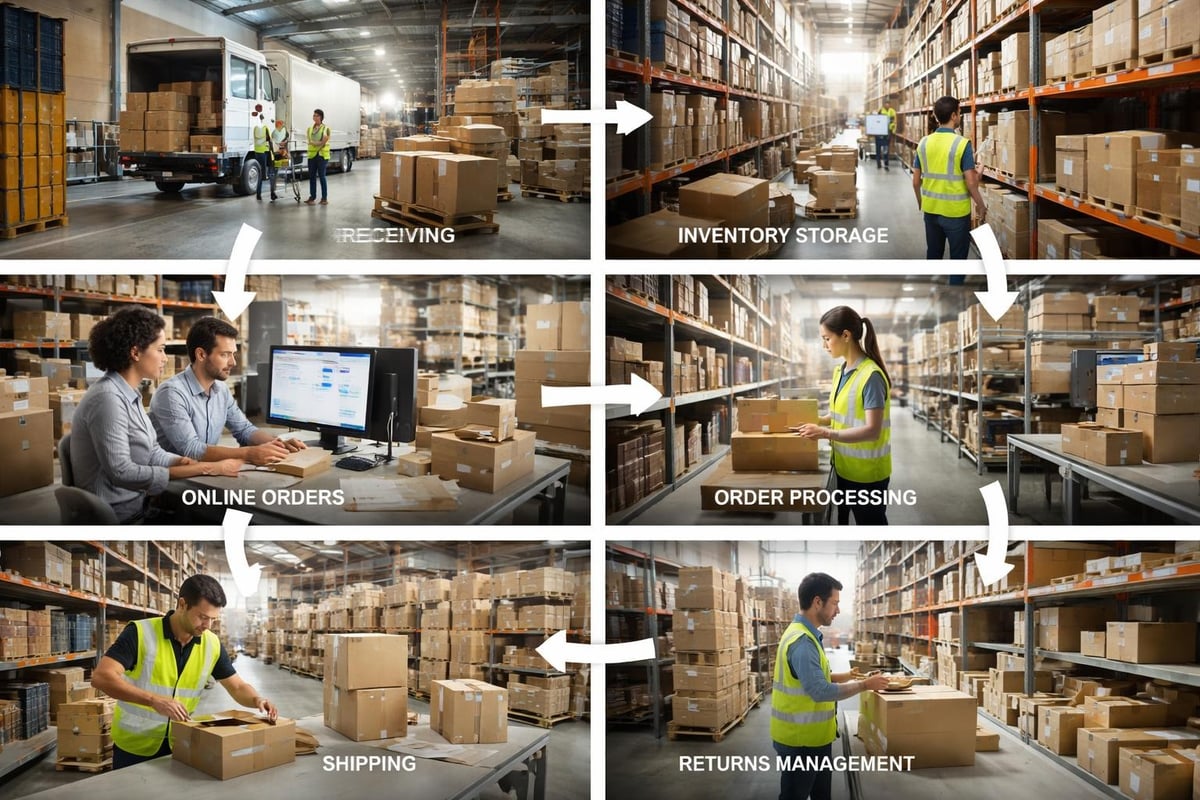
Each component must integrate seamlessly to create the responsive, reliable system that customers expect. The Council of Supply Chain Management Professionals provides authoritative guidance on implementing world-class order fulfillment processes that balance efficiency with service quality.
Technology Driving Fulfillment Innovation
Advanced technology forms the backbone of competitive order fulfillment solutions. Warehouse Management Systems (WMS) serve as the central nervous system, coordinating inventory movements, optimizing storage locations, and directing picking routes to minimize travel time and errors.
Modern platforms incorporate artificial intelligence and machine learning to predict demand patterns, optimize inventory placement, and identify potential bottlenecks before they impact operations. Intelligent fulfillment optimization systems maximize efficiency across supply chain networks by analyzing multiple variables simultaneously.
Automation and Robotics Integration
| Technology Type | Primary Function | Operational Impact |
|---|---|---|
| Automated Storage and Retrieval Systems (AS/RS) | Dense storage and rapid retrieval | Reduces footprint by 40-60% |
| Robotic Picking Systems | Item selection and movement | Increases pick rates by 200-300% |
| Conveyor Networks | Product transportation | Eliminates manual carrying time |
| Automated Packaging Systems | Box sizing and sealing | Reduces material waste by 15-25% |
| Barcode and RFID Scanning | Inventory tracking | Achieves 99.9%+ accuracy |
Physical automation works in concert with software intelligence to create responsive systems that adapt to fluctuating demand. For businesses managing Amazon FBA prep requirements alongside direct-to-consumer channels, integrated technology ensures compliance across different marketplace specifications.
Scalability Considerations for Growing Brands
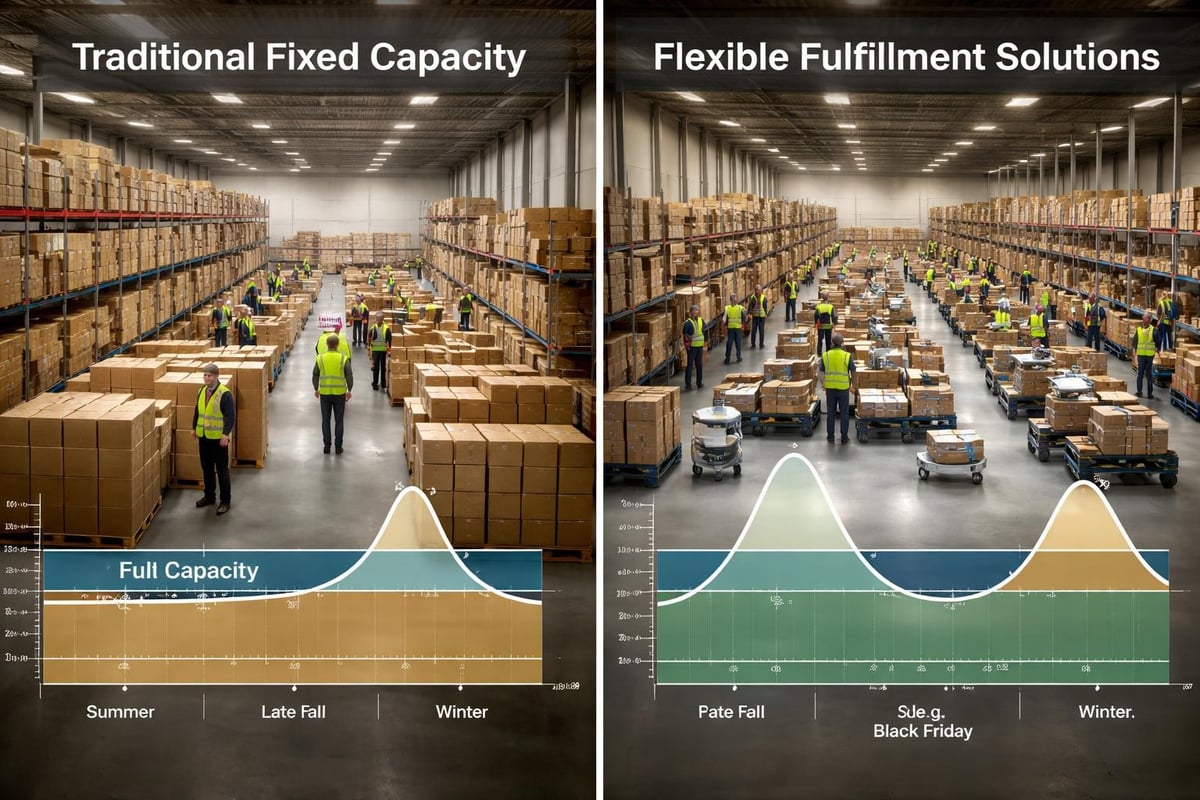
Order fulfillment solutions must accommodate growth without requiring complete operational overhauls. Scalability encompasses both volume capacity and geographic expansion capabilities.
Fast-growing e-commerce brands typically experience seasonal peaks, promotional surges, and steady baseline growth. Effective fulfillment partners design systems with flexible capacity that can absorb 200-300% volume increases during peak periods without service degradation.
Evaluating Scalability Factors
When assessing potential order fulfillment solutions, consider these critical dimensions:
- Physical capacity expansion capabilities for inventory storage
- Labor flexibility to scale workforce during demand spikes
- Technology infrastructure that handles increased transaction volumes
- Geographic distribution options for regional fulfillment centers
- Integration capabilities with emerging sales channels and platforms
Research demonstrates that data-driven integrated planning significantly improves fulfillment efficiency at scale. Companies implementing advanced analytics into their fulfillment operations achieve better inventory allocation and faster order processing times.
The fulfillment services offered by specialized providers must align with your growth trajectory, supporting current volumes while providing clear pathways for expansion.
Omnichannel Fulfillment Strategies
Modern consumers interact with brands across multiple touchpoints before, during, and after purchase. Omnichannel order fulfillment treats inventory as universally available to all sales channels from centralized or distributed locations, creating consistent experiences regardless of purchase method.
This strategic approach enables capabilities like buy-online-pickup-in-store, ship-from-store, and marketplace fulfillment from a unified inventory pool. Rather than siloing stock by channel, omnichannel systems provide real-time visibility across all locations.
Implementation Challenges and Solutions
Implementing omnichannel order fulfillment solutions requires addressing several operational complexities:
- Inventory synchronization across multiple platforms and locations
- Order routing logic that balances cost, speed, and inventory position
- Returns processing from any channel to any location
- Channel-specific packaging and compliance requirements
- Performance tracking across different fulfillment methods
Successful omnichannel strategies rely on robust Order Management Systems (OMS) that orchestrate fulfillment across the network. OMS solutions enable self-service capabilities that improve both operational efficiency and customer satisfaction.
Value-Added Services in Modern Fulfillment
Beyond basic pick-pack-ship operations, competitive order fulfillment solutions incorporate value-added services that enhance product presentation and customer experience. These services transform fulfillment centers into brand extensions rather than purely functional warehouses.
Kitting and bundling operations combine multiple SKUs into custom configurations for promotions, subscription boxes, or product sets. Kitting services enable brands to create unique offerings without managing assembly operations in-house.
Customization and Personalization Options
| Service Category | Examples | Brand Benefits |
|---|---|---|
| Custom Packaging | Branded boxes, tissue paper, inserts | Enhanced unboxing experience |
| Product Assembly | Kit building, set creation | Market differentiation |
| Quality Control | Inspection, testing, compliance verification | Reduced returns and complaints |
| Special Handling | Gift wrapping, personalization, special instructions | Premium service positioning |
| Documentation | Multi-language inserts, certificates, instructions | Global market readiness |
These services allow brands to maintain quality standards and brand consistency while leveraging external fulfillment expertise. The combination of core logistics capabilities with brand-enhancing services creates comprehensive solutions that support business objectives beyond pure operational efficiency.
Selecting the Right Fulfillment Partner
Choosing order fulfillment solutions requires evaluating multiple dimensions beyond price. The key factors when selecting fulfillment services include technology capabilities, geographic coverage, industry expertise, and cultural alignment.
Critical Evaluation Criteria
Begin your assessment by defining specific business requirements:
- Volume requirements including current levels and projected growth
- SKU complexity such as product sizes, special handling needs, and storage conditions
- Geographic distribution needs for domestic and international shipping
- Technology integration requirements with existing e-commerce platforms
- Service level expectations for processing times and shipping speeds
- Specialized services like subscription management or marketplace compliance
Understanding how different fulfillment models work helps identify solutions aligned with your operational philosophy and customer promises. Some businesses prioritize cost optimization while others focus on speed or specialized capabilities.

Technology Integration Requirements
Seamless technology integration separates adequate fulfillment partners from exceptional ones. Modern order fulfillment solutions must connect with your existing technology stack through robust APIs and integrations.
Essential integration capabilities include:
- Real-time inventory synchronization with e-commerce platforms
- Automated order import and status updates
- Shipping notification and tracking number transmission
- Returns authorization and processing workflows
- Analytics and reporting data exchange
Software solutions for e-commerce fulfillment have evolved to support increasingly complex multi-channel operations. Evaluating a partner's technology infrastructure reveals their capacity to support your current needs and future expansion.
Cost Structure and Pricing Models
Order fulfillment solutions employ various pricing structures that impact total cost of ownership. Understanding these models enables accurate comparison and budget forecasting.
Most providers charge fees across multiple categories:
- Receiving fees for processing incoming inventory shipments
- Storage fees based on pallet positions or cubic footage occupied
- Pick and pack fees per order or per item picked
- Shipping costs at actual carrier rates plus potential handling fees
- Special service fees for kitting, returns processing, or custom requirements
Comparing Total Cost Models
| Pricing Approach | Structure | Best For |
|---|---|---|
| Per-Order Pricing | Flat fee per order regardless of items | Low-SKU, consistent order profiles |
| Per-Item Pricing | Fee multiplies by items per order | Variable order sizes |
| Hybrid Models | Base fee plus per-item charges | Balanced flexibility |
| Volume Tiers | Decreasing rates at higher volumes | Predictable, growing businesses |
| Cost-Plus | Actual costs plus margin percentage | Complex, custom operations |
Transparent pricing structures indicate partnership-oriented providers. Hidden fees, complex minimum requirements, or opaque surcharges suggest potential alignment issues. Request detailed pricing breakdowns that model your actual order profiles to compare options accurately.
Performance Metrics and Service Level Agreements
Effective order fulfillment solutions establish clear performance expectations through measurable metrics and Service Level Agreements (SLAs). These agreements define acceptable performance standards and consequences for failures.
Key Performance Indicators
Monitor these critical metrics to evaluate fulfillment performance:
- Order accuracy rate measuring percentage of orders shipped correctly
- On-time shipment rate tracking orders shipped within promised timeframes
- Inventory accuracy comparing system records to physical counts
- Average processing time from order receipt to carrier pickup
- Damage and loss rates indicating handling quality
- Returns processing speed measuring reverse logistics efficiency
Industry-leading order fulfillment solutions consistently achieve 99.5%+ accuracy rates, same-day or next-day processing for standard orders, and 99.9%+ inventory accuracy. Modern fulfillment systems leverage advanced technologies to maintain these performance standards even during peak demand periods.
Establish SLAs that align with your customer promises. If you guarantee two-day delivery, your fulfillment partner must commit to same-day processing and provide late-day carrier pickups to support that promise.
Future Trends Shaping Fulfillment Solutions
Order fulfillment solutions continue evolving in response to changing consumer expectations, technological capabilities, and competitive pressures. Understanding emerging trends helps businesses select partners positioned for long-term success.
Micro-fulfillment centers located in urban areas enable same-day and even one-hour delivery windows by positioning inventory closer to dense customer populations. These smaller facilities complement traditional regional distribution centers in multi-node networks.
Emerging Technologies and Capabilities
Several innovations will reshape fulfillment over the next 3-5 years:
- Autonomous mobile robots that navigate warehouses without fixed infrastructure
- Predictive inventory positioning using AI to pre-position stock near likely demand
- Sustainable packaging automation that reduces waste while maintaining protection
- Blockchain tracking for enhanced transparency and authentication
- Drone delivery integration for rapid last-mile delivery in approved zones
Environmental sustainability increasingly influences fulfillment strategies. Order fulfillment solutions incorporating renewable energy, recyclable packaging, and optimized routing to reduce carbon emissions appeal to environmentally conscious brands and consumers alike.
Implementing the right order fulfillment solutions transforms logistics from a cost center into a competitive advantage that enables growth, enhances customer satisfaction, and supports brand differentiation. Whether you need specialized e-commerce help with Amazon marketplace requirements or comprehensive direct-to-consumer fulfillment, selecting partners with proven expertise and scalable infrastructure positions your business for sustainable success. Ecom Automation Prep delivers comprehensive fulfillment services designed specifically for fast-growing e-commerce brands, combining advanced technology with flexible capacity to make fulfillment effortless as your business scales.