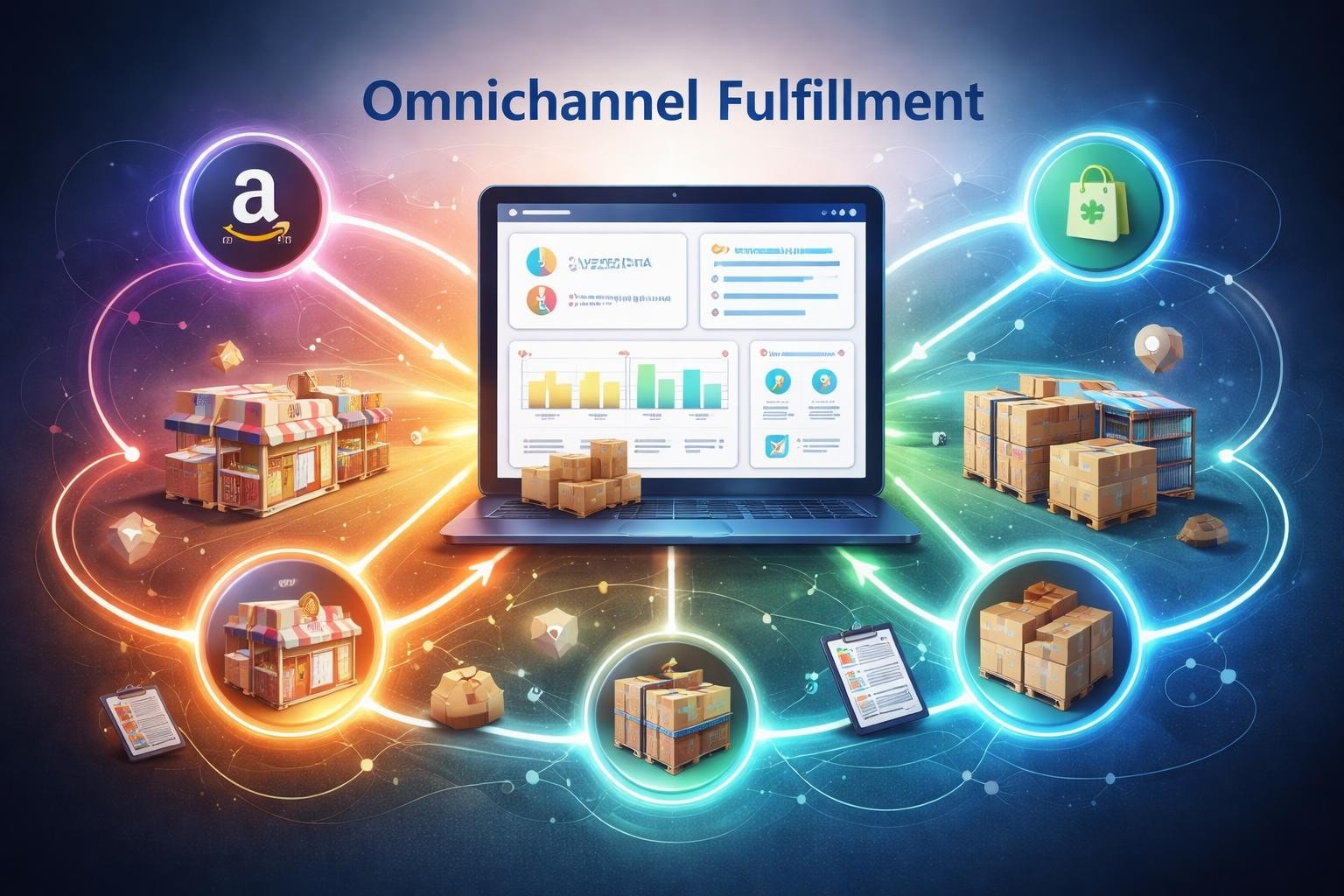

The modern e-commerce landscape demands flexibility, speed, and precision across every customer touchpoint. Brands selling on Amazon, their own Shopify stores, retail locations, and wholesale channels simultaneously face complex logistical challenges that single-channel solutions can't address. Omnichannel fulfillment services provide the infrastructure needed to synchronize inventory, process orders efficiently, and deliver consistent experiences regardless of where customers choose to shop. As consumer expectations continue to evolve in 2026, understanding how these integrated fulfillment systems work has become essential for brands looking to scale without sacrificing service quality.
Understanding Omnichannel Fulfillment in the Modern E-commerce Environment
Omnichannel fulfillment services represent a strategic approach to order management that treats all sales channels as interconnected parts of a single system rather than isolated silos. This methodology contrasts sharply with traditional multichannel approaches where each platform operates independently with separate inventory pools and fulfillment processes.
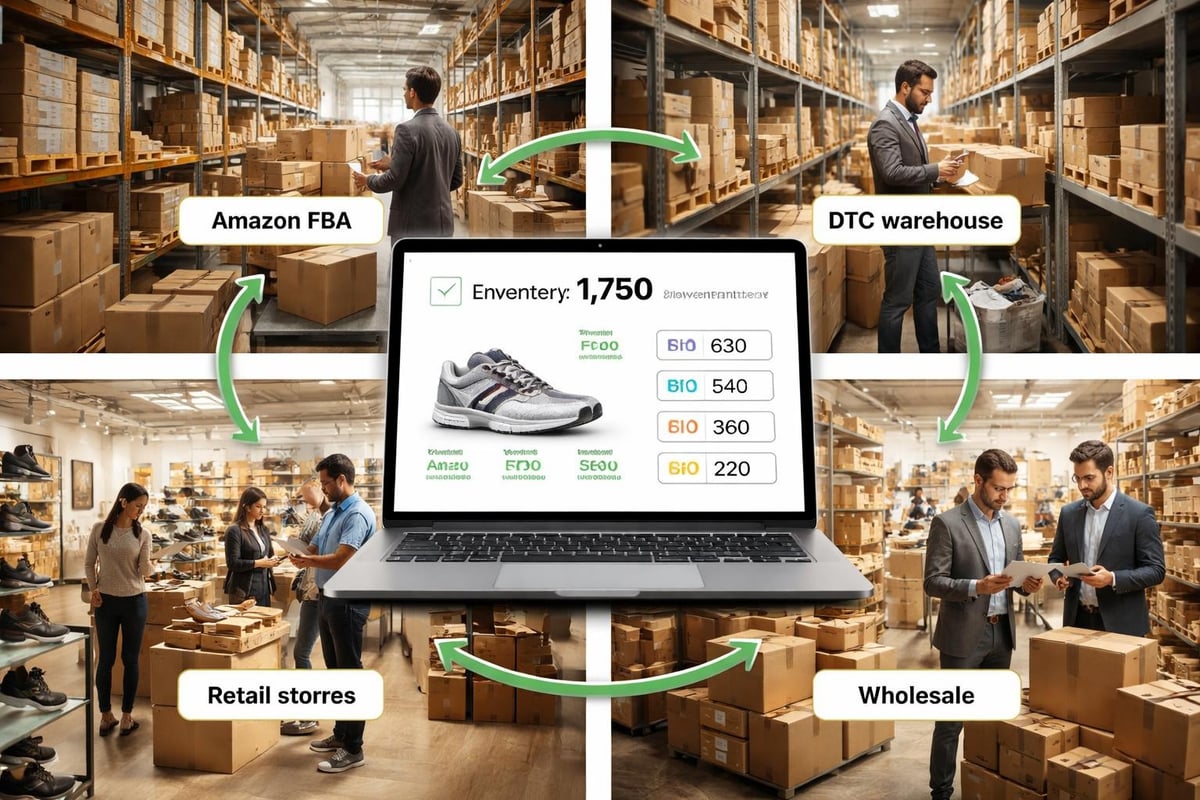
The fundamental principle behind omnichannel order fulfillment involves maintaining unified inventory visibility across all channels while routing orders to the optimal fulfillment location based on speed, cost, and availability. When a customer purchases a product, the system automatically determines whether to ship from a warehouse, retail store, or third-party logistics provider based on predetermined algorithms.
Key Components of Effective Omnichannel Systems
Several interconnected elements must work together to create successful omnichannel fulfillment operations:
- Centralized inventory management that provides real-time visibility across all locations
- Intelligent order routing algorithms that optimize for speed and cost
- Integrated technology platforms connecting sales channels, warehouses, and carriers
- Flexible warehouse operations capable of handling diverse SKU types and packaging requirements
- Multi-carrier shipping networks offering various delivery options
The complexity of managing these components simultaneously explains why many growing brands partner with specialized fulfillment providers rather than building internal infrastructure. Research on efficient omnichannel fulfillment strategies demonstrates that integrated systems reduce operational costs while improving customer satisfaction metrics.
Strategic Advantages for Fast-Growing E-commerce Brands
Implementing omnichannel fulfillment services delivers measurable benefits that directly impact both operational efficiency and bottom-line profitability. Brands that successfully integrate their fulfillment operations report significant improvements across multiple performance indicators.
Inventory optimization stands out as one of the most compelling advantages. Instead of maintaining separate stock levels for each channel, businesses can pool inventory strategically. This approach reduces total inventory requirements while maintaining the same or better service levels. A brand might keep 80% of inventory in a central warehouse while distributing 20% across regional locations for faster delivery.
Reduced shipping costs emerge naturally from intelligent order routing. When systems can fulfill orders from the location closest to the customer, transportation expenses decline substantially. This becomes particularly valuable for D2C ecommerce brands competing on delivery speed against marketplace giants.
Operational Efficiency Metrics
| Performance Indicator | Traditional Multi-channel | Omnichannel Integration |
|---|---|---|
| Inventory Turnover | 4-6 times annually | 8-12 times annually |
| Order Accuracy | 95-97% | 98-99.5% |
| Average Delivery Time | 4-7 days | 2-4 days |
| Fulfillment Cost per Order | $6-9 | $4-7 |
Customer experience improvements represent another critical advantage. Modern consumers expect seamless interactions regardless of channel. They want to buy online and pick up in store, return marketplace purchases through retail locations, or track all orders through a single interface. Omnichannel fulfillment services make these experiences possible without creating operational nightmares.
Technical Infrastructure and Integration Requirements
The technology stack supporting omnichannel fulfillment services forms the nervous system of the entire operation. Without robust software connecting various components, even the best physical infrastructure fails to deliver promised benefits.
Warehouse Management Systems (WMS) serve as the operational foundation. Modern WMS platforms track inventory locations, direct picking and packing activities, and manage inbound receiving processes. For omnichannel operations, these systems must integrate seamlessly with order management platforms and provide real-time data synchronization.
Order Management Systems (OMS) orchestrate the entire fulfillment process. These platforms receive orders from all sales channels, apply business rules for routing decisions, and communicate fulfillment instructions to appropriate warehouses or stores. Advanced systems incorporate machine learning algorithms that continuously optimize routing decisions based on historical performance data.
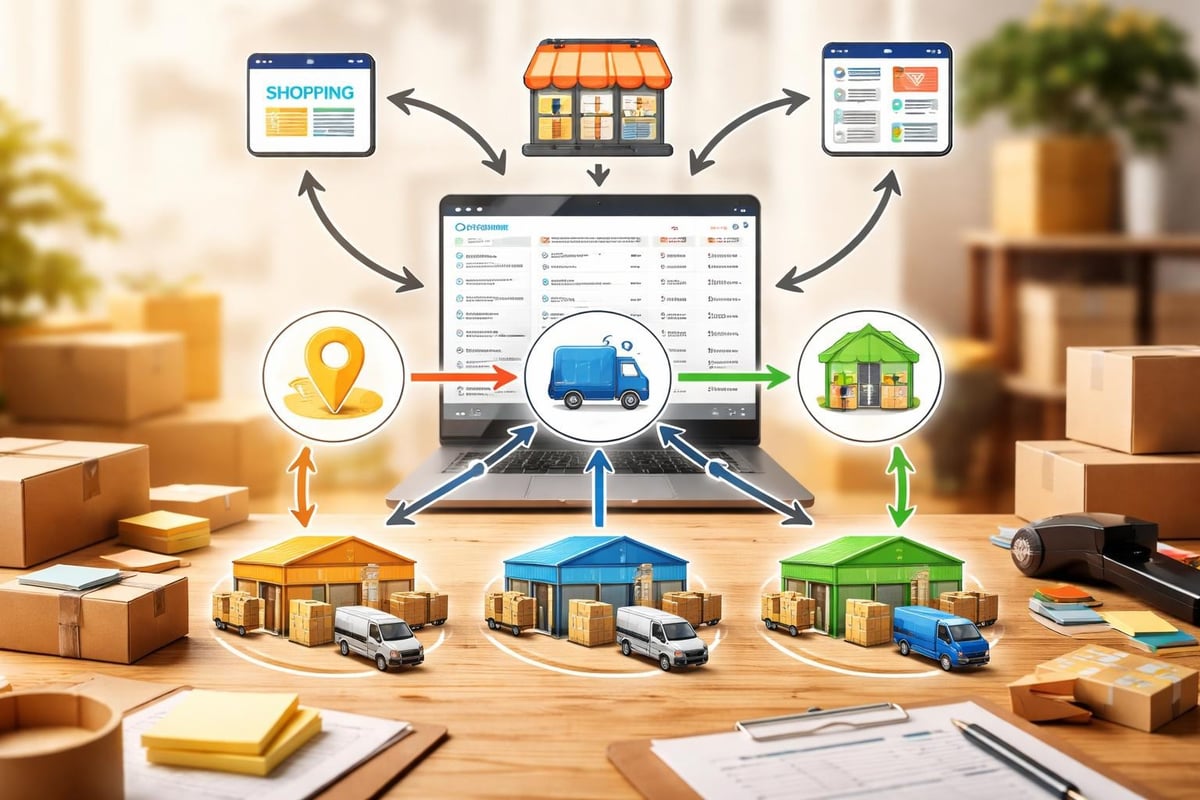
The integration between different platforms requires careful planning and execution. E-commerce brands must ensure their marketplace listings, website shopping carts, and point-of-sale systems all communicate inventory changes instantly. A sale on Amazon should immediately update available inventory counts across Shopify, retail locations, and wholesale portals.
API Connectivity and Data Synchronization
Modern omnichannel fulfillment relies heavily on Application Programming Interfaces (APIs) that enable different software systems to exchange information automatically. These connections must be:
- Bidirectional to allow inventory updates flowing back to sales channels
- Real-time to prevent overselling and maintain accuracy
- Scalable to handle traffic spikes during peak seasons
- Reliable with fallback mechanisms for system outages
Research on contextual optimization for fulfillment operations highlights how advanced algorithms can dramatically improve fulfillment center and carrier selection when integrated with comprehensive data streams.
Inventory Allocation Strategies Across Multiple Channels
Determining how much inventory to allocate to each sales channel and fulfillment location represents one of the most complex decisions in omnichannel operations. Poor allocation leads to stockouts in high-velocity channels while slow-moving inventory sits idle elsewhere.
Demand forecasting provides the foundation for smart allocation. Sophisticated systems analyze historical sales data, seasonality patterns, promotional calendars, and market trends to predict future demand by channel and location. This forecasting must account for the unique characteristics of each channel, as Amazon sales patterns often differ significantly from direct-to-consumer website behavior.
Several allocation methodologies exist, each with distinct advantages:
- Fixed allocation assigns specific quantities to each channel based on historical sales ratios
- Dynamic allocation adjusts inventory distribution based on real-time demand signals
- Safety stock buffering maintains reserve inventory for unexpected demand spikes
- Seasonal redistribution moves inventory proactively before known demand periods
When scaling ecommerce operations, brands must continuously refine their allocation strategies as sales volumes grow and channel mixes evolve. What works at $100,000 monthly revenue often breaks down at $1 million.
Managing Amazon FBA Integration
Amazon FBA represents a unique challenge within omnichannel fulfillment services because inventory sent to Amazon becomes unavailable for other channels. Brands must carefully balance FBA stock levels against direct fulfillment capabilities.
Smart strategies include maintaining 60-70% of fast-moving inventory in Amazon warehouses while keeping 30-40% in third-party facilities for other channels. This approach leverages Amazon's Prime eligibility and fulfillment speed while maintaining flexibility for direct-to-consumer orders and wholesale shipments.
Warehouse Operations and Process Optimization
The physical execution of omnichannel fulfillment requires warehouse operations designed for flexibility rather than single-channel efficiency. Traditional warehouses optimized for bulk wholesale shipments struggle with the diverse requirements of modern omnichannel commerce.
Zone-based organization helps warehouses handle multiple order types efficiently. Fast-moving items destined for direct-to-consumer shipping might occupy prime picking locations near packing stations, while bulk wholesale inventory stays in deeper storage areas. FBA prep operations often require dedicated zones with specific equipment and trained staff familiar with Amazon's packaging requirements.
Process standardization across order types reduces errors and training complexity. While a marketplace order, website order, and wholesale shipment have different end destinations, many picking and quality control steps remain identical. Creating standardized procedures with channel-specific exceptions improves accuracy and throughput.
| Order Type | Picking Method | Packing Requirements | Label Format |
|---|---|---|---|
| Amazon FBA | Batch picking | Amazon compliance | FNSKU labels |
| D2C Website | Wave picking | Branded packaging | Carrier labels |
| Wholesale | Bulk picking | Pallet wrapping | Purchase order labels |
| Retail Fulfillment | Single-item picking | Retail-ready packaging | Store labels |
Quality control becomes increasingly important in omnichannel environments where order accuracy directly impacts brand reputation across multiple touchpoints. Implementing barcode scanning at each process step, conducting regular cycle counts, and maintaining detailed audit trails help maintain the accuracy standards customers expect.
Value-Added Services That Differentiate Omnichannel Providers
Beyond basic pick-pack-ship capabilities, comprehensive omnichannel fulfillment services often include specialized offerings that help brands compete more effectively. These value-added services can transform fulfillment from a cost center into a strategic advantage.
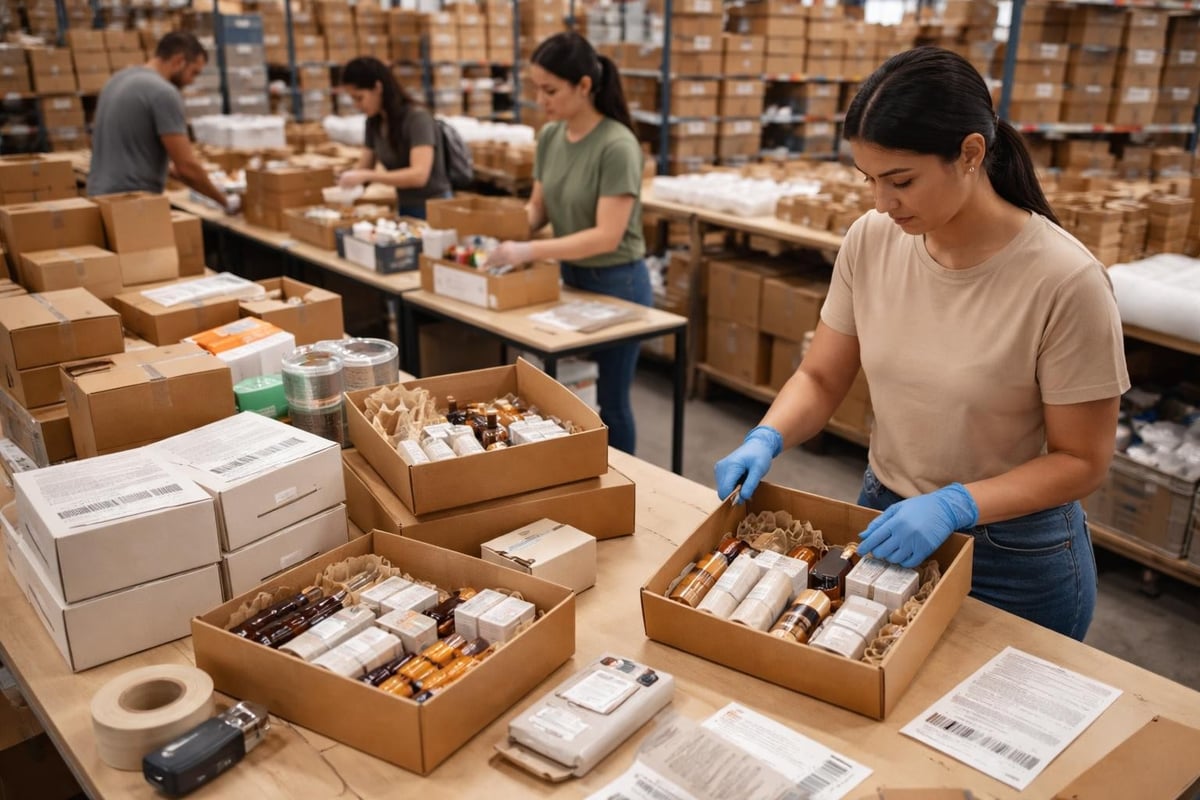
Kitting and bundling operations allow brands to create custom product combinations without pre-assembling inventory. When an order comes in for a bundle, the warehouse assembles components on demand. This approach maximizes inventory flexibility while offering customers curated product sets. For example, a skincare brand might offer different bundle combinations across various channels without maintaining separate bundled inventory for each.
Custom packaging and branding help direct-to-consumer orders stand out. While marketplace orders often ship in standard boxes, website orders present opportunities for branded unboxing experiences. Omnichannel fulfillment partners who offer custom packaging services enable brands to differentiate their direct channels while maintaining cost efficiency.
Returns Management and Reverse Logistics
Returns processing represents a critical component of omnichannel fulfillment that many brands overlook during initial planning. A comprehensive returns strategy must address:
- Multi-channel return acceptance allowing customers to return marketplace purchases through other channels
- Rapid inspection and restocking to return saleable items to inventory quickly
- Disposition decisions for damaged or non-compliant returns
- Data collection on return reasons to identify quality or listing issues
The complexity of processing returns from multiple channels while maintaining accurate inventory counts requires specialized expertise. Understanding ecommerce fulfillment pricing models helps brands evaluate the true cost of returns management across different service providers.
Selecting the Right Omnichannel Fulfillment Partner
Choosing a fulfillment partner represents a strategic decision with long-term implications for brand growth and customer satisfaction. The wrong choice leads to operational headaches, while the right partner becomes an extension of your team enabling rapid scaling.
Technology compatibility should top the evaluation criteria. The fulfillment provider's systems must integrate seamlessly with your existing technology stack. Request detailed information about API capabilities, supported shopping cart platforms, and marketplace integrations. Test integrations during the evaluation phase rather than discovering limitations after signing contracts.
Scalability and flexibility determine whether a partnership can support your growth trajectory. Ask about capacity constraints, seasonal surge capabilities, and geographic expansion options. A partner that works perfectly at 1,000 orders monthly might struggle at 10,000. Understanding these limitations upfront prevents painful migrations later.
Consider the provider's experience with your specific product category and channel mix. Electronic fulfillment requires different expertise than apparel or food products. A fulfillment partner with deep category knowledge brings valuable insights beyond basic logistics.
Evaluation Checklist for Fulfillment Providers
- Current client portfolio and references from similar brands
- Technology platforms and integration capabilities
- Geographic warehouse locations and coverage areas
- Pricing structure including fees for various services
- Service level agreements and performance guarantees
- Insurance coverage and liability protections
- Quality control processes and accuracy metrics
- Customer support responsiveness and accessibility
- Value-added service offerings beyond basic fulfillment
- Financial stability and business longevity
Studies examining pricing and fulfillment strategies in omnichannel retailing emphasize how fulfillment decisions impact overall profitability across channels, making partner selection a critical strategic choice.
Performance Metrics and Continuous Improvement
Measuring and optimizing omnichannel fulfillment performance requires tracking metrics across multiple dimensions. Unlike single-channel operations where simple metrics like orders shipped per day suffice, omnichannel environments demand more sophisticated analytics.
Order accuracy remains fundamental but must be measured by channel and order type. A 99% overall accuracy rate might mask serious problems if marketplace orders achieve 99.5% accuracy while direct website orders only hit 97%. Channel-specific tracking reveals where process improvements deliver maximum impact.
Fulfillment speed metrics should capture both internal processing time and total delivery time. Breaking down the timeline from order receipt through picking, packing, carrier handoff, and final delivery helps identify bottlenecks. Different channels often require different speed standards based on customer expectations.
Inventory turnover by channel and location indicates allocation effectiveness. Slow-moving inventory in any location represents tied-up capital and potential obsolescence risk. High-performing omnichannel operations maintain balanced turnover rates across channels while avoiding stockouts.
Cost Per Order Analysis
| Cost Component | Weight in Total Cost | Optimization Opportunities |
|---|---|---|
| Labor (picking/packing) | 35-45% | Process automation, layout optimization |
| Shipping/carrier fees | 30-40% | Carrier negotiation, zone optimization |
| Packaging materials | 8-12% | Right-sizing boxes, bulk purchasing |
| Technology/software | 6-10% | Platform consolidation, efficient integrations |
| Facility overhead | 8-12% | Space utilization, multi-client facilities |
Regular performance reviews with fulfillment partners ensure continuous improvement and alignment with business objectives. Quarterly business reviews should examine trends across all key metrics, discuss upcoming promotional calendars, and plan for seasonal demand fluctuations.
Future Trends Shaping Omnichannel Fulfillment
The evolution of omnichannel fulfillment services continues accelerating as technology advances and consumer expectations rise. Understanding emerging trends helps brands make future-proof decisions when selecting partners and designing fulfillment strategies.
Micro-fulfillment centers represent a growing trend where brands position small warehouses in urban areas for same-day or next-day delivery. These facilities might stock only top-selling SKUs while routing slower-moving items from regional warehouses. The economics of micro-fulfillment continue improving as automation technology becomes more affordable at smaller scales.
Artificial intelligence and machine learning are transforming demand forecasting, inventory allocation, and order routing decisions. Systems that once required manual analysis now automatically optimize themselves based on historical performance. As explored in the future of omnichannel fulfillment, AI-driven systems will increasingly handle complex decisions that currently require human judgment.
Sustainability initiatives are reshaping packaging choices, shipping methods, and warehouse operations. Consumers and regulatory bodies increasingly demand environmental responsibility. Forward-thinking fulfillment operations incorporate sustainable packaging materials, carbon-neutral shipping options, and energy-efficient warehouse designs without sacrificing performance.
Direct store fulfillment where retail locations serve as mini-warehouses for online orders continues expanding. This approach reduces delivery times while optimizing store inventory utilization. The complexity of managing store-based fulfillment alongside traditional warehouse operations requires sophisticated omnichannel fulfillment services that can coordinate across location types seamlessly.
The integration of these emerging capabilities into cohesive fulfillment operations will separate industry leaders from laggards over the next several years. Brands partnering with providers who actively invest in these technologies position themselves for sustained competitive advantage.
Successfully implementing omnichannel fulfillment services requires strategic planning, robust technology integration, and operational excellence across multiple touchpoints. The complexity of managing inventory, orders, and customer expectations across diverse channels demands specialized expertise that most brands can't build internally. Ecom Automation Prep delivers comprehensive fulfillment solutions designed specifically for fast-growing e-commerce brands, combining Amazon FBA prep expertise with direct-to-consumer fulfillment capabilities, kitting, and bundling services. Whether you're selling on marketplaces, your own website, or through multiple channels simultaneously, our scalable infrastructure and integrated technology platform make omnichannel fulfillment effortless so you can focus on growing your brand.