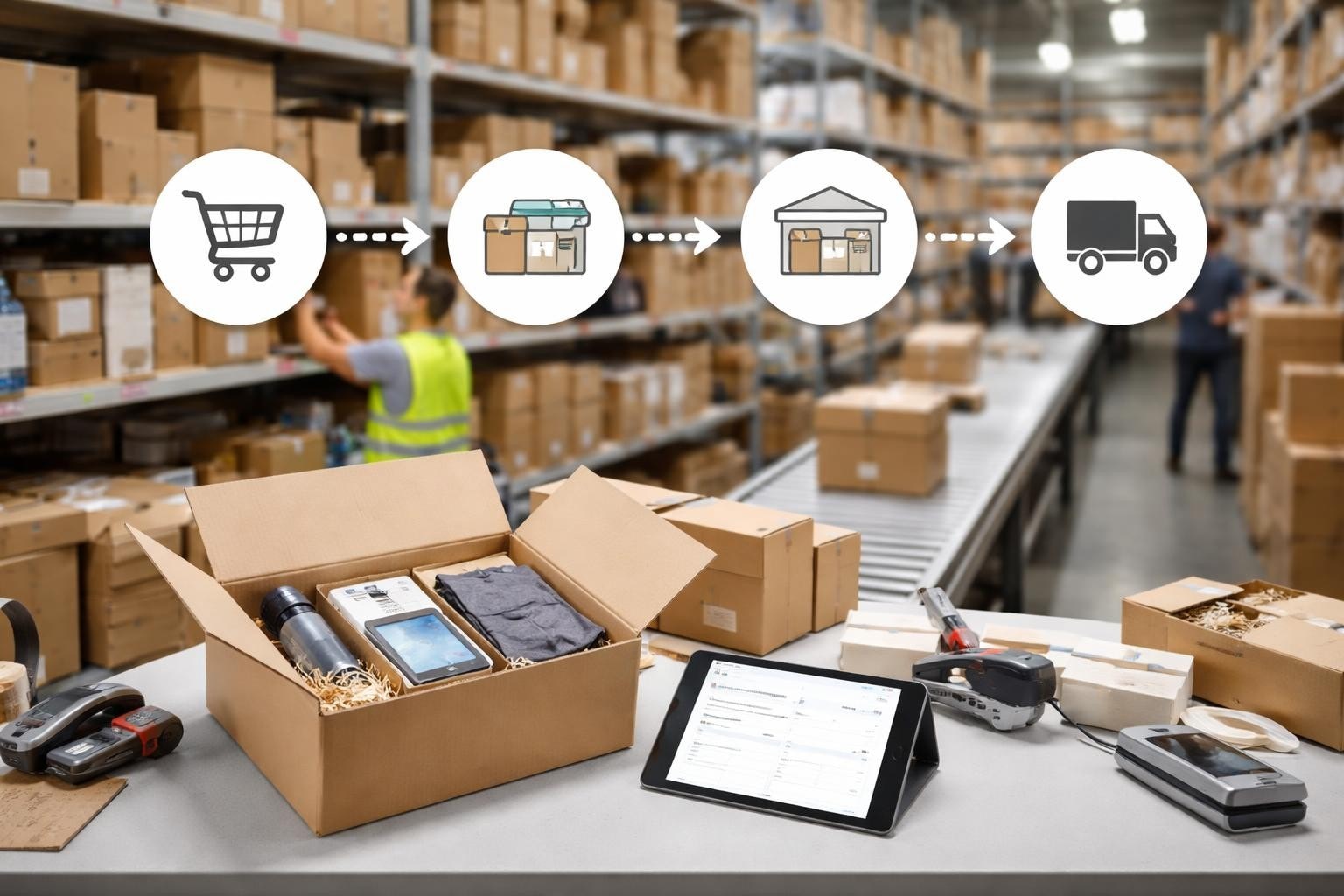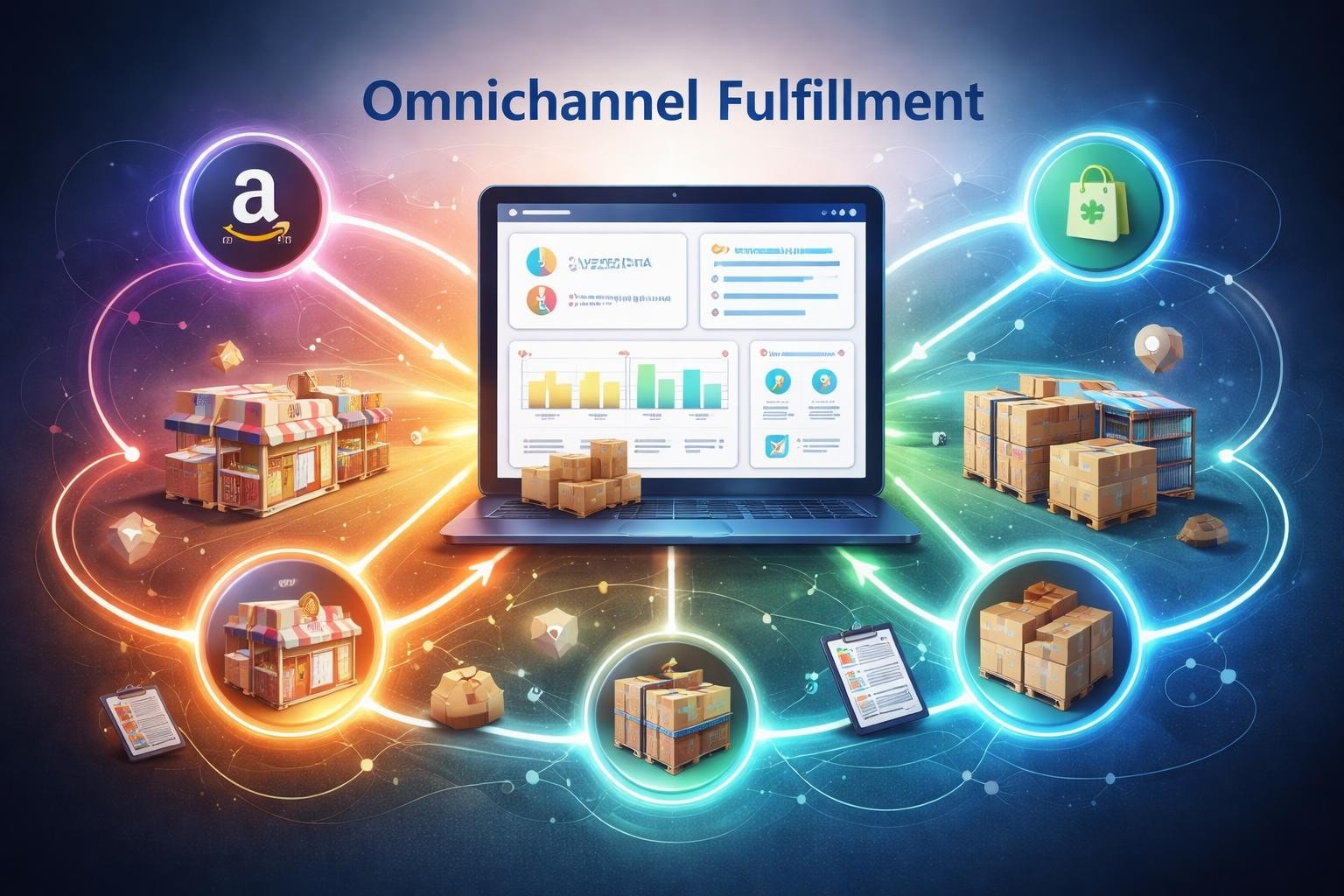


The backbone of successful e-commerce operations lies in efficient logistics fulfillment. As online shopping continues to dominate retail, the ability to receive, process, and deliver orders accurately and quickly has become a critical competitive advantage. For fast-growing e-commerce brands, understanding the complexities of logistics fulfillment is essential for maintaining customer satisfaction, managing costs, and scaling operations sustainably. This comprehensive guide explores the fundamental components, strategies, and technologies that drive modern fulfillment operations.
Understanding Logistics Fulfillment Components
Logistics fulfillment encompasses far more than simply shipping products to customers. It represents an integrated system of processes designed to move inventory efficiently from suppliers to end consumers.
The fulfillment process begins with inventory receiving and storage. When products arrive at a warehouse facility, they must be accurately counted, inspected for quality issues, and stored in designated locations. This initial step sets the foundation for all subsequent operations, as errors here can cascade through the entire supply chain.
Order processing forms the operational heart of logistics fulfillment. Once a customer places an order, the fulfillment system must locate the correct items, verify their condition, and prepare them for shipment. This involves:
- Picking items from warehouse locations
- Packing products securely with appropriate materials
- Generating shipping labels and documentation
- Conducting quality control inspections
- Coordinating carrier pickups
Returns management completes the fulfillment cycle. Modern e-commerce demands flexible return policies, which means logistics operations must efficiently process returned merchandise, assess product condition, and restock items when appropriate.

Technology Infrastructure Requirements
Modern logistics fulfillment relies heavily on integrated technology systems. Warehouse Management Systems (WMS) coordinate inventory movements, track product locations, and optimize picking routes. These platforms connect with e-commerce platforms, shipping carriers, and accounting systems to create seamless data flow.
Barcode scanning and RFID technology enable real-time inventory tracking. Every product movement gets recorded automatically, reducing human error and providing accurate stock counts. This visibility allows brands to make informed decisions about reordering, promotional planning, and inventory distribution across multiple warehouses.
According to research on e-commerce fulfillment and logistics, investment in fulfillment technology has accelerated significantly as brands recognize its impact on operational efficiency. Companies implementing advanced systems report improved accuracy rates and faster processing times.
| Technology Component | Primary Function | Key Benefit |
|---|---|---|
| Warehouse Management System | Inventory control and order routing | Reduced picking errors |
| Barcode Scanning | Product identification and tracking | Real-time visibility |
| Shipping Software | Carrier rate comparison and label generation | Cost optimization |
| Inventory Forecasting | Demand prediction and stock planning | Prevented stockouts |
Warehousing Strategies for E-Commerce Growth
Selecting the right warehousing approach significantly impacts logistics fulfillment performance. E-commerce brands face several strategic decisions about how and where to store inventory.
Geographic distribution affects delivery speeds and shipping costs. Brands selling nationally often benefit from multiple fulfillment centers positioned near major population centers. This strategy reduces transit times and allows access to more affordable ground shipping rates. However, distributed inventory requires sophisticated allocation systems to prevent stockouts at individual locations.
Single-warehouse operations offer simplicity and lower overhead costs. For brands with limited SKU counts or regional customer concentrations, consolidating inventory in one facility may provide the most cost-effective solution. This approach simplifies inventory management and reduces the complexity of coordinating multiple locations.
The global warehousing and distribution logistics market continues expanding as e-commerce brands seek flexible storage solutions. Many companies now utilize hybrid models that combine owned facilities with third-party warehouse space to accommodate seasonal fluctuations.
Specialized Storage Considerations
Different product categories demand unique storage requirements within logistics fulfillment operations. Temperature-sensitive items like cosmetics or food products need climate-controlled environments. Hazardous materials require specialized handling procedures and separate storage areas complying with safety regulations.
Inventory organization methods dramatically affect picking efficiency. High-velocity items should be positioned in easily accessible locations near packing stations, while slower-moving products can occupy less convenient spaces. Smart slotting algorithms analyze sales patterns to optimize product placement continually.
For brands offering subscription box fulfillment services, dedicated kitting areas allow assembly of multi-product packages. These specialized zones facilitate efficient bundling operations while maintaining quality control standards.
Order Fulfillment Process Optimization
Efficient order processing distinguishes exceptional logistics fulfillment from adequate service. Every second saved in picking, packing, and shipping compounds across thousands of orders monthly.
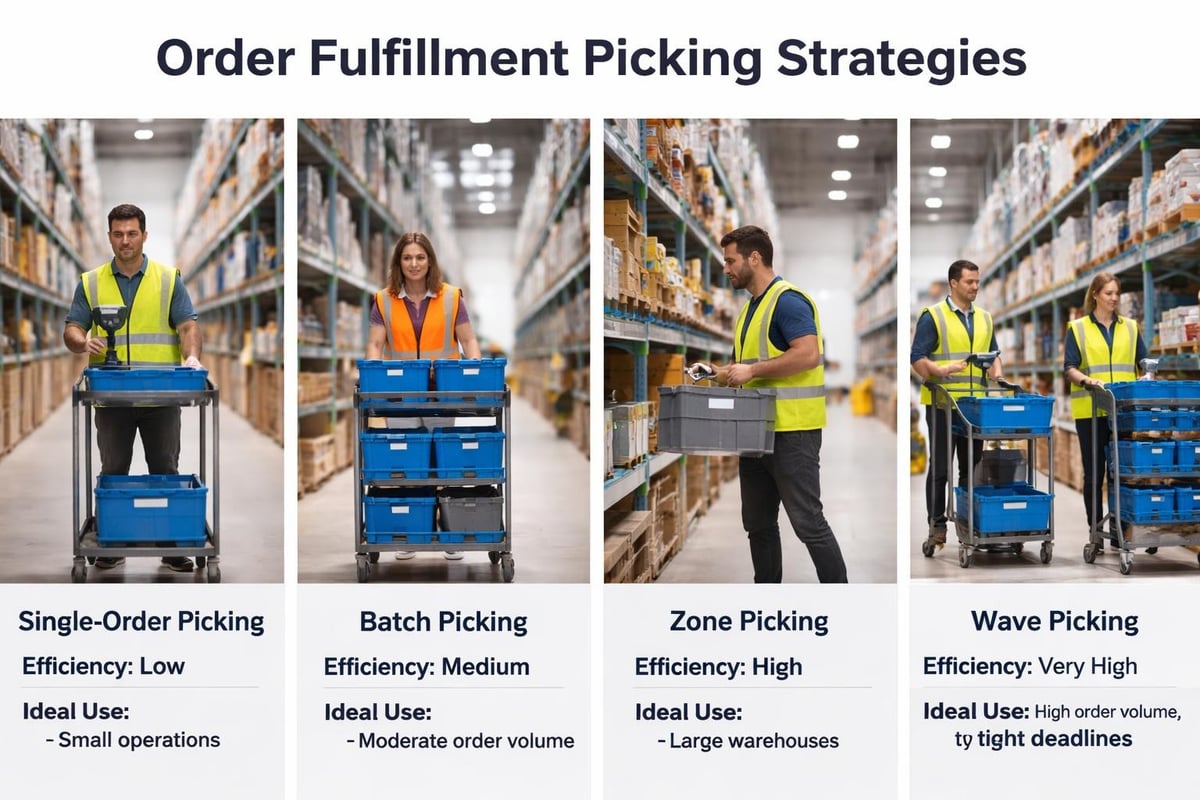
Batch picking strategies allow warehouse staff to collect items for multiple orders simultaneously. Rather than completing one order at a time, workers gather all units of a particular SKU needed across many orders, then distribute them during the packing phase. This method significantly reduces travel time within the warehouse.
Zone picking assigns specific warehouse areas to individual workers. Each picker handles all items within their designated zone, passing partially completed orders to the next zone. This specialization increases picking speed and accuracy as workers become intimately familiar with their assigned inventory locations.
Wave picking combines time-based scheduling with strategic order grouping. Orders are released to the warehouse floor in coordinated waves, allowing managers to balance workload across shifts and prioritize urgent shipments. Many operations schedule waves around carrier pickup times to maximize same-day shipping opportunities.
- Single-order picking: One order completed at a time; best for low volumes
- Batch picking: Multiple orders picked simultaneously; ideal for similar items
- Zone picking: Workers assigned specific warehouse areas; improves specialization
- Wave picking: Scheduled order releases; optimizes carrier coordination
Quality Control Integration
Quality assurance checkpoints throughout the logistics fulfillment process prevent costly errors. Visual inspection during picking confirms correct product selection. Weight verification at packing stations identifies missing items or incorrect quantities before shipment.
Photographic documentation provides evidence of proper packing for fragile items and creates records useful for resolving customer disputes. Some operations photograph every package before sealing, creating an audit trail that protects both the brand and the customer.
Shipping and Carrier Management
Selecting appropriate carriers and shipping methods represents a critical logistics fulfillment decision impacting both costs and customer satisfaction. The complexity of modern shipping extends beyond choosing between major carriers.
Multi-carrier strategies provide flexibility and cost optimization. By maintaining relationships with several carriers, fulfillment operations can select the most economical service for each shipment based on destination, package dimensions, and delivery timeline. Shipping software automates this selection process using real-time rate comparison.
Regional carriers often offer competitive pricing for specific geographic areas. While national carriers provide comprehensive coverage, regional specialists may deliver faster service at lower costs within their operating territories. Sophisticated logistics fulfillment operations leverage these regional partnerships alongside national carriers.
For brands managing branded e-commerce operations, packaging presentation matters tremendously. Custom boxes, branded tissue paper, and thank-you cards create memorable unboxing experiences. However, these elements must be integrated efficiently into packing workflows without significantly increasing processing time.
International Fulfillment Complexity
Cross-border logistics fulfillment introduces additional layers of complexity. Customs documentation, duties and taxes, and international shipping regulations require specialized knowledge. Many e-commerce brands partner with fulfillment providers experienced in international commerce rather than attempting to manage these complexities internally.
Delivered Duty Paid (DDP) shipping simplifies the customer experience by including all fees in the purchase price. Alternatively, Delivered Duty Unpaid (DDU) transfers customs responsibility to the recipient, potentially creating friction if unexpected fees arise upon delivery.
The third-party logistics industry continues evolving to meet international e-commerce demands, with providers expanding global warehouse networks and customs expertise.
| Shipping Strategy | Best For | Primary Advantage | Consideration |
|---|---|---|---|
| Multi-carrier | High volume operations | Cost optimization | Complex integration |
| Regional carriers | Concentrated customer base | Faster delivery | Limited coverage |
| Flat rate shipping | Predictable product sizes | Simplified pricing | May subsidize distant zones |
| Real-time rates | Variable product sizes | Accurate customer charges | Can deter with high costs |
Kitting and Bundling Operations
Product bundling and kitting represent value-added services within logistics fulfillment that can differentiate brands and increase average order values. These operations require dedicated processes and quality control measures.
Pre-assembled kits allow faster order fulfillment when multiple items frequently sell together. Rather than picking individual components for each order, workers select pre-packaged bundles. This approach works particularly well for gift sets, promotional packages, or products requiring specific component combinations.
Build-to-order kitting offers more flexibility by assembling bundles only when ordered. This strategy prevents obsolete inventory if bundle configurations change frequently but requires more labor during order processing. The decision between pre-assembled and build-to-order depends on bundle sales velocity and component shelf life.
Many e-commerce fulfillment services provide specialized kitting capabilities, including custom packaging insertion, product assembly, and quality inspection. These value-added services transform basic fulfillment operations into comprehensive brand support partnerships.
Quality Standards for Bundled Products
Kitted products demand rigorous quality control since multiple components must arrive correctly. Standardized kitting instructions with visual guides reduce assembly errors. Batch verification processes confirm all components are included before sealing packages.
Weight verification becomes particularly valuable for kits containing numerous small items. Automated scales can identify missing components by comparing actual weight against expected weight, flagging discrepancies for manual review.
Inventory Management and Forecasting
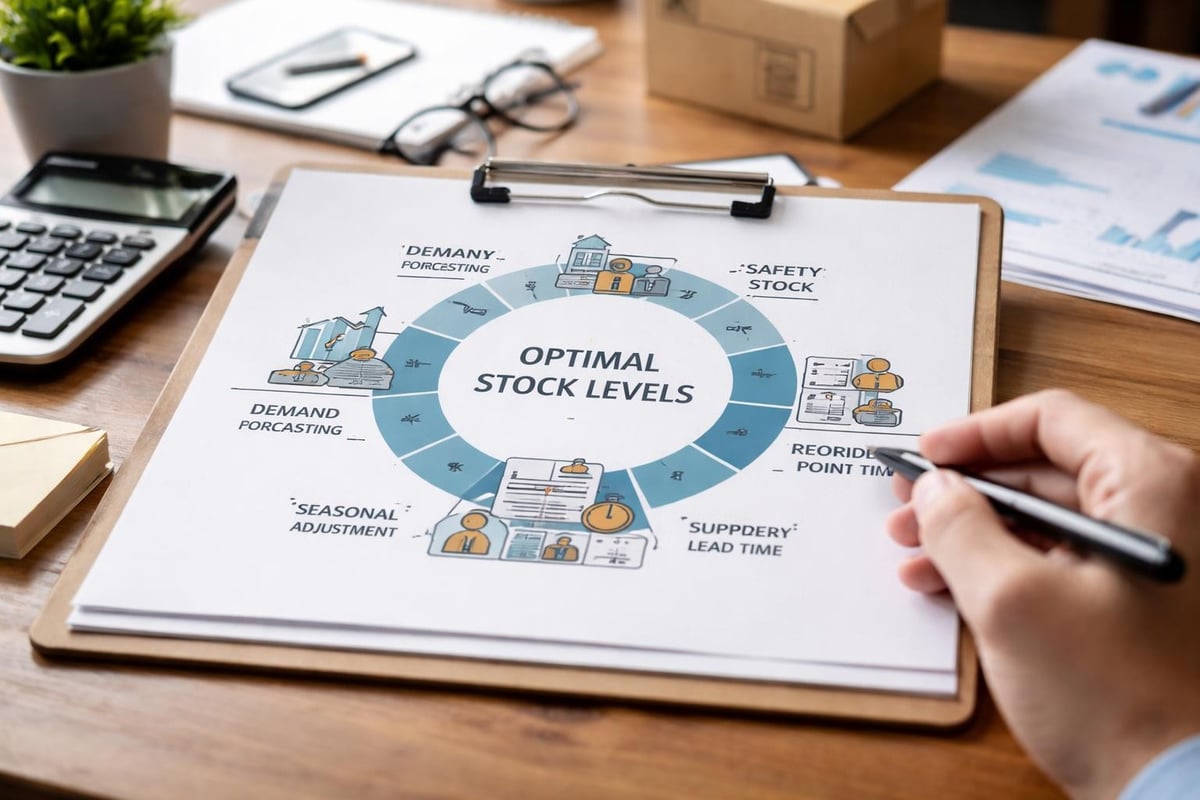
Effective logistics fulfillment requires sophisticated inventory management balancing stock availability against carrying costs. Overstocking ties up capital and warehouse space, while understocking leads to lost sales and disappointed customers.
Demand forecasting uses historical sales data, seasonal patterns, and market trends to predict future inventory needs. Advanced systems incorporate external factors like promotional calendars, competitor actions, and economic indicators. For brands experiencing rapid growth, accurate forecasting becomes increasingly challenging as historical patterns may not reflect future performance.
Safety stock calculations determine buffer inventory levels protecting against demand variability and supply chain disruptions. These calculations consider lead times from suppliers, demand volatility, and desired service levels. More predictable products require less safety stock, while items with erratic demand patterns need larger buffers.
According to research on hybrid fulfillment models, successful e-commerce operations increasingly adopt flexible inventory strategies that balance efficiency with responsiveness. This includes maintaining core inventory in primary warehouses while using distributed micro-fulfillment centers for high-demand products.
ABC Analysis for Inventory Prioritization
Not all inventory deserves equal attention within logistics fulfillment operations. ABC analysis categorizes products based on their contribution to revenue and order frequency.
A-items represent approximately 20% of SKUs but generate 80% of revenue. These products warrant close monitoring, frequent replenishment, and prime warehouse locations. Stock outages of A-items directly impact business performance.
B-items occupy the middle tier with moderate sales velocity and revenue contribution. Standard inventory management practices typically suffice for this category.
C-items constitute the majority of SKUs but contribute minimally to overall revenue. While maintaining some availability, these products can tolerate longer replenishment cycles and less convenient storage locations.
Scalability and Seasonal Planning
Logistics fulfillment systems must accommodate significant volume fluctuations without compromising service quality. The difference between peak and off-peak periods can exceed 300% for many e-commerce brands.
Flexible workforce strategies allow operations to scale labor appropriately. Many fulfillment centers employ core full-time staff supplemented by temporary workers during peak periods. Cross-training employees across multiple functions creates flexibility in task allocation based on daily priorities.
Space planning considers seasonal inventory increases and operational capacity. Warehouses operating at 90% capacity during normal periods lack room for peak season expansion. Most operations target 60-70% utilization during off-peak months, reserving capacity for seasonal surges.
For brands leveraging growing e-commerce strategies, understanding capacity constraints before peak seasons prevents fulfillment breakdowns. Planning should begin months in advance, addressing inventory procurement, staffing recruitment, and technology system testing.
Technology Enablement During Peak Periods
Advanced logistics fulfillment systems provide critical support during high-volume periods. Automated picking technologies like conveyor systems and robotic assistance increase throughput without proportional labor increases. While significant investments, these systems often justify their costs through peak season performance improvements.
Temporary automation solutions offer middle-ground approaches. Mobile robots that assist with inventory transport or automated packing stations can be leased seasonally, providing capacity boosts without permanent capital commitments.
Studies examining fulfillment vision and omnichannel shopping emphasize the importance of flexible systems capable of adapting to changing customer expectations and volume fluctuations throughout the year.
Returns Processing and Reverse Logistics
Returns management significantly impacts overall logistics fulfillment efficiency and profitability. Well-designed reverse logistics processes minimize costs while maintaining customer satisfaction.
Centralized returns processing consolidates returned merchandise in dedicated facilities or warehouse zones. This specialization allows staff to develop expertise in damage assessment, inventory disposition, and refurbishment operations. Separating returns from outbound fulfillment prevents contamination of pick locations with potentially damaged goods.
Disposition decision trees standardize handling based on product condition and return reason. Items in saleable condition return to inventory immediately. Damaged products may warrant refurbishment, liquidation, or disposal. Systematic approaches prevent valuable inventory from languishing in returns queues.
The financial impact of returns extends beyond lost sales. Return shipping costs, inspection labor, and inventory write-downs compound to create significant expenses. Research on risk management in order fulfillment highlights the importance of process improvements that reduce return rates and optimize reverse logistics efficiency.
Data Analytics for Returns Reduction
Analyzing return patterns identifies opportunities to reduce return rates at their source. High return rates for specific products may indicate listing inaccuracies, quality issues, or sizing problems. Logistics fulfillment operations providing detailed return reason tracking enable brands to address root causes.
Photography and documentation during returns intake protects against fraudulent claims while providing evidence for supplier quality disputes. Systematic data collection transforms returns from pure cost centers into valuable feedback mechanisms.
Choosing Between In-House and Outsourced Fulfillment
E-commerce brands face a fundamental decision about whether to manage logistics fulfillment internally or partner with specialized providers. Each approach offers distinct advantages and challenges.
In-house fulfillment provides maximum control over processes, customer experience, and data. Brands can implement unique packaging, customize quality standards, and maintain direct oversight of all operations. However, this approach requires significant capital investment in warehouse space, equipment, and management expertise.
Third-party logistics (3PL) providers offer established infrastructure, scalable capacity, and specialized expertise. These partnerships convert fixed fulfillment costs into variable expenses, improving financial flexibility. For brands comparing Amazon FBA prep vs 3PL fulfillment, understanding the specific trade-offs becomes essential.
The global e-commerce fulfillment market shows increasing sophistication among 3PL providers, with many offering specialized services for specific product categories or sales channels. This specialization enables brands to access expertise that would be prohibitively expensive to develop internally.
Hybrid Fulfillment Models
Many successful e-commerce operations adopt hybrid approaches combining in-house capabilities with outsourced services. Brands might fulfill standard orders internally while partnering with specialists for electronic fulfillment requiring specialized handling or international orders demanding customs expertise.
Geographic distribution often drives hybrid models. Brands maintain primary fulfillment operations in one location while utilizing 3PL partners to establish presence in additional markets without full warehouse investments.
Performance Metrics and Continuous Improvement
Measuring logistics fulfillment performance enables data-driven optimization. Key performance indicators (KPIs) provide objective assessments of operational efficiency and identify improvement opportunities.
Order accuracy rates measure the percentage of orders shipped correctly without returns due to fulfillment errors. Industry-leading operations achieve accuracy rates exceeding 99.5%, while average performers typically range between 97-98%. Even small accuracy improvements significantly impact customer satisfaction and reduce costly return processing.
Order cycle time tracks the duration from order placement to shipment departure. Faster cycle times enable later order cutoff times and improve the likelihood of meeting customer delivery expectations. Many operations target same-day shipping for orders received before specific cutoff times.
Inventory accuracy compares physical stock counts against system records. Discrepancies indicate process breakdowns requiring investigation. Regular cycle counting programs maintain accuracy without disruptive full facility inventories.
- Order accuracy rate: Percentage of correctly fulfilled orders
- Average order cycle time: Hours from order receipt to shipment
- Inventory accuracy: Match between physical and system counts
- On-time shipment rate: Percentage meeting promised ship dates
- Cost per order: Total fulfillment expenses divided by order volume
- Returns rate: Percentage of orders returned by customers
- Warehouse capacity utilization: Percentage of available space occupied
Benchmark Comparisons and Goal Setting
Understanding industry benchmarks contextualizes internal performance metrics. While specific targets vary by product category and business model, logistics fulfillment operations should regularly compare their performance against industry standards and competitors.
Continuous improvement methodologies like Lean and Six Sigma provide frameworks for systematic performance enhancement. Regular process reviews identify bottlenecks, waste, and opportunities for automation or workflow redesign.
Advanced operations utilize last-mile delivery datasets and analytics to understand delivery performance patterns and optimize routing strategies. This data-driven approach transforms logistics fulfillment from reactive operations into proactive competitive advantages.
Successful logistics fulfillment requires strategic planning, robust technology infrastructure, and continuous optimization across all operational components. As e-commerce continues evolving, brands that master fulfillment complexity gain significant competitive advantages through improved customer satisfaction and operational efficiency. Whether you're scaling a growing brand or optimizing existing operations, partnering with experienced fulfillment providers can accelerate your success. Ecom Automation Prep offers comprehensive fulfillment solutions designed specifically for fast-growing e-commerce brands, including Amazon FBA prep, direct-to-consumer fulfillment, and specialized kitting services that make logistics effortless.