
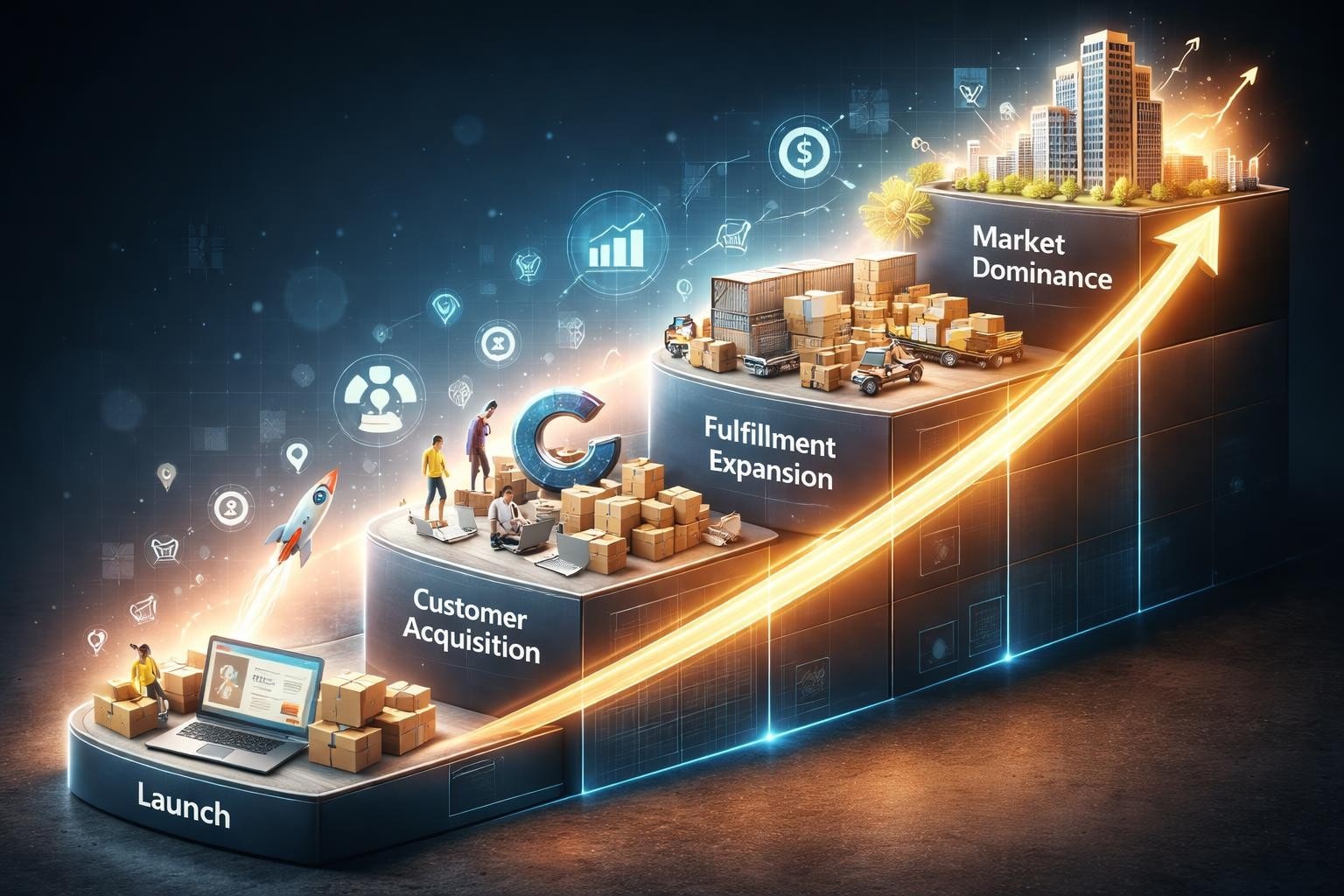

The landscape of online retail continues to evolve at an unprecedented pace, with projections indicating that global ecommerce sales will reach $6.88 trillion in 2026. For businesses navigating this dynamic marketplace, understanding the mechanisms behind growing ecommerce operations becomes essential for long-term success. Whether you're launching your first online store or scaling an established brand, the principles of sustainable growth remain consistent: strategic planning, operational excellence, and adaptable fulfillment infrastructure. This comprehensive guide explores the critical components that drive ecommerce expansion and provides actionable strategies for businesses ready to scale.
Understanding the Current Ecommerce Growth Trajectory
The digital commerce sector demonstrates remarkable resilience and expansion across global markets. Ecommerce now represents an increasingly significant portion of total retail spending, with online channels capturing market share from traditional brick-and-mortar establishments at accelerating rates.
Recent data from comprehensive ecommerce statistics reveals several compelling trends shaping the industry. Mobile commerce continues its upward trajectory, accounting for a growing percentage of total online transactions. Consumer behavior has fundamentally shifted, with shoppers expecting seamless experiences across multiple touchpoints and devices.
Key Market Indicators
Understanding where the market is heading helps businesses position themselves for sustainable growth. The following metrics provide insight into the current state of online retail:
| Metric | 2026 Projection | Growth Driver |
|---|---|---|
| Global Ecommerce Sales | $6.88 trillion | Digital adoption and mobile penetration |
| Online Share of Total Retail | 24%+ | Consumer preference shifts |
| Mobile Commerce Percentage | 70%+ | Smartphone ubiquity |
| Cross-border Transactions | 22% annual growth | Global marketplace expansion |
These figures underscore the massive opportunity available for businesses committed to growing ecommerce operations strategically. The question isn't whether to invest in online channels, but how to do so efficiently and effectively.
Building a Foundation for Scalable Growth
Before accelerating expansion efforts, businesses must establish robust operational foundations. Growing ecommerce brands that attempt to scale without proper infrastructure often encounter critical bottlenecks that limit their potential or damage customer relationships.
Inventory Management Systems
Effective inventory control serves as the backbone of successful ecommerce operations. As order volumes increase, manual tracking methods quickly become inadequate. Implementing sophisticated inventory management software enables real-time visibility across multiple sales channels, preventing stockouts and overstock situations that erode profitability.
Modern systems integrate with various platforms, automatically updating stock levels as orders are processed. This synchronization proves essential for businesses selling through Amazon, Shopify, WooCommerce, and other marketplaces simultaneously.
Fulfillment Strategy Development
Perhaps no single factor impacts growing ecommerce businesses more significantly than fulfillment capabilities. The promise made during the purchasing process must be delivered-literally-through reliable, efficient order processing and shipping.
Businesses face several fulfillment model options:
- In-house fulfillment: Maximum control but requires significant infrastructure investment
- Third-party logistics (3PL): Scalable solutions with professional expertise
- Hybrid approaches: Combining in-house and outsourced fulfillment for flexibility
- Amazon FBA: Leveraging Amazon's infrastructure for Prime eligibility
- Dropshipping: Minimal upfront investment but reduced margin and control
Each model presents distinct advantages and trade-offs. Rapidly growing ecommerce operations typically benefit from partnering with specialized fulfillment providers who can absorb volume fluctuations and provide expertise in areas like kitting, bundling, and marketplace-specific preparation requirements.
Technological Infrastructure for Expansion
Technology serves as the great enabler for businesses focused on growing ecommerce revenue and customer base. The right technical stack automates repetitive tasks, provides actionable insights, and creates seamless customer experiences.
Platform Selection and Optimization
Choosing the appropriate ecommerce platform significantly influences growth potential. Shopify, WooCommerce, Magento, and BigCommerce each offer different capabilities suited to various business models and technical requirements.
For businesses seeking professional development expertise, partnering with specialists like Kida Digital can accelerate the path from concept to launch, particularly for Shopify-based stores requiring conversion optimization and scalability.

Integration Ecosystems
Modern ecommerce demands seamless data flow between systems:
- Shopping cart platforms connecting with payment processors
- Order management systems syncing with inventory databases
- Customer relationship management tools integrating with marketing automation
- Analytics platforms consolidating data from multiple sources
- Fulfillment systems receiving order details and updating tracking information
These integrations eliminate manual data entry, reduce errors, and provide the real-time visibility necessary for informed decision-making. As operations scale, the efficiency gains from proper integration compound dramatically.
Customer Acquisition and Retention Strategies
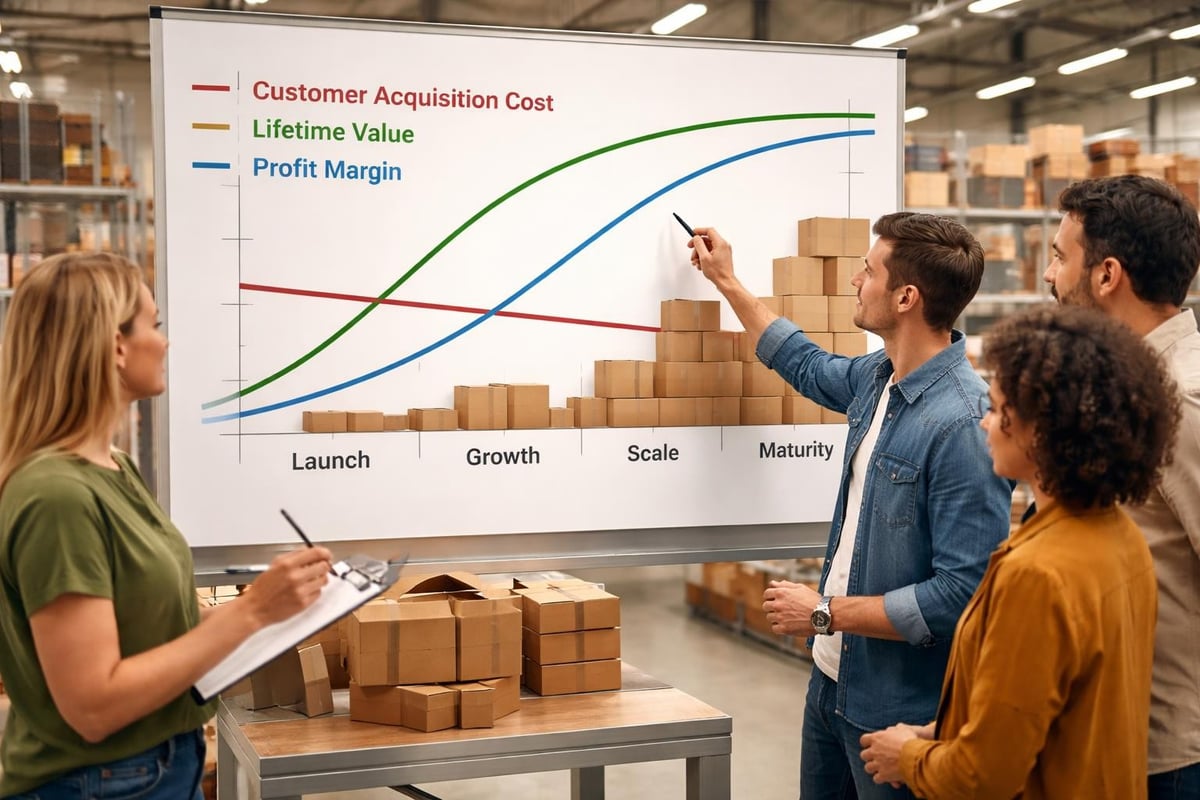
Growing ecommerce businesses must balance the dual imperatives of acquiring new customers while maximizing value from existing ones. Customer acquisition costs continue rising across most channels, making retention increasingly critical to profitability.
Multi-Channel Marketing Approach
Successful brands diversify their customer acquisition channels to reduce dependency on any single source. According to emerging ecommerce trends, businesses should consider incorporating:
- Search engine optimization for organic traffic
- Paid search advertising through Google and Bing
- Social media marketing across relevant platforms
- Influencer partnerships and affiliate programs
- Email marketing for both acquisition and retention
- Content marketing to establish authority and trust
The optimal channel mix varies by product category, target demographic, and competitive landscape. Regular testing and analysis reveal which channels deliver the strongest return on investment for specific business contexts.
Conversion Rate Optimization
Traffic without conversion wastes marketing investment. Growing ecommerce operations must continuously refine the customer journey to reduce friction and increase purchase completion rates.
| Optimization Area | Common Issues | Improvement Strategies |
|---|---|---|
| Product Pages | Insufficient information, poor imagery | Enhanced photography, detailed descriptions, reviews |
| Checkout Process | Too many steps, unexpected costs | Streamlined flow, transparent pricing, guest checkout |
| Mobile Experience | Non-responsive design, slow loading | Mobile-first design, performance optimization |
| Trust Signals | Lack of credibility indicators | Security badges, money-back guarantees, social proof |
Small improvements in conversion rates produce outsized impacts on revenue when applied across significant traffic volumes.
Operational Excellence in Fulfillment
As order volumes increase, fulfillment operations transition from a tactical concern to a strategic differentiator. The companies succeeding in growing ecommerce markets recognize that delivery experience directly impacts customer lifetime value and word-of-mouth referrals.
Speed and Accuracy Standards
Consumer expectations around delivery continue rising. Two-day shipping, once a premium service, increasingly represents the baseline expectation. Same-day delivery gains traction in urban markets.
Meeting these expectations requires:
- Strategic warehouse location selection near major population centers
- Efficient pick-and-pack processes minimizing errors
- Strong carrier relationships providing reliable transit times
- Real-time inventory accuracy preventing order cancellations
- Proactive communication throughout the delivery journey
Accuracy proves equally important as speed. A single incorrect shipment generates customer service inquiries, potential returns, and replacement shipments-all eroding margins and customer satisfaction.
Amazon FBA Preparation Services
For brands selling through Amazon, proper FBA preparation ensures inventory acceptance and optimal listing performance. Amazon maintains strict requirements around labeling, packaging, and shipment configuration.
Professional FBA prep services handle:
- Product inspection for quality assurance
- FNSKU labeling application
- Polybagging and bubble wrapping as required
- Case pack configuration meeting Amazon standards
- Shipment creation and carrier coordination
These specialized services allow brands to focus on product development and marketing while ensuring compliance with Amazon's evolving requirements.
Data-Driven Decision Making
Growing ecommerce businesses generate enormous quantities of data. Converting this information into actionable insights separates market leaders from struggling competitors.
Key Performance Indicators
Tracking the right metrics enables proactive management and course correction before small issues become major problems.
Financial Metrics:
- Average order value (AOV)
- Customer acquisition cost (CAC)
- Customer lifetime value (CLV)
- Gross margin by product and category
- Inventory turnover rates
Operational Metrics:
- Order fulfillment cycle time
- Shipping error rates
- Return and refund percentages
- Inventory accuracy scores
- Website conversion rates by source
Customer Metrics:
- Repeat purchase rates
- Net promoter score (NPS)
- Average time between purchases
- Customer service inquiry volume
- Review ratings and sentiment
Establishing baseline measurements and tracking trends over time reveals operational strengths to amplify and weaknesses requiring attention.

Predictive Analytics and Forecasting
Advanced analytics move beyond historical reporting to forecast future trends. Machine learning algorithms identify patterns in purchasing behavior, seasonal fluctuations, and inventory requirements.
Accurate forecasting prevents two costly extremes: stockouts that result in lost sales and damaged customer relationships, and overstock situations that tie up capital and increase storage costs. For businesses experiencing rapid expansion, forecasting accuracy becomes increasingly critical as the financial stakes of miscalculation grow proportionally.
Emerging Trends Shaping Future Growth
The ecommerce landscape continues evolving, with several trends poised to significantly impact growing ecommerce operations over the coming years.
Artificial Intelligence and Automation
Agentic AI and unified commerce systems represent transformative technologies that will define competitive advantages in 2026 and beyond. These systems autonomously handle complex tasks like inventory optimization, dynamic pricing, personalized product recommendations, and customer service inquiries.
Businesses implementing AI-powered solutions report significant improvements in operational efficiency and customer satisfaction metrics. The technology democratizes capabilities previously available only to enterprise-scale operations, enabling smaller brands to compete effectively.
Sustainability and Ethical Commerce
Consumer preferences increasingly factor environmental and social considerations into purchasing decisions. Brands demonstrating genuine commitment to sustainability gain competitive advantages, particularly with younger demographic segments.
Sustainable practices in growing ecommerce include:
- Eco-friendly packaging materials and right-sized boxes
- Carbon-neutral shipping options
- Transparent supply chain communications
- Product lifecycle considerations and recyclability
- Ethical labor practices throughout the production chain
These initiatives resonate with conscious consumers while often reducing costs through material optimization and waste reduction.
Omnichannel Integration
The distinction between online and offline commerce continues blurring. Successful brands create unified experiences allowing customers to research online and purchase in-store, or vice versa, with complete flexibility.
Key omnichannel capabilities include:
| Feature | Customer Benefit | Operational Requirement |
|---|---|---|
| Buy Online, Pick Up In Store | Immediate gratification, no shipping costs | Real-time inventory sync |
| Ship from Store | Faster delivery, reduced stockouts | Store-level fulfillment training |
| Unified Customer Profiles | Seamless experience across channels | Integrated CRM systems |
| Cross-channel Returns | Flexibility and convenience | Centralized return processing |
Implementing true omnichannel capabilities requires significant technical investment but delivers measurable returns through increased customer loyalty and higher lifetime values.
Scaling Fulfillment Infrastructure
As sales volumes grow, fulfillment capabilities must scale proportionally. Many businesses attempting rapid expansion encounter fulfillment bottlenecks that constrain growth and damage customer relationships through delayed shipments or inventory availability issues.
Geographic Expansion Strategies
Distributing inventory across multiple locations reduces shipping distances and transit times. This geographic diversification enables faster delivery at lower costs, directly impacting customer satisfaction and repeat purchase rates.
Strategic warehouse placement considers:
- Customer concentration by region
- Proximity to major shipping hubs
- Labor market availability and costs
- Facility lease terms and scalability
- Tax implications across jurisdictions
Partnership Models
Rather than building fulfillment infrastructure entirely in-house, many growing ecommerce brands partner with specialized providers offering expertise, technology, and flexible capacity. These partnerships provide several advantages:
- Variable cost structure scaling with revenue
- Professional expertise in fulfillment best practices
- Technology platforms providing visibility and integration
- Established carrier relationships and negotiated rates
- Ability to handle seasonal volume fluctuations
Third-party fulfillment providers typically offer services beyond basic warehousing and shipping, including value-added services like kitting, bundling, subscription box assembly, and marketplace-specific preparation.
Financial Management for Growth
Rapid expansion creates unique financial challenges. Growing ecommerce businesses must carefully manage cash flow, working capital, and profitability metrics to sustain growth momentum.
Working Capital Optimization
Inventory represents the largest working capital requirement for most product-based businesses. Balancing sufficient stock to meet demand against the capital tied up in unsold goods requires careful analysis.
Inventory financing options allow businesses to purchase additional stock without depleting cash reserves:
- Traditional bank lines of credit secured by inventory
- Inventory-specific financing from specialized lenders
- Supplier payment terms negotiation for extended dating
- Revenue-based financing using sales projections as collateral
Profitability Across Channels
Different sales channels present varying cost structures. Amazon charges referral fees, fulfillment fees, and storage fees. Shopify requires platform subscriptions, payment processing fees, and separate fulfillment arrangements. Understanding true profitability by channel informs resource allocation decisions.
Many brands discover that while marketplaces like Amazon drive volume, direct-to-consumer channels through owned websites deliver higher margins. The optimal strategy typically involves a balanced portfolio leveraging each channel's strengths.
International Expansion Considerations
Geographic expansion represents a significant growth opportunity for established domestic brands. However, international operations introduce complexity around customs, regulations, currency, and localization.
Cross-Border Logistics
International shipping requires additional documentation, duty and tax calculations, and carrier selection. Businesses can choose between several approaches:
- Direct international shipping from domestic warehouses
- Foreign warehouse establishment for local fulfillment
- Third-party logistics partners with international capabilities
- Marketplace fulfillment programs like Amazon Global Selling
Each approach balances control, cost, and complexity differently. The right choice depends on target markets, product characteristics, and growth objectives.
Localization Requirements
Successful international expansion extends beyond logistics to cultural adaptation. Product descriptions, marketing messages, customer service, and even product selection may require adjustment for different markets. Currency display, local payment methods, and region-specific regulations all impact the customer experience.
Successfully growing ecommerce operations requires balancing strategic vision with operational excellence across multiple dimensions simultaneously. The brands achieving sustainable expansion invest in scalable infrastructure, leverage data for decision-making, and maintain unwavering focus on customer experience throughout the fulfillment journey. When you're ready to eliminate fulfillment bottlenecks and scale your operations confidently, Ecom Automation Prep provides the comprehensive services and expertise needed to support your growth ambitions without sacrificing quality or customer satisfaction.





[…] growing e-commerce landscape demands that D2C fulfillment partners understand brand positioning. A luxury skincare brand […]
[…] transfers operational burden while leveraging established expertise and infrastructure. For many growing e-commerce brands, partnering with experienced providers accelerates growth by removing operational bottlenecks and […]
[…] growing e-commerce brands, these optimization practices become increasingly important as order volumes scale. What works at […]
[…] focused on growing e-commerce operations recognize that sustainability and profitability align when fulfillment box strategies […]