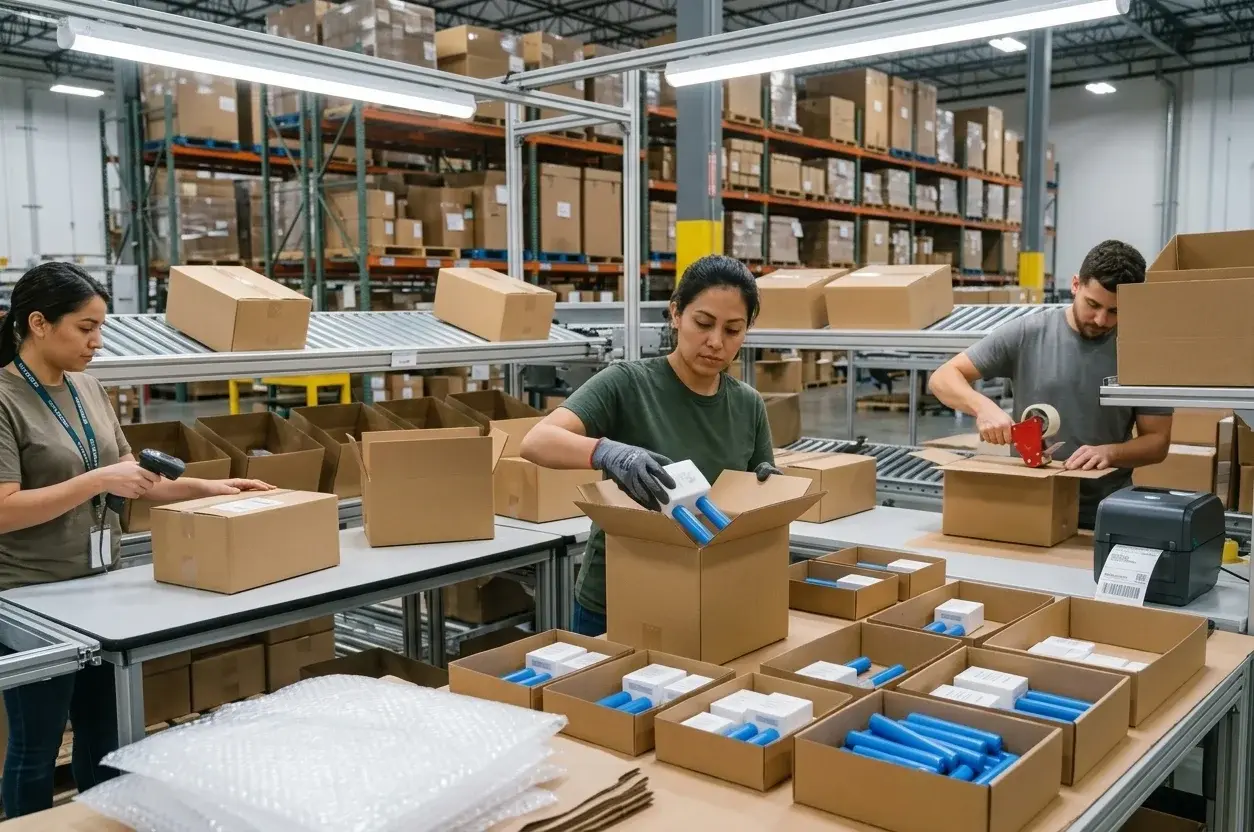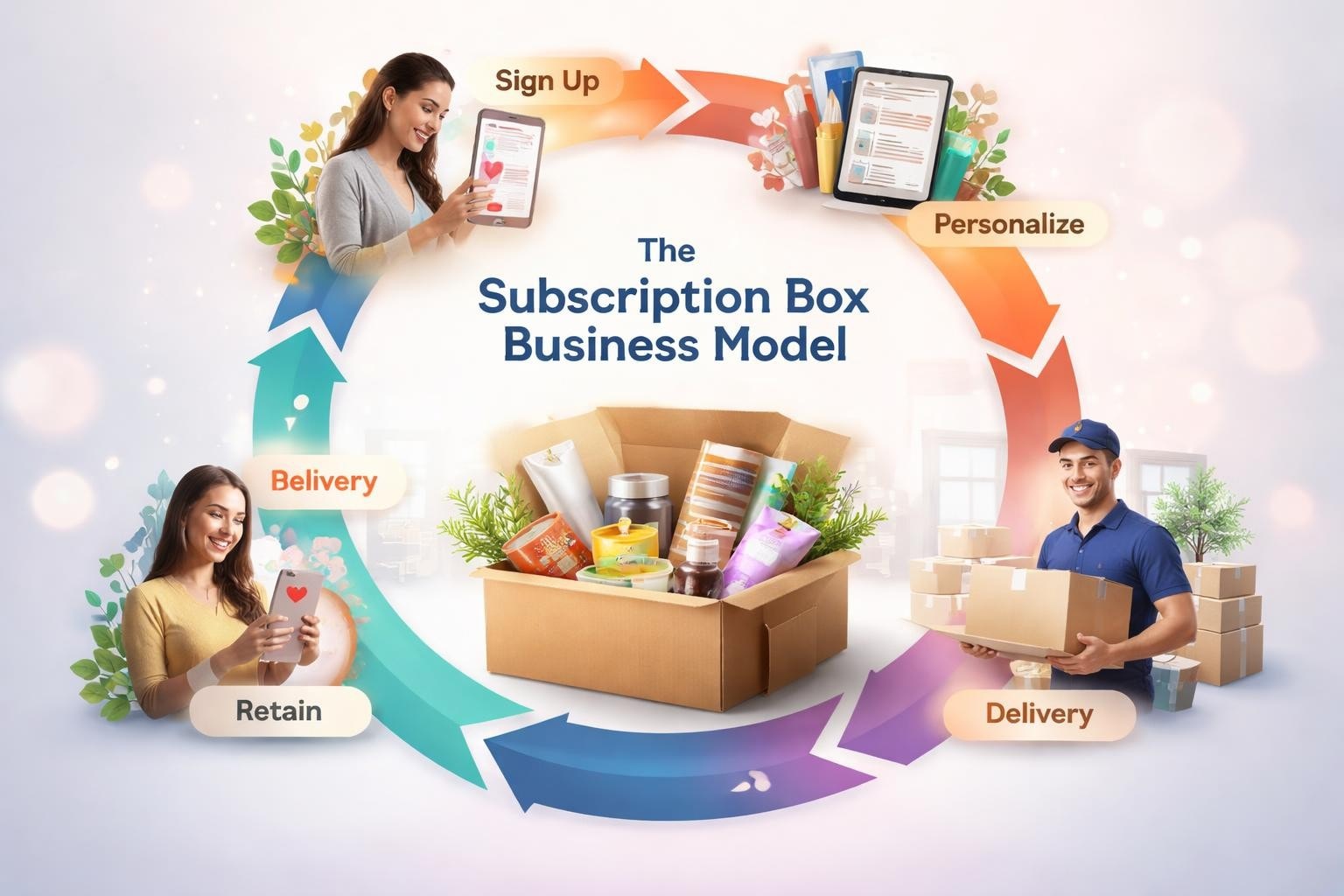

Subscription-based business models have transformed e-commerce, creating predictable revenue streams and deeper customer relationships. However, the operational complexity behind delivering curated products month after month requires specialized logistics expertise. Subscription fulfillment encompasses the entire process of receiving, storing, picking, packing, and shipping recurring orders to subscribers while maintaining consistency, quality, and efficiency. For fast-growing e-commerce brands, mastering these operations can mean the difference between sustainable growth and operational chaos.
Understanding Subscription Fulfillment Operations
Subscription fulfillment differs fundamentally from traditional e-commerce order processing. While standard fulfillment handles sporadic, one-time purchases, subscription operations must manage recurring shipments with precise timing, personalized product combinations, and consistent customer experiences across multiple cycles.
The core components include customer onboarding workflows, inventory planning for recurring demand, assembly and kitting processes, customized packaging solutions, and ongoing communication systems. Each element must function seamlessly to deliver products on schedule while maintaining the quality standards subscribers expect.

Key Operational Differences
Inventory management becomes more predictable yet more complex. Brands can forecast demand based on subscriber counts, but must account for:
- New subscriber acquisition rates
- Churn and cancellation patterns
- Product preference variations across tiers
- Seasonal fluctuations in subscriber behavior
- Buffer stock for reshipments and replacements
Order processing shifts from individual transactions to batch cycles. Most subscription businesses process orders on monthly, quarterly, or custom cycles, requiring synchronized workflows that can handle hundreds or thousands of orders simultaneously.
Packaging requirements typically demand more customization than standard fulfillment. Subscription boxes often include branded inserts, personalized notes, tissue paper, custom box designs, and promotional materials that enhance the unboxing experience.
| Standard Fulfillment | Subscription Fulfillment |
|---|---|
| Sporadic order timing | Predictable cycle dates |
| Individual SKU picks | Multi-item kitting required |
| Generic packaging | Custom branded boxes |
| One-time customer interaction | Ongoing relationship management |
| Variable demand forecasting | Subscription-based predictions |
Critical Challenges in Subscription Fulfillment
Managing recurring shipments introduces unique operational hurdles that don’t exist in traditional fulfillment models. Understanding these challenges helps brands prepare appropriate solutions before problems impact customer satisfaction.
Kitting and Assembly Complexity
Creating subscription boxes requires assembling multiple products into cohesive packages. This kitting process demands careful coordination, especially when managing different subscription tiers, seasonal variations, or personalized selections based on customer preferences.
The assembly line must handle various configurations efficiently. A beauty subscription might offer three tiers with different product combinations, while a food subscription might customize based on dietary preferences. Each variation requires clear documentation, quality control checkpoints, and trained staff who can maintain accuracy across high volumes.
Common kitting challenges include:
- Version control across different subscription tiers
- Managing component shortages without delaying shipments
- Maintaining assembly accuracy during peak periods
- Training temporary staff during seasonal surges
- Implementing quality checks that don’t slow throughput
Inventory Forecasting Precision
Subscription box fulfillment requires balancing supply and demand with greater precision than traditional retail. Overstocking ties up capital and warehouse space, while understocking forces brands to substitute products or delay shipments, damaging subscriber trust.
Effective forecasting integrates multiple data sources: historical subscriber counts, acquisition trends, seasonal patterns, churn rates, and marketing campaign impacts. Advanced brands use predictive analytics to model subscriber behavior and adjust purchasing accordingly.
Packaging Consistency and Brand Experience
Subscribers expect consistent quality with every delivery. A single disappointing unboxing can trigger cancellations and negative reviews that ripple across social media. Maintaining packaging standards across thousands of shipments requires robust quality control systems.
Brands must standardize packing workflows while allowing customization where needed. This includes defining exact product placement, insert sequencing, protective material usage, and box sealing methods. Documentation should be visual and detailed enough that any team member can replicate the process exactly.

Choosing Between In-House and Outsourced Solutions
The decision between managing subscription fulfillment internally or partnering with a third-party logistics provider significantly impacts operational efficiency, scalability, and profitability.
In-House Fulfillment Considerations
Operating your own fulfillment operation provides maximum control over the subscriber experience. Brands can immediately adjust processes, experiment with packaging innovations, and maintain direct oversight of quality standards.
However, in-house operations require substantial upfront investment in warehouse space, equipment, technology systems, and staff. Fixed costs remain constant regardless of subscriber fluctuations, creating financial pressure during slower periods. Seasonal surges demand temporary labor that requires training, reducing efficiency precisely when speed matters most.
Advantages of in-house operations:
- Complete control over fulfillment processes
- Direct quality management
- Faster implementation of changes
- No sharing of inventory or resources
- Ability to handle unique product requirements
Disadvantages include:
- High fixed overhead costs
- Limited scalability during growth phases
- Technology investment requirements
- Staff management and training burden
- Geographic limitations affecting shipping costs
Third-Party Logistics Partnerships
Working with an e-commerce fulfillment center specializing in subscription services transfers operational complexity to experienced partners. Quality 3PLs understand the nuances of recurring shipments, maintain infrastructure for scalability, and offer geographic distribution that reduces shipping costs.
The key is selecting a partner experienced with subscription models. Generic fulfillment providers may struggle with kitting complexity, cycle timing requirements, and the customization standards subscribers expect. Subscription box brands need 3PL partners who understand recurring shipment challenges and can maintain consistency across billing cycles.
| Consideration | In-House | 3PL Partnership |
|---|---|---|
| Initial Investment | High | Low to moderate |
| Scalability | Limited | Highly flexible |
| Geographic Reach | Single location | Multiple distribution centers |
| Technology Costs | Full burden | Shared infrastructure |
| Control Level | Complete | Collaborative |
| Expertise | Requires building | Immediate access |
Scaling Subscription Fulfillment Operations
Growth creates new operational challenges that can overwhelm fulfillment systems designed for smaller volumes. Scaling subscription brand fulfillment requires proactive planning, technology investments, and process optimization before capacity constraints impact service quality.
Technology Infrastructure Requirements
Subscription businesses need integrated systems connecting customer management, inventory tracking, order processing, and shipping execution. The technology stack should automate recurring billing, trigger fulfillment workflows at cycle cutoffs, update inventory levels in real-time, and provide subscribers with tracking information automatically.
Key technology components include:
- Subscription management platforms handling billing and renewals
- Warehouse management systems optimizing pick paths and inventory placement
- Order management software coordinating fulfillment workflows
- Integration middleware connecting disparate systems
- Customer communication tools for shipment notifications
Without robust integration, teams waste hours manually transferring data between systems, creating error opportunities and limiting growth capacity.
Process Optimization Strategies
Efficient subscription fulfillment workflows balance speed with accuracy. Leading operations implement proven strategies that minimize touches, reduce errors, and maintain consistent quality.
Batch processing groups similar tasks together. Rather than picking individual orders, staff pick all units of specific SKUs for an entire cycle, then move to assembly stations where kits are built systematically. This approach reduces warehouse travel time and increases picking accuracy.
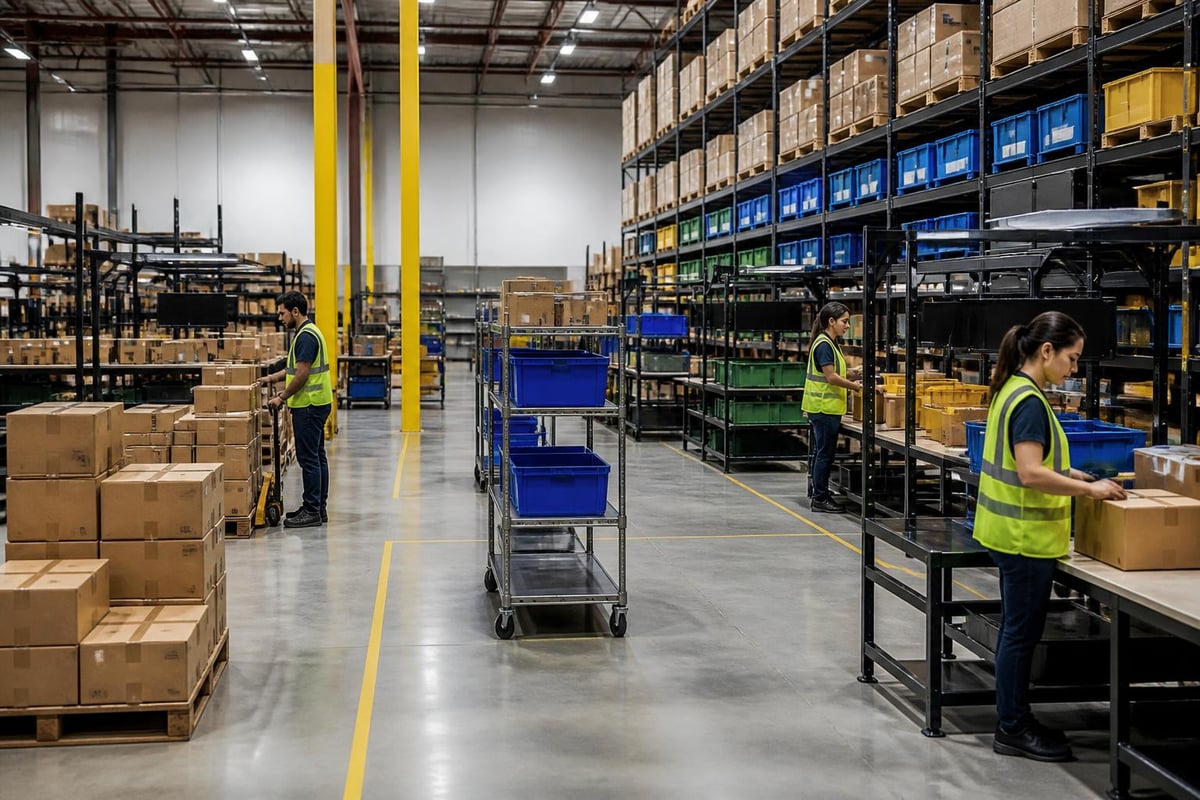
Zone-based picking assigns different product categories to specific warehouse zones. Teams become expert in their zones, improving speed and accuracy. Products then converge at assembly areas where complete kits are built and quality-checked.
Standard operating procedures document every process step with visual guides. New employees can follow documented procedures immediately, maintaining quality during training periods and seasonal hiring surges. Best practices for subscription fulfillment emphasize workflow design and quality control systems that scale with volume.
Managing Customer Experience Through Fulfillment
Subscription success depends on delivering consistent value month after month. The fulfillment operation directly impacts subscriber satisfaction, retention rates, and lifetime customer value. Every touchpoint, from package arrival timing to product presentation quality, shapes customer perceptions.
Delivery Timing and Reliability
Subscribers expect predictable delivery windows. Marketing communications promise products by specific dates, creating contractual obligations the fulfillment operation must honor. Missing delivery windows, even occasionally, erodes trust and increases churn risk.
Successful operations build buffer time into schedules, accounting for potential delays at every stage. Order cutoff dates should provide adequate processing time before promised delivery dates. Carrier relationships should include performance guarantees and contingency options when primary carriers experience disruptions.
Real-time tracking transparency helps manage expectations. Automated notifications at key milestones (order processed, shipped, out for delivery) keep subscribers informed and reduce support inquiries about shipment status.
Handling Variations and Customization
Many subscription models offer product variations based on subscriber preferences, adding complexity to fulfillment operations. A single subscription brand might manage dozens of SKU combinations across different tiers, preferences, and seasonal offerings.
Effective systems use clear labeling, color coding, or zone separation to prevent mixing variations. Assembly instructions should be foolproof, with visual guides showing exact product combinations for each variation. Quality control checkpoints verify correct configurations before boxes are sealed.
Working with an e-commerce fulfillment warehouse experienced in customization helps brands maintain accuracy while scaling personalization options that enhance subscriber value.
Inventory Planning for Recurring Revenue
Subscription models provide valuable forecasting data, but inventory planning remains challenging. Purchasing decisions made months in advance must account for subscriber growth, retention patterns, and product availability windows.
Demand Forecasting Methods
Historical analysis reviews previous cycles to establish baseline demand patterns. Year-over-year comparisons reveal seasonal trends, while month-over-month changes indicate growth trajectories or concerning churn increases.
Cohort analysis examines subscriber behavior by acquisition date. Understanding how different cohorts retain over time improves predictions about future renewal rates and product consumption patterns.
Lead time consideration factors in supplier production schedules, shipping durations, and quality inspection requirements. Long lead times demand earlier purchase commitments based on less certain forecasts, increasing risk.
Safety Stock Strategies
Maintaining buffer inventory protects against forecast errors, supplier delays, and quality issues requiring replacement products. However, excessive safety stock ties up capital and warehouse space that could support growth.
Calculate safety stock based on:
- Demand variability across recent cycles
- Supplier lead time consistency
- Cost of stockouts versus carrying costs
- Product shelf life or obsolescence risk
- New subscriber acquisition volatility
Perishable products, seasonal items, and trend-driven merchandise require different safety stock approaches than evergreen products with long shelf lives.
Quality Control and Returns Management
Maintaining consistent quality across thousands of recurring shipments demands systematic quality control processes integrated throughout fulfillment workflows.
Multi-Stage Quality Checks
Effective quality control begins at receiving, where incoming inventory is verified against purchase orders for accuracy, quantity, and condition. Damaged or incorrect products are quarantined immediately, preventing them from entering fulfillment workflows.
Assembly quality checks verify correct product combinations and quantities before packaging. Weight verification can quickly identify missing items, while visual inspections confirm packaging presentation meets brand standards.
Final inspections before carrier handoff ensure boxes are properly sealed, labeled correctly, and meet dimensional requirements. Some operations photograph completed packages, creating documentation useful for resolving subscriber disputes.
Returns and Replacement Processes
Subscription businesses experience different return patterns than traditional e-commerce. Rather than returning unwanted items, subscribers who receive damaged products or incorrect configurations expect rapid replacements without disrupting their subscription.
Streamlined replacement processes acknowledge issues quickly, ship replacement products immediately, and investigate root causes to prevent recurrence. Some brands ship replacements proactively upon receiving damage reports, then provide return labels for defective items.
Common fulfillment challenges like kitting errors and packaging inconsistencies often surface through returns data, providing valuable feedback for process improvements.
Cost Optimization Without Sacrificing Quality
Subscription margins depend on controlling fulfillment costs while maintaining the quality standards that justify recurring revenue. Strategic optimization identifies savings opportunities that don’t compromise subscriber experience.
Packaging Efficiency
Custom branded packaging enhances unboxing experiences but costs more than generic boxes. Smart brands balance presentation with practicality, investing in custom exterior packaging while using cost-effective interior components.
Right-sizing boxes reduces shipping costs by minimizing dimensional weight charges. Packaging should protect contents adequately without excess void fill or oversized boxes that increase carrier costs.
Carrier Negotiations
Subscription volume creates negotiating leverage with shipping carriers. Predictable monthly volumes, consistent package dimensions, and flexible pickup scheduling make subscription businesses attractive carrier partners.
Negotiate rates based on actual volume tiers you achieve, not aspirational growth targets. Include performance guarantees requiring minimum on-time delivery percentages, especially approaching holidays when carrier networks strain under peak volumes.
Labor Productivity
Efficient workflows maximize labor productivity without rushing staff in ways that increase errors. Time studies identify bottlenecks where process redesigns or additional resources improve throughput.
Cross-training staff across multiple functions provides flexibility during volume fluctuations and prevents single points of failure when key employees are unavailable. Seasonal hiring strategies should include adequate training periods before peak cycles begin.
Technology Integration and Automation
Modern subscription fulfillment increasingly relies on technology to manage complexity, improve accuracy, and scale efficiently. Strategic automation investments pay dividends as volumes grow.
Warehouse Management Systems
WMS platforms optimize inventory placement, generate efficient pick paths, track product movements, and provide real-time visibility into fulfillment operations. Advanced systems use algorithms that continuously improve warehouse efficiency based on actual fulfillment patterns.
Integration with subscription platforms ensures order data flows automatically into fulfillment workflows at cycle cutoffs. Manual data entry elimination reduces errors and accelerates processing.
Automation Equipment
Automated solutions range from simple conveyor systems to sophisticated robotics handling picking and packing tasks. Investment decisions should balance automation costs against labor savings, error reduction, and throughput improvements.
Smaller operations might start with barcode scanning systems improving picking accuracy, while larger operations justify automated sorting systems, robotic pick-assist technology, or fully automated packing lines.
The key is implementing automation strategically where it provides clear ROI rather than pursuing technology for its own sake.
Building Flexible Systems for Market Changes
Subscription markets evolve rapidly as consumer preferences shift and competitive pressures intensify. Fulfillment operations must adapt quickly to support product changes, new subscription tiers, seasonal variations, and promotional campaigns.
Modular Process Design
Designing fulfillment workflows with modular components enables rapid reconfiguration without complete process overhauls. Standard assembly stations, flexible packing areas, and adaptable quality checkpoints accommodate product changes while maintaining core efficiency.
Documentation systems should make process modifications straightforward. When product formulations change or new SKUs launch, updated procedures should deploy quickly across fulfillment teams without extensive retraining.
Capacity Planning
Growth forecasts inform capacity planning decisions about warehouse space, equipment investments, and staff requirements. Conservative projections risk constraining growth, while aggressive assumptions create excess capacity that drains profitability.
Balance fixed investments with flexible capacity options. Core infrastructure should support current operations plus reasonable near-term growth, while partnerships, temporary space, and seasonal staffing provide surge capacity for peak periods or faster-than-expected expansion.
Working with B2B fulfillment partners experienced in scaling operations provides flexibility without long-term infrastructure commitments, allowing brands to test growth strategies before making permanent investments.
Subscription fulfillment success requires specialized expertise, scalable infrastructure, and unwavering attention to quality that keeps subscribers engaged month after month. The operational complexity behind consistent delivery experiences can overwhelm brands trying to manage fulfillment internally while simultaneously growing their subscriber base. Ecom Automation Prep specializes in comprehensive fulfillment services designed for fast-growing subscription brands, offering the kitting capabilities, quality control systems, and scalable infrastructure that transform recurring revenue models into sustainable businesses. Whether you’re launching your first subscription offering or scaling an established program, partnering with experienced fulfillment professionals lets you focus on product development and subscriber acquisition while ensuring operational excellence.