
Understanding amazon fba costs is critical for e-commerce sellers who want to maintain healthy profit margins and make informed decisions about their fulfillment strategy. Amazon’s Fulfillment by Amazon (FBA) program offers convenience and scalability, but the fee structure can significantly impact your bottom line if you’re not careful. From referral fees and fulfillment charges to storage costs and unexpected surcharges, the total cost of using FBA requires careful analysis. This comprehensive guide breaks down every component of amazon fba costs in 2026, helping you calculate your true expenses and optimize your business operations.
Core Amazon FBA Fee Structure
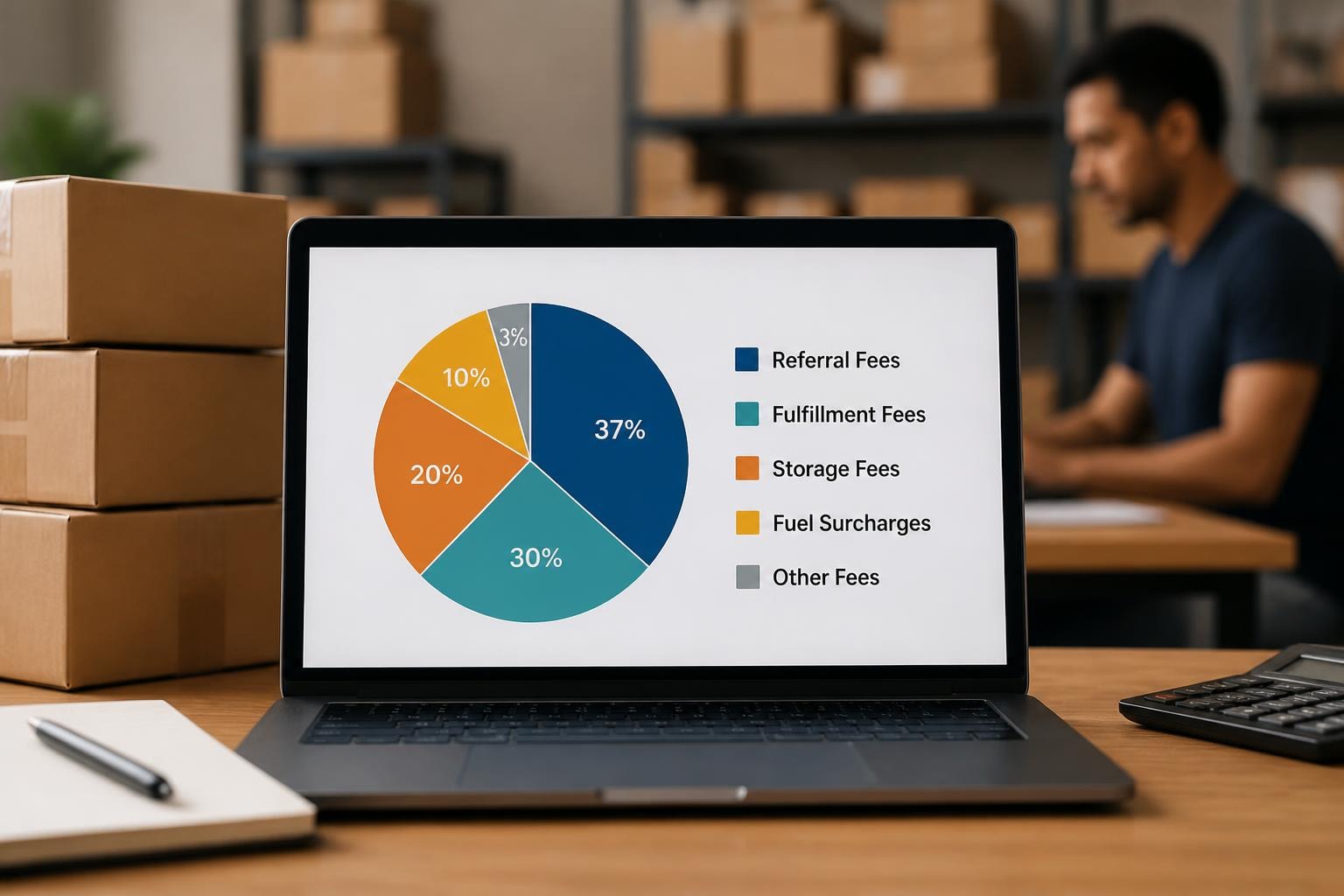
Amazon’s fee structure consists of several distinct components that sellers must understand to accurately forecast their costs. These fees are not optional when using the FBA service, and they vary based on product characteristics, storage duration, and sales volume.
Referral Fees Explained
Amazon charges a referral fee on every item sold through its platform, regardless of whether you use FBA or fulfill orders yourself. This percentage-based fee varies by product category and typically ranges from 8% to 15% of the total sales price, including shipping charges.
Common referral fee percentages by category:
- Electronics: 8%
- Home and Kitchen: 15%
- Clothing and Accessories: 17%
- Toys and Games: 15%
- Books: 15%
The minimum referral fee is $0.30 per item sold. For high-value items, some categories have a cap on the referral fee amount. Understanding these percentages is essential when pricing your products strategically to maintain profitability.
Fulfillment Fees Based on Size and Weight
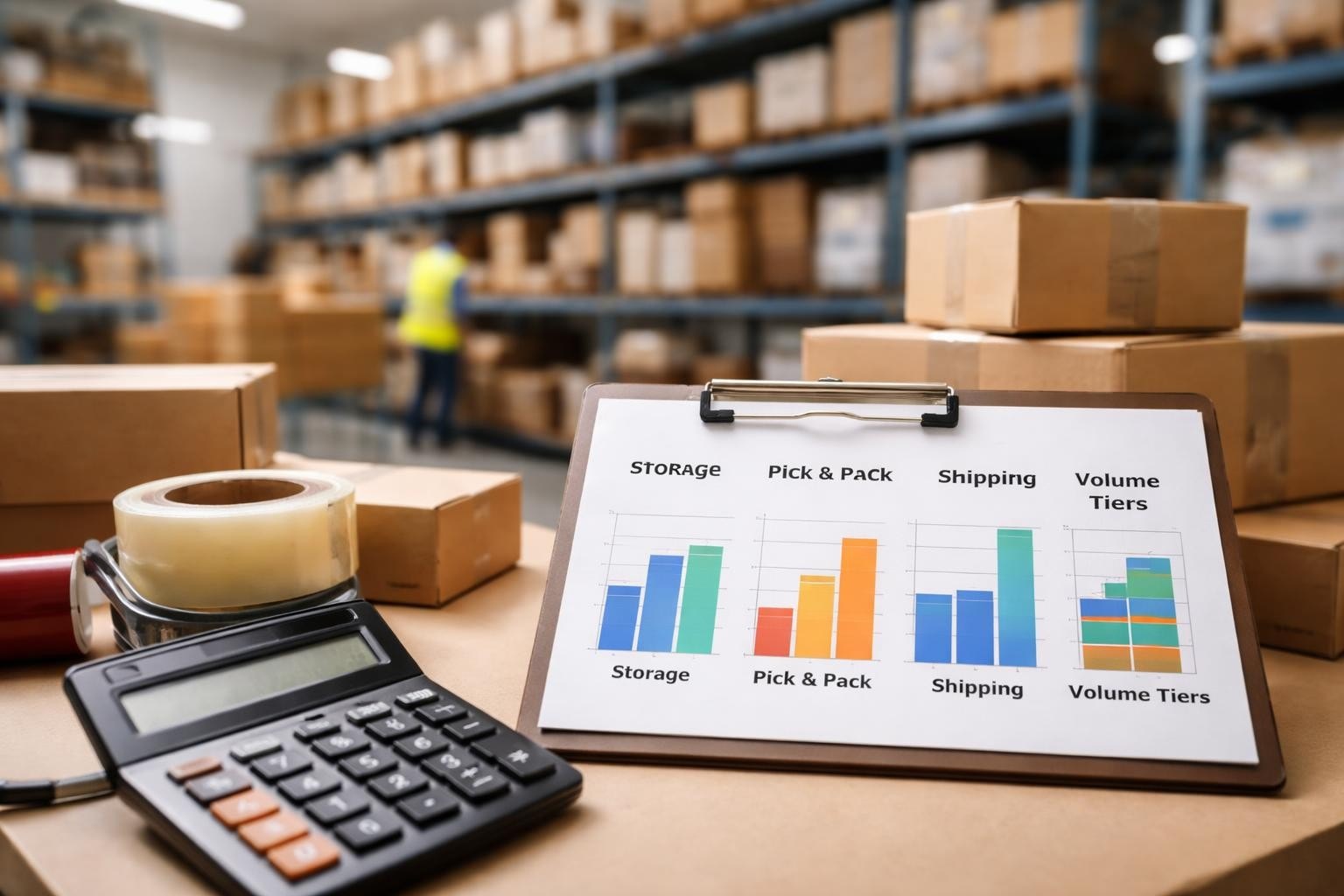
Fulfillment fees represent the cost Amazon charges for picking, packing, and shipping your products to customers. These fees are determined by the dimensional weight and product size tier classification. In 2026, Amazon continues to use a tiered system that categorizes products into small standard, large standard, small oversize, medium oversize, large oversize, and special oversize.
| Size Tier | Dimensions | Weight Limit | Fulfillment Fee Range |
|---|---|---|---|
| Small Standard | 15″ x 12″ x 0.75″ | 16 oz | $3.22 – $3.40 |
| Large Standard | 18″ x 14″ x 8″ | 20 lbs | $4.40 – $9.73 |
| Small Oversize | 60″ length + girth | 70 lbs | $10.05 – $14.88 |
| Large Oversize | 108″ length + girth | 150 lbs | $89.98+ |
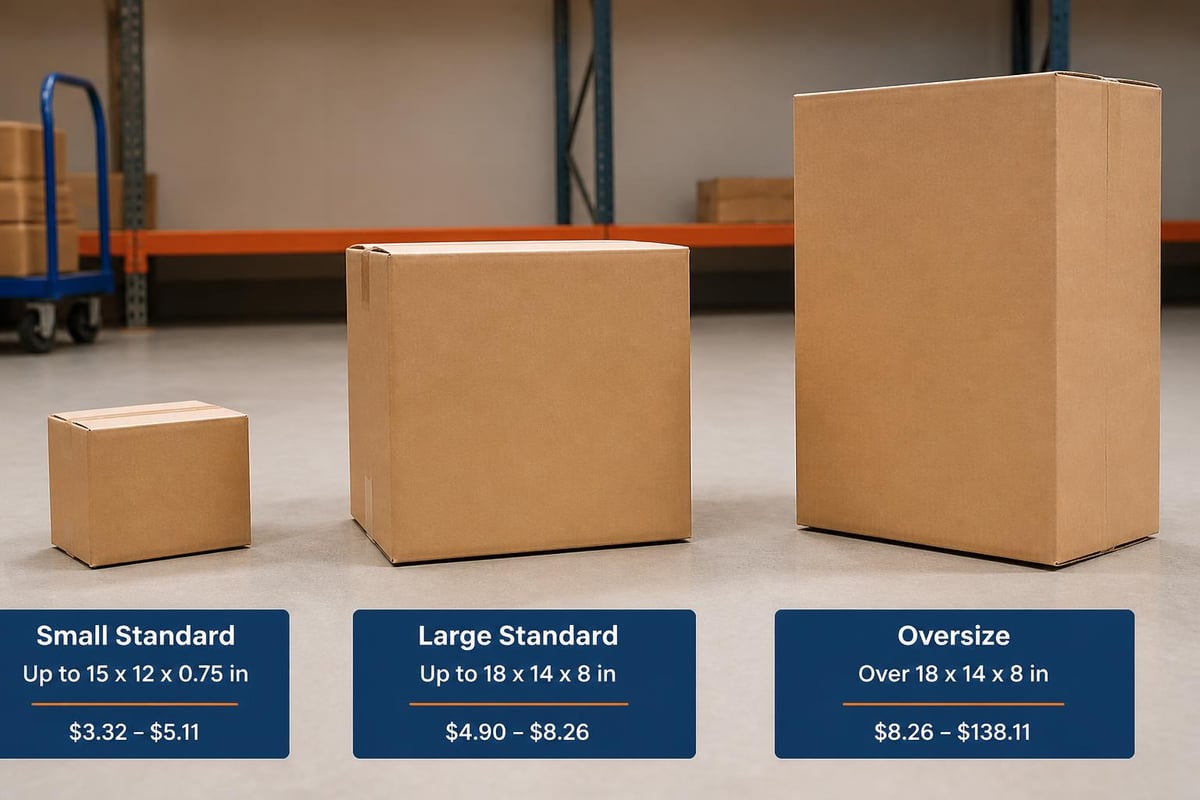
Dimensional weight calculations use the formula: (Length × Width × Height) / 139. If the dimensional weight exceeds the actual weight, Amazon charges based on the higher number. This pricing structure incentivizes sellers to minimize packaging size and choose compact products when possible.
Storage Fees and Inventory Management Costs
One of the most significant ongoing amazon fba costs comes from storing your inventory in Amazon’s fulfillment centers. These fees fluctuate based on the time of year and the volume of space your products occupy.
Monthly Storage Fees
Amazon charges monthly storage fees calculated per cubic foot of warehouse space occupied. The rates increase substantially during the peak holiday season from October through December. For 2026, standard-size products cost $0.87 per cubic foot from January through September and $2.40 per cubic foot from October through December. Oversize products face higher rates at $0.56 per cubic foot during off-peak months and $1.40 per cubic foot during peak season.
Sellers should monitor their inventory turnover rates carefully to avoid accumulating excessive storage charges. Products that sit in warehouses for extended periods can quickly erode profit margins through these recurring fees.
Long-Term Storage Fees and Aged Inventory Surcharges
Amazon implemented aged inventory surcharges to encourage sellers to maintain fresh, fast-moving inventory. Products stored for 271-365 days incur a $0.69 per cubic foot monthly surcharge, while inventory exceeding 365 days faces a hefty $6.90 per cubic foot monthly fee.
Strategies to minimize storage costs:
- Implement just-in-time inventory replenishment
- Run promotions on slow-moving products
- Remove aged inventory before surcharge dates
- Use inventory performance metrics to forecast demand
- Consider working with fulfillment warehouse services for overflow inventory
These aged inventory surcharges can devastate profitability if not managed proactively. Sellers must balance having sufficient stock to avoid stockouts against the risk of excessive storage fees.
Additional FBA Fees and Surcharges
Beyond the core fees, several additional charges can impact your total amazon fba costs. These supplementary fees often catch new sellers by surprise and should be factored into your financial projections.
Inbound Placement Service Fees
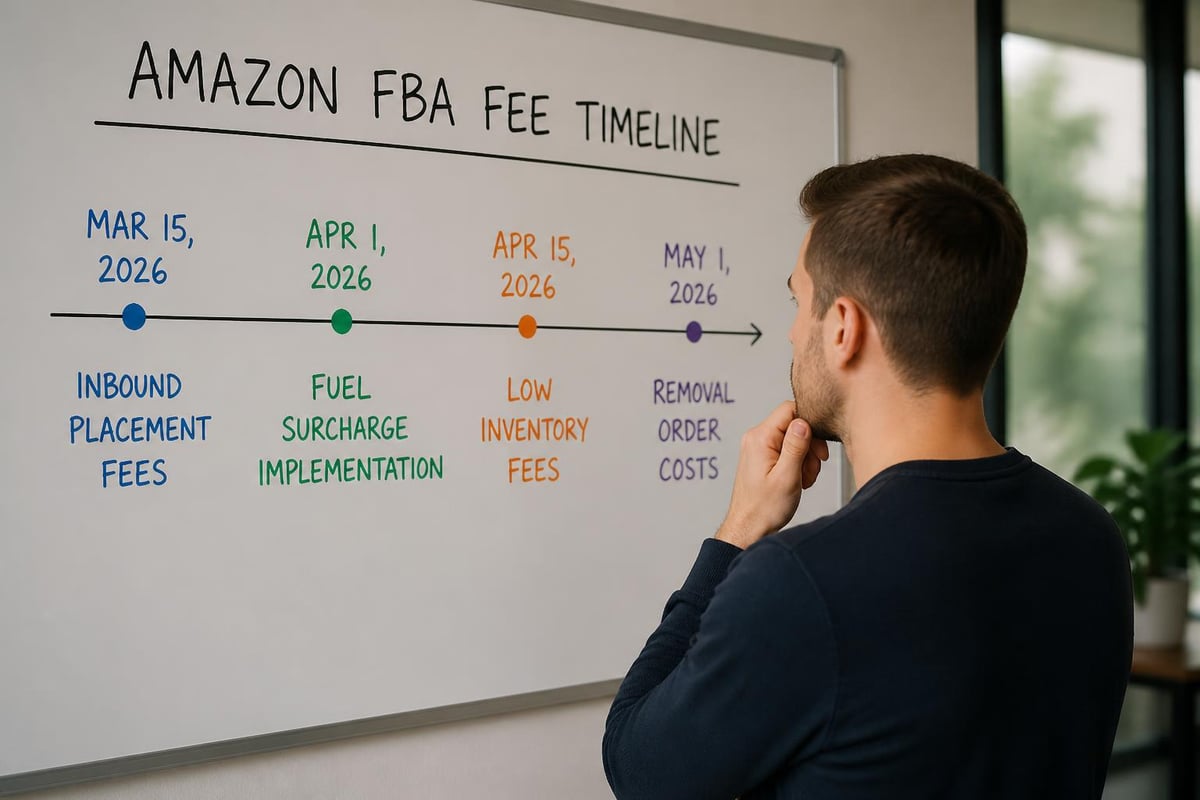
In 2026, Amazon introduced changes to its inbound placement system, giving sellers options for how their inventory is distributed across fulfillment centers. The default minimal shipment split distributes inventory to multiple locations for optimal placement, incurring placement fees based on product size and units shipped.
For standard-size products, fees range from $0.27 to $0.40 per unit depending on shipment size. Large bulky items face higher charges of $1.58 to $2.16 per unit. Sellers can reduce these fees by choosing the partial shipment split option, which concentrates inventory in fewer locations but may result in higher fulfillment costs later.
Fuel and Logistics Surcharge
Recent global events have significantly impacted shipping costs, prompting Amazon to implement additional surcharges. Amazon’s 3.5% fuel and logistics surcharge, effective April 17, 2026, applies to all FBA services due to rising global shipping and fuel costs related to geopolitical tensions. This surcharge directly increases amazon fba costs across all product categories.
This surcharge is calculated as a percentage of the total fulfillment and storage fees combined, adding an unexpected layer to cost calculations. Sellers must update their pricing models to account for this additional 3.5% expense on their FBA services.
Low-Inventory-Level Fee
Amazon charges a low-inventory-level fee when products have historically sold well but current inventory levels are insufficient to meet projected demand over the next eight weeks. This fee applies to standard-size products and ranges from $0.63 to $0.97 per unit sold while inventory is below the recommended threshold.
The fee aims to incentivize sellers to maintain adequate stock levels, ensuring customer satisfaction and reducing the likelihood of stockouts. Sellers can avoid this charge by monitoring their inventory performance dashboard and maintaining healthy restock schedules.
Calculating Your Total Amazon FBA Costs
Understanding individual fee components is important, but calculating your comprehensive amazon fba costs requires combining all elements into a cohesive analysis. Successful sellers develop detailed spreadsheets or use specialized software to track these expenses accurately.
Building a Cost Model
Start by identifying your product’s physical characteristics: weight, dimensions, and category. Use these specifications to determine your size tier and corresponding fulfillment fee. Next, estimate your monthly sales velocity to calculate storage fees based on average inventory levels.
Essential cost model components:
- Product cost (manufacturing or wholesale)
- Shipping to Amazon warehouse
- FBA prep services (if using Amazon fulfillment company partners)
- Referral fees (category-dependent percentage)
- Fulfillment fees (size and weight-based)
- Monthly storage fees (volume-based)
- Inbound placement fees
- Fuel and logistics surcharge (3.5%)
- Potential long-term storage fees
- Advertising costs (if applicable)
Many sellers find that comprehensive e-commerce fulfillment services can help optimize prep costs and reduce overall expenses through efficient processing and strategic inventory management.
Break-Even Analysis and Margin Calculations
Once you’ve compiled all fee components, calculate your break-even point and target profit margins. A typical formula looks like this:
Revenue = Sale Price
Costs = Product Cost + Shipping + Prep + Referral Fee + Fulfillment Fee + Storage Fee + Surcharges
Profit = Revenue – Costs
Margin = (Profit / Revenue) × 100
Most successful FBA sellers target profit margins of at least 30-40% to account for advertising costs, returns, and unexpected expenses. Products with margins below 20% often struggle to remain profitable once all fees are considered.
| Cost Category | Example Product A | Example Product B |
|---|---|---|
| Sale Price | $29.99 | $49.99 |
| Product Cost | $8.00 | $15.00 |
| Referral Fee (15%) | $4.50 | $7.50 |
| Fulfillment Fee | $4.85 | $6.32 |
| Storage Fee (monthly) | $0.45 | $0.78 |
| Total Costs | $17.80 | $29.60 |
| Profit per Unit | $12.19 | $20.39 |
| Profit Margin | 40.6% | 40.8% |
Strategies to Reduce Amazon FBA Costs
Smart sellers continuously optimize their operations to minimize amazon fba costs without compromising service quality. Several proven strategies can significantly reduce your fee burden over time.
Product Selection and Optimization
Choosing the right products from the start can dramatically impact your cost structure. Focus on items that fit into lower-cost size tiers, have strong sales velocity to minimize storage time, and command healthy retail prices relative to their weight and dimensions.
Consider products that allow for creative bundling or kitting opportunities. These specialized fulfillment services can increase your average order value while spreading fixed costs across a higher-priced item.
Product optimization tactics:
- Reduce packaging dimensions without compromising protection
- Negotiate better supplier pricing to improve margins
- Test different product variations to find optimal size/price combinations
- Bundle complementary items to increase value per transaction
- Focus on higher-velocity items during peak storage fee periods
Inventory Management Best Practices
Effective inventory management directly impacts your storage and aged inventory fees. Implement systems that forecast demand accurately, accounting for seasonal variations and promotional periods.

Use Amazon’s inventory performance dashboard to monitor your Inventory Performance Index (IPI) score. Maintaining a score above 450 ensures you won’t face storage limits and can help negotiate better terms. Consider using third-party inventory management software that integrates with Amazon to automate reordering and prevent stockouts.
For sellers experiencing rapid growth, partnering with specialized providers for scaling ecommerce operations can provide the infrastructure needed to manage inventory efficiently across multiple channels.
Alternative Fulfillment Models
While FBA offers significant advantages, it’s not always the most cost-effective solution for every product or situation. Evaluate hybrid fulfillment strategies that combine FBA with merchant-fulfilled options or third-party logistics providers.
Some sellers maintain their fastest-moving inventory in FBA for Prime eligibility while using fulfillment e-commerce partners for slower-moving products, oversize items, or multi-channel fulfillment. This approach can reduce storage fees while maintaining the benefits of Prime shipping for core products.
For entrepreneurs building digital product businesses alongside physical goods, platforms like CreateSell offer complementary revenue streams with zero inventory costs, providing an interesting diversification opportunity that avoids amazon fba costs entirely for certain product lines.
Fee Changes and Updates for 2026
Amazon regularly adjusts its fee structure to reflect changing market conditions and operational costs. Staying informed about these updates is crucial for maintaining accurate financial projections.
Recent Fee Adjustments
In 2026, Amazon implemented several notable changes to its fee structure. The detailed breakdown of Amazon FBA fees shows that while some fulfillment fees decreased for certain size tiers, the addition of the fuel surcharge and adjustments to inbound placement fees offset many of these savings.
The new inbound placement service provides more flexibility but introduces complexity in cost calculations. Sellers must now evaluate whether the minimal shipment split (distributing inventory across more facilities) or partial shipment split (concentrating in fewer locations) offers better economics for their specific situation.
Monitoring Future Changes
Amazon typically announces fee changes several months in advance, allowing sellers time to adjust their strategies. Subscribe to Seller Central notifications and regularly review the fee schedule documentation to stay current.
Consider the broader economic factors that influence amazon fba costs, such as fuel prices, labor costs, and real estate expenses for warehouse space. These external pressures often drive fee increases, making it important to maintain flexible pricing strategies that can adapt to changing cost structures.
Comparing FBA Costs to Alternative Fulfillment Options
While this article focuses on amazon fba costs, understanding how these expenses compare to alternative fulfillment methods provides valuable context for strategic decision-making.
Self-Fulfillment Cost Analysis
Merchant-fulfilled (MFN) sellers avoid FBA fulfillment and storage fees but incur their own expenses for warehouse space, labor, packaging materials, and shipping carriers. For low-volume sellers or those with very large/heavy products, self-fulfillment may offer cost advantages.
However, self-fulfillment requires significant time investment and lacks the Prime badge that drives higher conversion rates. Most sellers find that the increased sales velocity from FBA eligibility offsets the additional fees for products under 5 pounds.
Third-Party Fulfillment Services
Specialized ecommerce fulfillment warehouse providers offer an interesting middle ground. These services handle storage, picking, packing, and shipping while potentially offering more flexible terms than Amazon for certain product types.
Third-party providers excel at multi-channel fulfillment, allowing you to maintain a single inventory pool that serves Amazon, Shopify, and other sales channels. They also provide specialized services like kitting, bundling, and custom packaging that may be more cost-effective than Amazon’s equivalent services.
| Fulfillment Option | Best For | Primary Advantage | Main Drawback |
|---|---|---|---|
| Amazon FBA | Fast-moving, Prime-eligible products | Highest conversion rates | Amazon FBA costs can be high |
| Self-Fulfillment | Low-volume or oversize items | Complete control | Time-intensive |
| Third-Party 3PL | Multi-channel sellers | Flexibility and customization | No Prime badge |
| Hybrid Model | Diverse product catalogs | Optimized cost structure | Complex to manage |
Maximizing Profitability Despite Fee Structure
Even with comprehensive knowledge of amazon fba costs, success requires strategic thinking that extends beyond simple cost minimization. The goal isn’t necessarily to pay the lowest fees, but rather to maximize net profit through intelligent pricing, product selection, and operational efficiency.
Value-Based Pricing Strategies
Rather than pricing based solely on costs plus desired margin, consider the value your product provides to customers. Products with strong differentiation, superior reviews, or unique features can command premium prices that easily absorb FBA fees while maintaining healthy margins.
Invest in high-quality product photography, compelling descriptions, and enhanced brand content that justifies higher price points. The incremental revenue from value-based pricing often exceeds any savings achieved through aggressive cost-cutting.
Leveraging Economies of Scale
As your sales volume grows, your per-unit costs decrease across multiple dimensions. Higher order volumes allow for better supplier pricing, more efficient inventory management, and improved negotiating power with prep service providers.
For sellers experiencing rapid growth, understanding how comprehensive fee breakdowns work helps identify which cost components decrease with scale and which remain fixed, allowing you to project future profitability more accurately.
Understanding the complete spectrum of amazon fba costs empowers you to make informed decisions about product selection, pricing strategies, and fulfillment methods that maximize your profitability in 2026. Whether you’re optimizing packaging dimensions to reduce fulfillment fees or implementing smarter inventory management to minimize storage charges, every cost reduction flows directly to your bottom line. For sellers looking to streamline their FBA operations and reduce prep-related expenses, Ecom Automation Prep offers comprehensive fulfillment services including Amazon FBA prep, kitting, and bundling that help you maintain competitive margins while scaling your e-commerce business efficiently.