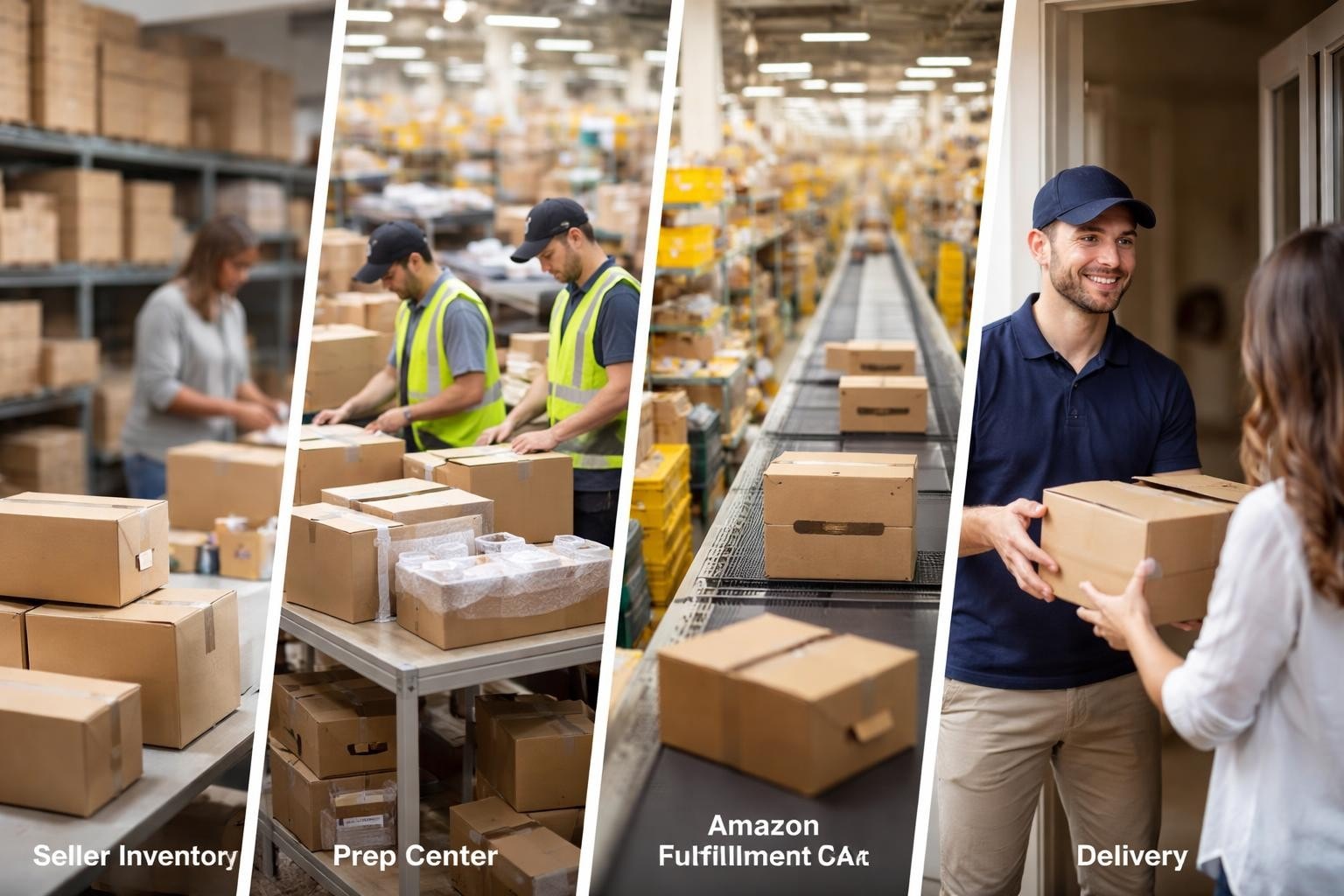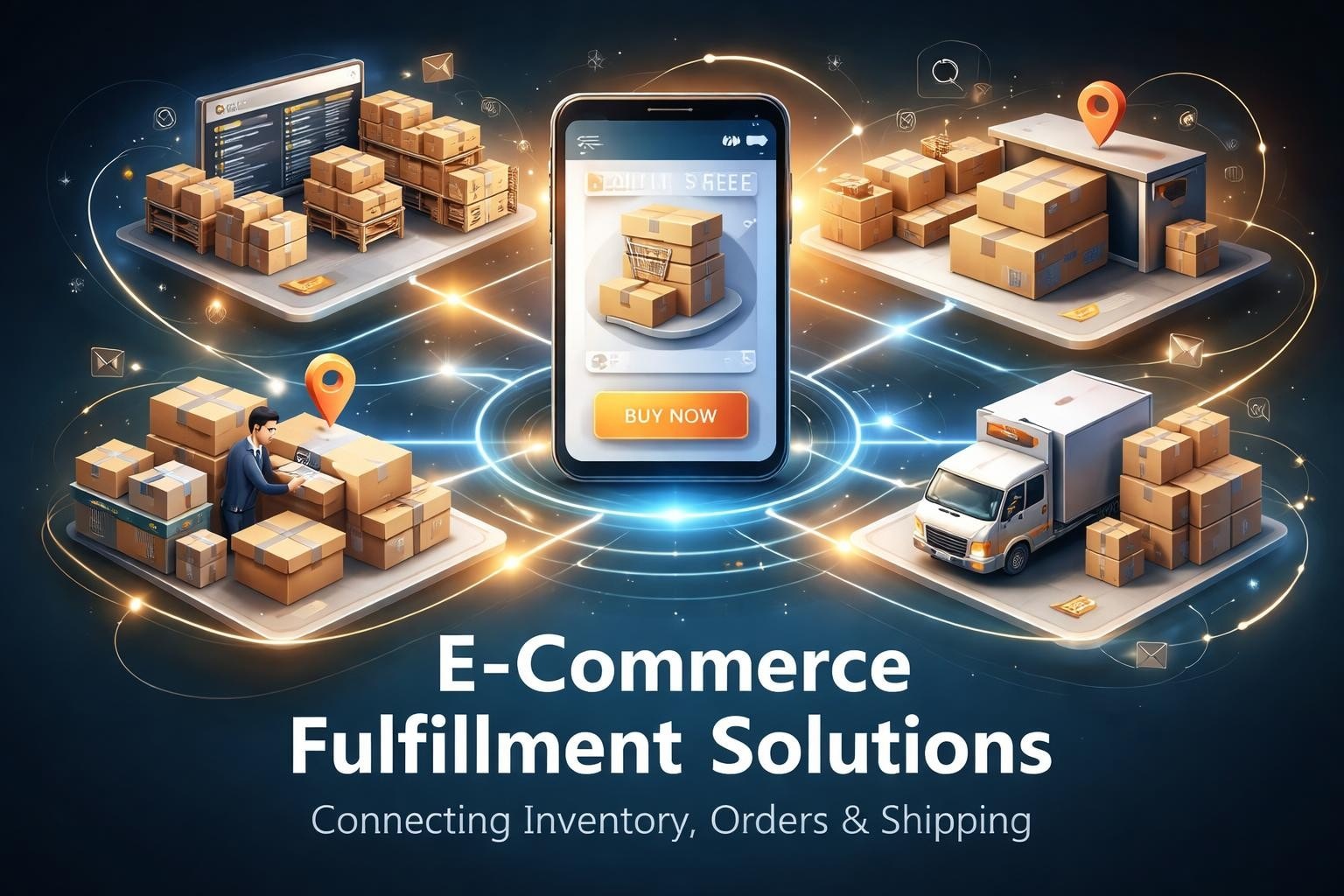

E-commerce brands face unprecedented challenges in 2026 as consumer expectations continue to evolve. The demand for faster shipping, accurate order fulfillment, and seamless returns has transformed how businesses approach their operations. Modern e com solutions encompass far more than basic warehousing; they represent integrated systems that connect inventory management, order processing, packaging, and shipping into cohesive workflows. For fast-growing brands, choosing the right fulfillment partner can mean the difference between scaling successfully and struggling with operational bottlenecks. Understanding the landscape of available solutions helps businesses make informed decisions that support long-term growth.
Understanding Modern E Com Solutions
E com solutions have evolved significantly from traditional warehousing models. Today’s fulfillment landscape incorporates advanced technology, data analytics, and specialized services designed to meet diverse business needs.
Core Components of Fulfillment Systems
Effective e com solutions integrate multiple operational layers that work together seamlessly. Inventory management forms the foundation, tracking stock levels across multiple channels and locations. Order processing systems automatically route orders to the appropriate fulfillment center based on proximity, inventory availability, and shipping requirements.
The middle layer includes picking and packing operations where accuracy directly impacts customer satisfaction. Modern solutions employ barcode scanning, batch picking strategies, and quality control checkpoints to minimize errors. Shipping coordination then ensures packages reach carriers efficiently, leveraging negotiated rates and automated label generation.

Data integration ties these components together. Real-time inventory updates prevent overselling, while order tracking information flows automatically to customers. Understanding key e-commerce terms helps businesses communicate effectively with fulfillment partners and optimize their operations.
Technology Infrastructure Requirements
Modern fulfillment operations depend on robust technology infrastructure. Warehouse Management Systems (WMS) coordinate daily operations, directing workers to specific locations and optimizing pick paths. Integration with e-commerce platforms ensures order data flows seamlessly without manual entry.
| Technology Component | Primary Function | Business Impact |
|---|---|---|
| WMS | Coordinates warehouse operations | Increases efficiency by 30-40% |
| Integration APIs | Connects platforms and systems | Eliminates manual data entry |
| Inventory Tracking | Real-time stock monitoring | Reduces stockouts by 25% |
| Shipping Software | Automates carrier selection | Decreases shipping costs 15-20% |
Application Programming Interfaces (APIs) enable different software systems to communicate. A well-designed integration allows inventory levels updated in the WMS to immediately reflect on all sales channels. This synchronization prevents the frustrating scenario where customers purchase items that are actually out of stock.
Specialized Services in E Com Solutions
Beyond basic fulfillment, specialized services address specific business needs and product requirements. These value-added services differentiate comprehensive e com solutions from simple warehousing.
Amazon FBA Prep Services
Amazon’s strict requirements for incoming inventory create challenges for many sellers. Professional FBA prep services handle labeling, polybagging, bundling, and quality inspections according to Amazon’s standards. This specialization ensures shipments pass Amazon’s receiving checks without rejection or delays.
Key FBA prep activities include:
- FNSKU labeling for individual units
- Polybagging for fabric items and products without packaging
- Case pack configuration according to Amazon requirements
- Bubble wrapping fragile items for protection
- Compliance documentation for restricted products
Sellers who outsource FBA prep reduce the risk of inventory being rejected at Amazon warehouses, which can lead to long-term storage fees and lost sales opportunities. Professional prep services understand the nuances of Amazon’s evolving requirements across different product categories.
Kitting and Bundling Operations
Creating product bundles requires careful coordination and quality control. Kitting services assemble multiple items into single units, whether for promotional bundles, subscription boxes, or multi-component products. This process demands accuracy to ensure every bundle contains the correct items in proper condition.
Bundling offers strategic advantages beyond simple convenience. Brands can increase average order values by offering curated sets at attractive pricing. Seasonal bundles create urgency, while subscription kits build recurring revenue streams. The fulfillment infrastructure must support these strategies with flexible assembly capabilities.

Direct-to-Consumer Fulfillment
D2C fulfillment emphasizes brand experience and customer relationships. Unlike wholesale or marketplace fulfillment, D2C operations often include custom packaging, branded inserts, and personalized touches that reinforce brand identity.
D2C fulfillment considerations:
- Unboxing experience design that reflects brand values
- Insert materials including thank you cards and product information
- Custom packaging with branded boxes and tissue paper
- Return processing that maintains customer satisfaction
- Data collection for customer insights and retention strategies
The growing e-commerce landscape demands that D2C fulfillment partners understand brand positioning. A luxury skincare brand requires different packaging standards than a budget electronics seller, even though the core fulfillment tasks remain similar.
Scaling Operations with E Com Solutions
Growth creates fulfillment challenges that require proactive planning. Effective e com solutions scale alongside business expansion without compromising quality or speed.
Managing Seasonal Fluctuations
E-commerce brands typically experience significant seasonal variations. The fourth quarter surge during holiday shopping can triple or quadruple normal order volumes. Fulfillment operations must flex to accommodate these peaks without maintaining excess capacity year-round.
Strategic inventory positioning begins months before peak seasons. Brands work with fulfillment partners to forecast demand based on historical data, marketing plans, and market trends. Early inventory receipt allows time for quality checks and strategic placement within the warehouse.
| Season | Typical Volume Change | Key Preparation Activities |
|---|---|---|
| Q1 | -30% to -40% | Returns processing, inventory rebalancing |
| Q2 | Baseline | System upgrades, staff training |
| Q3 | +10% to +20% | Early holiday inventory receipt |
| Q4 | +200% to +300% | Temporary staff onboarding, extended hours |
Temporary staffing provides the flexibility needed for seasonal peaks. Professional fulfillment providers maintain relationships with qualified temporary workers and have training systems that quickly bring them up to speed. This scalability prevents the bottlenecks that plague in-house operations during busy periods.
Multi-Channel Distribution Strategies
Modern brands sell through multiple channels simultaneously: their own websites, Amazon, eBay, Walmart Marketplace, and sometimes retail stores. E com solutions must support this multi-channel reality with unified inventory management and channel-specific requirements.
Inventory allocation strategies determine how stock distributes across channels. Some brands maintain separate inventory pools for each channel, while others use dynamic allocation that shifts inventory based on real-time demand. The latter approach maximizes inventory efficiency but requires sophisticated systems.
Channel-specific packaging and documentation add complexity. Amazon requires certain label placements, while retail stores may need different barcodes entirely. Comprehensive fulfillment services handle these variations without requiring separate inventory pools for each channel.
Quality Control and Accuracy Standards
Customer satisfaction depends heavily on fulfillment accuracy. E com solutions implement multiple quality checkpoints to ensure the right products reach the right customers in proper condition.
Receiving and Inspection Protocols
Quality control begins when inventory arrives at the fulfillment center. Comprehensive receiving procedures verify that shipments match purchase orders in quantity and condition. Damaged items are documented immediately, and discrepancies are reported to suppliers.
Receiving inspection includes:
- Carton count verification against bills of lading
- Visual inspection for shipping damage
- Sample checking of product condition
- Barcode scanning for SKU verification
- Photographic documentation of any issues
These upfront checks prevent damaged or incorrect inventory from entering the fulfillment pipeline. Catching problems at receiving is far more efficient than discovering issues during picking or dealing with customer returns later.
Order Accuracy Measures
Pick accuracy directly impacts customer satisfaction and return rates. Multi-step verification processes ensure orders contain the correct items before shipping. Barcode scanning during picking confirms that workers selected the right SKUs, while weight verification catches quantity errors.
Research on e-commerce product understanding demonstrates how advanced systems can improve accuracy through better product identification. Machine learning algorithms can flag unusual orders for additional verification, such as when order weights don’t match expected values.
Quality control extends beyond accuracy to product condition. Visual inspections catch cosmetic damage, while functional testing applies to certain product categories. Electronics might undergo power-on tests, while apparel receives checks for stains or tears.
Technology Integration and Automation
Automation transforms e com solutions from labor-intensive processes to efficient, scalable operations. Strategic automation focuses on repetitive tasks while preserving human judgment where it adds value.
Warehouse Automation Technologies
Physical automation ranges from simple conveyor systems to sophisticated robotic picking. The appropriate automation level depends on order volumes, product characteristics, and facility layout. High-volume operations handling uniform products benefit most from advanced automation.
Automation technologies by complexity:
- Barcode scanning systems for accurate tracking (fundamental)
- Automated sortation directing items to packing stations
- Conveyor networks reducing walking time
- Pick-to-light systems guiding workers to correct locations
- Autonomous mobile robots transporting inventory
- Robotic picking arms for repetitive tasks (advanced)
Exploring e-commerce site search solutions reveals how search technology has advanced, and similar innovations impact warehouse operations. Predictive algorithms now determine optimal storage locations based on SKU velocity and order patterns.

Software Integration Architecture
Backend systems integration creates the data flows that power modern e com solutions. Order data must flow from shopping carts to warehouse management systems in seconds, not hours. Inventory updates need to propagate across all sales channels immediately to prevent overselling.
API-based integrations offer flexibility and reliability. Rather than batch file transfers that update periodically, APIs enable real-time communication between systems. When a customer places an order, the WMS receives it instantly and can begin processing without delay.
Error handling and data validation prevent integration failures from disrupting operations. Robust systems include retry logic for temporary connection issues and alerting mechanisms when manual intervention becomes necessary. This reliability ensures that technical problems don’t cascade into customer-facing failures.
Cost Optimization Strategies
E com solutions significantly impact business profitability through their cost structure and efficiency. Understanding the cost drivers helps brands optimize their fulfillment expenses.
Pricing Models and Fee Structures
Fulfillment providers typically charge through a combination of fees covering different services. Receiving fees cover the labor and systems for processing incoming inventory. Storage fees bill based on space occupied, often calculated per pallet or cubic foot monthly. Pick and pack fees charge per order based on complexity.
Shipping costs usually pass through at the provider’s negotiated rates, though some providers add handling fees. Understanding the complete cost structure allows accurate profitability calculations and helps identify optimization opportunities.
| Cost Component | Typical Structure | Optimization Approach |
|---|---|---|
| Receiving | Per unit or hour | Consolidate shipments |
| Storage | Monthly per pallet | Improve inventory turnover |
| Pick & Pack | Per order | Increase average order value |
| Shipping | Weight and zone based | Right-size packaging |
Comparing providers requires examining total costs rather than individual line items. A provider with low storage fees but high pick fees might cost more overall for businesses with high order velocities. Comprehensive resources on shipping optimization help brands understand these trade-offs.
Efficiency Improvements That Reduce Costs
Operational efficiency directly impacts fulfillment costs. Reducing the number of touches required per item lowers labor costs. Strategic warehouse organization minimizes travel time during picking. Automated systems reduce error rates and the associated costs of returns and replacements.
Packaging optimization offers significant savings opportunities. Right-sizing boxes reduces dimensional weight charges from carriers while also decreasing material costs. Using standard box sizes enables better packing automation and reduces packaging inventory complexity.
Inventory turnover rates affect storage costs substantially. Products sitting in warehouses for months accumulate storage fees that erode margins. Coordinating marketing promotions with inventory levels helps move slower-moving SKUs before they become expensive storage burdens.
Returns Management and Reverse Logistics
Returns represent a significant challenge in e-commerce, with rates often reaching 20-30% in certain categories. Effective e com solutions include comprehensive returns processing that maintains customer satisfaction while minimizing losses.
Customer-Friendly Returns Processes
Modern consumers expect hassle-free returns. Fulfillment operations must support this expectation with efficient processing that quickly inspects returned items, updates inventory, and processes refunds or exchanges. The speed of returns processing directly impacts customer satisfaction and likelihood of repeat purchases.
Returns processing workflows differ significantly from outbound fulfillment. Items require inspection to determine their condition and resale eligibility. Some returns can return to active inventory immediately, while others need refurbishment or disposal. Detailed tracking prevents returned items from being lost in the warehouse.
Returns processing steps:
- Receipt scanning and customer account lookup
- Condition assessment and categorization
- Restocking or disposal decision
- Inventory system updates
- Customer refund or exchange processing
- Data analysis for return pattern identification
Understanding customer opinions and product aspects through returns data provides valuable insights. High return rates for specific SKUs might indicate product issues, inaccurate descriptions, or sizing problems that need addressing.
Sustainability and Disposal Considerations
Environmental responsibility increasingly influences e com solutions. Returns that cannot be resold create disposal challenges. Progressive fulfillment providers partner with recycling facilities, donation programs, and liquidation channels to minimize waste.
Product refurbishment extends the lifecycle of returned items. Cosmetic repairs, repackaging, or simple cleaning can make many returns saleable again, either through primary channels or secondary markets. This approach recovers value while reducing environmental impact.
Packaging materials also present sustainability opportunities. Recyclable materials, biodegradable void fill, and reusable packaging systems reduce environmental footprints. Some brands view sustainable packaging as a competitive advantage that resonates with environmentally conscious consumers.
Security and Risk Management
E com solutions must protect valuable inventory and sensitive customer data. Comprehensive security measures address physical, cyber, and operational risks.
Physical Security Measures
Warehouse facilities require multi-layered security. Perimeter controls including fencing and access gates form the first barrier. Internal access controls using badge systems limit which employees can enter specific areas. High-value inventory often receives additional security measures including locked cages and enhanced monitoring.
Video surveillance systems provide both deterrence and documentation. Modern systems include analytics that flag unusual patterns, such as employees spending excessive time in specific locations. Regular audits compare physical inventory counts against system records to detect discrepancies quickly.
Employee screening and training form essential security components. Background checks reduce theft risks, while training helps employees understand and follow security protocols. Clear accountability through individual login credentials ensures actions can be traced to specific workers.
Cybersecurity for E-Commerce Operations
Security frameworks for e-commerce systems address the complex technical challenges of protecting customer data and financial information. Fulfillment operations handle sensitive information including customer addresses, order details, and sometimes payment data.
Data encryption protects information both in transit and at rest. Secure API connections between e-commerce platforms and fulfillment systems prevent interception of order data. Access controls ensure that fulfillment staff only see information necessary for their specific roles.
Regular security audits and penetration testing identify vulnerabilities before attackers exploit them. Compliance with standards like PCI DSS for payment data and GDPR for European customer information requires ongoing attention and investment.
Selecting the Right E Com Solutions Provider
Choosing a fulfillment partner represents a strategic decision with long-term implications. The right provider becomes an extension of your brand, while the wrong choice creates ongoing frustrations and customer dissatisfaction.
Evaluation Criteria for Fulfillment Partners
Location matters significantly for shipping costs and delivery speeds. Providers with facilities near major population centers enable faster delivery at lower costs. Multi-facility providers offer geographic distribution that supports growing brands expanding their reach.
Technology capabilities determine how smoothly operations integrate with existing systems. Providers should offer robust APIs, real-time reporting, and transparent inventory visibility. The ability to access detailed operational data enables informed decision-making and rapid problem resolution.
Provider evaluation checklist:
- Geographic coverage and facility locations
- Technology platform capabilities and integration options
- Service specializations relevant to your products
- Scalability to support projected growth
- Pricing transparency and competitive rates
- References from similar-sized businesses
- Customer service responsiveness and expertise
Cultural fit often gets overlooked but matters tremendously. A provider that understands your brand values and target customers will make better operational decisions. Regular communication and collaborative problem-solving indicate a partnership mindset rather than a transactional relationship.
Transition Planning and Onboarding
Switching fulfillment providers requires careful planning to avoid disruptions. Detailed timelines account for inventory transfer, system integration, and staff training. Parallel operations during transition periods provide safety nets, though they increase short-term costs.
Inventory accuracy during transfer demands meticulous tracking. Every unit must be accounted for between the old and new facilities. Physical counts at both locations, combined with careful documentation, prevent shrinkage and discrepancies that create long-term headaches.
System integration testing should occur well before go-live dates. Test orders flowing through the complete pipeline reveal integration issues when they’re still fixable without customer impact. Gradual rollouts, perhaps starting with specific product categories or channels, reduce risk compared to big-bang transitions.
Selecting and implementing effective e com solutions requires balancing operational efficiency, customer experience, and cost management. The right fulfillment infrastructure supports business growth while maintaining the quality and speed that today’s consumers demand. Ecom Automation Prep specializes in providing comprehensive fulfillment services that scale with your business, from Amazon FBA prep to direct-to-consumer fulfillment and specialized kitting. Whether you’re launching your first product or managing thousands of SKUs across multiple channels, partnering with experienced fulfillment professionals allows you to focus on growing your brand while ensuring every order reaches customers accurately and on time.