
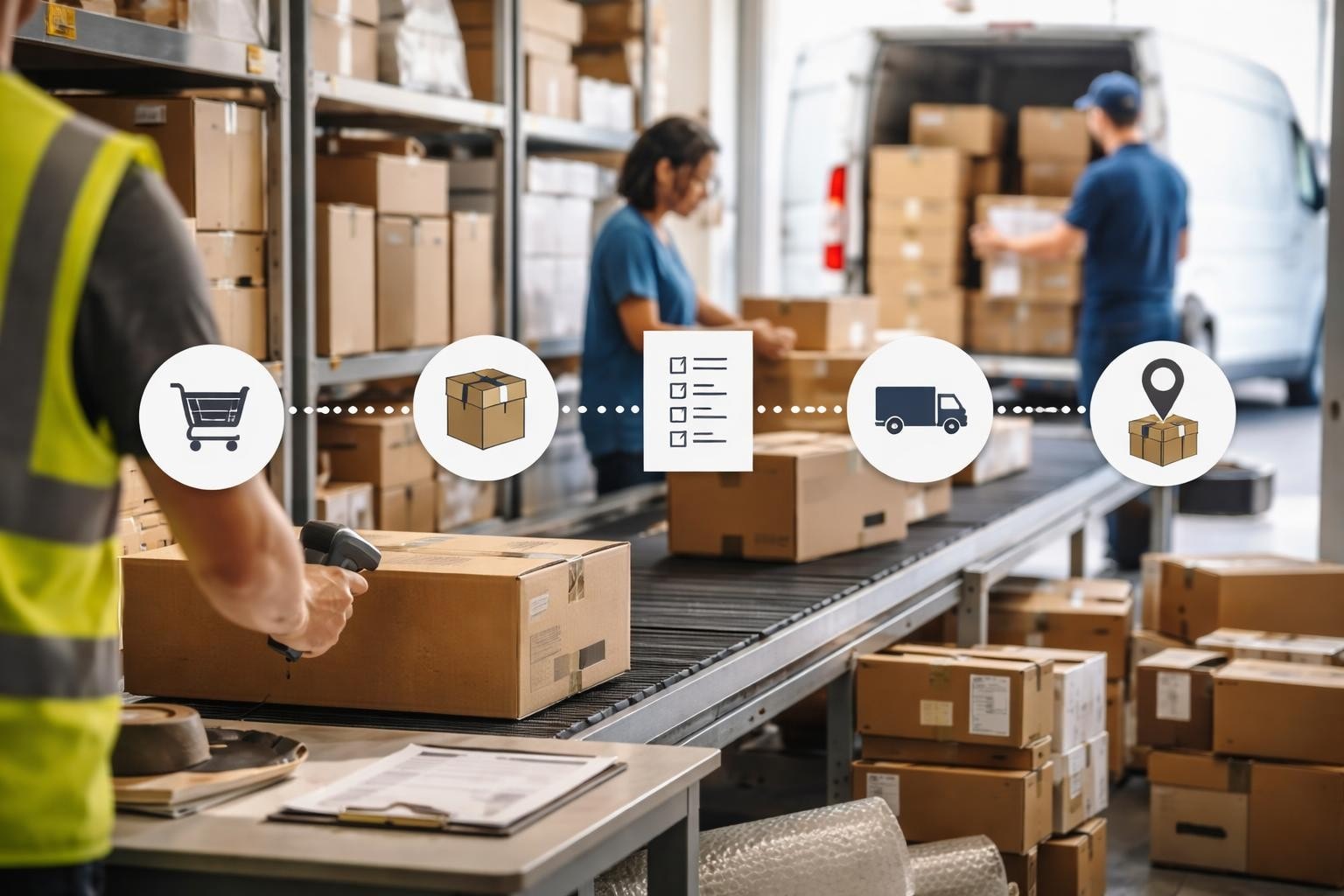

Running a successful ecommerce business requires more than just great products and marketing. The backbone of customer satisfaction lies in how efficiently you handle logistics after the sale. An order fulfillment service for ecommerce handles the entire process of receiving, processing, packing, and shipping customer orders, allowing business owners to focus on growth rather than warehouse operations. As online shopping continues to expand in 2026, understanding how these services work and whether they're right for your business has become essential for maintaining competitive advantage.
What Is an Order Fulfillment Service for Ecommerce
An order fulfillment service for ecommerce manages the complete logistics chain from the moment a customer places an order until the product arrives at their doorstep. These specialized companies operate warehouses where they store your inventory, process incoming orders from your sales channels, pick and pack items according to your specifications, and coordinate shipping through various carriers.
The fundamental components of fulfillment services include inventory storage, order processing, picking and packing, shipping coordination, and returns management. Each element requires expertise, infrastructure, and technology that most growing ecommerce brands cannot efficiently maintain in-house.
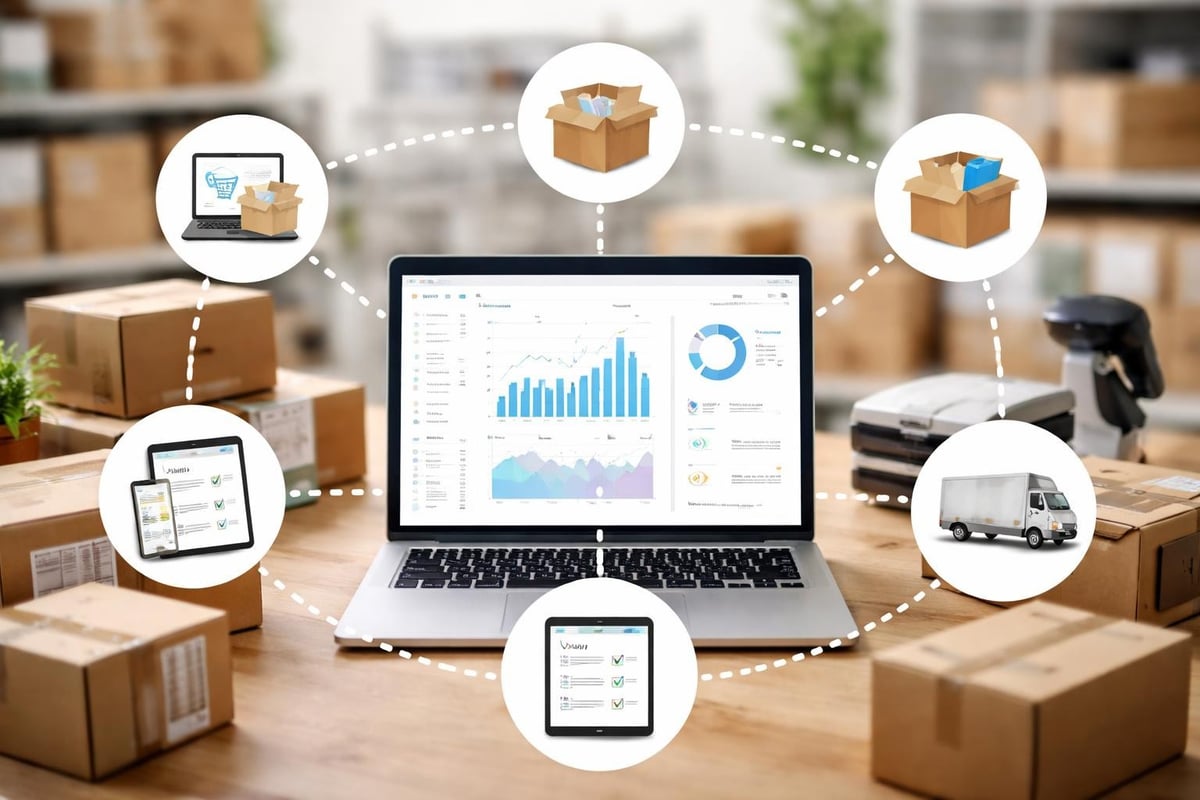
Modern fulfillment providers integrate directly with your ecommerce platform, whether you sell on Shopify, Amazon, WooCommerce, or other channels. This integration enables real-time inventory updates, automatic order routing, and seamless tracking information that keeps both you and your customers informed throughout the delivery process.

Types of Fulfillment Models Available
Ecommerce businesses can choose from several fulfillment approaches depending on their needs, volume, and growth trajectory. In-house fulfillment gives you complete control but demands significant space, staff, and operational expertise. This model works well for businesses just starting out or those with unique handling requirements.
Third-party logistics (3PL) providers offer comprehensive outsourced solutions, managing everything from receiving shipments to handling customer returns. Companies like Easyship connect merchants with multiple carriers to optimize shipping costs and delivery times.
Fulfillment by Amazon (FBA) represents a specialized model where sellers send inventory to Amazon warehouses, and Amazon handles storage, picking, packing, and customer service. This approach provides access to Prime shipping but requires adherence to strict packaging and labeling standards through Amazon FBA prep services.
Dropshipping eliminates inventory holding entirely, as suppliers ship directly to customers. While this reduces upfront costs, it offers less control over quality and delivery times. Hybrid models combine these approaches, using different methods for various product lines or customer segments.
Key Benefits of Using Professional Fulfillment Services
Outsourcing to a professional order fulfillment service for ecommerce delivers measurable advantages that directly impact your bottom line and customer satisfaction scores. The most immediate benefit comes from cost reduction, as fulfillment providers leverage economies of scale to negotiate better shipping rates than individual businesses can achieve independently.
Scalability becomes effortless when working with experienced partners. During peak seasons like the holidays or promotional events, fulfillment centers adjust staffing and resources to handle volume spikes without requiring you to hire temporary workers or lease additional warehouse space.
Operational Advantages
- Faster shipping times through strategically located warehouses closer to your customer base
- Professional packaging that protects products and reinforces brand identity
- Advanced inventory management preventing stockouts and overstock situations
- Reduced overhead costs by eliminating warehouse leases, equipment, and full-time staff
- Focus on core competencies like product development and marketing rather than logistics
The technology infrastructure that professional fulfillment providers maintain offers another significant advantage. Modern systems provide real-time visibility into inventory levels across multiple locations, automated reorder triggers, and detailed analytics about shipping costs, delivery performance, and return rates.
Customer experience improvements represent perhaps the most valuable benefit. According to research from the Chamber of Commerce on fulfillment services, businesses using professional fulfillment report higher customer satisfaction scores due to faster delivery times, accurate order processing, and professional packaging.
Essential Features to Look for in Fulfillment Partners
Selecting the right order fulfillment service for ecommerce requires careful evaluation of capabilities that align with your specific business needs. Not all fulfillment providers offer the same services or excel in the same areas, making due diligence essential before committing to a partnership.
| Feature Category | What to Evaluate | Why It Matters |
|---|---|---|
| Technology Integration | API connections, platform compatibility, real-time syncing | Ensures seamless order flow and accurate inventory data |
| Geographic Coverage | Warehouse locations, shipping zones, international capabilities | Reduces delivery times and shipping costs to your customer base |
| Specialized Services | Kitting, bundling, custom packaging, returns processing | Supports unique product requirements and brand presentation |
| Pricing Structure | Storage fees, pick-pack costs, shipping rates, minimum volumes | Determines total cost of fulfillment and scalability economics |
| Performance Metrics | Order accuracy rates, shipping speed, customer service responsiveness | Indicates reliability and quality of service delivery |
Technology and System Capabilities
The fulfillment provider's technology stack determines how smoothly operations run. Look for systems that integrate with your existing ecommerce platforms, marketplaces, and business tools. Distributed order management systems enable sophisticated routing rules that optimize which warehouse ships each order based on inventory availability and proximity to the customer.
Advanced providers implement data-driven fulfillment strategies that improve efficiency through integrated assortment planning and intelligent inventory allocation. These approaches use historical data and predictive analytics to position inventory optimally across fulfillment networks.
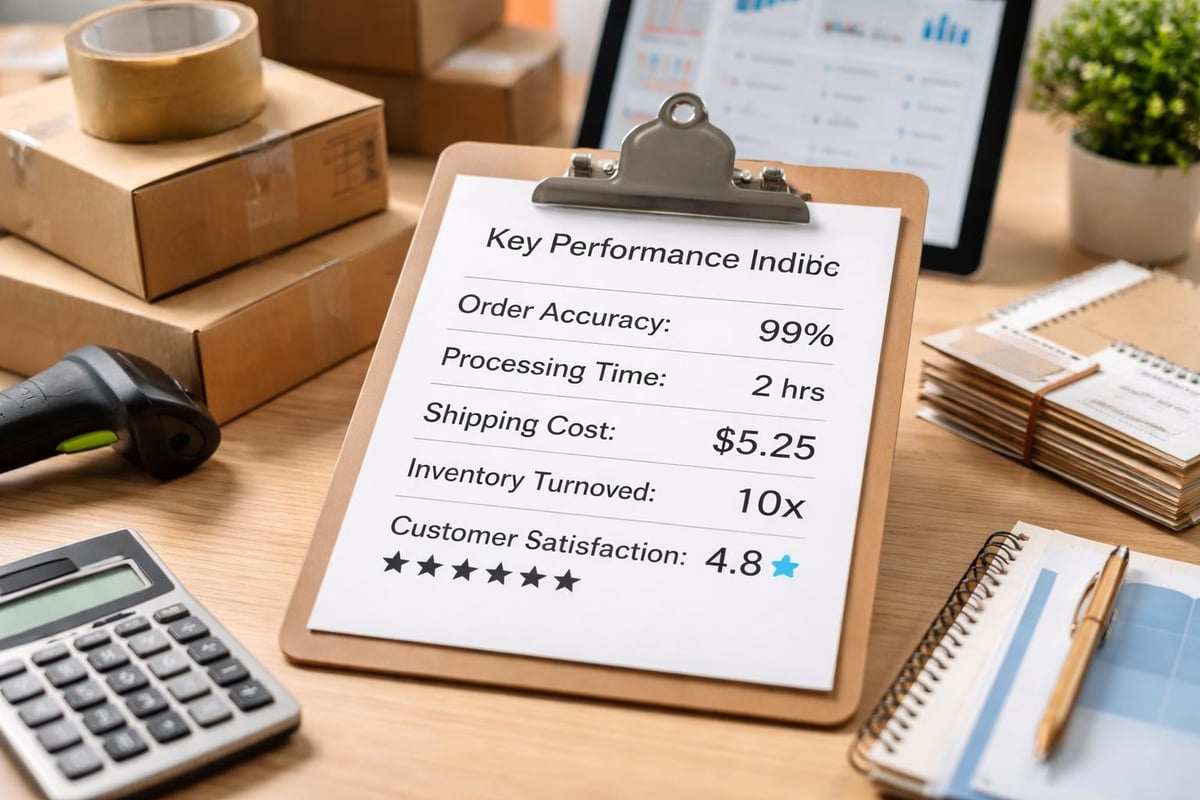
Reporting capabilities should provide granular insights into every aspect of fulfillment performance. You need visibility into order accuracy rates, average pick-pack times, shipping cost per order, damaged goods rates, and return processing efficiency. This data empowers informed decisions about inventory management and fulfillment strategy refinement.
Specialized Fulfillment Services for Growing Brands
Beyond basic pick-and-pack operations, specialized services add significant value for ecommerce businesses with unique requirements or growth ambitions. Understanding these enhanced capabilities helps you select a fulfillment partner that can support your business as it evolves.
Kitting and bundling services allow you to create multi-item packages, promotional bundles, or subscription boxes without managing assembly yourself. Professional kitting services ensure consistent quality, reduce assembly errors, and enable product combinations that increase average order value.
Value-Added Services That Drive Growth
Subscription box fulfillment requires specialized capabilities including recurring order management, variable item selection, and branded unboxing experiences. Companies focused on subscription fulfillment understand the unique challenges of retention-based business models and provide the flexibility needed for subscriber management.
Custom packaging and branding transform standard shipping boxes into memorable brand experiences. Fulfillment partners offering these services can include custom inserts, branded tissue paper, promotional materials, and personalized notes that strengthen customer relationships.
Returns management handles reverse logistics efficiently, processing returns quickly, inspecting items for damage, restocking sellable inventory, and disposing of or repairing damaged goods. Strong returns processes recover revenue and maintain customer satisfaction even when orders don't work out perfectly.
Quality control inspections protect your brand reputation by catching defects before products ship. This service becomes particularly valuable when sourcing from overseas manufacturers or dealing with fragile items requiring careful handling.
Cost Structure and Pricing Models Explained
Understanding the financial aspects of an order fulfillment service for ecommerce enables accurate cost projections and ROI calculations. Fulfillment pricing typically combines several components, each addressing different aspects of the service.
Receiving and inbound processing fees cover the cost of accepting your inventory shipments, counting items, inspecting for damage, and adding products to the warehouse management system. These fees typically range from $0.30 to $0.60 per unit received, depending on product complexity and required inspections.
Storage fees compensate for warehouse space occupied by your inventory. Most providers charge monthly based on either volume (cubic feet) or weight, with rates ranging from $8 to $20 per pallet or $0.40 to $0.85 per cubic foot. Slow-moving inventory often incurs higher storage rates after extended periods.
Breaking Down Pick and Pack Costs
- Base pick fee: Covers labor to locate and retrieve items from warehouse locations ($2-5 per order)
- Per-item fee: Charges for each additional item in multi-item orders ($0.30-0.70 per item)
- Packing materials: Boxes, tape, padding, and protective materials ($0.50-2.00 per order)
- Kitting charges: Assembly of multi-component products ($1-5 per kit depending on complexity)
- Special handling: Fragile items, oversized products, or temperature-controlled storage command premium rates
Shipping costs represent the largest variable expense, calculated based on package dimensions, weight, destination, and carrier service level. Professional fulfillment providers negotiate discounted carrier rates that typically save 20-40% compared to individual business accounts.
Technology and integration fees may include setup costs ($500-2,000), monthly platform fees ($50-300), and API integration development for custom systems. Some providers waive these fees for high-volume clients or include them in per-order pricing.
How to Calculate When Outsourcing Makes Financial Sense
Determining the breakeven point for using an order fulfillment service for ecommerce requires comparing your current costs against projected fulfillment expenses. This analysis should account for both obvious and hidden costs of managing fulfillment internally.
Start by calculating your total current fulfillment cost per order, including warehouse rent, utilities, staff salaries and benefits, packing materials, equipment maintenance, shipping software, and your own time spent managing operations. Many business owners discover their actual cost per order exceeds $15-20 when fully accounting for overhead.
Next, obtain detailed quotes from fulfillment providers based on your actual order profile including average order value, items per order, product dimensions and weight, and monthly volume. Request pricing for different volume tiers to understand how costs scale as your business grows.
| Monthly Order Volume | Typical In-House Cost Per Order | Outsourced Fulfillment Cost Per Order | Monthly Savings |
|---|---|---|---|
| 100 orders | $18-25 | $12-16 | $600-900 |
| 500 orders | $14-18 | $9-13 | $2,500-2,500 |
| 2,000 orders | $12-15 | $7-11 | $10,000-8,000 |
| 5,000+ orders | $10-13 | $6-9 | $20,000-20,000 |
Beyond direct cost comparisons, consider opportunity costs of time spent managing fulfillment that could be invested in revenue-generating activities like marketing, product development, or customer acquisition. For most growing brands, outsourcing becomes financially advantageous between 200-500 orders monthly.
Integrating Fulfillment Services Into Your Operations
Successfully implementing an order fulfillment service for ecommerce requires careful planning and systematic execution. The transition from in-house to outsourced fulfillment involves multiple steps that minimize disruption to ongoing operations while establishing reliable new processes.
Implementation Timeline and Milestones
Weeks 1-2: Planning and Setup
Begin by providing your fulfillment partner with complete product information including SKUs, dimensions, weights, special handling requirements, and product images. Configure integrations between your ecommerce platform and the fulfillment center's warehouse management system, testing data flow to ensure orders transmit correctly and inventory updates properly.
Weeks 3-4: Inventory Transfer
Coordinate the shipment of initial inventory to the fulfillment center. Work with your provider to determine optimal stock levels at each location, considering historical sales data and seasonal patterns. Quality fulfillment partners offer guidance on e-commerce order processes that optimize efficiency from day one.
Week 5: Testing and Validation
Process test orders through the system to verify accuracy, packaging quality, and shipping performance. Review generated shipping labels, tracking information, and inventory updates. Address any issues before fully launching live operations.
Week 6+: Launch and Optimization
Begin processing live customer orders while monitoring key performance indicators closely. Schedule regular check-ins with your fulfillment account manager to review metrics, address concerns, and identify optimization opportunities.
Advanced Fulfillment Strategies for Competitive Advantage
Leading ecommerce brands leverage sophisticated fulfillment strategies that go beyond basic shipping to create competitive differentiation. Understanding these advanced approaches helps you maximize the value of your fulfillment partnership.
Distributed inventory management positions products across multiple fulfillment centers strategically located near major customer concentrations. Research on multi-courier order fulfillment optimization demonstrates how data-driven allocation strategies reduce delivery times while controlling costs.
Predictive inventory allocation uses machine learning to forecast demand patterns and position inventory proactively. Advanced providers implement predictive models for order fulfillment times that improve accuracy in delivery estimates and customer communication.
Optimization Techniques That Reduce Costs
- Zone skipping: Consolidating packages destined for similar regions to reduce carrier zone charges
- Rate shopping: Automatically selecting the most cost-effective carrier for each shipment based on real-time rates
- Batch processing: Grouping orders strategically to improve pick efficiency in the warehouse
- Dimensional weight optimization: Right-sizing packaging to minimize dimensional weight charges
- Returns consolidation: Aggregating returned items before shipping back to manufacturers or liquidators
Same-day and next-day delivery capabilities have transitioned from premium services to customer expectations for many product categories. Fulfillment centers located in major metro areas enable these accelerated timelines without prohibitive costs when inventory is positioned strategically.
International fulfillment expands market reach by establishing inventory positions in key global markets. Rather than shipping internationally from domestic warehouses and incurring lengthy transit times plus customs delays, distributed global fulfillment provides localized shipping experiences that mirror domestic performance.
Common Challenges and How to Overcome Them
Even well-planned fulfillment partnerships encounter occasional obstacles that require proactive management and clear communication to resolve. Understanding common challenges prepares you to address issues quickly before they impact customer satisfaction.
Inventory discrepancies between your system and the warehouse represent one of the most frequent frustrations. These mismatches occur due to receiving errors, picking mistakes, damaged goods, or system synchronization issues. Establish regular cycle counting procedures and reconciliation protocols with your fulfillment partner to maintain accuracy above 99%.
Peak season capacity constraints challenge fulfillment centers during holidays and major promotional events when volume spikes dramatically. Communicate your promotional calendar well in advance and work with providers to secure dedicated capacity during critical periods. Consider diversifying across multiple fulfillment partners to reduce risk of capacity shortfalls.
Managing Quality and Performance Issues
Implement quality control checkpoints at critical process stages. Request sample shipments periodically to audit packaging quality, product condition, and branded insert placement. Mystery shopping your own fulfillment process reveals the actual customer experience and identifies improvement opportunities.
Communication breakdowns between your team and fulfillment staff create confusion, errors, and frustration. Designate a single point of contact on both sides, establish regular check-in meetings, and document standard operating procedures for common scenarios like product variations, special requests, and holiday handling.
Technology integration failures disrupt order flow when systems don't communicate properly. Maintain backup processes for manual order entry during system outages, monitor integration health proactively, and keep technical contacts from both your platform and fulfillment provider readily available for troubleshooting.
Measuring Fulfillment Performance and ROI
Effective management of an order fulfillment service for ecommerce requires tracking specific metrics that indicate performance quality and financial impact. Establishing clear key performance indicators (KPIs) enables objective assessment and continuous improvement.
| Performance Metric | Target Benchmark | How to Calculate | Why It Matters |
|---|---|---|---|
| Order Accuracy Rate | 99.5%+ | (Correct orders / Total orders) × 100 | Measures picking and packing precision |
| On-Time Shipment Rate | 98%+ | (Orders shipped on promised date / Total orders) × 100 | Indicates operational reliability |
| Average Order Processing Time | <24 hours | Time from order receipt to carrier pickup | Affects delivery speed and customer satisfaction |
| Fulfillment Cost Per Order | Varies by industry | Total fulfillment fees / Number of orders | Determines profitability of fulfillment approach |
| Inventory Accuracy | 99%+ | (System inventory matching physical / Total SKUs) × 100 | Prevents stockouts and overselling |
| Return Processing Time | <3 days | Time from return receipt to inventory restocking | Impacts cash flow and product availability |
Customer satisfaction scores related specifically to delivery experience provide qualitative insight into fulfillment performance. Survey customers post-delivery asking about packaging quality, delivery speed, and product condition to identify trends requiring attention.
Cost per order trends reveal whether fulfillment expenses scale efficiently as volume grows. Track this metric monthly and compare against industry benchmarks to ensure competitive positioning. Well-negotiated fulfillment agreements show decreasing per-order costs as volume increases.
Shipping cost as a percentage of revenue indicates whether fulfillment expenses remain sustainable relative to business economics. Most successful ecommerce businesses maintain this ratio between 5-15% depending on product category and average order value.
Future Trends Shaping Ecommerce Fulfillment
The order fulfillment service for ecommerce industry continues evolving rapidly as technology advances and customer expectations increase. Understanding emerging trends helps you select forward-thinking partners positioned to support long-term growth.
Automation and robotics transform warehouse operations through automated picking systems, autonomous mobile robots, and AI-powered inventory management. These technologies increase accuracy, reduce labor costs, and enable 24/7 operations that accelerate order processing.
Micro-fulfillment centers locate small, highly automated warehouses in urban areas to enable ultra-fast delivery directly to consumers. This approach addresses the last-mile delivery challenge while reducing transportation costs and environmental impact.
Technology Developments Changing the Landscape
Platforms like Broadleaf Commerce and systems from companies such as PFSweb demonstrate how composable architecture enables businesses to customize fulfillment workflows precisely to their requirements. This flexibility supports unique business models and specialized product handling.
Sustainability initiatives respond to consumer demand for environmentally responsible shipping practices. Fulfillment providers increasingly offer carbon-neutral shipping options, plastic-free packaging alternatives, and consolidated shipments that reduce transportation emissions.
Blockchain-based tracking provides immutable supply chain visibility from manufacturer through final delivery. This transparency builds customer trust and enables precise accountability at each fulfillment stage.
Predictive analytics powered by artificial intelligence forecast demand patterns with increasing accuracy, enabling proactive inventory positioning that reduces both stockouts and excess inventory holding costs. These capabilities help fulfillment centers like Source Logistics optimize operations across diverse client portfolios.
Selecting and implementing the right order fulfillment service for ecommerce represents a strategic decision that impacts customer satisfaction, operational efficiency, and profitability. By understanding the various models, evaluating providers systematically, and monitoring performance rigorously, you position your business for sustainable growth. Ecom Automation Prep specializes in comprehensive fulfillment solutions including Amazon FBA prep, direct-to-consumer shipping, kitting, and subscription box services designed specifically for fast-growing ecommerce brands. Our scalable infrastructure and experienced team make fulfillment effortless so you can focus on building your business.