

E-commerce continues to surge worldwide, yet for many brands, order fulfillment is the true test of scalability and customer satisfaction. The right fulfillment providers can unlock new growth by leveraging advanced technology, global infrastructure, and tailored logistics solutions. In this article, we spotlight eight leading fulfillment providers setting new standards for speed, reliability, and innovation in 2026. You will discover their unique advantages, pricing models, and the specific needs they serve, giving your brand a strategic edge in the evolving e-commerce landscape.
The State of E-Commerce Fulfillment in 2026
The landscape of e-commerce fulfillment is evolving at a rapid pace. As online shopping has surged, so have customer expectations for delivery speed, flexibility, and transparency. In 2026, fulfillment providers are the backbone of e-commerce growth, driving innovation and helping brands meet these rising demands.
Evolution of Fulfillment: 2020–2026
From 2020 to 2026, the e-commerce sector has experienced tremendous growth, fueled by changing consumer habits and the rise of mobile commerce. Amazon Prime’s two-day shipping set a new industry benchmark, pushing fulfillment providers to elevate their logistics capabilities.
Brands have shifted from managing fulfillment in-house to partnering with technology-focused third-party providers. The rise of omnichannel and cross-border e-commerce has further increased the complexity of logistics. Today, transparency, real-time tracking, and customizable experiences are essential. For a foundational overview of how fulfillment providers operate, see What Are Fulfillment Services.
Key Challenges Facing Brands
Brands face several persistent challenges when working with fulfillment providers:
- Managing inventory across multiple sales channels and regions.
- Navigating rising shipping costs and complex carrier negotiations.
- Balancing speed, order accuracy, and cost-effectiveness.
- Handling efficient returns and reverse logistics.
- Adapting to shifting consumer preferences and seasonal demand spikes.
As fulfillment providers innovate, they help brands address these pain points, but each challenge requires tailored strategies and robust support.
Fulfillment Provider Selection Criteria in 2026
Selecting the right fulfillment providers in 2026 depends on several critical factors. Brands should evaluate:
| Criterion | Importance |
|---|---|
| Technology integration | APIs, automation, real-time dashboards |
| Geographic coverage | Domestic vs. global warehouse networks |
| Service flexibility | Kitting, custom packaging, subscription box |
| Pricing transparency | Clear, competitive, cost-saving opportunities |
| Customer support & scale | Responsive, scalable for high-growth brands |
A thorough comparison ensures that fulfillment providers align with your brand’s growth goals and operational needs.
The Role of Fulfillment in Brand Differentiation
Fulfillment providers are no longer just logistics partners—they are marketing assets. Custom unboxing experiences and branded packaging can turn every delivery into a memorable moment for customers.
Fast, reliable shipping boosts customer loyalty, while data-driven fulfillment enables personalized journeys. Brands that leverage fulfillment providers for superior logistics often gain a distinct competitive edge, standing out in a crowded market and building lasting relationships with their audience.
8 Leading Fulfillment Providers Transforming E-Commerce 2026
Selecting the right fulfillment providers is a pivotal decision for brands seeking to win in today’s e-commerce landscape. The following eight industry leaders are setting new standards for speed, transparency, technology, and global reach. Each brings unique strengths and solutions, catering to various growth stages and business models.
Ecom Automation Prep
Ecom Automation Prep stands out among fulfillment providers for its focus on scalable, tech-driven solutions. This provider offers custom pricing with up to 90% off shipping rates for high-volume brands and a 30-day free trial on select offerings.
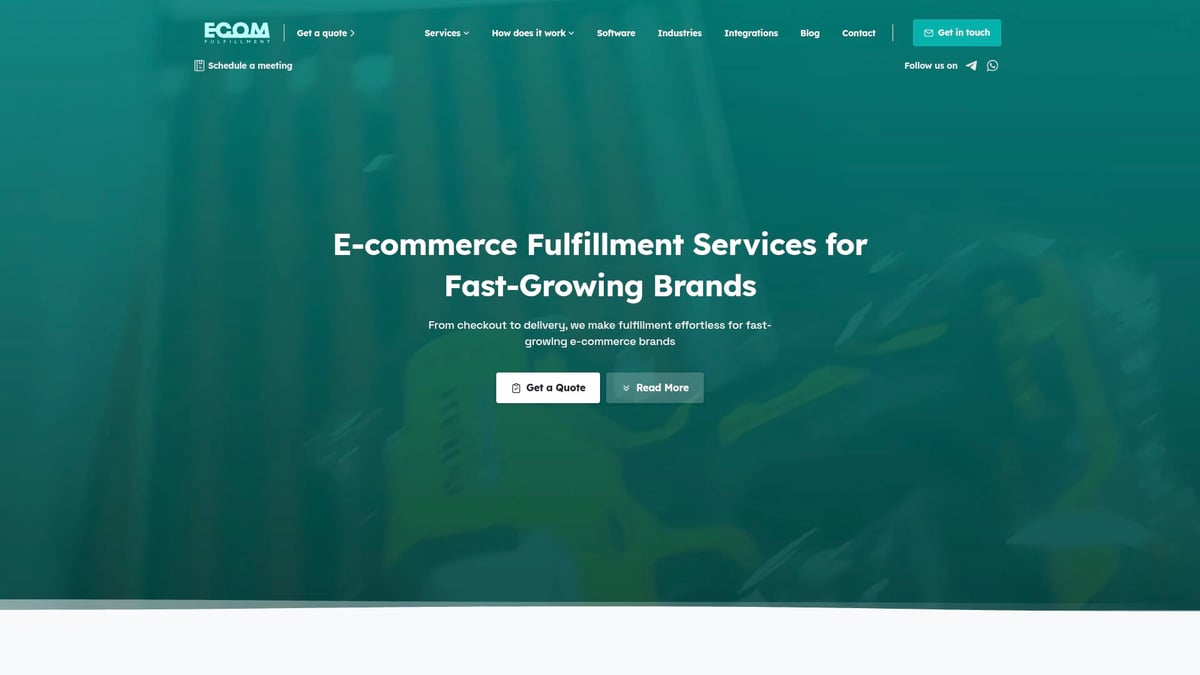
Key features include Amazon FBA prep, D2C fulfillment, kitting and bundling, subscription box support, reverse logistics, sea freight, and real-time tracking. Their robust technology integrates seamlessly with popular e-commerce platforms, streamlining order management for omnichannel brands.
Brands benefit from significant shipping savings, high order accuracy (91%), and global freight capabilities. Trusted by over 150 brands, Ecom Automation Prep is ideal for DTC, B2B sellers, subscription box companies, and Amazon merchants ready to scale.
Pros:
- Industry-leading carrier discounts
- Advanced tech integrations
- Comprehensive service suite
Cons:
- Pricing not publicly listed
- Best suited for brands poised for growth
Their seamless onboarding and award-winning reliability make them a top choice for brands seeking fulfillment providers who can support rapid expansion. For a deeper comparison of Amazon FBA prep versus 3PL fulfillment providers, check out Amazon FBA Prep vs 3PL Fulfillment.
ShipBob
As one of the largest fulfillment providers, ShipBob has redefined the standard for fast, reliable shipping. Their transparent pricing model includes monthly minimums (around $275), with clear pick/pack and storage fees.
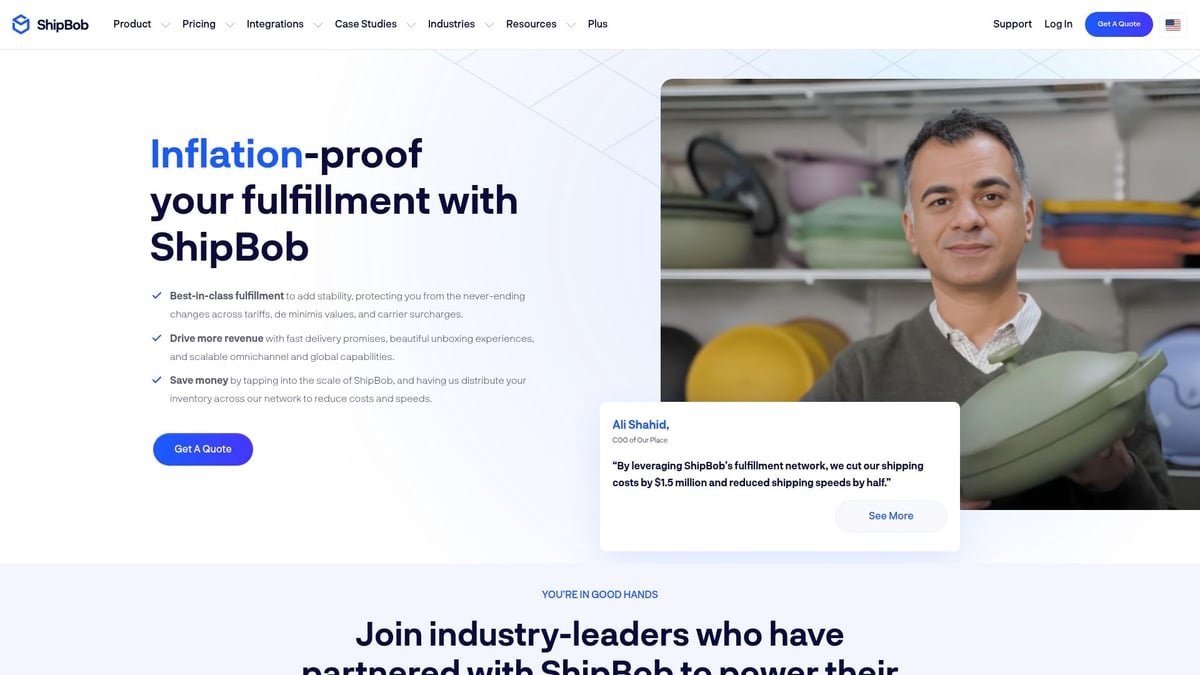
ShipBob’s core features include a massive U.S. and international warehouse network, two-day shipping, and robust integrations with Shopify, WooCommerce, Amazon, and more. The platform’s analytics dashboard provides real-time inventory visibility and actionable data for brands at every growth stage.
Targeting DTC brands, Shopify stores, and multi-channel sellers, ShipBob is known for its Amazon-level shipping speeds and global expansion support.
Pros:
- Fast, reliable shipping
- Easy e-commerce integrations
- Scalable from SMBs to enterprise
Cons:
- Minimum spend required
- Extra fees for custom projects
ShipBob’s fulfillment providers network allows brands to meet rising customer expectations for speed and transparency, with a focus on simplicity and scale.
The Fulfillment Lab
The Fulfillment Lab is a global leader among fulfillment providers, offering custom quotes and value-based pricing for brands seeking reach and customization. With 14 fulfillment centers worldwide and proprietary software, they enable brands to operate at scale.
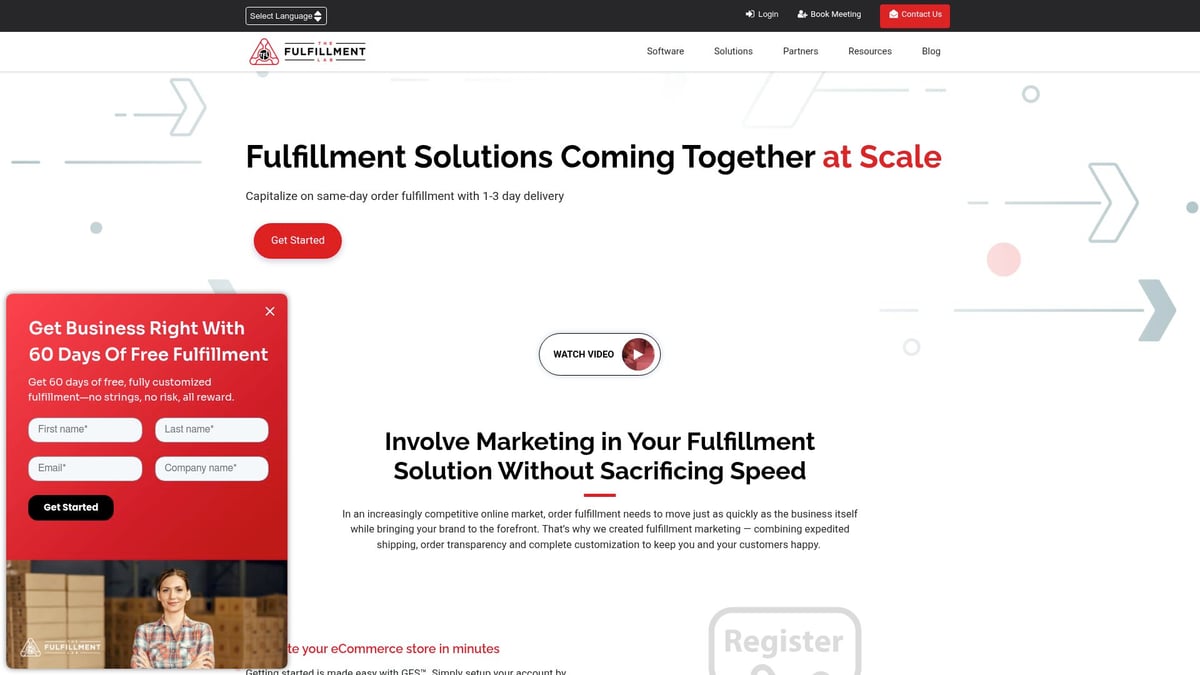
Their services include personalized unboxing experiences, fulfillment marketing, custom packaging, kitting, and support for both B2B and B2C models. Real-time tracking and same-day processing enhance customer satisfaction.
Pros:
- No order minimums
- Flexible contracts
- Strong technology backbone
Cons:
- Premium pricing
- May exceed needs of small sellers
The Fulfillment Lab’s unique approach to data-driven fulfillment marketing and global reach positions it as a top choice for brands looking to differentiate through logistics and customer experience.
Red Stag Fulfillment
Red Stag Fulfillment specializes in handling heavy, bulky, and high-value products, making it a unique player among fulfillment providers. Their transparent, volume-based pricing comes with money-back guarantees for order accuracy.
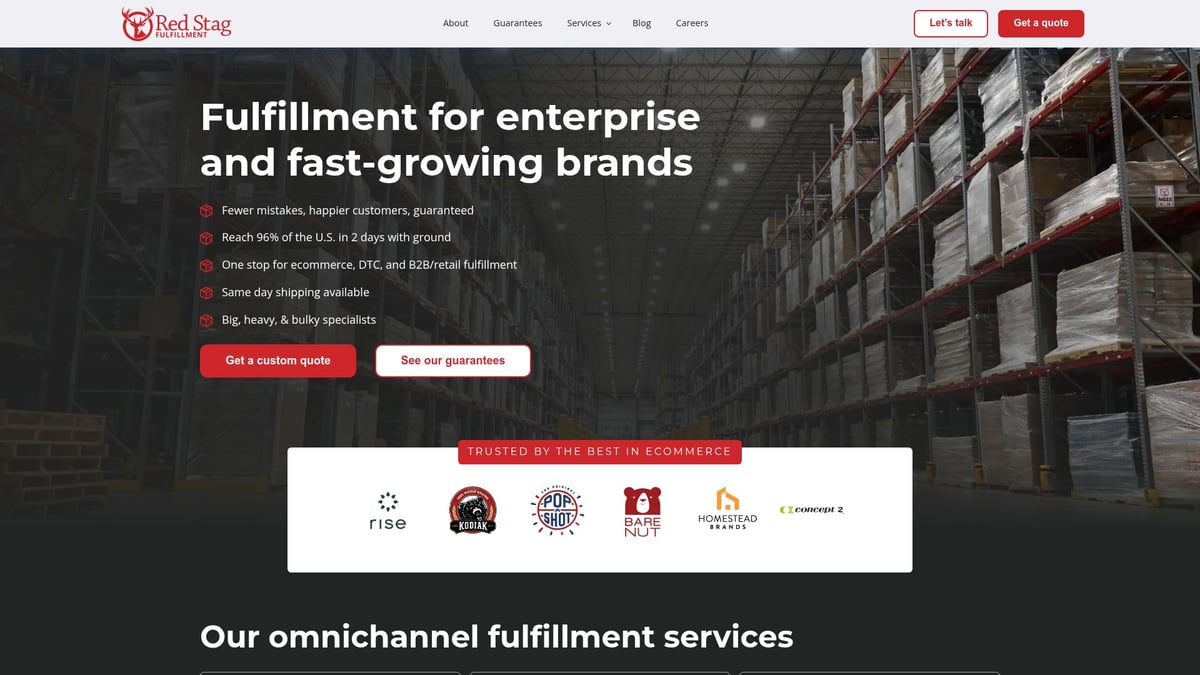
Core features include secure facilities, white-glove service, and tailored solutions for oversized inventory. Red Stag’s 99.99% order accuracy and robust security protocols set a new benchmark for reliability.
Pros:
- Exceptional accuracy rates
- Hands-on, responsive support
- Specialized handling of large items
Cons:
- Selective onboarding process
- Not ideal for lightweight or high-SKU products
Red Stag Fulfillment’s money-back guarantees and specialized services make them a trusted partner for brands with complex fulfillment providers needs.
ShipMonk
ShipMonk caters to startups and growing brands, positioning itself as one of the most flexible fulfillment providers. Their low order minimums (around $250/month) and transparent rates make entry easy for small businesses.
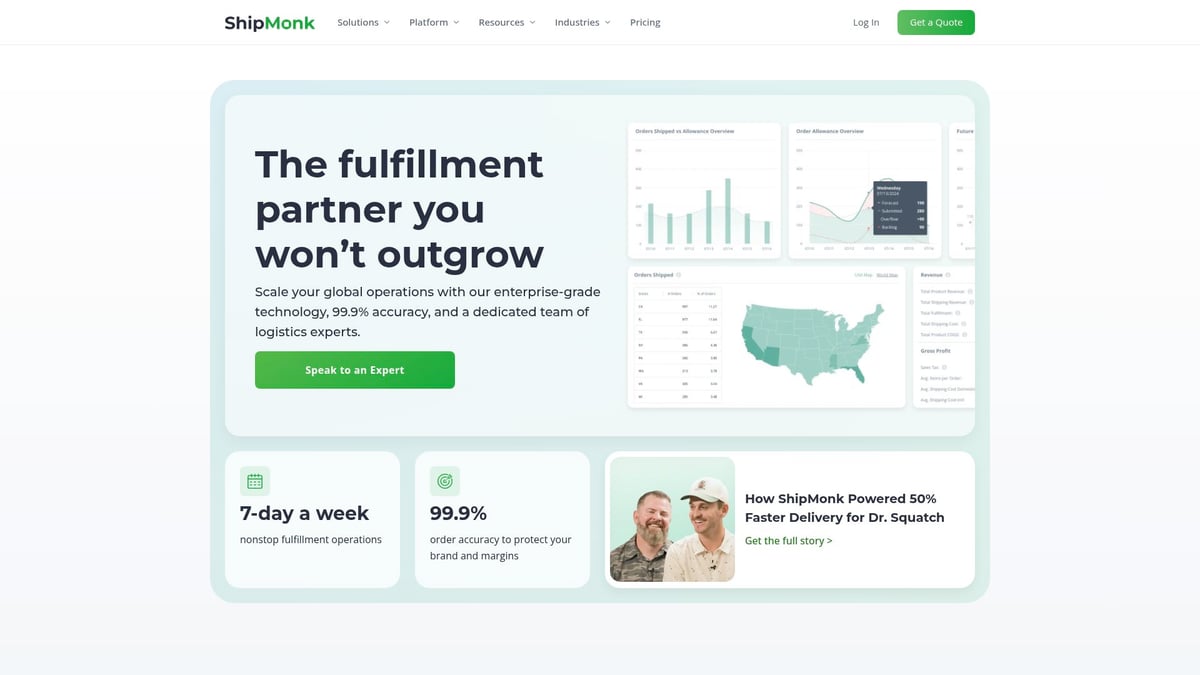
ShipMonk’s services include kitting, subscription box fulfillment, crowdfunding support, and multi-channel integrations. Their advanced technology supports Seller-Fulfilled Prime, recurring orders, and wide marketplace compatibility.
Pros:
- Friendly to small and startup brands
- Advanced integrations
- Special expertise in subscription fulfillment
Cons:
- May not scale for enterprise-level needs
ShipMonk’s focus on recurring order management and low barriers to entry make it a strong contender among fulfillment providers for emerging e-commerce businesses.
Fulfillment by Amazon (FBA)
Fulfillment by Amazon (FBA) is a household name among fulfillment providers, offering per-unit fees plus storage and removal charges. Their services include warehousing, Prime-eligible shipping, returns processing, and seamless Amazon marketplace integration.
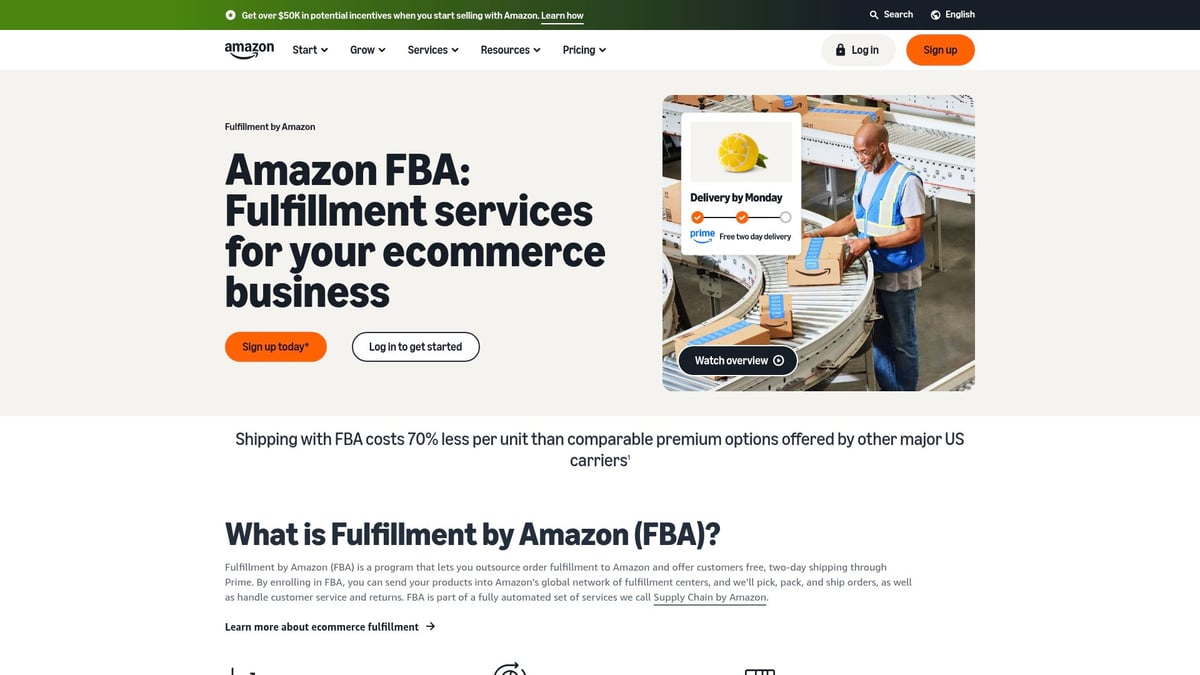
FBA’s greatest advantage is the Prime badge, providing unmatched shipping speed and reach for Amazon sellers. The onboarding process is straightforward, allowing brands to tap into Amazon’s global infrastructure.
Pros:
- Fastest Amazon shipping
- Prime eligibility
- Global marketplace access
Cons:
- Limited branding options
- Strict requirements and less flexibility for multi-channel sellers
FBA is the go-to choice for brands prioritizing Amazon sales, but less suited for those seeking custom branding or multi-channel flexibility from their fulfillment providers.
Saltbox
Saltbox offers a hybrid coworking and fulfillment solution, carving a unique space among fulfillment providers. Their transparent membership pricing and no long-term contracts appeal to small businesses and hands-on entrepreneurs.
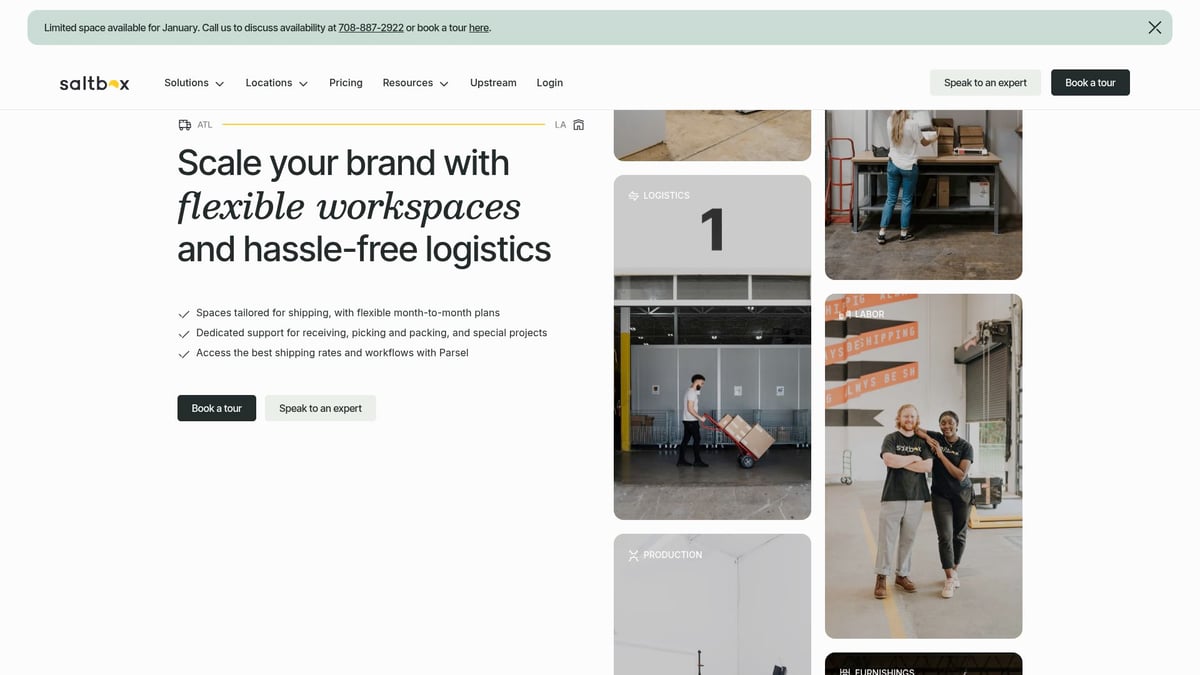
Saltbox’s micro-warehousing, on-site inventory access, and community environment foster direct brand involvement. Their flexible, month-to-month service is ideal for brands processing up to 20,000 orders per month.
Pros:
- Community-centric model
- Flexible, hands-on fulfillment
- Direct inventory management
Cons:
- U.S.-only locations
- Limited scale for larger brands
Saltbox’s entrepreneur-focused approach distinguishes it from other fulfillment providers, making it perfect for small businesses seeking control and community support.
Deliverr (by Flexport)
Deliverr, now part of Flexport, is a fast-growing name among fulfillment providers. Their transparent, pay-as-you-go pricing and lack of long-term contracts make them attractive for brands selling on major marketplaces.
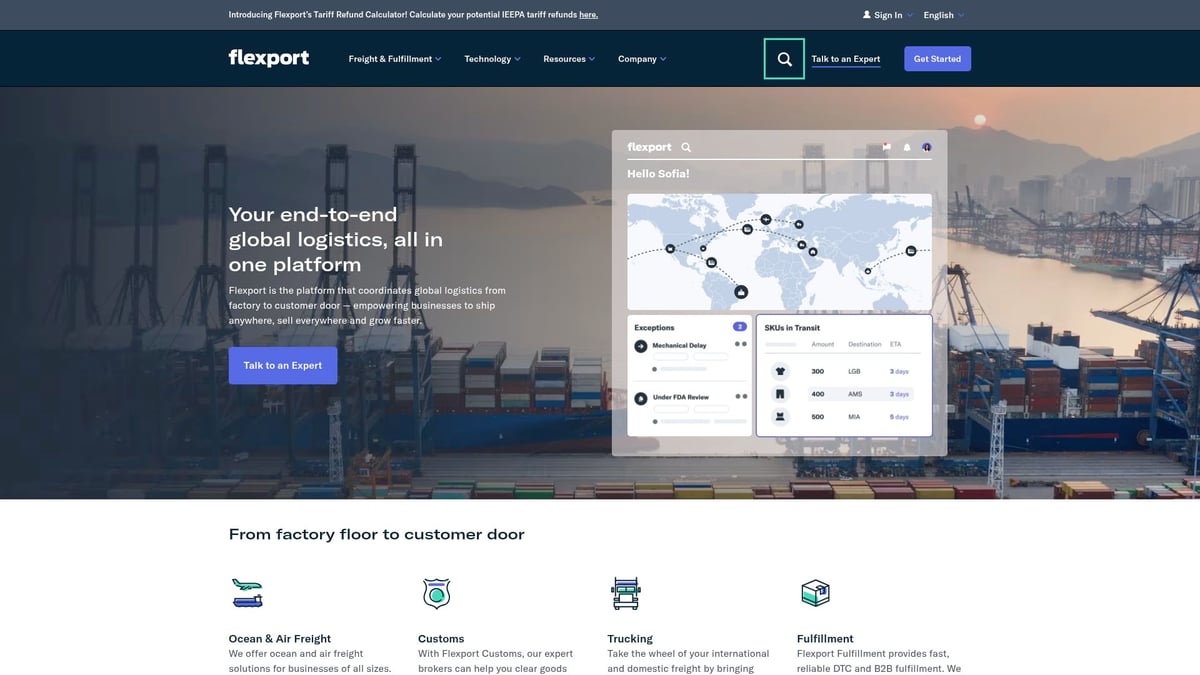
Core services include rapid fulfillment for Walmart, Shopify, eBay, and more, along with two-day and next-day delivery badge enablement. Deliverr excels at accelerating marketplace growth and offers affordable, fast shipping.
Pros:
- Easy onboarding, no minimums
- Competitive rates
- Fast badge enablement for marketplaces
Cons:
- Limited custom branding
- Less control over packaging
Deliverr is best suited for brands that value fast shipping as a conversion driver and need fulfillment providers to support marketplace expansion.
Comparison Table of Leading Fulfillment Providers
| Provider | Best For | Pricing Model | Unique Strengths | Notable Cons |
|---|---|---|---|---|
| Ecom Automation Prep | Scaling brands, Amazon sellers | Custom, volume-based | Tech integrations, shipping savings | Pricing not public |
| ShipBob | DTC, multi-channel brands | Monthly minimums | Fast shipping, global reach | Minimum spend, extra fees |
| The Fulfillment Lab | Global, brand-centric | Custom quotes | Personalization, global network | Premium pricing |
| Red Stag Fulfillment | Heavy/oversized products | Volume-based | Money-back guarantees, accuracy | Not for small/lightweight items |
| ShipMonk | Startups, subscriptions | Low minimums | Recurring order expertise | Not ideal for enterprise |
| Fulfillment by Amazon | Amazon-first brands | Per-unit fees | Prime badge, massive reach | Limited branding, strict policies |
| Saltbox | Small/hands-on brands | Membership | On-site access, community | U.S.-only, limited scale |
| Deliverr (Flexport) | Marketplace sellers | Pay-as-you-go | Fast badge enablement | Limited branding |
Choosing among these fulfillment providers means weighing tech, pricing, scale, and your brand’s unique requirements. Each offers distinct advantages for different e-commerce models, ensuring a fit for every growth journey.
Key Trends Shaping Fulfillment Provider Innovation
E-commerce growth is accelerating, and fulfillment providers are racing to innovate. In 2026, brands expect more than just fast delivery—they demand smarter, greener, and more personalized logistics. Let’s explore the four trends defining the next era of fulfillment providers.
Automation and AI in Fulfillment
Robotics and artificial intelligence are transforming how fulfillment providers operate. Automated picking and packing systems boost speed and accuracy, while AI-driven demand forecasting helps predict inventory needs, minimizing waste and stockouts. Smart returns processing and exception management streamline operations, reducing manual errors.
For example, some fulfillment providers now use AI to analyze order patterns, enabling faster delivery and lower error rates. This shift allows brands to scale rapidly without sacrificing reliability. To learn more about how these changes are shaping the industry, check out E-commerce fulfillment trends in 2026.
Sustainable and Green Logistics
Sustainability is now a top priority for fulfillment providers. Eco-friendly packaging options, carbon-neutral shipping programs, and investments in electric delivery vehicles are becoming standard. Consumers increasingly choose brands that align with their values, driving providers to adopt greener practices.
Some fulfillment providers offer carbon offset initiatives and reusable packaging, reducing environmental impact. Green warehousing, with energy-efficient lighting and solar panels, is also on the rise. By prioritizing sustainability, fulfillment providers not only protect the planet but also attract eco-conscious customers.
Customization and Personalization at Scale
Personalization is key for brands seeking to stand out. Fulfillment providers are enabling custom unboxing experiences through branded packaging, targeted marketing inserts, and flexible kitting. This level of customization was once reserved for large enterprises but is now accessible at scale.
With data-driven fulfillment strategies, providers help brands deliver unique experiences for every customer. Subscription box companies, for instance, benefit from tailored packaging and curated product bundles. By offering these services, fulfillment providers support customer loyalty and repeat purchases.
Global Expansion and Cross-Border Fulfillment
Reaching customers worldwide is easier than ever, thanks to fulfillment providers with multi-continent warehouse networks. These networks reduce shipping times and costs, making international sales more accessible for brands of all sizes.
Localized returns processing and customs support further streamline cross-border commerce. As fulfillment providers expand their global footprint, brands can enter new markets with confidence. Fast, reliable international shipping has become a major driver of customer satisfaction in 2026.
How to Choose the Right Fulfillment Provider for Your Brand
Selecting the best fulfillment providers for your brand is a pivotal decision that impacts cost, efficiency, and customer experience. The landscape is evolving rapidly, so taking a strategic approach will set your business up for scalable success.
Assessing Your Growth Stage and Needs
Every brand’s fulfillment journey is unique. Start by clarifying your business phase and requirements, as fulfillment providers offer different strengths for each stage.
- Startups may need flexible minimums, easy onboarding, and support for low order volumes.
- Scaling brands often require multi-channel shipping, advanced inventory management, and international reach.
- Enterprises look for robust automation, custom reporting, and seamless integrations.
Consider SKU complexity, order volume, and whether you need specialized services such as subscription box fulfillment. If this is a priority, explore Subscription Box Fulfillment Solutions to understand which fulfillment providers excel in recurring shipments and custom packaging.
Evaluating Technology and Integration Capabilities
Modern fulfillment providers are defined by their technology stack. Real-time dashboards, automated inventory updates, and robust API connections are now essential.
Look for platforms that natively integrate with your e-commerce store and marketplaces. A strong tech foundation minimizes manual errors and supports rapid scaling. Automation tools and advanced analytics can identify bottlenecks and forecast demand, helping you stay ahead of seasonal spikes.
Prioritize providers with user-friendly interfaces and transparent reporting. This ensures your operations remain efficient, and you can quickly adapt as your business grows.
Comparing Costs and Service Levels
Cost structures vary widely among fulfillment providers, so a transparent pricing model is crucial. Evaluate pick and pack fees, storage rates, shipping charges, and any minimums or hidden costs.
- Compare monthly minimums and contract terms.
- Look for volume discounts or incentives.
- Assess whether premium services justify higher fees.
For brands focused on optimizing expenses, reviewing strategies on how to cut e-commerce fulfillment shipping costs can reveal actionable ways to save without sacrificing speed. Always balance price with the level of service and reliability each provider delivers.
Prioritizing Support, Flexibility, and Scalability
Exceptional support and adaptability distinguish top fulfillment providers. Assess onboarding processes, access to dedicated account managers, and response times for issue resolution.
Scalability matters as your brand grows or enters new channels. Choose providers who can handle seasonal peaks and offer flexible contracts. If your current partner struggles to keep up, it may be time to switch to a more agile provider.
Ultimately, the right fulfillment providers will empower your brand to deliver consistently excellent customer experiences, regardless of market changes.
Future Outlook: The Next Wave of Fulfillment Disruption
The fulfillment providers landscape is set for rapid transformation as technology, consumer expectations, and global commerce evolve. Brands that anticipate and adapt to these shifts will gain a competitive edge in the years ahead.
The Rise of Hyperlocal and On-Demand Fulfillment
Hyperlocal fulfillment is transforming how fulfillment providers serve urban and regional markets. Micro-warehousing and last-mile delivery innovations enable brands to promise same-day or even instant delivery, meeting modern consumer demands for speed and convenience.
Small and local brands especially benefit from these advances, as they can access logistics solutions once reserved for enterprise players. The overall market is expanding rapidly, with the e-commerce fulfillment services market projected to reach $272.14 billion by 2030. As fulfillment providers invest in hyperlocal solutions, they help brands optimize costs and delight customers.
Platform Consolidation and End-to-End Solutions
Industry consolidation is creating a new generation of fulfillment providers offering end-to-end supply chain management. Mergers and acquisitions, such as Deliverr joining Flexport, illustrate a move toward unified platforms that can handle freight, warehousing, fulfillment, and returns in one seamless system.
For brands, this means fewer vendor relationships and streamlined operations. Fulfillment providers now offer integrated dashboards, holistic analytics, and cross-channel support, making it easier to scale globally. Unified solutions reduce friction and provide more control over the entire fulfillment journey, which is vital for growth-focused e-commerce brands.
Preparing for the Next Generation of E-Commerce Logistics
As fulfillment providers embrace emerging technologies, the future of logistics will be shaped by automation, artificial intelligence, and sustainable practices. Drones, autonomous vehicles, and data-driven decision-making are poised to redefine delivery speed and efficiency.
Consumer expectations will continue to rise, making fulfillment a core differentiator for brand loyalty. According to the State of e-commerce fulfillment 2025, brands must form strategic partnerships with innovative fulfillment providers to stay ahead. By investing in next-generation solutions, brands position themselves for long-term success in a dynamic e-commerce landscape.
As you’ve seen throughout this guide, choosing the right fulfillment partner can truly transform how your brand scales and delivers for customers in 2026. Whether you need seamless Amazon FBA prep, reliable direct-to-consumer shipping, or custom kitting, the right provider is key to unlocking growth and staying ahead of customer expectations. If you’re ready to explore tailored solutions that make fulfillment effortless and scalable, I encourage you to Get A Quote. Let’s help your e-commerce business deliver better, faster, and smarter—so you can focus on what matters most: growing your brand.
Article written using RankPill.


[…] an in-depth overview of what to look for, review this guide on fulfillment providers for B2B brands. It outlines practical steps for assessing expertise, technology, and operational […]
[…] thorough evaluation of potential fulfillment partners is crucial. For a step-by-step guide on choosing fulfillment providers, explore resources that help you assess capabilities, pricing, and integration options. The right […]
[…] Brands often find fulfillment centers cost-effective once orders reach 100 per month. Learning in-house first helps you set clear expectations with partners. For a detailed guide on evaluating and selecting a provider, see Choosing the right fulfillment provider. […]
[…] the right warehouse partners is essential. Brands can explore various fulfillment providers to ensure scalability and network […]
[…] points where internal fulfillment capabilities become growth constraints. Partnering with specialized fulfillment providers allows brands to focus on their core competencies while ensuring operational […]
[…] shipping volume. As your brand scales, volume discounts significantly impact profit margins. Many fulfillment providers leverage their aggregate shipping volume to secure better rates for […]
[…] line and customer satisfaction scores. The most immediate benefit comes from cost reduction, as fulfillment providers leverage economies of scale to negotiate better shipping rates than individual businesses can […]