


E-commerce brands today face mounting pressure to deliver products faster than ever before. Customer expectations have shifted dramatically, with same-day and next-day delivery becoming standard rather than exceptional. Fast fulfillment has emerged as a critical competitive advantage, directly impacting customer satisfaction, repeat purchase rates, and overall brand reputation. For growing e-commerce businesses, mastering speed without sacrificing accuracy or inflating costs represents one of the most significant operational challenges. This comprehensive guide explores actionable strategies to optimize fulfillment operations and meet the demands of modern online shoppers.
Understanding the Fast Fulfillment Landscape
The definition of fast fulfillment continues to evolve as technology advances and consumer expectations rise. In 2026, customers expect their orders to ship within 24 hours, with delivery completed in two days or less for standard shipping options. Major marketplaces have set the pace, creating a ripple effect across the entire e-commerce ecosystem.
Key performance indicators for fast fulfillment include:
- Order processing time (from purchase to shipment)
- Pick and pack accuracy rates
- Carrier pickup frequency
- Shipping zone optimization
- Inventory turnover velocity
Meeting these benchmarks requires more than simply working faster. It demands systematic process improvements, technology integration, and strategic warehouse design. According to research on speeding up e-commerce fulfillment, optimizing these core elements can reduce fulfillment times by 40-60% without proportional cost increases.
The Business Impact of Speed
Fast fulfillment directly correlates with revenue growth and customer lifetime value. Studies consistently show that customers who receive orders quickly become repeat buyers at significantly higher rates. Additionally, speed reduces cart abandonment during checkout, as shoppers gain confidence in quick delivery capabilities.
The financial implications extend beyond customer satisfaction. Efficient fulfillment operations reduce labor costs per order, minimize warehouse space requirements through faster inventory turnover, and decrease the likelihood of costly shipping errors that require resolution.

Warehouse Organization for Maximum Speed
Physical warehouse layout represents one of the most overlooked opportunities for improving fulfillment speed. Strategic organization reduces travel time for warehouse staff, minimizes picking errors, and accelerates the entire order processing workflow.
Strategic Slotting and Inventory Placement
High-velocity items should occupy prime warehouse real estate closest to packing stations. This basic principle of slotting optimization can dramatically reduce pick times. Analyzing order data reveals which products frequently ship together, enabling strategic co-location that streamlines multi-item orders.
Effective slotting strategies include:
- ABC analysis based on sales velocity
- Seasonal adjustment protocols
- Size-based placement for efficient space utilization
- New product integration workflows
- Regular slotting audits and reconfigurations
Many fulfillment operations leverage warehouse layout optimization strategies to reduce average pick times by 30-50%. These improvements compound across thousands of daily orders, generating substantial time savings.
| Slotting Approach | Pick Time Reduction | Implementation Complexity | Best For |
|---|---|---|---|
| Velocity-based | 25-35% | Medium | High SKU count |
| Zone picking | 30-45% | High | Large warehouses |
| Golden zone placement | 15-25% | Low | All operations |
| Family grouping | 20-30% | Medium | Complementary products |
The investment in proper warehouse organization pays dividends immediately. Even small adjustments to product placement based on order frequency can yield measurable improvements within days.
Technology Integration for Acceleration
Modern fast fulfillment relies heavily on technology systems that automate decision-making and eliminate manual processes. Warehouse management systems (WMS), inventory management platforms, and automated picking solutions form the technological foundation of high-speed operations.
Automation Opportunities Across the Fulfillment Chain
Automation doesn't necessarily require massive capital investment in robotics. Many high-impact automation opportunities exist in software systems that optimize workflows and reduce human error. Barcode scanning, automated label generation, and intelligent order routing represent accessible entry points for most operations.
Automated packaging solutions have transformed fulfillment speed for major logistics operations. These systems automatically select appropriate box sizes, print shipping labels, and even apply protective materials based on product characteristics.
Technology tiers for fast fulfillment:
- Foundation tier: Barcode scanning, digital picking lists, integrated shipping software
- Intermediate tier: WMS with real-time inventory tracking, automated reorder points, multi-carrier rate shopping
- Advanced tier: Automated storage and retrieval systems (AS/RS), robotic picking, AI-powered demand forecasting
Integration between e-commerce platforms and fulfillment systems eliminates manual order entry, one of the most time-consuming bottlenecks in traditional operations. Real-time inventory synchronization prevents overselling and enables accurate delivery date promises at checkout.
Strategic Process Optimization
Beyond technology and layout, operational processes themselves offer substantial opportunities for speed improvements. Examining each step in the fulfillment workflow reveals inefficiencies that accumulate into significant delays.
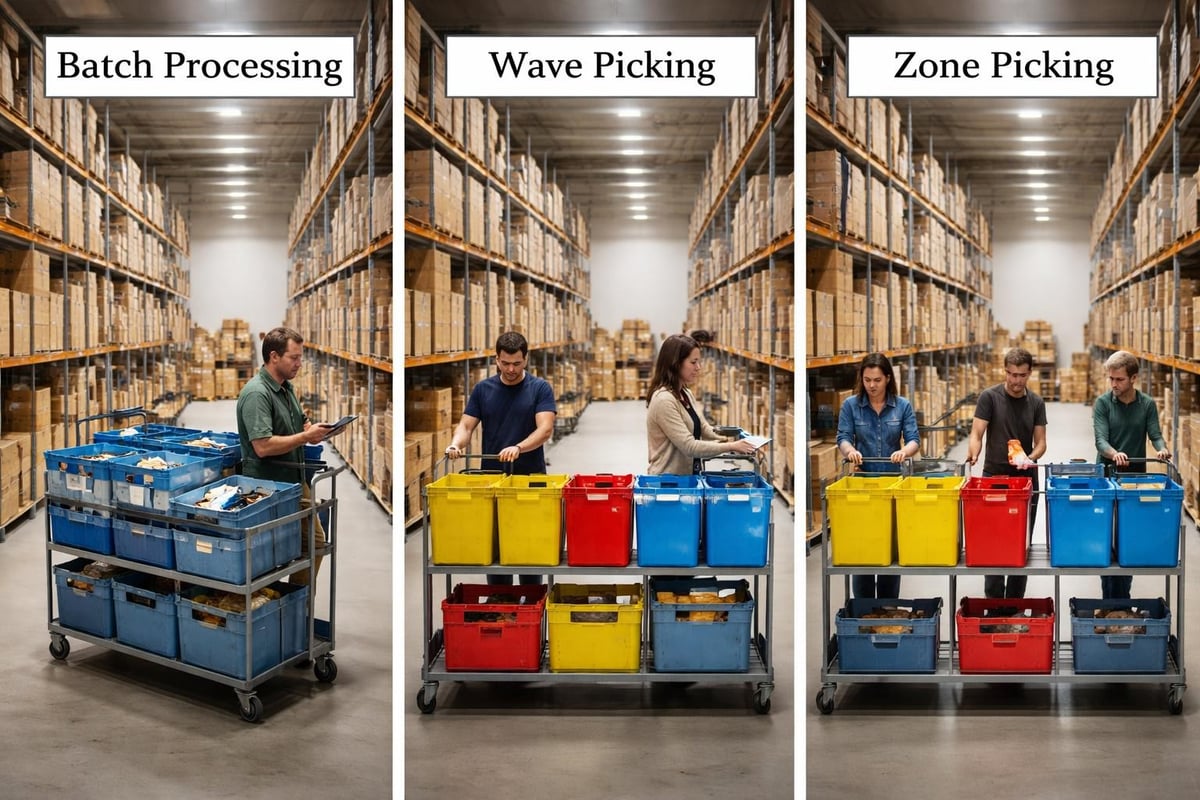
Batch Processing vs. Wave Picking
Different order processing methodologies suit different operational scales and order profiles. Batch processing groups similar orders together for efficient picking, while wave picking organizes work based on carrier pickup schedules or shipping zones.
Implementing strategies for fast order fulfillment often involves testing multiple approaches to identify the optimal workflow for specific product mixes and order volumes. Many operations find that hybrid approaches deliver the best results, using different methodologies for different product categories or order types.
Quality Control Without Speed Penalties
Fast fulfillment cannot compromise accuracy. Returns due to picking errors or damaged goods ultimately cost far more than careful quality control measures. The key lies in integrating quality checkpoints that add minimal time while preventing costly mistakes.
Streamlined quality control methods:
- Scan verification at each pick
- Weight verification before shipping
- Automated image capture of packed items
- Random audit sampling
- Real-time error tracking and staff feedback
These measures actually accelerate overall fulfillment by preventing the time-consuming customer service interventions required when errors reach customers. Building quality into the process proves faster than inspecting it in afterward.
Inventory Management for Speed
Inventory availability represents the foundation of fast fulfillment. The fastest picking and packing processes cannot overcome stockouts or misplaced inventory. Sophisticated inventory management practices ensure products are available, findable, and ready to ship.
Demand Forecasting and Predictive Stocking
Anticipating inventory needs prevents both stockouts and overstock situations that slow fulfillment. Modern demand forecasting leverages historical sales data, seasonal patterns, and market trends to optimize inventory levels.
Strategic inventory placement goes beyond simply having stock available. For businesses serving national markets, distributed inventory across multiple fulfillment centers enables faster delivery to all regions. This approach, combined with delivery speed optimization strategies, can reduce average delivery times by 1-2 days.
| Inventory Strategy | Speed Benefit | Cost Impact | Ideal Application |
|---|---|---|---|
| Single centralized warehouse | Moderate | Low | Regional businesses |
| Distributed inventory | High | Medium-High | National brands |
| Safety stock optimization | Medium | Medium | All operations |
| Just-in-time receiving | Variable | Low | Predictable demand |
Cycle Counting and Inventory Accuracy
Inventory accuracy directly impacts fulfillment speed. When system records don't match physical inventory, staff waste valuable time searching for products or dealing with stockout situations that shouldn't exist. Regular cycle counting maintains accuracy without requiring full inventory shutdowns.
Implementing perpetual inventory systems with ongoing verification ensures reliable stock levels. This accuracy enables confident delivery date promises and prevents the delays associated with discovering inventory discrepancies during order processing.
Carrier Relationships and Shipping Optimization
The fastest internal fulfillment processes lose value if packages sit waiting for carrier pickup. Strategic carrier relationships and shipping optimization complete the fast fulfillment equation.
Multi-Carrier Strategy Benefits
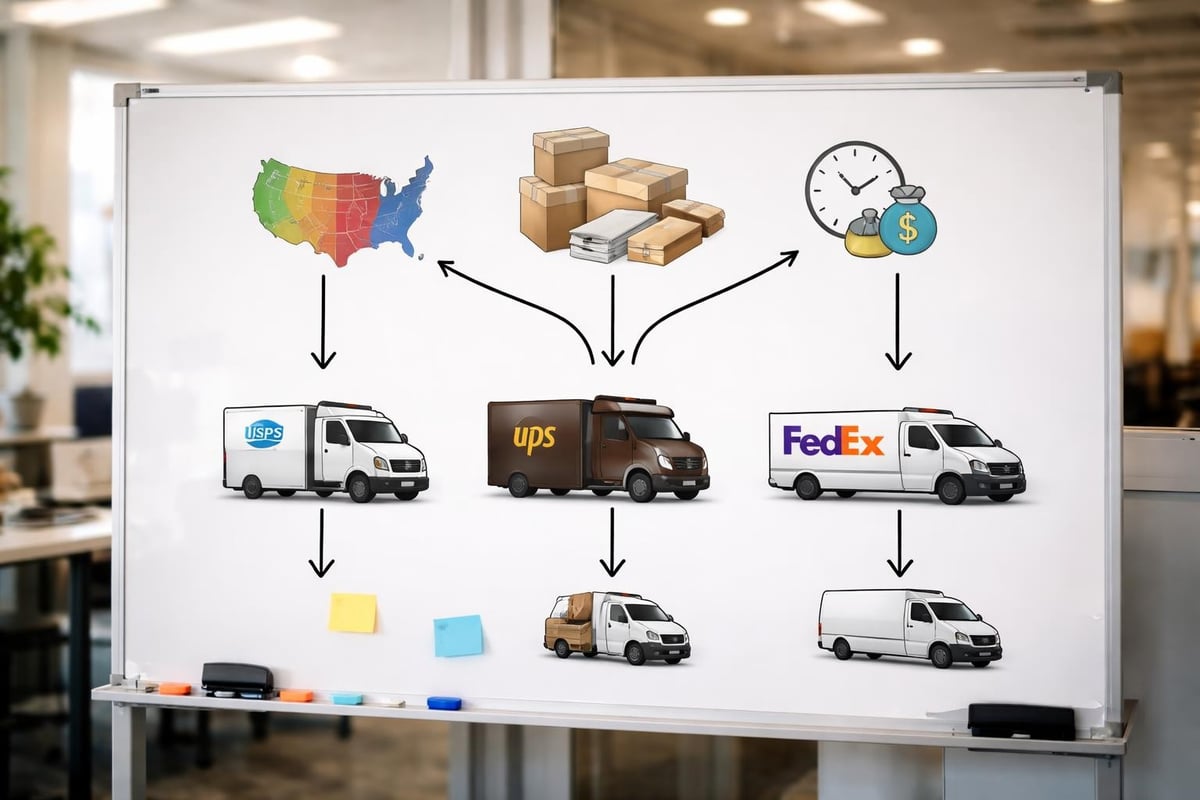
Relying on a single shipping carrier creates vulnerabilities and limits optimization opportunities. Multiple carrier relationships enable rate shopping for each shipment, backup options during peak seasons or service disruptions, and access to specialized services for different product types.
Many e-commerce brands leverage order fulfillment optimization through shipping software that automatically selects the fastest, most cost-effective carrier for each order based on destination, package characteristics, and service level requirements.
Carrier selection criteria for speed:
- Transit time to destination zone
- Pickup frequency and cutoff times
- Weekend and holiday service availability
- Package tracking reliability
- Claims resolution efficiency
Negotiating multiple daily pickups with primary carriers eliminates the bottleneck of waiting for end-of-day collection. For high-volume operations, continuous carrier pickup throughout the day can reduce time-to-ship by 4-8 hours.
Zone Skipping and Regional Carriers
Zone skipping strategies transport bulk shipments to regional carrier facilities closer to final destinations, reducing the number of carrier hand-offs and accelerating delivery. This approach works particularly well for businesses with concentrated customer bases in specific geographic regions.
Regional carriers often provide faster service and more competitive rates for specific areas compared to national carriers. Integrating regional carriers into the shipping strategy enhances both speed and cost-effectiveness for those zones.
Staff Training and Performance Management
Technology and processes only deliver results when executed by well-trained, motivated staff. Human performance remains central to fast fulfillment operations, particularly for businesses not yet fully automated.
Cross-Training for Flexibility
Cross-trained staff can shift between receiving, picking, packing, and shipping as workflow demands change throughout the day. This flexibility prevents bottlenecks from developing in any single area and maintains consistent throughput.
Implementing best practices for e-commerce fulfillment includes regular training updates as processes evolve and new technologies integrate into operations. Ongoing education ensures staff leverage available tools effectively rather than reverting to slower manual methods.
Performance Metrics and Incentives
Transparent performance metrics help staff understand expectations and identify improvement opportunities. Tracking individual and team metrics like units picked per hour, accuracy rates, and orders fulfilled per shift creates accountability while recognizing high performers.
Incentive programs tied to speed and accuracy metrics can motivate consistent performance. However, balanced scorecards that weight both metrics equally prevent speed from compromising quality or vice versa.
Scalability and Peak Season Preparation
Fast fulfillment capabilities must scale to meet demand fluctuations without degrading performance during peak periods. Seasonal preparation and flexible capacity represent critical components of reliable speed.
Flexible Labor Models
Peak season demands often exceed base staffing capacity by 200-400%. Developing relationships with staffing agencies, cross-training office staff for warehouse support, and implementing flexible scheduling allows operations to scale rapidly when needed.
Many growing e-commerce brands partner with specialized fulfillment services to access flexible capacity without maintaining excess warehouse space and staff during slower periods. This approach provides scalability while maintaining consistent service levels.
Peak season preparation timeline:
- 90 days out: Forecast demand and plan inventory builds
- 60 days out: Recruit and begin training temporary staff
- 45 days out: Test systems under load scenarios
- 30 days out: Finalize carrier agreements and pickup schedules
- 15 days out: Conduct full operational dry runs
Technology Load Testing
Systems that perform well at normal volumes may struggle during peak periods. Load testing ensures warehouse management systems, inventory platforms, and integration connections can handle 3-5x normal order volumes without slowdowns or failures.
Identifying technology bottlenecks before peak season enables proactive upgrades or workarounds rather than crisis management during the highest-revenue periods.
Cost-Benefit Analysis of Speed Investments
While fast fulfillment delivers clear customer experience benefits, each speed improvement carries associated costs. Sophisticated operators evaluate investments based on comprehensive cost-benefit analysis rather than pursuing speed as an absolute goal.
Balancing Speed and Profitability
Not every order requires same-day processing, and not every customer values next-day delivery enough to pay premium shipping costs. Segmenting customers and orders based on value and urgency enables tailored service levels that optimize overall profitability.
Balancing speed and cost in e-commerce fulfillment requires understanding customer willingness to pay for expedited service and the actual cost differentials of various speed options. This data-driven approach prevents over-investing in speed improvements that customers don't value sufficiently.
| Speed Investment | Typical Cost | Customer Impact | ROI Timeline |
|---|---|---|---|
| Extended warehouse hours | 15-25% labor increase | Moderate | 6-12 months |
| WMS implementation | $20K-$200K+ | High | 12-24 months |
| Second fulfillment center | Significant | High (for national brands) | 18-36 months |
| Automated picking | $100K-$1M+ | Very high | 24-48 months |
Revenue Impact Modeling
Quantifying the revenue impact of faster fulfillment helps justify investments. Metrics like conversion rate improvements from faster delivery promises, repeat purchase rate increases, and reduced cart abandonment all contribute to the business case for speed enhancements.
Testing different delivery speed options with customer segments reveals actual behavioral responses rather than relying on assumptions. A/B testing delivery promise messaging and analyzing resulting conversion rates provides concrete data for investment decisions.
Integration with Sales Channels
Fast fulfillment begins before orders reach the warehouse. Integration with sales channels enables accurate delivery date promises, real-time inventory visibility, and automated order routing that accelerates the entire process.
Real-Time Inventory Synchronization
Nothing frustrates customers more than ordering products that appear available but are actually out of stock. Real-time inventory synchronization between fulfillment systems and sales channels prevents overselling while enabling confident availability displays.
For multi-channel brands selling through their own websites, Amazon, and other marketplaces, centralized inventory management ensures accurate availability across all channels. This coordination prevents the delays associated with order cancellations and customer service interventions.
Businesses utilizing Amazon prep services alongside their own direct-to-consumer operations benefit from integrated inventory visibility that allocates stock appropriately across channels while maintaining fast fulfillment capabilities for both.
Automated Order Routing
Intelligent order routing systems automatically direct orders to the optimal fulfillment location based on inventory availability, customer location, and carrier service areas. This automation eliminates manual decision-making delays and ensures the fastest possible delivery for each order.
For brands operating multiple fulfillment centers or using a combination of internal fulfillment and third-party logistics providers, automated routing optimizes the entire network for speed and cost efficiency.
Continuous Improvement Culture
Fast fulfillment represents a moving target as customer expectations and competitive benchmarks continually evolve. Organizations that embed continuous improvement into their culture maintain competitive advantages over time.
Data-Driven Decision Making
Comprehensive data collection across all fulfillment processes enables evidence-based improvements. Tracking metrics like order cycle time by product category, picking accuracy by staff member, and shipping delays by carrier reveals specific improvement opportunities.
Regular performance reviews analyzing trends rather than just snapshots identify emerging issues before they impact customers. Declining accuracy rates, increasing pick times, or growing backlog trends signal the need for intervention.
Key performance indicators for ongoing monitoring:
- Average order processing time (receipt to ship)
- Picking accuracy percentage
- Packing efficiency (orders per labor hour)
- Shipping cutoff adherence rate
- Perfect order rate (on-time, accurate, undamaged)
- Inventory accuracy percentage
Staff Feedback and Innovation
Warehouse staff performing fulfillment tasks daily often identify improvement opportunities that managers overlook. Creating formal channels for staff suggestions and rewarding implemented ideas taps into frontline expertise.
Regular process review meetings that include staff from all fulfillment functions generate cross-functional insights. Pickers may identify packing inefficiencies, while packers may suggest inventory organization improvements that streamline picking.
Fast fulfillment has evolved from competitive differentiator to baseline customer expectation in the e-commerce landscape of 2026. The strategies outlined above, from warehouse organization and technology integration to carrier optimization and continuous improvement, provide a comprehensive framework for building fulfillment operations that meet modern speed demands. Growing e-commerce brands seeking to implement these strategies while maintaining focus on their core business can partner with Ecom Automation Prep for scalable fulfillment solutions that deliver the speed and reliability today's customers expect without the operational complexity of managing it internally.