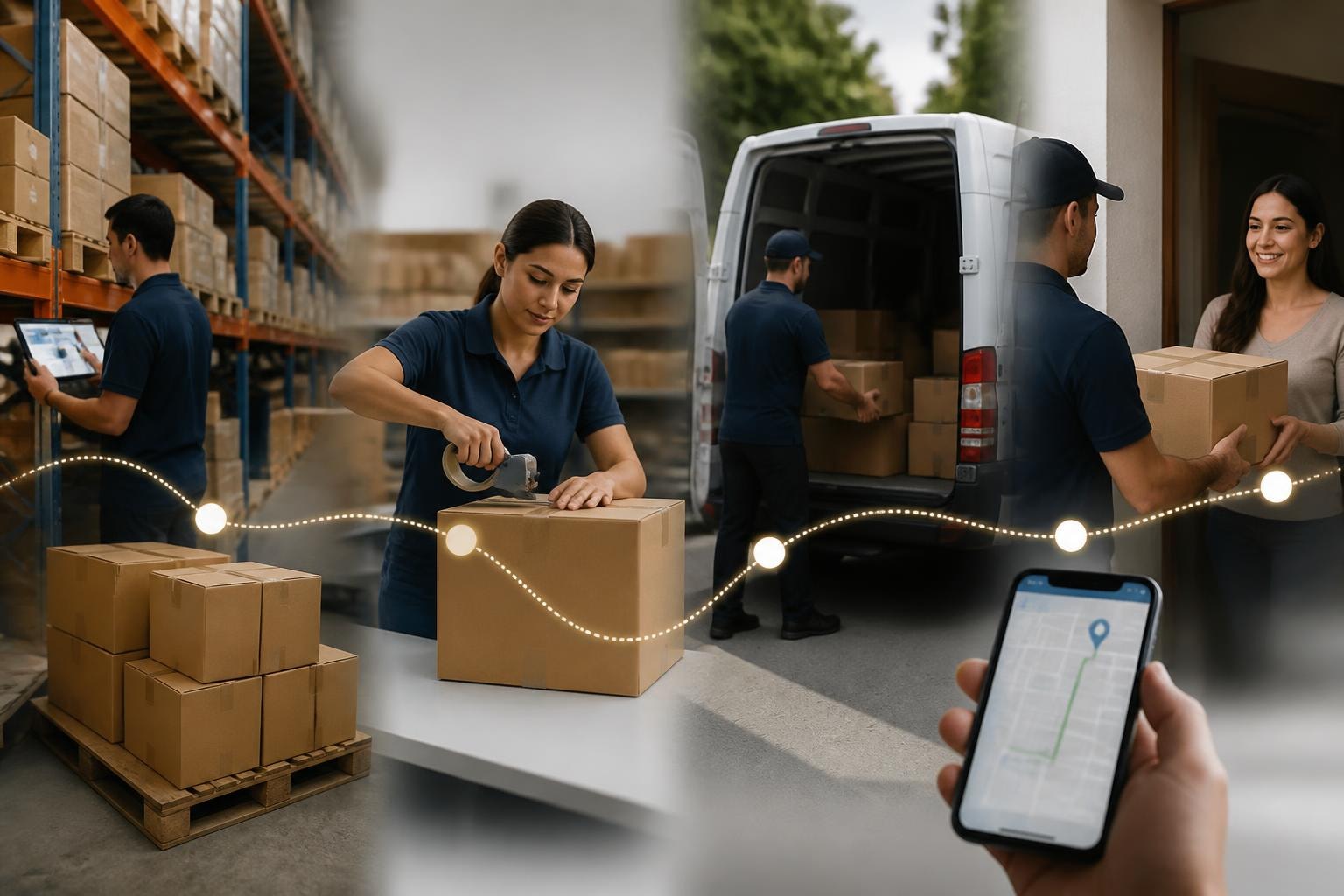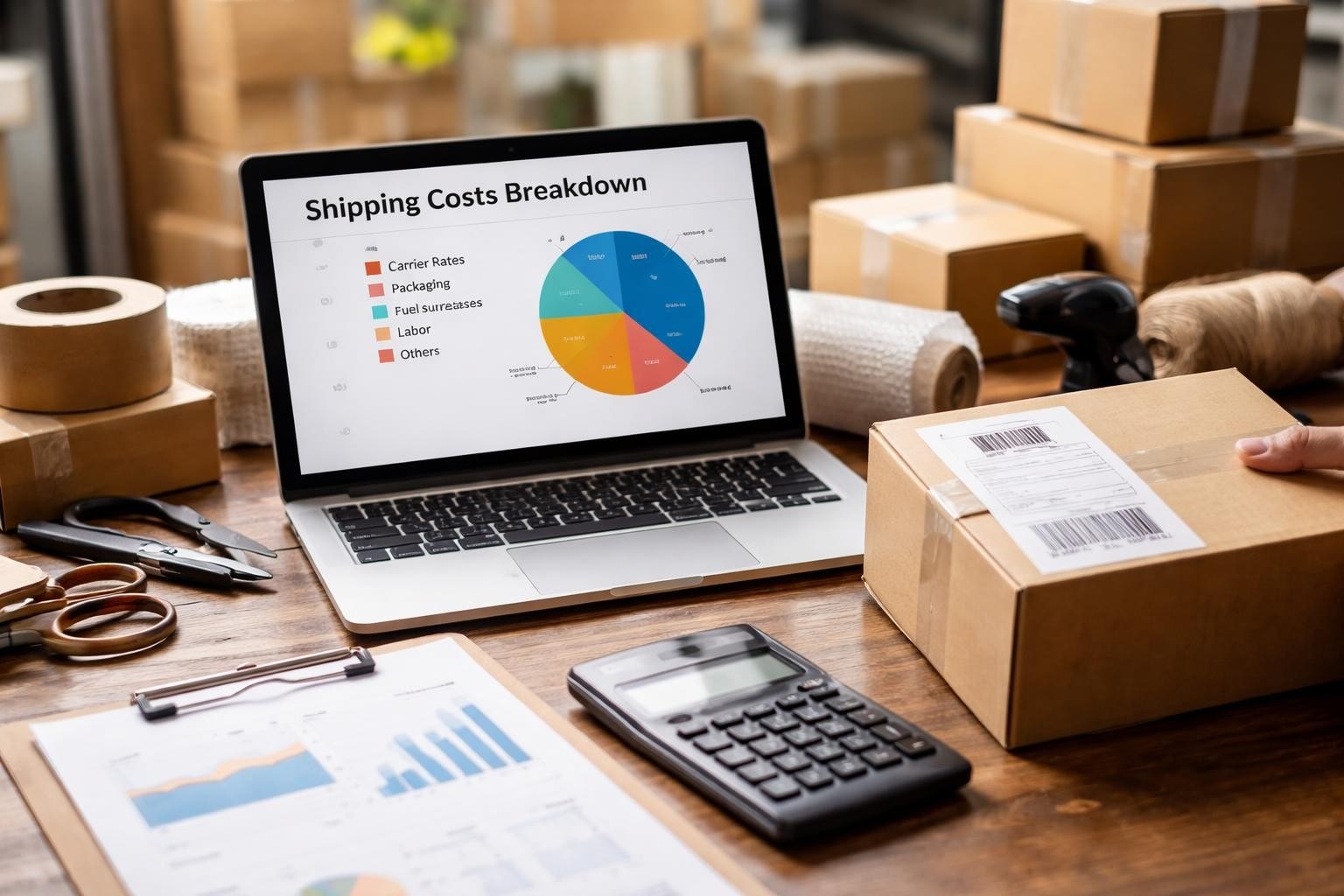

The true cost of shipping can make or break an e-commerce business. While product margins might look promising on paper, shipping expenses often consume 10-20% of total revenue for online retailers. Understanding and controlling these costs is essential for maintaining profitability while meeting customer expectations for fast, affordable delivery. This comprehensive guide explores the factors driving ecommerce shipping costs and provides actionable strategies to optimize your shipping operations in 2026.
Understanding the Components of Ecommerce Shipping Costs
Ecommerce shipping costs consist of multiple elements beyond the basic carrier rate. Many business owners focus solely on the per-package price without considering the complete picture.
Base Carrier Rates and Zones
Carrier pricing operates on a zone-based system, where shipping costs increase with distance. A package traveling from your warehouse in California to a customer in Oregon costs significantly less than shipping to Maine. Major carriers divide the United States into eight zones, with Zone 1 representing the closest destinations and Zone 8 covering the farthest.
Key factors affecting base rates:
- Package weight (actual and dimensional)
- Destination zone
- Service level (ground, 2-day, overnight)
- Carrier contract negotiations
- Seasonal surcharges
The dimensional weight calculation has become increasingly important as carriers prioritize space efficiency. This pricing method compares actual weight against dimensional weight (length × width × height ÷ 166 for domestic shipments) and charges based on whichever is greater.
Additional Fees and Surcharges
Beyond base rates, numerous surcharges can inflate your final shipping bill. Residential delivery fees add approximately $4-5 per package when shipping to homes rather than businesses. Fuel surcharges fluctuate weekly based on national diesel prices, typically adding 8-12% to your total cost.
| Surcharge Type | Typical Cost | When Applied |
|---|---|---|
| Residential Delivery | $4.50-$5.25 | Residential addresses |
| Fuel Surcharge | 8-12% of base | All shipments |
| Address Correction | $15-18 | Incorrect addresses |
| Peak Season | $0.30-$6.00 | November-January |
| Oversized Package | $30-$90 | Exceeds carrier limits |
| Additional Handling | $16-$20 | Irregular shapes |
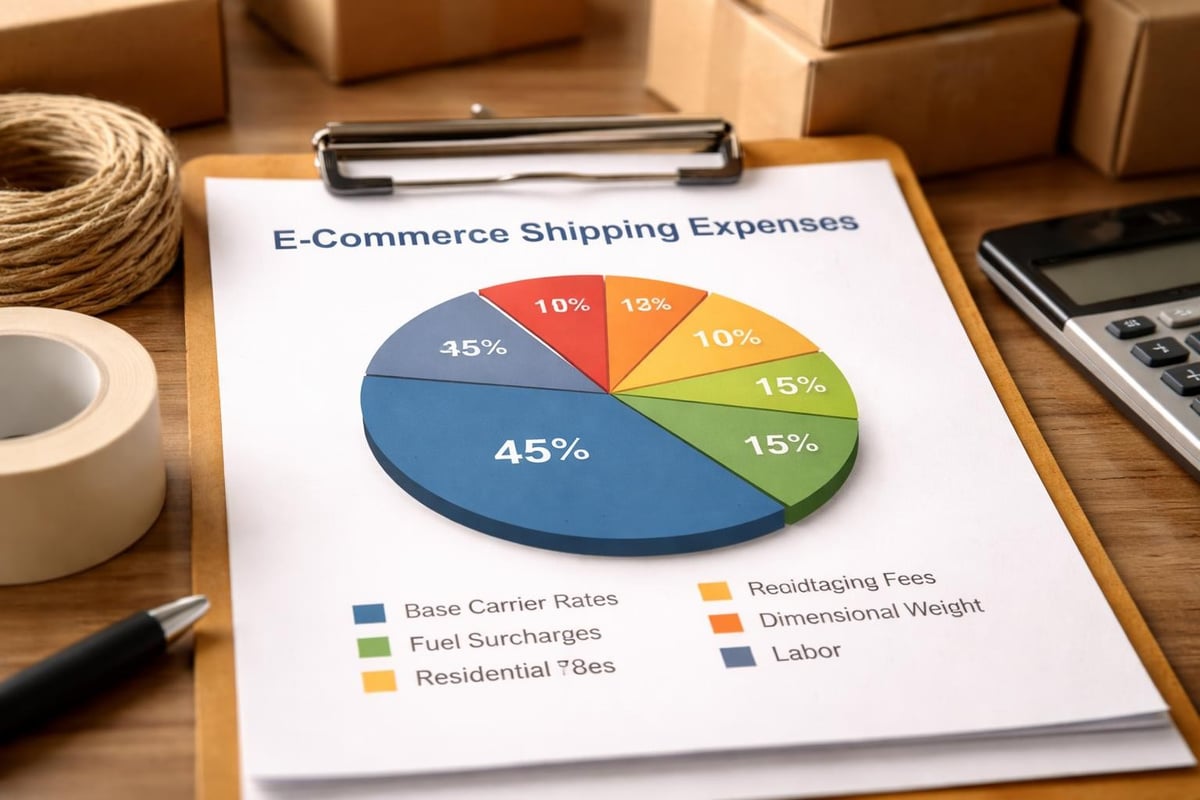
Packaging Materials and Labor
The cost of boxes, padding, tape, and labels adds up quickly. A basic corrugate box costs $0.75-2.50 depending on size and quality. Protective materials like bubble wrap, air pillows, or paper fill contribute another $0.25-1.00 per shipment.
Labor represents a hidden but substantial component. The time your team spends picking, packing, and preparing shipments for carrier pickup translates directly to cost. For businesses handling fulfillment in-house, labor can account for 30-40% of total shipping expenses.
Strategies to Reduce Your Shipping Expenses
Controlling ecommerce shipping costs requires a multi-faceted approach combining carrier optimization, operational efficiency, and strategic planning.
Negotiate Better Carrier Rates
Most e-commerce businesses pay significantly more than necessary because they accept standard published rates. Carriers expect negotiation, especially once you reach consistent volume thresholds.
Negotiation leverage points:
- Shipping volume (packages per week/month)
- Average package weight and dimensions
- Destination distribution
- Service level mix
- Competitive carrier quotes
Request detailed cost analyses from multiple carriers. USPS often provides the best rates for lightweight packages under 1 pound, while UPS and FedEx become competitive for heavier items or when ground speed meets your delivery requirements. Regional carriers like OnTrac or LSO offer compelling rates for specific geographic areas.
Optimize Package Dimensions and Weight
Right-sizing your packaging reduces dimensional weight charges while minimizing material costs. Many businesses use oversized boxes “just in case,” wasting money on every shipment.
Conduct a packaging audit to identify your most common product combinations. Create a standardized set of 4-6 box sizes that efficiently accommodate 80-90% of your orders. This approach reduces inventory complexity while ensuring optimal dimensional weight calculations.
Weight reduction tactics:
- Replace bubble wrap with lighter air pillows
- Use poly mailers for non-fragile items
- Eliminate unnecessary packaging inserts
- Switch to lightweight corrugate options
- Remove product packaging when possible
Every ounce matters. Reducing average package weight from 2.5 pounds to 2.0 pounds can save $0.30-0.80 per shipment depending on your zones and carrier mix.
Shipping Speed vs. Cost Trade-offs
Customer expectations for fast shipping continue rising, but expedited services carry premium prices. Balancing delivery speed with ecommerce shipping costs requires strategic thinking about customer segmentation and fulfillment location.
Service Level Selection
Ground shipping typically costs 60-75% less than 2-day air service. For a 5-pound package shipping cross-country, ground service might cost $8-10 while 2-day air runs $25-35. This differential creates significant margin pressure when offering free expedited shipping.
| Service Level | Transit Time | Cost Index | Best Use Case |
|---|---|---|---|
| Ground | 1-5 days | 1.0x | Cost-sensitive customers |
| 3-Day Select | 3 days | 1.8x | Balanced option |
| 2-Day Air | 2 days | 2.5x | Premium customers |
| Next Day | 1 day | 4.0x | Urgent/high-value |
Consider offering tiered shipping options at checkout. Display the ground shipping timeline alongside expedited choices, allowing customers to self-select based on their urgency and willingness to pay. Many customers will choose slower, cheaper options when delivery dates are clearly communicated.
Strategic Fulfillment Location
Geography dramatically impacts shipping costs and speed. Operating from a centrally located fulfillment center reduces average zones and transit times compared to coastal locations.
A warehouse in Ohio, Kentucky, or Tennessee can reach 80% of the US population within 2-day ground service. This positioning cuts ecommerce shipping costs while enabling you to offer faster delivery without premium air services. For businesses with sufficient volume, establishing multiple fulfillment locations on both coasts and in the center of the country optimizes both cost and speed.

Free Shipping: Managing Customer Expectations and Costs
Free shipping has become a standard customer expectation, with 66% of online shoppers expecting complimentary delivery on all orders. However, “free” shipping isn’t actually free – someone pays those costs.
Threshold-Based Free Shipping
Implementing a minimum order value for free shipping encourages larger basket sizes while protecting margins. Calculate your average order value (AOV) and set your free shipping threshold 20-30% above that figure.
If your current AOV is $45, setting free shipping at $60 incentivizes customers to add items while ensuring sufficient margin to absorb shipping costs. This strategy increased AOV by 15-25% for many retailers while keeping shipping expenses manageable.
Building Shipping Costs Into Pricing
Many successful e-commerce brands incorporate shipping expenses into product pricing rather than itemizing them separately. This approach requires careful calculation to avoid pricing yourself out of the market while ensuring profitability.
Pricing strategy steps:
- Calculate total annual shipping costs
- Divide by total annual units sold
- Add resulting per-unit cost to product prices
- Monitor competitor pricing and market positioning
- Adjust as needed based on volume changes
This method works particularly well for consumable products with predictable replenishment cycles and established price points in the market.
Technology and Automation for Shipping Efficiency
Modern shipping software and automation tools significantly reduce both labor costs and carrier expenses associated with e-commerce fulfillment.
Multi-Carrier Shipping Software
Platforms like ShipStation, ShippingEasy, and Shippo connect your store to multiple carriers, automatically selecting the most cost-effective option for each shipment based on your rules. These systems compare real-time rates across carriers considering weight, dimensions, destination, and service level.
Rate shopping functionality alone can reduce ecommerce shipping costs by 10-15% by ensuring you never overpay for a service when a cheaper equivalent exists. Additional benefits include automated label generation, tracking updates, and consolidated carrier invoicing.
Address Validation and Correction
Address errors cost e-commerce businesses millions annually through redelivery attempts, returns, and correction fees. Implementing real-time address validation at checkout prevents 60-70% of address issues before they become expensive problems.
These systems standardize addresses to USPS format, correct common typos, and flag potentially problematic addresses for customer review. The $15-18 address correction fee from carriers quickly justifies the minimal cost of validation software.
Packaging Optimization and Kitting Considerations
For businesses selling multiple products or creating bundled offerings, packaging strategy directly impacts shipping economics.
Custom Kitting and Bundling
Pre-kitting popular product combinations reduces picking time and optimizes packaging efficiency. Instead of pulling three separate items and combining them during order fulfillment, kitted products ship as single units with purpose-designed packaging.
Kitting benefits for shipping costs:
- Reduced dimensional weight through optimized packaging
- Lower labor costs from simplified picking
- Decreased packaging material usage
- Fewer shipping errors and returns
- Faster processing and carrier cutoff compliance
Product bundles also enable strategic pricing that accounts for shipping economics. A bundle priced at $75 with $8 shipping costs has better margins than three separate $25 items each costing $6 to ship individually.
Sustainable Packaging Options
Eco-friendly packaging increasingly matters to consumers, with 73% of shoppers willing to pay more for sustainable options. Fortunately, many sustainable materials also reduce shipping costs.
Compostable mailers weigh less than traditional poly bags. Corrugated alternatives to Styrofoam peanuts reduce both dimensional weight and material costs. Right-sized packaging eliminates void fill entirely, cutting both materials and weight.

Handling Returns and Reverse Logistics
Returns represent a significant but often overlooked component of total shipping expenses. The average e-commerce return rate hovers around 20-30%, with each return costing $10-20 in shipping alone.
Reducing Return Rates
Prevention costs less than processing. Detailed product descriptions, accurate sizing information, and high-quality photography reduce return rates by helping customers make informed purchase decisions. For apparel and size-dependent products, interactive sizing tools can cut returns by 20-35%.
Consider implementing a small restocking fee for returns to offset processing costs while still offering flexibility. Clearly communicate this policy during checkout to manage expectations without discouraging purchases.
Efficient Return Processing
When returns occur, efficient processing minimizes costs. Consolidated return programs through carriers often provide discounted return labels compared to one-off return shipments. These programs also offer customer-friendly options like drop-off locations instead of requiring carrier pickup.
Decide whether to inspect and restock returned items at your location or use a third-party fulfillment partner with specialized return processing capabilities. The breakeven analysis depends on your return volume, product complexity, and available labor resources.
International Shipping Considerations
Expanding internationally introduces additional cost complexities beyond domestic ecommerce shipping costs.
Duties, Taxes, and Customs
International shipments incur customs duties and taxes based on product category, value, and destination country. These charges can surprise customers and lead to refused deliveries if not communicated upfront.
Delivered Duty Paid (DDP) shipping means you collect and remit all duties and taxes at checkout, providing customers with a single total price. This approach improves conversion rates and reduces delivery refusals, though it requires more complex tax calculation and remittance processes.
International Carrier Selection
USPS offers competitive rates for lightweight international packages through First-Class Package International Service. For heavier items or when tracking reliability matters, private carriers like DHL, FedEx, and UPS provide better service at higher costs.
| Carrier | Best For | Typical Cost | Tracking Quality |
|---|---|---|---|
| USPS First-Class | Under 4 lbs | $15-30 | Limited |
| USPS Priority | 4-20 lbs | $35-75 | Good |
| DHL eCommerce | Lightweight | $20-40 | Excellent |
| FedEx International | Premium service | $50-120 | Excellent |
| UPS Worldwide | Heavy items | $60-150 | Excellent |
Regional fulfillment centers in target markets often provide better economics than shipping internationally from US warehouses. If you have concentrated demand in specific countries, explore local fulfillment partnerships to reduce transit times and shipping costs while improving customer experience.
Leveraging Fulfillment Partners
Outsourcing fulfillment to specialized third-party logistics (3PL) providers can actually reduce total ecommerce shipping costs despite the service fees involved.
Volume Discounts and Carrier Relationships
Established fulfillment providers ship thousands of packages daily, securing carrier rates that individual businesses cannot match. These discounts often exceed 30-40% off published rates, particularly for regional and ground services. The savings frequently offset 3PL fees while eliminating the need for warehouse space and fulfillment staff.
Professional fulfillment partners also absorb carrier rate increases through their negotiated contracts, providing more predictable shipping costs compared to accepting annual carrier increases directly.
Operational Expertise
Fulfillment specialists bring process optimization, technology infrastructure, and shipping expertise that reduce errors and improve efficiency. Lower error rates mean fewer costly reshipments, address corrections, and customer service interventions.
These providers also handle peak season scaling without requiring you to hire and train temporary staff or expand warehouse capacity. This flexibility is particularly valuable for businesses with seasonal demand patterns or rapid growth trajectories.
Managing ecommerce shipping costs effectively requires understanding all cost components, implementing proven optimization strategies, and continuously monitoring performance to identify improvement opportunities. Smart carrier selection, packaging optimization, strategic fulfillment locations, and technology automation all contribute to sustainable shipping economics that support profitable growth. Ecom Automation Prep specializes in helping e-commerce brands optimize their fulfillment operations with comprehensive services including Amazon FBA prep, direct-to-consumer fulfillment, and strategic kitting that reduces shipping expenses while scaling efficiently. Partner with experienced fulfillment professionals to transform shipping from a cost burden into a competitive advantage.