


E-commerce brands face increasing pressure to deliver products faster, reduce operational costs, and create memorable unboxing experiences. One solution that addresses all three challenges is kitting and fulfillment services. This operational strategy combines individual products into ready-to-ship bundles, transforming how brands manage inventory, process orders, and meet customer expectations. Whether you're launching subscription boxes, promotional bundles, or multi-component products, understanding how kitting integrates with fulfillment operations can give your business a competitive edge in 2026.
What Are Kitting and Fulfillment Services
Kitting and fulfillment services involve assembling individual items into single units before they reach the customer. This process goes beyond simple packaging-it's a strategic approach to inventory management and order processing. Kitting in fulfillment operations transforms how businesses handle multi-item orders by pre-assembling components into kits.
The process typically includes several distinct stages. Warehouses receive individual components, store them separately, then combine specific items based on predetermined specifications. These assembled kits receive new SKUs, making them trackable as single units within inventory management systems.
Core Components of Kitting Operations
The kitting process requires careful coordination between multiple fulfillment activities:
- Inventory receiving and storage of individual components
- Quality control inspection before assembly begins
- Assembly workflows that combine items according to specifications
- Packaging customization with branded materials and inserts
- SKU creation for tracking assembled kits as distinct products
- Integration with order management systems for real-time updates
Modern kitting operations leverage automation where possible while maintaining quality standards. Barcode scanning ensures accuracy during assembly, while dedicated kitting stations optimize workflow efficiency.

Business Benefits of Implementing Kitting Services
Companies that incorporate kitting into their fulfillment strategy unlock multiple operational advantages. These benefits extend beyond simple cost savings to include customer experience improvements and competitive positioning.
Cost Reduction Through Operational Efficiency
Kitting creates significant cost advantages by consolidating multiple items into single shipments. Rather than picking, packing, and shipping individual products separately, fulfillment centers handle one assembled kit. This approach reduces labor hours, minimizes packaging materials, and decreases shipping expenses.
Packaging and kitting workflows directly impact fulfillment costs by reducing the number of touches each product requires. When assembly happens during slower warehouse periods rather than peak order times, labor costs decrease further.
| Cost Category | Traditional Fulfillment | Kitting Approach | Savings Potential |
|---|---|---|---|
| Pick/Pack Labor | High (multiple items) | Reduced (single kit) | 30-40% |
| Shipping Costs | Multiple packages | Single shipment | 25-35% |
| Packaging Materials | Per-item supplies | Consolidated packaging | 20-30% |
| Quality Control | Per-item inspection | Kit-level verification | 15-25% |
Enhanced Customer Experience
Kitting enables brands to create curated product experiences that drive customer satisfaction. Subscription boxes, gift sets, and seasonal bundles arrive as cohesive packages rather than disparate items. This presentation quality influences perceived value and brand reputation.
The unboxing experience becomes more memorable when products arrive thoughtfully assembled. Custom inserts, branded packaging, and coordinated presentation materials all become easier to implement at the kit level rather than managing them across individual products.
Inventory Management Simplification
Managing kits as single SKUs simplifies inventory tracking and forecasting. Rather than coordinating availability across multiple components, businesses monitor kit-level stock. This consolidation reduces the complexity of inventory planning and helps prevent situations where one out-of-stock component halts sales of an entire bundle.
Pre-assembled kits also speed up order processing during peak seasons. When customer demand surges, fulfillment centers ship ready-made kits instead of scrambling to assemble components under time pressure.
Industries and Applications for Kitting
Kitting and fulfillment services adapt to diverse business models and product categories. Understanding industry-specific applications helps identify opportunities within your own operations.
Subscription Box Services
Monthly subscription boxes represent perhaps the most obvious kitting application. These businesses rely entirely on assembling curated product selections and delivering them on predictable schedules. Kitting services handle the variability of product combinations while maintaining consistent delivery timelines.
Subscription models benefit from customizing kitting services to align with specific business objectives, allowing brands to adjust kit contents based on seasonal themes, customer preferences, or promotional strategies.
E-Commerce Bundles and Multi-Packs
Online retailers create product bundles to increase average order values and move inventory strategically. Skincare sets, tool kits, and starter packages all leverage kitting to present multiple items as cohesive solutions.
These bundling strategies work particularly well for:
- Product launches that combine new items with established bestsellers
- Seasonal promotions featuring holiday-themed assortments
- Clearance strategies that pair slow-moving inventory with popular products
- Cross-selling initiatives introducing customers to complementary items
B2B and Corporate Gifting
Business-to-business operations use kitting for employee welcome packages, client appreciation gifts, and event materials. These applications demand higher customization levels and often include branded merchandise, company swag, and promotional materials.

Choosing the Right Kitting Partner
Selecting a fulfillment provider with robust kitting capabilities requires evaluating multiple factors beyond basic warehousing services. The right partner becomes an extension of your operations, capable of scaling with business growth while maintaining quality standards.
Essential Capabilities to Evaluate
When assessing potential kitting and fulfillment service providers, prioritize partners offering comprehensive solutions that align with your specific requirements.
Technology Integration stands as a critical consideration. Your fulfillment partner should provide real-time inventory visibility, automated order routing, and seamless integration with your e-commerce platform. API connections enable inventory updates, order status tracking, and reporting without manual intervention.
Quality Control Processes protect brand reputation by ensuring kits meet specifications before shipping. Look for partners implementing multi-point inspection protocols, photographing assembled kits for verification, and maintaining detailed quality metrics.
Scalability and Flexibility determine whether a partner can grow alongside your business. Peak season capacity, the ability to handle kit complexity variations, and quick turnaround for new kit introductions all indicate operational maturity.
Customization Options and Limitations
Different providers offer varying levels of customization. Some specialize in simple kitting (combining standard items), while others handle complex assembly requiring specialized equipment or skills.
Consider these customization dimensions:
- Assembly complexity: Simple bundling versus intricate multi-step assembly
- Packaging personalization: Generic boxes versus fully branded custom packaging
- Insert management: Standard packing slips versus customized marketing materials
- Special handling: Temperature control, fragile items, or regulated products
Many fast-growing brands find success working with specialized e-fulfillment services that understand the unique demands of scaling e-commerce operations while maintaining quality standards.
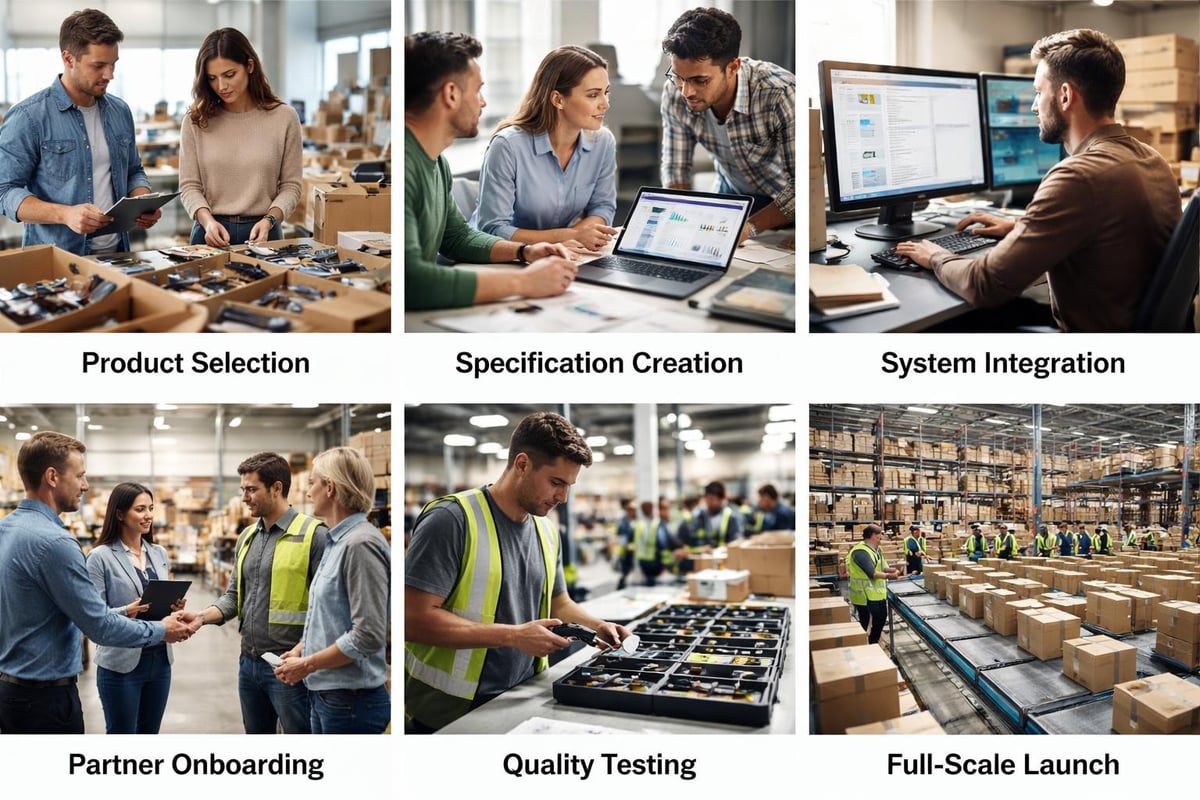
Implementing Kitting in Your Fulfillment Strategy
Successfully integrating kitting requires careful planning and coordination between your team and fulfillment partners. A structured implementation approach minimizes disruptions while maximizing benefits.
Planning Your Kitting Operations
Start by identifying which products make sense for kitting. Analyze your order data to find frequently purchased combinations, products with complementary use cases, or items that could create compelling bundle offers.
Create detailed kit specifications including:
- Component lists with precise SKU identifiers and quantities
- Assembly instructions with step-by-step procedures and photos
- Packaging requirements specifying boxes, void fill, and protective materials
- Insert materials like instruction cards, promotional flyers, or thank-you notes
- Quality standards defining acceptable tolerance ranges and inspection criteria
Integration with Existing Systems
Product kitting in e-commerce fulfillment demands tight integration between inventory management, order processing, and warehouse operations. Your fulfillment partner should connect with your existing technology stack to enable automated workflows.
Key integration points include:
- E-commerce platform synchronization for inventory levels and order capture
- Warehouse management systems tracking component availability and kit assembly
- Shipping carrier integration for rate shopping and label generation
- Customer communication providing tracking updates and delivery notifications
Managing Kit Inventory Levels
Kit inventory presents unique forecasting challenges since you must maintain adequate stock of all components simultaneously. Running out of one component prevents kit assembly even when other items remain available.
Implement safety stock strategies that account for component lead times, kit demand variability, and assembly capacity constraints. Many businesses maintain slightly higher inventory levels for kit components compared to standalone products to prevent stockouts.
Kitting Workflows and Operational Excellence
Efficient kitting operations balance speed with accuracy through well-designed workflows and continuous improvement practices. Understanding how leading fulfillment centers structure their kitting processes reveals opportunities for optimization.
Standard Operating Procedures
Professional fulfillment providers maintain documented procedures for every kit they assemble. These standard operating procedures (SOPs) specify exactly how workers should handle each component, the assembly sequence, quality checkpoints, and packaging methods.
SOPs typically include:
- Visual guides showing correct assembly configurations
- Barcode scanning requirements at each workflow stage
- Exception handling procedures for damaged or missing components
- Packaging material specifications with photos
- Weight verification to catch errors before shipping
Quality Assurance Methods
Multi-layer quality control protects against errors that could damage customer relationships. The most effective approaches combine automated verification with human inspection.
Automated checks use weight verification systems, barcode scanning validation, and photographic documentation. These systems flag discrepancies automatically, routing questionable kits to inspection stations.
Human verification remains essential for subjective quality factors like packaging appearance, insert placement, and overall presentation quality. Random sampling of completed kits provides ongoing quality monitoring without inspecting every single unit.
Cost Considerations and ROI Analysis
Understanding the financial impact of kitting helps justify the investment and set appropriate performance expectations. While kitting introduces assembly costs, it typically generates net savings through operational efficiencies.
Breaking Down Kitting Costs
Fulfillment providers typically charge for kitting services using per-kit fees that vary based on complexity. Simple kitting (combining 2-3 items in a bag) costs significantly less than complex assembly requiring multiple steps and custom packaging.
Common fee structures include:
- Base kitting fees covering standard assembly labor ($0.50-$2.00 per kit)
- Complexity surcharges for intricate assembly or special handling ($1.00-$5.00 per kit)
- Custom packaging costs for branded boxes and materials (variable)
- Insert handling fees for marketing materials or instructions ($0.10-$0.50 per insert)
- Quality control charges for enhanced inspection protocols (variable)
These costs must be weighed against savings in other areas. Reducing shipping expenses and cutting e-commerce fulfillment costs through consolidated shipments often offsets kitting fees entirely.
Calculating Return on Investment
ROI analysis should account for both hard savings and softer benefits like improved customer satisfaction. Start by comparing total fulfillment costs for kitted products versus individual item shipments.
| Metric | Individual Items | Kitted Approach | Monthly Impact (1000 orders) |
|---|---|---|---|
| Avg. Pick/Pack Cost | $4.50 | $2.25 | $2,250 savings |
| Avg. Shipping Cost | $8.75 | $6.50 | $2,250 savings |
| Kitting Fee | $0.00 | $1.50 | $1,500 cost |
| Net Per-Order | $13.25 | $10.25 | $3,000 monthly savings |
This example demonstrates how kitting generates net savings despite introducing assembly costs. Actual results vary based on product characteristics, shipping zones, and kit complexity.
Technology Enabling Modern Kitting
Advanced technology transforms kitting from manual assembly work into sophisticated, data-driven operations. Modern fulfillment centers leverage software and automation to maximize efficiency and accuracy.
Warehouse Management Systems
Sophisticated warehouse management systems (WMS) orchestrate kitting workflows by directing workers to optimal pick paths, validating component selection through barcode scanning, and tracking kit assembly progress in real-time.
These systems provide visibility into:
- Component inventory levels across multiple warehouse locations
- Kit assembly queues prioritized by order urgency
- Worker productivity metrics and quality performance
- Bottleneck identification for continuous improvement
Automation and Robotics
While complete automation of complex kitting remains challenging, semi-automated systems handle repetitive tasks efficiently. Automated dispensing systems deliver components to assembly stations, robotic arms place items into packaging, and conveyor systems move kits between workflow stages.
The most successful operations blend automation with human expertise. Machines handle high-volume, standardized tasks while workers manage exceptions, perform quality inspections, and handle delicate or irregular items.
Overcoming Common Kitting Challenges
Even well-planned kitting operations encounter obstacles that require proactive management and creative problem-solving. Recognizing common challenges helps develop mitigation strategies before issues impact customers.
Component Availability Management
The biggest operational challenge in kitting involves maintaining balanced inventory across all kit components. A single out-of-stock item prevents assembly of the entire kit, creating fulfillment delays and potential revenue loss.
Strategies for managing component availability include:
- Safety stock buffers providing cushion against demand variability
- Alternative component approval allowing substitutions when primary options unavailable
- Supplier diversification reducing dependency on single sources
- Lead time monitoring triggering early reorder points
- Component forecasting predicting needs based on kit demand projections
Scaling During Peak Periods
Seasonal demand surges test kitting capacity and workflow efficiency. The solution involves building flexibility into operations through temporary labor scaling, pre-assembly during off-peak periods, and prioritization systems routing urgent orders first.
Many brands pre-assemble kits during slower months, building inventory ahead of anticipated demand spikes. This approach smooths labor requirements and ensures adequate stock during peak seasons when assembly capacity becomes constrained.
Maintaining Quality at Volume
As kitting volume increases, maintaining consistent quality becomes more challenging. Worker fatigue, training gaps with temporary staff, and pressure to meet speed targets all threaten quality standards.
Robust quality management systems counteract these pressures through automated verification checkpoints, ongoing training programs, clear accountability metrics, and culture emphasizing accuracy over pure speed. Understanding how to achieve excellent kitting and fulfillment experiences requires balancing efficiency with uncompromising quality standards.
Future Trends in Kitting and Fulfillment
The kitting landscape continues evolving as technology advances and customer expectations shift. Forward-thinking businesses monitor emerging trends to maintain competitive advantages.
Personalization and Mass Customization
Customers increasingly expect personalized products and experiences. Kitting operations adapt by incorporating variable components based on customer preferences, purchase history, or demographic data. This mass customization approach requires sophisticated software directing which components belong in each individual kit.
Advanced fulfillment centers now handle kits with dozens of potential variations, assembling unique combinations for each customer while maintaining efficiency standards. This capability transforms kitting from standardized bundle creation into personalized product curation.
Sustainability Initiatives
Environmental concerns drive changes in kitting practices, particularly around packaging materials and waste reduction. Brands seek fulfillment partners offering recyclable packaging options, minimal void fill solutions, and consolidated shipping reducing carbon footprints.
Kitting inherently supports sustainability by reducing overall packaging through consolidated shipments. Rather than shipping three items in three boxes with triple packaging materials, one kit uses a single box and shared protective materials.
Omnichannel Fulfillment Integration
Modern commerce operates across multiple channels simultaneously. Kitting services increasingly support omnichannel strategies by preparing kits for various distribution paths-direct-to-consumer shipping, wholesale distribution, retail store shipments, or marketplace fulfillment.
This flexibility requires systems tracking kit inventory across channels, routing orders to optimal fulfillment locations, and adapting packaging based on final destination. The most capable providers offer comprehensive fulfillment services addressing complex omnichannel requirements while maintaining consistent quality standards.
Kitting and fulfillment services represent powerful tools for e-commerce brands seeking operational efficiency, cost reduction, and enhanced customer experiences. By understanding implementation strategies, selecting capable partners, and leveraging modern technology, businesses position themselves for sustainable growth in competitive markets. When you're ready to streamline your fulfillment operations with professional kitting services, Ecom Automation Prep provides the expertise and scalable solutions that fast-growing e-commerce brands need to succeed.