#1 Fulfillment Partner in the Region

Cosmetic Fulfillment Services

Cosmetic fulfillment services have to solve a problem most general 3PLs weren't built for: products that leak, break, degrade, or expire if they're stored, handled, or shipped the wrong way. A serum that separates in a hot trailer or a compact that cracks in a poorly packed mailer becomes a return, a bad review, or a wasted unit before it ever reaches the customer. This page covers what protects product integrity from receiving through delivery, how lot and expiration tracking actually works, fulfillment differences across beauty product formats, branded packaging expectations, and what to verify before choosing a partner.

Protecting Product Integrity in Cosmetic Fulfillment

Heat, Humidity, and Storage Conditions

Cosmetic formulations can separate, discolor, or degrade when stored in conditions that swing with ambient temperature and humidity. Storage location and duration should account for how sensitive a given formulation actually is, rather than treating every SKU the same way.

Clean Handling and Product Condition Checks

Cosmetic products are handled with attention to surface cleanliness and container integrity at every touch point, since a scuffed or contaminated-looking unit reads as damaged to the customer even when the formulation inside is unaffected.

Preventing Leaks, Breakage, and Package Damage

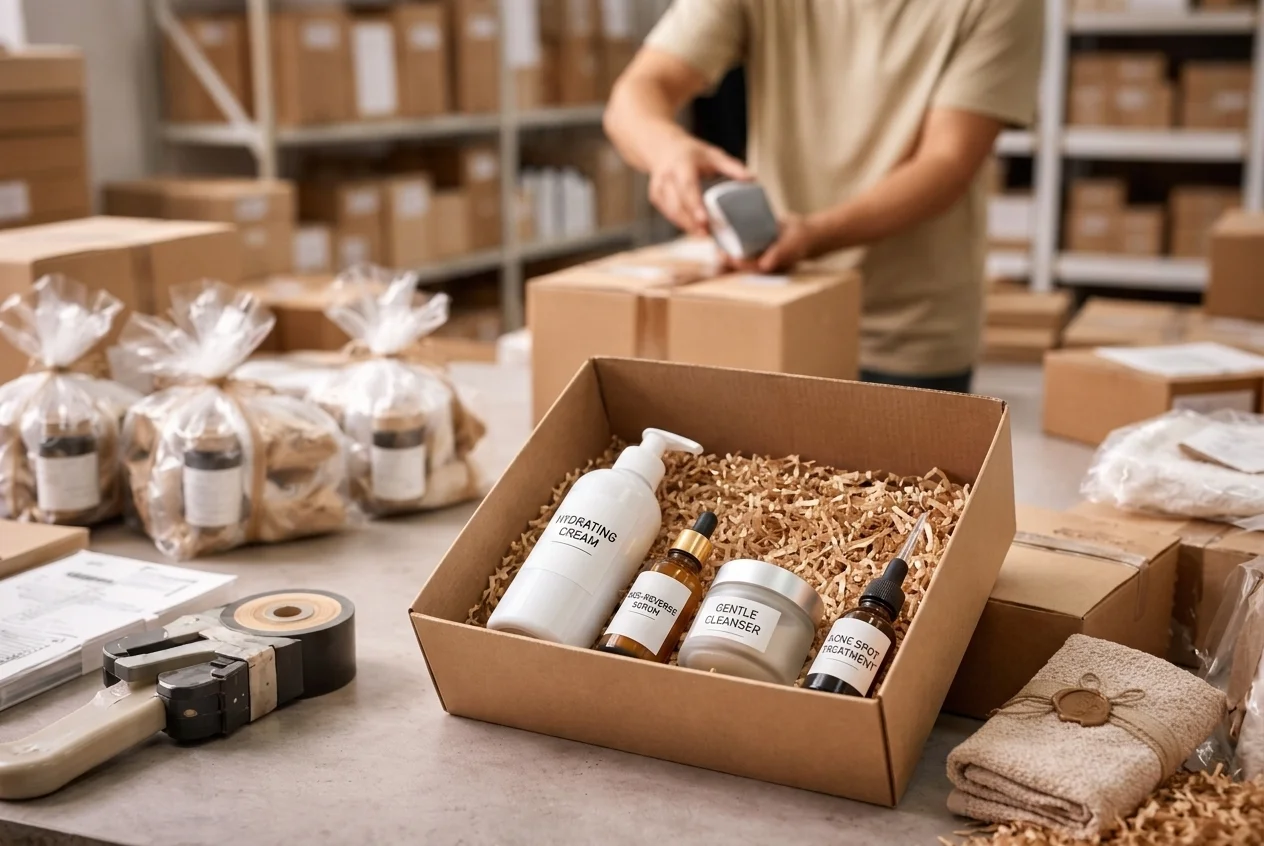
Liquid and glass-component products need void fill and cushioning matched to the actual failure risk, not a one-size packaging default applied across the whole catalog. A leak inside a shipped order damages every other item in the box, not just the source SKU.

Shelf Life and Expiration Risk

Every cosmetic SKU carries a shelf-life clock that starts at manufacture, not at the point it reaches the warehouse. Fulfillment has to account for how much shelf life remains at receiving, not just at the moment of sale.
Beauty Inventory Controls

Beauty Inventory Controls

  • Order Release and Hold Statuses - which WooCommerce statuses (processing, on-hold, custom plugin statuses) actually release an order to the warehouse.
  • Split Shipment and Backorder Logic - how a single order with a backordered line item is handled: ship what's available now, or hold the full order.
  • Ship-Alone and Packaging Rules - which SKUs require separate packaging due to size, fragility, or hazmat status.
  • Inventory, Tracking, and Email Updates - what triggers a stock-level push back to WooCommerce and what triggers the customer-facing shipping confirmation email.

Lot, Batch, and Expiration Date Management

Capturing Lot and Expiry Data at Receiving

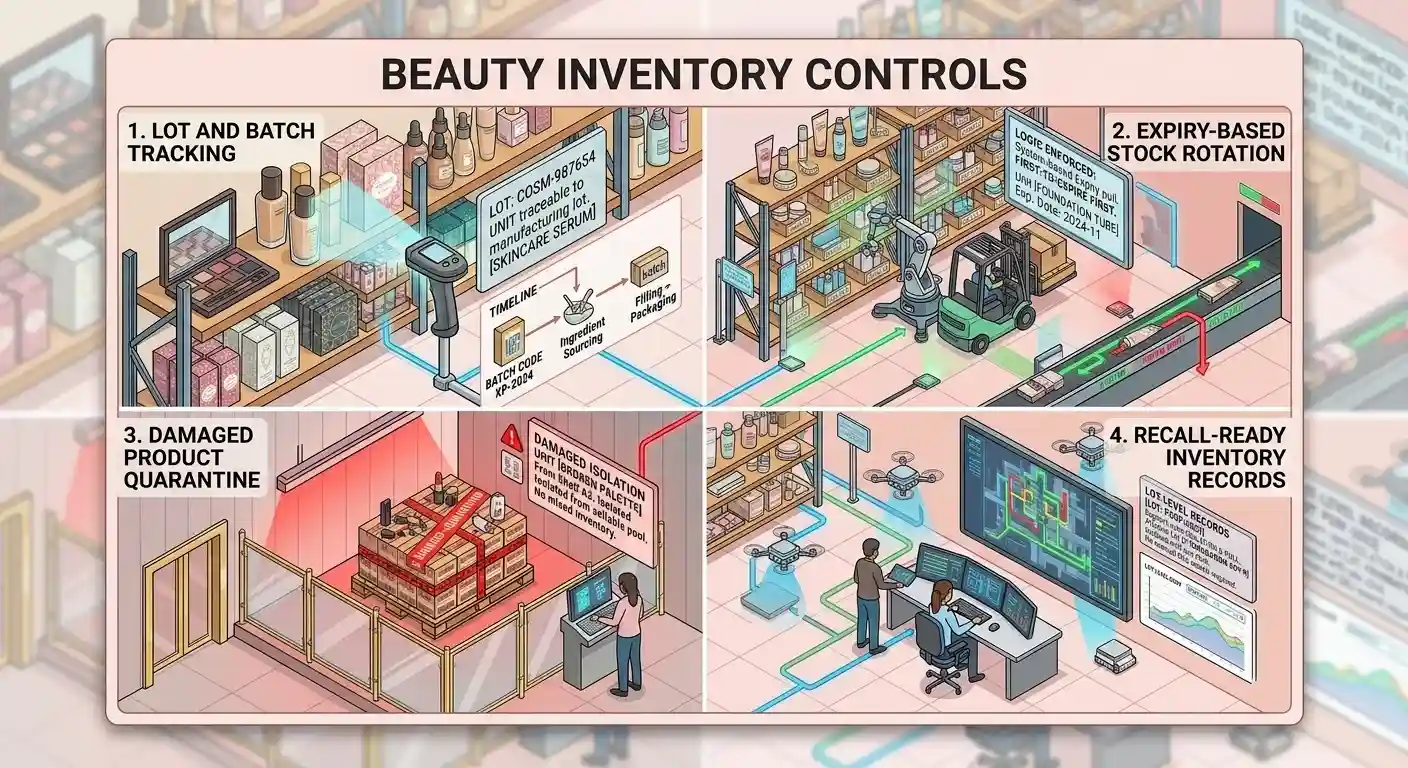
Lot numbers and expiration or best-by dates are captured at the point of receiving and tied to the inventory record, so this data exists before the unit is ever put away as sellable.

Short-Dated Inventory Alerts and Disposition Rules

A SKU approaching its expiration window should trigger an alert well before the date arrives, with a defined disposition rule (promotional use, return to brand, disposal) rather than a scramble once it's already too close to sell.

Applying FIFO and FEFO Rules by Product

Not every cosmetic SKU needs the same rotation logic. Fast-degrading formulations need strict first-expired-first-out picking, while some longer-shelf-life products can run on standard first-in-first-out rotation.

Traceability for Returns and Product Recalls

Lot-level traceability has to work in both directions: forward from receiving through shipment, and backward from a return or recall event to the specific units affected.

Fulfillment for Different Beauty Product Formats

Creams, Serums, Cleansers, and Treatment Products

Creams, Serums, Cleansers, and Treatment Products

Cream and serum formats generally carry the most temperature sensitivity and the highest leak risk of any beauty format, which makes storage conditions and void-fill selection especially important for this category.
Makeup, Palettes, Compacts, and Fragile Components

Makeup, Palettes, Compacts, and Fragile Components

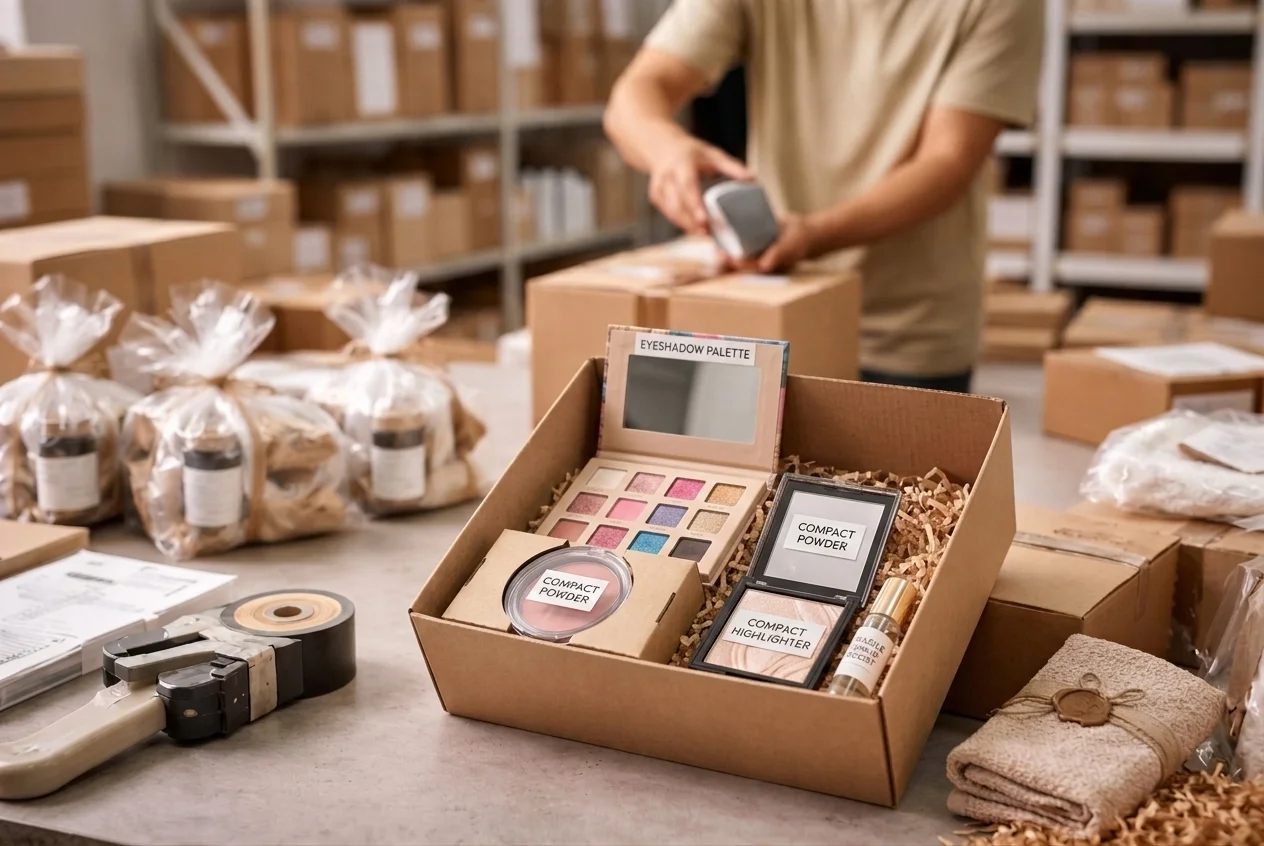
Pressed powders, palettes, and compacts are prone to cracking or shattering under impact, so pick, pack, and outbound handling need cushioning matched to fragility rather than treated like any other small SKU.
Haircare, Pumps, Tubes, and Liquid Products

Haircare, Pumps, Tubes, and Liquid Products

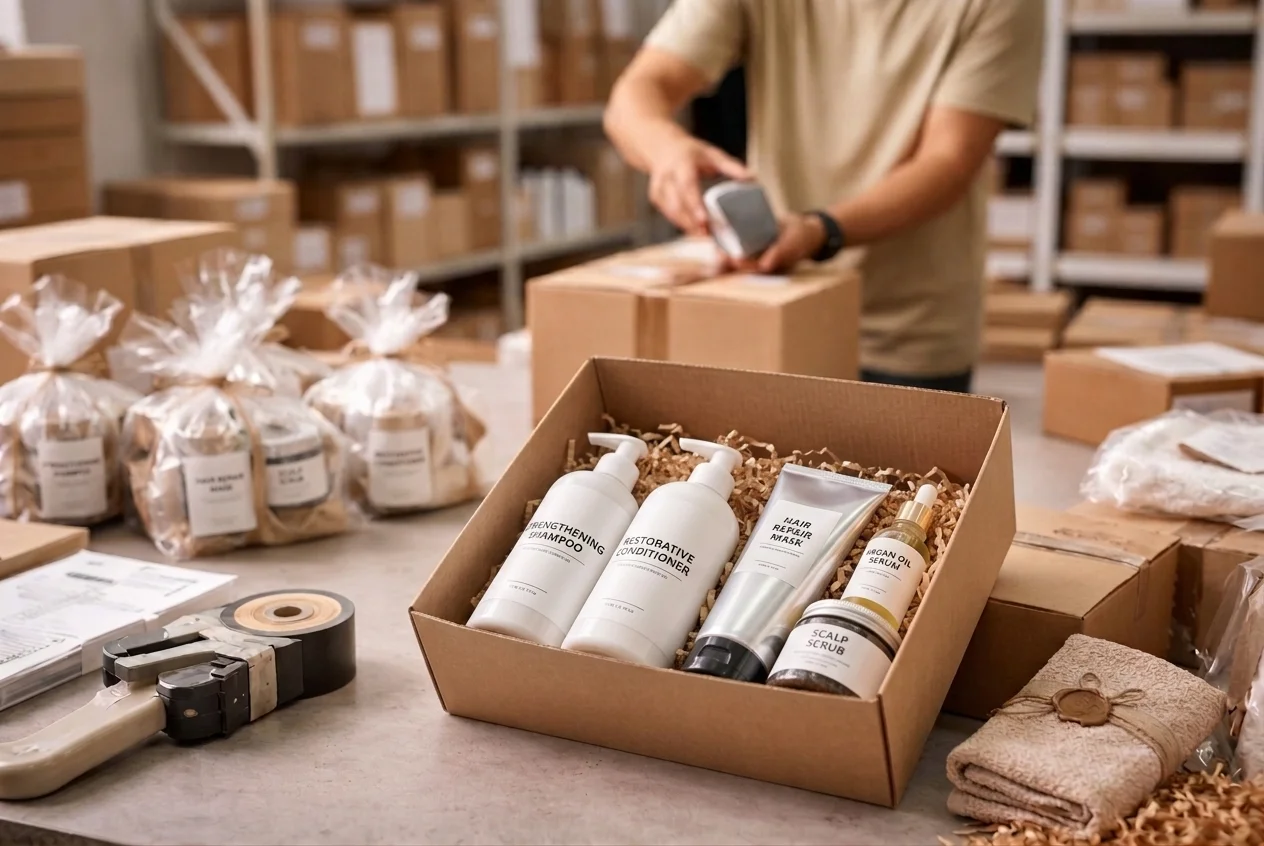
Pump and tube products carry their own leak and orientation risks in transit, and packing needs to account for how the product behaves if the package is tipped, dropped, or compressed.
Gift Sets, Samples, and Multi-Product Kits

Gift Sets, Samples, and Multi-Product Kits

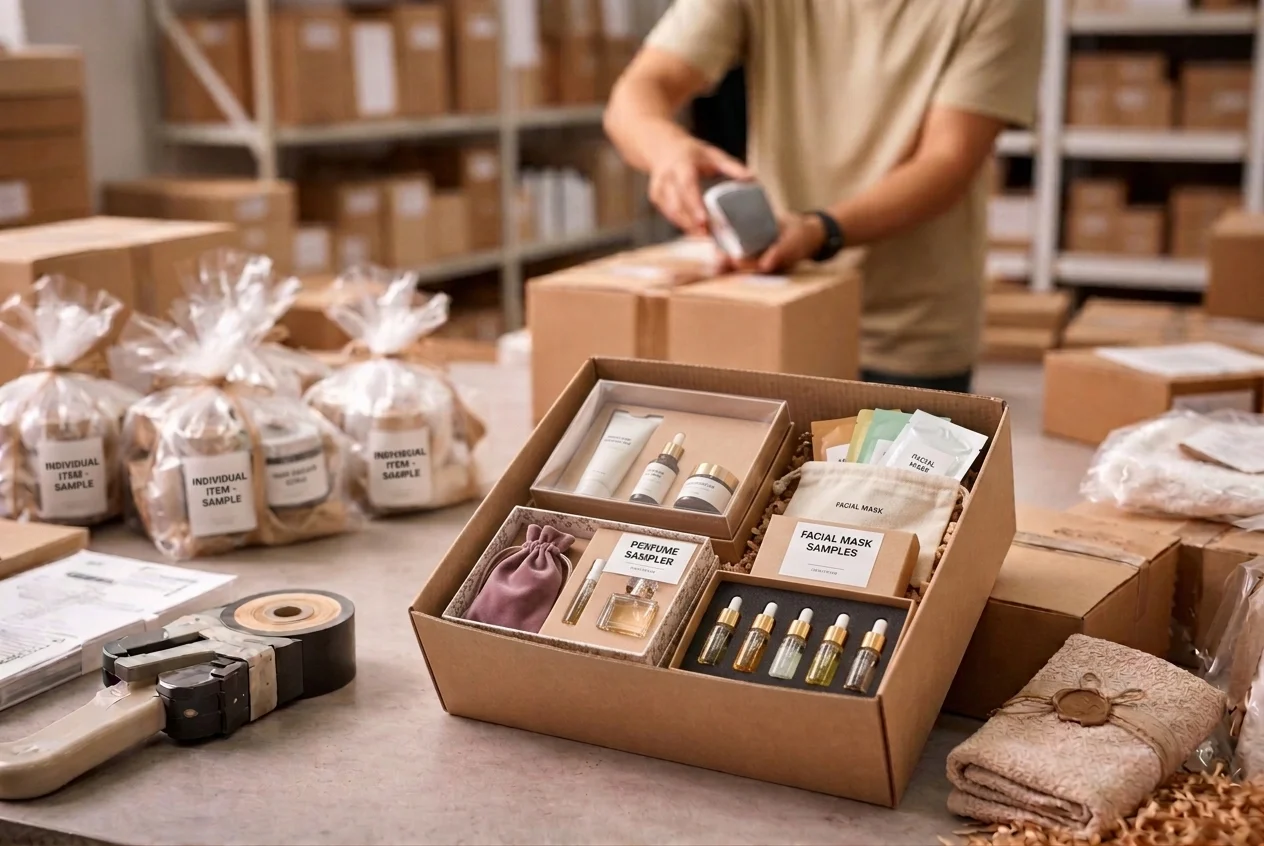
Multi-product gift sets and sample kits need component-level inventory tracking, since one kit SKU can draw down several distinct physical products with different lot numbers and expiration dates.

Branded Packaging for Beauty Orders

1

Custom Boxes, Tissue, Inserts, and Samples

Branded outer boxes, tissue paper, inserts, and sample additions are assembled as part of the standard pack process for beauty brands, not treated as a rare special request.
2

Influencer Mailers and Product Launch Kits

Influencer mailers and launch kits typically combine unusual packaging, specific product combinations, and tight timing, which requires a warehouse process that can flex for a one-time configuration without disrupting standard order flow.
3

Subscription Boxes and Recurring Beauty Programs

Recurring subscription programs need predictable, repeatable kitting logic and a defined process for handling formulation or SKU changes between cycles.
4

Personalized Notes and Campaign-Specific Packing

Personalized notes and campaign-specific packing variations are handled as configurable rules tied to order attributes, not as manual one-off exceptions each time.

Cosmetic Fulfillment Across DTC, Retail, and Marketplaces

Direct-to-Consumer Beauty Orders

DTC beauty orders ship as individual parcels with the branded packaging and unboxing experience the customer expects from the channel they ordered through.
Direct-to-Consumer Beauty Orders
Retail and Wholesale Case Fulfillment

Retail and Wholesale Case Fulfillment

Retail and wholesale orders move at case or carton level against each account's specific packing and labeling requirements, distinct from parcel-level DTC handling.

Marketplace Inventory and Shipping Requirements

Marketplace channels carry their own labeling, packaging, and shipping-time requirements that need to be tracked separately from DTC and retail rules, even when the product is identical.
Marketplace Inventory and Shipping Requirements
Inventory Visibility Across Sales Channels

Inventory Visibility Across Sales Channels

One shared inventory pool across DTC, retail, and marketplace channels prevents a sale on one channel from overselling stock that another channel believes is still available.

Quality Control and Compliance-Aware Handling

Receiving and Outbound Quality Checkpoints

Inbound units are checked for condition, correct lot data, and packaging integrity at receiving, and outbound orders are checked again before they leave the building.

Product Labels, Documentation, and Handling Instructions

Product labels, ingredient documentation, and any brand-specific handling instructions travel with the inventory record so warehouse staff aren't relying on memory for SKU- specific requirements.

Supporting Applicable Cosmetic Storage and Distribution Requirements

Storage and distribution practices should align with the specific requirements applicable to the brand's product category and the retailers or marketplaces it sells through, which a brand should confirm directly for its own SKUs rather than assume from general industry practice.

Returns and Product Disposition for Cosmetics

1

Opened, Used, Damaged, and Unopened Returns

Each returned unit is assessed by condition category (opened, used, damaged, unopened) since cosmetic returns carry hygiene and resale considerations that most other product categories don't.
2

Restock Eligibility and Inventory Updates

Restock decisions follow a defined eligibility rule tied to condition category, and only units cleared for resale sync back into sellable inventory.
3

Quarantine, Disposal, and Reporting Rules

Units that don't clear restock eligibility move to quarantine or disposal with the disposition documented and reported back, rather than sitting unresolved in a returns pile.

Scaling Beauty Fulfillment for Launches and Seasonal Demand

Inventory Planning for Promotions and Product Drops

A product launch or promotional drop needs inventory and pick-face capacity planned ahead of the spike, since beauty demand curves around launches tend to be steeper than routine seasonal demand.
Inventory Planning for Promotions and Product Drops
Flexible Kitting and Packing Capacity

Flexible Kitting and Packing Capacity

Launch-driven kitting work needs warehouse capacity that can flex up temporarily without displacing standard daily order fulfillment.

Connecting Stores and Marketplaces to Fulfillment

Shopify, Amazon, and other sales channels need a reliable connection to the warehouse feed so inventory and order data stay accurate through a launch spike, not just during normal volume. See EAP's industry expertise for the specific categories and channels supported.
Connecting Stores and Marketplaces to Fulfillment

Frequently Asked Questions

Storage should account for each formulation's actual sensitivity to temperature and humidity, rather than applying one storage standard across every SKU regardless of formulation.

Lot and expiry data are captured at receiving and tied to the inventory record, enabling FEFO rotation, short-dated alerts, and traceability in both directions for returns or recalls.

Yes, provided the warehouse can handle component-level inventory for multi-product kits and flex capacity for one-time configurations like influencer mailers or launch kits without disrupting standard order flow.

Yes, provided the warehouse operates one shared inventory pool across channels, since DTC ships as parcels, retail moves at case or carton level, and marketplace orders carry their own labeling and shipping-time rules.

Each return is assessed by condition category (opened, used, damaged, unopened), and only units that clear a defined eligibility rule sync back into sellable inventory; the rest move to quarantine or disposal with the disposition reported.

Confirm lot-level traceability, expiry-based rotation, condition-based return handling, and the ability to connect existing sales channels to the warehouse feed reliably through a launch or promotional spike.

Ready to Protect Product Integrity Through Every Order

Leaked serums, cracked compacts, and expired stock trace back to fulfillment not built for cosmetics. Get a quote on a beauty fulfillment setup built around lot tracking and protective packaging, schedule a meeting to review your shelf-life requirements, or request a service pricing breakdown across your DTC, retail, and marketplace volume.