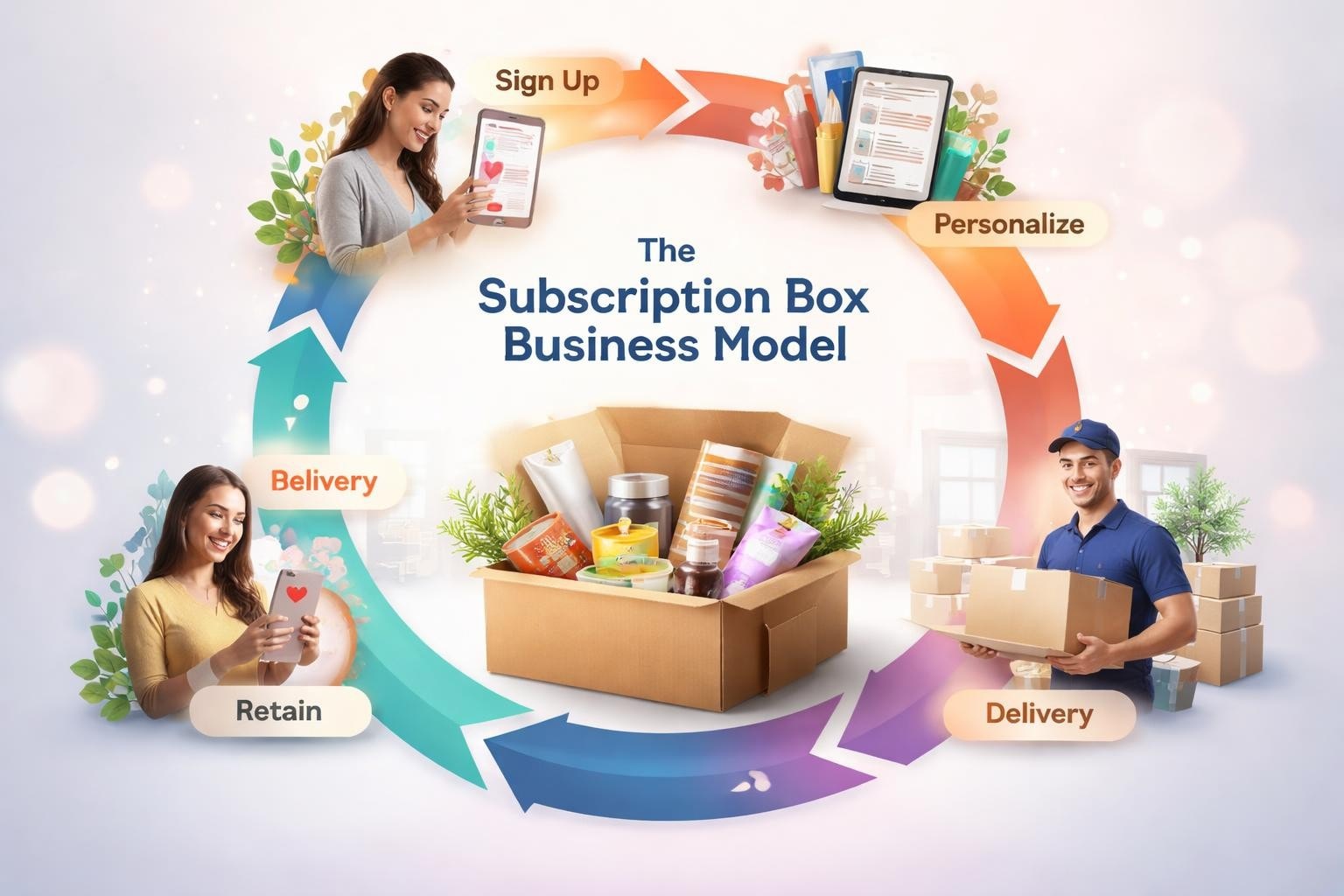

Subscription box services have transformed from a novel e-commerce concept into a mainstream retail channel, with the market experiencing continuous evolution as consumer preferences shift toward personalized experiences and sustainable practices. As businesses navigate this competitive landscape in 2026, understanding the operational demands, fulfillment complexities, and emerging trends becomes essential for success. From beauty and wellness to pet supplies and gourmet foods, subscription models require sophisticated logistics infrastructure that can handle recurring orders, customization, and the unique challenges of direct-to-consumer delivery.
The Current State of Subscription Box Services
The subscription box industry has matured significantly, with market projections indicating continued growth through the next several years. What began as a trend has evolved into a legitimate business model that appeals to consumers seeking convenience, discovery, and personalized shopping experiences.
Monthly subscription boxes dominate the market, accounting for the majority of consumer preferences. This frequency strikes the ideal balance between anticipation and practicality, giving businesses predictable revenue cycles while providing customers with regular product discovery opportunities. However, the landscape now includes quarterly, bi-monthly, and even weekly options that cater to different product categories and customer needs.
Market Segmentation and Consumer Preferences
Different product categories perform distinctly within the subscription economy. According to research on subscription box market segments, beauty and personal care subscriptions lead in popularity, followed by food and beverage, fitness and wellness, and lifestyle categories.
| Product Category | Market Position | Fulfillment Complexity | Average Box Weight |
|---|---|---|---|
| Beauty & Personal Care | High | Medium | 1-3 lbs |
| Food & Beverage | High | High (temperature control) | 3-8 lbs |
| Fitness & Wellness | Medium | Medium | 2-5 lbs |
| Pet Products | Medium | Medium-High | 5-15 lbs |
| Books & Media | Medium | Low | 1-4 lbs |
The complexity of fulfillment varies dramatically across these categories. Food subscriptions require temperature-controlled storage and expedited shipping, while beauty boxes need careful handling of fragile items and compliance with cosmetic regulations. Pet product subscriptions often involve heavier shipments with variable SKUs based on pet size and dietary restrictions.
Operational Challenges in Subscription Box Fulfillment
Running successful subscription box services demands more than just curating great products. The operational backend determines whether a business can scale profitably or becomes overwhelmed by logistical complexity.
Inventory Management and Forecasting
Subscription businesses face unique inventory challenges. Unlike traditional retail where customers select products, subscription box services must predict demand across multiple SKUs while maintaining enough variety to keep boxes fresh and exciting.
- Demand forecasting requires analyzing subscriber counts, churn rates, and seasonal trends
- Safety stock levels must account for supplier delays without creating excessive overhead
- Product rotation necessitates careful planning to introduce new items while clearing existing inventory
- Supplier coordination becomes critical when sourcing from multiple vendors with different lead times
Many subscription businesses struggle with the balance between variety and efficiency. Offering extensive customization increases customer satisfaction but exponentially increases fulfillment complexity. A beauty box with five customization options might require managing dozens of potential box configurations.
Kitting and Assembly Processes
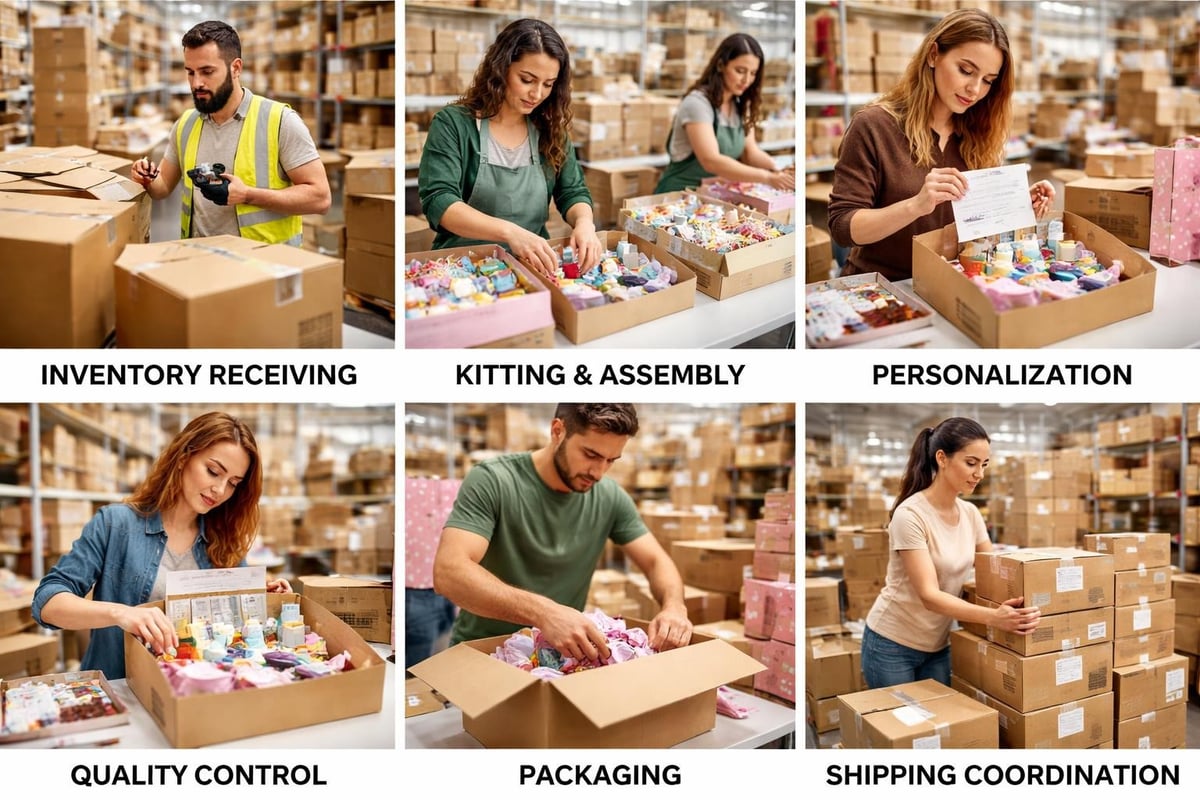
The assembly phase represents a significant operational bottleneck for subscription box services. Each box requires precise component selection, proper packaging materials, and often personalized elements like handwritten notes or customized inserts.
Efficient kitting workflows typically follow these steps:
- Batch preparation where all components for a fulfillment cycle are staged
- Assembly line setup with stations for different box configurations
- Quality verification to ensure correct items and quantities
- Packaging and sealing with branded materials and protective elements
- Labeling and sorting for efficient carrier handoff
Wave picking strategies help optimize this process by grouping similar box configurations together, reducing travel time and errors. However, businesses must balance efficiency with the personalization that subscribers expect.
Technology and Personalization Trends
The subscription box industry increasingly leverages technology to create differentiated customer experiences. AI-driven personalization and hybrid experiences represent significant trends reshaping how subscription box services operate in 2026.
Data-Driven Customization
Modern subscription businesses collect extensive customer data through preference quizzes, feedback surveys, and purchase history analysis. This information powers recommendation engines that create increasingly personalized box contents.
Machine learning algorithms analyze patterns across thousands of subscribers to identify which product combinations generate the highest satisfaction rates. These insights inform both curation decisions and inventory purchasing strategies. Businesses that effectively leverage this data can reduce churn while optimizing inventory turnover.
The fulfillment implications are substantial. Dynamic box configurations require flexible warehouse management systems that can handle variable pick lists and routing logic. Integration between customer preference platforms and fulfillment operations becomes mission-critical.

Digital Integration and Member Experiences
Subscription box services now extend beyond physical products to create comprehensive digital ecosystems. Member portals allow customers to manage preferences, skip months, add products, and access exclusive content. This digital layer creates stickiness that improves retention rates.
From a fulfillment perspective, these portals must connect seamlessly with warehouse operations. Real-time inventory visibility ensures customers only see available options, while cut-off date management prevents changes after boxes enter the fulfillment queue. API integrations between customer-facing platforms and warehouse management systems enable this synchronization.
Sustainability and Packaging Considerations
Environmental concerns significantly influence consumer behavior in subscription markets, with subscribers increasingly scrutinizing packaging materials and supply chain practices.
Eco-Friendly Packaging Solutions
Subscription box services face pressure to reduce packaging waste while still delivering products safely and creating an appealing unboxing experience. This challenge requires balancing multiple objectives:
- Protection during transit to prevent damage and returns
- Brand presentation that creates memorable unboxing moments
- Environmental impact through recyclable or compostable materials
- Cost efficiency to maintain profitable unit economics
Many businesses now use recycled cardboard, biodegradable packing peanuts, and minimalist designs that reduce material usage. Right-sizing boxes for different subscription tiers prevents excess void fill while optimizing shipping costs. Some companies have implemented mailer boxes that eliminate the need for outer shipping cartons entirely.
Reverse Logistics and Returns
Subscription models generate unique return patterns. Unlike traditional e-commerce where customers return unwanted items, subscription returns often stem from damaged products, delivery issues, or dissatisfaction with curation quality.
| Return Type | Frequency | Fulfillment Impact | Prevention Strategy |
|---|---|---|---|
| Damaged items | 5-8% | Replace and reship | Better packaging, carrier selection |
| Wrong items shipped | 2-4% | Replace and investigate | Enhanced QC processes |
| Preference mismatch | 10-15% | Refund or credit | Improved personalization algorithms |
| Delivery failures | 3-6% | Reship to updated address | Address validation systems |
Efficient returns processing protects margins and customer relationships. Businesses need clear protocols for inspecting returned products, restocking viable items, and documenting quality issues that might indicate upstream problems.
Building Scalable Fulfillment Infrastructure
As subscription box services grow, fulfillment operations must scale without proportionally increasing complexity or costs. This scalability challenge separates successful subscription businesses from those that plateau.
In-House vs. Outsourced Fulfillment
Early-stage subscription businesses often handle fulfillment internally to maintain control and understand operational nuances. However, growth inevitably creates capacity constraints and capital allocation decisions.
In-house fulfillment provides maximum control over quality, customization, and customer experience. Businesses can iterate quickly on packaging, implement unique personalization, and maintain direct oversight of every box. The trade-off comes through capital requirements for warehouse space, equipment, labor, and management attention diverted from core business activities.
Outsourced fulfillment through specialized third-party providers offers scalability without capital investment. The subscription box market’s evolution has created fulfillment partners with expertise in kitting, personalization, and subscription-specific workflows. These providers typically offer volume-based pricing that improves unit economics as businesses grow.
Systems Integration and Automation
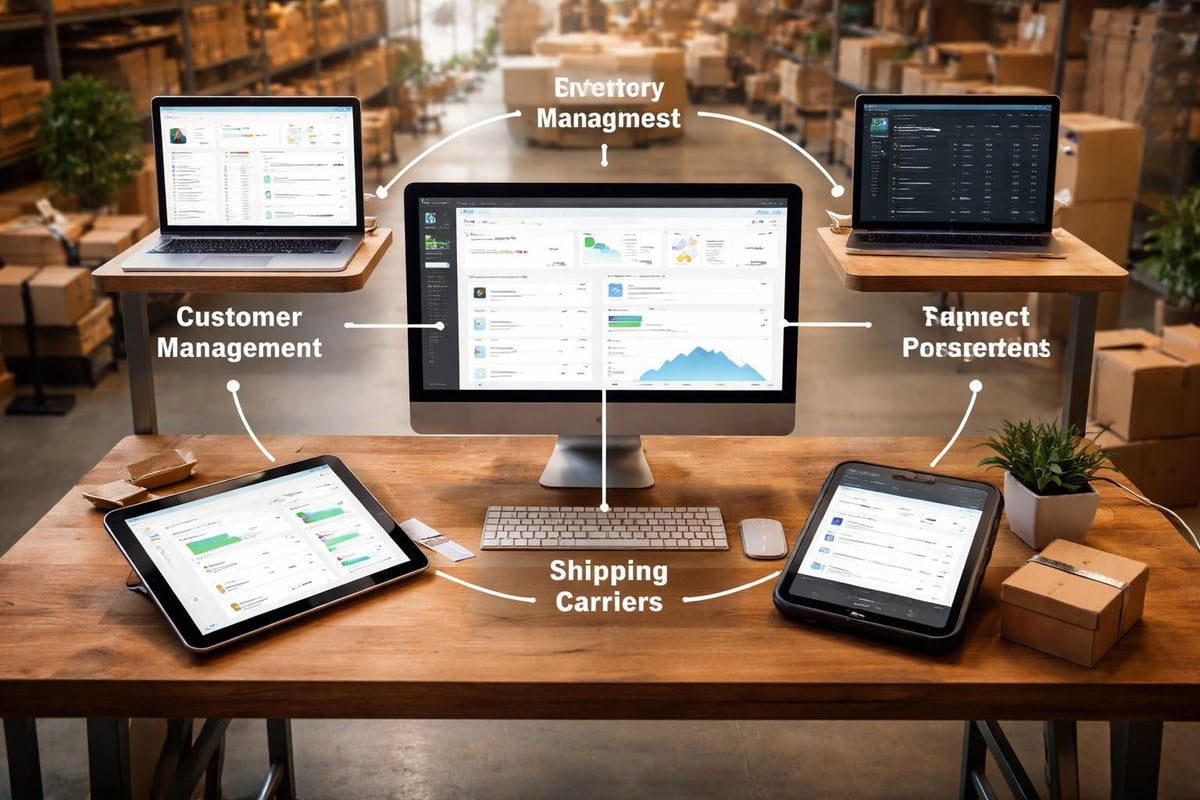
Successful subscription box services rely on integrated technology stacks that connect customer data, inventory management, fulfillment operations, and shipping logistics. Subscription management platforms like Recharge or Cratejoy handle billing and customer portals but must integrate with warehouse management systems.
Key automation opportunities include:
- Automated pick list generation based on subscription cycles and customer preferences
- Inventory threshold alerts that trigger reorder points for popular products
- Shipping label creation with carrier selection algorithms based on destination and box weight
- Customer communication through automated shipping notifications and tracking updates
- Analytics dashboards that surface key metrics like fulfillment accuracy and cycle times
The goal is creating straight-through processing where subscription renewals automatically trigger fulfillment workflows without manual intervention. This automation becomes essential when managing thousands of recurring orders monthly.
Pricing Strategies and Unit Economics
Profitable subscription box services require careful attention to unit economics. The recurring revenue model provides predictability but also constrains pricing flexibility once customers commit.
Cost Structure Analysis
Understanding the complete cost structure helps businesses price appropriately and identify optimization opportunities. Major cost components include:
Product costs represent the largest expense, typically ranging from 30-50% of subscription price depending on category and differentiation strategy. Premium positioning allows higher retail-to-cost ratios, while competitive categories squeeze margins.
Fulfillment costs encompass labor for kitting and packing, packaging materials, and warehouse space allocation. Efficient operations might achieve $3-5 per box fulfillment costs, while complex customization or inefficient processes can drive costs above $10 per box.
Shipping expenses vary by box weight, dimensions, and delivery speed. Negotiated carrier rates based on volume become crucial competitive advantages. Businesses shipping 10,000+ boxes monthly can achieve significantly better rates than smaller operations.
Technology and overhead includes subscription platform fees, payment processing, customer service, and marketing attribution. These typically represent 10-15% of revenue for mature operations.
Customer Acquisition and Lifetime Value
The subscription model’s success depends on customer lifetime value exceeding acquisition costs by a comfortable margin. Market analysis reveals that personalization and experience quality directly impact retention rates, which fundamentally drive profitability.
A subscriber who remains active for 12 months at $30 monthly generates $360 in revenue. If acquisition cost is $60 and total fulfillment and product costs are $20 per box, the net profit reaches $120 over that customer lifetime. However, if churn occurs after three months, that same customer generates a net loss.
This dynamic makes retention the most critical metric for subscription businesses. Small improvements in monthly churn compound dramatically over annual periods. A reduction from 10% to 7% monthly churn can double average customer lifetime value.
Category-Specific Fulfillment Considerations
Different subscription box categories present unique operational requirements that influence fulfillment strategies and partnership decisions.
Food and Beverage Subscriptions
Food subscriptions demand specialized handling capabilities. Temperature control becomes essential for perishable items, requiring refrigerated storage and expedited shipping with insulated packaging. Compliance with food safety regulations adds complexity through required certifications and handling protocols.
Expiration date management creates inventory rotation challenges. FIFO (first-in, first-out) processes prevent shipping near-expiration products while minimizing waste. Many food subscription businesses partner with fulfillment centers that specialize in consumables and maintain relevant certifications.
Beauty and Personal Care
Beauty subscriptions typically involve multiple small items that require careful organization during kitting. Fragile products like glass bottles or compacts need protective packaging to prevent transit damage. Regulatory compliance for cosmetics varies by state and requires proper labeling and ingredient documentation.
Sample sizes popular in beauty boxes create procurement challenges, as many brands have minimum order quantities that exceed monthly needs. Strategic supplier relationships and careful forecasting help manage this constraint.
Apparel and Fashion
Clothing subscriptions introduce sizing complexity and higher return rates compared to other categories. Style preferences combined with fit variables create extensive SKU proliferation. Successful fashion subscription services invest heavily in preference algorithms and stylist curation to minimize returns.
Seasonal inventory transitions require careful planning to clear previous season items while introducing new collections. Many fashion subscriptions operate on quarterly rather than monthly cycles to align with fashion seasons.
Future Outlook for Subscription Box Services
The subscription box industry continues evolving as consumer expectations rise and operational capabilities advance. Several trends appear positioned to shape the next phase of industry development.
Micro-subscriptions targeting specific niches allow businesses to serve passionate communities with highly specialized offerings. These focused subscriptions often command premium pricing through authentic curation and community engagement.
Hybrid models combining subscriptions with a la carte purchases create additional revenue streams while giving customers flexibility. This approach helps businesses capture customers hesitant to commit to full subscriptions while building relationships that may convert to recurring revenue.
Sustainability initiatives will likely accelerate as environmental concerns influence purchasing decisions. Businesses that authentically integrate sustainable practices throughout their supply chain and fulfillment operations will differentiate in crowded markets.
The operational complexity of subscription box services continues increasing as personalization becomes table stakes rather than differentiation. Businesses must balance customer experience expectations with operational efficiency, often requiring specialized fulfillment partnerships that can deliver both quality and scale.
Successfully launching and scaling subscription box services requires mastering both customer experience and operational execution. As personalization, sustainability, and seamless digital integration become essential competitive requirements, having reliable fulfillment infrastructure makes the difference between growth and stagnation. Ecom Automation Prep specializes in the complex fulfillment needs of subscription businesses, offering kitting, bundling, and direct-to-consumer fulfillment services that scale with your business. Partner with fulfillment experts who understand subscription box operational demands and can help you deliver exceptional experiences to every subscriber.
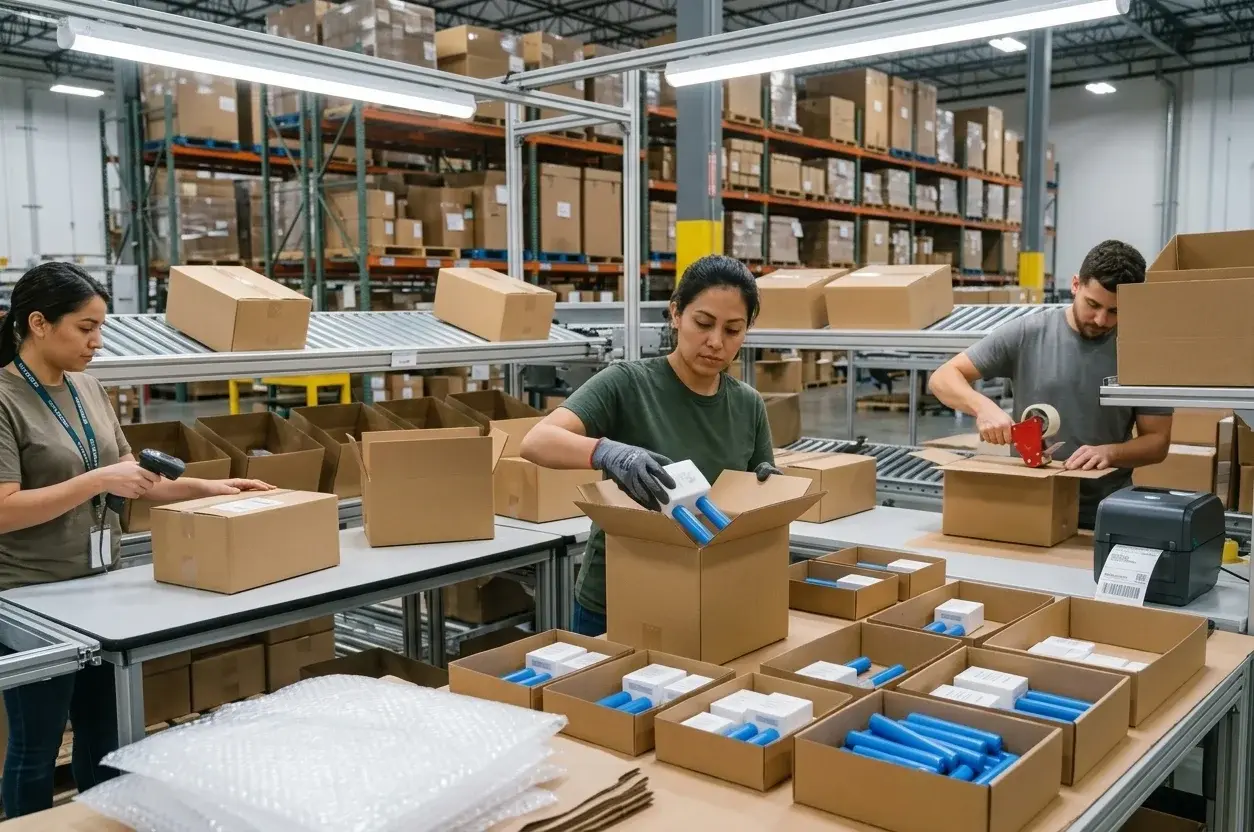



[…] quality control time while meeting tight delivery windows. This approach, common among experienced subscription box services, reduces last-minute scrambles and improves […]