
A subscription box shipment does not behave like a normal ecommerce order. It ships on a fixed calendar date whether the warehouse is ready or not, it usually bundles several SKUs and inserts into one kit, and every customer in the cycle needs to receive the same box, packed the same way, at the same time. Get any one of those three constraints wrong at scale and the mistake does not affect one order, it affects an entire cycle of subscribers on the same day.
This guide covers what subscription box fulfillment actually involves, where it breaks down operationally, what it costs, and how to evaluate a 3PL partner for 2026, including how Ecom Auto Prep approaches subscription cycles for growing brands.
What Is Subscription Box Fulfillment?
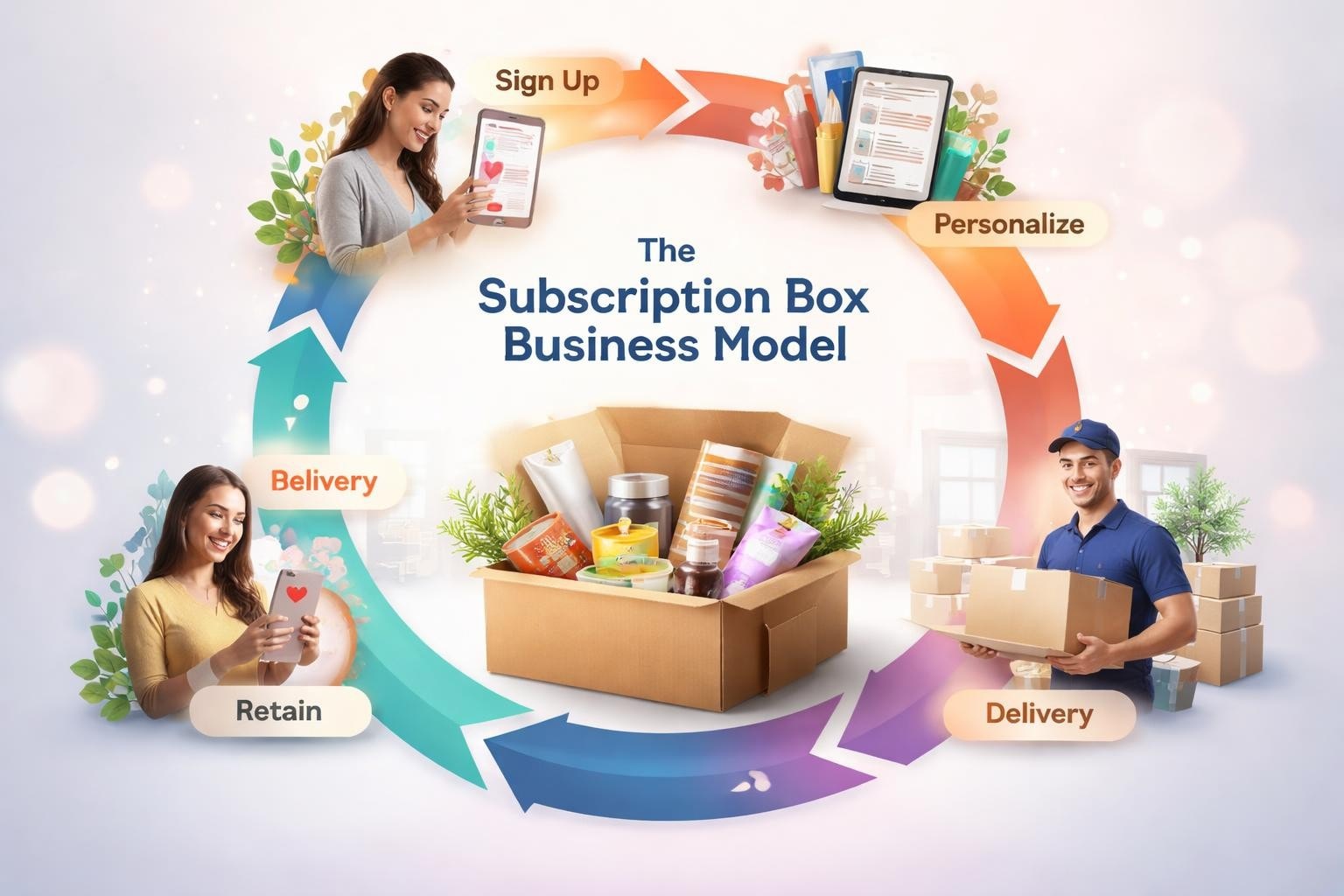
Subscription box fulfillment is the process of receiving, storing, kitting, packing, and shipping recurring orders on a set schedule rather than as they arrive one at a time. A subscriber signs up once, and the brand (or its 3PL) then assembles and ships a new box on a recurring cadence, weekly, biweekly, or monthly, until the subscriber cancels or pauses.
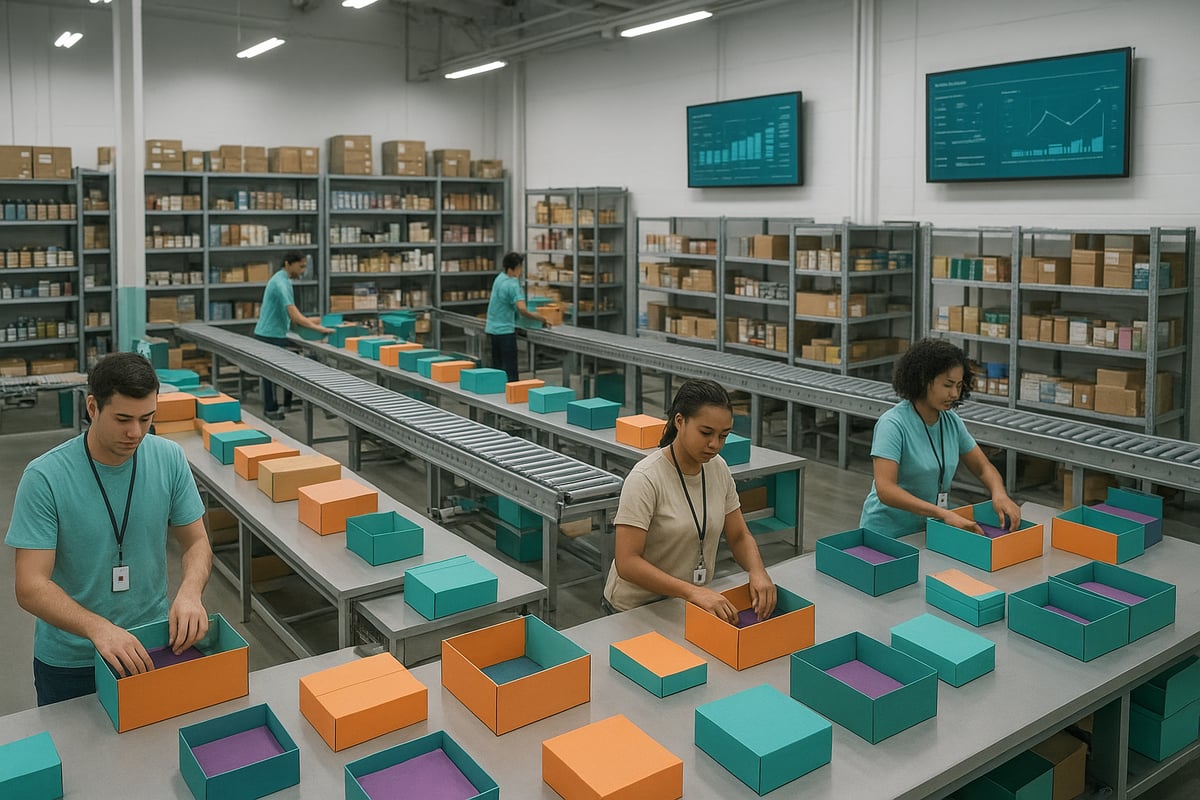
The distinction that matters operationally is batch versus continuous fulfillment. A standard ecommerce warehouse picks and packs orders as they land, spread across the day. A subscription warehouse has to prepare thousands of nearly identical boxes inside a narrow cycle window, then ship nearly all of them within a day or two of each other. That single difference changes staffing, receiving timelines, and inventory planning far more than the products themselves do.
The Subscription Box Fulfillment Landscape in 2026
Market Growth and Trends
The subscription box market has grown well past its early curated-box roots and now spans consumer packaged goods, beauty, pet products, supplements, and specialty food, alongside corporate and B2B gifting programs. Growth has been driven less by novelty boxes and more by replenishment models, where subscribers rely on a product running out on a predictable schedule rather than by the surprise of a curated selection.
Key Market Drivers
Three forces are pushing brands to formalize subscription fulfillment rather than run it out of a garage or a general-purpose warehouse: subscriber expectations for a consistent delivery date, the margin pressure that comes from rising parcel costs on recurring shipments, and the operational complexity of rotating SKUs or bundle contents between cycles.
Types of Subscription Box Business Models
| Model | What ships | What fulfillment must prioritize |
| Replenishment | Same or near-identical items each cycle (razors, supplements, coffee, pet food) | Timing accuracy, inventory availability, low error tolerance |
| Curated / discovery | A themed or rotating product selection chosen by the brand | Presentation, unboxing consistency, kitting precision |
| Hybrid | A mix of fixed and rotating items, or multiple subscription tiers | Assortment logic by tier, more complex kitting instructions |
| Meal kit / perishable | Fresh or frozen components on a fixed delivery window | Cold chain handling, zero tolerance for delay |
| B2B / corporate gifting | Office, gifting, or niche kits shipped to businesses | Higher customization, lower volume per cycle |
Market Size and Retention
Subscriber retention, not new sign-ups, is what determines whether a subscription brand survives its first two years. A missed or late cycle is one of the fastest ways to trigger a cancellation, because the entire value proposition of a subscription is predictability.
Fulfillment’s Role in Scalability and Retention
Fulfillment is not a back-office function for a subscription brand, it is the product experience. A curated box brand can have excellent creative and product selection and still lose subscribers over a warehouse that ships two days late or swaps in the wrong insert. Retention is protected or lost at the warehouse, not just in marketing.
Evolving Consumer Expectations
Subscribers increasingly expect the same delivery-date reliability from a monthly box that they get from a one-off ecommerce order: real tracking, proactive delay notifications, and a consistent unboxing experience cycle after cycle, not just on the first box.
Impact of Global E-Commerce and Cross-Border Fulfillment
Brands shipping subscription boxes to international subscribers face longer, less predictable transit windows and added customs friction. This pushes many subscription brands toward a domestic-first fulfillment footprint until international volume justifies the added complexity of cross-border compliance and duties handling.
Key Challenges in Subscription Box Fulfillment
Subscription fulfillment concentrates several ordinary warehouse risks into a single fixed date, which is what makes it harder than standard ecommerce fulfillment:
Fixed ship windows. Every box for a cycle needs to leave the warehouse inside a narrow window. There is little room to push the date without notifying every subscriber at once.
Multi-component dependency. A box with five SKUs and two inserts only ships once all seven components are on hand. One late supplier shipment can hold up an entire cycle.
Inventory timing. Components need to arrive, be counted, and be quality-checked before kitting starts, not during it.
Quality control at volume. A single mislabeled SKU or missing insert does not affect one customer, it can affect every box built from that batch.
Churn-driven volume swings. Subscriber counts move up and down between cycles, which means labor and component quantities have to be replanned every cycle rather than set once.
Step-by-Step: How Subscription Box Fulfillment Works in 2026

Inventory Receiving and Storage
Before kitting can start, every SKU, insert, and packaging component for the cycle has to be received, counted, and quality-checked. Brands typically confirm subscriber counts and component quantities with suppliers ahead of the cycle so nothing is missing on assembly day.
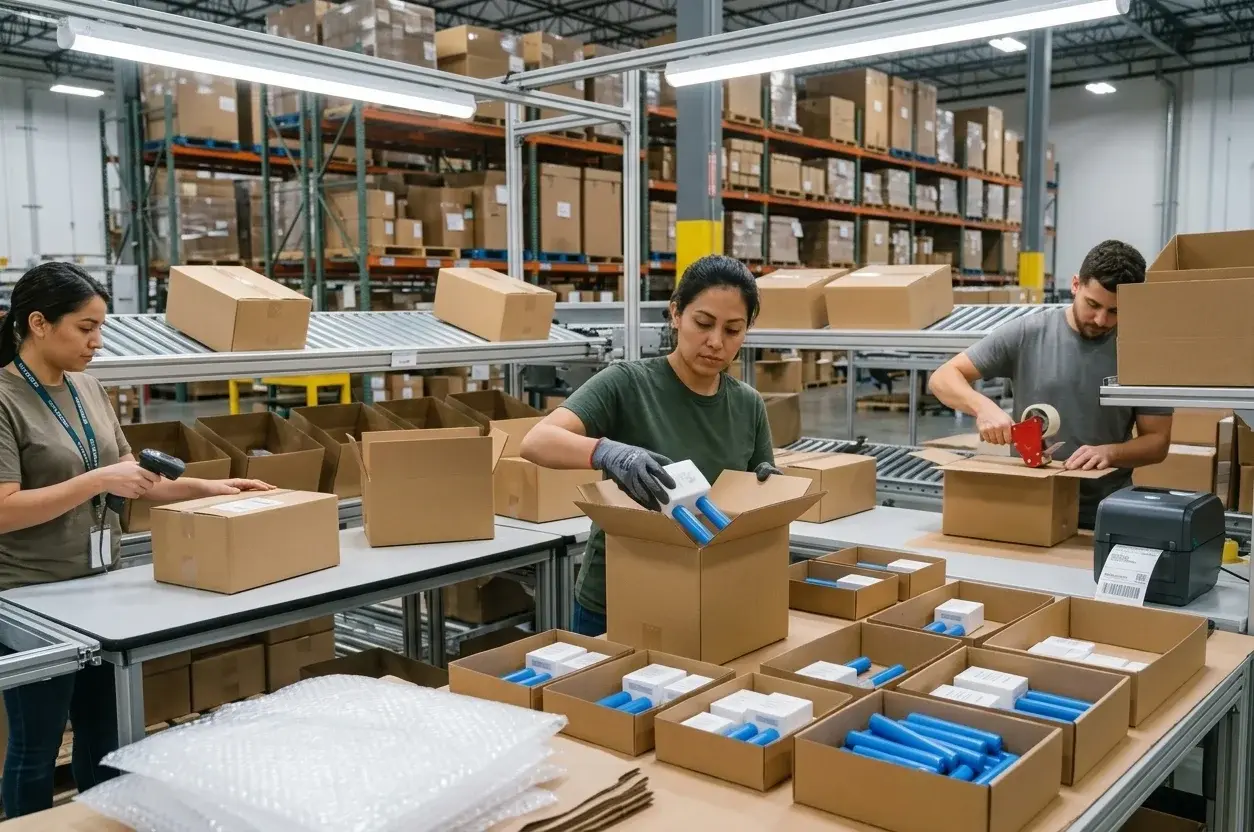
Kitting and Assembly
Items are picked in bulk, staged, and assembled into the finished box configuration. Staging matters as much as the assembly itself: components need to be organized so kitting can run at a steady pace without a picker walking back and forth between locations mid-cycle.
Pick and Pack
Once kits are assembled, boxes are packed for shipment. Replenishment boxes are usually packed to a fixed spec every cycle. Curated and hybrid boxes may require light personalization, such as swapping a component based on a subscriber’s stated preference or tier.
Shipping and Carrier Management
All boxes for a cycle are typically manifested and handed to carriers within the same one- to two-day window. Tracking needs to be pushed back to the subscription platform automatically so brands can catch delivery exceptions before a subscriber has to ask about a missing box.
Returns and Reverse Logistics
Subscription returns usually fall into three buckets: damaged or incorrect items, cancellations that require stopping the next cycle’s shipment, and replacement requests for a missing component. A 3PL handling subscription fulfillment needs a defined process for all three, not just a generic returns workflow built for one-off orders.
Real-World Examples and Key Metrics
The metrics that matter most for a subscription cycle are cycle completion time (how long from “inventory received” to “last box shipped”), error rate per cycle, and on-time ship rate against the cycle’s stated window. A brand shipping 20,000 boxes a cycle with a 1% error rate is still generating 200 subscriber complaints every cycle, which is enough to measurably affect retention.
Real-World Examples and Key Metrics
Consider a beauty subscription box with monthly product changes. Its fulfillment requires agile kitting and inventory management to handle ever-changing SKUs. In contrast, a replenishment box for essentials focuses on speed and consistency.
Key metrics tracked throughout the subscription box fulfillment services process include:
- Order accuracy rate
- Average processing time per box
- Cost per order
- Customer satisfaction scores
- Return rates
Tracking these metrics ensures brands can optimize their operations, minimize errors, and delight subscribers month after month.
In-House vs. Outsourced Subscription Box Fulfillment
Choosing between in-house and outsourced subscription box fulfillment services is a pivotal decision for any brand. The fulfillment model directly affects operational efficiency, cost structure, and the ability to scale. As the subscription box market grows more competitive, the right approach can be the difference between sustainable growth and operational headaches.
In-House Fulfillment: Control and Complexity
Running fulfillment in-house gives a brand full control over kitting quality and the unboxing experience, which matters most for curated and highly branded boxes. It also means the brand carries the full labor, space, and seasonality burden of the operation, including the swings in staffing that come with subscriber churn between cycles.
Outsourced Fulfillment: Scalability and Expertise
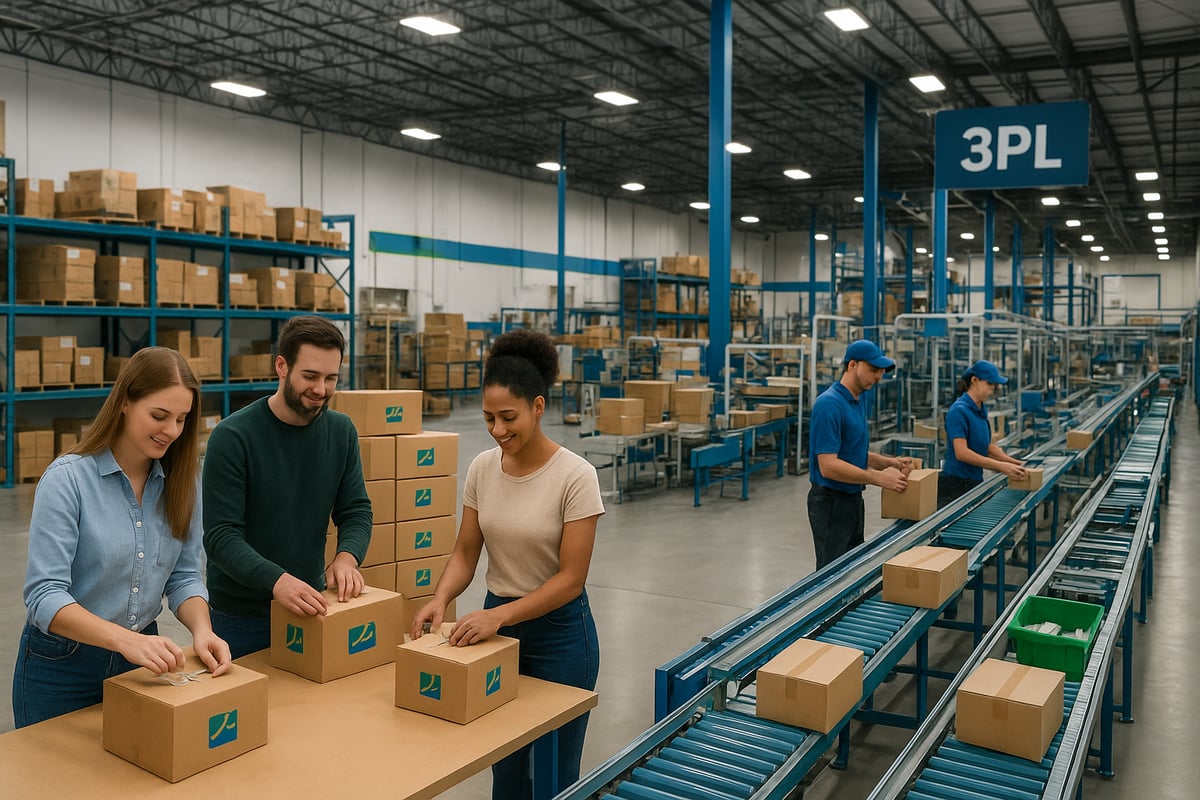
A 3PL brings warehouse infrastructure, batch-shipping experience, and staffing flexibility that most subscription brands cannot replicate in-house past a certain volume. The tradeoff is less day-to-day control over the exact assembly process, which is why the choice of partner matters more for subscription boxes than for standard ecommerce fulfillment.
Cost Comparison: In-House vs. Outsourcing
| Cost factor | In-house | Outsourced (3PL) |
| Labor | Fixed headcount, idle between cycles | Variable, scaled to cycle volume |
| Warehouse space | Leased or owned year-round | Shared or allocated, paid by use |
| Kitting equipment | Capital investment | Included in service |
| Scaling for growth | Requires new hires and space | Absorbed by 3PL capacity |
| Packaging sourcing | Brand-managed | Often coordinated by 3PL |
When to Switch and Real-World Examples
Brands typically move from in-house to outsourced fulfillment once cycle labor becomes difficult to staff predictably, or once missed ship windows start showing up in cancellation surveys. The switch tends to happen faster for replenishment models, where the fulfillment process is simple enough that a 3PL can match in-house quality from the first cycle.
Technology, Automation, and Integration in Subscription Box Fulfillment
The landscape of subscription box fulfillment services is rapidly transforming, powered by new technologies and automation. In 2026, efficient fulfillment operations are only possible when brands embrace the latest advancements, ensuring accuracy, speed, and scalability for every box shipped.
Fulfillment Center Automation: Robotics and AI
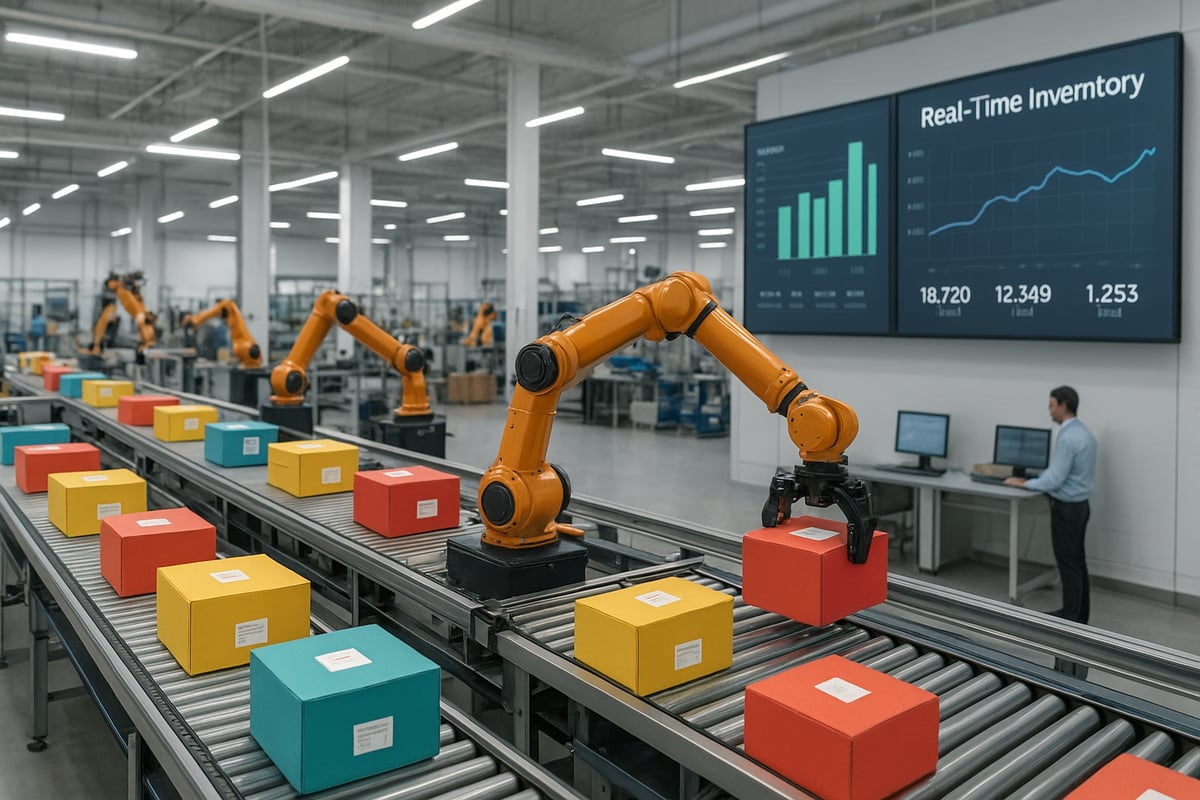
Some larger fulfillment operations use collaborative robots to move totes between picking zones during batch kitting, which reduces walking time on high-SKU-count boxes. This is not universal across the industry and tends to appear only at higher-volume operations.
Warehouse Management Systems: Real-Time Control
A WMS with real-time inventory visibility is what prevents a subscription cycle from starting kitting before every component is actually confirmed on hand, rather than assumed on hand based on a stale count.
Seamless Integrations for Subscription Success
Subscription platforms such as Recharge, Cratejoy, and Bold need to pass order and renewal data to the fulfillment provider automatically. Manual spreadsheet uploads work at low volume but become an error source once a brand crosses a few thousand subscribers.
Data-Driven Growth and Real-World Scaling
Cycle-over-cycle reporting, error rates, on-time ship rate, and inventory variance, is what lets a brand or 3PL catch a developing problem before it shows up as a churn spike two cycles later.
Cost Structures and Pricing Models for Subscription Box Fulfillment
Understanding the cost structures behind subscription box fulfillment services is essential for brands aiming to scale efficiently in 2026. With the right approach, businesses can optimize expenses while maintaining high-quality delivery and customer satisfaction. Every dollar saved or reinvested in fulfillment can directly impact profitability and growth.
Standard Cost Components in Subscription Box Fulfillment
Typical cost components include receiving, storage, kitting labor, pick and pack, packaging materials, and outbound shipping. Kitting labor is usually the largest variable cost, since it scales directly with how many components and personalization steps each box requires.
Variables Influencing Pricing
The biggest cost drivers are the number of SKUs and inserts per box, whether personalization is required, packaging complexity (custom boxes, tissue, branded inserts), and outbound parcel weight and dimensions. A five-SKU curated box with custom packaging will always cost more to fulfill than a single-SKU replenishment box, regardless of which 3PL runs it.
Pricing Models and Cost-Saving Strategies
Most 3PLs price subscription fulfillment as a combination of per-box kitting/pick-pack fees, storage, and a markup on postage. Brands can reduce per-box cost by simplifying packaging where it does not affect the unboxing experience, and by giving suppliers enough lead time that components do not arrive late and trigger rush labor.
In-House vs. Outsourced Fulfillment Cost Comparison
See the cost comparison table above. The short version: in-house fulfillment carries fixed costs that do not flex with subscriber churn, while outsourced fulfillment converts most of that cost into a variable, per-cycle expense.
FAQs: Subscription Box Fulfillment Services Costs
Does subscription fulfillment cost more than standard ecommerce fulfillment?
Usually yes per box, because kitting multiple SKUs and inserts takes more labor than packing a single-item order.
What is the biggest lever for reducing per-box cost?
Packaging and dimensional weight. Reducing unnecessary box volume can lower parcel cost per shipment without changing what is inside the box.
Do storage costs matter for subscription brands?
Yes, especially for brands carrying many SKUs or receiving components far ahead of the cycle date, since that inventory sits in storage until kitting begins.
How to Choose the Right Subscription Box Fulfillment Partner in 2026
Selecting the right subscription box fulfillment services provider is a pivotal decision for any e-commerce brand aiming for growth in 2026. With so many options available, the process can seem daunting. However, a structured approach ensures you find a partner aligned with your business goals and customer expectations.
Step-by-Step Evaluation Process
Start by mapping your own cycle: SKU count per box, subscriber volume, personalization requirements, and current ship-window failures. Only after that is defined should you compare 3PL pricing, since a quote without your actual cycle complexity is not a usable number.
Key Criteria and Due Diligence
- Experience running batch cycles on a fixed calendar, not just daily one-off orders
- WMS visibility into component inventory before kitting starts
- Defined quality control process for kitted boxes, not just standard pick accuracy
- Integration with your subscription platform (Recharge, Cratejoy, Bold, or a custom system)
- A returns process that covers cancellations, replacements, and damaged items separately
Technology, Customization, and Returns
Confirm the 3PL can actually support the level of personalization your box requires. A provider built for simple replenishment orders may not have the kitting workflow needed for a multi-tier curated box, even if their pricing looks competitive.
Transparency, Red Flags, and Checklist
Red flags include vague answers about how cycle timing works operationally, no clear process for handling a late component shipment, and pricing that does not break out kitting labor separately from pick and pack. Before signing, confirm: cycle turnaround time, error-rate history, kitting capability, integration support, and returns handling.
Example Scenarios and Final Thoughts
A replenishment brand shipping 10,000 identical boxes a month has very different fulfillment needs than a curated brand shipping 2,000 five-SKU boxes with custom tissue and inserts. The right partner is the one whose kitting workflow, staffing model, and technology match your specific box, not the one with the lowest quoted per-pick rate.
How Ecom Auto Prep Supports Subscription Box Fulfillment
Ecom Auto Prep runs subscription cycles out of its Coral Springs, Florida warehouse with direct access to the people managing your account, not a support ticket queue. That means component receiving, kitting, quality control, and batch shipping are coordinated by the same team that already knows your SKU mix and cycle calendar, cycle after cycle. Browse our industries pages to see how we support recurring fulfillment across consumer packaged goods, beauty, and other subscription-heavy categories, and check our integrations for supported subscription and ecommerce platforms.
Get a Cycle That Ships On Time, Every Time
Every late subscription cycle costs you subscribers, not just a shipment. Missing components and inconsistent kitting compound fast past a few thousand boxes a month. Get a quote from our team, schedule a meeting to walk through your SKU mix and cycle calendar, or request a service pricing breakdown built around your real box complexity, not a generic 3PL rate card.


[…] partners offering subscription box fulfillment services maintain dedicated workstations for these specialized tasks. Teams assemble kits according to […]
[…] Subscription box fulfillment services require specialized expertise in recurring shipments, customer management, and coordinated inventory planning for curated products. […]
[…] box businesses need dedicated subscription box fulfillment capabilities that handle recurring shipments, customer preferences, and inventory rotation. This specialized […]
[…] brands offering subscription box fulfillment services, dedicated kitting areas allow assembly of multi-product packages. These specialized zones […]
[…] Subscription box fulfillment presents unique challenges including recurring order management, customization options, and precise timing requirements. Successful subscription businesses need partners who understand these nuances and can execute flawlessly month after month. […]
[…] principles outlined in resources about subscription box fulfillment services apply broadly to inventory management, as subscription models require particularly precise […]
[…] Subscription box fulfillment services require specialized kitting capabilities where each box contains curated selections that may vary by subscription tier or customer preferences. Distribution centers with kitting expertise can customize assemblies based on dynamic requirements. […]
[…] subscription box fulfillment services handle the complexities of recurring shipments, including kitting multiple items per box, managing […]